


97,99 €
Mehr erfahren.
- Herausgeber: Wiley-VCH
- Kategorie: Wissenschaft und neue Technologien
- Sprache: Englisch
This practical guide for advanced students and decision-makers in the pharma and biotech industry presents key success factors in R&D along with value creators in pharmaceutical innovation.
A team of editors and authors with extensive experience in academia and industry and at some of the most prestigious business schools in Europe discusses in detail the innovation process in pharma as well as common and new research and innovation strategies. In doing so, they cover collaboration and partnerships, open innovation, biopharmaceuticals, translational medicine, good manufacturing practice, regulatory affairs, and portfolio management. Each chapter covers controversial aspects of recent developments in the pharmaceutical industry, with the aim of stimulating productive debates on the most effective and efficient innovation processes.
A must-have for young professionals and MBA students preparing to enter R&D in pharma or biotech as well as for students on a combined BA/biomedical and natural sciences program.
Sie lesen das E-Book in den Legimi-Apps auf:
Seitenzahl: 958
Veröffentlichungsjahr: 2016
Ähnliche



















Table of Contents
Cover
Related Titles
Title Page
Copyright
List of Contributors
Foreword
Chapter 1: Introduction to the Book
Reference
Chapter 2: Global Epidemiological Developments
2.1 Introduction
2.2 Model of Epidemiological Transition
2.3 Global Burden of Diseases
2.4 Infectious Diseases
2.5 Noncommunicable Diseases
2.6 Antimicrobial Resistance
2.7 Dynamics
References
Chapter 3: The Value of Pharmaceutical Innovation: Concepts and Assessment
3.1 Introduction
3.2 Concepts and Definitions of Value
3.3 Stakeholder's Perspectives on Value
3.4 Recent Developments Influencing the Definition and Assessment of Value
3.5 Recommendations: Implications for R&D
3.6 Discussion
3.7 Conclusion
References
Chapter 4: A Review of the Pharmaceutical R&D Efficiency: Costs, Timelines, and Probabilities
4.1 Introduction
4.2 The Historical Perspective
4.3 The R&D Phase Model
4.4 The Low R&D Success Rates
4.5 The Long R&D Time Intervals
4.6 The High Cost of Pharmaceutical R&D
4.7 The Reduced R&D Efficiency
4.8 Can an Increase in R&D Value Compensate the Reduced R&D Efficiency?
References
Chapter 5: Financing Pharmaceutical Innovation
5.1 Introduction
5.2 Measuring Innovation: Categories of New Drugs
5.3 Productivity of Pharmaceutical Industry throughout Time
5.4 Measuring the Cost of Developing New Medicines
5.5 Funding Drug Development: a Global Endeavor
5.6 Public and Private Funds: Complementary Finance for Drug Development
5.7 How Commercial Drug Development Projects Are Financed Today: Big Firms, Small Firms, and Their Cooperation
5.8 Public Health Economics and Financing Pharmaceutical Innovation
5.9 Conclusion
Acknowledgment
References
Chapter 6: Challenges and Options for Drug Discovery
6.1 Introduction
6.2 Paradigm Shifts of R&D Organizations
6.3 Productivity of Drug Discovery
6.4 Is There an Innovation Gap in Biomedical Research?
6.5 Why Did Drug Candidates Fail?
6.6 Implications from the “Lessons Learnt” for Future Drug Discovery Research
Acknowledgment
References
Chapter 7: Translational Medicine: Enabling the Proof of Concepts
7.1 Introduction
7.2 Translational Medicine and Its Role/Value in Early Development
7.3 Knowledge Generation
7.4 Types of Data, Experiments, and Tools Needed to Move from Basic Research to Early Clinical Development
7.5 FIM (Dose Escalation and MTD)
7.6 Proof of Concept (PoC)
7.7 Summary
References
Chapter 8: Preclinical Safety and Risk Assessment
8.1 Introduction
8.2 Test Systems
8.3 Case Study: hERG Assay
8.4 The Preclinical “Package” during the Development of an NME
8.5 Factors Influencing the Preclinical Data Set
8.6 Translation into Humans: The “Therapeutic Window”
8.7 Influence of Intended Therapeutic Use on the Risk Assessment (RA)
8.8 Deep Dive Case Study: Safety Assessment of Biological Drug Formats
8.9 NBE Case Study 1
8.10 NBE Case Study 2
8.11 Carcinogenicity Risk Assessment for Marketed Drugs
8.12 Treatment Duration
8.13 Conclusion – the “Art” of Preclinical Safety: Summarizing the Concept of Hazard Identification and Description, Risk Assessment, and Risk Management
Acknowledgment
Disclosures
References
Chapter 9: Developing Commercial Solutions for Therapeutic Proteins
9.1 Introduction
9.2 Developing Commercial Solutions for Therapeutic Proteins
9.3 Quality by Design
9.4 Examples for Innovations in Manufacture of Sterile Pharmaceutical Products
9.5 Summary
List of FDA/ICH Guidances Referenced
Disclaimer
References
Chapter 10: The Evolution of Clinical Development: From Technical Success to Clinical Value Creation
10.1 Introduction
10.2 CD: Changes and Challenges
10.3 Technical Success and Clinical Value Creation in CD in the Future
Disclaimer
References
Chapter 11: Translational Development
11.1 Introduction
11.2 Translational Development
11.3 Dose Optimization
11.4 Pharmacogenomics
11.5 Biomarker Development
11.6 Systems Pharmacology
11.7 Rational Drug Development
11.8 Concluding Remarks
References
Chapter 12: Forty Years of Innovation in Biopharmaceuticals – Will the Next 40 Years Be as Revolutionary?
12.1 Introduction
12.2 The Evolution of Biologics Manufacturing
12.3 The Evolution of Alternative Scaffolds
12.4 Antibody-Drug Conjugates
12.5 The Next Wave of Biologics
Disclaimer
References
Chapter 13: Vaccines: Where Inertia, Innovation, and Revolution Create Value, Simultaneously and Quietly
13.1 Introduction
13.2 The World of Vaccines
13.3 The Vaccine Market: Substantial, Fast Growing, with Intense and Concentrated Competition
13.4 The Vaccine Industry: Domination of the Heavyweights, for Now…
13.5 New Vaccine Developments: Strategic Trends and Why Innovation Is Needed All along the Value Chain
13.6 Where Will Innovation Come from? Strategy and Players
References
Chapter 14: The Patient-Centric Pharma Company: Evolution, Reboot, or Revolution?
14.1 Introduction
14.2 Health, Always…
14.3 The Mission of the Healthcare Industry
14.4 Megatrends Affecting the Strategic Scorecard of the Healthcare Industry
14.5 Focus on the Societal Trends and Their Consequences for the Management of Healthcare Innovation
14.6 The DNA of the Healthcare Industry: R&D and the Management of Innovation
14.7 Societal Expectations for Personalized Medicine
14.8 New Players Contributing to Information Management to Substantiate Value Propositions for Novel Therapies
14.9 The Role of the Key Stakeholders in Shaping a New Regulatory Framework
14.10 The Consequences for the Healthcare Industry in Terms of Governance and Capabilities
14.11 The Sustainable Path Forward for the Healthcare Industry
References
Chapter 15: The Pharmaceutical Industry is Opening Its R&D Boundaries
15.1 Introduction
15.2 Open Innovation versus Closed Innovation
15.3 Business Models in an Open Innovation Framework
15.4 Open Innovation Processes
15.5 Capabilities and Attitudes Enabling Open Innovation
15.6 Open Innovation in the Pharmaceutical Industry
15.7 New Business Models in View of the Potential of Open Innovation
15.8 Outlook
References
Chapter 16: Out-Licensing in Pharmaceutical Research and Development1
16.1 Introduction
16.2 Performance-Based R&D Collaborations on the Rise
16.3 The Impact of Collaborations on the Value Chain
16.4 Generating Value from Pipeline Assets by Out-Licensing
16.5 Pharmaceutical Companies' Resistance toward Out-Licensing
16.6 Managing Out-Licensing at Novartis: A Case Study
16.7 Future Directions and Trends
References
Chapter 17: Trends and Innovations in Pharmaceutical R&D Outsourcing
17.1 Introduction
17.2 Drivers to the Use of Outsourcing
17.3 Genesis of Outsourcing in the Twentieth Century: From Commodity to Contribution
17.4 Current and Future Trends in Outsourcing: From Contribution to Innovation
17.5 Discussion and Conclusion
References
Chapter 18: New Innovation Models in Pharmaceutical R&D
18.1 Introduction
18.2 Some Attempts That Were Recommended in the Past
18.3 The Increasing Pipeline Size
18.4 The Reduction of R&D Investments
18.5 The Opening of the R&D Processes
18.6 The Challenge with the Return on Investment
18.7 Changing the R&D Processes Is Not Enough
18.8 What Is the Best R&D Model?
References
Chapter 19: The Influence of Leadership Paradigms and Styles on Pharmaceutical Innovation
19.1 Introduction
19.2 What Is Your Concept or Model of Good Leadership?
19.3 Approaches to Leadership Modeling and Profiling
19.4 The Developmental Approach to Leadership Paradigms and Styles
19.5 Inner and Outer Leadership
19.6 Dynamics of How Leadership Paradigms Evolve
19.7 Leadership at Different Levels within Pharma
19.8 Optimizing Innovation in Different Organizational Models and Cultures
19.9 How Do We Support the Development of Evolutionary Leaders?
19.10 What Does It Mean to Operate from the Evolutionary Paradigm?
19.11 Leadership and Personal Mastery
19.12 Building an Evolutionary Bridge to Release Innovation
19.13 Conclusions
References
Chapter 20: The Role of Modern Portfolio Management in Pharma Innovation
20.1 Introduction
20.2 Challenges in R&D and the Origin of Pharmaceutical Portfolio Management
20.3 Goals and Metrics of Portfolio Management
20.4 Portfolio Management as Enabler of Innovation
20.5 Modern Portfolio Management Integrates In-House R&D, Business Development, and M&A
References
Chapter 21: Patent Management Throughout the Innovation Life Cycle1
21.1 Introduction
21.2 The Changing Role of Patents: From Legal to Strategic
21.3 The Patent Life Cycle Management Model
21.4 Example: Managing IP Rights at Bayer
21.5 Concluding Remarks
References
Index
End User License Agreement
Pages
xvii
xviii
xix
xx
xxi
xxii
1
2
3
4
5
6
7
8
10
11
12
13
14
15
16
17
18
19
20
21
22
23
24
25
26
27
28
29
30
31
32
33
34
35
36
37
38
39
40
41
42
44
45
46
47
48
49
50
51
52
53
54
55
56
57
58
59
60
61
62
63
64
65
66
67
68
69
70
71
72
73
74
75
76
77
78
79
80
81
82
83
84
85
86
87
88
89
90
91
92
93
94
95
96
97
98
99
100
101
102
103
104
106
107
108
109
110
111
112
113
114
115
116
117
118
119
120
121
122
123
124
125
126
127
128
129
130
131
132
133
134
135
136
137
138
139
140
141
142
143
144
145
146
147
148
149
150
151
152
153
154
155
156
157
158
160
161
162
163
164
165
166
167
168
169
170
171
172
173
174
175
176
177
178
179
180
182
183
184
185
186
187
188
189
190
191
192
193
194
195
196
197
198
199
200
201
202
203
204
205
206
207
208
209
210
211
212
213
214
215
216
217
218
219
220
221
222
223
224
225
226
227
228
229
230
231
232
233
234
235
236
237
238
239
240
241
242
243
244
245
246
247
248
249
250
251
252
253
254
255
256
257
258
259
260
261
262
263
264
265
266
267
268
269
270
271
272
273
274
276
277
278
279
280
281
282
283
284
285
286
287
288
289
290
291
292
293
294
295
296
297
298
299
300
301
302
303
304
305
306
307
308
309
310
311
312
313
314
315
316
317
318
319
320
321
322
323
324
325
326
327
328
329
330
331
332
334
335
336
337
338
339
340
341
342
343
344
345
346
347
348
349
350
351
352
353
354
355
356
357
358
359
360
362
363
364
365
366
367
368
369
370
371
372
373
374
375
376
377
378
379
380
382
383
384
385
386
387
388
389
390
391
392
393
394
395
396
397
398
399
400
401
402
403
404
405
406
407
408
409
410
411
412
413
414
415
416
417
418
419
420
421
422
423
424
425
426
427
428
429
430
431
432
433
434
435
436
437
438
439
440
441
442
443
444
445
446
447
448
449
450
451
452
453
454
455
456
457
458
460
461
462
463
464
465
466
467
468
469
470
471
472
473
474
475
476
477
478
479
480
481
482
483
484
485
Guide
Cover
Table of Contents
Foreword
Begin Reading
List of Illustrations
Chapter 1: Introduction to the Book
Figure 1.1 The pharmaceutical innovation hemisphere.
Figure 1.2 The traditional R&D phase model; IND (Investigational New Drug), NDA (New Drug Application), FDA (Food and Drug Administration), PTRS (probability of technical and regulatory success), WIP (work in progress), USD (U.S. Dollar), data derived from Paul S. et al. (2010)
Chapter 2: Global Epidemiological Developments
Figure 2.1 Composition of global DALYs in 1990 and 2010 (Murray
et al
., 2012).
Figure 2.2 2010 Composition of DALYs for different economic and geographic regions (Institute for Health Metrics and Evaluation (IHME), 2013c).
Figure 2.3 Composition of causes of death in 2015 and 2030 in three different regions.
Chapter 4: A Review of the Pharmaceutical R&D Efficiency: Costs, Timelines, and Probabilities
Figure 4.1 The traditional R&D phase model; IND (Investigational New Drug), NDA (New Drug Application), FDA (Food and Drug Administration), PTRS (probability of technical and regulatory success), WIP (work in progress), USD (U.S. dollar).
Figure 4.2 Proportion of total R&D expenditures based on CMR 2014 data of 11 research-based pharmaceutical companies.
Chapter 5: Financing Pharmaceutical Innovation
Figure 5.1 Annual NME approval rates by decade. Source: U.S. Food and Drug Administration (2013).
Figure 5.2 Breakdown of out-of-pocket (before accounting for the cost of capital) costs by drug development stage. The milestone “first toxicity dose” is reached when the first dose is given in the first animal toxicity study required to support administration to a human. The “first patient dose” milestone is reached when the active substance for the relevant project is administered to patients for a specific indication with the intention of treating for that indication. The date for the “first pivotal dose” is the date when the first dose is given to the first patient in the first pivotal safety and efficacy trial – the large-scale clinical study necessary to support registration in one of the core markets. Source: Mestre-Ferrandiz
et al
. (2012) and Adams and Brantner (2010).
Figure 5.3 Global public and private biomedical R&D expenditure.
Figure 5.4 Size of the public and private biomedical R&D expenditures relative to the domestic GDP.
Figure 5.5 Private sector expenditures in biomedical R&D during 1987–2013 for selected countries. The time series for the United States uses a secondary scale axis on the right hand side.
Figure 5.6 Geographic origins of novel drugs.
Figure 5.7 Efficiencies of domestic pharmaceutical industries.
Figure 5.8 Public funding of health R&D in 1998–2005, selected countries.
Chapter 7: Translational Medicine: Enabling the Proof of Concepts
Figure 7.1 The exposure at the site of action that is responsible to trigger a pharmacological action and humanization of the animal PK/PD models.
Chapter 8: Preclinical Safety and Risk Assessment
Figure 8.1 Schematic screening cascade for selection of compounds through application of “
in silico
” (left), “
in vitro
” (center), and “
in vivo
” methods (right).
Figure 8.2 Exemplary electrocardiogram with induction torsades de pointes (TdP). The arrows represent falling T-wave which is initiating the induction of the TdP.
Figure 8.3 The development of a compound and the preclinical data set.
Figure 8.4 Schematic Figure describing the therapeutic window (or range, or index).
Figure 8.5 Exemplary decision tree for carcinogenicity risk assessment.
Figure 8.6 The concept of hazard identification and risk assessment.
Chapter 9: Developing Commercial Solutions for Therapeutic Proteins
Figure 9.1 Key parameters to be investigated and well selected during product/target product profile for an injectable peptide/protein product.
Figure 9.2 Schematic high-level overview on development steps for a commercial solution.
Chapter 10: The Evolution of Clinical Development: From Technical Success to Clinical Value Creation
Figure 10.1 Chain of evidence in clinical development.
Chapter 11: Translational Development
Figure 11.1 Translating research into clinical utility and commercial success.
Figure 11.2 Relationship PKPD and systems pharmacology as parallel approaches to build confidence around proof of concept.
Chapter 12: Forty Years of Innovation in Biopharmaceuticals – Will the Next 40 Years Be as Revolutionary?
Figure 12.1 Comparison of Biologics with small molecules. (a) Three-dimensional ribbon structure of an Immunoglobulin G IgG molecule. (b) Comparison of general properties of biopharmaceuticals compared with small-molecule therapeutics. COGs, cost of goods sold.
Figure 12.2 (a) Probability of success rates of Biologics (black bars) and small molecules (gray bars) and average development costs (b) in various phases of development. SMOL, small-molecule therapeutic.
Figure 12.3 Typical annual sales rate progression in the life cycle of a Biologic.
Figure 12.4 Biologics sales from 2007 to 2013 and market growth rate for Biologics versus overall pharma market growth (gray bars).
Figure 12.5 Number of FDA drug approvals 1998–2014 split by drug modality.
Figure 12.6 Antibody scaffolds and bispecific antibodies. While antibodies, single-domain antibodies and single-chain Fv fragments are monospecific, all other derivatives can be engineered to recognize more than one antigen.
Figure 12.7 Essential elements of an antibody-drug conjugate (ADC).
Figure 12.8 Mechanism of action of an ADC: Upon binding of a tumor antigen, the ADC can be internalized via various mechanisms. Trafficking to the lysosome results in mAb degradation and payload release into the cytoplasma. Depending on the mechanism of action of the payload, the target cell undergoes programmed cell death in a cell cycle dependent or independent manner.
Chapter 13: Vaccines: Where Inertia, Innovation, and Revolution Create Value, Simultaneously and Quietly
Figure 13.1 Top 10 therapy sales in 2013, market share and sales growth (2012–2013).
Figure 13.2 Top 10 therapy areas in 2020, market share and sales growth.
Figure 13.3 Worldwide sales, market share, and sales growth (2013–2020). Note: Bubble = WW sales in 2020.
Chapter 15: The Pharmaceutical Industry is Opening Its R&D Boundaries
Figure 15.1 The logic of closed innovation.
Figure 15.2 R&D funnel in the logic of closed innovation.
Figure 15.3 Open innovation paradigm for managing R&D.
Figure 15.4 The three open innovation processes.
Figure 15.5 Reported in-licensing in clinical development phases in 2002 and 2010.
Chapter 16: Out-Licensing in Pharmaceutical Research and Development1
Figure 16.1 Distribution of pharmaceutical deals.
Figure 16.2 Restructuring of pharmaceutical R&D departments and resulting interaction with external partners (Gassmann and Reepmeyer, 2005).
Figure 16.3 Classification of partnerships in pharmaceutical R&D activities (Reepmeyer, 2005).
Figure 16.4 Different types of collaboration in pharmaceutical R&D (perspective: pharmaceutical company) (Reepmeyer, 2005).
Figure 16.5 Out-licensing: The neglected strategy to gain complementary assets for the utilization of a company's own technology (compare Megantz, 2002).
Figure 16.6 Out-licensing as a way to open new markets (Reepmeyer, 2005).
Figure 16.7 Out-licensing process at Novartis (Reepmeyer, 2005).
Figure 16.8 Out-licensing collaboration between Novartis and Speedel (Reepmeyer, 2005).
Chapter 17: Trends and Innovations in Pharmaceutical R&D Outsourcing
Figure 17.1 Degree of outsourcing as a function of pipeline volume and internal resource and capabilities.
Chapter 18: New Innovation Models in Pharmaceutical R&D
Figure 18.1 Total R&D expenditures of PhRMA members in the years of 1995–2012. Data derived from PhRMA (PhRMA, 2013) Pharmaceutical Industry 2013 Profile, http://www.phrma.org/sites/default/files/pdf/PhRMA%20Profile%202013.pdf.
Chapter 19: The Influence of Leadership Paradigms and Styles on Pharmaceutical Innovation
Figure 19.1 Spectrum of leadership team options.
Figure 19.2 Innovation at the edge of chaos.
Chapter 20: The Role of Modern Portfolio Management in Pharma Innovation
Figure 20.1 Projects of a portfolio can be plotted in ascending order by their “productivities,” that is, the ratio of risk-adjusted (RA) NPV and RA investment. Productivity is represented as the slope of the curve, and the steeper the slope, the higher the value contribution of a project relative to the investment required. If, for example, the budget limit equals $250 million, all projects to the right of the budget limit may be licensed out or, in the event the slope is negative (negative NPV), abandoned.
Figure 20.2 Future project values can be calculated and plotted as a function of development phase. Innovative projects may add significant more value at later stages than less innovative projects. The information of how much value will likely be added once a particular milestone will be reached should contribute to decision making. For example, management may want to support and fund project “B” because of its value gain in later stages, although its NPV at the time of decision is negative.
Figure 20.3 Plot of a value distribution of a portfolio consisting of nine preclinical, three phase I, two phase II, and one phase III projects. The portfolio value mean is used as a single descriptor of the portfolio's value, the standard deviation (SD) being a measure of portfolio risk. The portfolio can be said to be reasonably diversified as the probability of portfolio failure (negative NPV) is in the order of 1%. Of interest is the “value-to-risk” ratio that can be obtained by dividing portfolio value by its SD. The more projects are added to a portfolio, the larger the ratio becomes, that is, more value is created per “unit of risk.” Therefore, large portfolios have a much higher probability to provide a return on investment than small ones, and the return becomes bigger relative to the risk assumed.
Figure 20.4 Modern portfolio management spans internal R&D, business development, and M&A functions. This structure allows a company to take a bird's-eye view onto potential portfolios, whose individual project members are recruited for the entire world.
Chapter 21: Patent Management Throughout the Innovation Life Cycle1
Figure 21.1 The “innovation scissors” in the pharmaceutical sector.
Figure 21.2 Value effect of monopolizing patents in the pharmaceutical sector.
Figure 21.3 The patent life cycle management model.
Figure 21.4 External exploitation of intellectual property at Bayer.
List of Tables
Chapter 2: Global Epidemiological Developments
Table 2.1 2010 DALY rate, change of rate since 1990, and three leading causes in geographic and socioeconomic regions (Institute for Health Metrics and Evaluation (IHME), 2013b; Institute for Health Metrics and Evaluation (IHME), 2013a)
Table 2.2 Classification of infectious diseases (Nelson, Masters, and Graham, 2001)
Table 2.3 Impact of major infectious diseases, as share of global DALYs and global deaths (Institute for Health Metrics and Evaluation (IHME), 2013b; Anonymous, 2015)
Table 2.4 Selection of some NTDs (not comprehensive) (Hotez
et al.
, 2014; Institute for Health Metrics and Evaluation (IHME), 2013b)
Table 2.5 Major NCDs based on DALYs, deaths, and change of DALYs per 100 000 since 1990 (Institute for Health Metrics and Evaluation (IHME), 2013b; Murray
et al.
, 2012)
Table 2.6 Selection of pathogen antibiotic resistances in WHO regions (World Health Organization, 2014a)
Chapter 3: The Value of Pharmaceutical Innovation: Concepts and Assessment
Table 3.1 Strategies for early assessment of value during the drug research and development process
Chapter 4: A Review of the Pharmaceutical R&D Efficiency: Costs, Timelines, and Probabilities
Table 4.1 Success rates per phase of pharmaceutical R&D
Table 4.2 Average timelines of pharmaceutical R&D phases
Table 4.3 Costs of pharmaceutical R&D and costs per phase of R&D.
Table 4.4 R&D efficiencies (2001–2012) of multinational pharmaceutical companies.
Chapter 5: Financing Pharmaceutical Innovation
Table 5.1 Estimates of drug development costs
Chapter 7: Translational Medicine: Enabling the Proof of Concepts
Table 7.1 Types of studies conducted and their outcome to mitigate the risk for first-in-human trials for the investigational medicinal product
Chapter 8: Preclinical Safety and Risk Assessment
Table 8.1 Affinity (
K
D
, dissociation constant) of an IL-6 mAb against various preclinical species epitopes
Table 8.2 Comparison of various cross-species properties of biologics and their influence on the design of the safety package
Chapter 9: Developing Commercial Solutions for Therapeutic Proteins
Table 9.1 Moving from a minimal approach to quality by design
Table 9.2 WHO: Maximum permitted airborne particle concentration (World Health Organization, 2011)
Table 9.3 WHO: Recommended limits for microbial contamination
a
(World Health Organization, 2011)
Chapter 10: The Evolution of Clinical Development: From Technical Success to Clinical Value Creation
Table 10.1 Changes and their impact on the clinical development area
Table 10.2 Factors driving technical success and value creation in the clinical development area
Chapter 11: Translational Development
Table 11.1 Target occupancy requirements for clinical efficacy
Table 11.2 Examples of known alleles influence the outcomes of specific drug therapy mentioned within product labels
Table 11.3 Examples of genetic variants that are used to enable optimum selection of specific oncology therapy
Chapter 12: Forty Years of Innovation in Biopharmaceuticals – Will the Next 40 Years Be as Revolutionary?
Table 12.1 Annual sales in US$ of the 10 best-selling drugs in 2013
Table 12.2 A typical downstream recovery process for a monoclonal antibody
Table 12.3 Select ADCs in clinical development
Chapter 13: Vaccines: Where Inertia, Innovation, and Revolution Create Value, Simultaneously and Quietly
Table 13.1 Worldwide ranking of healthcare companies according to 2020 projected prescription sales
Table 13.2 Top 10 companies and total worldwide vaccine sales 2013–2020
Table 13.3 Top 5 vaccine products worldwide in 2020
Table 13.4 Top 20 most valuable R&D projects (ranked by net present value)
Chapter 15: The Pharmaceutical Industry is Opening Its R&D Boundaries
Table 15.1 Contrasting principles of closed and open innovation
Table 15.2 Key R&D pipeline figures of multinational pharmaceutical companies
Table 15.3 Outsourced R&D expenditures by type in the years 1997, 2001, 2005, and 2009 (Hu, 2007)
Chapter 17: Trends and Innovations in Pharmaceutical R&D Outsourcing
Table 17.1 Key objectives to utilize outsourcing in the early days
Table 17.2 Basic requirements and enablers for innovation in the pharmaceutical outsourcing process
Chapter 18: New Innovation Models in Pharmaceutical R&D
Table 18.1
Table 18.2 Externally acquired R&D pipeline of research-based pharmaceutical companies
Chapter 19: The Influence of Leadership Paradigms and Styles on Pharmaceutical Innovation
Table 19.1 Leadership paradigms and styles summary (Howard, 2015)
Table 19.2 Leadership style descriptions (Howard, 2015)
Table 19.3 Leadership style and organizational culture, innovation, and situationality
Table 19.4 Definitions of the six critical organizational capabilities
Chapter 20: The Role of Modern Portfolio Management in Pharma Innovation
Table 20.1 Values, standard deviations (SDs), and value-to-risk ratios of value distributions representing portfolios that become increasingly rich (more projects) and mature (late-stage projects)
Chapter 21: Patent Management Throughout the Innovation Life Cycle1
Table 21.1 Overview of the investigated firms
Related Titles
Mollah, A., Long, M., Baseman, H. (eds.)
Risk Management Applications in Pharmaceutical and Biopharmaceutical Manufacturing
2013
ISBN: 978-0-470-55234-6, also available in electronic formats
Chaguturu, R. (ed.)
Collaborative Innovation in Drug Discovery
Strategies for Public and Private Partnerships
2014
ISBN: 978-0-470-91737-4, also available in electronic formats
Rajagopal, R.
Sustainable Value Creation in the Fine and Speciality Chemicals Industry
2014
ISBN: 978-1-118-53967-5, also available in electronic formats
Meyer, H., Schmidhalter, D.R. (eds.)
Industrial Scale Suspension Culture of Living Cells
2014
ISBN: 978-3-527-33547-3, also available in electronic formats
Behme, S.
Manufacturing of Pharmaceutical Proteins
From Technology to Economy\hb 2nd Edition
2015
ISBN: 978-3-527-33766-8, also available in electronic formats
Edited byAlexander Schuhmacher,Markus Hinder andOliver Gassmann
Value Creation in the Pharmaceutical Industry
The Critical Path to Innovation
Editors
Prof. Dr. Alexander Schuhmacher
Reutlingen University
School of Applied Chemistry
Alteburgstr. 150
72762 Reutlingen
Germany
Prof. Dr. Markus Hinder
Novartis Pharma AG
Novartis Institutes for BioMedical
Research
Postfach, Forum 1
4002 Basel
Switzerland
Prof. Dr. Oliver Gassmann
University of St. Gallen
Institute of Technology Management
Dufourstr. 40a
9000 St. Gallen
Switzerland
Cover
Image © Kadmy / fotolia.
All books published by Wiley-VCH are carefully produced. Nevertheless, authors, editors, and publisher do not warrant the information contained in these books, including this book, to be free of errors. Readers are advised to keep in mind that statements, data, illustrations, procedural details or other items may inadvertently be inaccurate.
Library of Congress Card No.: applied for
British Library Cataloguing-in-Publication Data
A catalogue record for this book is available from the British Library.
Bibliographic information published by the Deutsche Nationalbibliothek
The Deutsche Nationalbibliothek lists this publication in the Deutsche Nationalbibliografie; detailed bibliographic data are available on the Internet at <http://dnb.d-nb.de>.
© 2016 Wiley-VCH Verlag GmbH & Co. KGaA, Boschstr. 12, 69469 Weinheim, Germany
All rights reserved (including those of translation into other languages). No part of this book may be reproduced in any form – by photoprinting, microfilm, or any other means – nor transmitted or translated into a machine language without written permission from the publishers. Registered names, trademarks, etc. used in this book, even when not specifically marked as such, are not to be considered unprotected by law.
Print ISBN: 978-3-527-33913-6
ePDF ISBN: 978-3-527-69343-6
ePub ISBN: 978-3-527-69341-2
Mobi ISBN: 978-3-527-69342-9
oBook ISBN: 978-3-527-69340-5
Cover Design Bluesea Design, McLeese Lake, Canada
List of Contributors
Martin A. Bader
BGW AG
Management Advisory Group
Varnbüelstrasse 13
9000 St. Gallen
Switzerland
and
Technische Hochschule Ingolstadt
THI Business School
Esplanade 10
85049 Ingolstadt
Germany
Ulrich A. K. Betz
Merck KGaA
Frankfurter Str. 250
64293 Darmstadt
Germany
Michael Buckley
Independent Principal Consultant
Livermore
CA
Rob Caldwell
Abbvie Inc. R466
AP13A-3, 1 North waukegan Road
North Chicago
IL 6000064
USA
John Darbyshire
Mooshagweg 10
CH 4123 Allschwil
Switzerland
Oliver Gassmann
University of St. Gallen
Institute of Technology Management
Dufourstrasse 40a
9000 St. Gallen
Switzerland
Paul Germann
AbbVie Deutschland GmbH & Co KG
Knollstraβe 50
67061
Ludwigshafen am Rhein
Germany
Joachim M. Greuel
Bioscience Valuation BSV GmbH
Am Zigeunerbergl 3
82491 Grainau
Germany
Antal K. Hajos
Procelsis Holding UG
Am Farnberg 3
79289 Horben
Germany
Galina Hesse
Sanofi-Aventis Deutschland GmbH
Industriepark Hoechst
65926 Frankfurt am Main
Germany
Markus Hinder
Novartis Pharma AG
Novartis Institutes for Biomedical
Research
Postfach, Forum 1
4002 Basel
Switzerland
Aubyn Howard
Château Chavagnac
07610 Lemps
Ardèche
France
and
Psychosynthesis Coaching Limited
London
United Kingdom
Paul Kamudoni
Institute of Medicines Development
Duffryn House
CF 23 6NP
Cardiff
UK
Werner Kramer
Biomedical & Scientific Consulting
55130
Mainz- Germany
Carol A. Krech
AG Management Advisory Group
Varnbüelstrasse 13
9000 St. Gallen
Switzerland
Technische Hochschule Ingolstadt
THI Business School
Esplanade 10
85049 Ingolstadt
Germany
Gezim Lahu
Takeda Pharmaceuticals International
Thurgauerstrasse 130
CH 8152 Glattpark-Opfikon (Zürich)
Switzerland
Qiang Liu
Takeda California, Inc.
10410 Science Center Drive
San Diego
CA 92121
USA
Stephan Luther
IHPH – Institute for Hygiene and Public Health
WHO Collaborating Centre for Health Promoting Water
Management and Risk Communication
Medical Geography & Public Health Workgroup
University of Bonn
Sigmund-Freud-Straβe 25
D-53105 Bonn
Germany
Nigel McCracken
Debiopharm Group
Forum ℌaprès-demain”
Chemin Messidor 5-7
Case postale 5911
1002 Lausanne
Switzerland
Pierre A. Morgon
AJ Biologics
Level 4, Menara Atlan
161B Jalan Ampang
50450 Kuala Lumpur
Malaysia
and
Mérieux Développement
17 rue Bourgelat
69002 Lyon
France
and
Theradiag SA
14 rue Ambroise Croizat
77183 Croissy Beaubourg
France
and
Eurocine Vaccines AB
Fogdevreten 2
17165 Solna
Sweden
and
MRGN Advisors
Rue du Mont-Blanc 4
Case postale 2067
1211 Genève 1
Switzerland
Hannah Nawi
AJ Biologics
Level 4, Menara Atlan
161B Jalan Ampang
50450 Kuala Lumpur
Malaysia
Sanjay Patel
Takeda California, Inc.
10410 Science Center Drive
San Diego
CA 92121
USA
Gerrit Reepmeyer
Ockham Razor Ventures
33717 Woodward Avenue #143
Birmingham
MI 48009
USA
Sam Salek
University of Hartfordshire
School of Life and Medical Sciences
Department of Pharmacy
Pharmacology and Postgraduate Medicine
College Lane
Hartfield
Herts
AL10 9AB
UK
and
Institute of Medicines Development
Duffryn House
CF 23 6NP
Cardiff
UK
Mathias Schmidt
Takeda California, Inc.
10410 Science Center Drive
San Diego
CA 92121
USA
Peter Schmitz
IHPH – Institute for Hygiene and Public Health,
WHO Collaborating Centre for Health Promoting Water
Management and Risk Communication,
Medical Geography & Public Health Workgroup,
University of Bonn
Sigmund-Freud-Straβe 25
D-53105 Bonn, Germany
Alexander Schuhmacher
Reutlingen University
School of Applied Chemistry
Alteburgstrasse 150
72762 Reutlingen
Germany
Sviataslau Sivagrakau
Goethe University Frankfurt
Theodor-W.-Adorno-Platz 1
60323 Frankfurt
Germany
Petter Veiby
Takeda Pharmaceuticals International
40 Landsdowne Street
Cambridge
MA 02139
Axel Wiest
Merck Serono
Frankfurter Straβe 250
64293 Darmstadt
Germany
Foreword
The main driver for sustainable profitable growth in the pharmaceutical industry is innovation.
Research and development (R&D) is the primary source for product innovation; it is the lifeblood of our industry. Product innovation is the result of long-term investments, which at the same time takes place in a challenging and dynamic environment, as pharmaceutical companies are highly pressurized by long development times, shorter commercialization of the intellectual property (IP) rights, and cost pressure by the public healthcare sector. R&D requires commitment, flexibility and perseverance: We need to invest and believe, learn from setbacks, scrutinize, and execute.
With the objective to provide new and differentiated therapies to patients and society, our biopharmaceutical company, AbbVie, is devoted to having a remarkable impact on patients' lives, especially in areas with a high unmet medical need AbbVie's approach to innovation builds on track record of developing breakthrough science. For example, our work in immunology has benefited over 850,000 patients with rheumatoid arthritis, psoriasis, Crohn's disease and other chronic autoimmune conditions. And, at the beginning of 2015, we received the approval for our oral, interferon-free treatment option for patients with chronic hepatitis C, which provides a very high probability of cure. Decades of research, extensive investment, and collaboration across functions and countries have made this kind of innovation possible.
With this book, Alexander Schuhmacher, Markus Hinder, and Oliver Gassmann provide a unique overview of the success-critical components necessary to deliver pharmaceutical innovation. The authors have compiled an overview of today's state-of-the-art pharmaceutical R&D processes and the challenges the industry is facing. All authors are thought leaders in the industry and academia and offer a wide range of experience. They give the reader comprehensive insights into research-, development-, and business-related subjects of the pharmaceutical industry. In addition, each author provides his or her personal view of how the industry might evolve in the future and how current issues and challenges can be addressed to increase overall productivity.
Starting with two epidemiological and pharmacoeconomic analyses, this book provides first-class strategic and operational insights into drug discovery, translational and clinical development up to more managerial aspects such as portfolio or IP management. As the industry is increasing its integration and as some companies need to adopt a more effective approach to their R&D organizations, the chapters on open innovation and new innovation models give a brilliant summary of some key drivers in pharmaceutical R&D today and tomorrow.
This book is a exclusive compilation of challenges and state-of-the-art solutions within the pharmaceutical R&D process. In its wider significance, the book deals with the critical path towards value creation in the pharmaceutical industry. Thus, the book is targeted at R&D managers, business managers, researchers, drug developers, marketing leaders, and sales managers – in a nutshell to all innovators in the pharmaceutical sector. In addition, it should be a valuable platform for academics, educational organizations, and university students who are interested in today's world of pharmaceutical innovation.
Ludwigshafen, September 2015
Dr Friedrich RichterVice PresidentGlobal Drug Product Development
Chapter 1Introduction to the Book
Alexander Schuhmacher, Oliver Gassmann and Markus Hinder
“Value Creation in the Pharmaceutical Industry: The Critical Path to Innovation” is intended to review the current state of the art and to provide cutting-edge knowledge in the pharmaceutical research and development (R&D) process. All authors are well-known experts in their field of activity and provide first-hand scientific, regulatory, management, or business information. They share their personal vision on how their field of expertise will or need to develop to finally keep pace with the changes that will happen in the pharmaceutical industry.
With this book, we examine the situation of pharmaceutical innovation from three different perspectives:
Technically from the sequence of R&D
Operationally when we answer the question of what can be done to increase R&D efficiency
Strategically by examining environmental factors and trends that may influence pharmaceutical R&D in the future
Due to its unique structure and content, we expect that this book will be a way to update knowledge and spark new ideas for R&D managers, industry specialists, academics, and other stakeholders interested in pharmaceutical R&D.
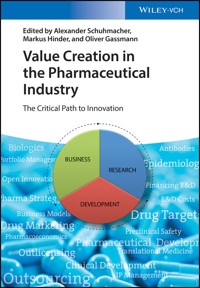
As depicted in Figure 1.1, this book addresses the critical path of value creation in the pharmaceutical industry from the view points of research, development, and business. The articles on epidemiology, antibodies, and drug discovery may be assigned best to the section on “research.” At the interface of “research” to the part of “development,” we provide the articles on preclinical safety, translational medicine (TM), and drug costs. The section on “development” is represented by the articles on pharmaceutical, clinical, and translational development. A more holistic view on pharmaceutical R&D with an interface to the topic “business” is provided by the texts on portfolio management, financing of R&D, open innovation, licensing, outsourcing, innovation models, leadership in R&D, and management of intellectual assets. The business part is represented by the articles on marketing, vaccines, and pharmacoeconomics.
Figure 1.1 The pharmaceutical innovation hemisphere.
We will start this introduction by describing in general how does the highly regulated and standardized R&D process in the pharmaceutical industry look like. The first step of pharmaceutical R&D is the identification and validation of a suitable drug target that, if up- or downregulated, activated, or inhibited, may play a role in a disease. Thus, an in-depth understanding of the disease and its molecular mechanism is key to search for new drug targets. In a next step, researchers search for lead compounds that potentially influence the drug target in the aforementioned way. If a lead compound is discovered, researchers optimize the potential of the compound to become a drug candidate. In preclinical development, it is analyzed as to whether this candidate can be used in the human situation, and it undergoes a series of preclinical testing primarily intended to understand how the compound works and as to whether it is safe in animal models. Next, safe drug candidate can be used for test series in the human situation. First and in view of the US market, an Investigational New Drug Application (IND) needs to be filed at the Food and Drug Administration (FDA). In the following years, several clinical trials are conducted to analyze the efficacy and safety profile of the drug candidate. Principally, the clinical trial process is conducted in three phases. In phase I, the drug candidate is tested in a small group of healthy volunteers to analyze its pharmacokinetic. Phase II trials are conducted to analyze the safety and the efficacy of the drug candidate in a selected group of patients that have the disease under investigation. In the phase III trials, the drug candidate is tested in large groups of patients to provide statically well-founded data on the efficacy and safety of the drug and the overall risk–benefit ratio. Finally, a new drug application (NDA) is filed to get market approval for the new drug. The FDA reviews all data and assesses the benefit versus the risk of the drug candidate and decides as to whether an approval can be granted.
Today, this R&D process lasts on average for about one to two decades and is related with a very low probability of success (PoS) from discovering a new drug candidate to its launch to the first market. The complexity of drug R&D combined with the increasing permeation by technology, the costs related with failed drugs, and the capitalization of costs over the long timelines are the main drivers of the enormous high costs that need to be invested per new molecular entity (NME). Today, the average costs per NME are probably above USD 2 billion (Figure 1.2).
Figure 1.2 The traditional R&D phase model; IND (Investigational New Drug), NDA (New Drug Application), FDA (Food and Drug Administration), PTRS (probability of technical and regulatory success), WIP (work in progress), USD (U.S. Dollar), data derived from Paul S. et al. (2010)
With a total of 22 chapters, this book reviews the whole value chain of pharmaceutical R&D from drug discovery to marketing of a new drug. In detail, this book starts with three chapters that set the stage for the pharmaceutical industry, namely, epidemiology, healthcare needs, and a definition of value in the pharmaceutical business and the shrinking R&D efficiency.
First, Stephan Luther provides an overview and introduction on “Global Epidemiological Developments.” He reviews the basic models which describe the burden of disease in different geographical areas and under different socioeconomic and climate conditions. Based on these factors, he reviews the healthcare needs for specific areas and provides an outlook on likely future developments worldwide. The chapter explains why on a global scale, there is a shift from communicable disease to noncommunicable disease and why in addition to mortality the disability-adjusted life years (DALYs) will become a prominent estimate for the overall global burden of disease.
The chapter by Sam Salek and Paul Kamudoni on “The Value of Pharmaceutical Innovation: Concepts and Assessment” introduces the reader to the different concepts of value and its assessment. Importantly the authors describe value from different perspectives of the multiple stakeholders in the healthcare sector and how the concept of value has evolved over time. They review on how value is assessed today and describe the consequences for pharmaceutical R&D. Based on recent developments, they provide an outlook how the pharmaceutical industry and regulatory agencies decision makers in the healthcare sector can work together in a more unified and transparent way to improve outcomes for the patients and the healthcare systems.
In the following chapter (“A Review of the Pharmaceutical R&D Efficiency: Costs, Timelines, and Probabilities”), we review the efficiency of the current R&D, namely, the R&D costs, the cycle times, the PoS of pharmaceutical R&D, and the number of NMEs that have been launched in past years. Alexander Schuhmacher, Oliver Gassmann, and Markus Hinder describe the traditional R&D phase model, highlight the reasons of the low success rates, and answer the question of why pharmaceutical R&D takes so long. We also detail the drivers of the enormous R&D costs and summarize our research on the question of how much does an NME cost today. Finally, further impact factors on R&D efficiency are discussed.
It is realistic to say that today more than USD 2 billion is required to bring one NME to the market, in a process that takes one to two decades. Accordingly, and as provided by the chapter of Sviataslau Sivagrakau (“Financing Pharmaceutical Innovation”), drug development is concentrated almost exclusively in advanced economies. The United States is the global leader with market share of 60% in scientifically novel new drugs. Globally, two-thirds of the investments in biomedical R&D come from the industry, whereas one-third are publicly funded. Since the 1980s, multinational pharmaceutical companies lost their dominance in providing NME. Whereas in the 1980s the big players originated three quarters of all NMEs, they have lost today's majority market share to smaller companies. In light of this, the financing landscape has become more fragmented and includes venture capital, university funds, public and charity grants, alliances, private–public partnerships, corporate and state venture capital, acquisitions by larger firms, and initial public offerings for companies with late-stage compounds. The last 5 years exhibited very favorable market conditions for exchange-listed drug developers: high valuations and strong industry-level performance. On the other hand, funding at early stages, particularly translational phase, remains scarce.
The next seven book chapters focus more specifically on the R&D process and the related potential of value creation in the phases of drug discovery and preclinical and clinical development.
In “Challenges and Options for Drug Discovery,” Werner Kramer analyzes the different approaches taken in research–discovery and compares historical promises and delivery in these disciplines. He identifies the key obstacles, which need to be overcome to provide sustained success in the discovery space. He proposes and describes a new model, which unites scientific scrutiny, decisions based on understanding of human and molecular physiology. This includes the weighing of target-related safety and efficacy and the stringent application of decision trees in the assessment of projects. The chapter is especially valuable because the author does not forget to build the bridge to neighboring discipline TM.
The transition of a new molecule from animals to humans is a key event in the development of a new medicine. On the one hand, this is important to ensure adequate clinical safety for study participants. On the other hand, TM up to clinical proof of concept can offer precious information on a molecule's mode of action, pharmacokinetics (PKs), and pharmacodynamics (PDs) and its therapeutic potential. Gezim Lahu and John Darbyshire review in “Translational Medicine: Enabling the Proof of Concepts” the overall process and show the benefit of established and emerging tools and skills to enable informed and better decision making. By embedding TM into the bigger context between drug discovery and development, they provide a perspective of how TM can become a value driver in both directions.
In their chapter “Preclinical Safety and Risk Assessment,” Paul Germann and Rob Caldwell review the state of the art in preclinical safety assessment. The authors give an overview of today's preclinical test strategies to support drug candidate testing in the early phases of drug development. They also provide an overview on the general components that are required for regulatory acceptable preclinical data package. Furthermore, the authors give information on the interaction of therapeutic use, route of application, treatment duration, and therapeutic indication and its influence on the safety assessment and the determination of the therapeutic window.
In the next book chapter on pharmaceutical development, it is described that more and more biological molecules (peptides, proteins, monoclonal antibodies (mAbs)) in not only oncological indications but also general medicine indications (e.g., diabetes, rheumatoid arthritis, or psoriasis) are reaching the market today and more will follow in the future. Thus, Galina Hesse's chapter (“Developing Commercial Solutions for Therapeutic Proteins”) describes the challenges associated with this switch from low-molecular-weight orally available molecules to parenterals. The chapter describes all key steps of pharmaceutical development from formulation over devices and quality design to ensure a successful and target product profile-driven formulation development.
Clinical development's remit is under full transformation, from a discipline whose primary deliverable was drug approval to an area of expertise where new and neglected aspects of the right use of medications come together. Markus Hinder and Alexander Schuhmacher review in “The Evolution of Clinical Development: From Technical Success to Clinical Value Creation” how the road to technical success has continued and will continue to evolve and which new aspects need to be integrated during the process of clinical development to finally provide a drug which benefits the individual and society. The chapter highlights and provides concrete examples how this process will become more patient-centric, successful, and efficient by integrating knowledge early on the different customer's needs in the field.
Finally and in a more holistic way, Nigel McCracken describes the role of “Translational Development” within today's pharmaceutical business to help translate basic research into clinical utility. He also outlines the multidisciplinary tools and the highly collaborative approaches that are used to deliver a specific development solution designed to maximize the risk–benefit ratio of a new drug. Therefore, he answers the following questions: what is translational development, and where does it fit into the drug development process? What are the main types of activities where translational development provides a value for the development of a new drug?
In a next step to examine the critical path of value creation in the pharmaceutical industry, the book focuses more on business-related aspects of pharmaceutical R&D.
In a book chapter with the title “40 Years of Innovation in Biopharmaceuticals: Will the Next 40 Years Be as Revolutionary?,” Mathias Schmidt and colleagues present that the invention of recombinant DNA technology and the ability to generate mAbs have revolutionized the pharmaceutical industry and the way serious diseases are treated. The chapter will review milestones and innovations along the success path of mAbs and other biologics and will critically challenge successes and setbacks. They also introduce the next wave of innovation for mAbs that is focusing on miniaturized antibodies, novel binding scaffolds, bispecific antibodies, oral availability, antibody–drug conjugates, permeation of the blood–brain barrier, and targeting of biologics to the cytoplasm.
Pierre Morgon's first chapter in this book (“Vaccines: Where Inertia, Innovation, and Revolution Create Value, Simultaneously and Quietly”) provides an overview on the space and role of vaccines within the healthcare sector, the emergence of novel immunization approaches, the drivers of immunization, and its fast growth as a product segment. In addition, we will analyze why innovation is needed along the whole value chain of the vaccine business and who will be a player that might drive this business in the future.
In his second book chapter (“The Patient-Centric Pharma Company: Evolution, Reboot, or Revolution?”), Pierre Morgon provides new trends that are affecting the players in the healthcare sector and that are driving the increasing focus on real-life patient data in the course of the process of clinical development. And we will illustrate why patient satisfaction should be the ultimate performance indicator of healthcare procurement.
Subsequently, the authors of the Chapters 15–21 address the more management-related topics that impact the value-creation potential of pharmaceutical R&D. Chapters 15–19 review the impact of open innovation, outsourcing, out-licensing, new business models, and leadership styles on the efficiency and productivity of pharmaceutical R&D and illustrate the newest trends in these fields. Chapters 20 and 21 describe portfolio management and the management of intellectual property (IP) rights as key success factors.
With the book chapter on open innovation (“The Pharmaceutical Industry Is Opening Its R&D Boundaries”), we provide a sound basis to understand the complex of open innovation. It begins with a comparison of closed versus open innovation and an insight into the open innovation process. Alexander Schuhmacher and Ulrich Betz offer an overview of the more traditional elements of open innovation in the pharmaceutical industry, such as target scouting, research collaborations, drug licensing, outsourcing, and joint ventures. In addition, they provide examples of new open innovation initiatives in the pharmaceutical business, for example, new frontier sciences, drug discovery alliances, private–public partnerships, innovation incubators, virtual R&D, crowdsourcing, open-source innovation, innovation camps, and fluctuating open teams. Finally, the role of open innovation in new R&D business models is examined, and the open and virtual innovation model “knowledge leverager” is explained in detail.
While in-licensing is a key source of new drug development, out-licensing does not play a central role in pharmaceutical companies' R&D strategies yet. Oliver Gassmann and colleagues describe in their book chapter “Out-Licensing in Pharmaceutical Research and Development” how out-licensing can contribute to an increase in R&D efficiency. Therefore, the authors address the following questions: What is the relevance of R&D collaborations in the pharmaceutical industry? What are the drivers of out-licensing? And how is out-licensing managed in R&D organizations?
Outsourcing has originally been established as an off-the-shelf service in the pharmaceutical industry decades ago to reduce R&D costs and to increase R&D flexibility. Antal K. Hajos (“Trends and Innovations in Pharmaceutical R&D Outsourcing”) describes the fundamental changes in the clinical research organization (CRO) industry that have happened in the past years and the development of outsourcing as a strategic partnership option. In addition, he illustrates how the CRO industry has started to become more differentiated into global players, specialist, and niche providers.
Next, the book chapter on “New Innovation Models in Pharmaceutical R&D” illustrates the consequences and measures that have been taken in the past years as a result of the historically low success rates in R&D. We outline the development in pipeline sizes of multinational pharmaceutical companies as we illustrate the R&D investments and the measures that have been taken in the past years to reduce the R&D costs. Finally, Alexander Schuhmacher, Markus Hinder, and Oliver Gassmann discuss and review some R&D models that were developed to increase R&D efficiency.
In his book chapter on “The Influence of Leadership Paradigm and Styles on Pharmaceutical Innovation,” Aubyn Howard sets the topic of innovation within the context of leadership. He shows how both collective leadership paradigms and individual leadership styles influence the process of innovation in the pharmaceutical industry. Furthermore, he shows how the challenges that the industry is facing are contextualized within a wider process of transformation and evolution within organizations and society today. Finally, we are providing information of how leadership paradigms and styles can impact the capacity of pharmaceutical companies to enable innovation.
With Chapters 20 and 21, the authors complete our view on pharmaceutical R&D by providing their insights on both portfolio and IP management in today's pharmaceutical world.
As it is becoming more and more expensive and risky to develop an NCE (New Chemical Entity), pharmaceutical companies need to make sure that their portfolio of drug candidates is well balanced financially and risk-wise. According to the authors Joachim Greuel and Axel Wiest, a primary goal of portfolio management is to ensure that an entire R&D portfolio is successful while allowing individual projects to fail. With their book chapter “The Role of Modern Portfolio Management in the Pharmaceutical Industry,” they describe that since H. M. Markowitz was awarded the Nobel Memorial Prize in Economic Sciences in 1990 for his pioneering work in modern portfolio theory, portfolio management has been a main pillar in asset allocation and financial investment. However, the benefit of portfolio management for the pharmaceutical industry is still controversial. Although most larger pharmaceutical companies report to have implemented portfolio management processes, some question whether a portfolio management system leads to a higher R&D productivity. The authors put a hypothesis forward suggesting that pharmaceutical portfolio management is not only important to allocate resources and optimize project management from a strategic perspective. It may be seen as a crucial enabling element in the entire pharmaceutical innovation process.
Finally, the purpose of the book chapter “Patent Management Through the innovation Lifecycle” is to provide an overview of the role of patents in today's pharmaceutical business. The authors Martin Bader and Oliver Gassmann provide best practice examples of the pharmaceutical industry and outline how patent management is done in the environment of low R&D efficiency. Therefore, the authors answer the questions of what are the challenges that companies face when managing patents and how can patents be managed throughout the product life cycle.
Reference
Paul, S.M.
et al
. (2010)
Nat. Rev. Drug Discovery
,
9
, 203–214.
Chapter 2Global Epidemiological Developments
Stephan Luther and Peter Schmitz
2.1 Introduction
The purpose of this chapter is to provide an overview of the changing patterns of diseases in the world. The reader will learn how the global burden of disease (GBD) can be quantified, how it is distributed in the different regions of the world, and what changes can be expected in the future. Moreover the underlying causes for the observed patterns and the special characteristics of selected diseases will be reviewed.
The structure of disease burden in populations is the result of diverse factors, including cultural, social, economic, and environmental aspects. Health geography analyzes medical questions by application of geographical methods and combines the mentioned aspects and various determinants under a spatial perspective to develop a holistic understanding of health and diseases. This understanding is essential to anticipate future developments and needs on a global scale.
The following questions will be explored in this chapter:
What are the underlying mechanisms (causes and drivers) of disease patterns and dynamics of epidemiology in populations?
How can the burden and structure of diseases in a population be quantified?
What are neglected diseases, and where can one find them?
What is the status of infectious diseases in the world?
Why is antimicrobial resistance a global problem?
Does climate change have an impact on health and diseases?
What are the challenges derived from epidemiological transition?




