


Erhalten Sie Zugang zu diesem und mehr als 300000 Büchern ab EUR 5,99 monatlich.
- Herausgeber: Cinnamon Press
- Kategorie: Gesellschafts- und Liebesromane
- Sprache: Englisch
For Eleanor Barton, fleeing from the bombs of the Birmingham Blitz during World War II changes her life. On the Isles of Scilly, she negotiates a teaching contract, her own sexual awakening, and a decision about her future that will have repercussions for decades. Her course is set when she sails from the UK on the Queen Mary as one of thousands of GI brides. But the path she has chosen will not be an easy one. Struggling with issues of infidelity, gas-lighting, her 'outsider's' experience of racial apartheid in 1950s America and living within the bounds of Catholic teaching on contraception and marriage, Eleanor faces an uncertain future. But she persists, bolstered by her love for her daughter, Sadie. Spanning the 1940s to 1980s, Eleanor faces a stream of new challenges—not least the struggle to overturn the Decree of Nullity granted to her American husband by the Catholic Church, and her waning health. But a return visit to Scilly brings her life full circle and demonstrates the endurance of deep love. Exquisitely realised characters and a powerful story unite in Waiting for the All Clear, L.B. Gray's debut novel, to immerse readers in the ageless questions of what it means to make a good life and what are the boundaries that must be defended if we are to remain true to our own stories.
Sie lesen das E-Book in den Legimi-Apps auf:
Seitenzahl: 559
Veröffentlichungsjahr: 2023
Das E-Book (TTS) können Sie hören im Abo „Legimi Premium” in Legimi-Apps auf:
Ähnliche




















Contents
Title Page
Copyright
Half Title
Part One: Don’t Promise Her Anything
Birmingham, England
Out of the Shelter
Breaking Point
Westholme, Wiltshire
Ray
Gone with the Wind
Eleanor Alone
The Normandy Landings
Part Two: Moving Forward
Destination Carn Friar’s School
En Route to Scilly
St. Mary’s
First Days at Carn Friar’s School
The Letter
The Decision
St. Mary’s: Settling In
St. Mary’s Christmas
To St Martin’s
Return of the Raids?
Return to St. Mary’s
Breaking the Silence
Trying to make sense of it all
Picnic at Lower Moors
Caught Between
All Clear?
Preparations
Visit to St. Mary’s
Leave or Stay?
Calmer Waters
Swimming Lesson
Hard Choices
No Turning Back
The Rain of Ruin
Time to Go
Part Three: Back on the Mainland
Married
Honeymoon
Marking Time
Part Four: Leaving and Arriving
This is it
Tidworth Camp, Salisbury Plain
At Sea
New York
The ‘GI Brides’ Special’
Part Five: Together Again
Rolling Stone Farm
Spring Thaw
A Turn for the Worse
Pregnant
Hibernation
Warning Signs
Into Spring
Chill in the Air
Into the Deep Freeze
Dreams
Part Six: Heading South
Winter
A Kind of Harvest?
Trying Hard
Clean Break, Fresh Start
Trying, and Settling
The Diagnosis
Part Seven: Tabu
Judith
Who is Eleanor?
Disintegration
Thanksgiving
Making the News
Treading Water
Back to School
Shocking
Part Eight: Renewal—1968–1972
Back to the Farm
Suspended
Irretrievable Breakdown
New Chapter?
Taken Apart
A New Year
Celebrity at Last
Just a Bit of a Blip
Part Nine: Under Attack
Fighting Back
Anthony: A Turn for the Better
Returning Fire
Inquisition
Peace on Earth
Part Ten: Return to Scilly
To St. Mary’s
Looking for Harvey
Another St. Mary’s Christmas
Another Decision
Stretching Time
St. Martin’s
Back to the USA
Leaving Sadie
March 1984
Letters I
Letters II
Sounding the All Clear
Acknowledgements
Further Reading
About the Author
Waiting for the All Clear
L B Gray
Published by Leaf by Leaf an imprint of Cinnamon Press,
Office 49019, PO Box 15113, Birmingham, B2 2NJ
www.cinnamonpress.com
The right of L.B. Gray to be identified as author of this work has been asserted by her in accordance with the Copyright, Designs and Patent Act, 1988. © 2023, L.B. Gray.
Print Edition ISBN 978-1-78864-955-1
Ebook Edition ISBN 978-1-78864-958-2
British Library Cataloguing in Publication Data. A CIP record for this book can be obtained from the British Library.
All rights reserved. No part of this publication may be reproduced, stored in a retrieval system, or in any form or by any means, electronic, mechanical, photocopying, recording or otherwise without the prior written permission of the publishers. This book may not be lent, hired out, resold or otherwise disposed of by way of trade in any form of binding or cover other than that in which it is published, without the prior consent of the publishers.
Designed and typeset by Cinnamon Press.
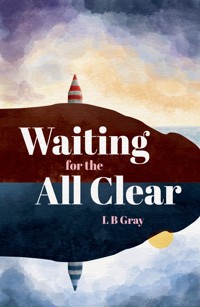
Cover design ‘Daymark on St. Martin’s, Isles of Scilly’, by Adam Craig © Adam Craig.
Cinnamon Press is represented by Inpress.
The story and characters in this novel are fictitious. Whilst research has been undertaken and certain institutions, agencies, and public offices are mentioned, the characters and events are the work of the author’s imagination and any resemblance to actual persons, living or dead, or actual events is purely coincidental..
Waiting for the All Clear
Part One:
Don’t Promise Her Anything
Birmingham, England
June 1943
Eleanor Barton peered through the cracked window at rows of empty shelves. ‘M. Masterson, Purveyor of Fine Fruit and Vegetables.’ The gilt letters above the window spoke of better times. She shaded her eyes as she searched in vain for fine produce. A day’s teaching in the shadow of war had taken its toll. Her head and feet ached. She imagined how dishevelled she looked, with the morning’s carefully placed hairpins probably scattered on the schoolroom floor, lost as she’d separated two scrapping six-year-olds.
She spotted a basket of slightly wrinkled apples and gazed at the fruit. Her mouth watered as she imagined the crunch and sharp taste. Only four other women ahead of her, waiting to be served. She gazed around, tracking every move made by anyone in the queue, any attempt to push in.
A woman gave her a sour look. ‘Don’t get your knickers in a twist, Missy, I’m too tired to fight you for them.’
Embarrassed, Eleanor looked at the speaker. ‘Sorry,’ she muttered, ‘I didn’t mean to…’
‘Oh yes, you did,’ came the reply. ‘We’re all like bloody wild animals now.’
Lost for a response, Eleanor faced forward, her craving quelled, ashamed of her readiness to do battle. For an apple.
As she debated relinquishing the apples, the air raid siren wailed. Thoughts of fruit vanished as she was trapped by the scurrying crowd heading for Smith Street public shelter. She couldn’t even lift her arms as bodies stampeded around her. She was drowning, caught in a torrent, about to go under, unable to breathe. In her panic, she turned and fought to get back to her lodgings, away from the suffocating crowd. All she managed was to incur the wrath of frenzied citizens.
‘Get down the shelter, Miss, you trying to get us all killed?’ A woman shrieked.
‘Move it, the shelter’s this way, where d’you think you’re going?’ This last speaker grabbed at her shoulder but missed and caught hold of her loosened hair. He dragged her roughly in the opposite direction.
Helpless now, her feet almost leaving the ground, Eleanor could only try to keep up, to avoid being trampled by the human tide surging down the street. She scrabbled at the hand gripping her hair and felt pain as her neck twisted. She broke free and ran for her life with the crowd. Just as she reached the shelter, the first bombs dropped, close, with a terrifying crash. She was blown straight through the entrance, landing on her hands and knees at the bottom of the steps.
Eleanor didn’t stop to assess her injuries. Must find a space against the wall, away from people, mustn’t be trapped… Panic drove her to push past looming bodies until, with relief, she sank against a wall. She looked out towards the mass of families staking claims to larger spaces. Then, as if a switch was thrown, the shouting and screaming stopped. The noise was replaced by an eerie quiet as the dim yellow lights on the wet stone walls picked out pale faces, etched with fear, waiting for the next bomb to fall.
Time to take stock. Eleanor was still clutching her battered handbag. To her surprise, given the frantic crush, her string shopping bag containing her purse was still wrapped around her arm. The rough handle had scraped the skin on her forearm, which, with cuts on her hands and knees, was the extent of the damage. She wiped her wounds with a handkerchief and settled back. She felt a kind of calm creep over her, allowing her to examine her surroundings, to accustom herself to the sights, smells and sounds of the shelter.
Most of the others taking refuge were families with children. In the half light, Eleanor picked out several children who attended the school where she worked. Despite the government’s efforts, many families chose not to have their children evacuated to homes in the country. As a result, Eleanor knew that the number of pupils in the school was not much below pre-war levels. In many ways, she didn’t blame the families. She’d seen the terse instructions sent out by the Ministry:
1. Children should come to school at 6am
2. Each child evacuating should bring their respirator, a change of clothes, night attire and food for two days
3. Children will be taken from school to trains, and thence to their destination, which will be unknown for security purposes
4. They will be met by host parents who have generously opened their homes to evacuees, where they will be safe and well cared-for
Eleanor heard rumours of problems arising from the evacuation scheme, and although some children had settled, a good number had returned, unable to cope with the separation.
She watched as women tried to soothe and distract the children with fruit drinks and biscuits from the ‘shelter bags’, always ready by many back doors. She observed the constant movement to the two lavatories serving the entire shelter and tried to block out the smell of human waste overlaid with disinfectant. As she settled herself, wishing she had remembered to put a book in her bag to pass the time, Eleanor noticed a group of about ten children ushered into a small annex by two women in identical serge suits. She couldn’t quite make out the logo on their shoulders, but they appeared to be from a charitable organisation.
Unwilling to risk losing her place, she craned her neck and could just see into the room. She watched as the children were seated at wooden tables by the uniformed women, she heard the children call them ‘Miss Rhoda’ and ‘Miss Audrey’. Paints and copybooks were laid out, two children made puppets, two more used cardboard to create a model village.
Eleanor couldn’t resist. Leaving her cardigan spread on the ground as a feeble barrier against invaders, she slipped into the room and spoke to the woman the children called Miss Rhoda, who looked up with a tight smile. Not sure she’s welcoming the interruption, thought Eleanor. Reassurance needed. Charm.
‘Excuse me, I just had to speak to you, I teach some of these children and I’m simply amazed at what you are doing in these difficult surroundings.’ Miss Rhoda’s lips became noticeably less pursed. Eleanor pressed on. ‘So, is this a sort of play centre?’
Miss Rhoda now favoured Eleanor with a full smile. ‘That’s it exactly, my dear. We are from the Save the Children Fund, and we try to make these children feel secure, take their minds off what’s’—she pointed skywards—‘up there.’
Eleanor did not have to pretend to be impressed as she observed the activities. ‘What an excellent idea. I wonder, do the play sessions give them a chance to talk about their fears as well as enjoying themselves? They seem to clam up when we try to talk to them at school.’
Miss Rhoda looked thoughtful. ‘Well, I suppose so, we certainly don’t discourage talk of the war if they seem to want to. Or more often it comes out in their drawing.’ She looked around the room, then beckoned Eleanor to the end of a table. A boy of about six, tongue protruding from his lips, painted with intense concentration. He had produced a stick figure family, gathered around a rock, on which the boy had drawn crude eyes, nose, and a down-turned mouth. Crooked letters at the top proclaimed: ‘MY FAMILY BY WILLAM’.
Eleanor looked at the painting, then the child. ‘William, could you tell me about your painting?’
The boy seemed happy to oblige. He pointed to the tallest figure. ‘Well, Miss, there’s my Mam.’ He then indicated two smaller figures. ‘That’s my sisters, Maisie and Beth, they’re twins.’ The final figure, standing next to Mam, was identified. ‘There’s me, I’m the youngest, but Mam says I’m the man of the family now.’ He pointed to the rock-shaped object. ‘And there’s Dad, I heard them say there were just bits of him, so I drew one o’ the bits. See, he’s sad because he can’t be with us.’ He turned to the two women with a half-smile, looking uncertain.
Eleanor felt her stomach contract. Her voice was soft. ‘Thank you, William.’ Miss Rhoda led her away. William got on with his painting.
As she returned to the main room, Eleanor saw that two women had encroached on both sides of her hard-won place. However, she was able to squeeze into the space left, gratefully accepting a biscuit from one and a hot drink from the other. She forced herself to nibble the biscuit. Her appetite and strength were deserting her.
Scraps of conversation reached her as she tried to relax: ‘…only recognised me missus by one of her boots…she used to read bits of the paper to me every evening. Can’t read, meself…’
‘…my cousin’s still under there. They got his little Benji out, dog was in one of them Frank-Heaton kennels. Y’know, like a rubbish bin tipped on its side…’
‘…lost my son. We had a funeral but no idea what was in the coffin…’
Finally, Eleanor slept fitfully against the rough wall, troubled by images of William’s father. And the voice of the last speaker she heard as she drifted off: ‘…oh well, life’s a short business, so it is…’
Out of the Shelter
June 1943
Broken glass and rubble crunched underfoot as Eleanor hurried back from the shelter in the warm early summer morning. Going to be late, must clean myself up first. Around her, buildings were sliced open from top to bottom. They looked like giant dolls’ houses, some furniture in place, exposed to the air, and some scattered on the ground. She put her hand to her face, a futile attempt to block the acrid smoke. Her foot brushed a clump of dusty hair strewn above the rubble, was the owner buried beneath?
Wardens nearby dug frantically. ‘Stay away, Miss, we might have someone under here.’
‘Sorry, sorry. Didn’t see…’ She stumbled away. Looking over her shoulder, she imagined she saw the children following, running to get to the shelter. She tried to tell them: ‘Go back, go home, it’s that way, what are you doing, following me?’ The children, looking ahead, ignored her, rushed on.
And then an explosion ripped through the taut fabric of the day, scattering the searchers. The children vanished. Stunned, Eleanor fell into a broken armchair.
Someone was pulling her arm and she fought back. An urgent voice said, ‘Come on Miss, it’s not safe, Jerry left a few behind and another one might go off any minute.’
Eleanor staggered back to her lodgings. Disorientated, she slumped onto her bed, trying to gather her thoughts. Despite the summer heat, she shook with cold and shock. Crawling under the bedcovers, she waited for the tremors to subside.
Eleanor could not have said how much time passed as she lay curled in a ball. Slowly, she pushed herself up and opened the wardrobe. She pulled the nearest blouse and skirt off their hangers, then found that her fingers were shaking too much to fasten the buttons. A jumper covered the gaps. Looking in the mirror as she tried to drag a comb through her hair, she thought she’d aged ten years. There was food in the pantry, but she wasn’t hungry. And the children were waiting.
Breaking Point
June 1943
She felt better after walking to the school. As she opened the door to her classroom, the Headmistress stopped her.
‘Miss Barton, a word if you don’t mind.’
Eleanor gestured towards the door. ‘But, Miss Thomas, the children…’
‘Don’t worry.’ Miss Thomas smiled. ‘I’ve asked the Caretaker to keep an eye on them. They love his stories of the good old days.’ She led the way into her study, closing the door behind her. ‘Please, sit down.’ She indicated a chair and seated herself on the other side of her desk.
Eleanor was really worried now. I haven’t been late that often. It’s my first real job, I can’t get the sack. She kept silent and braced herself.
Miss Thomas took a deep breath. ‘First of all, let me say how pleased we are with the work you are doing. You are a gifted young teacher with a bright future ahead of you. The children respond so well to you.’ Eleanor was far from reassured. A ‘but’ was coming, she was sure of it.
The Headmistress continued. ‘However, I have a duty to look after my staff as well as the children, and anyone can tell that you are ill.’
Eleanor opened her mouth. But Miss Thomas ploughed on.
‘You’ve lost weight, you are as pale as a ghost, and worst of all, you seem distracted and anxious most of the time. And that worries me greatly.’
Finally, Eleanor managed to speak. ‘But Miss Thomas, everyone’s been affected by the raids, the bombs, the war. I’ve hardly suffered at all compared to those who’ve lost loved ones, their homes.’ She raised her head and saw a look of compassion on the usually stern face of the Headmistress.
‘That’s perfectly true, my dear. But I am recommending… in fact, I am insisting that you take a break. There are those I wish I could have saved…’ She broke off, turning her head to look out the window.
Eleanor waited, distracted from her own distress. How little we know of the people we see every day, she thought.
Miss Thomas gathered herself. ‘You are the future, Miss Barton. You will be making a difference to children’s lives long after I’m gone, and I am quite determined that you will survive to do that.’
Eleanor’s control slipped in the face of the Head’s kindness. She put her elbow on the edge of the desk, head in hand, and leaked tears onto the scratched oak surface. After a minute, a cotton handkerchief appeared under her arm. Slowly she became quiet, blew her nose, and was ready to listen.
A look of what might have been relief passed over Miss Thomas’s face. ‘Now, am I right that you have family in the country?’
Eleanor nodded. ‘My parents live in a village. But…’ Seeing a quizzical brow raised, she explained. ‘They advised against taking this post, but I didn’t listen. I wanted the experience of teaching in a big city, teaching children who perhaps didn’t have the advantages that country children do.’
‘And a very good job you’ve made of it too,’ said Miss Thomas. ‘You’ve adapted so well to our ways. The children will miss you, I know, but get yourself sorted and you might just be able to come back.’
With this carrot dangling in front of her, Eleanor weakened. ‘Well, I could contact my parents, see what they say.’
‘That’s the spirit. Show a bit of the courage you’ve shown in the bombing and face up to your own parents.’
That evening, Eleanor pushed a good supply of coins into the hall telephone at her lodgings. ‘Hello, Father, it’s me.’ Worried noises came at her from the receiver, and she hastened to add, ‘No, I’m all right. But I have a favour to ask.’
One week later, she was on her way south.
Westholme, Wiltshire
June 1943
At the end of the afternoon, Eleanor pushed open the gate to her parents’ garden, and sank gratefully into the nearest frayed deck chair. It was a hot walk from Marshfield School where she had now been teaching two weeks. She loosened the buttons on her high-necked dress to let the air through. She sighed. It hadn’t been a bad day. She’d only panicked once, lurching backwards and hitting her head on a shelf at the sound of a book dropping. She had managed to pull herself upright and walk on as a couple of the children passed by.
‘You all right, Miss?’
‘I’m fine, just knocked my head on the shelf there.’
The children lifted their gaze to the sharp corner. ‘Ooh, better be careful, Miss, mind you don’t knock yourself out.’ They rounded the corner, giggling.
Safe in the garden, Eleanor mulled over the episode and took a deep breath. Good effort, she told herself. They didn’t notice anything odd, I didn’t overreact, maybe I am getting better.
The early summer sun on her face, Eleanor still couldn’t believe how her life had changed. She could tell her parents, especially her undemonstrative Northern mother, were somewhat discomfited by her request to stay with them. Although they opened their village home to their damaged daughter without a murmur, she could not escape a belief that she was an unexpected burden.
She recalled her mother’s tired voice when they spoke just before her return. ‘Of course, Eleanor, if you need a rest. I suppose we could clear your old room; I could find somewhere else for my sewing.’
Eleanor had sensed more than resignation in her mother’s words, possibly resentment at an intrusion. She was not having that. ‘Thank you for the offer, but I’ll be fine in the box room. It gets the afternoon sun, and I like the view over the garden.’ No argument from Mother. ‘And in any case, I may not be here for long, no point in creating upheaval for a short time.’
To begin, Father had offered work at Westholme Primary, where he was Headmaster. ‘Now then, Eleanor, I suppose we could use some help with the Infants,’ he began one day shortly after her arrival.
‘Very kind of you, Father.’ She tilted her head up with a slight smile. ‘Actually, I understand there’s a position at Marshfield School, it’s not far to walk and I’d like to give it a go.’
Like Mother, Father did not argue. Eleanor was pleased. She wanted to maintain some independence from her parents, at least during working hours. With so many men away fighting, she knew a well-trained schoolteacher was more than welcome. There was always the possibility the post could be a springboard back to Birmingham and away from dependency.
Eleanor continued to bask in the sunshine, satisfied with her decisions since returning. Inside the house a door slammed in the breeze. She did not move a muscle, allowing herself a small smile. Yes, indeed, I’m getting there. Would have jumped out of my skin a couple of weeks ago.
At work, however, she sometimes found it hard to reconcile her new situation with the fresh memories of Birmingham. When the other teachers complained about petrol rationing, endless mending of threadbare clothes, lack of decent fruit, and aching backs from digging veg, Eleanor kept quiet. Her colleagues could not understand her patience with the evacuees now at Marshfield School, children filled with anger and unable to concentrate.
‘Ungrateful little buggers, aren’t they?’ a teaching assistant muttered as Eleanor helped her sweep the debris resulting from a disrupted art lesson. Megan, the apparent cause of the mayhem, was seated on a high-backed chair in a corner of the room, sniffling. All that could be seen of her was brown hair frizzed away from two rough plaits. ‘I simply asked them to draw a house.’ She shook her head. ‘Next thing I knew, Megan covered her paper with orange paint, then ripped it to pieces when I asked her about it.’
Eleanor glanced at Megan’s heaving shoulders. Miss Rhoda’s voice came back to her from the shelter: Sometimes it seems that impersonal pictures take away personal horrors. And what we really hope is that if they can feel safe and happy, we can persuade them to try the country again.
Eleanor remembered her initial reaction. ‘Persuade’ them? Had these well-meaning people learned nothing from the repeated returns of some evacuees? And yet, she could understand the impulse of parents and welfare organisations to prioritise physical survival over the emotional security provided by family bonds.
As they finished sweeping the debris in the Marshfield classroom, Eleanor gathered a few pieces of the torn painting. ‘Mind if I have a word with Megan?’
The other woman shrugged. ‘Suit yourself, but I hope you’ll have more luck than I’ve had.’
Eleanor approached the child. ‘Megan, I saved some of your painting because I thought it was interesting.’ She waited, expecting another outburst.
Megan turned slowly, a wary expression on her blotched face. She took the vivid orange paper from Eleanor and smoothed it on her knees. She wiped her eyes with the back of her hand. ‘Miss told us to paint a house, an’ that’s it. My house.’ A fierce glare at Eleanor, as if daring her to comment. Eleanor simply nodded. Megan ducked her head and muttered. ‘It burnt.’ Another sniffle. ‘An’ now we can’t go back.’
Eleanor sighed and relaxed back in the garden chair, letting her mind drift from Megan’s distress. Although Eleanor was recovering, she still believed she had failed, should have been stronger, should not have abandoned the children. Now, she could at least offer understanding to the evacuees who, like her, had escaped the bombs but suffered in the aftermath.
Eleanor’s reflections were interrupted as Father came out of the house; pipe clamped in the side of his mouth. She was just about to kick off her sensible shoes and unhitch her lisle stockings. There were spots of high colour on Father’s otherwise pale cheeks.
’Don’t get too comfortable. Couple of American officers coming to tea. They gave a talk at the school today, went down rather well, so least we can do is feed them before they go back to base.’
He hurried back into the house before Eleanor could reply. But she wasn’t fooled. Mother’s health was bad, and she knew she and her sister Annie, probably upstairs with a magazine, had about an hour to scratch together a meal to do justice to the Americans.
Ray
Summer 1943
Extracting Annie from her magazine wasn’t difficult. The words ‘American officers’ had her shooting downstairs and into the kitchen.
As so often, she took charge. ‘Right then, Eleanor, better have the best china for the Yanks.’ With care, the sisters dug bone china cups and plates from the back of the sideboard.
Eleanor peered into the pantry. ‘There’s some of Father’s wholemeal loaf here, that’ll test their teeth.’ Squinting further into the cool semi-dark, she picked out a small paper-wrapped packet. ‘And what’s this I see? We can treat them to real butter, but we might have to use the marge for our bread.’
Annie passed Eleanor a battered saucepan and a bowl containing half a dozen eggs. ‘Got some eggs left from our share. I’d say Father’s ‘girls’ are doing him proud. Boil these up, while I get some tomatoes and strawberries from the garden.’
Thirty minutes of frantic activity later, they surveyed the table. Polished oak, gleaming china and cutlery, and a wholesome spread. The vivid reds of the tomatoes and strawberries made a pleasing contrast with the warm brown of the bread and pale hard-boiled eggs. It would do.
They scampered upstairs to change. Annie pulled two matching dresses from the back of their wardrobe. ‘Look, these will still fit. And it’ll be a laugh to confuse the Yanks, what do you think?’ She held up a flowery garment and twirled.
The twins no longer dressed identically, but these summer frocks from before the war were in good repair and would be just right for a tea party.
Eleanor wasn’t so sure. ‘Aren’t we a bit old for those sorts of games?’ But, seeing Annie’s disapproving look, and not wanting to be a spoilsport, she gave in. Dressed alike, they faced each other.
Sometimes people said, ‘It must be like looking in a mirror, being identical.’ But they were wrong. It was true they were both of medium height, with dark curly hair and wide-spaced pale blue eyes. They had inherited their father’s cool white complexion. The Barton nose, with its high ridge, stood out proudly from oval faces. Father, quite a sportsman in his youth, had also passed on his athletic, well-muscled frame to his children.
However, Eleanor knew that events in their lives had left marks that made them instantly distinguishable to those who were close. Like the lines across Eleanor’s forehead and between her eyes, in contrast to Annie’s smooth face. Or the protruding bones in Eleanor’s hands, while Annie’s were well-fleshed and smooth. And, Eleanor sometimes reminded herself with sisterly spite, the small bristly mole next to Annie’s nose.
Downstairs, Eleanor heard her parents answering the doorbell. The girls joined them and were introduced to 1st Lieutenant Ray Miller and his officer pal Mac Shilton, both in their best uniforms. Small talk cloaked Eleanor’s initial shyness while she studied Ray. He towered over her parents, carrying himself with strength and confidence. She supposed people would describe his features as ‘ordinary’: brown eyes behind round military-issue spectacles, hair Brylcreemed back to a peak in the middle above a sun-tanned forehead, a prominent nose, and thin lips. His voice was deep and resonant, turning chitchat to poetry in Eleanor’s ears. He took the lead after Father made the introductions. Mac stood back, the smaller and possibly shyer of the two men.
‘Pleased to meet you, Miss Barton. And, uh, Miss Barton.’ Ray smiled, seeming to see the funny side as he turned from one sister to the other.
Annie extended her hand. ‘I’m Annie, she’s Eleanor, and now you gentlemen will have to figure out how to tell us apart.’
Ray looked at them, rubbing his chin and furrowing his brow. He snapped his fingers. ‘Got it! Annie, I see you are wearing a bracelet, so as long as the two of you don’t swap jewellery, I guess we’ll be just fine.’
Eleanor was impressed with his confidence and easy banter with Annie, especially in front of her parents. Maybe this is what Americans are like, she mused. They just assume everyone is going to be as friendly and open as they are.
She decided it was time she spoke up and gestured to the dining room. ‘Won’t you come through. I imagine you are hungry after facing an interrogation from Father’s top class.’ She knew she hadn’t quite managed Annie’s breezy tone, but the men smiled and followed her to the table.
The sisters served tea, and Eleanor continued to observe the two soldiers. As she did, her heart sank. Even with the twins’ near-identical features, dresses, and hairstyles, both men looked mostly at Annie. Eleanor thought she knew why. Her sister chatted with ease and wit, whereas her mirror told her that months of tension had dimmed the sparkle in her own eyes.
Annie moved around the table, lifting dishes, laughing at jokes, and looking so comfortable. Whereas Eleanor struggled at times to concentrate on the conversation. Worst of all, when she brought a dish to the table, she imagined it shattering across the polished surface, blown apart by a bomb. Her hands shook and she was sure they noticed. Being soldiers, she imagined they sensed her inner wounds and preferred the bright sunny girl on a day to match.
Over the next days following the soldiers’ visit, Eleanor put the tea party, and what she perceived as her rejection by the Americans, behind her. The weather helped. Five days of chilly June rain made sunny times in the garden seem distant.
Friday afternoon and, after another sodden slog from Marshfield School, Eleanor curled up with a cup of tea. She was thankful that tea had been spared the scythe of total rationing, but the drink was not much enhanced by a tasteless sprinkle of powdered milk, all that was available. She had changed into an old pair of trousers and an itchy wool cardigan to ward off the chill. Father would be in soon, and Annie would be back from her clerical job at the Supply Depot. Then they’d have a fire. Mother didn’t hold with wasting coal on fewer than four people, no matter how cool and damp the summer evenings might be.
An hour later they were benefitting from the modest warmth generated by carefully selected lumps of coal. Father reached over and turned off the Home Service, in the middle of his favourite gardening programme.
He nodded at the twins. ‘Had an invitation today for you two. Those American officers want to take you to the pictures tomorrow. They seem all right, so what about it?’ The girls exchanged looks. Annie gleeful, Eleanor wary.
However, Eleanor overcame her uncertainty, remembering Ray’s kind face and warm, baritone voice. ‘I wouldn’t mind, we seem to spend the days working, and the evenings like this. It could be fun to get out for a change.’
‘Right,’ said Father, ‘I’ll get back to them.’
He switched the wireless back on. With relief, Eleanor suspected. He did his best but dealing with personal matters related to his daughters made him twitchy, and Mother tended to remain aloof. Eleanor was left wondering what on earth had possessed her to agree to yet another evening on the side lines. Although it might be worth it to hear Ray’s voice again, even if he was only telling stories of camp military life to amuse Annie.
The next evening the two men, preceded by a waft of pungent aftershave, arrived to collect the girls. On the bus into town, Ray sat with Annie and Mac settled beside Eleanor. Oh well, she thought, just enjoy the evening. And she did enjoy it. The film was No, No Nanette, a perfect escapist comedy. The nervous chatter of the bus ride into town was replaced by relaxed hilarity over chips and a shandy afterwards.
That first evening set the pattern for the coming weeks, the four of them enjoying themselves when they could. Eleanor noticed that Ray and Annie sometimes disappeared for a short while, and she had a good idea of what was going on. Ray did his best to remove the lipstick from his face but didn’t always make a clean job of it. She had hoped he might show a bit of interest in her, but she could understand that he was obviously drawn to her more vivacious sister. And after all, she could relax in Mac’s quiet, undemanding company.
Gone with the Wind
August 1943
One hot afternoon, Eleanor trudged back from town, tired and aching from queuing hours at the butcher’s shop. She knew that rationing of essential food meant more was available for the troops, but sometimes the shortage of meat and dairy produce was dispiriting. She didn’t think there was enough time left in the world to stew the gristly meat she was carrying home into some edible form for supper that night.
As she turned a corner, a jeep passed, then executed a smart U-turn in a cloud of dust and pulled up beside her. At the wheel was Ray.
‘Need a lift?’ Eleanor hesitated. She knew ‘frivolous’ use of petrol was universally frowned on, as was the sight of an English girl on her own with an American soldier. Especially in a jeep, with her hair blowing in the breeze, her presence visible to passers-by. He seemed to know what she was thinking. ‘Don’t worry, I’m on an errand for the Commanding Officer, and I don’t think the Army will object to the splash of gas it will take to go down your lane. In the interests of good relations with the community, of course.’ He smiled warmly, opened the passenger door, and the heavy bags and her aching shoulders did the rest of the persuading.
Eleanor always felt that it was from that moment that the two of them ‘clicked’. Annie had been called up to National Service. In the blink of an eye, it seemed, she was in Auxiliary Territorial Service uniform and on her way to Liverpool to help with refugee resettlement. Eleanor wasn’t proud of her thoughts after Annie left: I do miss her, but who knows what could happen with Ray now that I’m out of her shadow?
Mac’s main topic of conversation was his wonderful girl back home. When they occasionally met for coffee, Eleanor felt more like a sister, listening to the latest news of this paragon of womanhood. A bit boring, she confessed to herself, although she tried to be sympathetic.
Two days after the jeep ride, the telephone sounded in the hall, and Eleanor answered.
Her ‘Westholme 252’ was met by a brief silence, then, ‘Well, hello there, am I speaking to Miss Eleanor Barton?’
No mistaking the accent, or the melodious voice. She responded, hoping her tone was suitably light. ‘You are, and what can I do for you, Lieutenant Miller?’
‘Well, you can let me take you to the pictures again. This time, just the two of us, what do you think?’
‘I’d love to.’ Was her tone overly enthusiastic? ‘Although I’m not sure what’s playing.’
A chuckle at the other end of the line. ‘You’re quite right to be cautious, I wouldn’t want to take you to some third-rate garbage. Have you seen Gone with the Wind?’
‘No, but I’ve been wanting to see it for ages, ever since it came out over here.’ This was true, and she couldn’t keep the excitement out of her voice.
‘I was hoping you’d say that. Six o’clock bus into town, then? I’ll come by your house, and we can walk to the bus stop.’
Much later that evening, the lights faded on the screen. Eleanor sat glued to her seat, dazed by the spectacle she’d witnessed, tears drying on her cheeks.
Ray waved his hand in front of her face. ‘Hey there, anybody home? I know it was a pretty long movie, but are you still with me, sweetheart? You okay?’
Eleanor shook herself. ‘I’m a bit stunned. I’ve never seen anything quite like that.’ He stood and she took his outstretched hand, pulling herself up to join him. ‘I think I’d like to walk for a bit.’
Ray pulled her hand through the crook of his arm as they strolled out of the cinema into the soft dark. Ten o’clock at night, and the summer sky still had a glow. ‘So then, what’s up?’ he said. ‘I’m no mind reader, but I can see something about that movie really hit you.’
Eleanor sighed. ‘Well, it was a different time, a different war, but like them… one minute we were living a normal life, and then death, destruction, families torn apart…’ She stopped, and she looked up for any sign he was mystified, or even irritated, by what she was saying.
But he nodded and stared up into the night sky. ‘You are so right. Sometimes I wonder what happened to me. I used to be this happy guy, playing his music, and helping out on the farm. And how’s it all going to end up?’
‘That’s it, exactly, and the film showed how truly awful, how stupid and pointless, any war is. I thought about Melanie, and whether being loving and loyal is enough. It didn’t seem like it was, for her. Yet Scarlett, well, she was strong and wilful and didn’t give up. I’m not sure I could be like that. In fact, I know I’m not, because here I am, safe in the country. Not strong at all.’ She thought Ray looked slightly uncomfortable at these revelations. ‘Sorry, I don’t know what got me started, you must think I’m a bit feeble.’ He opened his mouth, but she didn’t give him a chance. Change the subject, Eleanor. ‘And another thing I couldn’t help wondering about.’
‘Yes?’ Ray drawled his response.
Eleanor hurried on. ‘The Civil War, like we’ve had in England in the past. The North and the South, all part of the same country.’ She lifted a puzzled face. ‘But I couldn’t understand, why were they fighting? What exactly were they fighting for?’
Ray stopped. ‘Funny, I’ve never thought too much about it, it was just The War Between the States.’ He frowned. ‘You know I grew up in the North, what they call Yankee land. In fact, Minnesota sent some of the first soldiers to fight against the South.’ Eleanor waited. She had a sense Ray was taking a new look at his own old history, and that the view was unsettling. They started to walk again. ‘I had some cousins used to visit from Georgia. They always wanted to play Yankees and Rebels, us kids all shooting at each other. I remember my uncle, he told us once he kept some Confederate money, said the South would rise again and he might need it.’
Eleanor still couldn’t understand. ‘So, if they were called Rebels, what were they rebelling against? Why were children still fighting it out, all those years later?’
Ray blew out his cheeks. Eleanor thought she might have pushed him too far. What she’d said about the story in the cinema seemed connected to something uncomfortable for him. ‘Well, far as I can tell, this is what it was about. The Southerners had big tobacco and cotton plantations. They got the best profit if they didn’t have to pay the workers and kept them from running away. Slavery, basically. The government wanted to make slavery illegal, on, y’know, moral grounds. That movie made being enslaved look kind of romantic, but basically it was men owning other men.’ He sighed. ‘Anyway, the South rebelled, they fought for the right to own the people they’d enslaved. My dad told me that’s what it was, no matter how anyone dresses it up. But my uncle from Georgia used to say it was some issue about the states’ rights.’ He shook his head. ‘I just don’t know, to tell the truth, too complicated for me.’
They walked on in silence. An old wooden bench emerged out of the gloom. Ray sat, then patted the seat next to him and leaned forward with his elbows on his knees. ‘I tell you, Miss Eleanor Barton, you are something special. I reckon we hardly know each other, I thought you were a bit shy, a bit prim and proper. But there’s more to you than meets the eye, and I want to spend a lot more time finding out about it.’ He sat up and put his arm around her. Slowly.
Eleanor leaned in towards him and smiled in the dark. ‘Fine with me,’ she said. ‘How about a picnic this weekend?’
Picnics, walks, tea with Eleanor’s parents and village hall socials filled the lazy days of August. Ray was able to get leave at least twice a week, and they spent every possible minute together. Superficial chat diminished in favour of something more relaxed. He intrigued her with stories of life on his parents’ farm.
‘Got a letter from my dad today.’ Ray pulled an envelope from his pocket as he and Eleanor sat on a windy hillside trying to keep the flies off their sandwiches. ‘Typical Pop, it’s all about the animals. Big news is, they’re finally getting electricity to the farm so they can run a freezer for the sperm from their new bull. Pop’s really excited about it, I can tell.’
Eleanor couldn’t hold back a laugh. ‘Well, I’ve picked up quite a bit from the farmers’ children at the school, but I can’t imagine insemination ever being the main topic in a letter from my father. Your dad sounds like a pretty straight-talking chap.’
‘Oh, yes, and he likes to think he’s Mr. Modern Farmer. But the real funny thing is, he still won’t have a phone put in, I guess I’m going to have to persuade him when I get back.’
The two of them rocked back onto the blanket, laughing. Ray kissed the tip of her nose.
‘Now that’s what I like to see, no more shadows on your face from whatever went on up in Birmingham.’
Eleanor stopped laughing and pushed herself up on her elbow. ‘Ray, I feel like I ought to tell you about that, maybe I should talk about it.’
This time, he kissed her lips and silenced her. ‘Honey, we don’t need to talk about bombs and war when we’re together. You need to put all that out of your mind, you’ll just drive yourself nuts.’ He pulled her up. ‘Now let’s climb to the top of this fine hill, work off some of that food we just ate.’
Eleanor sighed. It was true, she wasn’t as jumpy as she had been, and slept better and laughed more. Maybe Ray was right. She should put the nightmare of Birmingham behind her and live in the present. They climbed the hill together. She got to the top first.
Then, in September, just as they realised that what they felt for each other was more than close friendship, the news came that Ray was being posted to France.
A shock, but it shouldn’t have been. Ray’s job in the Army involved organising transport of essential supplies to frontline troops, and Eleanor had always expected that this could happen. But it was a shock that catapulted them out of their sedate courtship into something more urgent. The three weeks between Ray’s notice of posting and his departure passed in a haze. In different ways, each of their lives had given them little experience of sudden passion and desperate decisions. Especially ones reaching across distance, culture, and background.
The night before he left, Ray suggested a stroll. Dusk was falling; the air in the garden was damp. He put his arm around her shoulders, catching his watchband in her cloud of dark, curly hair.
Eleanor winced and pulled away. ‘Ow—careful, Ray!’ She rubbed her head, and a few strands of hair came away in her hand.
Ray seemed distraught. ‘Oh, my Lord, now look what I’ve done. Sorry, sweetheart, I’ve got a lot on my mind.’
Eleanor’s heart was thumping. Of course, he’s about to go into a war zone, no wonder he’s distracted. But could there be another reason? Something he wants to ask me?
However, the words that came weren’t what she had expected. ‘Sweetheart, the Army tells us to concentrate on the job of getting rid of Hitler and not to promise anything, especially to foreign girls.’ Startled, and a little offended, Eleanor gave him a quizzical look. He seemed to realise he’d got off to a bad start. ‘What I’m trying to say is, that advice is just too late for me, I am involved, I want to have a life with you… oh, hang it…’ He stuttered to a halt. Eleanor folded her arms, refusing to put him out of his misery. Finally, he held her more closely and murmured: ‘Darling, I’m no good at this, but I don’t suppose… can I hope?’ He opened his hand, revealing a gold ring with a tiny diamond.
Eleanor stared at the dainty object in Ray’s large palm. Her first feeling was panic. Wait a minute, it’s too soon. Panic was followed by euphoria. ‘Oh Ray, I would be so happy.’ She stopped abruptly. ‘But what about your family, and your faith? I recall when we saw that old film in the village hall, about the Jewish lad who pretended to his parents that his Irish Catholic sweetheart was Jewish?’
His puzzled look vanished. He looked away, uncomfortable.
On the verge of tears, she continued. ‘You said, Ray Miller, that you couldn’t understand how the girl could want to marry outside her faith. Or how her fiancé could lie to his parents? And that you would never ever do that. So how,’ she saw him look away, and refused to let him. ‘No, look at me, Ray. How can you want to marry me?’
Ray pulled her close, whispering in her ear. ‘I just love you so much, and I know my parents will too. Especially if, well, if you might think about converting.’
Eleanor wiped her eyes on the soft cloth of his shirt.
He bent down towards her. ‘Hey honey, let me kiss those tears away.’
His clumsy attempt at comfort struck her as funny and brought her distress to an abrupt end. She pushed him away, sniffling, half laughing. ‘For goodness’ sake, Ray, I’m not six! I do love you, I do want to marry you, but converting? I will think about it, that’s all I can say. Now hand over that ring, I’ll keep it under my pillow. Or maybe in a drawer, safer there. Until I figure out what to say to my parents.’
Eleanor Alone
October 1943
On that hesitant note began a courtship of letters. Other than ‘somewhere in France’ Eleanor had no idea where Ray was or what he was doing. She could only guess at the dangers he was facing behind the lines in occupied territory.
As she went about her daily life, she sensed Mother and Father were watching her. Waiting for signs of imminent collapse, she supposed. She tried not to show her irritation at this scrutiny. She couldn’t have a headache, a bad day at work, or fail to finish a meal without her sanity being questioned.
One Sunday afternoon, Father appeared at her door, holding a wooden tray. He strode into the room before she had a chance to protest. ‘I’ve brought you a cup of tea. And a bit of toast, your mother was worried you didn’t finish your meal.’
Eleanor roused herself from a pleasant doze and tried to focus. ‘Oh, well, thank you, I’ve just got a bit of a headache.’ He put the tray down and she reached for the tea. ‘Didn’t sleep much last night, you see.’
Father looked around, then perched his lanky frame on her dainty dressing table stool. ‘Want to have a chat about it? You know they say a trouble shared is a trouble halved.’ He cleared his throat. ‘And if you’re not sleeping…’
Now fully awake, Eleanor tried to hold back an exasperated sigh, ‘Very sweet of you, Father, but you needn’t worry.’ She gestured to the window. ‘I realise you and Mother can’t hear the pigeon from your side of the house. She’s raising a brood, and there’s a constant cooing and shuffling from the crack of dawn.’ She yawned. ‘I mean, as a woman, I admire her devoted care, but it’s impossible to sleep through it.’ She tried to keep her tone light, but annoyance crept into her voice. ‘Please stop fussing, it really doesn’t help.’
Father, looking chastened, rose from the stool and made a hasty exit. ‘Leave you to get some rest then.’
Eleanor regretted her sharp tone and called after him. ‘Lovely supper, thank you!’
In fact, remembering the state she was in when she left Birmingham, she sometimes questioned herself. She was surprised at how well she was feeling. Missing Ray, but somehow the fear and despair she’d brought with her was gone.
About a week after Ray left, Eleanor came home to find a letter with an Army Post Office address propped against a flower vase on the hall table. Out of the corner of her eye, she spotted Mother in the flower room, shifting vases from one shelf to another. I guess I’m still under observation, she thought.
Eleanor called out, ‘It’s all right, Mother, you can stop pretending to be busy in there. It’s a letter from Ray. I’m going upstairs to read it.’ No reply, but Mother’s lips twitched. Eleanor raced upstairs, blowing a kiss to her parent as she went.
Sliding into her favourite chair by the window, overlooking the garden, she tore open the envelope. Her first letter from Ray, and her first ever love letter. She couldn’t wait to read it.
Dear Eleanor
I hope this letter finds you well, and that the weather is nice enough for you to get out on some of those walks you enjoy so much.
I want to start with an apology. I am sitting here in a field office (I’m not allowed to say where) feeling like the biggest chump there ever was. That was the most unromantic proposal a man ever made to a woman, I’m sure of it. I wouldn’t blame you if you wanted to give that ring right back to me. I lie awake at night, thinking I’ve blown my best chance of happiness, please forgive me.
I love you so much.
Ray
Eleanor didn’t know whether to laugh or cry. She’d been expecting something a bit more romantic, although she realised her lack of experience might have led her to fantasise.
She hated to think of Ray facing danger and feeling so miserable about her. Better put him right. She pulled out a pen and paper.
My Dear Ray
I love you, I want to marry you, and I thought your proposal was very original (although I know very little about these things, of course). I do know we are going to have to do some talking and thinking about religion, but I’ve always considered myself a good Christian. I can’t imagine that your Catholic beliefs can be so far from mine, and I certainly want to learn more.
There! I hope you understand now how much you mean to me. I think about you all the time.
Fondest love,
Eleanor
With the letter posted, there was nothing to do but wait. Each morning, Eleanor opened the drawer on her bedside table, took out the ring and tried it on. Perfect fit, but when to tell her parents? Let them get used to seeing letters arrive, they’ll work it out, then I can tell them. And they like Ray, they’ll be happy for me, she told herself.
The following week, on Saturday morning, another flimsy US Armed Forces letter dropped on the mat. Anticipating a relieved reply to her cheery effort, Eleanor picked up the silver letter opener (always on the hall table, to avoid damage to the contents of a letter by its overeager recipient). Just in time, she looked again at the envelope. Ray’s writing, but addressed to Lawrence Barton Esq.
Flustered, Eleanor returned the letter to the mat and dashed upstairs. Good heavens, she thought, he’s done the traditional suitor thing and I still haven’t told them. What if he mentions the ring? That will just make things worse. She pulled open the drawer, then rushed back down before Father could spot the letter.
She rounded the door into the breakfast room, breathless. Her parents looked up, slices of toast suspended mid-air.
Eleanor sat. ‘I’ve got good news. At least I hope you will think it’s good news.’ Mildly enquiring looks came from across the table. Eleanor held out her left hand. A shaft of morning sunlight caught the modest diamond, and she thought it sparkled like the Koh-i-Noor. She took a deep breath. ‘Ray and I are engaged!’
A stunned silence. Mother frowned. ‘Really, Eleanor? You hardly know the man.’ There was a movement under the table, which could have been Father’s foot. Mother went on in a softer tone. ‘Well, of course, you aren’t a schoolgirl, I suppose you know your own mind.’
Father spoke up. ‘We just need a bit of time to get our heads around this, you see. Out of the blue really. But if you care for each other, if he makes you happy, then I guess that’s enough for us.’
Eleanor, aware of the letter to Father on the mat, came round the table to give them each a quick hug. ‘I’ll just go see if there are any eggs, the girls have been on a go-slow lately.’
She grabbed her jacket from the hall and scampered out the back door, leaving Father to make his discovery. As she went, she heard Father say, ‘Madeleine, please, no point in trying to talk her out of it. Whatever you might think. You know what these wartime romances are like. Lonely homesick soldiers getting carried away. He’s a nice enough young chap, but he’ll probably end up with a girl back home once it’s over.’
We’ll see about that, thought Eleanor.
When she returned with a clutch of still-warm eggs, Father was standing in the hall, holding the letter. He peered over his glasses at Eleanor. ‘Interesting letter from your young man. Funny it’s come just after your little bombshell with the ring. I’ll read it to you, shall I?’
Eleanor looked at him, trying to judge his mood. Probably be wrong no matter what I say. She nodded. Father read:
Dear Mr. Barton
No doubt you know from Eleanor that before I left, I asked her to do me the great honour of becoming my wife. You will see that I have shown my intentions by giving her a ring, and I hope you will allow her to keep it.
I also hope you will understand that, things being as they are, I have taken this liberty before speaking to you. If anything happens to me, I wanted her to have the ring for remembrance of my love.
Respectfully yours,
Raymond J. Miller
Eleanor waited. She still couldn’t work out what Father was thinking.
Finally, he sat heavily on an upholstered hall chair. ‘Not how we used to do things, but give the lad credit, nothing’s how it used to be. I’ll be writing back, saying we would be happy to have him in the family.’ He sighed. ‘“No doubt you know from Eleanor”, he says. Hmm. Say no more about that.’
Relieved and grateful, Eleanor gave her parent a proper hug, burying her face in his rough jacket. ‘I’m the luckiest girl alive, that’s what I say.’
Ray’s next letter showed none of the tension of his first one.
Dearest Eleanor
I’m sitting here watching a full moon, just had to scribble a few lines before I get my head down for the night.
Your letter made me so happy, and today I’ve had a great reply from your dad. I was hoping that you—and he—would understand, but so afraid you wouldn’t. Now I have peace, and I can start imagining our life together.
I might get leave in a few weeks, so I can be with you, and tell you all the things I love about you. Although there’s so many I might run out of time.
I wonder if you’re looking at the same moon, and what you are thinking. I wonder if you worry about me, and if you are asking yourself the same questions as other sweethearts and wives. Well, just put those thoughts out of your mind, I will keep myself safe for you
S.W.A.L.K.
Yours always,
Ray
Sealed With a Loving Kiss. Eleanor was thrilled with the warmth in this letter. And with the possibility she would see him soon.
On Ray’s first leave, Eleanor was taken aback by the change in him, by the contrast with the loving letters that flew back and forth across the Channel. He had little to say, although he seemed content to sit by her side, or walk the fields and paths with her, holding hands. But he jumped at the slightest sound: a dog barking, the telephone ringing, even sudden laughter. He was barely polite to anyone who asked how the War was going. He would change the subject or leave the room.
And then she realised. When she came back to her parents’ home, she existed in a private hell. Well-meaning questions, assumptions that ‘it will help to talk about it’, and just plain nosiness assaulted her from all sides. People were offended at her lack of gratitude, and, to her relief, eventually left her alone.
It was Ray’s cheerful confidence during their early days that eased her terror then. He made her laugh and wore her into a deep dreamless sleep with relentless countryside walks. This was the shield protecting her now. She hadn’t made the connection before, but the damaged part of her that Ray and Mac had once shied from was there to be used for him now.
Music was key, she decided. During their time before he left for France, she learned that the meticulous soldier who made sure that inventories were carried out and supplies requisitioned was a passionate musician. He’d paid his way through college by singing with a big band, and sometimes arranged three-part harmonies for his neighbours, who sang on local radio. He told her about his job as a high school music teacher, that he conducted the marching band, played several instruments in the community orchestra and was, as he put it, beginning to dabble in composing.
Eleanor shared his love of music, if not his talent, as she cheerfully admitted. On many occasions they danced at the village hall until their legs nearly collapsed. In fact, thanks to years as captain of the school hockey team, her legs usually held up better than his. Happy memories of Ray leaning on her as they staggered, laughing, into the blackout.




