


3,65 €
Mehr erfahren.
- Herausgeber: Wildside Press
- Kategorie: Fantasy und Science-Fiction
- Sprache: Englisch
CAN THE EMPIRE SURVIVE?
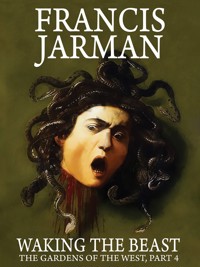
The invasion of the Blood-Drinkers has begun, but the Empire is also under attack from within, as the Sleepless Ones scheme to Wake the Beast After the deadly attack on Manasa, the travelers part company: Decimus to bring a warning to the General, Thomasius to escort a capricious Senator’s daughter to safety. Mara, abused and dishonored, must face the judgement of the Horse People, while Aulus, if he is to help her, must cast off his fear and become a man. And the eunuch Florianus, offered a remarkable chance to enter the history books, must now choose between the light and the dark...
Part four of The Gardens of the West.
Das E-Book können Sie in Legimi-Apps oder einer beliebigen App lesen, die das folgende Format unterstützen:
Seitenzahl: 481
Veröffentlichungsjahr: 2023
Ähnliche



















Table of Contents
WAKING THE BEAST
COPYRIGHT INFORMATION
ALSO BY FRANCIS JARMAN
CHAPTER 1
CHAPTER 2
CHAPTER 3
CHAPTER 4
CHAPTER 5
CHAPTER 6
CHAPTER 7
CHAPTER 8
CHAPTER 9
CHAPTER 10
CHAPTER 11
CHAPTER 12
CHAPTER 13
CHAPTER 14
CHAPTER 15
CHAPTER 16
CHAPTER 17
CHAPTER 18
CHAPTER 19
CHAPTER 20
CHAPTER 21
CHAPTER 22
CHAPTER 23
CHAPTER 24
CHAPTER 25
WAKING THE BEAST
Francis Jarman
The Gardens of the West, Part FoUR
COPYRIGHT INFORMATION
Copyright © 2023 by Francis Jarman.
All rights reserved.
The website for the series, including a map, a glossary,and a full list of characters, can be found at thegardensofthewest.com
Published by Wildside Press LLC.
wildsidepress.com
ALSO BY FRANCIS JARMAN
THE GARDENS OF THE WEST SERIES
The Eagle’s Wing
The Hour of the Fox
What the Hawk Sees
THE LEMNOS SERIES
The Gate of Lemnos
The Call of Lemnos
The Curse of Lemnos
OTHER WORKS
A Star Fell: A Play
Cold from Your Breath
Culture and Identity
Encountering the Other
Girls Will Be Girls: A Play
Intercultural Communication in Action
Invictus: A Play
Lip Service: A Play
White Skin, Dark Skin, Power, Dream
CHAPTER 1
MARA IS SUMMONED TO A MEETING
On the Plain, not far from the camp of the Speaking Bird clan.
“No!” Mara said.
By signs and gestures, Thea had offered to cut her hair, so as to repair at least some of the damage that Gisso had done. It looked terrible. After he and Dirty Fingers had raped her, he had hacked off her plaits.
Yes, it looked terrible, Mara believed that, though not for the reason that Thea probably thought.
The damage to her hair could be repaired, but not the damage done to Mara herself. Her father would see it at once. Her grandfather, too. Her family, and all the members of her clan, gathered to greet and honor the emissaries from the East, would see it. They would know that she had been shamed, and they would recoil from her.
Then let them at least see and understand that it had been done with violence!
She must tell them who had done it, not in any hope that they would punish him, but to warn them that they were harboring a traitor among the warriors of the Speaking Bird clan, a man without honor. She owed that much to her clan, even though her clan would now cast her out.
Whoever had done it, they would still cast her out as unwanted, shamed, and unmarriageable. How it had come to this didn’t matter, and in any case she had no proof that it was Gisso who had shamed her.
It was the word of a warrior against that of… a slut. “A warrior’s oath”, he had said, showing that he would even be willing to swear a false oath to cover his lies. It would therefore be his word against hers, a rock in one of the weighing-baskets of truth, a pebble in the other. Indeed, as a young unmarried girl who had dishonored her family, she might not even be allowed to sully the name of a god by taking the oath.
Her innocence was gone, but why should it be Gisso, they would say, a respected married man with battle scars, who had taken it? She had been riding for days with a company of men from distant lands, teasing and mocking them, behaving like a willful boy, and not as a modest young woman should. Why should anybody be surprised if, last night, one of them had used the final opportunity, before she rejoined her clan, to have his way with her?
Afterwards she had ripped off her plaits in despair. Was that not the true story?
Besides, if she spoke up in front of her clan she would be useless to Aulus and Lord Syrus. Far better for them, better for the cause she had agreed to serve, if she were not to be seen.
Yet how could she not go to her clan? Syrus had proudly announced that she was with them. Her family would be waiting, eager to welcome her.
So whatever she chose to do, her life was finished. When they found out, her people would expect her to end it herself, alone and in shame. Or, more likely, show her true character by taking refuge in the brothels of Cascantum and becoming a soldiers’ whore.
Where else could she go?
Perhaps Aulus would accept her as a slave after all?
Or Syrus (she could work in his stables, with Thea)?
Soon, he and the others would know. She would have to tell them, although at this moment all she wanted to do was to die.
Sounds broke into her troubled thoughts. The camp was now awake, and the men were up and noisily preparing their breakfasts. She heard a man’s voice. Beltran was there—he had come to bring her to his master.
“Ooo, look at you!” He grinned at her. “Had a rough night, did you, ladies? That haircut doesn’t suit you though, Mara. Next time, let me do it.”
Thea snapped at him. She may not have understood his words, but she was obviously telling him to shut up (there were some matters that really didn’t concern him).
Oh, why bother, Mara thought to herself, when soon everyone will hear about it anyway?
Thea accompanied her to Aulus’s tent, where they found only Perfectus, the Senator’s slave. Master Aulus was with Lord Syrus, he told them, making plans for the coming encounter with the Horse People. They had gone off a small distance beyond the camp, away from the breakfast clatter, to where it was quieter. He would take her there; Thea need not come with them.
When Thea indicated that it would be better if she did, Perfectus gave her a strange look. Very well, if she thought so.
They found the two men hunkered down on cloaks spread out over the grass, which was wet with morning dew. Morning dew: sweat from the flanks of the Sacred Mother of Horses. There were crumbs and spilled wine on the cloaks, and a flask and empty goblets.
Syrus greeted her and began to explain something about what would be expected of her at the coming meeting.
“Please, master,” Thea interrupted him, talking rapidly and gesturing in Mara’s direction.
Syrus stared at them both in irritation.
“We know that she has been working hard to improve her command of the Citizens’ Tongue, with your help no doubt, Mara, but there is no call for her to talk non-stop!”
Thea bowed her head. (“Master, forgive me.”)
Nevertheless, he asked Mara to tell him what had happened.
Her story was quickly told, and without tears. The moment for tears was past. It was Aulus who seemed to be closer to tears. What a strange, unmanly man he was!
She could no longer serve them, she said. Her presence at the meeting would harm, not help them. But Syrus had mastered the Tongue of the Horse People superbly. Aulus could also speak well, with few mistakes. And after the opening greetings, the words of welcome offered and graciously accepted, they would be able to use the Citizens’ Tongue for whatever followed.
“No,” Syrus said. “You will come with us, Mara, because you must have justice. You have been badly wronged.” He paused. “The Horse People have a system of justice, surely?”
During the journey she had taught the two men to speak her tongue, and she had tried to explain the ways of the Horse People to them. But—“a system of justice”?
Aulus tried to help.
“You know, Mara, like the magistrate in Cestae, you remember him? The place you call ‘Kesta’! Do you have magistrates among the Horse People?”
“No, Aulus,” she answered slowly. “Our ‘justice’ is given by the people of the clan. The clan chieftain, my father, speaks for everyone—”
“Like a magistrate?” Aulus broke in eagerly. “And since he’s your father… well, that’s pretty good! He’ll give his daughter justice, won’t he?”
“No, Aulus. He is bound by our traditions, as a rope tethers a horse. If he forgets them, the wise women will remind him. And if it is a free man, a warrior, who stands accused, the matter is brought to the Council of the Horse People. But they too act only in accordance with our ways.”
“Then you must appeal to the Council! Your grandfather is the eldest of the Council, isn’t he? And he will be present today?”
Aulus was trying his best to help her, but there was no point.
“I am only an unmarried girl who has brought dishonor on her family. How can I appeal to the Council? Only a free man can appeal—not women, or children, or slaves.”
Her head sank.
She heard Syrus ask her to look at him, and to listen carefully to his words.
“Mara, your world is not my world, and your gods are not my gods, but there is no world in which good men would deny that you have been wronged. This man has dishonored himself, not you or your family. In Neopolis, I am a magistrate as well as a Senator. There must be some way in which you can expose his wrongdoing. Were there witnesses, for example?”
The slave-trader Thrasyllus, she said, who had also abused her.
“But you will never find him,” she added. “And even if you do, Syrus, it will not help. Because I am only a woman, and therefore nothing without a man, I must offer the word of two free men, freely given, without threat or torture, to support my own word. His word stands on its own feet, as a warrior stands, unsupported.”
“That is not just, Mara.”
“Yes, Syrus, it is not just—in your world. But that is our way, and it is good so. Do you suppose that it never happens among the Horse People that a girl cries out that some man has touched her against her will? Young girls cry out like that all the time! For that reason, what they say must be supported by the word of two free men, because otherwise no warrior would ever be safe from the accusations of crazed young girls.”
“It is therefore solely your word—that he came to your tent in the night and abused you—against his word—that he did not?”
“Yes.”
“Is there at least some way to prove that he was in your tent? Some evidence. Do you know that word, Mara?”
“Yes, Syrus, I know that word. The evidence is what those men did to my body, which no-one can see, and what they did to my hair, which everybody can.”
“That is evidence against an unknown attacker, not evidence against him. He will merely claim that another man did it. Someone here in the camp. One of the mule-drivers perhaps.”
Yes. He was right.
Her head sank again. She had no chance. She could only hope that the gods would be so outraged that the thread of Gisso’s life would soon be cut, by a spear-thrust or a Blood-Drinker’s arrow, and that the Dark One would claim him for the pit of Esbus, where all evil-doers belonged; in this world, though, there would be no retribution for what he had done to her.
“Please, Syrus,” Mara said. “Forget about me. Go to the meeting. All the clan will be assembled and waiting for you, not just my father and my grandfather—the elders and warriors, their wives, their sons. Even the young girls and the slaves will be there, to see the great men from the East. I shall hide among the servants until after the meeting has ended, and only then will I speak to my father and beg him for forgiveness.”
She realized that she had said “great men” without any hint of scorn or irony. But it was somehow true. Syrus was wise, and he was a fine horseman. And Aulus was maybe not “great”, yet he was kind and good.
Thea, who was crouched beside Perfectus, spoke up.
“Master?”
“Really, Thea, again!” And to Mara: “Your friend here is surprisingly talkative today! Someone please tell her that I am not one of her horses, to be talked to all the time! Is there anything still to be said that is pertinent?” (What did that word mean?) “If so, let me now hear it, because we must soon be leaving for the meeting with your father, and we don’t have much time—”
Thea spoke once more, but in the Eto. At first, Syrus looked angry and Mara, who had no wish for her to get into trouble, broke in.
“Syrus, I don’t know what she is saying, but please let her speak, and don’t punish her. She is only trying to help me.”
Syrus nodded, and listened, although she spoke at length. When she had finished, he turned to Mara.
“Something that might be pertinent… perhaps. The girl says that there is evidence that the two men came to your tent. They bound and gagged you, tying your hands with a colored cloth like a scarf. Did they find it in your tent? The cloth doesn’t belong to her, and she has never seen you wearing it. Is it yours by any chance? Or did the men bring it with them?”
Mara’s heart leaped.
“Is it gray and red?”
And Thea, who had understood her words, said, “Yes, Mara.”
Syrus gave Thea some instructions, and then explained to Mara that he had told her to go back to their tent and fetch the scarf. But after that they really must prepare to leave.
“Why is the color of this scarf so important?” Aulus asked.
Because, Mara said, such a bright scarf was most unusual among the Horse People, who preferred plain colors. Colors that, when you were riding out on the Plain, would not make it easier for your enemy to spot you.
Some would even say that it was womanish, and wrong for a warrior, to wear bright things.
(She remembered too late the flashing costume that Aulus had worn in Neopolis, and hoped that he didn’t feel offended—but he was not a warrior, of course, and he had never claimed to be one.)
There was surely someone in the clan who had seen him wearing it, who knew that it was his scarf?
“Yes,” Syrus said, “the two warriors who rode out to greet us were wearing such scarves: the first man who spoke—”
“Remulo of the Dark Wolf clan. He is kinsman to my mother. She has spoken of him many times.”
“—he was wearing a plain scarf. But the other man—”
“Gisso.”
How she hated to say that name!
“—wore just such a colored scarf.”
“And it was gray and red, master,” Perfectus added. “I saw it most clearly.”
“Mara, speaking now as a magistrate I have to say that this unfortunately proves very little. There may be several other warriors in your clan who own such a scarf. It might even be some kind of fashion. Perhaps a traveling merchant came by and had scarves like this to sell or to offer as gifts. But… it is a start, Mara, and you will come with us. I have argued more hopeless cases than this and won.”
Aulus blurted out, “He mustn’t be allowed to get away with it. I’ll kill this man!”
Poor Aulus, had he now gone completely mad? Syrus ignored him.
“I might also add, Mara, that the goodwill already shown by your grandfather and by your father, in agreeing to meet with us to discuss an alliance, will create a favorable atmosphere in which to bring up your case.”
Mara nodded—and smiled grimly. Syrus was wrong, her “case” was hopeless. Yet strangely she felt better now.
Was it because a great magistrate and Senator was going to speak for her? No. Because the ways of the Citizens were not the ways of the Horse People. His words would be listened to respectfully, but that was all.
And it was certainly not because a well-meaning friend, a weak-limbed wearer of ridiculous multicolored tunics, was willing to fight for her!
No, it was because a fearsome goddess, one who could not be named, had smiled again, whispering deep into her heart that, though men might fail her, the gods were listening to her. There was a perilous weapon with which she might yet destroy Gisso, but if she chose to use it there would be no turning back.
Would she be able to find the courage?
CHAPTER 2
DECIMUS HAS NO FEWER THAN FOUR WOMEN TO WORRY ABOUT, TWO OF WHOM ARE RATHER UPSET
On the road.
In the murky light, Decimus stared grimly at the scene of carnage in front of him. Victor had struck hard. There was a badly wounded officer. There was a dead slave-girl. And two of the Sueni cavalrymen had tripped and hurt themselves in the frantic dash through the trees.
Swampies were useless on horseback, and it seemed they were not much better on foot.
“That one will live,” the officer said, pointing at Thomasius, and Decimus agreed with him. Yes, he had taken a knock, or a cut, to the side of the head, and there was quite a lot of blood, but he was moving slightly and groaning. Thomasius would live—and he would have an impressive new scar that he could show his children and his grandchildren, unlike the embarrassing one he had received earlier at Victor’s hands…
Decimus called for someone to fetch the wise woman, and quickly! She would know best how to dress the wound.
But Ja-neh the wise woman was already there, one of the Sueni said.
“Then what in Sol’s name is she doing?” he shouted, without turning to look. “Bring her over here, there is a wounded officer to be treated!”
When nothing happened, he turned—and saw Ja-neh. She was resisting the cavalryman who was trying to prize her away from whatever it was she was doing. In fact, one fierce look was enough to make the soldier step back.
And then Decimus saw what it was she was doing. She was tending to Manasa, pressing on her wound with leaves, and muttering prayers or spells.
This was ridiculous, he thought: he had seen a fair number of dead bodies in his time, some of them of people he himself had killed, and in the gloom Manasa looked distinctly dead. Thomasius had obviously been fond of her, and he would want her body to be dealt with honorably, but that was the most they could do for her.
Now the old woman was signaling to the cavalrymen. She was telling them to pick the body up.
Really, enough was enough! Decimus told the officer to order his men to desist, but he merely shrugged and turned away. His meaning was clear, even to Decimus: the Swampies had wise women of their own, and if a wise women wanted you to do something, you did it.
“I missed.” It was Turgulo, the “Javelin-boy”. “I didn’t hit him. But I will, next time, I swear it.”
“Can’t you speak to them? Look, this is pointless, she’s dead.”
The wise woman had been collecting herbs, Turgulo said. She had gathered a whole basketful, and she must want the men to carry Manasa out of the wood to where Lady Flavia and the others were waiting for them, and where she would have left her basket.
“Perhaps she believes she can use her herbs to treat her?”
“Oh, certainly,” Decimus snorted. “Raising the dead, eh? If you believe that you’ll believe anything. Or is the old crone a necromancer as well?”
Yet this old woman did have a gift, Turgulo replied. Why had they all rushed into the wood like that, without a second thought? Because the old woman had suddenly become agitated and had started wailing and pointing to the line of trees. She had sensed an evil presence there. Victor.
Very well, Decimus conceded. Two of the men could carry Manasa’s body out of the wood, and two other cavalrymen could see to Thomasius. Everyone else should scour the area for signs of Victor.
“No no, he’s gone,” Turgulo contradicted him once more—the boy was getting quite cocky. “If he was still here, the wise woman would warn us.”
Thomasius had now been helped to his feet. With the support of two of the cavalrymen he would be able to stagger back to the road.
He was visibly upset. The tough acting Company-commander was actually weeping! Had he heard Decimus or one of the others say that Manasa was dead?
Decimus walked on ahead of them, as quickly as the slippery carpet of moldering leaves and damp twigs underfoot allowed. He must prepare those who had stayed by the roadside and not gone into the wood, Julia, her brother, Lady Flavia, for a nasty shock.
Some decisions would need to be made.
When Thomasius arrived, he would assess his friend’s injury. Was he in any condition to lead the soldiers, or should the cavalry officer assume command? Thomasius had been given specific marching orders, and the officer had presumably been informed of what those were. They should not allow themselves to be held up for too long by the need to arrange a funeral for a dead slave-girl.
As for himself, he had the urgent task of bringing the two young Placidi to the General and briefing him on what had occurred in the City. It was conceivable that one or two Senatorial refugees might reach Ogilo first, terror having lent wings to their flight; none of them, however, would be able to tell the General as much about the coup as he could.
“Shock” was the right word for how his traveling companions reacted.
Lady Flavia began shuddering and groaning. He had terrorized her, and now the “Monster” had done it again! Who was safe? Who would be next? He would come back for her, she knew it.
Hearing the fell creature named, the litter-slaves huddled together, shaking, praying, and calling upon their different gods. The “Monster” would return to pick them off, one by one. To eat them. To drag them all down to Esbus.
Anthea the maid was scuttling backwards and forwards, weeping, and begging for her and her mistress to be spared.
Even in the poor light, he could see that Julia Placida had blanched with fear. She was whispering to her brother, but Sextus said nothing.
They must hold a short conference—immediately. He, the Sueni officer, and Thomasius. Did Thomasius feel well enough to take part?
“Yes, of course, I’m the ranking officer here.”
There was a firmness in his voice. The tears had gone.
And Lady Flavia joined them as well, uninvited. Now more composed, and with a glint in her eye.
When Decimus tried to shoo her away, she said, “You talk about rank. I am the person of highest rank here, freedman, and you will do well to remember that!”
He couldn’t find the strength to object.
They must press on quickly, he said, to get to wherever the General was now encamped. Believing that he had settled his personal score, Victor would probably be on his way there too, to find and kill Ogilo. They must warn him!
Their first stop would be the next inn, which with a great effort they could still reach not long after nightfall. Arriving at a remote country inn in the middle of the night, with the doors double barred and maybe not even a watchman still awake, was not generally a good idea. The slaves might be too frightened to open up for them, or they might rush out with clubs to drive the intruders away; there would be a lot of commotion at the very least.
Victor would be taking the same route, though he would be several hours ahead of them. Would he too be using the inns? Decimus doubted it, but they would still need to be careful.
While he was talking, Turgulo approached and indicated that he had something important he needed to tell him. What was it? They didn’t have time to waste!
“Well, Lord Thomasius here wouldn’t agree with you on that! Why don’t you listen, just for once?”
What?!
Decimus raised his arm to strike him but found Thomasius holding him back.
“No, let him speak,” Thomasius said.
Manasa was alive! The wise woman had dressed her wound, and put her mouth to hers, and she was breathing. She might still die, but—
Thomasius had already thrown his arms around him in joy.
Decimus knew when he was beaten. And he was happy that she had survived, at least for the moment.
Turgulo led them to where she lay. Her eyes were shut, she looked deathly white, and sweat pearled the dark skin of her forehead and her tattoos. Yet she was breathing. Barely.
Thomasius grasped her hand and kissed it. Decimus looked away in embarrassment.
“We can’t leave her here.”
“No,” Decimus said. “We’ll take her with us. In the litter. With the maid. Lady Flavia is such a fine horsewoman that she can get on her horse again—”
“No! No!”
Which of them was it? Or was it both? The two women had come up behind him and seemed not to like what he was suggesting.
“I’m not riding in the litter with a corpse!”
That was Anthea, the maid.
“Then you’ll bloody well have to ride on a mule, woman!” Both of them protested loudly. “And whatever you ladies graciously decide, we are leaving this place as soon as Manasa has been moved to the litter. Thomasius?”
The soldier nodded in agreement. Lady Flavia was not done with them, however.
“You say that the ‘Monster’ will be going in the same direction, and taking the same route?”
“Yes. Probably.”
“Well then, that is not a route that I am prepared to take!”
“Look,” he remonstrated, “I have to bring Sextus Placidus and his sister to the General, and warn him of the danger he is in. I have no choice.”
“Fine. Do as you wish, freedman.” She turned to Thomasius. “Tell us what your instructions were.”
Thomasius looked startled but told her. His orders had been to travel to the City, by way of Maidunum, and to meet Decimus there. Decimus, who represented the General’s interests.
“There were no specific instructions as to what I should do afterwards.”
“And what were your orders from my father? From Lord Governor Flavius Probus, in case you had forgotten? Who could have you crucified for disobeying them!”
“To deliver you safely to your friends in the City. To your friend’s uncle, Senator Terebinthian.”
Indeed, she said, that was correct. And hadn’t Decimus himself told her that the Green Senators would all have fled, or been lynched? He had been ordered to bring her to safety, and where might that be?
It would not be in the City!
Nor would it be in Ogilo’s camp, with all those vulgar soldiers intent on raping her.
“And me too!” squeaked the maid Anthea.
With the “Monster” lurking about, looking for people to kill.
And with hordes of Blood-Drinkers gathering to attack them.
But her father, the Lord Governor, would probably also be there, Decimus pointed out.
“Yes, and it was my stupid father who sent me away in the first place, you may remember. So, why should he be pleased to see me again? And what a bore it would be, too.”
Decimus had been impatient. Now he was exasperated.
“We don’t have time for this! Where in Sol’s name does Milady, in her great wisdom, think that she would be safe then?”
He immediately knew that he had overstepped the mark. A freedman simply didn’t talk like that to a Senator’s daughter, however annoying the wretched woman was. Yet instead of becoming indignant, Lady Flavia seemed almost pleased. He was apparently inviting her to choose.
“Good that you now see it my way! We shall go to wherever the Senators have gone, of course. To where the Emperor has gone. The Green Senators will be there, won’t they? Terebinthian will certainly be there; he won’t be roughing it with the soldiers, will he? There’ll be a proper court, and it’ll be much more fun than sleeping in a tent in a military camp, surrounded by the unwashed, eating the pigswill you call rations, and having to shit in a ditch!”
Decimus had to admit that she was right. He asked Thomasius and the Sueni officer to step aside with him for one moment: the decision must now be made.
He and the two Placidi would continue their journey as planned. On mules, not horses: horses would look suspicious for a “normal” party of harmless travelers. Besides, Julia was not a confident rider, and her brother was plainly happier on a mule than on a horse (though he would not admit it).
And without an escort. A small group would attract less attention, Decimus said—he could have added that a mob of noisy, clumsy Sueni cavalrymen would also slow them down, but there was no call to hurt the officer’s feelings.
Should they at least include Turgulo as the fourth member of the group?
Could it be that the officer was trying to get rid of him? Decimus was seriously tempted to accept the offer—“Javelin-boy” would be useful if they ran into trouble at one of the inns—but Lady Flavia would be sorely disappointed, and she might become angry and difficult when she discovered that she would no longer be able to enjoy the Swampie’s close company, especially after dark.
There would be little danger, Decimus said. Turgulo was probably right that the “Monster” was now after other prey. There would be inns all along the route, and this was Green country, where the General was popular and anyone in his service would be given whatever help they required.
Not until they neared the General’s camp would they need to keep a careful lookout for raiding parties of Blood-Drinkers, though if they were surprised by one it would be fatal—there was no way that their mules would be able to outrun the Blood-Drinkers’ ponies.
There was one possible danger that did give him cause for concern. Marcus Vulpeculus would have men out, searching for Julia. She would have to adopt once again her disguise as Sextus’s younger brother and try not to be seen limping too obviously. (If need be, Decimus could carry her into each inn, claiming that the “poor young master” was totally exhausted from the long day’s ride.)
Thomasius’s journey, in the other direction, would be even less challenging.
“Your task, brother, will be to carry out the orders you were given: to bring the esteemed lady to somewhere that is safe. To the court, if she so wishes. I’m sure you’ll be happy to see the back of her!”
But where would the court be? Since the Emperor was running from the Reds, and from Marcus Vulpeculus, whose Blue faction no longer existed, he would have to look for protection from Ogilo’s party, the Greens. Somewhere in the Province, therefore?
No, he had good reason to believe that Emperor Maximillus was now scurrying towards the Riverlands.
The rich merchants of Trebenna would surely welcome him. But Trebenna itself was vulnerable to attack from the sea, and the Placidi would now be building ships, in the great sea-faring tradition of Sybaris. Also, while Maximillus would be happy to take their gold, and to accept their pledges of allegiance, he wouldn’t want to be completely at their mercy, just as he wouldn’t want to become Ogilo’s effective prisoner either.
The flourishing market town of Laurinum, secure within the swamplands of the Twin Rivers, would be ideal. The Emperor might not have worked that out for himself, but he had at least one clever person by his side: the Empress Naevia.
“It’s not too far,” Thomasius said. “Back down the road and then through the Stone Gates Pass. Bandits, if there are any, won’t trouble a troop of cavalry, and there are inns.”
“Back down the road. With luck, you can reach the Cornbasket Inn before the night is far advanced.”
The officer said that he would send his fastest rider to warn the inn that that they were returning.
“Because you were attacked,” Decimus said, “and several were injured, one badly. Tell them that.” He added, “Manasa must go in the litter, whatever Milady may say. The wise woman will look after her. When you’re through the Pass, she can find her way back into the forest from there. By then, Manasa will be better or—”
“She will be better, brother. Her gods and mine will protect her. She has a strong will, and there is a task that she has to perform before she dies.”
He didn’t say what that task was, and Decimus didn’t press him. Instead, he suggested that the officer get his troopers organized for departure and, when the man had gone off to do that, gave Thomasius some hurried instructions.
Thomasius had told him that he had been given a letter of authorization by the General. He could, if he needed, send fire-beacon messages, was that not so?
“Don’t hesitate then to send a message from Laurinum—if that is indeed where the Emperor has decided to set up his court—should any of the following interesting situations occur. Construct a seemingly harmless message around the appropriate code-word...”
There were only half-a-dozen code-words to be memorized, but Thomasius’s eyes widened considerably when he heard what the “interesting situations” were that they referred to. So, he was to be the General’s spy at the court of Maximillus!
His eyes widened even further when Decimus asked him to pay his respects, and to offer cordial greetings, to a certain friend of his, though only if this could be done unobserved. The friend was not a Senator or a courtier, but a young woman who served the Empress.
Her name was Cassia.
CHAPTER 3
FLORIANUS IS INVITED TO VISIT THE OFFICE OF CORRECTION
Neopolis, at the Imperial Palace.
Florianus found it hard to follow the passing of time. The tiny window, high up, let barely any light into his cell. When there was no light at all he assumed that it must be night-time outside, but sometimes the light flickered, as though it came from torches.
He was taken out and half dragged, half carried, with a hood over his head, to the Office of Correction. Whether the interrogations took place at night or during the day he therefore couldn’t tell.
The Office of Correction, gloomy and windowless, was lit by torches held in rusty wall-brackets. It contained more or less what he would have expected, from his experience of similar rooms in the Imperial Palace where he had once been High Chamberlain.
These items were (as he noted on his first visit):
A writing table, with a simple stool for the scribe who would write down the questions and answers.
A more comfortable-looking chair for the State Prosecutor, or whoever would be representing him that day.
A small side-table with a range of refreshments for that important gentleman.
A dark wooden chair with wrist- and ankle-straps and other restraints. Had they chosen dark wood because it wouldn’t show the bloodstains so obviously? Even in the dim light he could see that the chair was badly stained. Blood? Vomit? Urine? Excrement? This was where he would sit to be questioned; most probably, he would be tied.
There was a long bench made of separate sections which were connected by ropes, wheels, and pulleys. It had not been placed there to enable the poor, tired prisoner to stretch out for a break between questions. But it was for stretching—yes. It was there to stretch him until his muscles tore and his bones were ripped from their sockets.
It was a rack.
The rack in the Imperial Palace in the City, which he had seen being used several times, was nicknamed “the Princess”. She was a fearsome old creature, believed to date back to the reign of Severian the Evil, but somewhat prone to breaking down, and Florianus had occasionally had to authorize settlement of the bill for an expert repair whenever Calixtus hadn’t been able to put the matter right himself.
“I have many talents,” Calixtus used to say, “but I’m not a fucking carpenter.”
This version looked newer, and it was more likely to function efficiently, he feared.
No stool or chair had been provided for the torturer, Florianus noticed—that good fellow would be far too busy to sit down.
There was another table with smaller pieces of equipment that were obviously intended for purposes of persuasion. He took in the whips, the screws, and crushing devices, but there was also a tray with bread, cheese, an apple, a jug of beer or watered wine, and a lead beaker. Torturing people must be strenuous work!
There were branding irons, too, though the brazier for heating them stood unlit against the wall in a far corner.
In that same corner was a small shrine to the Slave, the tortured, martyred god whose aid and blessing would perhaps be invoked before an especially demanding session of torture began. Calixtus, he remembered, was similarly superstitious (and unaware of irony).
In the wall nearby were hooks to which he might later be tied, though on that first visit he had been allowed to sit, without restraints. The chair was not only stained; some of the darker patches were still sticky.
The two warders who had brought him disappeared. There was no torturer to be seen. For the moment, he was alone with the State Prosecutor and a scribe.
The Prosecutor, who was well dressed, polite, and not unfriendly, introduced himself as Metrodoros. Was Florianus willing to be interrogated in the Eto, or would he prefer their conversation to be in the Citizens’ Tongue? It would make no difference to him, or to the scribe.
The Eto would be perfectly acceptable, he replied.
The Prosecutor thanked him—now there would be no need for a translation to be prepared afterwards—and complimented him on his mastery of their tongue. Florianus was plainly a man of education and good manners.
(Why all this polite flattery? When were they going to start actually hurting him?)
The meeting would not take long, the man said. They just had a few questions that they would like to put to Florianus—and they trusted that he would answer them honestly.
Florianus had already decided that he would do precisely that, since they doubtless already knew the answers to the questions. If he tried to dissemble, and they saw through it, they would be even more inclined to view him as guilty.
First. he had to tell them his name, which was easy enough. Where he was born, who his parents were, what he remembered of them, whether he still had any contact to his family.
(He didn’t, and he had never tried to find them, even after he had been freed from slavery, had risen to the rank of High Chamberlain, and been in a position, if he so wished, to send out an investigator to locate his parents.)
A good start! Then it became more tricky: he was invited to explain how it had come about that he had been included in the delegation from the West. Were two Senators really not sufficient? Why was he needed?
In keeping with his decision to give true answers, he gave the Prosecutor his honest opinion: that Necro was a pompous, pedantic, and incompetent fool who had been chosen mainly because he could easily be spared from his Senatorial obligations. In fact, no-one would care if he didn’t come back at all!
The Prosecutor laughed heartily.
As for the man’s qualifications: Necro was said to be a learned authority on court procedure and etiquette, a reputation which Florianus had no reason to doubt. He also claimed to be fluent in the Eto, though others were better placed than he was to be the judge of that.
And Atticus? What about him?
Aulus Atticus was a trivial and rather irritating young man who was not actually a Senator yet. Most conveniently, however, his father and his uncle belonged to two different Senatorial factions. Choosing him had therefore allowed the delegation to contain a pleasing balance of White, Blue, and Green political interests (the rebellious Reds naturally being excluded), while restricting the overall size of the party and thus saving on the cost of the expedition.
That was the sole reason for including Atticus—he had no personal qualification that recommended him as an emissary.
Once again, the Prosecutor laughed. Not such a hearty laugh, admittedly, more one of mild amusement, but a laugh nonetheless.
“Yes, indeed, we had formed much the same opinion of the two gentlemen. But why you, master eunuch, of all people, to accompany them? You had fallen badly out of favor at court, we have been told.”
The emissaries, Florianus replied, had been given a formal invitation to be delivered to the court of the East; also, substantial gifts from one Emperor to the other. He had been tasked by Marcus Naevius, in strictest confidence of course, with making sure that neither of the emissaries bungled the presentation.
“But not only that. Your Excellency is a man of the world. You will appreciate that I was also instructed to observe the situation at your court and to report later on what I saw, as any normal ambassador would be expected to do. It was felt that I was better equipped to carry out these ambassadorial tasks than our two official emissaries were.”
So far so good. It was all very gentlemanly. Florianus was even offered a sip of heavily diluted wine.
The Prosecutor wanted to hear about his previous encounters with Quintilianus Asper: about how Asper had had him gelded and made him his catamite, but then thrown him aside and had him sold.
“Are those not good enough reasons,” he added, “for you to plot revenge on the man?”
The scribe coughed. They had now come to the principal object of the interrogation!
No, Florianus said, not at all. Those things had happened long ago, and the gelding, cruel and painful though it had been, had allowed him to advance to the highest levels of service at the Imperial court of the West. It had enabled him to have a career.
“Hmm,” said the Prosecutor. (Career was a concept that he would surely understand.)
Furthermore, he had been very young when he was cut. Although he had frequently been the object of Lord Asper’s lustful attentions, he himself had never experienced any gratification.
So, Lord Asper had never invited him to, er…?
To reverse the roles? No, he had been too young for that, a mere child. He therefore harbored no bitterness over physical joys that had been stolen from him. How could he resent the loss of something he had never felt?
Besides which, he had observed over the years how often whole men were tormented and distracted by their desires. They would be consumed by their passion, unable to adhere to reason or decorum, and led into dangerous foolishness. He had (may the Blessed Slave be praised!) been spared such turmoil.
“Well, I think that is enough for today,” the Prosecutor said, more to the scribe than to Florianus.
Florianus expected to be dragged off back to his cell, but instead, and to his amazement, the scribe got up and brought him the tray.
Florianus needed no invitation. Fresh bread! Cheese! A delicious apple! A long, refreshing drink that tasted good and wasn’t full of dirt and insects! He wolfed it all down before anyone could decide to take it away from him. After the muck that he had chewed and choked on in the darkness of his cell, this was like being in the paradise that the Slave followers were promised by their preachers.
The Prosecutor waited patiently for Florianus to finish. Then he clapped his hands, upon which the two warders re-appeared. They placed a hood over Florianus’s head, lifted him out of the chair, and returned him to his cell.
He was back. Hiding in the shadows, he was safe. That had gone well, hadn’t it? He had even been wined and dined. Had it been just for show—a tactic? Had they merely been softening him up? The next interrogation might be far less pleasant.
He crawled about on the stone floor, looking for the spot where he had been relatively comfortable before they had come to collect him. When he found it, he would roll himself up into a ball and sleep for a bit, at least until the aches and cramps forced him awake; then he would wriggle about until he had found another position that allowed him to fall asleep again for a while.
Reassuring squeaking noises told him that his little friends had not deserted him. Had earlier occupants of the cell got to know them as well as he had? He had given them names and imagined ratty adventures, romance, challenges, and rivalries for the flirtatious “Naevia” and her two admirers. No-one else would have gone to such trouble.
When “Naevia” finally chose one of them, what would the rejected suitor do?
When the time came for him to be taken out and put to death, when he would meet a painful end among strangers, unloved and unremembered, would they at least miss him? They would be the last creatures that he would bid farewell to, perhaps with a tear in his eye.
At some point he fell asleep.
Such was his first visit to the Office of Correction. His second was, as he had feared it might be, more alarming.
The suave, polite State Prosecutor was there again, but his manner was more distant, and he didn’t ask Florianus whether he was thirsty or offer him a tray of refreshments. He was now accompanied by a second official, an ugly, plainly dressed man with a harsh, rasping voice who, judging by his appearance, would be of much lower rank than the Prosecutor, maybe only one level higher than the thugs who did the beating, cutting, and burning.
And, terrifyingly, two such thugs now hovered in the background.
He had only been sitting in the blood-stained chair for the blink of an eye when the two thugs grabbed him from behind.
Thwack!
He didn’t see the blow coming, and it knocked him out of the chair and onto the ground.
One of the thugs was kicking him. He shrieked each time a kick went in. How did the man know so expertly where to hurt him?
He saw a huge foot in a heavy leather sandal studded with lumps of metal. Oh no, not his face… please! He tried to twist his head around. The kick, when it came, thudded against his ear instead of crushing his nose. He wailed in pain.
The man was standing over him, abusing him.
“Fucking eunuch! Degenerate piece of filth! I’m gonna feed what’s left of you to my dogs!”
The thug ranted violently, but there were no more kicks or blows. Had the Prosecutor signaled to them to stop? They hauled him to his feet and dumped him back onto the chair.
“Tie him securely,” the man with the rasping voice told them. “Arms and legs.” He loomed up over Florianus before bending down to stare directly into his face. His breath stank. His name, he said, was Pamphilinus.
Why did such a vile man have such a beautiful name, a name for a eunuch or a musician?
“Just so that you know: I don’t like eunuchs. Nor does my friend here, as you may have noticed. That was just a little taster. It had nothing to do with the interrogation. You see, my friend didn’t get home to shag his wife last night, so he is not happy today. Bear that in mind. Lord Metrodoros” (he said the name with an audible sneer) “will now ask you some questions and you will answer them! Do you understand?”
Florianus nodded. “Yes,” he whispered. What could he tell them, though? He didn’t know anything. What did they want to hear?
“Oh, and before we start, it’s cold in here. Can someone light the brazier?”
Oh no.
The Prosecutor asked the very same questions he had asked before. Timidly, though, and in a quiet voice. He was no longer in charge.
And Florianus answered the questions as before, but simply and without embellishment. This was not a friendly conversation.
Necro was “incompetent”, he said, Aulus “a harmless nobody”. They had been chosen because between them they represented the three political factions still permitted in the Senate.
His own role had been to ensure that they fulfilled their tasks; also, to write a report on the visit by the delegation to be submitted later.
His instructions had come from Marcus Naevius, the grandfather of the Empress and Imperial Guardian.
Pamphilinus interrupted the interrogation. “So—you’re a spy. Correct?”
“Oh no!” Florianus protested, then yelped as one of the thugs, skulking behind him, jerked at his damaged ear. “No, truly!”
Metrodoros tried to help him. He suggested that this might be a good point at which to end the meeting for the day?
“No,” Pamphilinus said, and now took over the questioning. “Scribe, make sure you get down everything the eunuch says. Don’t miss a word—or my friends here will be roasting your testicles on that brazier!”
He wanted to know, he said, who it was in the delegation that had trained and prepared the bum-boy to murder Lord Asper. They had already been given certain names.
Florianus admitted that he had groomed and trained the boy Aphroditus—
“Aphroditus? Don’t make me laugh! Gorth, you mean. Who had the bright idea of turning that piece of crap into a little bed-warmer for Asper? A fucking fishy-bastard—what a delight that must have been for the old man! They all smell like rotten fish, worse than the Sueni! Almost as bad as your wife’s pussy, Ferdo!”
Even the scribe laughed. Only Metrodoros failed to find it amusing. And Florianus, of course, who tried to explain how Gorth had been chosen by a foolish court official and had been foisted on them as the “ideal gift” for Lord Asper.
He was not to blame, though. His greatest wish, he pleaded, had been to replace the unsuitable boy with a much more suitable one, the pretty little creature Phrygillus, but he had been thwarted.
“Thwarted by whom?”
By Aulus Atticus. There, he had said it. Sad for the boy, but was it not the truth?
And by Necro. He had no regrets about naming him—he had a score to settle with the horrible man.
“Aha,” said Pamphilinus. “This is most interesting!” And to the scribe: “Have you noted those two names? We shall need to put the question to both these gentlemen. To bring them down here for a few hours for a cozy chat!”
Be that as it may, Metrodoros pointed out, Senator Necro was an Imperial emissary, and as such he enjoyed the personal protection of his Imperial Majesty the Emperor. He had also been invited to act as consultant on an important project close to his Majesty’s heart. There was no way that such a man could be subjected to interrogation merely on the word of a eunuch.
Pamphilinus replied that it was not the eunuch’s word alone. They had another informant, one whose identity would soon be revealed.
“As for the boy Atticus, he too enjoys his Majesty’s protection, although his exact whereabouts at this moment are unknown.”
“And why am I somehow not surprised by that? The little bastard’s trying to do a runner!” Pamphilinus exulted. “That proves it! We shall find him, though, and then we’ll arrest him!”
Metrodoros didn’t give up.
“Without his Majesty’s consent? I hardly think so.”
Pamphilinus glared at him.
“You ‘hardly think so’, do you? My friend, let me tell you something: there are those who can easily arrange it! And they won’t be overjoyed to hear that a certain State Prosecutor placed obstacles in their way.” He paused, but Metrodoros made no reply. “Ferdo?”
The thug who had abused Florianus sprang forward.
“Yessir?”
“We are done here now. This piece of shit has given us what we wanted. For the moment. Next time we shall broaden the conversation a little. Call the warders in to take him back to his cell.” He turned to Metrodoros. “And you were so keen to end the session? Well, good that we didn’t. See how much progress we’ve made! And look, my boys have lit the brazier all for nothing. Perhaps next time, eh? And with a more distinguished guest.”
“Do you believe so?” Metrodoros said, but it sounded half-hearted.
“Trust me, my Lord, we shall make all the necessary arrangements.”
Florianus was hauled to his feet and bundled out of the room. In the excitement, he was unable to hear the Prosecutor’s reply—if there was one.
CHAPTER 4
AULUS DELIVERS A WELL-REHEARSED SPEECH
The camp of the Speaking Bird clan.
Mara had been tucked safely into the middle of the group that rode towards the encampment of the Horse People. She was wearing a plain hooded cloak that matched the cloak worn by Thea, who rode beside her, and would attract less attention than the elegant cloak that the Easterners had given her. It was fortunate that Thea had taken the trouble to bring a spare cloak with her.
“What a sensible woman!” Syrus had commented. “Winter is coming, and we are riding north.”
The Easterners felt the cold more than Mara did, or even Aulus for that matter. He had lived for many years in the North, but the mornings and evenings he now found chilly as winter drew in. He appreciated the heated wine that the mule-drivers sometimes prepared at suppertime.
Hooded cloak or no hooded cloak, no-one would be fooled. Everyone in the clan, she had said, would recognize her face at once. Even those who didn’t know her, visitors like Remulo or some of the warriors who had escorted her grandfather: they would see that only one rider was riding without a saddle.
Though she didn’t say it openly, Aulus knew that she was far too proud to make her dramatic return to her people sitting on a saddled horse.
This way, at least no-one would see her hair until the moment finally came for her to speak. She would stay within the group until then, it had been decided, and no-one would be allowed to approach her.
The plan they had originally had, that she would introduce the two noble Citizen emissaries in the happy glow created by the tearful reunion of Mara with her family… that plan had been abandoned.
As Mara put it: if you have only stones to make your soup with, you make it with stones. Though Aulus himself was not overly confident, Syrus had mastered the Tongue of the Horse People so well that he would need no introduction from her. They would manage without her, she said.
Word of their coming had reached the Horse People, and the envoys would be welcomed heartily, as ancient tradition and the laws of hospitality required. But Mara obviously accepted that for her that welcome would lose its warmth once she lowered her hood.
Even so, it was hard for the horsemen to fight off the small children who swarmed all around them long before they reached the camp. “Mara! Mara!” they shouted to her, trying to attract her attention, and competing with the yapping dogs to make themselves heard.
After their long, uneventful journey across one plain, then some hills, then another plain, with a few river crossings as highlights in between, with not even a glimpse of the fabled Tower of the Sky (from a safe distance, of course), and no more than a handful of encounters with slow-witted villagers or herders, Aulus found this all very exciting.
As before, it was Remulo “of the Dark Wolf clan” who rode out to greet them. This time he was alone—without the villainous Gisso. He announced that he was there to bid them welcome, “in the name of Corvo, eldest and chieftain of the Speaking Bird clan” (Mara’s father), and to lead them to a spot outside the camp where a Meeting Place had been prepared.
Mara had told them what to expect. Though this was not the same camp that she had left many moons before, the camps of the Horse People were always laid out (when there was sufficient leisure to do so) to the same pattern, not unlike the camps pitched by the Citizen Army, with the tent of the clan chieftain at the center, surrounded by the tents of the eldest members of the clan. There, too, a tent would have been placed for the honored visitor from the Council of the Horse People, her grandfather Haimo.
He saw that Mara was having trouble holding back her tears. She was home again! She had already seen children whom she remembered, she told him, such as the brat she had once caught hurling stones at the camp dogs.




