


149,99 €
Mehr erfahren.
- Herausgeber: John Wiley & Sons
- Kategorie: Wissenschaft und neue Technologien
- Sprache: Englisch
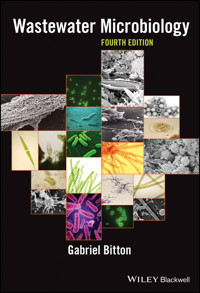
Wastewater Microbiology focuses on microbial contaminants found in wastewater, methods of detection for these contaminants, and methods of cleansing water of microbial contamination. This classic reference has now been updated to focus more exclusively on issues particular to wastewater, with new information on fecal contamination and new molecular methods. The book features new methods to determine cell viability/activity in environmental samples; a new section on bacterial spores as indicators; new information covering disinfection byproducts, UV disinfection, and photoreactivation; and much more. A PowerPoint of figures from the book is available at ftp://ftp.wiley.com/public/sci_tech_med/wastewater_microbiology.
Sie lesen das E-Book in den Legimi-Apps auf:
Seitenzahl: 1458
Veröffentlichungsjahr: 2011
Ähnliche



















Table of Contents
Cover
Title page
Copyright page
DEDICATION
PREFACE TO THE FOURTH EDITION
PREFACE TO THE THIRD EDITION
PREFACE TO THE SECOND EDITION
PREFACE TO THE FIRST EDITION
PART A: FUNDAMENTALS OF MICROBIOLOGY
1 THE MICROBIAL WORLD
1.1 INTRODUCTION
1.2 CELL STRUCTURE
1.3 CELL GENETIC MATERIAL
1.4 BRIEF SURVEY OF MICROBIAL GROUPS
1.5 WEB RESOURCES
2 MICROBIAL METABOLISM AND GROWTH
2.1 INTRODUCTION
2.2 ENZYMES AND ENZYME KINETICS
2.3 MICROBIAL METABOLISM
2.4 MICROBIAL GROWTH KINETICS
2.5 WEB RESOURCES
3 ROLE OF MICROORGANISMS IN BIOGEOCHEMICAL CYCLES
3.1 NITROGEN CYCLE
3.2 PHOSPHORUS CYCLE
3.3 THE SULFUR CYCLE
3.4 WEB RESOURCES
PART B: PUBLIC HEALTH MICROBIOLOGY
4 PATHOGENS AND PARASITES IN DOMESTIC WASTEWATER
4.1 ELEMENTS OF EPIDEMIOLOGY
4.2 PATHOGENS AND PARASITES FOUND IN DOMESTIC WASTEWATER
4.3 WEB RESOURCES
5 MICROBIAL INDICATORS OF FECAL CONTAMINATION
5.1 INTRODUCTION
5.2 REVIEW OF INDICATOR MICROORGANISMS
5.3 DETECTION METHODOLOGY FOR SOME INDICATOR MICROORGANISMS
5.4 WEB RESOURCES
6 MICROBIAL SOURCE TRACKING
6.1 INTRODUCTION
6.2 MICROBIAL SOURCE TRACKING
6.3 APPROACHES USED IN MICROBIAL SOURCE TRACKING
6.4 CONCLUDING REMARKS
6.5 WEB RESOURCES
7 WASTEWATER DISINFECTION
7.1 INTRODUCTION
7.2 FACTORS INFLUENCING DISINFECTION
7.3 CHLORINE
7.4 CHLORINE DIOXIDE
7.5 OZONE
7.6 UV LIGHT
7.7 WASTEWATER IRRADIATION AND OTHER EMERGING DISINFECTION TECHNOLOGIES
7.8 TOXICOGENOMICS
7.9 WEB RESOURCES
PART C: MICROBIOLOGY OF WASTEWATER TREATMENT
8 INTRODUCTION TO WASTEWATER TREATMENT
8.1 INTRODUCTION
8.2 COMPOSITION OF DOMESTIC WASTEWATER
8.3 OVERVIEW OF WASTEWATER TREATMENT
8.4 WEB RESOURCES
9 ACTIVATED SLUDGE PROCESS
9.1 INTRODUCTION
9.2 DESCRIPTION OF THE ACTIVATED SLUDGE PROCESS
9.3 BIOLOGY OF ACTIVATED SLUDGE
9.4 NUTRIENT REMOVAL BY THE ACTIVATED SLUDGE PROCESS
9.5 ACTIVATED SLUDGE MODELS
9.6 PATHOGEN AND PARASITE REMOVAL BY ACTIVATED SLUDGE PROCESS
9.7 WEB RESOURCES
10 BULKING AND FOAMING IN ACTIVATED SLUDGE PLANTS
10.1 INTRODUCTION
10.2 FILAMENTOUS BULKING
10.3 SOME FACTORS CAUSING FILAMENTOUS BULKING
10.4 USE OF FILAMENTOUS MICROORGANISM IDENTIFICATION AS A TOOL FOR DIAGNOSING THE CAUSE(S) OF BULKING
10.5 CONTROL OF SLUDGE BULKING
10.6 FOAMING OF ACTIVATED SLUDGE
10.7 WEB RESOURCES
11 PROCESSES BASED ON ATTACHED MICROBIAL GROWTH
11.1 INTRODUCTION
11.2 TRICKLING FILTERS: PROCESS DESCRIPTION
11.3 BIOLOGY OF TRICKLING FILTERS
11.4 REMOVAL OF PATHOGENS AND PARASITES BY TRICKLING FILTERS
11.5 ROTATING BIOLOGICAL CONTACTORS
11.6 WEB RESOURCES
ROTATING BIOLOGICAL CONTACTORS (RBC)
12 WASTE STABILIZATION PONDS
12.1 INTRODUCTION
12.2 FACULTATIVE PONDS
12.3 OTHER TYPES OF PONDS
12.4 PATHOGEN REMOVAL BY OXIDATION PONDS
12.5 WEB RESOURCES
13 SLUDGE MICROBIOLOGY
13.1 INTRODUCTION
13.2 SLUDGE PROCESSING
13.3 PATHOGEN AND PARASITE REMOVAL DURING SLUDGE TREATMENT
13.4 EPIDEMIOLOGICAL SIGNIFICANCE OF PATHOGENS IN SLUDGE
13.5 RISK ASSESSMENT
13.6 WEB RESOURCES
14 ANAEROBIC DIGESTION OF WASTEWATER AND BIOSOLIDS
14.1 INTRODUCTION
14.2 PROCESS DESCRIPTION
14.3 PROCESS MICROBIOLOGY
14.4 SOME METHODS FOR DETECTING METHANOGENS
14.5 FACTORS CONTROLLING ANAEROBIC DIGESTION
14.6 ANAEROBIC TREATMENT OF WASTEWATER
14.7 WEB RESOURCES
15 BIOLOGICAL AEROSOLS AND BIO-ODORS FROM WASTEWATER TREATMENT PLANTS
15.1 INTRODUCTION
15.2 DEFENSE MECHANISMS OF RESPIRATORY SYSTEM AGAINST AIRBORNE PARTICLES
15.3 SAMPLING OF BIOLOGICAL AEROSOLS
15.4 FACTORS CONTROLLING THE SURVIVAL OF BIOLOGICAL AEROSOLS
15.5 PREDICTIVE MODELS FOR ESTIMATING DOWNWIND LEVELS OF AIRBORNE MICROORGANISMS
15.6 PRODUCTION OF BIOLOGICAL AEROSOLS BY WASTEWATER TREATMENT OPERATIONS
15.7 HEALTH HAZARDS OF BIOLOGICAL AEROSOLS GENERATED BY WASTE TREATMENT OPERATIONS
15.8 MICROBIOLOGICAL ASPECTS OF BIO-ODORS GENERATED BY WASTEWATER TREATMENT PLANTS
15.9 WEB RESOURCES
PART D: BIOTECHNOLOGY IN WASTEWATER TREATMENT
16 POLLUTION CONTROL BIOTECHNOLOGY
16.1 INTRODUCTION
16.2 USE OF COMMERCIAL BLENDS OF MICROORGANISMS AND ENZYMES IN WASTEWATER TREATMENT
16.3 USE OF IMMOBILIZED CELLS IN WASTE TREATMENT
16.4 ROLE OF MICROORGANISMS IN METAL REMOVAL IN WASTEWATER TREATMENT PLANTS
16.5 POTENTIAL APPLICATION OF MOLECULAR TECHNIQUES IN WASTEWATER TREATMENT
16.6 MEMBRANES IN WASTEWATER TREATMENT
16.7 POTENTIAL NANOTECHNOLOGY APPLICATIONS IN WATER AND WASTEWATER TREATMENT
16.8 BIOELECTROCHEMICAL WASTEWATER TREATMENT
16.9 WEB RESOURCES
PART E: FATE AND TOXICITY OF CHEMICALS IN WASTEWATER TREATMENT PLANTS
17 FATE OF XENOBIOTICS AND TOXIC METALS IN WASTEWATER TREATMENT PLANTS
17.1 INTRODUCTION
17.2 BIODEGRADATION IN AQUATIC ENVIRONMENTS
17.3 FATE OF XENOBIOTICS IN WASTEWATER TREATMENT PLANTS
17.4 REMOVAL OF SOME TOXIC ORGANIC POLLUTANTS BY AEROBIC BIOLOGICAL PROCESSES
17.5 REMOVAL OF SOME TOXIC ORGANIC POLLUTANTS BY ANAEROBIC AND ANOXIC BIOLOGICAL PROCESSES
17.6 BIODEGRADATION IN BIOFILMS
17.7 METAL BIOTRANSFORMATIONS
17.8 MOBILE WASTEWATER PROCESSING SYSTEMS FOR BIODEGRADATION OF HAZARDOUS WASTES
17.9 WEB RESOURCES
18 TOXICITY TESTING IN WASTEWATER TREATMENT PLANTS USING MICROORGANISMS
18.1 INTRODUCTION
18.2 IMPACT OF TOXICANTS ON WASTEWATER TREATMENT
18.3 TOXICITY ASSAYS USING ENZYMES AND MICROORGANISMS
18.4 SOME APPLICATIONS OF SMALL-SCALE BIOTESTS AND ECOTOXICOGENOMICS TO TOXICITY ASSESSMENT IN WASTEWATER TREATMENT PLANTS
18.5 WEB RESOURCES
PART F: MICROBIOLOGY AND PUBLIC HEALTH ASPECTS OF WASTEWATER EFFLUENTS AND BIOSOLIDS DISPOSAL AND REUSE
19 PUBLIC HEALTH ASPECTS OF WASTEWATER AND BIOSOLIDS DISPOSAL ON LAND
19.1 INTRODUCTION
19.2 LAND TREATMENT SYSTEMS FOR WASTEWATER EFFLUENTS AND BIOSOLIDS
19.3 PUBLIC HEALTH ASPECTS OF WASTEWATER AND BIOSOLIDS APPLICATION TO LAND
19.4 TRANSPORT OF PATHOGENS THROUGH SOILS
19.5 PERSISTENCE OF PATHOGENS IN SOILS
19.6 TRANSPORT OF PATHOGENS IN AQUIFERS
19.7 PERSISTENCE OF PATHOGENS IN AQUIFERS
19.8 DISPOSAL OF SEPTIC TANK EFFLUENTS ON LAND
19.9 BIODEGRADATION IN SOILS AND AQUIFERS: AN INTRODUCTION TO BIOREMEDIATION
19.10 WEB RESOURCES
20 PUBLIC HEALTH ASPECTS OF CONTAMINATION OF RECREATIONAL WATERS WITH WASTEWATER
20.1 INTRODUCTION
20.2 GLOBAL SURVEYS OF ENTERIC PATHOGENS IN CONTAMINATED MARINE WATERS
20.3 SURVIVAL OF PATHOGENIC AND INDICATOR MICROORGANISMS IN MARINE WATERS
20.4 SURVIVAL OF PATHOGENIC AND INDICATOR MICROORGANISMS IN SEDIMENTS
20.5 HEALTH ASPECTS OF SWIMMING IN CONTAMINATED RECREATIONAL WATERS
20.6 WEB RESOURCES
21 WASTEWATER REUSE
21.1 INTRODUCTION
21.2 CATEGORIES OF WASTEWATER REUSE
21.3 THE U.S. EXPERIENCE IN WASTEWATER REUSE
21.4 WATER REUSE IN SPACE
21.5 WEB RESOURCES
REFERENCES
Index
Color Plates
Copyright © 2011 by Wiley-Blackwell. All rights reserved
Wiley-Blackwell is an imprint of John Wiley & Sons, formed by the merger of Wiley’s global Scientific, Technical and Medical business with Blackwell Publishing.
Published by John Wiley & Sons, Inc., Hoboken, New Jersey
Published simultaneously in Canada
No part of this publication may be reproduced, stored in a retrieval system, or transmitted in any form or by any means, electronic, mechanical, photocopying, recording, scanning, or otherwise, except as permitted under Section 107 or 108 of the 1976 United States Copyright Act, without either the prior written permission of the Publisher, or authorization through payment of the appropriate per-copy fee to the Copyright Clearance Center, Inc., 222 Rosewood Drive, Danvers, MA 01923, (978) 750-8400, fax (978) 750-4470, or on the web at www.copyright.com. Requests to the Publisher for permission should be addressed to the Permissions Department, John Wiley & Sons, Inc., 111 River Street, Hoboken, NJ 07030, (201) 748-6011, fax (201) 748-6008, or online at http://www.wiley.com/go/permissions.
Limit of Liability/Disclaimer of Warranty: While the publisher and author have used their best efforts in preparing this book, they make no representations or warranties with respect to the accuracy or completeness of the contents of this book and specifically disclaim any implied warranties of merchantability or fitness for a particular purpose. No warranty may be created or extended by sales representatives or written sales materials. The advice and strategies contained herein may not be suitable for your situation. You should consult with a professional where appropriate. Neither the publisher nor author shall be liable for any loss of profit or any other commercial damages, including but not limited to special, incidental, consequential, or other damages.
For general information on our other products and services or for technical support, please contact our Customer Care Department within the United States at (800) 762-2974, outside the United States at (317) 572-3993 or fax (317) 572-4002.
Wiley also publishes its books in a variety of electronic formats. Some content that appears in print may not be available in electronic formats. For more information about Wiley products, visit our web site at www.wiley.com.
Library of Congress Cataloging-in-Publication Data is available.
ISBN 978-0-470-63033-4
ISBN 978-1-118-14815-0(epub)
To Ari Gabriel with love
PREFACE TO THE FOURTH EDITION
The field of wastewater microbiology is advancing rapidly, thanks to improved methodology dominated by novel molecular techniques. This is helping environmental microbiologists, molecular biologists, and environmental engineers gain a deeper knowledge of what is inside the wastewater “black box.”
The fourth edition of Wastewater Microbiology, compared with the third edition, updates the reader on fundamental and molecular biology topics and deals exclusively with wastewater topics. Furthermore, the present edition of Wastewater Microbiology includes a new chapter titled Microbial Source Tracking of Fecal Contamination. This timely topic is of great interest to environmental microbiologists and engineers for tracking the sources of fecal contamination in receiving waters.
What follows are some specific changes/additions to several chapters in the fourth edition. These changes give an indication of the direction of the funded research in wastewater microbiology during the past five years since the third edition was published. The chapters have been reorganized accordingly to reflect those changes and additions.
The molecular methods section of Chapter 1 was significantly expanded, especially the methods of nucleic acid fingerprinting. The polymerase chain reaction (PCR) section was also expanded to include quantitative real-time PCR (qRT-PCR) and competitive PCR (cPCR). Chapter 2 was slightly revised to include some new methods for determining cell viability/activity in environmental samples. In Chapter 3, the section on enhanced biological phosphorus removal (EBPR) was expanded to include the latest information on this topic. Chapter 4 covers the expanding field of epidemiology and public health microbiology. Information has been updated all over this chapter, particularly the sections on noroviruses, enteric adenoviruses, polyomaviruses, coronaviruses, and picobirnaviruses. As regards the protozoan parasites, new information was added concerning Cryptosporidium, Giardia, and other protozoan parasites. A short section on fungal pathogens was also added. As mentioned earlier, Chapter 6 is new and covers the topic of microbial source tracking of fecal contamination of receiving waters. Chapter 7 covers disinfection, a fertile research field. Much of the new information added to this chapter deals with disinfection byproducts, ultraviolet (UV) disinfection and photoreactivation, solar radiation, photocatalysis, and other emerging technologies such as the use of nanomaterials, ultrasonic energy, or ultrahigh hydrostatic pressure. The new information in Chapter 9 includes advances in new techniques for the study of activated sludge, extracellular polymeric substances (EPS), and settling of activated sludge flocs. Research on sludge microbiology (Chapter 13) has peaked in the 1980s and 1990s and has since slowed down. The section on risk assessment was expanded a little bit. In Chapter 14, the sections on methanogen classification and methodology and inhibition of anaerobic digestion were expanded. Most of the research on bioaerosols (Chapter 15) being carried out presently deals with the transport of microbial biothreat agents in indoor environments. Little research is focusing on the transport of biothreat agents following wastewater treatment operations. Most of the new information added to this chapter deals with the use of molecular techniques in bioaerosol studies. Chapter 16 was updated and new sections were added to reflect the recent advances in wastewater biotechnology. These new sections include the potential applications of nanotechnology in wastewater treatment and bioelectrochemical wastewater treatment, a field covering the potential use of microbial fuel cells (MFC), microbial electrolysis cells (MEC), and phototrophic cells to eventually produce bioelectricity in large-scale wastewater treatment plants. The section on membrane bioreactors was expanded to reflect advances in membrane technology. In Chapter 17, the section on the fate and treatment of endocrine disrupters, pharmaceuticals, and personal care products in wastewater treatment plants was expanded to address the new research being carried out in this field. A new section on ecotoxicogenomics was added to Chapter 18. Finally, in Chapter 20, the sections on public health aspects of swimming in contaminated recreational waters and risk assessment were expanded.
As were the previous editions, the text in the fourth edition is abundantly illustrated with tables and figures. New figures and tables were included in this edition and some old tables were edited to reflect the latest research data. I take this opportunity to thank my colleagues and their students who published the tables and figures that helped in illustrating this book. I also thank the companies, publishing firms, and research journals that graciously gave me permission to use the figures and tables.
As were the preceding editions, this book is intended for advanced undergraduates, graduate students, and professionals in sciences and engineering in the fields of wastewater microbiology and wastewater engineering. Experience has taught me that this book is useful in many of the disciplines included in environmental/civil engineering programs.
I am indebted to Sejin Youn for patiently drawing several of the new figures added to the fourth edition of this book. I am also grateful to Dr. Karen Chambers, life sciences editor at Wiley, for her enthusiasm in supporting the publication of this book.
I am grateful to my wife Nancy, my daughters Julie and Natalie, my son-in-law Jonathan Rosenthal, my entire extended family, and my dear friends for their love and moral support for bringing this book to completion. Last but not least, my grandson Ari Gabriel Rosenthal has brought joy and hope to our lives. This book is lovingly dedicated to him.
GABRIEL BITTON
Gainesville, Florida, January 18, 2010
PREFACE TO THE THIRD EDITION
I would like to mention some of the changes and additions that have been included in the third edition of Wastewater Microbiology. In general, every chapter of the book has been revised (up to July 2004) to include the latest developments in the field, and I will highlight only the major ones.
A review of the most important molecular techniques has been added to Chapter 1, while the most recent methodology for measuring microbial biomass in environmental samples is described in Chapter 2. New developments in enhanced biological phosphorus removal (EBPR) are covered in Chapter 3. Chapter 4 covers new findings on old and emerging (e.g., Helicobacter pylori, Cyclospora, Microsporidia) microbial pathogens and parasites. Much progress has been made concerning the detection of Cryptosporidium and Giardia in environmental samples, including wastewater. The improved methodology is also covered in Chapter 4. As regards disinfection of water and wastewater, research efforts are now focusing on UV disinfection in industrialized countries and on the use of solar radiation in developing countries (Chapter 6).
Armed with new molecular tools and microsensor/microelectrode technology, investigators are making progress in understanding the microbial ecology and the surface properties of activated sludge flocs. The methodology used is similar to that used in biofilms. These advances will help us to better understand the flocculation process in activated sludge (Chapter 8). Concerning bulking and foaming in activated sludge plants, most of the recent studies have focused on the characterization and phylogeny of filamentous microorganisms (Chapter 9).
In the last few years we have witnessed an increased interest in biofilm microbiology. Biofilms develop on biological and nonbiological surfaces and are ubiquitous in natural aquatic environments and engineered systems (e.g., fixed-film bioreactors). Their beneficial role in fixed-film bioreactors has been known for years (chapter 10). However, the impact of biofilms on drinking water distribution systems has been the subject of increased research activity around the world (chapter 16). This interest is further heightened by the findings that biofilms are the source of medical problems such as dental plaques or colonization of artificial implants, leading to increased rate of infection in patients. The discovery of communication among members of the biofilm community (i.e., quorum sensing using signaling chemicals such as homoserine lactones) may lead to potential means of controlling biofouling of surfaces.
Chapter 13 shows that new procedures, particularly molecular techniques, have helped shed light on the phylogeny of methanogens and other Archaea.
Part D (Microbiology of Drinking Water Treatment) of the third edition now comprises three chapters instead of two as in the second edition. The third chapter (Chapter 17) introduces the reader to bioterrorism microbial agents and their potential impact on drinking water safety.
In Chapter 18 (Biotechnology of Waste Treatment: Pollution Control Biotechnology), I have added some information about membrane bioreactors (MBR technology), while in Chapter 21, new developments in the area of bioremediation have been included. Finally, in Chapter 23 (Wastewater Reuse), I have made an attempt to introduce the reader to the microbiological aspects of the treatment of wastewater effluents by natural and constructed wetlands and by the use of attached algae for polishing wastewater effluents.
Since the World Wide Web is increasingly becoming an integral part of the learning process at education institutions, I have added some Web resources to each chapter of the book to help students increase their knowledge or satisfy their curiosity about topics discussed in a given chapter. I have also included questions at the end of each chapter. These questions can help students in studying the material or can be used as homework.
I thank Jorge Gomez Moreno for drawing several of the new figures for the third edition of this book. His attention to detail is much appreciated.
I am grateful to Nancy, Julie, Natalie, Jonathan, my entire family, and friends for their love and moral support.
GABRIEL BITTON
Gainesville, Florida
PREFACE TO THE SECOND EDITION
The second edition of Wastewater Microbiology incorporates the latest findings in a field covering a wide range of topics.
During the past few years, we have witnessed significant advances in molecular biology, leading to the development of genetic probes, particularly the ribosomal RNA (rRNA) oligonucleotide probes, for the identification of wastewater microorganisms. The road is now open for a better identification of the microbial assemblages in domestic wastewater and their role in wastewater treatment.
The use of genetic tools has also been expanded as regards the detection of pathogens and parasites (Chapter 4), and biotechnological applications for wastewater treatment (Chapter 17). Chapter 4 has been expanded due to the emergence of new pathogens and parasites in water and wastewater. The topic of drinking water microbiology has been expanded, and two chapters are now devoted to this subject. Chapter 15 deals with water treatment and Chapter 16 covers the microbiology of water distribution systems. New methodology that shows the heterogeneous structure of biofilms and their complex biodiversity includes nondestructive confocal laser-scanning microscopy in conjunction with 16S rRNA-targeted oligonucleotide probes (Chapter 16). The topic of wastewater and biosolids disposal on land and in receiving waters has also been expanded and is now covered in two chapters (Chapters 20 and 21).
New figures and tables have been added to further enhance the illustration of the book. Many old figures and graphs were redrawn to improve the visual aspect of the book.
I am very grateful to the colleagues who reviewed the book proposal for their valuable suggestions concerning the second edition of Wastewater Microbiology. I am particularly grateful to my mentor and friend, Professor Ralph Mitchell, of Harvard University. As editor of the Wiley series in Ecological and Applied Microbiology, he offered me his full support in the undertaking of this project. I thank Dr. Charles Gerba of the University of Arizona for his continuous moral support and enthusiasm. I thank Dr. Robert Harrington, senior editor at Wiley, for enthusiastically endorsing this second edition of Wastewater Microbiology.
A picture is worth a thousand words. I thank Dr. Christopher Robinson of the Oak Ridge Institute of Science and Education, and Dr. H.D. Alan Lindquist of the U.S. EPA for promptly and kindly sending me photomicrographs of Cryptosporidium parvum. I am grateful to Dr. Rudolf Amann of the Max-Planck Institute for Marine Microbiology, Bremen, Germany, for allowing me to use his excellent color pictures on the use of rRNA probes in wastewater microbiology, and to Dr. Trello Beffa of the Universite de Neufchatel, Switzerland, for his scanning electron micrograph of compost microorganisms. Many thanks to Dr. Samuel Farrah and his students, Fuha Lu and ’Jerzy Lukasik, for supplying a scanning electron micrograph of Zooglea.
I am grateful to Nancy, Julie, Natalie, my entire family, and friends for their love and moral support.
GABRIEL BITTON
Gainesville, Florida
PREFACE TO THE FIRST EDITION
Numerous colleagues and friends have encouraged me to prepare a second edition of Introduction to Environmental Virology, published by Wiley in 1980. Instead, I decided to broaden the topic by writing a text about the role of all microorganisms in water and wastewater treatment and the fate of pathogens and parasites in engineered systems.
In the 1960s, the major preoccupation of sanitary engineers was the development of wastewater treatment processes. Since then, new research topics have emerged and emphasis is increasingly placed on the biological treatment of hazardous wastes and the detection and control of new pathogens. The field of wastewater microbiology has blossomed during the last two decades as new modern tools have been developed to study the role of microorganisms in the treatment of water and wastewater. We have also witnessed dramatic advances in the methodology for detection of pathogenic microorganisms and parasites in environmental samples, including wastewater. New genetic probes and monoclonal antibodies are being developed for the detection of pathogens and parasites in water and wastewater. Environmental engineers and microbiologists are increasingly interested in toxicity and the biodegradation of xenobiotics by aerobic and anaerobic biological processes in wastewater treatment plants. Their efforts will fortunately result in effective means of controlling these chemicals. The essence of this book is an exploration of the interface between engineering and microbiology, which will hopefully lead to fruitful interactions between biologists and environmental engineers.
The book is divided into five main sections, which include fundamentals of microbiology, elements of public health microbiology, process microbiology, biotransformations and toxic impact of chemicals in wastewater treatment plants, and the public health aspects of the disposal of wastewater effluents and sludges on land and in the marine environment. In the process microbiology section, each biological treatment process is covered from both the process microbiology and public health viewpoints.
This book provides a useful introduction to students in environmental sciences and environmental engineering programs and a source of information and references to research workers and engineers in the areas of water and wastewater treatment. It should serve as a reference book for practicing environmental engineers and scientists and for public health microbiologists. It is hoped that this information will be a catalyst for scientists and engineers concerned with the improvement of water and wastewater treatment and with the quality of our environment.
I am very grateful to all my colleagues and friends who kindly provided me with illustrations for this book and who encouraged me to write Wastewater Microbiology. I will always be indebted to them for their help, moral support, and good wishes. I am indebted to my graduate students who have contributed to my interest and knowledge in the microbiology of engineered systems. Special thanks are due to Dr. Ben Koopman for lending a listening ear to my book project and to Dr. Joseph Delfino for his moral support. I thank Hoa Dang-Vu Dinh for typing the tables for this book. Her attention to detail is much appreciated.
Special thanks to my family, Nancy, Julie, and Natalie, for their love, moral support, and patience, and for putting up with me during the preparation of this book.
GABRIEL BITTON
Gainesville, Florida
PART A: FUNDAMENTALS OF MICROBIOLOGY
1
THE MICROBIAL WORLD
1.1 INTRODUCTION
1.2 CELL STRUCTURE
1.2.1 Cell Size
1.2.2 Cytoplasmic Membrane (Plasma Membrane)
1.2.3 Cell Wall
1.2.4 Outer Membrane
1.2.5 Glycocalyx
1.2.6 Cell Motility
1.2.7 Pili
1.2.8 Storage Products
1.2.9 Gas Vacuoles
1.2.10 Endospores
1.2.11 Eukaryotic Organelles
1.3 CELL GENETIC MATERIAL
1.3.1 DNA in Prokaryotes and Eukaryotes
1.3.2 Nucleic Acids
1.3.3 Plasmids
1.3.4 Mutations
1.3.5 Genetic Recombinations
1.3.6 Recombinant DNA Technology: Construction of a Genetically Engineered Microorganism
1.3.7 Review of Selected Molecular Techniques
1.4 BRIEF SURVEY OF MICROBIAL GROUPS
1.4.1 Bacteria
1.4.2 Archaea
1.4.3 Eukaryotes
1.4.4 Viruses
1.5 WEB RESOURCES
1.6 REVIEW QUESTIONS
1.7 FURTHER READING
1.1 INTRODUCTION
The three domains of life are bacteria, archaea, and eukarya (Fig. 1.1; Rising and Reysenbach, 2002; Woese, 1987). Bacteria, along with actinomycetes and cyanobacteria (blue-green algae), belong to the prokaryotes, while fungi, protozoa, algae, plant, and animal cells belong to the eukaryotes or eukarya.
Figure 1.1 The Tree of Life.
From Rising and Reysenbach (2002) and Woese (1987).
Viruses are obligate intracellular parasites that belong to neither of these two groups.
The main characteristics that distinguish prokaryotes from eukaryotes are the following (Fig. 1.2):
Eukaryotic cells are generally more complex than prokaryotic cells.DNA is enclosed in a nuclear membrane and is associated with histones and other proteins only in eukaryotes.Organelles are membrane-bound in eukaryotes.Prokaryotes divide by binary fission, whereas eukaryotes divide by mitosis.Some structures are absent in prokaryotes, for example, Golgi complex, endoplasmic reticulum, mitochondria, and chloroplasts.Figure 1.2 Prokaryotic and eukaryotic cells.
Other differences between prokaryotes and eukaryotes are shown in Table 1.1.
TABLE 1.1. Comparison of Prokaryotes and Eukaryotes
FeatureProkaryotes (Bacteria)Eukaryotes (1 ungi, Protozoa, Algae, Plants, Animals)Cell wallPresent in most prokaryotes (absent in mycoplasma); made of peptidoglycanAbsent in animal; present in plants, algae, and fungiCell membranePhospholipid bilayerPhospholipid bilayer + sterolsRibosomes70S in size80S in sizeChloroplastsAbsentPresentMitochondriaAbsent; respiration associated with plasma membranePresentGolgi complexAbsentPresentEndoplasmic reticulumAbsentPresentGas vacuolesPresent in some speciesAbsentEndosporesPresent in some speciesAbsentLocomotionFlagella composed of one fiberFlagella or cilia composed of microtubules; amoeboid movementNuclear membraneAbsentPresentDNAOne single moleculeSeveral chromosomes where DNA is associated with histonesCell divisionBinary fissionMitosisWe will now review the main characteristics of prokaryotes, archaea, and eukaryotes. Later on, we will focus on their importance in process microbiology and public health. We will also introduce the reader to environmental virology and parasitology, the study of the fate of viruses, and protozoan and helminth parasites that are of public health significance in wastewater and other fecally contaminated environments.
1.2 CELL STRUCTURE
1.2.1 Cell Size
Except for filamentous bacteria, prokaryotic cells are generally smaller than eukaryotic cells. Small cells have a higher growth rate than larger cells. This may be explained by the fact that small cells have a higher surface-to-volume ratio than larger cells. Thus, the higher metabolic activity of small cells is due to additional membrane surface available for transport of nutrients into, and waste products out of, the cell.
Lesen Sie weiter in der vollständigen Ausgabe!
Lesen Sie weiter in der vollständigen Ausgabe!
Lesen Sie weiter in der vollständigen Ausgabe!
Lesen Sie weiter in der vollständigen Ausgabe!
Lesen Sie weiter in der vollständigen Ausgabe!
Lesen Sie weiter in der vollständigen Ausgabe!
Lesen Sie weiter in der vollständigen Ausgabe!
Lesen Sie weiter in der vollständigen Ausgabe!
Lesen Sie weiter in der vollständigen Ausgabe!
Lesen Sie weiter in der vollständigen Ausgabe!
Lesen Sie weiter in der vollständigen Ausgabe!
Lesen Sie weiter in der vollständigen Ausgabe!
Lesen Sie weiter in der vollständigen Ausgabe!
Lesen Sie weiter in der vollständigen Ausgabe!
Lesen Sie weiter in der vollständigen Ausgabe!
Lesen Sie weiter in der vollständigen Ausgabe!
Lesen Sie weiter in der vollständigen Ausgabe!
Lesen Sie weiter in der vollständigen Ausgabe!
Lesen Sie weiter in der vollständigen Ausgabe!
Lesen Sie weiter in der vollständigen Ausgabe!
Lesen Sie weiter in der vollständigen Ausgabe!
Lesen Sie weiter in der vollständigen Ausgabe!
Lesen Sie weiter in der vollständigen Ausgabe!




