


4,79 €
Mehr erfahren.
- Herausgeber: New Island
- Kategorie: Gesellschafts- und Liebesromane
- Sprache: Englisch
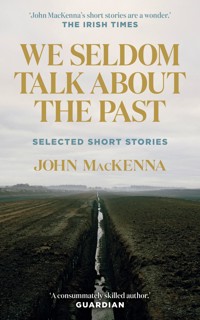
We Seldom Talk About the Past is John MacKenna's first selected collection of short stories, from a career spanning over three decades. The stories selected come from four collections of short fiction, and represent a culmination of MacKenna's work in a form of writing he has made uniquely his own. Often compared to John McGahern, and Raymond Carver, and deeply influenced by masters of the form like Chekov, MacKenna's stories focus on the quotidian truths of our lives, of the momentousness of small moments, of sexual desire and its intimate entanglement with the domestic, of deeply felt absences and social mores, and always at the heart of his work, the sense of place, often the rural, and the acute receptiveness of our lives to the places we inhabit.
Das E-Book können Sie in Legimi-Apps oder einer beliebigen App lesen, die das folgende Format unterstützen:
Veröffentlichungsjahr: 2021
Ähnliche


















A Note on the Author
John MacKenna is the author of twenty-one books – novels, short-story collections, a memoir, poetry and a biography – and a number of radio and stage plays. He is a winner of The Irish Times, Hennessy and Cecil Day-Lewis Awards. He is also a winner of a Jacob’s Radio award for his documentary series on Leonard Cohen and a Worldplay Silver Medal (New York) for his radio play The Woman at the Window (RTE Radio 1). He teaches Creative Writing at Maynooth University and at The Hedge School on the Moone.
Also by John MacKenna
Novels
Clare
The Last Fine Summer
A Haunted Heart
The Space Between Us
Joseph
Hold Me Now
Short-Story Collections
The Fallen and Other Stories
A Year of our Lives
The River Field
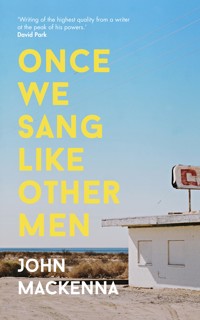
Once We Sang Like Other Men
Memoir
Things You Should Know
Non-fiction
Castledermot and Kilkea: A Social History
Shackleton: An Irishman in Antarctica (with Jonathan Shackleton)
The Lost Village
I Knew This Place (Radio Essays)
Children’s Books
Turkey’s Delight
South
Poetry Collections
The Occasional Optimist
Ten Poems
Where Sadness Begins
By the Light of Four Moons
Plays
The Fallen
The Unclouded Day
Towards Evening
Faint Voices
Sergeant Pepper
Over the Rainbow
The Woman at the Window
My Father’s Life
We Once Sang
Redemption Song
Lucinda Sly
Between Your Love and Mine (with Leonard Cohen)
The Mental
We Seldom Talk About the Past
Selected Short Stories
John MacKenna
We Seldom TalkAbout the Past
Selected Short Stories
John MacKenna
WE SELDOM TALK ABOUT THE PAST: SELECTED SHORT STORIES
First published in 2021 by
New Island Books
Glenshesk House
10 Richview Office Park
Clonskeagh
Dublin D14 V8C4
Republic of Ireland
www.newisland.ie
Copyright © John MacKenna, 2021
The right of John MacKenna to be identified as the author of this work has been asserted in accordance with the provisions of the Copyright and Related Rights Act, 2000.
Lyrics from ‘Boogie Street’ reproduced by kind permission of Leonard Cohen.
Lyrics featured in ‘The Fallen’ are from ‘Somewhere a Voice is Calling’, composed by Arthur F. Tate with lyrics by Eileen Newton.
Print ISBN: 978-1-84840-803-6
eBook ISBN: 978-1-84840-804-3
All rights reserved. The material in this publication is protected by copyright law. Except as may be permitted by law, no part of the material may be reproduced (including by storage in a retrieval system) or transmitted in any form or by any means; adapted; rented or lent without the written permission of the copyright owners.
British Library Cataloguing in Publication Data. A CIP catalogue record for this book is available from the British Library.
New Island received financial assistance from The Arts Council (An Chomhairle Ealaíon), Dublin, Ireland.
New Island Books is a member of Publishing Ireland.
For my friend and agent, Jonathan Williams
So come my friends, be not afraid, we are so lightly here, it is in love that we are made, in love we disappear.
Leonard Cohen, ‘Boogie Street’
Contents
Introduction
The Fallen
The Unclouded Days
Hewer
The Things We Say
A Year of Our Lives
Over the Rainbow
Husband
Laburnum
Breathless
The Low Terrace
Sacred Heart
Friends
Resurrection
Absent Children
My Beloved Son
Introduction
The thing that first intrigued me about short stories – in the beginning O’Connor, O’Faolain and Lavin, borrowed from my parents’ bookshelves; later Chekhov and Carver – was the sense of absence they brought, the inconclusiveness, the wonder of the unfinished. I’ve always thought of short stories as photographs. We see what we see, but what came before the moment and what follows the moment can only be guessed.
That sense of absence and want has been a huge part of my own stories – the missed opportunities, the empty chairs, the might-have-beens. Indeed, one of the stories in this selection is ‘Absent Children’, one of five stories with that title that I’ve written over the years. This may stem, in part, from the loss of a number of my siblings, still-born children, buried at the bottom of our garden.
Selecting stories from collections that range back over more than thirty years has been difficult and intriguing. The stories speak for themselves but a short account of their roots may clarify some aspects for the reader.
The pieces I have chosen begin with the title story from my first collection, The Fallen. It’s a tale inspired by a First World War headstone in the cemetery in Athy, Co. Kildare. Out of that one stone and that one name grew a story narrated by two voices, a story of love, loss and futility.
‘The Unclouded Days’ and ‘Hewer’ are from the same collection. Both are inspired by events in the area of south Kildare in which I grew up. The former began life as a stage play, based on real events from the 1930s. ‘Hewer’ grew out of a phrase thrown by a teacher at a fellow student in my schooldays.
The next three stories, ‘The Things We Say’, ‘A Year of Our Lives’ and ‘Over the Rainbow’, are drawn from my second collection. That book was written in the aftermath of the end of a marriage, a two-year period spent living alone in a cottage on the edge of Mullaghcreelan Wood – a time that also inspired my novel Clare. As with ‘The Unclouded Days’, ‘Over the Rainbow’ began life as a one-man play, but there were aspects of the character that didn’t fit on stage, so I reworked the narrative as a long story. Often, the process of writing, rehearsing, rewriting and performing brings on the urge to find a new medium for a story – to expand (or contract) the work from play to story or story to play.
‘Husband,’ from The River Field, is a glance into a future that may await any of us. ‘Laburnum’ came from a dream – an imagined encounter in the garden of the Church of Ireland rectory in Castledermot. In that dream, I came face to face with my schoolboy nemesis, a teacher whose cruelty was often beyond words. This occurred in the shadow of the wonderful laburnum tree that reached across the rectory wall for years.
‘Breathless’ grew out of the tragic trail of disappearances of young women in a geographical triangle that touched on my home area. The four women in the story are not based on real people, but the ordinariness of their lives and the brutality of their disappearances are paralleled in the story. Again, this began life as a stage-play.
‘The Low Terrace’ takes its title from the colloquial name for the street on which I was born and grew up, Abbeylands in Castledermot. The story is a mixture of memory and imagination, an homage to the people among whom I grew, a retelling of aspects of our lives. Memory is a place I’ve often gone to for stories – reality fictionalised or reality remembered in memoir.
‘Sacred Heart’ was inspired by a walk my daughter and I took on a beach in North Carolina. It comes from my most recent collection, Once We Sang Like Other Men – a body of work inspired by the notion of retelling the stories of the twelve apostles in a contemporary setting and written in the shadow of my brother’s death.
‘Friends’ is the only story in this book whose genesis is unclear, even to me. It began with a character and that character brought his own story – not one with which I was particularly comfortable but discomfort and dis-ease are wonderful and challenging places from which to write.
The final three stories, ‘Resurrection’, ‘Absent Children’ and ‘My Beloved Son’, are from Once We Sang Like Other Men. ‘Resurrection’ was inspired by the notion of a child taking the words of a priest literally and expecting the resurrection of his dead father, but it’s also about that first call to short-story writing: the intrigue of the uncertain, the unsolvable mystery that can destroy a relationship.
‘Absent Children’ is a continuation of my fascination with the notion of childhood and absence, inspired, I believe, by the fact that three of my siblings died at birth and were buried in our garden, at some kind of peace. Their unbaptised state meant they were refused burial in sacred ground. But the story is also prompted by a period I spent house-sitting for friends in a dwelling on a river bank – a setting I found increasingly depressing and dangerous to my mental health. Landscape, mostly for the better, has always been a central part of my work – another character in stories. If we lose touch with the soil, we’re lost.
When I wrote ‘My Beloved Son,’ I had a sense of the completion of a circle. It took me back to some of the work in my first collection and it seemed a fitting story with which to end the Selected Stories – everyman and everywoman coming face to face with the heartbreak. As Jackson Browne wrote in his song ‘For a Dancer,’ ‘in the end there is one dance you’ll do alone.’
John MacKennaJuly 2021
The Fallen
For Frank and Breege Taaffe –from whose home the Hannons wentto join the fallen
I wore a lavender skirt that night, a slate and brittle blouse. There is a lavender skirt thrown across the chair. A different skirt. Outside, the dark says autumn. A thick mist trembles into drops on the lead pipes. It pip pip pips the last few feet into the gutter in the yard. I turned from this same window on that night. A night in summer. I looked at what I appeared to be. I knew exactly what I was.
The road outside was just as quiet then as it is now. But that was a different quietness. That was the stillness of a summer evening as the gardens burst into a bloom of sound. The click of forks echoed, turning out the last settle of the deepest frost. A neighbour, borrowing, shouted, her voice rebounding from wall to wall along the gardens. Carts rasped in the alleyways as drivers backed and worked the loads of dung between the creaky gates. Girls with arms of precious roses hurried from place to secret place. The heels of love began to sound again. The heels of love were mine.
Here. I am here. Over here on the angle of the cobbled paths. Behind me the trains thunder. I despise the angle but I welcome the grass that is thick and long, cut once, perhaps, in eight or twelve seasons. I welcome that softness and the softness of her footsteps, unheard now by those she passes in the street. Her resolute body unseen. Her faint laughter reaching only me and my words are caught only by her. And, perhaps, by the other old soldiers grown tired in their graves. Men who still remember little things. Obscurities. The shining promise of a blade. The glisten of skin, caught, at last, after all the talk. The button blaze. The lightning smile.
Did we pay too much for the pleasures we got? The things that mattered then seem of no consequence any more.
What you want is my story.
My name is Mary Lloyd. I was born near Castledermot in the County Kildare on the seventeenth of June, 1890. I was the youngest daughter of three. My father was a farm labourer who could turn a pair of horses with a twist of his wrist and a cluck of his tongue. He cut and kept the ditches, weaving alder, sally, elder into fences every spring. He carted grain to Hannon’s mill. He ploughed the acres pair by pair. We rarely saw him in the summertime, except in passing, when he’d lift us on the chestnut backs and trot us to the road. My mother was a seamstress. Her customers left their cloth in a shop in the town and we collected it after school, carrying the bundles carefully, up and down Fraughan Hill.
By the time I was ready for work my sisters were married and gone. I travelled twelve miles to find something new. From the side of Fraughan, through Castledermot on a fair day. The cattle milled on Hamilton Road, dropping their thick necks to drink from the Lerr. Farmers and jobbers and hucksters pushed and jostled on the Square. They glanced at me. I waited hopefully, for some remark, a whistle or a gesture. They were too busy with their money. I walked through Hallahoise, past the woods at Mullaghcreelan, by the gates to FitzGeralds’ castle, on through Kilkea, Grangenolvin, to work in a bakery in Athy. I was sixteen then.
I did my work in bakery and shop. I danced. I sang. I walked with other girls on summer nights. Out past the pond at Bray and back the Castledermot road. Board dances and house dances marked the seasons of my life. I would dream men’s tongues along my breasts, their lips about my nipples. I had my share of men. They had their share of me. I was twenty.
I’d see him in the street. Him and his wife. She was young. Almost as young as me. And hard. I could hear it in her voice when she spoke in the shop. They moved from Barrack Street to a cottage on the Dublin road, across from where I had my digs. I’d see him in his garden among the daffodils and dahlias. Everything in that garden had its place. The rows and lines reminded me of my father’s garden, of his fields all ploughed and set. There were apples and cherries where the drunken bees hummed and fell. But it wasn’t just a garden of lines. There were clumped and clustered flowers where you least expected them. They took you by surprise. And all the plants and slips in pots along the gravel near the door. All waiting to be sown or given out to people in the town.
I wonder where a passion like mine starts. How does it grow? Does it run in the blood or does it just get out of hand till it’s beyond control? Is it like sap rising? Is it something that insists on being heard? I know it stares. It stares till the stare is returned. It flames until it burns its root and then it goes on burning. It outlasts time and place. I know all this because this passion for him carried me beyond any love I had accepted in the past.
I’d walk the roads I knew they’d be walking. I’d stay at home, miss dances with the other girls if I half-thought he’d be there burning twigs or leaves in late October. I’d talk to his wife for ages in the hope that he’d arrive. I’d stand at the gate and stare across at him. I knew how foolish I must look but I didn’t care. I was twenty-two.
I’m Frank Kinsella. I was born in this town on the seventh of October, 1880. I was an only son. My father was dead by the time I was born. He was never talked about and I never saw any reason to enquire.
I left school at twelve and started work for the Lord Kildare. The FitzGerald of Kildare. I set my mind to like the work. I walked the six miles out and back. I did my work. I was never late and I never missed a day. I listened well to every word that I was told. I watched what the other gardeners did and I knew his garden backwards by the time I was sixteen. I knew every strain of apple; every pear along the castle wall; every breed of rose; every vine in the greenhouses. Azaleas, magnolias, hydrangeas. The cypresses, the oak, the ash, the elder and the clematis. There were winter mornings at Nicholastown when the frost was as thick as cream. There were evenings when the rain was like bamboo rods across my back on the straight beyond Grangenolvin.
I’d salute Lady Nesta on the driveway. I’d stop to talk to Lady Mabel on her horse. I remember Lord Walter framed in the stable doorway with a light behind him like a golden blanket, soft and clean. It was Christmas time.
It was Christmas, too, when I met my wife. At a dance in the town hall in Athy. There she was in a crowd of girls. Her face was young and clear. It was like the light in the stable yard. And her hair was wild and brambled. She had a smile as bold as brass. We were married the following autumn. New suit, a ten-pound note and two days off. Lord Walter promised to put in a word about a cottage on the Dublin road. He was as good as his word.
She was hard at times but so was I. I could swing a fist with the best of men on Barrack Street. But she could soften too.
If you asked me to name a time, I’d go back to a summer morning. It was four or five o’clock. We’d been to a dance somewhere near Baltinglass and we were freewheeling down from Mullaghcreelan. The light was just coming up and it was a warm morning. Sometime in the end of June. We weren’t even tired after all the dancing and a ten-mile cycle. We were laughing as we reached the bridge above the Griese. We stopped and I lifted her onto the parapet above the river. I climbed down to pick a water iris from the bank. The river was down to a trickle and the bank was cracked and baked. I remember my boots made an impression on the mud. I looked up. She was perched above me. And then a man rode past, dismounted, pushed open a gate into a field and wheeled his bicycle across the grass. He had a small white box tied to the carrier. We watched until he disappeared into the ruins of a church. I climbed back up and handed her the irises. She dropped them slowly in the water and we watched them sail between the rocks and out of sight. Oh, she could soften too.
She never loved me the way I was in love with her but I accepted that. I saw this as how our lives were going to be. The same as everyone I knew. She could be soft but the softness disappeared and she had a habit of denying the memories I had. I’d remind her of things and she’d pretend to remember nothing. She’d be angry if I went on about it. I never understood how she could swear the past away. And once she started that, I knew I loved her as little as she loved me. I’d think to myself that she could change as much as she liked and so would I. But she should leave the past alone.
At times she’d say she was bored. Another time it was loneliness. ‘You have the garden,’ she’d say. ‘The garden doesn’t mean the same to me.’
One of her brothers would cycle in in the mornings and they’d cycle out together. After work I’d call to her father’s house and collect her. Winter and summer she’d be there, curled up like a cat beside the fire. Once or twice, when it was raining, she said she’d stay. Then more and more I’d hear that story. ‘You go on,’ she’d say. ‘There’s no sense the two of us getting wet. I’ll stay the night.’
Never once was I asked to stay. She never suggested it and her father and brothers made no move. I knew they’d never have me sleeping under their roof. As far as they were concerned, she was still one of them. I’d go home and walk around the garden. I remember one wet spring evening in particular. I walked around and around the cottage, up and down every path. There was a fine rain falling and there was a yellow light from the sun over the Laois hills. Around and around I walked. Other times I’d check the potato pits or heel in cabbage plants. I’d smoke a pipe. Some nights I’d sleep there in the chair. I’d wake at two or three and toss another sod on the melted flames. In the end the winter won. The blankets burnt with a better heat. I could imagine then.
She came some Saturdays. I’d arrive and find her there. The house would smell of bread and her. The hearth would be swept. I always kept it swept but this was in a different way. More complete. The windows would be open and the washing done, flying a flag of possibilities. She’d stay till Monday. I’d begin to tell myself the past was past. And then I’d find her gone again. I’d say nothing and neither would she.
Sometimes, I think, she was on the edge of touching me. I don’t mean touch. I don’t mean tease or sting. She was on the edge of explaining what was there or what was missing. Or so I thought. I never could be sure.
One Wednesday, the end of April, I drove a cart into the town to collect some seed from the railway station. I saw her father and her brothers at our gate. They had her dresses and her coats across their bicycles. One of them was coming down the path, his arms spread out. He had a mirror and a picture in them. They knew I saw them and they stood like frozen cattle, watching me. I jigged the horse and carried on.
She came to see me once after that. One evening of that week. We talked about nothing. She walked the garden with me. She was full of chat about the flowers and the plants. She’d touch my sleeve. She’d sweep the hair back from her face and stare at me, a thing she hadn’t done for months. She was a girl full of courting tricks again, except I knew she wasn’t. There was nothing to it. She was safe. Her bits and bobs were gone by then. She was as safe this last time as if it had been her first. And then they came to bring her home.
I’d meet her on a Sunday, safe between her brothers, on the steps after Mass. The way they carried on, you’d think I was something to be afraid of. As if by then I even cared.
The whole town knew. I’d hear it in the bakery and in the shop. Every tongue had a different twist. It was because of this or that. Because he wouldn’t touch her. Because he never stopped. There were always two sides at least, and every side was talked about and twisted. It wasn’t that she was telling anyone. She’d still come into town but she talked as much to me as anyone and there was never a word about him or them. And he never talked. I never saw him talk to anyone. But that didn’t stop the hints. By May the whole town knew.
What could I do? I was caught. Marooned. Too soon to try to make a bridge but the gap cried out for me to fill it.
Through May his garden stayed untouched, and then one evening after rain I saw him, scythe in hand, the nettles crashing from the ditch. The drops reared up and shone in every light. His sockets were still and his arms moved in them, floating rather than flapping. His head was half bent. His body was as hard as granite. I leaned across our gate and stared at him. Every now and then the blade would catch the stony wall and rasp and spark. Then it swished the wet and stinging greenery. I could hear the clean, flailing sound as clear as water. He was silent in his work; each swing was measured as he worked along the garden, never going back, the nettles laid as neat as corn across the grass.
I loved him then, by Christ I loved him then.
I wanted those arms to disentangle themselves from the work of scythes, from whatever memories of pleasure or pain that kept them straight. And I didn’t care what it was that had driven them apart. Too much pain. Too much demand. I could coax or satisfy. Listen, I wanted to shout, I’m not afraid of what the people think or what the people say. I’ve watched until I know the flex of every sinew in those arms. I know the stoop, the stretch, the walk, the watch.
My name is Mary Lloyd. I start my day at six. I try to meet you or to see you as I leave for work. I rarely do. I carry bread from bakery to shop. I think about you. I think, she’s the one that left but it’s me that you ignore. I’ve seen you talking to her, hung there between her brothers after Mass.
Frank Kinsella, my name is Mary. Mary Lloyd.
I’d drive the four-pronged fork into the bitter earth. I’d push the tines a foot below the soil. I’d stoop, as I had stooped all day, and then I’d lift and free the prisoner of a winter I’d allowed to drag itself into the summertime. I’d speed the rhythm gradually. I’d thrust, then push, then stoop, then lift. And thrust and push and stoop and lift. And thrust, push, stoop, lift. Thrust, push, stoop, lift. I dug my way out of the past. I dug myself a shallow grave from which to breathe, in which to rest. I thrust and push and stoop and lift and then I hear this voice that frightens me because it seems to come from nowhere.
‘My name is Mary Lloyd.’
‘I know your name.’
‘Tomorrow is my birthday. I’ll be twenty-three.’
I smile, I can think of nothing to say and so I smile.
‘I’d like it if you’d walk with me. If you have nothing else to do.’
I smile again. I say, ‘Of course.’ I have no idea why.
My name is Mary Lloyd, I say, as I walk back from work. I hurry now along the cobbled street. I am anxious to be out of these working clothes. I brush the flights of flour from my hair as I walk. I smile at people. I want to stop and tell them about the possibilities and still I do not want to stop. I want to hurry. I nod and rush on past the Railway Bar, across the bridge, out by the manse and through the yard into the house. I prepare myself. I wear a lavender skirt. My blouse is a slate and brittle grey.
We walk across the town. I don’t care who looks or what they say or what it means. Neither, I’m sure, does he. I talk. It is uneasy talk but I go on talking and he laughs. Sometimes he smiles but his smile is as uneasy as my talk. Mostly he laughs. I can recall every moment of that walk.
We go on walking several nights a week. On Sundays we cycle out between high ditches. He calls for me. Comes and stands at the gate. Leaning across his bicycle, he talks to the woman of the house. He says goodnight at that gate. And sometimes, when I am early, I stand at his gate. Once he invites me in to smell the roses by the wall.
The summer passes. What do I notice? Fifty factory girls are burnt alive in England. I read about them in the newspaper. They are not me. I notice his garden. I notice how his face will cloud and clear. I notice her whenever she’s about. She smiles at me in the shop.
I travel home one Saturday to see my sister’s child. I travel back on Sunday afternoon. I ride in a sidecar to Kilkea and walk the rest of the way to be in time to meet him after tea. That evening we walk out past Lord’s Island. We walk beyond the horse bridge, across the fields along the Carlow road. We perch on a half-built cock of hay and gradually slide until our backs are resting on the scattered wisps. He talks and talks instead of touching me.
That night I notice the dahlias touched with rust inside his gate. Lying awake, his plant of stock outside my window, I think how I would relish sin. But he has been so rigid in his hard, red boots. His collar starched and done. I wish that I could dance the seven veils. I think about how he went on talking while the possibilities narrowed and shrank with the light.
Walking back along the railway line, he’d told me. I remembered word for word.
‘She never loved me the way I was in love with her but I accepted that was how our lives were going to be.’
I waited for the rest. I waited for the recognition that I knew he had to have. If he couldn’t put the words in place, if he couldn’t give, at least he had to recognise what I was telling him with every gesture. I waited for him to say she had never loved him the way he knew I did. I lay and smelt the stock in the blue-black night. I imagined his tongue on mine, his fingers travelling between my thighs, his lips collapsing on my skin. In the end I knew there was a depth of pleasure and I knew as well that he’d never say that kind of thing. Not this side of whatever grave he’d already dug. Was that to be our only bed?
I envied her her passion.
If she’d talked of it. If she had put some shape on it. If she had turned to touch. I talked and talked in the hope that she’d grow tired of my talk and, despairing of ever kissing me, kiss me then.
I envied her her passion.
If she had skirted it. If there had been a breath. I strained and strained to say something. To move. To step out of that grave. I tried at night to put the whole thing into words. I wanted to unhook the lust from its silent pier. But then, I thought, I know nothing about that sea. What am I? A silent inland walker, scrabbling for some other words to say the words for me.
One morning I went and sat on the low wall at the road. I measured the steps that would take me to her window. I counted the possibilities. I decided on bringing her to my house. I rehearsed the possibilities. I went back inside and lay down and felt her touch in my own. I felt the possibilities seep away.
But I envied her her passion.
I thought the smell of stock must smother her in what I felt for her. Did it not tell you everything, Mary? Mary Lloyd.
I envied him his strength.
Never mind the strength to work all day and then to work on through the night. I envied him his strength to take whatever came. To let her go when she decided she was gone. And I envied him not taking what was there of me. He could have done at any time. He need never have asked. I envied him that. In spite of everything, he must have known that I was his. I envied him his strength and damned him into hell for it.
I looked at him and saw a blind and stumbling plough horse. I thought of how my father turned his horses with a twist but I couldn’t turn him any way. He was too heavy to ignore. Too set to change his ways. His boots were like brown lead feathers. His eyes were set on the end of some long drills that stretched like graves and graves and graves.
I envied him his strength, but Christ, I wished that he could sense the lust, the passion trapped in every breath I drew. Could he not feel it in my fingers; hear it in my darkest gasp; smell the smell of love that frightened me with its strength? Could he not untie the harness and touch me, just this once? Could he not take some lessons from the songs he hummed or from the thoughts his body sowed in me?
I waited.
We talked about the earliest dead who had fallen in France. They were not me.
After the harvest, after apple picking, he kissed me and I eased his hands about my body. He talked about breaking from the pier. I didn’t understand but urged his fingers on. He was changing, becoming another man. I thought about the curves of his body and the curves of mine. I thought of this in the early frost, hurrying to work. I thought of it in the warmth of the shop. I gave myself to it. I drew his tongue between my lips and refused to let him go. When his touch was not enough, I touched with him. I no longer cared about the smile his wife carried. I smiled myself.
Sometimes we talked about the names we’d heard. About the dead swept back on a tide of blood at Mons. About floundering sailors from the Cressy and the Hogue, sucked into the icy sea. I felt the blood pumping like water in a millrace. I felt his mouth suck my breasts between his lips. My blood drove towards one moment; all day it drove towards the moment of release.
And then he told me he was going. I asked him why. It seemed too simple to ask that question but I had the right to ask him why. I had nothing else to say. He just smiled. A wry smile. A mirror of his smiling wife? I knew then that when we’d touched we’d hardly touched at all.
Mons, Ypres, Paris. What had these to do with me?
Nothing. And nothing to do with me. They were places where things were clear. In a minute of foolishness I had told her part of what I thought. If I went, there was some chance the past would change here the way it was changing everywhere else. I had this vision of coming back and finding my wife gone, dead, something unforeseen. Something would happen that could never happen while I was here. I believed that. She looked at me when I said that. There was something of that other, brassy look. There was no anger. Just sadness.
Nothing will change unless you change. We could go and live in another place. There’s nothing here that I can’t live without. I’d be happy out of here. And I have no need of rings or churches or words. None. I could gladly go without them all. You’ve never changed. Your wife won’t be gone. She won’t be dead. But there are other things that could die. Will die. Things are changed already. Why? I have the right to ask you why.
For once I thought that touch instead of words would stop the questioning. We were under the chestnut. It was raining. If I was to tell her why, what would I say? I had no idea why. It might be to escape. Or to evict. My fingers moved with ease, my tongue was sure. The rain dripped in a great circle from the widest branches while we lay in their umbrella. There was no escape. Her breath quickened and then became a question. Why?
There were other mouths that called me traitor from the corners of the street, from black doorways, from the market crowds. I never raised a fist. I ignored the mouths I could have bruised or broken easily. But I felt no satisfaction knowing how they longed for pain and were denied it by my fists hanging limp. If there was a betrayal, it had happened a long time ago.
I had no interest in the tunic or the buttons or the guns. They were part of a cause. I wasn’t going for a cause. I wasn’t going out of reason but out of hope.
What did I hope? That if I went I’d come back a different man. If nothing had changed, at least I would have changed. And coming back, I’d find the same woman.
But did I believe? I believed that she’d remain. But her question dimmed and quenched the hope.
‘Do you believe in everything you’ve said?’
‘I believe you will remain.’
‘What else do you believe?’
I’ll tell you now. I’ve said it often enough to myself. I’ll tell you now. I believe in the beauty of your breasts, in the form of your shoulders, in the sickle of your thigh, in the ease of your hands, in the power of your eyes, in the fury of your hair, in the storm of your whisper, in the passion of your thought.
‘Do you believe in everything you’ve said?’
‘No. I don’t believe in me. My past is a nightmare. I have never told you that. First there is penance. Then sleep. Then this dream.’
‘Is that the truth?’
Part of the truth. The truth has nothing to do with us. The truth has all to do with me. Everything we have done has been true. The places have always been true for me – fields, gaps in ditches, trees that were one way in winter and one way in spring. Ways that you lay or laughed or walked. Ways I prepared for meeting you. These have all been true. There’s no question about these. But I have no answer about why. No answer for myself, much less for you.
‘When you smile your mouth reminds me of your wife’s.’
That might be what you see but that has nothing to do with the truth.
‘I saw no hope.’
I told no one until the thing was settled but already they knew. I gave my notice. Lord Walter asked me to think again. He said there were people he knew and then he said the job would keep.
I put straw on the pits. I got my uniform. I tied the last of the dahlias. Collected my wages. Cycled down the castle avenue without looking right or left. At home I washed in the starry yard, put on my uniform and called for her. I walked to her door and knocked. The stock was still in flower. They asked me in and ignored the uniform. We walked across the town and back. Sat on the low wall until Sunday came.
The night before he left we danced at the town hall. Sneering, I said, ‘Why don’t you wear your uniform tonight?’ For once I saw the pain and it frightened me. I drew back from saying any more, afraid I might have said too much. What did we do? We danced every dance while the music was playing. The music of fiddle, melodeon, piano and drum. We swung with the crowd without hearing the music. I was stunned by the speed with which certainty had arrived. Danced to the waltzes when the waltzes were playing, nodding at faces that passed in the crowd. There was Robert MacWilliams and Christopher Power, faces that passed as we swung around. He kept his distance but this moment of passion lasted as long as the music was playing. And then the music stopped. The faces grew voices, the movement was over and bodies jostled towards the cloakrooms. We were part of the crowd again. Faces smiled. Mouths dribbled short ashy cigarettes. I handed in my ticket, took my coat and put it on before we walked down the stairs. Stepping out into the night, I felt neither cold nor warmth. Loud men shouted in Emily Square, peeling their bicycles from the layers against the wall. Girls laughed and waited, uncertain whether to go or stay.
We walked up Offaly Street towards the park. The cold, hard park with its shiny brown bark and its thinly frosted grass.
‘Would you not bring me home this once?’ I said.
‘What did you say?’
‘Would you not bring me home? This once.’
I brought you … home.
Instead of passion there was panic. He saw how easy the whole thing could have been. How simple. But he dared not recognise it. Too late for that. And I dared not say anything. Isn’t that the way it was that night? Whatever our bodies did, no matter how easily, could have been done much better a thousand times after that. And whatever it was that they failed to do could be changed if there was time and ease. They did their work. The sweat of terror made the bodies slide together. It might have smelt of ecstasy but we were terrified. Our bodies ground on because it meant we had nothing to say and less time to think. And he was thinking, as I was, how this might have happened before and how easily it could have been another day on which we’d rise and go to work and come back home and go to bed. Had I not said all that? The truth was evident but there was no place for it now. I stayed and watched him dress. Had this been some kind of sweet, pale honeymoon?
We walked to the station. Him in his uniform. Me in my dancing dress. There were others there in their regalia. Their wives and sweethearts dressed for the day.
Mick Lawlor. William Wall.
I kissed him then. There on the top platform outside the stationmaster’s house. We leaned against the iron footbridge and kissed. He saw, again, how easy life can be. His body hard between my twisted skirts. Until the train began to move.
Outside the station, in the silence after he had gone, I heard somebody whistle, a young shop boy on his bicycle. A song the band had played the night before: Night and the stars are gleaming, Tender and true; Dearest! my heart is dreaming, Dreaming of you. The walls closed in. I saw the throng. I smelt his sweat and I heard the music clearer than when it played. Every sense I’d stifled came alive. His smell, his touch, his taste flowed from every pore and left me sick.
I woke up. It was another day. I had to work. I realised he had gone. I dressed and walked to the shop. Where was he now? Still in Dublin? Halfway across the sea? Somewhere in England? Certainly no further than that. I expected him to come lumbering into the shop, embarrassed, saying he had talked with Lord Walter and things had been worked out. He was going back to gardening. He was looking for a cottage in Kilkea. It might take time but then we’d move.
I was in the bakery when one of the girls called to me. There was a man in the shop wanting to talk to me. I recognise him. Noel Lambe. He says Frank has left a key with him. He’ll be keeping an eye on the cottage – sleeping there now and again. He’s to give me anything I want. I’m to go there any time I want. I can stay there if I like. That’s what he’s been told to tell me. I have only to let him know. Any time. All as matter of fact as that.
I carry bread from bakery to shop. I chat. I clean the windows in the street.
I wake up. It’s another day. I have to work. I wait and wait.
Little things that never bothered me before begin to bother me now. The weight of these boots. The way the collar scuffs my neck. The task of writing and what to say and how to say it.
‘We have arrived here safely and we are training. It’s not as bad as you might think. I suppose Noel told you what I said about the house. Whatever is there that you might want is yours to take.’
I don’t mention moving in. I try to come to that from several ways but I can’t.
I sit out in the barrack yard and try to think of other things to write. I look at the nail of moon caught on the edge of a hawthorn bush. Beyond it the lake water is dark. Darker than the Griese. But the thorn reminds me of a turn on the castle avenue. This is England. That was home. I start thinking of fields. I think of how she nested in the hollows of my body. I think of how I wound my arms around her and nested in the hollows of her body. Her breast was in the hollow of my hand. There was a particular smell from her hair. Maybe of apples or rain. I started to say that to her and then some people passed and we went back to our bicycles and she tossed my hair with her fingers.
I don’t mention any of this in my letter. This has happened. She knows that. Why write it? I tell her the food is good and the lads here are a decent crowd.
I wake and it’s another day. I walk to work. I stop at his gate and notice that Noel has scuffled all the weeds. They lie in neat piles along the edge of grass. Today he will come and burn them.
I wake. This is not another day.
We cross the English Channel. It’s not as bad as people say. They tell us Ypres was the worst but they tell us too that English, Irish, Germans, sang together at Christmas time. I write and tell her this.
‘A happy, happy New Year.’
I am surprised at what I’ve written. I leave it so.
I wake and it is spring. The snow melts into isolated spots of snowdrop. The crocuses in purple-yellow dot the ground around the apple bark. And then it snows again in wintry narcissi. The evenings lengthen, carts of dung arrive from the countryside and back between the creaking hinges of town gates. Young girls I last saw as children walk with boys, out the Dublin road to Ardscull and back.
And then it is summer. I tend his garden in the evenings. Noel comes and cuts the grass. The roses rear above the walls, sweet pea rambles across the gable. I wash and clean the floors. I open drawers and find his shirts in neat lines. They smell of winter. I hang them on the line and it gives me pleasure to see them threshing in the warm wind. I leave them out overnight and tell myself as I walk to work that he is home. I almost see the smoke from his chimney. That evening I fold the shirts and put them back inside their drawers.
Noel comes and limes the walls. We sit in the kitchen talking. The sun seems caught on the hills of Laois, unable to sink. It throws a long bolster of light across the table. I ask Noel if he knows why he went. ‘If you don’t know, no one does,’ he says. His words give me some feeling of closeness to Frank. I know what he says is true. If I don’t know, he doesn’t know himself. And it doesn’t matter, anyway. All that matters is that next summer the three of us will sit here and then the pair of us.
His letters come. I write to him. I read his words.
We heard a story down the line today about two blokes who were sentenced for desertion. They were strapped to the wheels of a gun and shot. I don’t write about that kind of thing. We hear these stories, we talk about them, but I don’t write of that. I write and say things are going well. I say the weather is improving. I am glad to hear the garden is doing well and glad about the lime. The cottage needed that. I mention people I know, fellows I’ve met – Larry Kelly and Stephen Mealy.
In April we were at Ypres. The gas crept like stink from a tomb. We passed these men lying in the grass. Their eyes were bandaged. We could hear their screams long after we had lost sight of them. Somebody said, you can’t fight that bastard gas. I didn’t write of that.
I remember the autumn by its fruit. I picked the low apples. Noel climbed for the high. I came home one afternoon and found a basket left at my digs, a basket of pears sent from the castle. I walked with the other girls on October Sundays. To Bert Bridge, to the Moat of Ardscull.
At Christmas I went home to Fraughan Hill. The house smelt of damp timber and the fire shot sparks across the stone floor. I told my mother about Frank. She smiled and said nothing. On the morning I left she said, ‘You’ll be all right.’
We had an Easter of daffodils. They trembled and shivered. I picked some and put them in a vase on his table. I left them there, even when the petals nodded, frizzled, stumbled and fell. I left them for a very long time.
There were other things I didn’t write about. I met this chap with his fingers cut so deep that they hardly seemed to be a part of him. I asked him how this happened: stretcher bearing. No stretchers left. He and the others carried the wounded on sheets of corrugated iron. He lost the use of his hands but he went on carrying with stretcher sacks tied around his neck. He told me he had carried a man two miles to the medic. Already there were thirty or forty bodies surrounding the trestle table where he worked. Still men, men screaming. The medic worked on, his vest blood-soaked. The bodies came and went, the dead and the dying. The rest were shipped further back.
The funerals begin. In the afternoon the shop shutters bang. Small cards with scrawled words appear all over the town, on doors in Barrack Street, in Leinster Street, around the Square.
I break the last branch of bloom from his lilac tree and take it home. The scent fills my room for three nights and then the bells fall apart.
One afternoon while we were marching, very close to the front, we saw a horse galloping towards us. His innards were trailing like a second tail. Then these men appeared. They came in twos and threes, the walking wounded. They came without rifles, many of them shirtless. They reminded me of people I had seen at gravesides, people deep in shock. They ignored us and went on walking, sometimes linking like drunken men on the Barrow Bridge, stupefied beyond recognition. Further along the track I saw a piece of flesh. I recognised it. Torn from the horse’s belly. We went on marching.
Later, lying in a trench, waiting for the whistle, I thought about all this and then I thought of her. I knew then I would write and tell her everything – but first about the horse, the wounded, the raving mad.
His laburnum flowers fall, their golden rain scattering the grass. I get more letters from him now, full of the things he sees, the things he smells, the sounds of shells and guns and human voices. He tells me everything.
‘My darling, Last week, Sunday I think, we came upon this village. It’s hard to believe but it’s still in one piece. It was raining when we marched in, far back from the lines. A bit like Ballitore on a wet evening. No one about. Four of us went to this little café place and sat there drinking wine. We stayed there while it got dark. You get used to wine. It’s nothing like the pint of stout in Maher’s but better than a lot of things I’ve drunk out here.
‘There was this woman behind the counter. She sat there the whole afternoon and evening. She was sewing. When it got dark she lit a lamp and I could have sworn she was you. I know what you’re thinking, so much for all this wine, but I swear, with the light and the colour of her hair, it could have been you. I was just sitting there watching her, and thinking to myself that I’ve forgotten a lot about you. About the way you look.
‘The clearest memories I have are of the parts of you I saw the least. Your face only came back to me in her face and hair in the light of the lamp. You must get a photograph taken and send it to me. Then I can remember all of you. Like I say, there’s parts of you I have no trouble remembering at all.
‘I know what you’re saying to yourself – this fellow is getting very forward.
‘I’ve been thinking, too, about the things I’m looking forward to going back to. I made a list of them the other day. November mornings cycling out to Kilkea was the first. And then the blossoms in the castle yard. And summer evenings coming in the road when the cuckoo is raising a row in the fields. These are going to be the same as they always were. I’ve noticed that. No matter what changes for me over the years, no matter what sort of time I’m going through, these things always keep their magic for me.
‘There’s other things that will never be the same. And the things between us, they’ll never be the same, only better.’
I went down to Carlow to have that picture taken. It was a Wednesday afternoon, a half-day in Athy. I took my bicycle and went alone. I was put standing in front of a tree painted on canvas.
I spent one night in a shell hole, out in no-man’s-land. The artillery went on firing, the thunder never stopped. I lay there with my companion, a dead machine gunner.
When I got the photograph I put it in an envelope and sent it off to him with a letter I had written but would never dare to read.
‘My dearest Frank, I’ve had the photograph taken and I enclose it here. I cycled to Carlow to have it done. The man there was very nice. He said all the girls are having it done. I went down on my birthday. Imagine, I am twenty-six. The photograph came on the train this evening and I collected it on my way home. I shouldn’t say this, but I like it. I hope you do too. Is this the way you remember me or the part of me you’ve forgotten?
‘It’s terrible to hear what you have told me about the war. Everything is quiet here now. Sometimes I think the worse the things you write about, the better it is. I feel nothing will happen to you while these things are in your letters.
‘Every week now some house in the town has a black ribbon on the door and the telegram boy from the post office is dreaded when he appears in any street.




