


9,59 €
Mehr erfahren.
- Herausgeber: Seren
- Kategorie: Gesellschafts- und Liebesromane
- Sprache: Englisch
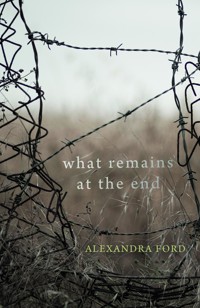
In the aftermath of World War II, hundreds of thousands of Yugoslavia's ethnic Germans – Swabians – were expelled by Tito's Partisan regime. A further sixty-thousand were killed. Seventy years later, a young married woman travels with her lover to find the truth behind her grandparents' flight to America. Alternating between the late 1940s and contemporary Serbia, the woman's story of a dysfunctional marriage and new relationship is interwoven with her growing knowledge of the nightmare horrors of genocide. As her journey unfolds the woman gains connection to the unidentified lost, to the memory of her grandfather, to the man beside her, and to her grandmother suffering from Alzheimer's back home in America. What Remains at the Endconsiders what happens when the truth goes unspoken and asks how it can be recovered – if there is anything left to recover in the face of so many secrets. Alexandra Ford has written an intriguing debut novel of personal relationships played out against some of the very worst results of realpolitik, where human life is subjugated to political and national ideology.
Das E-Book können Sie in Legimi-Apps oder einer beliebigen App lesen, die das folgende Format unterstützen:
Seitenzahl: 414
Veröffentlichungsjahr: 2019
Ähnliche




















WHAT REMAINS AT THE END
To Otto and Betty Fischer
And to all the named and nameless who have been forgotten by the world's terrible histories.
Seren is the book imprint of
Poetry Wales Press Ltd.
57 Nolton Street, Bridgend, Wales, CF31 3AE
www.serenbooks.com
facebook.com/SerenBooks
twitter@SerenBooks
© Alexandra Ford, 2019
The rights of the above mentioned to be identified as the authors of this work have been asserted in accordance with the Copyright, Design and Patents Act.
This is a work of fiction. All of the characters, organisations, and events portrayed in this novel are either products of the author's imagination or are used ficticiously.
ISBN: 9781781725559
Ebook: 9781781725566
A CIP record for this title is available from the British Library.
All rights reserved. No part of this publication may be reproduced, stored in a retrieval system, or transmitted at any time or by any means, electronic, mechanical, photocopying, recording or otherwise without the prior permission of the copyright holder.
The publisher acknowledges the financial assistance of the Welsh Books Council.
Printed by Severn, Gloucester
CONTENTS
Marie Kohler: Great Egg Harbor Bay, New Jersey: 1998
Philadelphia: January 2012
Anja Thompson: Milford, New Jersey: 2011
Philadelphia: 2011
Edie König: Near Linz, Austria: 1945
Vienna, Austria: January 2012
Linz, Austria: 2012
Oskar Geiger: Tschoka, Yugoslavia: 1944
Ansfelden, Austria: 2012
Belgrade, Serbia: 2012
Emma Fleischer: Čačinci, Yugoslavia: 1944
The E-75, Serbia: 2012
Elsa & Lenz Bruch: Rural Batschka, Yugoslavia: 1945
Kikinda, Serbia: 2012
Bački Brestovac, Serbia: 2012
Nicola Ilić: Kikinda, Yugoslavia: 1980
Gakova, Serbia: 2012
Jakob Glas: Batschki Brestowatz, Yugoslavia: 1945
Novi Sad, Serbia: 2012
Zrenjanin, Serbia: 2012
Unnamed: Gross-Betschkerek, Yugoslavia: 1945
Bački Jarak, Serbia: 2012
Novi Sad, Serbia: 2012
Avram Pavlović: Temerin, Yugoslavia: 1948
Apatin, Serbia: 2012
Molin, Serbia: 2012
Hanne Becker: Bristol, Pennsylvania: 2012
Novi Sad, Serbia: 2012
Kničanin, Serbia: 2012
Emil Scheussler: Novi Sad, Yugoslavia: 1946
Belgrade International Airport: January 2012
Vienna, Austria: January 2012
Before the war an apple tree had stood behind the church.It was an apple tree that ate its own apples.
Herta Müller, The Passport
MARIE KOHLER: GREAT EGG HARBOR BAY, NEW JERSEY: 1998
A GIRL WENT TO THE BEACH with her grandparents when she was twelve. They rented a house past where the boardwalk ends in Ocean City, New Jersey. Oma spent the whole week inside the house, sitting at the kitchen table with her feet on the cold tile floor. She polished spoons and watched a portable television with a screen the size of a toaster, and Opa sat diagonally across from her. He did crossword puzzles. The girl woke up extra early in the mornings to listen for the sound of his pencil on soft paper. There were half-finished crossword magazines everywhere with no earmarks in the covers or the pages—only occasional paperclips marking where he’d left off. The girl liked to fill sloppy letters in the empty boxes when he wasn’t looking. She loved putting letters in tiny homes.
A few hours each day, Opa came outside to stand with the girl on the sand. His legs and arms and face and chest were slathered in so much sunscreen his skin was the color of whole milk—so white it made his teeth look yellow. The girl ran around the surf without any sunscreen. Her hair turned blonde while Opa wore an oversized safari hat to keep his from falling out. He watched his granddaughter carefully while she plucked sand fleas out of the wash and dropped them in buckets. He would line her seashells out to dry on towels. And when they went back to the house in the afternoon, Oma was waiting to scrub the shells clean with soap. She picked out the bits of sea glass and threw them away, and shrieked when her granddaughter showed off the captive fleas.
“They tickle your hands,” the girl said. “See.”
She opened her palm to show how the tiny crustacean burrowed its way into her skin.
“Out!” Oma said, and the girl sped barefoot through the kitchen with her bucket sloshing sandy water on the tiles. She opened the sliding glass door and climbed over the wooden patio fence, scrambled over hot dunes, and collapsed laughing in the surf. She named the sand fleas, one by one, let them tickle her palms one last time, and released them, watched as they burrowed backwards into the wet sand like little moles before the tiny waves broke over their noses.
In the evenings, the girl walked with her grandfather to the Great Egg Harbor Bay and listened to bullfrogs and stories from fishermen about sharks being born in the bay water with full sets of teeth. Local boys picked up bead-skinned toads from the marsh with their bare fingers, and she rescued them with handfuls of grass because someone once told her that human fingers burn amphibian skin. She played ankle-deep in the too-soft sand until Opa called from the shore in his house shoes, a robe hanging open over swim trunks that never touched the water. Together, they walked back where Oma had citronella candles, bug spray, and mugs of mint chocolate chip ice cream waiting on the patio.
One morning Opa looked at the sun on the water and squinted. He told his granddaughter about the Danube. He told happy stories —one about bathing in secret in Hungary, another about visiting a village called Apatin to fish in the river with his cousin when he was eight. And then he grabbed the girl by the armpits and lifted her up, humming Johann Strauss. He propped her bare feet on top of his, put one hand on her waist, and held her right hand with the other. His pinky fingernail was longer than the rest, and the tops of his feet were soft and cold beneath her calloused soles. As he waltzed across the wet sand, the girl could feel the tendons working from his toes to his ankles. Whenever he came to the part of the waltz that sounded like rocks skipping over water, Opa tightened his grip on her waist and spun the girl in a circle so fast her feet left his.
PHILADELPHIA: JANUARY 2012
SID OFFERED TO DRIVE ME to Philadelphia International. We sat in the car for thirty-five minutes and didn’t speak. The sun had turned the sky the color of Pepto Bismol. It made me want to throw up. But it was also beautiful, driving across the Platt Bridge, the way the clouds and sun were framed in steel trusses. I didn’t understand how Sid was capable of driving me to the airport. He was my husband, and my eight o’clock flight would take me to Vienna.
To Sid, Vienna wasn’t a city. It was a man named David.
When Sid parked the car outside departures, I said thank you. I wanted to say I’m sorry. I wanted to say he shouldn’t have taken me. I wanted him to put up a fight. He pulled my luggage out of his trunk and stood on the sidewalk without talking. He looked at me, and his eyes said, “I don’t like it when you leave.” Usually his eyes were the color of a sunny ocean—a clear one, not the muddy one in New Jersey. But standing there outside the ticket hall, they were the gray-blue color of dusk.
“I love you,” he said. I wanted to say I loved him too. Instead, I kissed his cheek and left him standing by the trunk of his car. I looked back at him before wheeling my luggage through the automatic door, and his eyes looked like the end.
“I’m sorry,” I said under my breath, but it was too late.
In the check-in line, the man in front of me spoke loudly on his cell phone about his gig doing visual effects for Star Trek. When he hung up, he leaned on the handle of his suitcase and smiled.
“Hi,” he said. “I’m Robert.”
“Hi, Robert,” I said. Robert talked a lot about his job, as if he knew it sounded impressive to strangers. I told him my husband was a rocket scientist.
It felt like lying, saying husband. I hadn’t used that word in months.
Robert said, “Cool,” then didn’t speak for the rest of our wait.
All I could think was how much I wanted to tell Sid I’d met a guy who worked on Star Trek. I wanted to tell Sid like I told Sid everything. I always told him everything—I told him for years that we were broken. I told him so often the word broken felt empty. His mind was always in orbit, somewhere between me and the International Space Station. Maybe he took the word to space with his thoughts and left it there. Maybe he left all his memories of how we used to be up there, too. Memories of making love in the afternoon, of kisses that made us feel like teenagers. Maybe he stored them inside the docking bay of his new spaceship.
Seven months had passed since Sid was asked to build space vehicles in Washington DC. When he told me he got the job, he was like a little boy going to space camp. I was excited for him, but I told him maybe it was best if I stayed in Philadelphia. He said okay. He always said okay. So he moved out in June. We used the word separated, but it was more complicated than that.
Sid called me on his way to work every morning, and I called him before bed—out of fear or habit or some other kind of love. When he visited our East Falls apartment on weekends, we acted like nothing was different. We laughed and went for walks along the Schuylkill River and listened to the passenger trains pulling into 30th Street Station, and to the screeching brakes of freight trains riding the bank. I drank wine and he drank beer and we talked about work and the weather and other peoples’ problems.
Just after Thanksgiving, I told him I’d met someone. I remembered watching snow blur the early Christmas lights outside the window when I said it, when I told him that in all our seven years I’d never been attracted to anyone else until David. I remember the draft in the living room as Sid’s shoulders sagged.
I didn’t tell him the rest until the next day.
“He’s taking me to Europe.”
“How long?”
“Two weeks. In January.”
“Did you sleep with him?” he asked.
“No,” I said. And then, “Yes.”
I was nervous before takeoff—nervous something would go wrong, nervous we’d crash. I felt like maybe karma would have something to say and send me nose-first into the Atlantic Ocean. Maybe that volcano in Iceland would erupt mid-flight and the engines would stall from the ash. Maybe the engine blades would catch a really fat goose and we’d blow up before we even made it to three thousand feet. Maybe we’d hit a hot air pocket and drop straight down to earth. “Adulteress on board!” a flight attendant would shout over the PA. “She doesn’t deserve two good men loving her, we’re taking her down.” I imagined the faces around me. The man from Virginia Beach in the seat beside me, so wide he took up part of my seat. His face turned into a tomato. The woman three rows ahead turned blotchy and called me a tramp. A baby cried from all the way in the back of coach. The passengers from first class elected to throw me overboard.
Both David and Sid, if they had been there, would have told me I was being silly. They would have explained exactly why none of my crash scenarios were possible. Or at least probable.
I heard Sid in my head, You see, hot air has less density than cold air, so when a 200-ton 767 flies into hot air, it falls until it reaches air dense enough to hold it up. I was angry with myself for thinking of him, for missing his reassuring science. Sid would have known exactly how the air moved through the plane, how old breaths got the spit sucked out of them and cycled back through the air conditioning. He’d have known how the air was kept at the right pressure, and how much air, down to a handful of ounces, was trapped inside the cabin with all the dried-out people. He’d have known exactly what path of tubes the excrement flushed in the bathroom would have traveled, and how long it would have taken to get to waste storage. I had always thought there was a little trap door at the bottom of airplanes where human waste was ejected.
But what if the hot air pocket goes all the way to the ground? I asked my absent husband. It’s possible, but very unlikely, he replied. Most likely the pocket was just another plane’s jet stream. Don’t worry. That wasn’t a brush with death you just experienced.
“My little angel,” Opa used to say, and Oma beside him with her rosary dangling beneath her sweater and a crucifix above it. Opa didn’t wear a cross around his neck; he wore a thin gold chain with a pendant on it that said, “Number 1 Lover.” And he had a trucker hat made of black polyester with magenta script that read, “Crazy Nude Girls.” I stole the hat once, off the credenza in the foyer of our house. I put it on and there were mirrors everywhere. The wall across from the credenza was a mirror, the closet doors were a mirror, and the longest wall in the living room—the one with the record player in front of it—was a mirror. I used to like to hide between the potted rubber tree and the old Zenith. I’d crouch under the broad shiny leaves and put my palms against my reflection, smearing fingerprints over the surface until Oma came running in with a bottle of Windex and a paper towel, shouting, “Lass mich dich nicht mit dem Holzlöffel jagen!”
She’d usually threaten the wooden spoon in English, but only ever tap my bottom with her open palm as I ran for the sofa. Then she’d call me her little angel and bring me raspberry linzer cookies on a plate with blue flowers painted around the edge.
The time I stole Opa’s stripper hat was an exception. She’d brought me extra cookies and an Andes mint to make up for the wince I made from her spoon when I sat on her overstuffed cushions.
My grandparents rarely ever talked about Yugoslavia. About either of their lives before coming to America. Until I was nineteen, I didn’t even know what Danube Swabian meant, that they were a Southern German people who resettled the naked farmland of the Pannonian Plains in the eighteenth century, while it still belonged to the Habsburg Empire. That five hundred thousand lived in what became northern Yugoslavia after World War I. That though they made up a small minority of the kingdom, there were nearly as many Swabians as Serbs in the region called Vojvodina.
At the end of the Second World War, Josip Broz Tito, a working-class revolutionary buoyed by the Allied Forces, took back control of the Kingdom of Yugoslavia from Hungary and Germany. As many as sixty thousand civilian Swabians were exterminated by Tito’s Partisans—either by death camps or forced labor in Siberian mines. Twenty-six thousand Swabian soldiers died fighting for whichever army they were drafted into—many fought as citizens of Yugoslavia against the Wehrmacht, though there were many, too, who fought for the Reich. I read an account once about Swabians getting drafted into the Yugoslav army and then killed in the army depot by Serbian draftees, even though the Swabians were prepared to fight for their country and not their mother tongue.
And then there were the quarter of a million Swabians who escaped the genocide with little more than their lives. They fled in freight trains and wagons and on foot through the woods in the dead of night.
How did I not know this history existed, when all my life I knew my grandparents fled to Austria before they immigrated to the United States? I knew they had been refugees. But the story ended there. The only details of their past life that were shared in our home on Anita Drive, the home I was raised in, by them, were fond memories of childhood before the war. On the rare occasions they spoke of their flight, I thought what they spoke of was the nature of war. They never said they were survivors of genocide.
I closed my eyes and imagined Opa in the Danube, up to his thighs in the river with a fishing pole made of wood and yarn from his grandmother’s basket. There was a strip of pork gristle tied to the end and flecks of pig beneath his fingernails. He cast the rod and the bait landed in the middle of his reflection, scattering his body across the surface.
I wanted to say that I was a Danube Swabian too, a Donauschwaben. But I didn’t know how I could be something that I had never even heard of. I didn’t know how many generations it took in America to lose your ethnicity.
David was a walking testament to his culture, a handsome incarnation of Winston Churchill. When he smiled, he looked like an old man. He left space on one side of his mouth for a fat cigar. I loved his face in profile, the way his nose curved to a point and sloped down into his upper lip. It was a British rock star nose. A Mickey Finn nose, David Bowie’s Thin White Duke. And the way his lips were like a ripe plum—I just wanted to kiss them until only the pit was left.
I thought of David waiting in arrivals in Vienna, tapping his leather oxfords on the linoleum, checking his watch, adjusting the shoulders of his tailored suit coat. Waiting to gather me in his arms and take me to my family’s beginning.
I thought of Sid, of how his sweat always smelled the same as my grandfather’s and felt like home. Home. I didn’t know if home was the failed marriage I spent the last seven years building, if it was David, if home could even exist in a person. If home was somewhere in Yugoslavia, or East Falls, or my grandparents’ house in Northeast Philadelphia.
I wished I could have gone back in time, buried my head under the pillows of their sofa, and hidden until I could accept that I would always be a coward.
ANJA THOMPSON: MILFORD, NEW JERSEY: 2011
ANJA THOMPSON POURS HERSELF a glass of wine the color of the stains on her fingertips. When she swallows, acid bites her throat. She coughs and catches a glimpse of herself in the bowl of her glass.
“What can you do?” she says to the living room. The W comes out sounding like a V.
Anja Thompson extinguishes her cigarette in a butter dish and pours herself more wine. She leans back in her armchair and looks at the empty recliner beside her. There’s an end table between the two chairs, a 1950’s geometric piece with veneer overlay displaying a faded photograph of children posed in Easter clothes. The eldest, her son, is due to be a grandfather soon. Thank God, Anja says to herself, he is not like his father. Anja’s first husband ran away to Florida. There hadn’t even been another woman as far as Anja knew—just the promise of palm trees and freedom and endless tumblers of vodka with pineapples and paper umbrellas on the rim. Her second husband’s name was Albert. Albert died in a plane crash on his way home from Baltimore. It had been a small plane, a twelve-seater prop full of businessmen. Only two passengers survived. Some suggest it was a bad engine that pitched the plane into a cornfield, but others speculate it was the pilot’s error. Albert had been the pilot.
Anja is four-foot-eight inches tall. Because I lived my childhood on potatoes and broth, she told the neighbors back in Fishtown and the ladies from church. Anja’s mother used to say that too, only when she said it, there was anger in her eyes.
Her mother died young of a botched hysterectomy. The doctors said a blood clot had formed and travelled to her lungs. Afterward, Anja’s father slipped nose-first down the neck of a whiskey bottle. Between his wife’s death and everything he’d seen in the old country that he refused to speak of, there was no getting out. Only his nightmares betrayed him. Anja can’t remember the last time she saw her father look as if he’d had a full night’s sleep, aside from the morning she found him beside the bathtub in an ocean of bile and shit. His collection of empty Jim Beam bottles twinkled on every windowsill. A few had dead flowers in them that he’d stolen from the neighbor’s garden and left to mold and shrivel in the glass.
Anja eats too much. Mushroom soup and pumpernickel, Piroulines, Chips Ahoy. Almost-expired strawberry wafers. She crunches through bags of cough drops—lemon Robitussin with liquid honey centers. She over-salts her chuck roast. Tomato sandwiches. Pigs feet. She even salts her chocolate mousse. But she never eats potatoes. They taste like a drafty wooden room in an old army barrack and the straw cot that poked her rib bones while she slept.
She turns on a polka record while she sips another glass of wine. A photograph of her sister sits caddy corner to the picture of her children, in a smaller plastic frame. Her sister is all she has left of her family, aside from her children. Which reminds her, Edie’s granddaughter left a message on the answering machine the other day saying she wanted to ask Anja some questions. She’d called the other week, too. “Please, Aunt Anja,” she’d said. The voice on the machine sounded just like Edie without her Swabian accent. She half expected her grandniece to start scolding her the way Edie had always done.
Anja borrowed Edie’s best Sunday dress from their shared trunk at the refugee camp—a white cotton wrap dress with hundreds of tiny birds printed on the fabric. Anja put it on with a pair of heavy tights while Edie was babysitting one of the farmer’s children. She meant to wear it for a walk into town so that a handsome man might notice her. But she ran into Friedrich coming back from fetching his mother’s cigarettes, and they ended up climbing a tree together to watch the neighbors: mostly camp residents walking home from the fields. Though they did see crazy Mrs. Deutschle, who lost her husband and children in Bloody October. She was throwing pebbles at a chicken.
Anja tore the hem of her sister’s dress as she shimmied down the trunk. It caught on a branch and she didn’t notice until she heard the tearing sound.
“Scheisse,” she remembers saying. She also remembers the look on Friedrich’s face.
“Edie’s going to be mad,” he said.
Anja hurried home and tucked the dress back inside the trunk.
When Edie found the dress on Sunday, with the tear and a leaf somehow folded into the dirty skirt, she threw a nasty look at Anja. Even when she was angry, Edie was beautiful. Pinched waist and delicate knees, a pert little nose and full curving eyebrows that furrowed at the center with a single wrinkle. Even her scowl was delicate.
“You ugly little thief,” she said.
“It wasn’t me,” Anja replied.
It’s been two years since Anja has seen her sister, since Edie last recounted to Anja all the dresses she’d ruined and stockings she’d torn. They’d met for dinner in one of the Balkan restaurants on Bustleton Avenue for Anja’s seventy-sixth birthday. The owners’ voices had made both sisters feel like children again. When the bulky waiter asked in his heavy voice if Edie would like beef or cheese burek, Anja heard, “It doesn’t matter where you run, we’ll find you.”
“No wonder I spent so much time in trees,” Anja whispered to Edie over a bowl of stuffed cabbage, staring at the waiter. “That’s a colossus, not a man.”
“Everybody is a colossus to you.”
Dessert came with no candle to blow out. Instead, they laughed about Friedrich’s pimples over slices of anthill cake. “If only his specks were as tiny as poppy seeds,” Edie said. “Then maybe you wouldn’t have stopped him trying to kiss you in those bushes.” They laughed with open lips and full mouths.
Anja has been meaning to visit Edie since she moved into the nursing home. But every time she packs her purse with bus tokens, tissues, and hard candies, she realizes she’s forgotten something or strains a muscle when she bends to tie her shoes and decides it’s not the right day to see Edie. She says, I’ll go tomorrow, and plucks a Robitussin drop from her purse, unwraps it, and pops it in her mouth. And then another. And another. Until the medicinal lemon numbs her tongue.
Ah well, she thinks, it’s not like Edie would know I’m there anyway.
And she’d probably smell like piss.
A nurse told her once that the demented appear so lost because their minds cross over before their bodies.
Anja lifts her Bakelite telephone to her ear and twists the dial.
“You called?”
“Hi, Aunt Anja.”
“How’s your grandmother?” Anja asks with a slight slur in her voice.
“She won’t let the nurses put her false teeth in. But she seems to smile a lot.
“She smells like piss,” her grandniece adds. “I went in yesterday and there was a puddle beneath her wheelchair. The nurses told me it was just water, but I could smell it.”
“All of us old farts smell,” Anja says. “Our nooks and crannies are harder to reach than they used to be. Don’t even get me started on cleaning under these pancakes,” she says, flipping her breast with her free hand.
“She asks why her husband doesn’t come to see her,” the young woman continues. “I don’t know how to tell her Opa’s been dead for nearly five years.”
Albert has been dead for nearly twenty, and sometimes Anja still wakes up thinking she can feel the weight of his body on the mattress beside her.
Edie has always been the lucky one. Even now. She doesn’t have the memory to grieve.
“I know why you called,” Anja says. “But I was only ten when they came for us. I’m seventy-eight now,” she says. “How’s an old woman supposed to remember things from so long ago?”
“But what about—
“You should have asked your grandmother,” Anja says, picturing Edie watching her from the other side of the ether. “She could have told you so much.”
Edie could have recounted the exact hue of the wheat grass in the autumn of 1944. While I slept under blankets in a covered wagon, she stayed awake and peered through a rip in the cover and watched the fields rush backwards. She could have told you the exact angle of sunlight at the moment we were told we had a place on a ship to America. She could have told you how many fingernails were missing off the dead hand in the middle of the road in Gašinci. She could have told you about the cow the Croatians stole from our backyard when we left.
Anja, silent, hangs up.
Young people only ever call when they want something. They have no shame. From her worn armchair in her tobacco-brown living room, Anja picks at the skin around her fingernails until they bleed.
She watches the blood make rivers around her nails. It stains the white tips dark. Dark like the mud she dug with her hands to steal potatoes on her way home to the barracks from school. She saw such terrible things before they fled. Edie talked about it, but not Anja. She didn’t even tell Albert about most of it.
The phone rings.
Anja Thompson looks at the empty glass in her hand and lets the rotary bell chime, trembling under the cradle.
PHILADELPHIA: 2011
WHEN I SAT DOWN AT NINETEEN to interview my grandparents for a family history project, Opa told me he was kidnapped and forced into the Nazi Youth under someone else’s name. He made me promise not to tell anyone until he died, in case a mysterious ‘they’ found out and shipped him back to Yugoslavia. What I was allowed to put in my school project: he was only allowed to leave his home in Batschki-Brestowatz with a single suitcase, and he cried because he had to leave his dog behind. He called it his “doggie” but he didn’t tell me its name. He also didn’t tell me what they were fleeing. Just that he listened to his dog bark until he couldn’t hear it anymore. Miles later, in the wagon, he thought he heard it following them and peeked through the cloth wall at an empty road.
He talked about the shed attached to the back of his house that he would sneak into to sit on piles of imported fruit and eat oranges. “It was a place unlike anywhere else,” he said. His eyes filled with nostalgia when he told me about the town crier and the outhouses and the baths he took in water heated on the stove.
When I sat down with Oma and asked the same questions, she cried and spoke of finding body parts in a ditch one morning in Gašinci. She talked about her Aunt who used to beat her, said she hoped the Croats’ farm animals had moved into her Aunt’s empty house. She hoped her Aunt was dead.
She talked about a bomb on Easter morning, the Easter after they fled for Austria. The siren went off as refugee workers were halfway between a bomb shelter and their camp. Half the refugees ran for the shelter, half ran back to the barracks. Oma and her mother went to the shelter. Walking home, her mother counted the bodies in the road under her breath.
I was disgusted with myself when I replayed the tape—with my “mmhmms” and “oh wows” and attempts to put words in their mouths when their age or their language or their memory made it difficult for them to finish the sentences they were looking for.
I thought it was the horror of war. That it was some kind of European norm in the forties.
I didn’t understand.
Opa gave me a small stack of books the day I interviewed him, written in German. He pointed at the word Donauschwaben like it was a secret, a key that would unlock everything. But that word meant nothing surrounded by other words I couldn’t pronounce.
“This is us,” he said, running his finger over the ‘D’ and the ‘u’ and the ‘e’. He ran it down the Danube River on a glossy map, from the Black Forest through Vienna and Budapest and all the way to Novi Sad.
After Sid moved to DC, I started cleaning out the apartment. I found Opa’s books stacked in a canvas grocery bag in the back of my closet and felt a massive pang of guilt for forgetting them. Four years had passed since Opa died. Five had passed since he’d given me the books. I hadn’t opened them once. Sid wasn’t home, so I sat in one of his worn-out college t-shirts on our hardwood floor and flipped through the pages. There were photographs of Opa at school in Brestowatz, photographs of his class playing soccer, of the Catholic Church, the German community center brimming with Donauschwaben in festival garb: dark trachts with bell skirts and aprons, black silver-buttoned vests, floral hair wreaths. There were ear-leafed pages and underlined phrases I couldn’t read. So many times the word Donauschwaben was underlined, as if Opa needed to underscore the letters to remind himself of a life that no longer existed. Or maybe he knew I’d take so long to look, that I’d need the encouragement of his pencil marks on the page to keep reading.
Like the pencil marks in his crossword puzzles that helped me along, the phonetic notes in the margins of the first books he read in English, the doodles on notepaper that he left on the kitchen table: eyes and suns and hearts and birds and coffee mugs with lines of steam arranged beside phone numbers and to-do lists like coded messages.
The next day I went to the Philadelphia Free Library and searched the catalog. Danube Swabian came up with nothing. Donauschwaben, nothing. I tried Yugoslavia and Tito, but all I got were books and articles on the civil war in the nineties. I typed in Yugoslavia German and the first book on the list was Genocide of the Ethnic Germans of Yugoslavia, 1944-1948. The words made my skin ripple.
Copper sat heavy on my tongue. That title was impossible. They would have told me. If something that big had happened, I would have known.
I wrote the catalog number on my palm. I’d always found the smell of dust, paper, and metal shelving in libraries comforting. That day it smelled like stagnancy and decay.
I touched the spine of Genocide of the Ethnic Germans of Yugoslavia, a bruised burgundy hardcover, and pulled at it until it unstuck from its neighbors. I wondered how long it had been since someone removed it from the shelves. I wondered how many people had ever even touched it. When I opened the cover, the pages inside shifted like stiff joints. They settled on a page with a phrase underlined: one German girl was hung with wire slings in a doorframe and split in half with a butcher hatchet.
My stomach turned to gelatin—not sweet, light orange-flavored Jell-O, but the clear salt jelly in Oma’s refrigerator that suspended pigs’ feet. And my knees, the bones in them felt out of whack. The muscles and tendons holding them together had disappeared. I sat on the floor, flipping pages, staring at the words and numbers without absorbing them.
All I could think of was the butcher hatchet, Oma’s Easter bombing, Opa’s singular suitcase, and the few words I’d managed to pull off the pages in front of me: mass graves, machine guns, liquidation camps, torture.
Why didn’t they tell me? Had they even known?
Another indigestible phrase, about a camp commander: his specialty was to electrify naked women’s breasts and genitals.
The saline jelly in my stomach rose again and again, burning the back of my throat, but I couldn’t make it come out. I wanted to cry. I wanted to vomit. I wanted to hurt more. The shock of the words took away everything I should have felt. Except the guilt. Opa died knowing I hadn’t opened his books, hadn’t taken the time to find the stories hiding under the surface. His face leapt out of the pages, and the words came in his voice: barbed wire, flee, starvation, town names written in German with Serbian spellings beside them—Neusatz/Novi Sad, Batschki-Brestowatz/Bački-Brestovac, Rudolfsgnad/Knićanin.
Oma’s face never mingled with the text. She was tucked safely inside the sallow walls of Bayside Nursing Home, eating food processed chicken tenders and smashed peas, forgetting what to do with the open carton of milk in her hand. Instead of drinking it, she poured it over her cube of yellow cake until it overflowed the plate and flooded her lunch tray. She was safe in her inability to remember exactly who I was, who she was, what she had survived.
Oma had always been naïve and childlike, big-hearted and easily hurt. As a wife and grandmother, she had given everything she thought she should give, the perfect game of house: cooking, sweeping, ironing, baking, foot-bathing, toe-nail clipping, birthing, raising, dusting. She was playing house in Bayside, too, only her role in the game had changed. She received baths and nail-clippings; she slept, ate, and fiddled with costume jewelry, dolls, and picture books.
She was twelve when her family fled Yugoslavia. She was nineteen by the time she got to America. Her schooling stopped and never resumed. Her whole life paused. It took me a long time to understand that she didn’t pick up where she left off. Oma stopped growing up the day she saw her friend’s father in pieces in a ditch. Instead, she cooked foods from the old country and chewed with her eyes closed, as if each bite of her fasnachts, spaetzle, goulasch, and krautsalat could transport her backwards, to a time when she was full of potential, even though she was just a farmer’s daughter.
Not all of the Donauschwaben were innocent. Many of them weren’t. The Prinz Eugen Division of the SS was made up of ethnic German men from Croatia’s Slavonia, the Serbian Banat, and the province of Vojvodina. My grandfather’s uncle was one of them. He moved to Germany after the war and never spoke to anyone about what happened, except to insist that he didn’t know what the German army was doing when he joined. But his division was not unlike the men who strung up Swabian children from barns. They burned a church full of civilians alive, massacred whole villages, and followed their revenge policy to a tee: for every ethnic German killed by Tito’s Partisans—soldier or civilian—they vowed to kill one hundred Slavic men, women, and children.
So many revenges and counter-revenges.
My history books didn’t teach this history, but it didn’t go unnoticed.
At the Potsdam Conference, the Allied Forces reacted to the unrest between ethnic Germans and other civilians throughout Eastern Europe:
The [United Kingdom, United States, and Soviet Union] having considered the question in all its aspects, recognize that the transfer […] of German populations […] will have to be undertaken […] and should be [affected] in an orderly and humane manner.
As if such a thing were possible.
EDIE KÖNIG: NEAR LINZ, AUSTRIA: 1945
ONE BEEF BONE. A POUND OF HAM. One onion. A head of cabbage. Sour cream. A pound of potatoes. Leeks if they have them, and dill, nutmeg, bay leaves. Beef, ham, onion, cabbage, sour cream, potatoes, leeks, dill, nutmeg, bay.
Today is Easter and we’re having soup. We spent weeks saving up for it—soup with real ham, and a bone. And Mother sent me to the shop to pick it up, not Anja. Because Anja messes everything up. Like the dresses I made out of leftover fabric I collected from the other women in the refugee camp. You know she steals them and covers them in grass stains?
All the boys tell me I’m the pretty one. Mr. Herbert actually asked me to marry him. He even asked Mother and Father if I could marry him. I think I would have said yes, but Mother and Father said no. Mr. Herbert is almost as old as my father. He’d had a wife once, and a kid, but now he’s alone. I think, if my parents had said yes, I wouldn’t have to work in the fields anymore. Mr. Herbert told me I’m delicate. That I shouldn’t have to bury my pretty fingers in the dirt.
I haven’t always been a field hand. For a while I babysat one of the farmers’ children. But they were bad kids. The oldest chased me around his backyard with a wooden spoon once, shouting that I wasn’t his mother. His mother is dead. When I came home with a spoon-shaped bruise on my arm, Mother told me I was to stop babysitting and go to work in the fields with her. At least you won’t come home with welts, she’d said.
Anja doesn’t have to work. Father says she’s too young. Which I don’t think is fair because she’s only two years younger than me. What’s the difference between eleven and thirteen except I’m a few inches taller? And I get to do the shopping. It feels wonderful to have coins in my pocket. I love the way they make my hands smell. And the noise they make when I shake them in my palm.
One beef bone. A pound of ham. One onion. Sour cream. A pound of potatoes. Leeks if they have them—and dill, nutmeg, bay leaves. I’m forgetting something. Cabbage. And they don’t have leeks. I’ll get garlic instead.
I have to give the shopkeeper cigarettes to get waited on because I’m not Austrian—Father gave me some for emergencies and told me not to tell Mother.
I get two reichspfennigs change, and the lady hands it to me in two coins instead of one. I’m going to ask Mother if I can keep one. Just to look at, not to spend. So I can keep it in my pocket and roll it between my thumb and forefinger until it leaves a crease in my skin. And one day when we leave Austria for America, since Father says we can’t go home anymore and that his American cousins will take us in, I’ll have lots of coins in my pocket, American ones. I wonder if they’ll smell different than pfennigs. If they’ll be smooth around the edges like a dinar or rough like my pfennig.
I wish we could play Epper for Easter this year. I always win. I mean, I’m sure Father lets me win, and maybe Mother loses on purpose too, but I beat Anja hands down. The best time was when Father went out first and already had his egg peeled and shoved into his mouth, and Mother, she was rolling her egg on the countertop so that it crackled like gossamer, slick from the water between the flesh and the shell. And then there was Anja, shoulders all hunched in preparation, her stubby fingers gripping the backside of her egg, pointing the skinny tip at my egg, which I balanced like china on my fingertips. One. Two. Three, Father said. And Anja jammed her egg so hard at my egg that she missed it altogether. She didn’t just miss it. You should have been there. She chucked it right on the floor. It made the best crunching sound.
This year, instead of playing Epper, we have to work. I have to walk to the fields with my mother and spend the day seeding. The farmer says people don’t stop to eat just because it’s Easter. But I know that. And you know that too. Before we left home, when we had a proper kitchen, Mother made the best doughnuts on Shrove Tuesday. She spent all morning kneading the dough, and the smell of lard sizzling in the pan just as she dropped the first fasnacht in—as the sugar and butter hit the fresh lard—it smelled under ripe, yeasty and clean. As more doughnuts sank into the pot, the smell changed to burning and caramel and smoke. We ate them all, though Anja ate more than everyone else. Even Father. And then Ash Wednesday came and we got dirty smudges on our foreheads. I remember seeing you with your ash smudge once, walking down the road with your parents and their ash smudges. I bet your mother made nice fasnachts too.
We also burned a doll made out of straw. I named the doll Mamsell every year, and Anja shielded her eyes from the fire as the little golden face turned black and the doll’s arms curled in.
But then we didn’t eat anything nice at all. All the way until Easter Sunday, we ate bland food. Mother got skinny and Anja’s elbows got lumpier, and Father lost the bit of fat under his chin. Easter mornings I ate so much eggs and potatoes and cabbage and peppers and bread and cakes and wurst and cheese and apricot palatschinke that my stomach hurt and I had strange nightmares about the food coming alive—wurst into greasy lips, lumpy potato noses, cabbage hair, and cracked eggs for runny eyes.
So I know people don’t stop eating just because it’s Easter. They start eating because it’s Easter. And I guess if some other family somewhere gets to have wurst and palatschinke for Easter, then it’s good I’m working on growing more food for next year. Only I also don’t really get it—it’s springtime, and we’re just planting seeds, so what difference would it make if we got to stay home and eat our hambone soup? It’s not like anyone depends on us to pick carrots today for their Easter feast.
I’m not complaining. At least I’m trying not to. We’re not in Gašinci anymore and this morning I get to be the grocery-shopper. Even though later I still have to be the seed-planter. We don’t even get horses to help us. There are so many of us in the fields that we just get little garden spades and an apron full of seeds. I don’t know what the seeds are, but I don’t like the shape of them. They’re skinny and pointy at the ends. Sometimes when I stick my hands in my pockets they poke my fingers and make me bleed. Not a lot, just a pinprick. But still, it hurts, and then the dirt gets in the little hole and I get afraid it won’t wash out and I’ll be left with dirty freckles forever.
Everyone here is always worried about getting sick, so I worry that the pinpricks will get infected and turn my fingers green. If anybody gets sick, they lose their job and lose their chance at going home or moving to America or the Motherland. The Motherland is a funny place because I don’t think I’m supposed to like it. I don’t know why—Mother is supposed to be a good thing and our refugee camp is just dirty rooms: my feet are always black on the bottom, and it makes me think of Mamsell’s doll feet right before she caught fire.
We don’t even have a yard. I hate coming home and seeing the gray-brown street and the dead beige grass and the plain brown walls. I wish I didn’t call it that, home. It doesn’t feel like a home, except that it’s got Mother and Father and Anja in it. It doesn’t have Grandmother or Grandfather in it, or our mean Aunt. Oh, she was so mean. I bet she’s still stuck in the village, in her house, kept prisoner like some of the other children say happened to the Aunts in their towns. Either that or she’s dead. I know that’s awful to say. But she used to hit me when I didn’t fetch her water fast enough. And one time, when I went to the well, I got curious and looked into the hole to see if anything was in there except darkness, and the bucket slipped and hit the back of my head and my chin cracked off the stone. I ran back to her house with my hands over my head, and she laughed at the bump and the blood and told me I was stupid. Then she smacked my bottom for not bringing her water like I was supposed to.
I hope there are goats and pigs living in her house now.
Mother says I’m petty, and Father tells her, in his stern voice, “She’s been through a lot, it’s a coping mechanism.” Well, I don’t think I’m petty, and I don’t know what a coping mechanism is.
“Hello, Mother. Yes, there was change—just a pfennig.”
I know, I know, but I couldn’t bear my pocket to hold only air again, especially when I went through so much trouble to warm the metal in my palm.
“Can I help you chop the carrots?”
See, I’m not petty. I’m grown up.
It’s an hour walk to the field. I’ve had the same shoes since we moved here from Yugoslavia. For a while my feet hurt from how worn out they got. And not just hurt, I couldn’t feel my toes. I couldn’t feel my soles except for a too-hotness. And the stabbing pains in my foot bones that felt like shin splints. Except I’ve never had shin splints, so I can only imagine that’s what they felt like. Whenever I ran in the yard at school, before we left the village, my chest would get all tight and my breaths would be too short and the teacher would tell me to sit down. He told my parents that I was a special child, too delicate for physical activity. He said I should focus on my book learning.
But my shoes. After a while of the stabbing and hotness, it all stopped. I grew funny bumps and rough patches on my feet, and my toes got crooked. Mother taught me a trick that another refugee taught her—if I wrap my feet in corn husks before I put them in my shoes, it helps keep them dry. It felt funny at first. The seam running down the middle of the husks and all the edges folded over each other felt like bunched up socks. But it’s a lot better than wet feet and a cold that could turn into something worse.
There are almost thirty of us on the road to the fields. I don’t know why we have to work in fields so far away from town. I know we need the money so we can move to America, and that I should be grateful for any job at all, but we walk past so many fields that use horses. Couldn’t they use us instead? We’d probably be cheaper.




