


Erhalten Sie Zugang zu diesem und mehr als 300000 Büchern ab EUR 5,99 monatlich.
- Herausgeber: Nick Hern Books
- Kategorie: Poesie und Drama
- Serie: NHB Modern Plays
- Sprache: Englisch
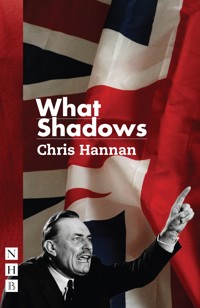
'I was a storm. I was also a man entirely alone in a storm. There were forces beyond my control and I was one of them.' 1968. Midlands MP Enoch Powell has something to say. Something he feels needs to be said. Something that could divide Britain forever. 1992. Rose Cruickshank, a black Oxford academic, wants answers. Powell's 'Rivers of Blood' speech, with its controversial words about immigration, shattered her childhood and now she is driven to confront both the man who made the speech and her own troubled identity. Will a meeting with Enoch resolve the conflicts that are tearing her – and the country – apart? Chris Hannan's powerful play, What Shadows, is a searing look at identity and immigration within a bitterly divided country. It premiered at Birmingham Repertory Theatre in 2016, in a production directed by Roxana Silbert and starring Ian McDiarmid as Enoch Powell. The play was revived at the Royal Lyceum Edinburgh in 2017, before transferring to Park Theatre, London.
Sie lesen das E-Book in den Legimi-Apps auf:
Seitenzahl: 104
Veröffentlichungsjahr: 2016
Das E-Book (TTS) können Sie hören im Abo „Legimi Premium” in Legimi-Apps auf:
Ähnliche






Chris Hannan
WHAT SHADOWS
NICK HERN BOOKSLondonwww.nickhernbooks.co.uk
Contents
Title Page
Original Production
Acknowledgements
Epigraph
Characters
What Shadows
About the Author
Copyright and Performing Rights Information
What Shadows was first performed in The STUDIO at Birmingham Repertory Theatre on 27 October 2016. The cast was as follows:
SAEED/BOBBY HUSSAIN/
Waleed Akhtar
SERGEANT SHERGAR/PATIENT
YOUNG ROSE
April Alexander
SOFIA NICOL/PAMELA POWELL
Bríd Brennan
CLEM JONES
George Costigan
ENOCH POWELL
Ian McDiarmid
ROSE CRUICKSHANK/
Rebecca Scroggs
JOYCE CRUICKSHANK
SULTAN/DR SHARMA
Phaldut Sharma
GRACE HUGHES/
Paula Wilcox
MARJORIE JONES
Director
Roxana Silbert
Designer
Ti Green
Lighting Designer
Chahine Yavroyan
Sound Designer
Giles Thomas
Video Designer
Louis Price
Movement Director
Anna Morrissey
Voice and Dialect Coach
Stephen Kemble
Assistant Director
Milli Bhatia
Acknowledgements
The playwright would like to thank
Mr Sardar AliGeorge AntillRita AntillNicholas JonesPat JonesMr Ram KrishanKaramat IqbalMr Mohammed IqbalDr Alison MukherjeeRev. Supriyo MukherjeeEleanor NesbittJonathan RewMr Banwari Lal SharmaJohn Wickenden
who were generous with their time and help
and the staff of Churchill College, Cambridge and Wolverhampton Archives and Local Studies
for their kindness and courtesy.
The script was developed with support from Playwrights’ Studio, Scotland.
‘What shadows we are and what shadows we pursue.’
Edmund Burke, Speech at Bristol Declining the Poll, 9th September, 1780
Characters
ROSE CRUICKSHANKSOFIA NICOL CLEM JONESENOCH POWELL PAMELA POWELL MARJORIE JONESBOBBY HUSSAIN SULTAN MAHMOODSAEED MAHMOODMRS GRACE HUGHES, laterGRACE MAHMOODJOYCE CRUICKSHANKDR SHARMASERGEANT SHERGAR
AlsoPATIENTin a mental hospital
This ebook was created before the end of rehearsals and so may differ slightly from the play as performed.
ACT ONE
Scene One
The Ends of the Earth
Kintyre, December 1992.
The shore.
ROSE CRUICKSHANKenters. She’s black, thirty-five.
SOFIA NICOLenters in oilskins, carrying pots and creels ashore. She’s white, forty-eight. This is her piece of shore.
ROSE. How to talk to people we hate. How to speak across the anger that divides us. You and me. England. Half the country thinks the other half is mad. Nothing to bind us together but the fact we hate each other’s guts.
SOFIA. How did you find me?
ROSE. Got here at dawn. There were deer on the beach.
SOFIA. They come to lick the salt.
ROSE. So far from reality.
SOFIA. We have guns. We shoot. The children.
ROSE. You shoot the children?
SOFIAcarries on with her work.
SOFIA. The children shoot the deer.
ROSE. I’m teaching at Oxford now. Your old college.
SOFIA. So remote.
ROSE. The pressure to publish. My next book’s about identity.
SOFIA. What’s it called?
ROSE.Who Can Tell Me Who I Am?
SOFIA. Who can tell you who you are?
ROSE.Who Can Tell Me Who I Am?
SOFIA. Is there an answer?
ROSE. Nobody cantellme.
SOFIA. Then why are you asking? Why are you here?
ROSE. I’ve come to make peace.
SOFIA. I have peace. I own fourteen acres and the shoreline.
ROSE. Fourteen acres of desolation. What do you do to enjoy yourselves?
SOFIA. We throw a great funeral.
ROSE. You in oilskins. People used to say you were the cleverest woman in England. I can rehabilitate you. You’re intellectually unfashionable, I’m black. We could write the book together.Who Can Tell Us Who We Are?England is a conflict. We could articulate the opposing views.
SOFIAneeds time to take this offer in.
SOFIA. I read yourfirstbook.
ROSE. Thank you yes thank you.
SOFIA. Haven’t said anything nice about it yet.
Magisterial work of scholarship. Winning the Deutscher Prize, that putsRose Cruickshankup there with someverybig names.
ROSE. When I sent the first draft to my publisher it had the snappy titleAn Economic History of Immigrants to England: 1066 to the Present Day.Seven hundred and eighty-nine pages.The publisher said,Rose,in a bookshop why would I pick this up? I’m not going to publish unless you can tell me what it’s about, in four words. And I said SOFIA.Whose Idea Was England?
ROSE.Who created the Norman churches, the Norfolk fens, the East End
SOFIA. Oxford
ROSE. the things that made England England. Sailcloth, the canvas for her ships
SOFIA. the technology of the cotton manufacturers who came from medieval with their what did the locals call the Flemish workers?
ROSE. theblue nails. Unforgettable detail.
SOFIA. I was spat on. That’s an unforgettable detail.
ROSE. I wasn’t involved in that.
SOFIA. You got me sacked.
ROSE. You justified racism.
SOFIA. You led the students, made speeches. Colleagues turned their backs on me, the broadsheets tore me to pieces. The things people said and did. It was primitive, I wascast out. I put my girls in the car and took off. Roof piled with stuff, left Oxford like refugees, headed for the wilds of Scotland.
ROSE. Did you forget?
SOFIA. Forget?
ROSE. Forget Oxford.
SOFIA. The sea’s rich. I almost drowned once. You lose yourself.
ROSE. How did you learn?
SOFIA. You go out on other people’s boats. There’s money in it.
ROSE. Are you on your own now?
SOFIA. My lobster ends up in France.
ROSE. A book by Rose Cruickshank and Sofia Nicol. It’ll attract attention. We can begin with Enoch Powell. His racist speech about immigrants.
Do you still have sympathies for him?
SOFIA (she is tired of saying this). I suggested he had a portion of the truth.
ROSE. You defended the speech.
SOFIA. I said it has never been answered.
ROSE. To describe black children he used the phrasewide-grinning picaninnies. Should people who use racist language even be included in the conversation?
SOFIA. Is that your decision? Who to include in the conversation and who not?
ROSE. It’s almost untouchable.
SOFIA. Like me?
She’s the one living in the back of beyond.
ROSE. I’m here to listen.
SOFIA. Misunderstood before I open my mouth.
ROSE. You were trying to redefine racism, you said. Isn’t the definition pretty clear?
SOFIA. Black rioters burn down Asian shops. Are they racist? Nigerian English boys call Jamaican English boys slaves. Are they racist? And immigrants are often racist, they have to be to hold their communities together. They saywe’re not like them, we don’t eat like them, we don’t think like them. We’re a little different, a little better.That’s what having an identityis, thinking you’re a little different, a little better. You don’t mix with people of other identities, in marriage say. And often there’s an enemy that defines you. Catholics and Protestants in Northern Ireland, or look how an atheist treats believers. He turns his nose up in disgust, his blood boils in primeval fury. We’re all racist. We all belong to groups which find other groups offensive. Nice lovely liberals despise white racists, look down on white racistslike they are a lower race.White racists are irrational, they say, no point in talking to them. Nice lovely liberals cast me out.
ROSE. You said all racism is equal.
SOFIA. Yes.
ROSE. Not when the police can kick your head in for being black. Not when whites have all the power.
SOFIA. Who in this conversation has the power?
She’s the one in the oilskins.
ROSE. I’m offering to share it.
SOFIA. You took half the meaning of my life.
ROSE. I’m giving you a chance to be heard.
SOFIA. I’m wondering why.
ROSE. (I dream about you. I never dream normally.)
SOFIA. I sleep as if I’m lying on the bottom of the sea. My chickens graze on the beach, eat the sandhoppers. Their yolks are orange, red nearly. I’ve had two lives to your one. I’m fine.
ROSEexits.
Scene Two
The Land of Lost Content
Twenty-five years before. 1st November 1967.
Birdsong from nearby light woodland.Rooks, possibly.CLEM JONESenters, map in hand. He’s fifty-two, editor of the WolverhamptonExpress and Star, a newspaper with a larger circulation than theGuardian. He has a smile that hides more than it reveals and a touch of vanity(I do mean a touch)about his looks, clothes, person.
ENOCH POWELLenters, also with map. He’s fifty-five, in country gent’s flat cap, tweeds, wellington boots. They are a few hundred yards from a pub and car park, looking for the source of the Thames.ENOCHconsiders the evidence on the ground, tries to align it with the map.
ENOCH. The Queen’s Hall Barnstaple, Conservative Women Cottingham, Institute of Charted Secretaries Birmingham,in every corner of the kingdommy message falls on deaf ears. I’m too old to be crying in the wilderness.
CLEM. Never heard you mention your age before, Enoch.
ENOCH. Ambition makes the clock tick.
CLEM. That’s the Thames there, I think.
ENOCH. To what are you pointing?
CLEM. The difference between that grass and that grass.
ENOCH. Ah.
As a journalist, would you describe my speeches as difficult or arcane?
CLEM. The ones I’ve read I’ve never finished.
ENOCH. I have made my argument as simple as I can. The cause of inflation is not trade unions or greedy bosses, it is governments and their unlimited power to create money. Try telling our glorious leader Mr Heath. The problem with Ted is his densuousness. Offer him an idea and he turns his nose up like a small boy offered broccoli.
PAMELA POWELL, forty-two, andMARJORIE JONES, fifty-two, enter in anoraks, carrying a light picnic: flasks, sandwiches. It’s cold but they’re English and set on the idea of some sort of picnic.
PAMELA (to the men). Have you found the Thames yet?
CLEM. There.
PAMELA. Where?
CLEM. You can see the shadow of the river in the different shade of green.
PAMELA. The girls can’t throw stones in a different shade of green. I promised them the source of the Thames.
CLEM. In a month or so the water will rise, where we’re standing will be a river.
MARJORIE. Shelley the poet tried to row here. With Mary Shelley before he married her, and two friends.
MARJORIEdirects this toENOCHeven though he’s much further away than the others.
ENOCH. The gravitas of autumn. The rooks, full of foreboding. Puts one at ease. The promise of spring, on the other hand, I always find unbearably painful.
MARJORIE. Yes.
ENOCH. Thelightnessof spring lies on one’s chest with the weight of a gravestone.
MARJORIE. They set off from Windsor, the Shelleys.
PAMELA. Was there any water in those days?
MARJORIE (to farawayENOCH). Mary was eighteen, the year before she wroteFrankenstein. She’d already lost a baby. She had a dream. She rubbed her dead baby beside the fire and it came back to life. Then she woke up of course.
Poor ghost.
PAMELA. And did they or didn’t they make it as far as here?
MARJORIE. Just beyond Lechlade. There were cows standing in the river.
PAMELA. They weren’t afraid of cows surely?
MARJORIE. Cows little more than ankle deep, too shallow for a boat.
She directs the next sentence toENOCH.
He wrote a poem in Lechlade,A Summer Evening Churchyard.
ENOCH. He wrote wonderfully about death.
MARJORIE. Death will be such a relief.
ENOCH. Sweeter. Like one’s mother coming and putting one to bed.
PAMELA. I should like to live till I’m ninety and die sitting up in bed with a brandy, watching someone dishy winning Wimbledon.
MARJORIE. You must all promise to speak nicely of me when I’m gone.
CLEM. Marjorie!
PAMELA. This is glorious. What’s your favourite part of England, Clem?
CLEM. Half-six. Rabbits lost in thought
PAMELA. lost in a dream yes
CLEM. like they’ve been down in their holes listening to the Test Match on a transistor radio all afternoon and now they’re out in the half-six light picturing Gary Sobers bowl his slow left arm chinamen.
MARJORIE. What about you, Enoch?
ENOCH. Sunken lanes in Shropshire.
MARJORIE. Wonderful. Pam, what about you?
PAMELA. Wolverhampton Train Station.
MARJORIE (polite). Really? Gosh. Clem met the architect.
CLEM. He suffered from clinical depression, to be fair.
PAMELA. When Enoch fought Wolverhampton for the first time, he asked me, a mere secretary, to come up from London to help his campaign; it was the Friday evening before Clem interviewed him for theExpress and Star.My train was four hours late and there he was, still waiting for me on the uncovered platform in the pouring rain.
ENOCH (shoulders hunched miserably). No umbrella.
PAMELA. Enoch can’t stand water on his head, he screams when you wash his hair and sulks like a soaked cat, so it was quite something.
ENOCH. Pam was a monsoon in which I was drenched.
The romance of this is acknowledged byCLEMandMARJORIE




