


9,59 €
Mehr erfahren.
- Herausgeber: And Other Stories
- Kategorie: Gesellschafts- und Liebesromane
- Sprache: Englisch
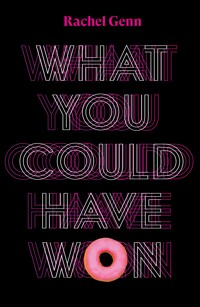
'Fame is the only thing worth having. Love is temporary brain damage. Or so thinks Henry Sinclair, a failing psychiatrist, whose career-breaking discovery has been pinched by a supervisor smelling of nipple grease and hot-dog brine. An emotional miser and manipulator par excellence, desperate for the recognition he's certain his genius deserves, Henry claws his way into the limelight by transforming his girlfriend—a singer-in-ascendance, beloved for her cathartically raw performances—into a drug experiment. As he systematically works to reinforce feelings of worthlessness while at the same time feeding off Astrid's fame, and as Astrid collapses deeper into dependence, what emerges is a two-sided toxic relationship: the bullying instincts of a man shrunk by an industry where bullying is currency, and the peculiar strength of a star more comfortable offloading her talent than owning her brilliance. Pinging between their apartment in New York (where they watch endless episodes of The Sopranos), a nudist campsite in Greece (where the tantalizingly handsome Gigi thwacks octopi into the sand), and a celebrity rehab facility in Paris (founded by the cassock-wearing and sex-scandal plagued 'artist' Hypno Ray), What You Could Have Won is a relationship born of regrettable events, and a novel about female resilience in the face of social control.
Das E-Book können Sie in Legimi-Apps oder einer beliebigen App lesen, die das folgende Format unterstützen:
Seitenzahl: 353
Veröffentlichungsjahr: 2020
Ähnliche




















Praise forWHAT YOU COULD HAVE WON
‘Rachel Genn takes up her tender knife again, to lay open the complexities of a relationship entangled in both public and private power. What You Could Have Won is a fiery, irresistible trip through music, drugs and personal agency.’
M John Harrison
‘Not so much a modern Pygmalion as Bride of Frankenstein, as Greek tragedy, as Get Him to the Greek, where a Svengali-cum-Edward Casaubon directs an Amy Winehouse-cum-Maenad through a mix of drug dependency, hokey psychology experiments, cultural appropriation and donuts. She, meanwhile, is acquiring survival strategies like spitting in his hair and working out the extent of her legendary musical talents. The split-screen dynamic of this battle of wills is an electrifying joy to read unlike anything else around, with the best placed squid ink incident and Sopranos boxset plot devices ever. Every character in the entourage is dripping in grotesque and hilarious description with a social wit that can mercilessly pinpoint the worst cafeteria behaviour. A truly felt human voice builds itself outwards from the brilliant, bawdy broad at the heart of this singular book.’
Holly Pester
‘Imagine William Gibson and M John Harrison had been commissioned to collaborate on a novel about sex, drugs, rock & roll and The Sopranos.’
Nicholas Royle
‘It’s a long time since I’ve read a novel in which the sentences bristle with such enjoyably reckless energy. The narrative ricochets between the two principle characters, each locked in their own version of a power struggle that Genn renders with characteristically forensic verve. At the heart of it all is the sparking, flickering apparatus of the human brain which – we learn – can make us do things we want to do and also things we don’t.’
Katharine Towers
First published in 2020 by And Other Stories Sheffield – London – New Yorkwww.andotherstories.org
Copyright © Rachel Genn, 2020
All rights reserved. The right of Rachel Genn to be identified as author of this work has been asserted.
Epigraphs from the following sources gratefully acknowledged: Eros the Bittersweet by Anne Carson (Princeton University Press) and ‘Seether’ by Veruca Salt, written by Nina Gordon. Whilst all attempts have been made to find the copyright holders of quoted passages and secure permission where relevant, the publishers and author would welcome approaches in the case of omission.
ISBN: 9781911508861 eBook ISBN: 9781911508878
Editor: Tara Tobler; Copy-editor: Lara Vergnaud; Proofreader: Sarah Terry; Typesetting and eBook by Tetragon, London; Cover Design: Jon Gray.
And Other Stories gratefully acknowledge that our work is supported using public funding by Arts Council England.
For Esther and Ingrid – that they may know their own power
A space must be maintained or desire ends.
Eros the Bittersweet, Anne Carson
I try to keep her on a short leash. I try to calm her down. I try to ram her into the ground, yeah.
Seether, Veruca Salt
Contents
AntiparosBox SetZootPicnic (No Picnic)BirdBoyUnder the DreamersThe KissingBox Set IIQuit Mooning over NefertitiPlydoDilpaU Heart EppendorfDonutSilk Burns Quickly in the DesertDespotikoSelf-ClassHe Wants MeFinally, NudesHow to Beat a DwarfDwell TimeLa LunaFireAntiparos
Up to now, I have only noted decisions that are poor to extremely poor and/or seem to be defences against shame. From the cafeteria, I can see down to the beach: framed by the rendered arch to the café’s terrace, her rectangular shelter by the shore is flapping in the wind. It is made up of a faded, jungle-patterned sheet stretched between four bamboo sticks secured in the sand, and stands twelve inches above her face. In that face, by now, the teeth will be chattering in the heat. Only yards from her, the main knot of Greeks are setting up volleyball, laughing in short barks because it is still early. They were up very late. There he is again, pulling himself from the sea, which makes me switch my eyes to the floor though no one can see me from there. I look towards him again and he is dragging his heel forcefully back through the sand to mark the boundaries of the court.
In the corner of the cold cabinet, there is a doughnut with a panther-pink glaze and I know that it has been put out for her. The doughnut has a cold sweat on it – an idiot among the metal saucers of tzatziki. If she sees it she will be positive that they can get to her even in the Cyclades. I have told her that being positive is dangerous, that there’s always room for doubt in the mentally healthy; she becomes positive very easily since Burning Man, though the tendency has been there since the beginning. I have not mentioned the video once this morning.
It’s clear that this place exists for the best-looking people from the capital. Athenians, in the main, are taut and deep brown and much taller than I imagined. From the shade in the café, I can get a good look at them down at the shore and I capture and hold on to a flash of small brown breasts. I get to admire the sheen on the torsos of these first weekenders from the mainland and feel that my eyes deal with them in fistfuls. I will make a note of that. They are forever emerging from the sea after swimming back and forth to the scrubby little island she calls Dilpa, two hundred yards from our shore. They are into coolly communicating jokes to each other: they like to quip quickly and make an appreciative moan rather than laugh openly; the handyman in particular makes laughter seem foolish. They drink frappés up to midnight. When not swimming or having faraway parties after sunset (where they laugh openly and often), these people are limbering, ankle-deep in sand. Apart from one, the men are colossal and unperturbed by deep water, large insects or the extreme heat. My skin is much fairer than theirs. I have tried nudity, but prefer to wear shorts.
He’s coming to serve me as I knew he would, and I turn from the doughnut to feta with fried courgettes plus dill. I pay him and smile but he treats me impatiently, then slams the till and runs back out to the game. There are more players now. The arch is filling up and there’s a new arrival to the group. At first I thought him a child but no, too hairy. A dwarf then? Whoever it is gets hold of the Handyman fondly enough to be family, but I don’t imagine that this handyman is related to a dwarf. A stick-thin woman with white-blonde hair follows the Handyman and hugs him from behind then takes a moment to twirl his long curls with both hands and, finally, nips his cheeks. She shouts out a rousing slogan (in what? French? Hebrew? Dutch?) that clearly ends in ‘Gigi’, at which the Handyman bows deeply, holding his hand palm out towards the dwarf. ‘Gigi’ cannot be his name and so must be a name for the dwarf. A pet name. Here come some dirty blondes, probably Swedes, perhaps brothers, and they join in with their preparations for the game, bouncing hard and high like Maasai which is not easy in sand. They have a caramel-to-toffee tan that brags ‘here for the season’, and are lithe and I measure their dicks against the other volleyballers’. It’s a matter of habituation: a few more days and I will not do this any more. I can talk my eyes out of it.
The Handyman is the centre of everything round here, carrying armfuls of drainage pipes or sides of meat wrapped in light blue cloth and newspaper, watering basil and oregano that thrive in gasoline canisters painted red, gold and green and kept in the scarce shade of the terrace walls. He has no idea that I have watched him perforate a basil leaf in a series of curves with the white shell of his nail then smell his fingers, then rub his fingers through his hair. He keeps the rustic showers pristine with a comically small squeegee. I whistle when I go into a stall. He polishes everything he passes with the cloth that wraps the meat. Gigi cannot be his name, which is why I am happy to apply it as a nickname for now.
There is a party on this island that we are not yet part of. I hear it. It starts with one lonely hide-beater and builds. Nothing so crass as a flyer, an invite or any evidence, though they have MTV and knew who she was the moment she arrived. Dilpa is where it’s at: the smaller, rockier island that I can see but only they can swim to. There is a rowing boat and one ferryman, who disappears between his daily crossings, but before he does thinks nothing of stunning octopus on the side of his boat (the sound, a meaty Hank) and firing the black ink in an arc so wide that we sunbathers sit up.
For me and her, island life has rapidly become isolating. When night comes, while the real party heats up somewhere else, we sit in a ghost camp where I am encouraged to agree with her take on why we are so good for each other. I am expected to flow with her high, while she explains how the timing of her album was exactly right; I wonder if she thinks that talking about how we are together constitutes our togetherness, that if she shut up about us we’d be repulsed by what we found us to be. I say nothing, just listen, as she points to evidence that means she is still being followed by cameras. If I try to locate the distant music, or look for clues as to where it might be coming from, she insists that I get closer to her to judge a melody or listen to repeats of verses (commitment is never being bored). On her visits to the camp bathroom, I get to see him polishing the laundry troughs in what look like his party clothes. I am instructed to wait for her under the lamp outside, where she rejoins me in a crisp cone of light, thick with insects, confessing, ‘I really can’t believe that I only want you.’ Later, I will suggest less kissing.
The slide began before we got here. In Athens, a couple of strangers had recognised her on the street so that on the ferry from Paros, all she wanted to do was play Zoot/Not Zoot (a title I coined, but now regret).
Sitting on deck, she sensed my reluctance to play.
‘Hey! You evil cuz this canary such a fine dinner?’
‘Can’t we take a rest from it?’ I said, tilting my chin at the sun.
At this, her headscarf (it’s old and it’s French), her glasses, her cigarette, all quivered. She overdid everything for the rest of the ferry ride: telling a staring passenger to fuck off, to gain my approval. As we approached the modest grey-green hump of Antiparos on the trawler, she performed an exaggerated running man. Since we started the Box Set she thinks she’s Adriana La Cerva. The Sopranos has a lot to answer for. This lack of inhibition will need monitoring.
From the jetty, we took a wide dirt track that headed from the unmarked harbour through bristly dunes on an incline towards a campsite and, having been there before, she couldn’t contain her enthusiasm: ‘Now ain’t dat barrelhouse?’
‘Granted,’ I said, taking in the view of a shallow bight of sand edged by green waters, punctuated by a smaller wild-looking island across a lagoon. We entered under a bleached sign for The Camping Antiparos and walked towards an unlit cabin with peeling turquoise paint, which seemed to have office status; through the window a wall calendar advertised ventilation ducting. I predicted a couple of days and we’d have to get out of here.
Gigi was the first person we saw. From behind the cabin he appeared with a piece of cream cheesecloth wrapped around his waist, a short kilt making his skin look black in the dusk. Standing with his legs apart like a wrestler, feet turned out and hands on hips. He carried a compact generator and up close smelled of sweat and pine cleaning fluid.
She pointed to the sign while staring at the generator. ‘Are you maintenance?’
‘You need hat,’ he replied, seriously.
‘I don’t think so,’ she said.
‘Bamboo hat!’
She looked to me.
‘Who’s the Greek here?’ I chuckled.
‘No hat!’ he shouted, pulling my hand from my crown. ‘Hat!’ He pointed to a row of small bamboo enclosures that stood in a row along the edge of the campground.
‘Huts!’ she cried, clapping her hands, as he went over and opened a rickety door constructed from odd lengths of old bamboo strapped together with binding. Inside was a six-foot-square corral and behind these huts were the boundaries to the camp, live bamboo thickets hissing in the breeze.
‘In here, you can sleep, two-fifty drachma.’
‘We have a tent,’ I said, swinging the nylon pod round to my chest and patting its bulk.
We were given a pitch. Before I had even hammered in the pegs, she had begun her routines, but I immediately noticed the insistence of a beat and became distracted by the faraway noise of a good deal of people. The tent was up just as the sun set and I heard a switch in the distance, from a lone drummer to faint music. Every so often, voices lilted in consensus, and I caught a Greek hooray at something unexpected. The tents around us were empty. She didn’t find this mysterious at all and intermittently sang into my face or did an English accent to coax me back to her. She drank the last of the ouzo then demanded the bag again. It wasn’t all I had brought but I did not tell her as she is incapable of leaving so much as a salting. While she went to the bathrooms, I noted the mg/kg ratio in the book.
So it was no surprise that our first morning started unevenly. The Handyman arrived outside the tent as I, after struggling through anemones of silk scarves to reach the air, had just suggested a blaming pathology. From inside she shouted that if we didn’t fucking arrive late to every fucking campsite we would know where the fucking shade was going to be for the fucking morning. I smiled at him and he shook his head. Without warning, he pulled out our tent pegs in strong smooth movements, helped her from the tent and removed our bags. With the tent emptied, he hooked two fingers around the strut, picked it up by its frame, and toyed with it to highlight its handiness, placing it finally in an empty patch of shade. When he left, we fucked. Something about the shaded heat of the tent and the inescapable stink of pine made it compulsory. I told her the heat put me off kissing, still, she tried to kiss me (NB: impulsivity to compulsivity).
Already, my favourite part of this camp is the cafeteria. If he isn’t in his seat at the till, I find myself scanning the beach or scouring the shallow bay for him. I know she won’t come out of her shelter. When paranoid, she waits until I say something she wants to hear. I had already told her this morning that a fresh start is always just around the corner but she called me a smug motherfucking yard dog who’s just as needy as she is. Instead of analysing why she demolished the remains of the stash from Piraeus, she began acting as if it were always her intention to be well and truly rid of it. The inevitability of failure sits at the back of all this but today she looks blithely forward, talking the talk (the newly abstinent adore hyperbole – This is the easiest! – etc.) while I predict that by mid-afternoon there could be a catastrophic failure of will. Before then, there will be the breakdown in decision-making (possible chapter titles: ‘Does it hurt to choose?’ / ‘Why it hurts to choose’). I could tell her that in some respects addicts want the regret, that they are longing for longing, only satisfied when there is nowhere else to go. This is the crux of my book: the very key to How Cocaine Can Break Your Brain is that regret is an integral part of the addiction machine. I am gathering evidence.
Making my way back towards the beach, my tray balances a cup and a frappé. The glass is tall and creaks with ice. She asked for coffee but I have a mint tea for her that will help her feel less unstable. My feet are burning, though no one on the beach would know. I check Gigi dividing his glances fairly between the volleyball and her shelter. A smart breeze lifts up the flap of the cloth coffin and I see the chocolate-dark corona around her nipple and my head swings to the Greeks and there he is again, looking, waiting. His colour matches hers. If only he knew that their little superstar was oiled up and nude under the sheet.
I put the tray down beside the sheet.
‘You should offer yourself to him,’ I say.
I take up my book then find the paper I need, ‘Degraded Decision-Making in Long-Term Cocaine Users’, from an up-and-coming Italian group. She squints through the flap at the ruffling pages of my maths notebook and I flick a look at the pages to see what she might have seen.
‘Psychiatrists do it with squares,’ she says.
I pull the book beside me in the sand, just in case.
‘Do I look over your shoulder when you’re writing songs?’
She blurts a laugh, ‘You couldn’t write a song,’ and I am disgusted at how convinced she is of this.
Box Set
It was the episode where Adriana was crying and couldn’t stop. The day on-screen was clear, New Jersey autumn, and when Adriana scrabbled on all fours through the fallen leaves, the crack of Silvio’s pistol shattered the air, and though the camera tilted upward from the forest floor there was no doubt about what had happened. You looked to Henry but he was staring at the patch of screen where Adriana was last seen. You have taken Ade’s death like a basketball to the face. Two basketballs.
By the time you get out of bed the next day Henry has already left for the clinic. You switch on the TV, pressing the button on the remote hard like you are mid-argument and you play with an idea. If you put on an old Hermès (perhaps Les Merveilles de la Vapeur?) and your biggest glasses, you can go out by yourself, buy season six and get over Adriana, but you know you will never watch an episode without Henry. Not even to punish him.
It is already a real effort to hold off opening the packet that Lucien has left in the hall; your management has given him his own key and he can let himself in while you sleep. You have been out to examine the little package twice: it feels like a miniature coffin, or a novelty soap. The midday news is taken up with Yemen and the reporter plows through to the story of a spate of teenage suicides upstate. You decide for fucking certain that you will talk to Catherine about Lucien’s attitude and this burst of assertion means that you can click off the television before the entertainment news and make for the hall and face the closet that holds the package but now you must also face the newspaper that has been left open on the green glass table. It’s you in Paris, only days ago. In the picture, you are startled and your mauve sweater is splattered with tahini. It says: ‘Astrid eats through pap slap.’ You want to stop the slant from anger into sorrow.
Paris had been management’s idea, but the Box Set was all you. You couldn’t believe Henry had never seen The Sopranos (you thought you were the only one) and you took it as a sign. Of course it was Melfi that got him interested and he began by commenting on the length of her skirt.
‘Therapy will never open up a man like Tony,’ he said. ‘ReOrientation is the only way forward,’ as he pounded an ice bag, ‘backed up with ReThink.’
‘Psychiatry’s gone to shit,’ you whispered to Laddie, a stuffed fox in a cap and cravat mounted on your middle finger through a hole in his stitching. You hung your head over the back of the couch. ‘ReOrient this!’ You brought Laddie and your finger back in close and whispered, ‘What did drugs do wrong, hey buddy?’
Henry returned from the kitchen with a drink and you almost suggested playing popcorn Rorschach. You started planning a joke about that last night in Greece, but you didn’t have the nerve for that either.
‘It’s undisciplined attention that’s the threat to his mental health.’
‘Not the family of ducks,’ you said.
‘Perceptions are choices. You should all realize this.’
Henry and Gregor implicitly encouraged everyone to use ReThink. You wondered if he had always done the clinic smile? You couldn’t have fallen in love with that, even back then.
Back then was when Catherine managed to get you and your band their first paid gig at the Eliot Perlman Wellness Center in Manhattan. Arriving early, you realized you may have been a little high to do a charity gig because when you left the elevator, you felt threatened by the ballroom chandelier and began a little trot to get away from it.
The band squinted together at a banner: Eliot Perlman Wellness Center Welcomes Non-Invasive Psychiatry Practitioners. Looking at Catherine, you asked, ‘Is this us?’
Just before the set, you began to regret the joint in the dressing room because you found yourself being stared at. Hard. You stared right back, first looking at his head then the suit, the hair. You did not tolerate not knowing and so you were over to him in a few steps.
‘Your kind of gig?’
‘Absolutely,’ he said, looking up and down the line of you. No shame.
‘What do you do?’ You were sweeping for clues. British? Light gray suit, charcoal shirt. No tie. Good pecs. White lacquered cufflinks. Myrrh in the cologne. Milk-fed.
‘I stare.’
You sank a substantial portion of his red wine, placing the glass back into his hand.
‘What else?’
‘That’s what I study. What people fixate on.’
‘Oh yeah?’
‘Their dwell time.’
There was a definite high-wire recklessness to him. You stayed silent, waiting for him to pitch one way or the other under scrutiny. ‘Then I train them to fixate on what really matters.’
This guy had monkey feet.
‘Nice work, hombre,’ you said, taking the last drops of his wine and leaping up onto the stage, knowing that you were the expert here and had never looked better in your ten-year-old jeans. He might have spooked you, but his attention to you was so complete, so insistent, that you felt he had already put down a deposit. Dwell Time had crouched patiently in your mind. It would be the title of your first album.
‘Loose in LA’ opened the set, and for once, you held the note you always chickened out on too early, managed a move during Eddie’s solo that you hadn’t dared since leaving Lotus Falls, and made damn sure you didn’t search for Dwell Time in the darkness. The audience exploded after the song but quickly settled down quickly to a couple of mistimed whoops. During the encore you allowed him eye contact. He was the only one not begging for your attention so you pulled the mic close:
‘When I was twelve… back in Lotus Falls, a guy came to fix our TV.’
Your tired-looking yellow hair covered your cheeks and shaded your eyes. The part you kept purposefully black.
‘My mom told him, “Astrid will always have a hole in her bucket.” This last song is for him.’
Wild after the encore, you jumped down from the stage and stood before him breathing fast, the sweetness of red wine full in his face; not a single sour note.
‘OK,’ you said. ‘Tell me about it.’
You grabbed his hand and tugged him through the clusters of associates and partners. You snuck him past security, out onto a balcony where neither of you acknowledged the magnificent view of downtown above the handrail. First, he made you laugh pretending to know about Electro. From this you got onto the tedium of cocaine compared to meth, next he had pressed into your hand what he said he had brought for himself. For a good half hour of speaking with him you hadn’t been able to tell if he was psychotic. Two hours later you were sitting at his feet.
‘A bird boy?’ you asked.
‘Not his official name,’ said Henry.
‘But this bird boy can read?’
‘He can’t move his eyes. His head moves like a bird’s to make up for that.’
‘Would a person be able to tell?’
Henry thought for a second. ‘I have never seen a busier neck than his.’
Your pupils spread like dinner plates at this and you felt the need to set up a recording of your conversation, imagining his answers ticker-taping from a tiny slot in the back of your head, gently parting your hair and coiling between the soles of your feet. Who says busier neck? You were falling for Busier Neck.
‘I started imagining a beak for him today.’
Henry tapped his nose briefly on an imaginary piece of wood in front of his face.
Silently you begged him. Don’t do that.
‘So his gaze is at the mercy of his neck, not his eyes.’
‘It’s all about where the eyes need to get to next. What’s important for him to know.’
The bird boy emerged in glorious detail, the data explained in such delightful and unexpected terms that the ticker halted right there because, just like that, he had made a world for you to hold in your hand, a BirdBoy at its center. His choice of words split you up the middle and from that night on you would be holding in your guts with your hands. You were determined to ignore the unnerving feeling that he had known you were coming. His thoughts were made for you.
You decided to test him. ‘What would you call your autobiography?’
‘How right I was, how right – exclamation mark, maybe two.’
If he came up with that just for you, you will never let him go. Then he said, ‘I think perhaps Hole in My Bucket could be volume one for you.’
You smiled lopsidedly.
He hated the work ethic here in the US, despised the lack of holidays and the unspoken dictates of the psychiatry department he was part of, and the ass-licking robots that he worked with, but he was yet to specialize and so was still kowtowing to a cigar-smoking mentor, who made shameless millions in condoms and recycled paper in China and who insisted on calling him ‘Hank’.
‘What’s his name?’ you asked.
‘Frank.’
You smiled. Full and equal smiles.
Midnight brought the first real lull. You panicked, sure that it was because of the story you had foolishly told about yourself.
‘I could stay here forever’ – your words were steady as a lunatic’s, and when he laughed you laughed right alongside him. You sensed imminence: movement on a planetary scale, as if a new sky was being rolled out and under it; brutality, with the right kind of guidance and determination, might be avoided.
You were upset at his surprise at your love of French literature. (You didn’t tell him that it began because Colette’s mother, like your own, seemed to have a fund of love for the world she never had to encounter.) Growing up in Lotus Falls you had smoked weed that was homegrown under plastic pitchers but was too strong to enjoy; you didn’t say that you thought it had changed you. You needed to confess to this stranger that after what you’d done, no one should push you to get perspective on yourself. You had fooled strangers by asserting your uniqueness but you didn’t want to fool him. You let him know you played the flute as well as the guitar and piano, but left out the news that you had remained indoors for a long period when a review of your first band described your performance as forced and emulatory, the reviewer concentrating instead on your tiny frame and the capricious switch from jet-black to yellow-ocher hair. You had no idea you and your loose-stringed guitar were soon to be plucked from the D Train by Lucien, an A & R man with a Hendrix-sized Afro from E&I Studios who looked as if he needed a bath. Recording the album in Nashville, relief would serve as well as regret to usher you into ignoring what you were really capable of. At the Eliot Perlman, neither of you would believe that you would one day lose the bump on your nose bequeathed you by your Greek grandmother (the miniature hillock of bone planed firmly away by a surgeon sick of your overexposure).
It had become chilly on the balcony in the dark.
You opened your hand on the ruined packet and allowed a pooling of anticipation. In savoring the ache of it you gained unnatural poise. You could wait! Spinning out the want, you asked him coolly, ‘What drew you to psychiatry?’
‘Dependence, mainly.’
‘All the fun’s in the waiting,’ you said.
‘Nothing beats it,’ he said, but wholesomely, so that you wondered if he was making you feel idiotic on purpose.
‘Or…’ you said, ‘anticipation is best when it ends.’ And hiding your chanciness, you got up and turned toward the bathroom, looking over your shoulder to flash your goofiest grin.
There’s a pause after a drug-fueled sleep, just before the mind realizes there’s no taking back what’s been said. You had woken alone that first night, hurtling toward terror. Undone by something, you fought to fill the wilderness that had threatened you in sleep, feeling a need to keep terrible things at bay with your bare hands. Once awake, you continued to lope under an awkwardness, a mismatch: because you remembered from the night before the ease of talking with Henry, the joy of it, each revelation seeming as simple and smooth as the progress of a coin flipped into a fountain. You watched the flash/flash of a penny turning through water and then – who tells someone a story like that on a first date? – sat down sharply. The panic made you want to snatch that penny before it reached the bottom, to chomp your teeth into the chalky plaster at the bed of the fountain to get it, if you had to.
Catherine calls you on your cell just after you switch off the news, telling you to ignore the papers and look at the sales, but the media, it seems, is unable to let you forget what happened in Paris.
‘Adriana’s dead and I don’t like it,’ you state baldly.
‘You should have stayed with Ray’s program.’
Catherine has never believed that it’s an agent’s job to provide sympathy.
‘How’d you like a photographer groping your cunt?’
She shudders. ‘I don’t want to think about it.’
‘What has the label said?’
‘Only if you tour again.’
You think back to the last gig of the tour, the bonfire, the threats.
‘Sit tight.’ Catherine gave a little. ‘I’ll work on them.’
You know it’s the truth, because Catherine is finally able to leave her husband and buy the house in Silverlake, all because of you.
‘But in the meantime, no going downtown. Those scarves are like flares to the press.’
‘I guess Combat de Coqs is out of the question?’
Catherine wants no more risks.
Since you flew back from Paris, Henry has been in meetings or on exaggerated calls with Greg about ReOrient and the book, leaving you looking out from the apartment, scanning the park and surrounding buildings for the black glint of long lenses and wondering why you thought that finishing the Box Set could help you. You began pawing through Henry’s things. The graph-paper notebook had been left on the bedside table and slotted into it was a Xeroxed psychiatry article. Scanning the title, your eyes jumped to Henry’s writing further down the page but he interrupted you looking for his good cufflinks, a present from a friend at college. You began reading aloud: The face does not age as one homogeneous object but as many dynamic compartments, which need to be evaluated, augmented and modified as such.
Henry’s distracted smile hovered above the performance but he had found what he was looking for and was leaving to meet Gregor.
‘Why have you underlined that?’
‘They love that shit.’
‘Who does?’
‘NYU. Gregor’s patients.’
The notebook felt poisoned and you threw it on the bed. If you can’t rewind, ReThink; it came naturally. Henry: the great coach.
‘Why do these patients need you?’
‘Mistakes need a ReThink.’ He made to kiss you on the top of your head and you turned from him so that the kiss was a shock in the cup of your ear, shrinking the skin over your shoulders. He picked up the notebook. When you heard the door, you padded quickly after him into the hall.
‘Hey!’
‘I’m already gone,’ he lilted.
‘Lucien’s coming over!’
The door closed gently as if by an invisible hand.
After seeing Tony Soprano getting a blow job at the Bing, you began dreaming of Tony as your therapist. Lucien was called round to check the locks. You touched Henry much less. And you became increasingly spiky when Adriana turned up on-screen. You called to Henry in the kitchen.
‘Hey, Hank! White jeans. Your favorite.’
Henry had favored your navy over your white pants before his faculty garden party and now, instead of joining you on the couch, Henry sat on a chair, a declaration that he only did things that he chose to.
The horizontal rips in Ade’s jeans were equally spaced, a punk-me-by-numbers for the mall. Henry leaned away from your childish tug toward a change of mind.
‘I would say white is fine.’
Lightning at night shows the world just as it is but you must scan greedily because it will only show for a second, the rich wide territory behind someone’s words. Gone for good was the notion that you would ever have the power to get him to change his mind on anything that mattered to you.
‘She’s an informant! She has IBS for Christ’s sake!’ You wanted to scratch out the word fine with something sharp. Pausing the action, you jammed the remote now at the jeans. ‘That’s OK?’
Adriana, frowning slightly, was captured at a point somewhere between a fox and a fawn and was dumbly beautiful. You felt your throat constrict.
‘It’s fine. In this case,’ Henry said, all effortful neutrality.
‘But not for your party.’
‘The navy looked better on you.’
Adriana held still for you on the screen, everything you wanted but paused. She was all yours, captured forever if that’s what you demanded and she stayed there, accepting layers and layers and layers of looking at.
In the episodes before Paris, Furio and Carmella had been falling in love behind Tony’s back and it was killing you. Henry sighed as a song struck up dramatically; old school Southern Italian, chaotic with melancholy. He began to smirk at you.
‘What’s so funny?’ you snapped.
‘Look at the shirt! I can’t work out if he’s a gladiator or a hairdresser.’
‘Who cares about the shirt? He’s exactly what she needs.’
‘He’s a murderer. From Naples.’
‘She loves him.’
‘They have barely ever been in the same room!’ Henry was openly laughing at you, the exasperation he had felt now transformed. You stared at him levelly.
‘Whatever happened to the insurmountable joy of anticipation?’
Henry’s look was suspicious, as if he thought you were trying to play a trick on him.
‘Did I say that?’
Maybe it was this. Or maybe it was when Carmella admitted her love for Furio to Tony, despite the shirt, the ponytail. Here Henry sniggered and you felt raw, unable, you had to leave your seat, you walked blindly to the kitchen, bumbling into the counter, then to the bathroom, only then did you pause. From the living room came sounds of Tony punching through the wall and you considered getting clean, catching the briefest glimpse of how things might be if you were to save yourself.
You could smell it was a hospital before you opened your eyes. From your hospital bed, the team had you sign a contract to attend and complete Hypno Ray’s program in Paris. Lucien stayed in the company apartment, near Rue de Surène, and to start with, because of Dwell Time album sales, you were given a suite at the Hôtel Costes, where the walls of the lobby were lined with velvet the color of eggplant. On the way to your suite, unwelcome thoughts pushed you to the walls where you put your hand up inside the guts of a thick dark satin tassel. The room Catherine chose for you was exquisite: beetroot, turquoise, gold and white, with dull gold curtains and a highly decorated pelmet. After a few minutes in the room, you ran downstairs to the terrace and scraped an iron chair into the sun as if the light itself would save you. A toned waitress whose hair had a liquid sheen, dressed in scarlet Lycra at 9 a.m., took your order without a word. You could see in her face that the hospital stay had not been kept private. Without returning your fake smile she brought your order of tartines and sliced olives and you commented on her hair, which she didn’t respond to either. Out of spite, you asked for french fries. Then you pointed to a flask of vinegar. For the first time, you could feel your anger rallying under Henry and went along with the idea that that’s where it belonged. The vinegar looked pink in the light which carved a twist of grief through you because, without drugs, wishing became impossible. It was the food stirring up trouble, that was all. Eating ravenously, alone, you had tilted in at yourself but you must look inward only if you are ready to deal with things. Wasn’t this a great hotel? The dining courtyard was a secret even from most Parisians but forcing yourself to feel this privilege made your eyes brim with tears. You finished the bread and looked through the sharp outline surrounding the sky above the courtyard while the thought of your room, two floors above, the colors just right, broke your heart.
Zoot
It’s not long before the Handyman is looking over at her shelter too, but he doesn’t yet realise that it is only I who can coax her out.
‘Hey Chirp,’ I whisper, ‘quit catching cups, get out from them dreamers, and see this.’
She stays silent so I speak up. ‘Come on, peola, you love this sun.’
‘I thought you said no Zoot.’
Bingo. I roll up the Italian paper, push it under the flap and speak through it: ‘Welcome to the Hellenic butt-nekkid volleyball competition where wigs are curly and asses are furry!’ I make a sound that suggests a distant but raucous crowd.
‘It’s volleyball,’ she says sourly from under the sheet, ‘and nude guys. The prize is rice pudding. And you’re the peola.’
I change tack. ‘What’s that, ma’am? Yes, there is a dwarf on the team. Who is the dwarf? Ma’am, you just asked the question on everybody’s lips back home.’ I look over to the Greeks, where the dwarf just about kisses Gigi. The volleyballers cheer as if playing this game was all they ever wanted to do.
‘Henry, can we please do this later?’
‘But I need help with the rules. You are Greek, aren’t you? For instance, can a cat hoof it?’
‘G-man, you know that ain’t in the book.’
‘OK, ma’am. Can a cat whack it?’
‘Whack it with his foot? Sure, or his hand or his head. But whack ain’t in the book either.’
‘Shheeeit. Buddy G done did that with his dukes.’
‘His arms. That’s digging,’ she says.
‘I dig. Now what other rules are there to this piece of shit homo-erectus pussy-ass game?’
She peeks out then and I get to my knees, pretending I have binoculars. ‘Baby, his nuts nearly jus’ bust loose! Damn! They gonna take a lickin’. His little pecker be red an’ swellin’.’
‘Pecker is not in the Zoot,’ she says. ‘I ain’t buying that.’
‘Gigi is breakin’ it up. Check it.’
‘Gigi? Who the hell is Gigi?’ She pokes out her head and Gigi looks over. ‘Either him or the dwarf,’ I say.
She takes off her glasses and squints peevishly.
‘Oh I get it,’ she says.
‘Get what?’
‘This is all about the party.’
‘Ain’t you still my barbecue?’
She reaches out for her glasses laying in the sand, pale yellow, patterned like bamboo, but I rake them towards me to pull her out in full view. ‘I did not know dwarves did that!’ I say in a shocked whisper, holding the glasses to my chest.
‘This sho’ better be a hummer. Boot me them cogs.’




