


Erhalten Sie Zugang zu diesem und mehr als 300000 Büchern ab EUR 5,99 monatlich.
- Herausgeber: Istros Books
- Kategorie: Gesellschafts- und Liebesromane
- Sprache: Englisch
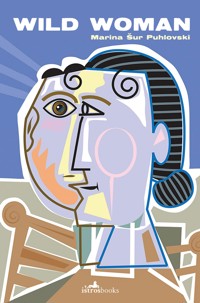
Wild Woman is an anti-love story, set against a background of economic hardship. Told through the undiluted language of thought and mania, the twists and turns of internal dialogue are brought alive by a narrator determined to find her true voice. It is a warning against letting life slip through one's fingers and a call for personal liberation and authenticity. Wild Woman is set in 1970s Croatia, interchanging between the capital, Zagreb, and the seaside towns of Rijeka and Pula on the Adriatic coast. This is a story about an everywoman from a poor family, with a retied invalid father and a mother who always protects the interests of men. The story begins with a love affair between two students of literature, who bond through shared experiences and rush into the romantic dream of marriage. However, what at first seems idyllic to a young woman in love soon becomes a nightmare as she finds herself the victim of an unscrupulous, lazy womanizer whom she must support financially and who often disappears without explanation, leaving her alone in unfamiliar surroundings. To free herself from him, she must free herself from the "prisons" imposed on her by her family, her community and tradition. She must go wild.
Sie lesen das E-Book in den Legimi-Apps auf:
Seitenzahl: 381
Veröffentlichungsjahr: 2019
Das E-Book (TTS) können Sie hören im Abo „Legimi Premium” in Legimi-Apps auf:
Ähnliche




















Marina Šur PuhlovskiWild Woman
Impressum
BOOK SERIESNA MARGINI / ON THE MARGINS
book no. 4
EDITOR-IN-CHIEF: Drago Glamuzina
MANAGING EDITOR: Sandra Ukalović
Marina Šur Puhlovski Wild Woman
PUBLISHER: V.B.Z. d.o.o., Zagreb 10010 Zagreb, Dračevička 12 tel: +385 (0)1 6235 419, faks: +385 (0)1 6235 418 e-mail: [email protected]
FOR CO-PUBLISHER: Istros Books Conway Hall, 25 Red Lion Square, London, WC1R 4RL e-mail: [email protected]
FOR PUBLISHER: Mladen Zatezalo
EDITOR: Susan Curtis
PROOFREADER: Charles Phillips
LAYOUT: V.B.Z. studio, Zagreb
PRINTED IN: Znanje d.o.o., Zagreb July 2019
E-BOOK: Bulaja naklada, Zagreb
This project has been funded with support from the European Commission. This publication reflects the views only of the author, and the Commission cannot be held responsible for any use which may be made of the information contained therein.
ORIGINAL TITLEMarina Šur Puhlovski Divljakuša
Copyright © 2019 by Marina Šur Puhlovski and V.B.Z. d.o.o.
copyright © 2018 for Croatian edition: V.B.Z. d.o.o., Zagreb
This book has been published with support from the Ministry of Culture of the Republic of Croatia.
ISBN: 978-1912545216 (print) ISBN: 978-9535202639 (e-book)
Marina Šur Puhlovski
Wild Woman
Translated by:Christina Pribichevich-Zorić
For my daughter Mirta Puhlovski
I.
This is the third day that I haven’t left the house, except to take the dog out, early in the morning, as soon as it’s light, and again late at night, when it’s dark, it’s out and back in, no walking, no running, he just does his business and it’s back to our refuge before anybody can see us. Because I look a wreck in my faded track suit with its sagging knees, unwashed, my cheeks practically ashen because I haven’t eaten a thing in three days, except for the cubes of toasted stale bread that my mother left in the oven for breadcrumbs before she took off. I dip them in the pan with what remains of the pork drippings from this winter; we already ate all the crackling.
You can buy ready-made breadcrumbs in the store for nothing, you don’t have to bother making them, but it’s a sin to throw bread away, says my mother, the memory of poverty always close to the surface, so, she grumbles, since we have no chickens to feed, she makes breadcrumbs. But you’ve never kept chickens, I remind my mother, who was born in a town, in the city centre actually, two tram stops away from the main square, like me, like her mother and her mother’s mother; chickens are not part of our family lore, you can’t cite them, not even when talking about being thrifty.
But being thrifty has proven to be useful to your daughter, I say to my mother, who isn’t here, as if she were still sitting at the kitchen table playing Patience, which she started doing when she retired, when life stopped before it had even begun – to the daughter who is incapable of going to the local shop let alone cooking, but there are always your breadcrumbs, I smile, and my mother understands, even though she’s absent, even though she ran away from the horror of my marriage, she hears everything even when she’s not here; you can count on her as if she were here. The secret of breadcrumbs.
I give Tanga the cooked giblets that I froze. Thank God we’ve got reserves, you won’t starve, I say aloud, thinking that without them even the dog would starve, she’d be on a diet of toasted bread cubes, because her mistress is incapable of doing anything – except drinking wine – my mother corrects me with concern but without reproach; because this mother doesn’t do reproach.
It’s red wine, Dalmatian Pharos, twelve-and-a-half per cent alcohol, says the label, but it doesn’t get me drunk, it’s as if the alcohol turns into water in my mouth, every drunk’s nightmare.
I’ve switched on the TV, hoping that it will bring me out of myself, but it’s no use, I can’t follow, I can’t connect one scene with the next, nothing makes sense, even sleep doesn’t seem to want me, although I occasionally snap out of the doldrums, not knowing where I am, as if I had dozed off.
At one point somebody rang the doorbell, it’s a terrible moment, an assault, I went rigid in my chair, who’s that breaking in, and Tanga runs off barking to chase away the intruder, but it’s no use, violence has taken hold of the bell so I open the door, foaming at the mouth.
And standing at the door is a girl, barely eighteen, I figure, barely of age, or maybe not even, and she’s in tears, trembling, saying she’s lost, she has no place to go, she doesn’t know anybody here, not a soul, she says, and I wonder what that’s got to do with me, why me, how did she wind up at my door, and then I learn from her confused talk that she’s been in this flat before, even slept here, last summer, she says (where was I then? at the seaside, I decide), when she came to Zagreb with the amateur theatre of Pula that Aunt Višnja runs; aha, Aunt Višnja, my mother’s “client”, so she’s the connection with this poor girl whom I can’t take in, not into the flat or into my heart, such are the times.
As soon as Tanga sees how miserable and tearful she is, she runs up to her, sniffing, wagging her tail, saying “Come in”, because we like visitors, says the tail, but not me, I keep my distance, I don’t move, I stand there at the door as immutable as a rock.
Can’t you see what I’m dealing with here, what’s around me, I tell her in my mind, but she keeps sniffling, gazing at me, her eyes full of hope, which I will have to kill, so I look around to make her look around, because she’s obviously blinded by fear, she doesn’t notice that I’m standing on sheets of newspaper streaked with paint and dirt from my slippers, because we’ve started painting the place, started and stopped when my husband walked out of the house, slamming the door, never to return, never to save me from myself.
But she doesn’t see the sheets of newspaper or the rubbish or the can of paint that I shoved into the hall, she doesn’t see the paint rollers and paintbrushes, she just sees her own problem, she doesn’t care about mine, we’re human, that’s just how we are, we won’t hold it against her but we won’t take her in either, I’m clear on that. Although I’m not exactly happy that I have to turn her away when she’s so miserable, lost in a strange city, and I know that my mother, when she hears about it, will criticise me, how could you send the poor thing away, she chides me in advance; I could do it, I say to myself, because I’m not you, I’m not a constant shoulder for the homeless, the disenfranchised, the betrayed to lean on, I don’t sacrifice myself, I mind my own business, it’s not my fault that she was unlucky enough to come not upon you but upon somebody like me, who will let her down...
Which I do instantly: I’m sorry, I say, but you can’t come in, you can’t, I’m a mess, I shake my head, slowly closing the door in her face, because I don’t want to be unkind, and because I’m wondering hypocritically where she’ll go, who’s going to help her, I feel sorry for her already, and guilty, but not to the extent that I want to run after her, bring her back to this mess of a flat, and of me, falling apart at the age of twenty-six and not knowing why.
As for Aunt Višnja, she’s been in my bad books for a long time, I think to myself, as if such thoughts are any justification before the all-knowing and all-seeing, maybe he records everything in the mysterious memory of the Universe – that Aunt Višnja of ours would give the leading roles to the children of important, politically powerful parents and leave the bit parts for the rest of us when putting on plays at the theatre she once ran, where my mother wound up at a certain point in her life, with me, of course.
Oh, she’s not that bad, my mother said when I complained, the poor thing has been through a lot, and when I grew up I learned what “the poor thing” had been through, which was that at the age of sixteen she had run away from home with an actor she had fallen in love with and who had literally gambled her away in a card game when he ran out of money. And then she passed from hand to hand, became an actress and, when she got old, a drama teacher, which is how she came with the children from Pula to Zagreb and stayed with us, where she had a free bed and room service.
But you’ve never been fair, I tell her, the thorn of her injustice still in my heart; as if that justifies the inhumane way I treated the girl.
To hell with her, too, I say to myself, disposing of the ballast that landed on me, as if I don’t have enough problems of my own, and I open the door to the space between the bathroom and the two rooms, a space that is a room in itself, except with no window overlooking the street – it does have a window, but it looks out in to the elevator shaft, which is always dark because it’s a ground-floor flat – and I step onto the carpet just long enough for the insects nestling inside it to jump out and take possession of my ankle.
Get off of me, I shout, shaking them off my leg, pushing away the hovering dog; what do you want, you stupid thing, I say, showing her my bite-pocked leg, which these guys go for when they’ve got nothing better around to nibble, and I close off the “prohibited zone”, as I’ve called the rooms ever since they started breeding there and the dog and I escaped to the other side, to the dining room with the small kitchen and little maid’s room, the only refuge we’ve got left. For now.
Luckily, the insects haven’t made it into the hall, where the toilet is, but they’ve occupied the bathroom, and the cupboards; I unplugged the phone, and at the last minute moved the television into the dining room so that at least I’d have something to break the silence, even if I didn’t watch it, so I’d know I’m alive because that’s not how I feel. I’m as alive as a zombie. As the living dead. And I have no idea how it happened – how I became a zombie – when only three days ago I was literally dancing with joy around the house, happy that the bastard had finally left; forever, I even sang, because we had thought it would be forever.
You and I are going to solve this, I tell my canine adviser curled up on the chair, who, hearing my words, raises her head and pricks up her ears, actually the top part of her ears, the bit next to her head, because she’s a cocker spaniel and her ears hang down to her neck so she can’t really prick them up, only to immediately sink back into her chair. Yes we will, I say, though I don’t know how because to know how you have to know what’s happening to you in the first place. And I don’t, life has caught me off-guard, it’s as if I was possessed by demons the moment he walked out of the flat, slamming the door behind him, when I thought I was so strong, when I did a victory dance around the space still uncontaminated by insects.
Hey-ho, I danced on the corpse of my marriage, the dog at my heels, twirling my twenty-six-year-old body down the hall, into the bedroom, and then into my mother’s room, as if to make sure that he wasn’t hiding there.
My mother’s room is a mess, with rolled up carpet leaning against the wall, the furniture pushed into the middle of the room, the paintbrushes, buckets and paint tins that I will later move into the hall, who knows why, probably to have a reason to stretch my muscles, as if that would help. And then hey-ho, it was back again to the dining room for the wine, because you always have to drink to victories, to make them bigger, and to defeats, to make them smaller, and then with the bottle back again into the hall, where we keep the bottle opener handily on a tray on the table and just as I grabbed it I fell onto the floor, as if mown down. And the bottle dropped out of my hand, quietly rolling until it came to a stop under the table.
It wasn’t that I tripped, no, I literally collapsed onto the carpet, as if my legs had given way, the same legs that had danced their way here, stockingless, in brown cork sandals with four-inch heels, legs as white as a naked corpse on the carpet, I suppose, because I’d never seen a corpse on the carpet, dressed or otherwise, legs that didn’t seem to belong to me, that were huge, they’d always been too strong, at least in my opinion, because there were also other opinions, legs that the dog immediately proceeded to sniff, maybe she knew something that we have long since lost.
So what if I collapsed, I tell myself, getting to my feet pretty easily, because I’m elastic, I have no trouble assuming a lotus position, doing cartwheels or a bridge, but I already know that I fell not because I wasn’t paying attention but because I had a blow to the head, an internal not an external blow, and it wasn’t my blood vessels that had decided to burst, as they had with him. No, the blow came to my head from my stomach, from my solar plexus where the third chakra is located, I read that somewhere but forget what it means except that it’s something vague and connected to your whole being, something that comes to life or collapses, that masters life or is mastered by it, as in my poor case.
The fact that I could stand on my legs and move them again was of no help at all, because while the machine worked externally, internally it was experiencing a permanent, endless breakdown. Early this morning I crept out of the house, waited for the poor dog to poo, trying not to be impatient because she was taking so long to sniff out a good spot, and feeling guilty because that’s all I can offer her now, she’s being deprived of the long walks she enjoys as if her life is unimportant, and it isn’t, so, keeping my head down, I ran back into the house and the realm of insects.
Until recently, there were no fleas at all, except for two or three on the dog, which are good for it and should be left there, say the experts, but after I collapsed on the floor they reproduced at the speed of light, as if they were unable to reproduce while I was strong, but the loss of my strength was a signal for them to breed, for a population explosion in my flat, miraculously arrested at the door to the hall.
At first I tried to exterminate them individually, one by one, since I couldn’t go out to get something from the pharmacy, and I listened to the blood-bloated insects crack, satiated to death, I thought to myself, as if that was any consolation. It wasn’t, I didn’t empathise with the parasites, I even drowned them in the sink, but to no effect. They came out of the water just as alive and hungry as before, so I gave up. I preferred taking the dog and retreating to the uncontaminated zone, even if I was bitten all over. And there I waited for who knows what, because it’s a known fact that fleas can go hungry for a long time, they can go without food for a year, they’re biblically tough. The dog and I aren’t.
And so I finished up on the southern, warm, sunny side of the world, where the balcony overlooks the courtyard with an apricot tree, its fruits scooped up into a bucket a long time ago by the neighbour who lives in the basement. I don’t know if she gave them to the other neighbours, but she certainly didn’t give them to me. The neighbour from the apartment above ours, on the first floor, had planted the tree when she was a child, accidentally, when she was playing in the courtyard and buried the pit of an apricot she’d just eaten in the ground.
It’s a miracle that apricot tree grew at all, my mother would say, because nobody took care of it, gave it compost, watered or weeded it, it simply sprouted up out of the ground and grew into a sturdy tree and in springtime its broad treetop would blossom with a whiteness you could never get enough of.
I usually prefer the south, warmth and lots of light, but not now. Now I could do with the other side of the world, with the north and its perpetual cold and dusk, its connection to Hades where I landed when I collapsed on the floor and clearly died. Died as the wife of my husband, as his partner, died along with love, faithfulness, loyalty and everything that goes with it, all shattered by the broken vow of “forever”, now nothing but an empty word. Because nothing is “forever”, not the dog, not me, not the damned insects or this apartment or this building or this tree or this town or this planet or the Milky Way and the Universe with it, everything changes, and so do words, which are basically always a matter of politics, in other words, a bitch.
To Hades what’s dead, to life what survives, I tell myself rationally, but I don’t go out, I’m still down there, looking down on my corpse as if I want to bring it back to life, although I don’t. And I can’t. Because you can’t revive the dead, the dead stay dead and should be buried or cremated so that we don’t look at them anymore, so that we can part ways because they don’t belong to us anymore, nor do we to them. We belong only in our thoughts – me now and me once upon a time – and in photos, and these photos keep us together like Siamese twins attached at the head, making it impossible to separate the two. Except with a knife. When one of us will drop away.
II.
Finally something I can wear, I say to my mother seven years earlier, meaning the latest fashion pictured in the women’s magazine Žena, aimed at women of all ages, but especially mine – an age group that doesn’t know anything yet, that has just an inkling, an idea – offering fashion trends and advice on how to catch a man and keep him, nothing about how to get rid of him, I notice now but don’t then, no I don’t – my mind then is on the craze for maxis, as compared to minis, which I can’t wear... I’m a bit chunky for a girl of nineteen, with narrow hips and broad shoulders, but strong thighs and calves, and legs that are neither short nor long, but definitely not made for mini skirts, which is what all the girls are wearing when I’m in secondary school... The vogue is for willowy girls with no curves, for girls built like boys, something I will never be unless I starve myself, and not even then. Because even when I starve myself, the curves remain, I am still chubby, I’d have to starve myself to death for my flesh to melt down to the bone, I’d have to waste away, I realised later, when I lost a drastic amount of weight, though still not enough to wear a mini, with all its damned demands.
In school, it never occurs to me to lose weight, I have no idea that you can lose weight, not even theoretically, for some things I am just stupid, even when they are obvious, I just schlep around in dresses and knee-length skirts like some old bag. The boys in my class give me a “C” for my legs, those little idiots graded us, a “B” for my face, and an “A” for my body, so my average is a “B” and I feel doomed and unhappy; I drag myself through life like a downtrodden cat, casting morose looks at people right and left, which nobody finds attractive, and if somebody does, then I don’t find them attractive. Whatever happened to that attractive thirteen-year-old girl, I wonder miserably, when three lovelorn boys used to stand under my balcony, the fourth pining for me in the school corridors, tossing me little packets of foreign chocolates and sweets, hoping to impress me... I ate the sweets with the brazenness of a vamp who takes but gives nothing in return, and even laughs at him. So now you try being the one who is invisible when she walks by, despised in advance, looking enviously at the other girls’ long, slim legs, because even trousers don’t look good on you, watching them you smile at the magic encircling them but that locks you out a hundred times over. So you stop even smiling and all you can do is nurse your contempt for the girls who leaf through fashion magazines that offer pointers about clothes and make-up, colour-coordinated brand-name shoes and handbags, and, to make matters worse, the sluts are rich, which you are not, and they revel in the luxury of all that fashionable plumage whereas you have already opted for black, dark blue and dark brown, colours that make you look thinner and taller because they hide your shortcomings. Your superiority comes from the inside, you tell yourself, because you see how shallow it is to view fashion as fundamental to life, to prattle about hairstyles and eye shadow and mascara and shaping your brows to look arched, to admire skeletal women who five foot ten inches tall and weigh less than eight stone but since everybody is crazy about them then you have to be, too, and how much it will cost you to work on your body instead of your mind, which is the only thing worth the effort.
And then I start uni, and the fashion changed, not by ditching the mini but by introducing the maxi, the skirt that goes down almost to your ankles; maxis had been in, then they disappeared, and then they had a comeback just at the right moment, as if somebody heard me secretly calling out for something that those of us with fuller figures could wear, and so I ran to my mother’s cousin Julia, a dressmaker who made all our clothes for us, with a fabric that I loved – dark brown, studded with details in the same colour – my eyebrows already plucked and pencilled into an arch, my mousy brown hair bleached, I just need that maxi to be trendy, too, rather than one of the herd taking the early morning tram to work, I think to myself, overjoyed.
I even found a pattern for a dress, with an A-line skirt and a long-sleeved button-up top – I’ll have the buttons covered in the same brown fabric – and with a belt to emphasise the waist, I chatter away, telling poor Julia what I want. She does her sewing in the kitchen, which is crammed with all sorts of things, and where all six of them congregate – her husband, three daughters and son, the neighbours often joining them, all of them sitting around, huddling like birds, filling the room with their warmth. There is always a pot of coffee on the stove, not the real thing, chicory, a coffee substitute, with everybody helping out, chatting, joking, laughing, even the two older sisters’ boyfriends join in, and miraculously, with all the comings and goings, everyone manages to fit into that kitchen; I love all the babble, which I don’t have at home because I am an only child, always alone.
I ask Julia when I can have the first fitting and she says the following week, but that is too long for me to wait because I want to wear the dress that minute, on the catwalk, in the street, at uni, my lectures have just started, and so has the flirting, and I want to present myself in the best possible light as soon as possible, because first impressions are crucial. So I ask for the fitting to be on Thursday, in two days' time, and I want to be able to wear the dress on Monday, because tomorrow I’m going to have the buttons covered. And I can come for the dress on Sunday, even if it’s in the evening, I say, pestering her, I don’t care that I’m making the woman work on a Sunday, not giving her a moment’s rest, even though I know she suffers from constant headaches because of all the pressure she has, from her family, from her clients, and that she always has a little packet of headache powder in her pocket, which she takes whenever she feels she needs it, as she’s doing now, while I’m pestering her; her childlike little hand dips into her pocket, takes out the packet, opens it and, using the paper like a funnel, she pours the powder into her mouth, while her son, already well trained in these matters, brings her a glass of water.
Julia is almost a midget, she’s always been grey, with a face like a raisin, round and soft like a puff of cotton, placed on this earth as if she’s always been crushed, though maybe she hasn’t, maybe that’s just how I saw her; mind you, I would be crushed, too, if I had to deal with the pressure of the five of them, no matter how much I loved them. And when you are crushed you don’t know how to defend yourself, not even from a squirt who is barely nineteen, who is breathing down your neck, who is young and big and on your back – two of you can fit into one of her – because all she can see is Monday when she’ll be fitted into that brown fabric, the one she brought, and it will shape her figure, highlighting the difference between her and the rest of the world, launching her into the starry heights of beauty, or at least attractiveness, making her feel important, feel like somebody, because in her mind she is nobody. Who am I, nothing and nobody, the words keep reverberating in her head; she has no idea that she will remain nothing even when he tells her that she is something, because in his mind he is nothing as well, but she is supposed to reassure him that he is something; what a farce...
We don’t live far from one another, our parents and us, it is a ten-minute leisurely walk under the autumn chestnut trees whose fruits, when they fall to the ground, burst open and little, shiny brown conkers roll out, inedible though, because these are wild chestnuts, but nice to look at, to hold in your hand, to make patterns with and then attach with toothpicks, or at least imagine what you can do with them if you keep them, since they are so lovely.
It is Sunday, early evening, and I am running to pick up my maxi dress, I’m prepared to wait for it until midnight if it turns out it isn’t finished yet, even if it means Julia dropping dead; I’d soften up by the age of twenty-six, but at nineteen I am still hard-nosed, the only thing I’ve experienced is my father’s illness, with no tragic outcome so far, and though I can sense my own selfishness, I’m not fighting it because I haven’t yet dug myself a well into which I can toss in the truth and leave it there to die a slow death.
Luckily, the dress is ready, there are just the buttons to sew on, and I’ve brought them, along with a pair of suede high heels, a nice brown to go with the dress, so that I can have a dress rehearsal in front of witnesses before my debut to the universe the next day, which is how I see this snippet of life I’ve plunged into. As soon as the buttons are sewn on, I disappear into Julia’s bedroom, where the fittings are done, and dive into the dress as if into a new life, which this remake will give me, because even Cinderella found her prince and became a queen only after she had her dress (and shoes and carriage), not before, that’s what the fairy tale taught me.
Ah, that bedroom of Julia’s, with its jumble of fabrics, double beds and eiderdowns, all puffed up and white as if one sleeps in the clouds, and on the walls souvenirs of bygone faces in ornate gilded frames, ribbons, threads, fashion magazines and dress patterns tossed on the table and chairs, clothes hanging from the wardrobes waiting for fittings, skirts, blouses, dresses, coats, and then the dressing table with its triple mirror in which clients can look at themselves from all angles, from the front, in profile, left and right, and over their shoulder at the back.
I put on the shoes and twirl in front of the mirror, posing like a model, fixing the expression on my face as soon as I catch sight of myself in the mirror, something I do even in shop windows, I am always so surprised that what I see in the reflection is me, I mean you don’t live with your face, a face you can’t see, so of course it comes as a surprise. And I decide that I’m satisfied with what I see there, the dress is exactly what I wanted, striking, unique, because maxis are still new on the street, they aren’t seen everywhere and never will be because women like to show off their legs, as I’ll come to understand soon enough. I still have to try it out on the people behind that door, in the kitchen, especially on my younger and middle cousins and their brother, whose response to everything is to joke, so that when I’m with him I always feel I’ve been pecked by parrots – my eldest cousin left to meet up with her fiancé as soon as I walked in, because they are about to get married – so I throw open the door, stop, and say, What do you think?
Oh, beautiful, it looks great on you, my cousins say in unison, both carbon copies of their mother, but prettier, in fact the younger one is gorgeous, they wanted her in the movies, but she wasn’t interested, their brother makes some crack that I’ve forgotten because it isn’t worth remembering, and laughs to himself; the middle cousin says I remind her of Marilyn Monroe, she’s exaggerating, of course, because I’m not pretty, I have an ordinary face, with a jutting chin and suspicious dip to my nose, thin hair, I have to tease it to give it volume, I have charm, not beauty, the only thing that breaks the mold of this perfect mediocrity are my eyes, big, heavy-lidded, piercing, I’m all about the eyes. But I enjoy being Marilyn Monroe for a second in that dingy kitchen with its Singer sewing machine and smell of chicory coffee; the whole point of that dress is to be who you’re not, to create an image, not be a person.
Standing by the bed with the eiderdowns, I take off the dress, so that it doesn’t age by the time I get home, and can hardly wait for daybreak to put it back on again and walk to uni in my heels, my maxi billowing around my legs, straight-backed, fast, with a magnificent walk, as some people later said, my skirt probably carrying the smell of my little dog which was in heat. And what I want to happen happens, the skirt does its job, it sweeps, it collects, it drags some thoughts underneath it, adopts them, imprisons them. I have no idea that from then on I will be imprisoned myself, that the game is over.
III.
I’d already noticed him, he’d already caught my eye at the first lecture, in the huge lecture hall, the college amphitheatre, with its semicircular rows of benches, and down below, in the middle, a table called a lectern, and behind the lectern a green board to write on. I noticed him when I briefly turned around to see who was sitting behind me, I always turn around, because I can, and he was leaning against the wall by the door, tall, thin, all bones, nice looking but nothing special, I decided, glued to my bench as I turned back to face the lectern. The lecture hadn’t started yet, the students were still settling down in their seats. So I turned around again to get a better view, and he was still there, leaning against the wall by the door, exceedingly fair-skinned, which I didn’t like, his hair thin and lank, like mine, which I didn’t like either, the only thing I did like was that he had dark hair, but standing next to him now was another guy of the same height but much healthier-looking, he was more the athletic type, he didn’t look tired, or melancholic, or tubercular as they used to say before tuberculosis was eradicated, with thick fair hair that had no intention of falling out, but for who knows what reason I rated less attractive than the first one.
They gave no sign of wanting to sit down, like the rest of us, they doggedly stood their ground by the door, as if intending to run off, because I could envisage them opening their mouths, waving their arms, nodding, laughing, as if they knew each other from before (and, as I was later to find out, they did, they went to the same high school, there was a two-year age difference), and I was slightly jealous that they had each other, compared to me, I knew nobody there, everybody was a stranger, and I was one of those people who didn’t know how to bridge the gulf between two bodies with the ease of a smile, I’d accept a smile but wouldn’t give one, and as a result I was the person always sitting on a chair in the corner whom nobody approached.
Admittedly, one student did approach me, all fair and blond and bearded, he introduced himself as Adam, but two girls, smiling ear to ear, immediately dragged him away, as if they owned him, and as there was nothing for it, he shrugged his shoulders and disappeared.
Meanwhile, the double act disappeared as well – I saw that when I turned around again, at the end of the lecture, and I decided that they were rude. That they had some nerve. That they had no respect. They had come to study something wonderful and lofty like literature, not technology, economics, medicine or law – so boring you wanted to die, just thinking of the syllabus was enough to make you go numb, but they had scuttled out like rats caught stealing. I wrote them off right away, but they reappeared on the evening of the same day, and stayed. And so I felt more kindly disposed. Amazingly, they kept coming regularly, in the morning and in the evening, with the other one taking notes, like me; but my guy didn’t, he didn’t even carry a notebook with him, ignoramus, I thought, but I didn’t hold it against him.
I usually went to classes with Flora, my neighbour and childhood friend, who was studying English and History, and we often waited for each other after lectures; we talked about boys, and soon also about the double act, because she had noticed them, too, especially him. I also got to know two or three other girls, one of them, Petra from Kutina, ambushed me on the tram, I think you’re the most interesting person at uni, she said out of the blue, and would I like to hang out with her? Of course, I answered, what else could I say, flattered, but also surprised by her manner, by the way she belittled herself, I’d never do that, I thought to myself.
I met the other one first; Filip: he introduced himself before a lecture, my guy wasn’t there and I was with Petra, who immediately glued herself to him, and I thought, never mind, I’m not interested in him anyway.
***
For a while I vacillated, yes I do want him, no I don’t, some things attracted me, others put me off; his eyes were big and blue, like forget-me-nots, but when you looked into them they weren’t warm, they were cold, like blue ice; you’re going to melt that ice, I said to myself, always stupidly believing in my own power to change things, as I know now but didn’t then; his regular features gave him a beautiful profile, but when you looked at him en face, one side of his face seemed to overshadow the other, like bad over good, or the other way round; his legs were too short for his body, but at least he had no fat on him, I didn’t like them chubby, and then there was that odd walk, tottering, sluggish, he shuffled along like a sixty-year-old, his shoulders stooped, all he needed was a tail like the Pink Panther, I thought, checking him out in the university corridors, in the café, outside, on the way home, in those wonderful days before anything happened.
Inwardly, I was attracted by the very things that put me off, the look that needed softening, the smile that needed coercing, and then the weariness, especially the weariness, with its hint of something tragic, of the predetermined downfall of the novel’s hero, he exuded an unhappiness that needed soothing, a pain that needed easing, a wound that needed healing, it was all written there in his eyes and on his brow, especially on his pale, high brow... Suddenly he became gorgeous.
Outwardly, nothing had happened, except that our eyes would meet, collide, avoid each other, underestimate each other, overestimate each other, working surreptitiously, spinning a web that you’d be caught in, and weren’t counting on. That day I was powerful, prancing around in a new dress, a striking maxi, and offered a choice, which one do you want, this one or that one, but by tomorrow I’d be helpless, everything would be slipping out of my hands, as if the previous day had never happened.
If you don’t want him, I do, Flora says as we walk home together one day, it’s so out of the blue that I’m startled, the kiss of death to my power, but I’m also stung, because, what the hell, somebody is prepared to snatch him away, just waiting for you to take your paws off him so that she can pounce; so he has to be protected, and that from somebody who, when you were kids, became your blood sister as a proof of everlasting friendship; even if you hadn’t wanted him, you do now, you don’t want him snatched away from you, you’re not generous, you’re selfish, and that’s something you’ll have to pay for, starting with valuing him more than he deserves. And that immediately sharpens your senses, you see something you may not have noticed in your previous role as queen, which is that suddenly his mind is elsewhere, he’s in a hurry, ignoring you with a bleak look as he rushes off, he doesn’t even come to the lectures anymore... Disaster, horror; what’s happened, you ask your rival of only yesterday who shrugs her shoulders, no idea, she says; so it’s true, you tremble inwardly, because you were expecting her to try to persuade you otherwise. She finds it odd, too, she says, still cutting you with her knife; all that interest I showed in him and nothing, he never even approached me – she tells me indifferently, not realising that she’s hurting me – nothing except for that something in the corner of his departing eye, I say to myself, but not aloud, because it’s pathetic to grasp at such straws when somebody is ignoring you.
Well, now you’re in a position to grasp at what’s allegedly been caught, which upsets you and keeps you awake, you wait day and night for the moment when you’ll see him again and catch that something in the corner of his departing eye, your stomach knots when you unexpectedly run into him in your neighbourhood, and you immediately think it’s no accident, you are the reason why he’s here, although it’s a busy street, and so an ordinary hello becomes an event of universal magnitude that you take to bed with you and all atremble dissect it down to the smallest detail, looking for hidden messages that work in your favour, what he said, how he looked at you, was he flustered, did he turn around to look at you, and by morning you’ve gone completely crazy, your chemical make-up has changed, you’re incapable of judging, of separating the wheat from the chaff, ready to eat the chaff as if it were wheat, until it poisons you to death. That’s what happens if you fall in love with love, with the possibility of love, with the perfect setting, the kind found in books that men don’t read, like in The Witch of Grič, for instance, whose instalments I still keep in the storage compartment of the sofa, if you fall in love with the unreal, which will never be confirmed by reality, because it can’t be. Because it doesn’t belong to it.
There’s also the other side of things, hidden behind the visible, the other story, which unfolds before your eyes, the other one’s story, which you don’t know, because you know only your own story, you imagine the other’s only in relation to your own, beyond that the other’s is empty and you imagine yourself filling that void, just as I imagined it when I ran into him in my neighbourhood and he was flustered. He even blushed as if he had been caught on a secret assignment, following me, as if we didn’t see each other at uni, where we could have settled everything, but didn’t, as if he hadn’t simply said hello and moved on, but rather had taken advantage of the opportunity.
He’s shy, the nineteen-year-old idiot decided, dancing home to dream of the future, while he rushed off to a small afternoon party at a nearby flat, to his thirty-five-year-old mistress, he later confessed, who had a tail at the end of her rump, a stunted tail; imagine, she’s got a tail several inches long, he said with a mocking laugh, taking demonic pleasure in somebody else’s deformity, I should have left him as soon as he said that, it was so indiscreet, and he loved it.
But I didn’t. Something inside me prickled, something went dark, something shrank and went cold, and then finished up with a sheet thrown over it, like unused furniture that’s covered to protect it from the dust. I started building my room for the unspoken, un-discussed comments I kept to myself, afraid that talking about them would force me to draw conclusions. And then to act accordingly, which was the hardest to do, which was why these comment rooms were created in the first place, so as not to have to act. Until the room filled to bursting point, and life boiled down to one single comment, ending with the word: enough!
At that time, we were still only sending signals, it was all still innocent, I was at home going crazy, my tonsils inflamed and I had to stay in bed, feverish, sweating, aching, taking caramelised sugar for my sore throat, our next encounter at uni ruined, an encounter that would resolve everything, I felt sure, after that encounter in the street, when he had blushed to the roots of his hair. I’ve been dying for two days, feeling more and more miserable, more and more desperate, with only books to keep me company, and then Flora appeared, my blood sister; there’s a party at Ria’s tomorrow night, she says (Ria and she attended the same courses), he’s been invited, too, she says, it’s Ria’s doing, she says, she’s being generous because she’s given him up. And, anyway, she’s interested in somebody else who’s coming, she says... Ah, Ria, that red-headed, scrawny witch with the imposing nose, dragging around some pretty-boy whose eyes can’t get enough of her and she doesn’t know what to do with him because the pretty-boy is dumb, and even his good looks don’t help; plus, she has a strange brother who’s already been in prison, and he isn’t even eighteen yet, I mused; it gives me the chills just to think about the future that’s descending on me; I’m a mess.




