


Erhalten Sie Zugang zu diesem und mehr als 300000 Büchern ab EUR 5,99 monatlich.
- Herausgeber: Story Machine
- Kategorie: Gesellschafts- und Liebesromane
- Sprache: Englisch
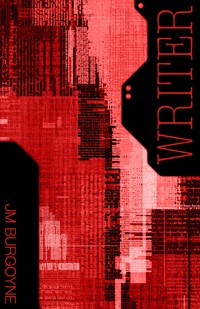
'I do not have a future, and I do not want dreams. My dreams are stories, written by a machine. And I will not think of her.' Luke Kierley has visited the writer and asked it to exorcise from him all memory of her. Now he has no idea who she was and he must try to find a way to live with a bleeding hole in his memory. Told in a unique voice that recalls southern gothic, classic horror, and frontier literature, Writer is like nothing you have read before. JM Burgoyne's debut brings her virtuosic voice alive in a striking and unforgettable meditation on free-will, love, and the lengths we'll go to avoid pain.
Sie lesen das E-Book in den Legimi-Apps auf:
Seitenzahl: 311
Veröffentlichungsjahr: 2022
Das E-Book (TTS) können Sie hören im Abo „Legimi Premium” in Legimi-Apps auf:
Ähnliche



















Writer
JM Burgoyne
Writer, copyright © JM Burgoyne, 2022
Ebook ISBN: 9781912665150
Published by Story Machine
www.storymachines.co.uk
JM Burgoyne has asserted her right under Section 77 of the Copyright, Designs and Patents Act 1988 to be identified as the author of this work.
All rights reserved. No part of this publication may be reproduced, stored in a retrieval system, or transmitted in any form or by any means, graphic, electronic, recorded, mechanical, or otherwise, without the prior written permission of the publisher or copyright holder.
This publication is sold subject to the condition that it shall not, by way of trade or otherwise, be lent, re-sold, hired out or otherwise circulated without the publisher’s prior consent in any form of binding or cover other than that in which it is published and without a similar condition including this condition being imposed on the subsequent purchaser.
For Em, and Nick
Writer
Someone is walking under a black sky towards a house. A white house with wooden slats, blue grey on the lintels and window frames, on the doors, the shutters, overhang of the roof. The roof is slate.
The house is preserved, fresh, clean. The garden is tangled like uncivilised hair. But it stops at the white walls. Is stopped.
The garden is full of wild roses and ground elder and poison ivy and blackberry bushes with rejected black clusters – the birds do not eat them. It is wild, it is excess, but it stops at the house, and at the gate – held back by keys and words, a decision made by them. And from the gate to the front door runs a path like the one created by God between two seas: sterile – clear, ready.
It is not night; it is dawn. The darkness is from a storm ready to come.
The woman has hidden her face under a veil. She is dressed for church, a large cross balanced on her protruding belly – she is pregnant. Her hat is black and has a crow’s feather pierced into it for decoration. She is dressed for a funeral.
She pauses at the gate – looks left, right, and behind her. Then pauses some more, her hand on the latch. She is pouring courage into herself: this is an act of will.
And then she enters the garden...enters the house, mounts the stairs, mounts another, smaller, set of stairs, opens the door, and enters the attic.
She does this all quickly – quickly but while carrying weight – because she has started, and it is waiting.
She looks up at the open window. Her breathing is hard here. She remembers a conversation and reaches forward to close the window. But her fingers touch the metal and her commands are overridden – stopped, and then reversed: her fingers stop, her hand retracts, the window stays open.
Now the woman comes and sits at the desk. She types a sentence on the typewriter. Just one sentence but slowly, using only one finger from each hand. She is searching to find the right letters. She narrows her eyes before each press of a key – bracing for the bite. And then she pulls the finger away, with pain and effort: the machine is hungry, it doesn’t want to let her finger go. She feels the bites, has heard the tales, but she continues. Sometimes, we deny what we know.
It is while she is typing that the storm makes its entrance: it is shouting, but the air inside is fast becoming like cotton wool – thick and abrading her throat as she breathes, making the sounds distant even though they are just the other side of the roof.
Then.
She is thrown backwards in the chair and one of her hands is made to bring up her dress, all the way, uncovering her belly. Her eyes are switched off – open but off – and the machine types a response onto her stomach, slow, then faster, then ranting, throwing its words from the keys, and bruising them into her skin. Her body twitches in time to each stroke, and she feels its ventriloquism as a good thing.
A minute of this, and ten more seconds, and then-
The woman stands. Gasping for air and bent more and more double. One hand reaches and fumbles towards the words which she has typed but does not get there. The other hand goes onto and then moves all the way around her belly: clutches it.
Blood drips through her underwear and onto the ground.
Then crawls, like a line of ants, up the table leg. Yes, it does. The woman doesn’t see this, but she can feel what is happening. Still, she moves steadily – in pain – out of the attic, down the stairs. Steady. At first. Sadness and success mixed on her face.
Then, the blood that is coming from her makes a sudden surge and becomes thicker, as thick as reins.
The woman starts to run.
The woman runs as well as she can – which is hardly at all – out of the house and along the pathway and out of the gate. Once she is out of the gate there is a tearing in the rope of blood that is being drawn up from her into the house. She continues, slower and slower, away from the house, and the rain washes away the dotted red line that would have shown where she had been.
Her blood runs out as she reaches her home. She steps up once, twice, then falls against her door. Closes her eyes and looks up and feels the rain and does not cry. She feels the water coming down and onto her, she feels the baby coming but knows that her body is the only thing moving, and she waits for her own movement to end, also.
The man who brings the milk gets to her house. He sees her, crosses himself and breathes deeply, glad he doesn’t have to shut her eyes. He does not run to get help because she is dead. He continues his round. He does shout at the crow that is watching. It ignores him.
When he’s at the part of town where there are people, he tells a boy and the boy runs to get the priest, and once again the town is talking about this woman.
The man who found her and the priest both say – and it is true - that the baby was half out of her, and she was at her door, and this means that people think that she was going to get help. They think she was leaving her house, not coming back to it.
And the writer?
Well, she left the window open.
Eighty-Six
I am staring at her thigh, well, resting my eyes on it. A light dusting of pale hair – soft – and some freckles that are islands of brown. I shift my arm, which is being deadened by her neck.
The air is hot enough to choke me, my sweat is half-whiskey, and there is a whore’s skin on me – but none of this is anything. A blade of light dives through a hole in the room’s curtain, and a bird laughs outside, and she moves, but does not wake. I would swallow at feeling her shift, but I drank enough last night that my throat is tight, and dry. My throat craves water and there is a woman connected to all sorts of parts of me, but my mind is back with its obsession.
Except now with something new.
Are highs the chained-to-partners of lows? Are they reflections?
I try to look at her clothesless body which is wet from sweat and – between there – from her and me, but my mind has the bit between its teeth and so it stamps its hooves and it says:
Danielle/writer/Danielle/writing/written.
And, now, because of this whore, it’s also asking:
Was there also good?
I have known I could repeat it, redo what I took away from myself, re-love someone so dark they made me cut out years from my life – I have known this since Danielle, but I still thought I’d done the right thing, that every memory it’d taken from me was bad. Everything it has done to me since, and the life I am living, I told myself that at least I was without her. Because she was a demon. Because she was Hell.
I told myself this must have been true: that the relationship I cut out was always and all poison. Or I would not have gone to it. Made my wish.
But now.
This woman has changed the story. Told it different. And she could be right.
Was there also good?
Was the thing I got rid of a thing that had anger, yes, fighting, yes, but had love as the other side of it? And is passion always strong, in sickness and in health?
Did I do the right thing?
She has done this to me.
She opened the door and teased me in – as they do – and she took off my hat and tossed her head back and my hat to the floor in the way that they do. Then she put her hand to my bandanna and I moved back – shied back – as I always do, and she said:
“What’s under that?”
Even the professionals like to play at love like kids in yards play at house. So they all ask, and then they all insist: they must take my clothes off, all my clothes off. They undress me and they flirt – out of habit. They ask then tell me to take off my bandanna, and so I take it off, and then it stops.
They stop.
Their habit stops.
And then it is new for them but for me it is every girl I have been with since I went to it. They throw questions at me, corral me with them, chase me and throw rope upon rope round me. Not because they want to tame me: they like my wildness, but they want the story.
People say they know that love is all. At the very least they believe it, because there are things you have to believe. They talk of, they weld to, this certainty. But, also, they like to be scared. They like to pretend they’ve run out of honey, they like to think they almost fell in front of that train, they like to think they almost tripped and fell into that canyon. This is why they ask me: I give them exactly what they want. A dead love story.
I have been with a thousand girls and answered a thousand questions and I ride every day with these questions next to me. I know a waste of fucken time, so when this whore asked I just took it off. And then we played the game where the woman tries to get it from me – my story – and I say as little as possible and they want me to tire but usually it is them, the woman trying to rope me, who tires, because I have done this longer than them. We played the game and I won, was winning – she asked and I evaded – but then when she had asked why and I had told her my bare minimum, the story I would allow, this one, she said, “You’re wrong.”
I said, “What?” Surprised, not angry.
And she said, “You got it wrong. Stronger things are better.”
I said, “What?”
She said, “Nobody wants the love where a woman takes a step out of a carriage and the man he bows and kisses her white-gloved hand and helps her to get onto the ground. That’s why they come to me.”
“What?”
“The man does not want the tea-sets and the gloves, he wants me. Maybe even wants me screaming, but he always wants me. And she wants his best friend. Usually.”
She smiled to herself at her truth, then she noticed that I was moving further from her so she closed the distance and ran her forefinger, right forefinger, over all the shapes in my forehead and she said, “Life isn’t like in kiddies’ stories. It’s strange, all tangled. And those men and women who are always shouting at each other, who leave and then come back, who scream and then kiss, they are the ones who love the most. They ain’t warm milk, they’re hot and frozen. I think you’ve lost something that was at once the peak and the bottom of a whirlpool, was the Devil, but also God.”
I told her whirlpools don’t have peaks, they only go down, and she laughed and took it as an instruction.
And then she fell asleep. Having played her part and thrown a million ropes around my neck. They pulled me. I had to turn to look the way her ropes dictated.
I lay awake thinking.
And am still thinking.
Life isn’t simple.
Love is not clear.
Maybe this whore is right and passionate relationships with higher peaks and, yes, deeper troughs, are the better ones. And perhaps it is also true that the two things always go together – high and low – and the lower the low, the higher the high.
I had thought, known, that the joy I felt on leaving the attic, after I’d typed my wish, showed me the colour of the past I had got it to remove. I had thought and known that it was hate, and only hate, that made me go to that attic. Hatred, or pain, nothing other than those two things. But what if it was more complicated than that, this relationship I’d had cut out? Not a childish painting, but a photograph.
Have I lost, have I lost something good?
Now all of the birds are laughing, and she still does not wake. A fly lands on her and walks along her spine and my eyes are looking at her back but my mind is thinking. Now, about what Danielle said. Those years ago, when I met her. It’s thinking about what she said, again.
She said:
“You ran away from the pain, so you haven’t grown. You’re a coppiced hedge – stunted.” Or she might not have said coppiced she might have said – what are those trees where you go along, and you chop off the centre, you behead the main trunk, so that you get all of those little twigs.
Pollarding. It might be pollarding.
She said that I had stunted myself – forever dwarfed. Not like the plants in the north-most places that don’t get enough sun but dwarfed because I cut out the part of me which could grow. Lessons learnt hewn from me. I have pollarded myself. Cut out my heart and I can now only extend a million frail branches which do nothing.
Danielle had meant that pain is valuable, it tells you where you have been and what it was you rode on. With this pain, these painful memories, you know when you’ve done something before and it ended badly. You can think I know that path, I went there once and it was dangerous – cliffs, scree slopes. If I ride that way a second time my horse and I will skid and fall, again, and I will be thrown to the ground, again: un-pollarded you remember and you go a different way. But I went to the writer. And because I now haven’t learned the lesson, I could repeat my mistakes. To Danielle, this was immediately obvious.
It was obvious, too, to her, that this life is not just chance, just gambling and dice, it is – it is paths, roads, trails: not random sheep tracks – a person, every person, has their well-worn roads and love is the widest trail of all. Love is food you like to eat and clothes you like to wear and places you like to go, more than like them: maybe choice, maybe instinct, but you will be drawn to
The things you liked before.
I am tempted, at this, to feel the scars on my head, but I don’t, because I know what they are. That they are there, and what they are. They don’t change. So instead I listen to the laughing birds and I say, “Fuck you,” and they keep laughing.
I say, to myself now, not the birds, “I will train my mind to one point on the horizon: the feeling immediately after I typed. I woke up. And breathed without the crone on my chest.”
I do this, now. Breathe in, out, trying to taste it, feel it, gain from it. Counting...until I see that she has woken.
This woman I am with is now pretending to sleep. Her hand moves to place itself round me, to encourage a second purchase. Her eyes are still shut and most would believe it, but I know the difference between resting and held closed.
I have responded despite my distraction, to her hand, and now she has woken and is waking me fully – the lower me. She is talking, though – only half on her job, not even focussed enough to check that I acquiesce in my second coming and will pay. She is more concerned with the questions – her body is doing its work, her mind is elsewhere. Hypothesising.
She is saying things.
Saying the things again.
I am not listening. I don’t listen to whores anymore.
Try not to.
This current one has not noticed, today. She is storying to herself. Who could she have been? What could have happened? What am I doomed to now? Was it passionate – did she leave a married man for me or rebel against her father?
I am not listening. And I am not with my body. She is on me and it is in her, but my mind – like hers – is thinking, still. It doesn’t give a damn about where my dick is trying to pull it to.
Instead it pulls back to its favourite theme: Danielle.
Cows, and a cliff, hooves, and flowers, no, herbs, everywhere.
She wore big hats to protect her face. They did not have decoration, she said such stuff was rubbish.
She told me when I got things wrong, she laughed at me, and she smiled.
She only had a hand mirror, to check there were no bumps in her hair, and she only used it when she had to go to meet people who would care.
I didn’t care.
Danielle was the one who started it, told me I was wrong to be happy, that I should be scared. Didn’t say those words, but she’s the one who began it. She planted a bramble in my brain. Thank you for your service.
And now.
This whore has added a question, and cut away more of the part of me which once knew and then thought and now only hopes it did right.
Have I lost?
My body has finished, without me.
The woman and I dress, and I give her my money.
One Hundred and Forty
I have brought Donkey round to her outbuildings and then come back again and we have talked. Are talking. Like Jessie, she knew I was coming. I asked her how and she said, “In the tea leaves of course,” and I looked down at the cup she had given me to see if it said anything and she laughed and said, “Jessie wrote to me. When you’d got to her farm and she’d found out about you, she wrote.”
Now, we are sat in wicker chairs with blankets on them and I am looking at her waiting for an answer. She is casting her eyes all over her house because she wants to draw mine to it, to the things in it, but I am waiting and I don’t dance for her.
The doors and windows are all wide open but the room is close and when I came in the horde of crows that’d been flying after me landed and shouted louder but she let me in and I got under the doorframe and they were silenced. Whatever she has done it only lets in natural birdsong.
So I lean back into my chair and close my eyes to push hers away further and I smile and ask again, “So can it be done?”
“Yes.” And I know this. I know this, finally. She says, “It is in no way easy-” (I knew this) “-but I think you can do it.” (I know this, too.) She stands and says, “Come with me,” and goes to the door. I don’t want to go outside again to those crows, but I know that I should so I stand. We walk round back to where I put Donkey and in the pen next to him is a mother pig with ten piglets. This woman takes out a knife from in her thick sock, and pulls a stopwatch on a chain from out of her blouse. She says, “There’s one thing I don’t know.” She hands me the stopwatch, saying, “I’d say you’re the same size as her. When I make the cut, start it.”
I say, “Why?”
“You want to see the woman’s face, then live to know it, yes?”
“Yes.”
“Then I need to check how long you’ll have.”
She opens the pen and comes in, knife behind her back. She coos over the piglets and strokes the mother pig who is not at all scared, and then she takes the sow’s upper foreleg and gouges the knife down it. The blood flows and I’ve already started the timer. The sow cries at first but she quiets it and strokes its nose and the piglets continue with their last meal.
The piglets drink and the sow gets paler and paler until she is no more than mist grey and then her eyes are out – dead.
Three minutes and forty-seven seconds. Not long but this is not science, it is not precise, not precise at all and anyway-
I say, “I only need a second.”
She stands and pushes down her skirt, which is soaked through with blood so’s that blood is running down from it into her socks and boots, “And then to sew yourself up again.”
I look again at the time on the stopwatch.
She says, looking down at the ten piglets, “You owe us a mother.”
Later, I lie in my bed in her house and my mind is telling me they are crying. Earlier they did cry, the piglets, and she gave them some cow's milk and that quieted them down. But now, in the dark, my mind hears tears.
I lie and I tell myself about soldiers and war and how animals are not the same as humans. I tell this to myself many times but in the end I stand, dress, and go to them.
They aren't crying, they are bunched together nail to toe in a mass. Sleeping, but I know what drives that closeness. One opens its eye and sees me. Stares at me.
I say, “You are not hurting.”
But I go to fetch the small cart I saw when I arrived. I hitch Donkey to it. I fill it with straw, the straw from the pen, which will smell of her. I lift each drowsing piglet in to the cart and Donkey and I take them down to the nearest farm. Day is coming up as I place them in with their new mother, take new straw and pig muck from her, and wipe each one of them in it.
I tell them, “She is something, at least.”
When I return, Maria says I owe her ten piglets, too.
One
I had opened the attic’s window to let out some of the heat, and it had drawn in a dragonfly even though the closest pond is over in the McKinley place – the southest end of Wyatt.
I watched as the dragonfly looped around and around the writer. It wasn’t flying lazy circles – it was being forced gradually inwards, closer. Finally it came too close, succumbed to the writer’s pull one too many times, and whoomph it was taken onto, and sliced by the arms of the keys. Its green was quickly sucked up and the writer was clean again except for the desiccated husk of a dragonfly, which I blew gently onto the floor.
This dragonfly may have been the last of the summer season.
I thought that I should close the window, now some of the heat had been replaced by air, but maybe allowing it the occasional snack would be better. The door was locked. Rafe had the key. He was a long way away.
There was paper already between the ribbon and the roller. I reached forwards and pushed the paper up to see if something had been written before. There was something there, but it could have just been the stains of now-dead insects.
I didn’t know.
Still, I rolled the paper on, to make sure that where I was typing was clean, would not be skewed or polluted.
Then, I stared at the letters. I probably thought of her – that has been edited away. I know I thought, planned, what my first twelve letters would be.
My wish.
I want her gone
To do this I knew that I would have to move two fingers twice (two ens, two ees), and one finger three times – the space bar – pulling them free because it likes blood; bites it out of you.
I had no fear – not brave not steeling myself, merely drained or devoid of every emotion but one – I was left only with...not sadness. Mire. I felt mire. That is not a feeling but it is closest to how I was. Thick, with every movement and thought almost impossible. Dank, dark, and full of shit.
Those four words – which would mean I had started – would then commit me to three more words, and twelve more finger movements:
from my mind
And then the full stop.
The writer digested the dragonfly, and my mind waded through the shit that was itself.
Rafe had, eventually, helped me plan my fingers – which would go where. Pressed my fingers onto his typewriter. Both warning and assistance. Had made it real for me, shown that it would be:
Wish, and wait.
He had stood over me and said, “I won’t take you unless you eat,” and I had eaten.
And so, I put down the first finger and the key sent its barbed spike up and into me, and then pulled my finger down, somehow, in order to push more blood from me. This happened but I observed it without alarm because my mind was cold.
I remember this, the actions of that day, because it wanted me to – I think this now.
It left me her ghost. Left me that. That last shadow of her. Not knowing who she was or what had happened and who she had been, only that I wanted her gone.
It wanted me suspended. Wanted me thirsty and asking is this water poison?
I know what I wished for.
I wanted her – a woman – gone.
Thank you.
But yes. I typed, and it bit. And yes, I was saying I felt no alarm. No pain. People feel pain. Even with foreknowledge, with the opportunity to steel themselves to what is about to happen. The injection they are waiting for, the ear that wants piercing. They brace but they still feel it.
My mind had degraded into mire and was no longer able to register much more than a dull awareness of the pain it caused itself.
I laid the rest of the first sequence, wrenching two fingers up for that n and e which needed doing twice, pulling the keys with me, tearing three fingers free – taking a maize kernel chunk out of each – and pressing the n twice, the e twice, the space bar three times.
And then the next part.
Again I pressed, and repressed, keys. And the full stop.
My head was smashed downwards onto the uplifted keys. On the paper it said I want her gone from my mind and blood was taken from me.
Rafe woke me, stood waiting with a cold cider. He’d already tipped me away from the machine so that I was slumped back against the chair, and he said, “The question is, why did you want her gone enough to go through all this?”
He handed me the drink and I looked up at him through what felt like ant-allergy eyes.
He said, “It’s done a good job – I’m your best friend and I don’t know who she is. Was.” And added, “I doubt she does either. If she still exists.”
My words were on the paper, highlighted by the blood from my head.
Her/gone/mind.
I said, “She should still be ‘is’. That was the point.”
Rafe handed me a mirror, and in it, across my forehead was a mash of jumbled keys. It had danced a jig on my forehead. Hundreds of letters, but a clear story, running through the mass of letters: words for me, nobody else would be able to read it. They would just see a mass of letter-shaped scars.
(Gone.)
But it had made sure I would always be asked, and always be reminded. Of a woman. By everyone who saw me.
(I stopped looking into mirrors. Learned to shave by feel.)
It’s a bastard.
The writer.
Rafe ripped out the sheet and handed it to me. I looked again, because I wanted to girder what I had been so desperate to do. A woman had hurt me.
I must have been in love.
I balled the paper and threw it to a corner. All I knew was the pronoun: she. Everything else was gone. I smiled because it felt like I’d had a cold for two years, but now I was able to breathe. My eyes were swollen, fingers ripped, and my forehead was bruises and blood, but air could now get into my lungs.
Rafe held my chain out to me, with a locket attached to its central rung. I took it, and pressed and it sprung open: empty.
Rafe said, “Did that used to have a picture in it?”
I said, “Lockets normally do.”
I finished the cider and Rafe asked, “Are you going to cover that?”
I said, “Yes.” I took the bandanna from my neck and tied it round my forehead, then put my Stetson on.
I said, “Don’t want them to start asking.”
Rafe said, “They know you’ve come here, so they’ll ask you why.”
“And I can’t tell them.”
“They’ll still ask.”
I didn’t reply.
Rafe said, “Come on, another drink.”
(But not here, he didn’t say – didn’t say not here, because it was obvious: you didn’t loosen your wits around it.)
I paused, then went over and opened the window wider – in thanks, or maybe I, already, felt some need to keep it on my side. Rafe looked at me, then jumped his eyes away from mine.
We walked out and Rafe locked the door behind us and put the key on the side table.
I said, “Not the bar.”
He said, “The bar.”
The writer is known in Wyatt. Well-known.
It pulls us daily, pulls on our minds. You are sittin’ in the bar and find your neck turning towards it. Drunks walking home pass out going not to their houses but going there. If you doze while walking to work you hope you will trip on a stone before you get too much closer, and all cart and coach drivers know to keep reining away, otherwise the horses will take them to that house.
So we know it.
It is wondered about elsewhere. Wondered and joked about by people who have several states between them and it. Beyond that I reckon nothing, no wondering, not even a hint. I don’t think they would know it, because stories travel like a line made of chalk – they go so far and then, eventually, the chalk runs out.
Not everyone in this world, then, knows this writer. But here it is as known as other places know God.
The writer came to Wyatt with the Owen family. We do not know everything. Some things are blurred. But we know that.
We do know, clearly, about the Owens. We know them sharply. A big family, money from an invention. Seven daughters, three sons, husband, wife. They bought a house in Wyatt, from the Glovers, who were going to Canada.
The Owens moved in
And they all killed themselves, one by one. Like dominoes, with the weakest one to grief going next. It was real quick and then the last living one – the second son, who was about nine or ten – was collected by his Aunt and Uncle. A year later he comes back – this second son – and goes into the house with Aunt and Uncle. Walks upstairs into the attic and types ‘thank you’.
They never locked the house up. I expect it didn’t want them to.
After that people knew this was the place to go if you needed something. Really needed it. But you didn’t go twice.
Everyone knows it is evil. Knows it in their bones and their waters and has terrifying dreams of it.
But then whiskey is evil, and fucken, and anything of pleasure.
If you want it you shouldn’t have it – that is always the rule.
But I had wanted
Air
Yes, whiskey is evil, fucken is evil, the writer is evil.
Vampires don’t like garlic, crosses give protection, and Jesus loves us all.
I had bruises on my face, but I was happy, and Rafe and I drank to joy.
Thirty-Six
I was making a map.
It was a map to make sure I did not repeat my mistakes or rather that one most acid mistake: her. I didn’t want to end up with the woman who broke my heart again. I didn’t want my heart to be broken again.
The map was made up of places, with names, dates; it was colour coded for dates, times in my life. Colours giving me the dates – pale blue meant I was there in my childhood (Wyatt, and one or two other places where I’d gone with my parents), grey was my adulthood – Wyatt, but I’d gone a bit further too, usually working in neighbouring towns.
After the writer didn’t matter, of course.
I would cross-hatch an area with the right colour for when I’d been there – as child or adult. And then if I’d also been there as an adult as well as child, I’d outline the blue town, or blue road, or blue rail line, with grey, so it was marked with both colours. That way I would know, when considering a woman, to check both times.
Have you ever been to that bar half way between Wyatt and Deep Bottom Creek? As an adult? No? What about when you were young, with your pa? No? Ok, what about...?
(Could she have met me already?)
I didn’t know how I’d work it into conversations, this map – how I’d ask women these questions, but it felt good to have something to hold onto: I needed it.
The map became another obsession. Another thing that chained me, except in my mind it wasn’t a chain it was the thing I was doing to break them – the other chains. I was a manacled prisoner and all I had was a pen, and a lot of paper, but you can change reality with pen and paper.
So, I rode.
And I worked on my map. Or thought on it. Always. To the exclusion of the things you should be doing to stay alive: at one point, on one day, I started swaying and Martyn said, “Drink some fucken water it’s hot out here,” and leant down and pulled my flask from Donkey’s saddle and shoved it in my mouth.
I hooked the reins on the saddle so I could more easily undo the bottle, and Donkey and Bunion just kept walking together amiable, redoing and redoing their loops of the cattle and Martyn looked at me from Bunion. I drank the water he’d given me. I didn’t thank him because my mind was away from all of this – dust and hooves and milk and meat.
Martyn said, “Let’s take a break. Sit in some shadow. Play some cards.”
I said, “Get lost,” and took another swig of the water.
He rode away, and once he’d done his looking back I re-lifted the bottle and drank almost every drop.
I had been thinking too hard.
About her, and then the map, and the map, and then her.
About the small shakes that she would still so she could carry her herbal teas, and coffee for me. And the small under-mouth swearwords she would let out as she combed through her hair.
But that was no longer.




