


92,99 €
Mehr erfahren.
- Herausgeber: John Wiley & Sons
- Kategorie: Wissenschaft und neue Technologien
- Sprache: Englisch
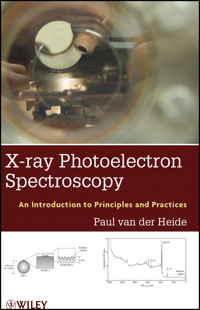
This book introduces readers interested in the field of X-ray Photoelectron Spectroscopy (XPS) to the practical concepts in this field. The book first introduces the reader to the language and concepts used in this field and then demonstrates how these concepts are applied. Including how the spectra are produced, factors that can influence the spectra (all initial and final state effects are discussed), how to derive speciation, volume analysed and how one controls this (includes depth profiling), and quantification along with background substraction and curve fitting methodologies. This is presented in a concise yet comprehensive manner and each section is prepared such that they can be read independently of each other, and all equations are presented using the most commonly used units. Greater emphasis has been placed on spectral understanding/interpretation. For completeness sake, a description of commonly used instrumentation is also presented. Finally, some complementary surface analytical techniques and associated concepts are reviewed for comparative purposes in stand-alone appendix sections.
Sie lesen das E-Book in den Legimi-Apps auf:
Seitenzahl: 342
Veröffentlichungsjahr: 2011
Ähnliche


















Table of Contents
Cover
Title page
Copyright page
FOREWORD
PREFACE
ACKNOWLEDGMENTS
LIST OF CONSTANTS
CHAPTER 1 INTRODUCTION
1.1 SURFACE ANALYSIS
1.2 XPS/ESCA FOR SURFACE ANALYSIS
1.3 HISTORICAL PERSPECTIVE
1.4 PHYSICAL BASIS OF XPS
1.5 SENSITIVITY AND SPECIFICITY OF XPS
1.6 SUMMARY
CHAPTER 2 ATOMS, IONS, AND THEIR ELECTRONIC STRUCTURE
2.1 ATOMS, IONS, AND MATTER
2.2 SUMMARY
CHAPTER 3 XPS INSTRUMENTATION
3.1 PREREQUISITES OF X-RAY PHOTOELECTRON SPECTROSCOPY (XPS)
3.2 SUMMARY
CHAPTER 4 DATA COLLECTION AND QUANTIFICATION
4.1 ANALYSIS PROCEDURES
4.2 PHOTOELECTRON INTENSITIES
4.3 INFORMATION AS A FUNCTION OF DEPTH
4.4 SUMMARY
CHAPTER 5 SPECTRAL INTERPRETATION
5.1 SPECIATION
5.2 SUMMARY
CHAPTER 6 SOME CASE STUDIES
6.1 OVERVIEW
6.2 SUMMARY
APPENDICES
APPENDIX A: PERIODIC TABLE OF THE ELEMENTS
APPENDIX B: BINDING ENERGIES (B.E.XPS OR B.E.XRF) OF THE ELEMENTS
B.1 1S-3S, 2P-3P, AND 3D VALUES
B.2 4S-5S, 4P-5P, AND 4D VALUES
APPENDIX C: SOME QUANTUM MECHANICS CALCULATIONS OF INTEREST
APPENDIX D: SOME STATISTICAL DISTRIBUTIONS OF INTEREST
D.1 GAUSSIAN DISTRIBUTION
D.2 POISSON DISTRIBUTION
D.3 LORENTZIAN DISTRIBUTIONS
APPENDIX E: SOME OPTICAL PROPERTIES OF INTEREST
E.1 CHROMATIC ABERRATIONS
E.2 SPHERICAL ABERRATIONS
E.3 DIFFRACTION LIMIT
APPENDIX F: SOME OTHER SPECTROSCOPIC/SPECTROMETRIC TECHNIQUES OF INTEREST
F.1 PHOTON SPECTROSCOPIES
F.2 ELECTRON SPECTROSCOPIES
F.3 ION SPECTROSCOPIES/SPECTROMETRIES
APPENDIX G: SOME MICROSCOPIES OF INTEREST
G.1 SEM
G.2 HIM
G.3 TEM
G.4 SPM (AFM AND STM)-BASED TECHNIQUES
APPENDIX H: SOME REFLECTION/DIFFRACTION TECHNIQUES OF INTEREST
H.1 XRD
H.2 GID
H.3 XRR
H.4 LEED
H.5 RHEED
TECHNIQUE ABBREVIATIONS LIST
INSTRUMENT-BASED ABBREVIATIONS
GLOSSARY OF TERMS
QUESTIONS AND ANSWERS
XPS VENDORS
REFERENCES
Index
Copyright © 2012 by John Wiley & Sons, Inc. All rights reserved
Published by John Wiley & Sons, Inc., Hoboken, New Jersey
Published simultaneously in Canada
No part of this publication may be reproduced, stored in a retrieval system, or transmitted in any form or by any means, electronic, mechanical, photocopying, recording, scanning, or otherwise, except as permitted under Section 107 or 108 of the 1976 United States Copyright Act, without either the prior written permission of the Publisher, or authorization through payment of the appropriate per-copy fee to the Copyright Clearance Center, Inc., 222 Rosewood Drive, Danvers, MA 01923, (978) 750-8400, fax (978) 750-4470, or on the web at www.copyright.com. Requests to the Publisher for permission should be addressed to the Permissions Department, John Wiley & Sons, Inc., 111 River Street, Hoboken, NJ 07030, (201) 748-6011, fax (201) 748-6008, or online at http://www.wiley.com/go/permissions.
Limit of Liability/Disclaimer of Warranty: While the publisher and author have used their best efforts in preparing this book, they make no representations or warranties with respect to the accuracy or completeness of the contents of this book and specifically disclaim any implied warranties of merchantability or fitness for a particular purpose. No warranty may be created or extended by sales representatives or written sales materials. The advice and strategies contained herein may not be suitable for your situation. You should consult with a professional where appropriate. Neither the publisher nor author shall be liable for any loss of profit or any other commercial damages, including but not limited to special, incidental, consequential, or other damages.
For general information on our other products and services or for technical support, please contact our Customer Care Department within the United States at (800) 762-2974, outside the United States at (317) 572-3993 or fax (317) 572-4002.
Wiley also publishes its books in a variety of electronic formats. Some content that appears in print may not be available in electronic formats. For more information about Wiley products, visit our web site at www.wiley.com.
Library of Congress Cataloging-in-Publication Data:
Van der Heide, Paul, 1962–
X-ray photoelectron spectroscopy : an introduction to principles and practices / Paul van der Heide.
p. cm.
Includes index.
ISBN 978-1-118-06253-1 (hardback)
1. X-ray photoelectron spectroscopy. I. Title.
QC454.P48V36 2012
543'.62–dc23
2011028942
ISBN 978-1-118-16292-7 (ePDF)
ISBN 978-1-118-16290-3 (ePub)
ISBN 978-1-118-16291-0 (Mobi)
FOREWORD
X-ray photoelectron spectroscopy (XPS), ultraviolet photoelectron spectroscopy (UPS), Auger electron spectroscopy (AES), and other related spectroscopies that obtain information about atoms, molecules, compounds, and surfaces by measuring the kinetic energies of electrons ejected from materials have developed rapidly over the past three decades. With their inception in the 1960s at the University of Uppsala, Sweden, under the direction of Professor Kai Siegbahn, these techniques rank as some of the most important advances in surface science and chemical physics in general. Information derivable from these techniques is of vital importance in understanding the electronic structure of solid materials and atoms, molecules, and ions in general.
Dr. Paul van der Heide’s book, X-ray Photoelectron Spectroscopy: An Introduction to Principles and Practices, treats the phenomenon of photoionization and its consequences by means of modern quantum mechanical methods. The process of ionization, spectroscopic classification of the ionic states, and the subtle spectral vibrational, rotational, vibronic, and spin orbit structure observed in the spectra are discussed in detail. The book serves both a pedagogic need and a research need. It will be of major interest to scientists who use electron spectroscopy in their research and to students majoring in the physical sciences, particularly in the fields of chemistry, physics, and chemical engineering. The book contains a large and valuable collection of references on electron spectroscopy, allowing readers to readily access the original publications. The many examples allow readers to obtain an understanding of some of the subtle and sometimes not so subtle complexities of the photoionization process. It will be particularly useful to senior undergraduates, graduate students majoring in chemistry, physics, and engineering, and scientists and engineers who wish to apply photoelectron techniques in their work.
Professor John Wayne Rabalais
Department of Chemistry
Lamar University
Beaumont, Texas
PREFACE
To know XPS is to know the atom.
X-ray photoelectron spectroscopy (XPS), otherwise known as electron spectroscopy for chemical analysis (ESCA), represents the most heavily used of the electron spectroscopies for defining the elemental composition and/or speciation of the outer 1–10 nm of any solid substrate. This is of importance since it is the solid’s surface that defines how the solid is perceived from the outside world. (Note: The composition and/or speciation over the surface region often differs from that of the underlying material) The information content provided by XPS is, however, heavily limited to the untrained eye.
The inspiration for this text arose when teaching the fundamental and practical aspects of XPS. More precisely, this arose on realizing how the collective works and experiences could be used in preparing a text that would further facilitate this transfer of knowledge. The underlying premise used in putting together this book was easily attainable answers to all of the questions asked over the years. For example, “Why is XPS so effective in analyzing all the elements except for hydrogen or helium, when all it is doing is kicking out electrons?”1 (Hydrogen and helium have electrons too.)
In adhering to this premise, all aspects associated with XPS are introduced from a practitioners perspective; all sections are prepared such that they can be read independently of each other; all equations are presented using the most commonly used units; and all fundamental aspects are discussed using classical analogies, where possible, over the more correct quantum mechanics descriptions. Note: Although XPS has its foundations in quantum mechanics, knowledge of this is not needed to understand XPS.
The ordering of the text is as follows: Since XPS derives information on the elemental composition and speciation by probing the electronic structure of the system in question (this is first covered in the introduction), an overview of the electronic structure of atoms is presented. Following this, the practical aspects of XPS from basic analysis procedures to instrumentation are covered. An overview of spectral interpretation is then presented followed by several illustrative case studies. Lastly, various complementary techniques and related concepts are covered in the Appendix.
In preparing this text, it also became apparent that this could be used as an effective stepping stone to some of the more extensive publications available, some of which contain a wealth of useful information that can otherwise be inaccessible to the uninitiated. What separates this text from other introductory texts is the greater emphasis placed on spectral understanding/interpretation. This is considered important since therein lies the ability of XPS to define speciation.
Paul A.W. van der Heide
Note
1 Hydrogen and helium within solids are not detectable by XPS because their photoelectron cross sections (yields) are below XPS detection limits. This arises from a combination of effects, namely, that
(a) Photoelectron cross-sections (these govern intensities) from stationary states of a specific principal quantum number decrease with decreasing atomic number.
(b) XPS is not highly sensitive to valence electrons (hydrogen and helium only have valence electrons, while XPS analysis is optimized toward core electrons).
In addition, since all of their electrons are within the valence region, there is nothing characteristic about their binding energies (B.E.s); that is, these participate in bonding.
Note: The increased sensitivity of ultraviolet photoelectron spectroscopy (UPS) to valence electrons can allow for the detection of hydrogen and helium in the gas phase.
ACKNOWLEDGMENTS
Although this book has profited from many people, there are three in particular whose names deserve mention. These are Professor John Wayne Rabalais, Dr. David Surman, and Kim van der Heide for the invaluable assistance, encouragement, and/or comments provided in preparing this text. Thank you.
P.V.D.H.
CHAPTER 1
INTRODUCTION
1.1 SURFACE ANALYSIS
We interact with our surroundings through our five senses: taste, touch, smell, hearing, and sight. The first three require signals to be transferred through some form of interface (our skin, taste buds, and/or smell receptors). An interface represents two distinct forms of matter that are in direct contact with each other. These may also be in the same or different phases (gas, liquid, or solid). How these distinct forms of matter interact depends on the physical properties of the layers in contact.
The physical properties of matter are defined in one form or another by the elements present (the types of atoms) and how these elements bond to each other (these are covered further in Section 2.1). The latter is referred to as speciation.
An example of speciation is aluminum (spelt aluminium outside the United States) present in the metal form versus aluminum present in the oxide form (Al2O3). In these cases, aluminum exists in two different oxidation states (Al0 vs. Al3+) with highly diverse properties. As an example, the former can be highly explosive when the powder form is dispersed in an oxidizing environment (this acted as a booster rocket propellant for the space shuttle when mixed with ammonium perchlorate), while the latter is extremely inert (this is the primary form aluminum exists within the earth’s crust).
Aluminum foil (the common household product) is primarily metallic. This, however, is completely inert to the environment (air under standard temperature and pressure) since it is covered by a thin oxide layer that naturally reforms when compromised. This layer is otherwise referred to as a passivating oxide. Note: Aluminum metal does not occur naturally. This is a man-made product whose cost of manufacture has decreased dramatically over the last 200 years. Indeed, aluminum metal was once considered more precious than gold, and it is reputed that Napoleon III honored his favored guests by providing them with aluminum cutlery with the less favored guests being provided with gold cutlery.
Lesen Sie weiter in der vollständigen Ausgabe!
Lesen Sie weiter in der vollständigen Ausgabe!
Lesen Sie weiter in der vollständigen Ausgabe!
Lesen Sie weiter in der vollständigen Ausgabe!
Lesen Sie weiter in der vollständigen Ausgabe!
Lesen Sie weiter in der vollständigen Ausgabe!
Lesen Sie weiter in der vollständigen Ausgabe!
Lesen Sie weiter in der vollständigen Ausgabe!
Lesen Sie weiter in der vollständigen Ausgabe!
Lesen Sie weiter in der vollständigen Ausgabe!
Lesen Sie weiter in der vollständigen Ausgabe!
Lesen Sie weiter in der vollständigen Ausgabe!
Lesen Sie weiter in der vollständigen Ausgabe!
Lesen Sie weiter in der vollständigen Ausgabe!
Lesen Sie weiter in der vollständigen Ausgabe!
Lesen Sie weiter in der vollständigen Ausgabe!
Lesen Sie weiter in der vollständigen Ausgabe!
Lesen Sie weiter in der vollständigen Ausgabe!
Lesen Sie weiter in der vollständigen Ausgabe!
Lesen Sie weiter in der vollständigen Ausgabe!




