


28,99 €
Mehr erfahren.
- Herausgeber: John Wiley & Sons
- Kategorie: Wissenschaft und neue Technologien
- Sprache: Englisch
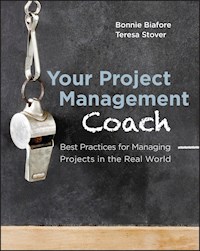
A pragmatic approach to project management Many projects fail to deliver on time or on budget, or even to deliver a workable product that satisfies the customer. While good project management goes a long way towards ensuring success, managers often fail to follow the plans they implement. This unique guide helps you understand and successfully handle project management, once and for all. Covering practical ways to solve problems you'll typically face when managing actual projects, this pragmatic book takes you through a full project management lifecycle. You'll find ample tips, tricks, and best practices--all richly illustrated with real case studies. Find out how to plan for risk, get wayward projects back on track, manage a whole portfolio of projects, and much more. Each topic in the book is mapped to the exam topics of the PMP® Certification Exam, so PMP certification candidates can also use this book for test prep. The book's companion web site offers downloadable forms, templates, and checklists. * Explains project management for the real world using a pragmatic approach that includes field-tested techniques, case studies to illustrate concepts, helpful tips and tricks, and downloadable content * Guides you to project management success by providing friendly advice, as if you had a friend or project management consultant at your side, discussing issues * Explores how to run successful meetings, how to get wayward projects back on track, planning for risk, and how to manage multiple projects Manage your next project with a personal consultant: your own copy of Your Project Management Coach: Best Practices for Managing Projects in the Real World. (PMP is a registered marks of the Project Management Institute, Inc.)
Sie lesen das E-Book in den Legimi-Apps auf:
Seitenzahl: 711
Veröffentlichungsjahr: 2012
Ähnliche



















Table of Contents
Part I: Understanding Projects and Project Management
Chapter 1: Getting to Know Projects
What Is a Project?
How Do Projects Differ from Other Work?
Summary
Coach's Review
Chapter 2: Getting to Know Project Management
What Is Project Management?
Project Management Processes: Start to Finish
Balancing Scope, Time, Cost, and Quality
Project Management Methodologies
Project Management Knowledge Areas
Who Makes a Good Project Manager?
Summary
Coach's Review
Part II: Planning a Project
Chapter 3: Getting a Project Off the Ground
From Idea to Project: An Overview of Project Initiation
Defining a Project
Identifying the Project Stakeholders
Preparing the Project Proposal
Getting Approval or Sign-Off
Publicizing the Project Charter
Assembling the Project Notebook
Summary
Coach's Review
Chapter 4: Getting to Know a Project Plan
What Work Has to Be Done?
How Much Will the Project Cost?
Who Will Do the Work?
When Will the Project Be Done?
How Will the Project Be Managed?
Summary
Coach's Review
Chapter 5: Identifying the Work to Be Completed
Understanding the Work Breakdown Structure
Identifying Work
Organizing Work in the WBS
Specifying Task Details
Summary
Coach's Review
Chapter 6: Estimating Work and Cost
Who Should Estimate a Project?
Managing the Uncertainty of Estimates
Preparing Estimates
Estimating Project Costs
Building a Budget
Summary
Coach's Review
Chapter 7: Planning Project Resources
Documenting Roles and Responsibilities
Identifying Resource Needs
Summary
Coach's Review
Chapter 8: Building a Schedule
Tools for Building a Schedule
Sequencing with Dependencies
Applying Date Constraints
Assigning Resources to Tasks
Modeling a Realistic Schedule
Optimizing the Schedule
Summary
Coach's Review
Chapter 9: Planning for Quality
Defining Quality
Quality Standards and Methods
Developing the Quality Plan
Building in Excellence with QA
Verifying the Standards with QC
Summary
Coach's Review
Chapter 10: Setting Up a Communication Plan
Guidelines for Good Communication
The Components of a Communication Plan
Who Are the Audiences?
What Do You Communicate?
What's the Best Communication Method?
Summary
Coach's Review
Chapter 11: Setting Up a Change Management Plan
When to Manage Changes
Who Sits on a Change Review Board
The Anatomy of a Change Management Process
Summary
Coach's Review
Chapter 12: Managing Risk
Identifying Risks to a Project
Analyzing the Risks
Choosing the Risks to Manage
Planning Risk Responses
Establishing Contingencies
Tracking Risks
When a Risk Becomes Reality
Tracking Issues
Summary
Coach's Review
Part III: Executing a Project
Chapter 13: Kicking Off a Project
Preparing to Execute the Project
Obtaining Resources
Next Steps
Summary
Coach's Review
Chapter 14: Taming Processes, Problems, and Conflicts
Defining Project Processes
Guidelines for Effectiveness
Summary
Coach's Review
Chapter 15: The Keys to Successful Meetings
Running Effective Meetings
Types of Project Meetings
Following Up after Meetings
Summary
Coach's Review
Chapter 16: Transforming People Into a Team
Developing a Team
Evaluating People's Performance
Summary
Coach's Review
Part IV: Monitoring and Controlling
Chapter 17: Gathering Progress Information
Choosing the Data to Collect
Obtaining Time and Status
Summary
Coach's Review
Chapter 18: Evaluating Progress and Performance
Evaluating Progress and Variance
Earned Value Analysis
Evaluating Financials
Summary
Coach's Review
Chapter 19: Getting a Plan Back on Track
Ways to Correct Course
Who Approves Course Corrections
Getting a Project Out of Trouble
Summary
Coach's Review
Part V: Closing the Project
Chapter 20: Obtaining Acceptance and Other Wrap-Up Tasks
Determining Whether the Project Is a Success
Obtaining Sign-Off
Documenting the Project: The Project Closeout Report
Financial, Legal, and Administrative Closeout
Project Transitions
Summary
Coach's Review
Chapter 21: Documenting a Project for Posterity
Gathering Information
Organizing the Project Archives
Storing the Project Archives
Summary
Coach's Review
Chapter 22: Don't Forget Lessons Learned
How Lessons Learned Help
Gathering Lessons Learned
Documenting Lessons Learned
Summary
Coach's Review
Part VI: Taking the Next Steps in Project Management
Chapter 23: Running a Project Management Office
Defining PMO Functions
Setting Up a PMO
Summary
Coach's Review
Chapter 24: Managing a Portfolio of Projects
What Is Project Portfolio Management?
Evaluating and Prioritizing Projects for the Portfolio
Tracking and Managing the Project Portfolio
Summary
Coach's Review
Chapter 25: Selecting the Right Projects
Capturing Ideas for Projects
Selecting Projects
Summary
Coach's Review
Part VII: Reference
Appendix A
Chapter 1: Getting to Know Projects
Chapter 2: Getting to Know Project Management
Chapter 3: Getting a Project Off the Ground
Chapter 4: What Goes into a Project Plan
Chapter 5: Identifying the Work to Be Completed
Chapter 6: Estimating Work and Cost
Chapter 7: Planning Project Resources
Chapter 8: Building a Schedule
Chapter 9: Planning for Quality
Chapter 10: Setting Up a Communication Plan
Chapter 11: Setting Up a Change Management Plan
Chapter 12: Managing Risk
Chapter 13: Kicking Off a Project
Chapter 14: Taming Processes, Problems, and Conflicts
Chapter 15: The Keys to Successful Meetings
Chapter 16: Transforming People into a Team
Chapter 17: Gathering Progress Information
Chapter 18: Evaluating Progress and Performance
Chapter 19: Getting a Plan Back on Track
Chapter 20: Obtaining Acceptance and Other Wrap-Up Tasks
Chapter 21: Documenting a Project for Posterity
Chapter 22: Don't Forget Lessons Learned
Chapter 23: Running a Project Management Office
Chapter 24: Managing a Portfolio of Projects
Chapter 25: Selecting the Right Projects
Appendix B
Chapter 3: Getting a Project Off the Ground
Chapter 6: Estimating Work and Cost
Chapter 7: Planning Project Resources
Chapter 10: Setting Up a Communication Plan
Chapter 11: Setting Up a Change Management Plan
Chapter 12: Managing Risk
Chapter 15: The Keys to Successful Meetings
Chapter 17: Gathering Progress Information
Chapter 18: Evaluating Progress and Performance
Chapter 20: Obtaining Acceptance and Other Wrap-Up Tasks
Chapter 21: Documenting a Project for Posterity
Chapter 22: Don't Forget Lessons Learned
Chapter 25: Selecting the Right Projects
Glossary
Introduction
Part I
Understanding Projects and Project Management
Chapter 1: Getting to Know Projects
Chapter 2: Getting to Know Project Management
Chapter 1
Getting to Know Projects
If your boss walks into your cubicle one day and says “I've got a little project for you to do,” you probably don't even think twice. You've tackled your share of projects at home and at the office so you already know that quite often they're simple, short-term assignments. When you're finished, you wipe your hands and go back to what you normally do.
At some point, you probably think about taking a more structured approach to handling them. Perhaps you want to try your hand at bigger projects, increase your success rate on the projects you perform, or simply get them done with less drama and fewer surprises. The first thing you want to know is what makes a project a project. They come in all shapes and sizes, but projects share a few characteristics that differentiate them from day-to-day work. This chapter provides a definition of a project and describes each characteristic. It also discusses how projects differ from other types of work.
What Is a Project?
It's tough to get through a week without working on some kind of project, at work, at home, or both. Projects span a broad range of endeavors and so you'll meet them regardless of what line of work you're in. If you've built a deck in your backyard, thrown a party, bought a house, or remodeled your kitchen, you've worked on projects. In the work world, producing a new marketing brochure or website, developing new products, building a new corporate campus, and landing on the moon all represent projects. What do all these undertakings have in common? The following is one definition of a project:
A project is a unique endeavor with clearly defined objectives and deliverables, clear-cut starting and ending dates, and, most of the time, a budget.
Figure 1.1 shows how all the pieces of the project definition fit together. But what do all the components of that definition really mean? What is a unique endeavor? What are clearly defined objectives and deliverables? What are clear-cut starting and ending dates? And how does a budget fit in? The following sections discuss the various aspects of a project in more detail and provide several examples so you can identify projects when you see them.
Example Projects
This book uses four different projects as examples. The sections in this chapter explain why each of these examples meets the criteria for a project.
Backyard deck constructionAlmost everyone has worked on a simple construction project, so this example acts as a link between what you're learning about project management and your experience with projects so far. Building a deck in the backyard is a simple example of a construction project.
New product developmentCompanies develop new products and services all the time, so you may run into a project like this at work. Later in this chapter, you learn how a project to develop a new product is different than actually manufacturing or providing the product to customers.
Exhibiting at a trade showA trade show is like a lot of other types of events, such as parties or conferences. They require a lot of planning and preparation up front in order to make the big finale a success.
Training program developmentWhether you want to teach your kids about money or have an assignment to develop training for your company, the development of a training program is a good example of a project.
Figure 1.1 Elements of a project
A Project Is a Unique Endeavor
Every project is unique, although the differences can be large or small. Some projects are performed more than once, so you might mistake them for ongoing work. For example, a landscaping contractor might build dozens of backyard decks each summer, but each deck has aspects that make it unique. The variations from project to project are what make managing projects so special and interesting. Not only is every project different, but every day that you manage one is different, too. Here are some examples of how projects are unique:
Backyard deck construction: Your idea of the perfect size and shape of a deck can be different than your neighbor's. You can choose from a variety of materials. The types of supports you use depend on whether the backyard is soft dirt, sand, or solid rock. The schedule could be affected by a long string of bad weather or whether you hire kids or a professional contractor.New product development: Every product is a little different from every other product, even the previous version of a product your company already sells. For example, your company's new product, the in-town hover-scooter, requires different designs, different components, and different testing procedures from a traditional scooter that has wheels on the ground.Exhibiting at a trade show: The audiences for trade shows can vary from the do-it-yourself construction crowd to professional contractors. Trade shows take place in different locations. The procedures you must follow to ship materials to the show or the crews that you use on site vary depending on the trade show organizers.Training program development: The topic of a training program can affect the way you teach and the tools you use. The materials for a course vary depending on whether it's taught in a classroom, online, or through video. Courses for adults are designed differently than those for school-age children. The duration of courses vary.A Project Has Clearly Defined Objectives and Deliverables
Projects have a point. Otherwise, you or your organization wouldn't spend time, effort, and money doing them. Projects are run in order to achieve a goal — a problem to solve or an opportunity to take advantage of. Although you might be able to sum up the purpose of a project in a single sentence, that purpose usually represents a number of specific objectives that the project must achieve and deliverables that you must hand over to call the project complete.
Clearly defined objectives and deliverables are important because you use them to tell when a project is done. Otherwise, a project can seem to go on forever because it's never quite finished. Similarly, clearly defined objectives and deliverables help you determine whether a project has been completed successfully. When you spell out objectives and deliverables, it's easier for everyone involved to tell whether the objectives have been met and the deliverables match the description you started with.
Who's Responsible for Achieving Business Goals?
As a project manager, you are rarely responsible for achieving the business goals that led to your project being started. Typically, your project is defined to produce deliverables and achieve intermediate objectives that business managers can use to drive the business results they want.
Vaguely defined or missing objectives lead to the demise of many a project. Without clearly defined objectives, you can end up working on a project long past its due date because you can't tell whether you're done. Or you can work longer and spend a lot more money because you didn't accomplish what you were supposed to. Yogi Berra famously said, “You've got to be very careful if you don't know where you are going because you might not get there.” The same could be said for projects with poorly defined objectives.
The following are some possible objectives and deliverables for the four example projects in this book:
Backyard deck construction: Your primary deliverable is a constructed stable platform for your deluxe gas grill and outdoor dining set. You might have other deliverables, such as a building permit to construct the deck and a signed inspection report confirming that the jewel you built is ready for action. But you might also have an objective for a deck built with low-maintenance materials so you can entertain more and maintain the deck less. Maybe you want to save money so you choose a simple off-the-shelf design so you can build the deck yourself over a few weekends. And you also want the deck completed in time for your annual end-of-summer barbecue.Your objectives and deliverables enable you to assess whether the deck is done and meets your requirements. If the gas grill and furniture don't tip over, you've obtained a stable platform for your outdoor meals. The design you picked includes a list of materials and instructions, so you know you're done when you've used up the materials you purchased and the deck looks like the last picture in the how-to guide. If you don't have to sand and stain the deck, you've achieved your low-maintenance nirvana. And you completed the deck in time for your barbecue, so you met your schedule.
New product development: You might develop a new product to enter a new market, increase revenue, or to keep up with new technology. If returns or high levels of customer support have been a problem in the past, your objective might be to develop a product that's easier to maintain or more dependable. Or you could design a product to decrease manufacturing costs so you can reduce the selling price or increase your profit margin. Those business objectives drive the specifications for the product. Your project's deliverables could include a prototype that the customer and executive team approve along with the documentation that tells the manufacturing team how to build the products your organization will then sell.Exhibiting at a trade show: Vendors usually attend trade shows to reach potential new customers. You might have an ancillary objective to see what your competition is up to or find out what customers think about your new products and services. The deliverables for this project might include the booth you set up at the show and the marketing materials you pass out. You might also have an objective to spiff up the booth and marketing materials to bring them up-to-date with your company's offerings and make them look fresh.Training program development: If you work for a training organization, the deliverable could be a new course to offer to students. In a corporation, you might develop a training program to improve customer service, increase productivity, or increase quality. Another project objective might include development of new training features that improve students' comprehension of the material.A Project Has a Beginning and an End
Projects are temporary, so they have a clear-cut beginning and a clear-cut end. Usually, the end of the project is the primary focus for the people involved in a project. The people who initiate a project want to enjoy the benefits that come when the project objectives are achieved. In addition, you, as the project manager, and the rest of the people working on the project, will be able to add it to your list of accomplishments and move on to something else.
As you learned in the previous section, the project goal and clearly defined objectives are essential to identifying the end of a project. When you've spelled out a project's objectives clearly, you can tell when you're done and bring the project to an end.
Note
In addition to the final date for a project, you usually have a passel of intermediate deadlines to meet, whether you're trying to enclose a structure before cold weather sets in or your contract includes specific dates for milestones, which in turn trigger payments from the customer.
The following are examples of clear-cut ends to projects:
Backyard deck construction: The end of the backyard deck project comes when you move the grill and dining set onto to the deck for your first barbecue. However, you might have other deadlines such as obtaining an inspection certificate from the county.New product development: The project to develop a new product is complete when you turn the product over to manufacturing.Exhibiting at a trade show: A trade show isn't over when the last attendee leaves. As a vendor, your trade show project is complete when you get your gear back to the office and wrap up the action items from the event, such as turning the list of new leads over to the sales team.Training program development: A training program is complete when the course materials are ready and the program is ready to schedule.A Project Usually Has a Budget
Most projects don't have the luxury of a blank check for the cost or unlimited resources to get the work done. Projects usually have a financial budget that must be met, similar to the budget you follow for your personal spending. And they almost always have to work with a limited amount of resources or a finite number of hours from the people who do the work.
Here are examples of project budgets:
Backyard deck construction: You decide to use this year's bonus to build a deck in the backyard, so you have $5,000 to get the job done.New product development: The executive team in your organization determines that developing a new product has to cost less than $200,000 in order to achieve the company's required annual return on investment of 15 percent.Exhibiting at a trade show: The director of sales has allocated $30,000 to cover the cost of attending a trade show based on the estimated sales that will result from the event. In addition, two sales people and two marketing people have been assigned to handle all aspects of preparing for and attending the trade show.Training program development: The training program is forecast to save the company $50,000 by the end of the first two years of training employees. Your boss has given you a budget of $15,000 to develop the training program.Tip
Once in a blue moon, you might manage a project that doesn't have a budget, but that doesn't mean your options are unlimited. For example, a project is essential to the survival of your company so the CEO has told you to do whatever it takes to make the customer happy. You might ask the CEO for more people or submit expense requisitions for approval. However, at some point, other alternatives might make more business sense. Even if you aren't asked to work within a budget, it's a good idea to build your own budget and aim to meet it. Chapter 6, “Estimating Work and Cost,” discusses building a budget.
How Do Projects Differ from Other Work?
Work that remains the same day after day, that is ongoing work or operations, is not a project. For example, delivering the mail to mailboxes on a route is ongoing. If you work in the accounting department, you might spend your days recording payments or paying bills.
Some projects might appear to represent recurring work. However, small differences make each project and the work it entails unique. The following list describes ongoing work that is similar to the four example projects:
Backyard deck construction: Each deck project is a little different. The terrain of your yard, the ground you build on, and the weather can affect your project. So, you could go to your local building supply store and work with a designer to come up with the deck of your dreams. Then, you get drawings and the building materials you need to construct the deck in your backyard. On the other hand, the building supply store that stocks the building materials you use or the company that manufactures the deck components performs the same work day after day.New product development: A new product development project does just that — it develops a new product and delivers documentation about how to manufacture that product. The project also includes tasks to turn over information to manufacturing so that that team knows how to build the products correctly. But once the product is in the hands of manufacturing, the production line does the same thing every day to pump out products to sell.Exhibiting at a trade show: If your organization attends trade show after trade show, your marketing department might have a team assigned to prepare standard materials for the shows. Some members of the team spend their days gathering copies of marketing collateral and then ship the materials to their destination.Training program development: Although developing a training program is a project, teaching a course can become ongoing work. Although each class of students might be different, the overall work in presenting a class is the same. Or, if you offer online training, the ongoing work is keeping the website operational and up-to-date.Summary
A project is work you undertake that is both unique and temporary. A project has specific goals and objectives. The good news is that a project ends when you achieve those goals and objectives. Most of the time, a project must be finished using a fixed amount of money or resources. It's important to be able to differentiate projects from ongoing, repetitive work, because projects require different management techniques.
Coach's Review
Use this section to assess what you've learned in this chapter and to apply it to a real-life project you're currently working on.
Test Your Knowledge
Test your knowledge of the material in this chapter by answering the following questions. See Appendix A for the answers.
1. What is the key characteristic that differentiates projects from other types of work?
2. Describe two ways that clearly defined objectives help a team complete a project successfully.
Project Challenge
Describe work you have done in the past or are working on now and explain why that work is or is not a project.
Chapter 2
Getting to Know Project Management
You have projects to do and you want to complete them successfully — without making yourself or the people on your team miserable. Projects can present challenges. They may be incredibly complex or they might have to be finished in record time or with only a tiny budget. At the same time, customers could change their minds or not know exactly what they want to begin with.
To conquer the challenges your projects face and achieve the desired results, you and the people on your team have to work smart. That's what project management is all about. What you do to manage projects should help you achieve the results the project is supposed to deliver or prevent problems that get in the way. If it doesn't, you shouldn't waste time or resources on it.
Getting projects done right boils down to knowing what you're trying to do, figuring out how you're going to do it, and then making sure you did it. This chapter introduces you to the five project management processes that help you address those areas. You'll also learn about several areas of expertise a project manager needs to master to make things happen the way they're supposed to.
Project management isn't one size fits all. You can use different approaches depending on the project size and complexity, and how clear the solution is, how tough your constraints are, and so on. In this chapter, you meet a few different methodologies and learn the pros and cons of each one.
Project managers have to master a diverse set of skills (although, fortunately, you don't have to do everything yourself). You tackle technical tasks such as building schedules, evaluating variances, and calculating financial results. At the same time, you need a host of soft skills including effective communication, good people skills, business savvy, leadership, and more. This chapter summarizes what it takes to be a good project manager. The rest of this book digs into these topics in detail.
What Is Project Management?
You don't need jargon or technical concepts to understand the basics of project management. It boils down to answering several questions about your project:
Why are you doing the project? The reason you're doing a project is one of the most important keys to making your project a success. A project is often about solving a problem, but projects are also launched to take advantage of opportunities. For example, your company might run a project to develop a training program because your company is growing quickly and it's taking too long for new employees to become productive. On the other hand, a lucrative and untapped market might move your organization to develop a new product.How are you going to solve the problem? Once you have a problem or opportunity to tackle, you need to figure out the solution you're going to employ. Most problems can be solved in a variety of ways, so you can consider different strategies. Then, you have to define what the solution looks like. The most common method for describing a solution is to document requirements and deliverables. (Deliverables are the tangible results the project is supposed to deliver.)Note
As you learn in later chapters, defining the solution can be quite a challenge, particularly at the beginning of the project. During the process of project definition, you might consider which project management methodology is most appropriate. If your solution is clear-cut, you can use a traditional approach to managing your project, as described in the section “Traditional Waterfall Project Management.” For murkier solutions, in which you know the overall context of the solution, but not the details, you have to tease them out over time. That's when the agile approach, described in the section “Iterative and Agile Project Management,” comes in handy. You make several iterations through the project, each time getting closer to the final solution.
Lesen Sie weiter in der vollständigen Ausgabe!
Lesen Sie weiter in der vollständigen Ausgabe!
Lesen Sie weiter in der vollständigen Ausgabe!
Lesen Sie weiter in der vollständigen Ausgabe!
Lesen Sie weiter in der vollständigen Ausgabe!
Lesen Sie weiter in der vollständigen Ausgabe!
Lesen Sie weiter in der vollständigen Ausgabe!
Lesen Sie weiter in der vollständigen Ausgabe!
Lesen Sie weiter in der vollständigen Ausgabe!
Lesen Sie weiter in der vollständigen Ausgabe!
Lesen Sie weiter in der vollständigen Ausgabe!
Lesen Sie weiter in der vollständigen Ausgabe!
Lesen Sie weiter in der vollständigen Ausgabe!
Lesen Sie weiter in der vollständigen Ausgabe!
Lesen Sie weiter in der vollständigen Ausgabe!
Lesen Sie weiter in der vollständigen Ausgabe!
Lesen Sie weiter in der vollständigen Ausgabe!
Lesen Sie weiter in der vollständigen Ausgabe!
Lesen Sie weiter in der vollständigen Ausgabe!
Lesen Sie weiter in der vollständigen Ausgabe!
Lesen Sie weiter in der vollständigen Ausgabe!
Lesen Sie weiter in der vollständigen Ausgabe!
Lesen Sie weiter in der vollständigen Ausgabe!
Lesen Sie weiter in der vollständigen Ausgabe!
Lesen Sie weiter in der vollständigen Ausgabe!
Lesen Sie weiter in der vollständigen Ausgabe!
Lesen Sie weiter in der vollständigen Ausgabe!
Lesen Sie weiter in der vollständigen Ausgabe!
Lesen Sie weiter in der vollständigen Ausgabe!
Lesen Sie weiter in der vollständigen Ausgabe!
Lesen Sie weiter in der vollständigen Ausgabe!
Lesen Sie weiter in der vollständigen Ausgabe!
Lesen Sie weiter in der vollständigen Ausgabe!
Lesen Sie weiter in der vollständigen Ausgabe!
Lesen Sie weiter in der vollständigen Ausgabe!
Lesen Sie weiter in der vollständigen Ausgabe!
Lesen Sie weiter in der vollständigen Ausgabe!
Lesen Sie weiter in der vollständigen Ausgabe!
Lesen Sie weiter in der vollständigen Ausgabe!




