



1,99 €
Mehr erfahren.
- Herausgeber: Booksell-Verlag
- Kategorie: Fantasy und Science-Fiction
- Sprache: Englisch
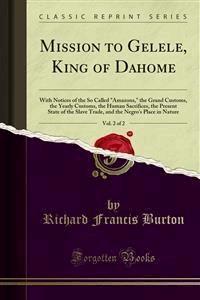
Richard Francis Burton's "1001 Nights" is a captivating translation and retelling of the famed Middle Eastern collection of folk tales, also known as the "Arabian Nights." Burton'Äôs rendition breathes new life into the ancient narratives with his signature style, which marries scholarly rigor with a poetic sensibility. His work not only captures the enchanting essence of the stories but also situates them within the broader literary context of Victorian England, illuminating the West's fascination with Eastern culture and the era'Äôs complex colonial dynamics. Burton's evocative language and vibrant characterizations invite readers into a world of magic, intrigue, and profound moral dilemmas. A polymath and adventurer, Burton was deeply enthralled by languages, cultures, and the mysteries of the East. His extensive travels across the Middle East, India, and Africa, coupled with his unique anthropological perspectives, informed his approach to this literary masterpiece. In undertaking the translation of "1001 Nights," Burton aimed to challenge Western stereotypes and present a more nuanced understanding of Eastern societies, reflecting his ambition to bridge cultures through literature. Burton's "1001 Nights" is essential for anyone intrigued by the intersections of culture, storytelling, and history. It not only enriches the reader's understanding of these timeless tales but also showcases the profound impact of cultural exchange. This work holds a timeless allure, inviting both scholars and casual readers to immerse themselves in the enchanting world Burton skillfully reclaims. In this enriched edition, we have carefully created added value for your reading experience: - An Introduction draws the threads together, discussing why these diverse authors and texts belong in one collection. - Historical Context explores the cultural and intellectual currents that shaped these works, offering insight into the shared (or contrasting) eras that influenced each writer. - A combined Synopsis (Selection) briefly outlines the key plots or arguments of the included pieces, helping readers grasp the anthology's overall scope without giving away essential twists. - A collective Analysis highlights common themes, stylistic variations, and significant crossovers in tone and technique, tying together writers from different backgrounds. - Reflection questions encourage readers to compare the different voices and perspectives within the collection, fostering a richer understanding of the overarching conversation.
Das E-Book können Sie in Legimi-Apps oder einer beliebigen App lesen, die das folgende Format unterstützen:
Veröffentlichungsjahr: 2023
Ähnliche

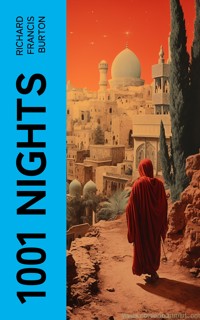









1001 Nights
Introduction
A life hangs on the edge of dawn, rescued night after night by the force of imagination turned into strategy.
Richard Francis Burton’s The Book of the Thousand Nights and a Night stands as one of the most influential English presentations of a vast Middle Eastern and South Asian story-cycle known widely as the Arabian Nights. Its classic status rests not on a single authorial voice but on the work’s capacity to gather many voices—comic, tragic, pious, bawdy, and wondrous—into a single frame that makes storytelling itself the central subject. Burton’s rendering helped fix the Nights in the English-speaking literary imagination, where its narrative abundance became a model for later experiments in plot, voice, and nested form.
The core premise is famously simple and inexhaustibly generative: Shahrazad, facing execution by a king, begins to tell stories and postpones their endings so that each sunrise brings a reprieve and another night of speech. This framing situation creates a book about the uses of narrative—its power to distract, to teach, to charm, and to hold violence at bay—while also providing an open doorway into an immense variety of tales. Without revealing outcomes, it is enough to say that the frame invites an ever-expanding sequence of adventures, romances, moral tests, reversals of fortune, and encounters with the marvelous.
Burton (1821–1890) was a British explorer, linguist, and translator, and his edition appeared in the 1880s in a privately printed series. His translation was produced in a Victorian context marked by intense curiosity about the cultures of the Islamic world and South Asia, alongside strong public constraints on what could be printed and discussed openly. That mixture of fascination and restriction shaped both the availability and the reputation of the work in English. Burton’s Nights entered circulation not merely as entertainment, but as a controversial literary event that insisted on the complexity—and the adult range—of the original materials.
The Nights themselves do not belong to a single time or place; they are a compilation whose stories accumulated and circulated for centuries in Arabic, drawing on earlier Persian, Indian, and Arabic narrative traditions. Modern readers often encounter the collection as “The Arabian Nights,” but it is more accurate to see it as a long, evolving archive of popular and courtly storytelling rather than a unified novel. Burton’s work is therefore best approached as a translation of a compilation, mediated through manuscripts and prior versions, that brought into English a mosaic of genres and social worlds.
Part of the book’s enduring status comes from its narrative architecture: stories nested within stories, characters who become narrators, and plots that mirror, interrupt, and comment on one another. This structure encourages a reader to notice how tales are built—how suspense is sustained, how moral questions are staged, and how coincidence, fate, and ingenuity collide. It also anticipates techniques associated with later literature, from framed narratives to self-conscious storytelling. The Nights made it natural for subsequent writers to imagine fiction as a chain of voices, each tale both complete in itself and a doorway to the next.
The collection’s themes have remained durable because they are foundational: power and vulnerability, justice and mercy, desire and restraint, risk and reward, loyalty and betrayal, and the precariousness of reputation. Across its varied episodes, the Nights repeatedly tests what people will do when confronted with fear, temptation, sudden wealth, or sudden loss. It also considers the social life of stories—how rumors travel, how advice is offered, how parables persuade, and how entertainment can conceal instruction. Even when the events are extravagant, the human motives are recognizable and sharply observed.
The Nights also matters because it helped shape a Western literary vocabulary for the marvelous. Later English and European writers drew on its images of enchanted objects, distant cities, tricksters, and perilous journeys, and on its confidence that the improbable can illuminate the ordinary. Its influence is felt not only in the development of fantasy and adventure fiction, but also in forms that prize episodic momentum and surprise. The book’s legacy is thus less a set of borrowed plots than a demonstrated permission: that a tale may be extravagant, and still speak seriously about ethics, longing, and the limits of control.
Burton’s translation, in particular, became famous for its expansive apparatus and for its attempt to reproduce, in English, a sense of the work’s linguistic texture and cultural specificity as he understood it. Readers should remember that this is a Victorian-era translation, shaped by the translator’s choices, assumptions, and the scholarly conventions of his time. Approached critically, it remains a significant landmark in the English reception of the Nights, not as a neutral window but as a historically situated rendering that influenced how generations of readers imagined the collection’s tone, setting, and social codes.
To read the Nights is to move through a shifting landscape of courts and markets, sailors and merchants, scholars and thieves, pious figures and scoundrels, people of high rank and people surviving by wit. The tales repeatedly dramatize chance meetings and sudden reversals, and they make room for humor alongside peril. This range gives the book a social breadth unusual in a single volume, even when filtered through translation. It offers, in story after story, a study of how individuals navigate systems larger than themselves—family, law, commerce, and the unpredictable turns of fortune.
The frame story gives the entire compilation an emotional and philosophical tension: words are not merely ornament but a means of survival, and attention itself becomes a form of power. The Nights therefore invites reflection on the responsibilities of listening and the consequences of judgment made too quickly. It is also a book about time—about nights accumulating, about delays and deadlines, and about how patience can transform a crisis. Without disclosing later developments, the setup alone makes clear why the act of narration carries such weight and why each tale feels charged with necessity.
Because it is a collection, the Nights rewards many kinds of reading: sustained immersion, selective sampling, or revisiting favored episodes. Its variety has allowed it to travel across languages and eras, meeting different audiences with different expectations. In Burton’s English, that variety is preserved as a wide tonal spectrum, from solemn to playful, from realistic to supernatural. The very multiplicity of the work—its refusal to be one thing—helps explain why it has remained a reference point for writers seeking capacious forms and for readers seeking a book that can contain, rather than simplify, human experience in all its contradictions and surprises.
Synopsis
Richard Francis Burton’s translation of The Book of the Thousand Nights and a Night presents a framed collection of Middle Eastern and South Asian tales that entered European readership through earlier French and English versions, but here appears with Burton’s expansive, Victorian-era apparatus. The narrative opens with a crisis in a royal household that sets the stakes for storytelling as a matter of survival. Into this peril steps Shahrazad, a learned and composed narrator whose strategy is to captivate her listener night after night. The frame establishes the work’s core tension between violence and restraint, and between authority and the transforming power of narrative.
paragraphs are about 100 words each. The synopsis must follow sequence and remain spoiler safe.
From the outset, Shahrazad organizes her nights so that each session ends at a moment that compels continuation, creating an ongoing rhythm of suspense and reprieve. Her tales range widely in tone, from moral exempla to romantic adventure, and from comic incident to accounts of hardship and reversal. The frame repeatedly returns to the court, where the act of narration itself becomes a test of endurance, judgment, and empathy. Burton’s presentation emphasizes this alternating structure, in which the reader moves between the immediate pressure of the frame and the imaginative breadth of the stories it contains.
As the sequence progresses, the collection introduces recurring motifs that give coherence to its variety: sudden changes of fortune, the consequences of desire, negotiations of honor, and the precariousness of social rank. Many tales begin with a familiar setting—merchant, artisan, ruler, traveler—then open into encounters with the extraordinary, including marvelous objects, hidden spaces, and beings that strain ordinary expectations. Yet even the most fantastic episodes often return to practical concerns such as contracts, debts, family obligations, and reputation. The stories collectively explore how people navigate risk when laws, customs, and personal impulses pull in conflicting directions.
A substantial portion of the narrative energy is devoted to travel and displacement, where characters leave home in search of livelihood, knowledge, or escape, only to meet unanticipated trials. Seafaring adventures, perilous routes, and unfamiliar courts provide settings in which resourcefulness is tested and identity becomes malleable. The collection repeatedly stages encounters between strangers—hosts and guests, patrons and petitioners, masters and servants—revealing how hospitality, suspicion, and negotiation can determine outcomes. Across these episodes, Shahrazad’s pacing sustains a balance between episodic novelty and thematic continuity, reinforcing the idea that fortune is unstable and vigilance essential.
Interwoven are stories focused on love and domestic life, often framed by marriage, jealousy, rivalry, or reconciliation. These narratives foreground competing duties: affection versus propriety, private longing versus public expectation, and personal agency versus familial or political constraint. The collection does not treat romance as purely idealized; it places it alongside deception, misunderstanding, and the vulnerabilities created by secrecy. Comic tales and bawdier episodes also appear, using satire and inversion to question social pretensions and to expose hypocrisy. Throughout, the frame reminds the reader that amusement and instruction are intertwined, and that pleasure can be a vehicle for reflection.
Other tales center on power—kingship, administration, and the hazards of proximity to authority. Petitioners seek justice, courtiers maneuver for advantage, and rulers face the limits of information and the temptations of severity. In these episodes, judgment is repeatedly tested by partial knowledge, and outcomes hinge on evidence, testimony, and the credibility of narrators within the stories. The emphasis on counsel and prudence echoes the frame’s predicament, where a sovereign’s decisions carry irreversible weight. The collection thus examines governance not only as command but as interpretation: rulers must read people and circumstances, just as listeners must read stories.
Religious and ethical dimensions recur without forming a single doctrinal argument, appearing instead as a texture of oaths, prayers, moral warnings, and appeals to fate or providence. Characters experience fear, gratitude, remorse, or steadfastness in the face of calamity, and many tales suggest that arrogance invites downfall while patience and generosity can open paths to safety. At the same time, the narratives often depict moral ambiguity, where cunning succeeds and innocence suffers, highlighting the gap between ideals and lived realities. Burton’s edition, through its extensive notes and supplemental material, situates these elements within his understanding of language, custom, and literary lineage.
As the nights accumulate, the sheer abundance of storytelling becomes a principal feature: tales nest within tales, and narrators within the fiction mirror Shahrazad’s own role. This layering foregrounds questions about why people tell stories and how stories persuade—whether to win sympathy, justify actions, entertain, or transmit cautionary knowledge. The ongoing deferral of closure in the frame underscores storytelling as a technique for managing fear and time, turning danger into an occasion for imagination and dialogue. The reader is invited to notice not only what happens in individual plots, but how patterns of repetition and variation shape meaning across the whole sequence.
Historical Context
The narrative world of the Arabian Nights is framed by the courts, marketplaces, and religious institutions of the medieval Islamic world, where caliphs, sultans, judges, and scholars appear as dominant authorities. The tales circulate through imagined settings that evoke Baghdad and other urban centers associated with Abbasid-era prestige (roughly eighth to thirteenth centuries), alongside Persian and Indian elements that signal a wider Afro-Eurasian horizon. Within this setting, literacy, sermon culture, and legal procedure sit beside popular entertainment, street performance, and the moral authority of mosque and madrasa. Burton’s nineteenth-century English edition foregrounds these institutions as “background facts” of the stories’ social order.
The collection itself is not a single authored work but an accretion of stories transmitted and rewritten across centuries in Arabic and other languages. Scholars generally link the frame story’s remote origins to earlier Persian and Indian narrative traditions, while many embedded tales reflect Arabic literary culture. By the time European readers encountered the Nights, they were reading a textual tradition shaped by scribes, reciters, and compilers rather than a fixed original. This historical reality matters for Burton’s project, because his “translation” inevitably selects and stabilizes one version among several manuscript and printed lines, turning a fluid corpus into a Victorian-era book with a strong editorial voice.
In the early modern and modern periods, the Ottoman Empire’s political dominance across much of the Arabic-speaking world shaped the production and circulation of Arabic books and manuscripts, including popular narrative materials. While many Nights tales evoke earlier Abbasid grandeur, later copyists and audiences lived under Ottoman provincial administration, with urban life structured by guilds, taxation, and the mediation of local notables and religious judges. Burton’s notes frequently gesture toward such social frameworks—law courts, public morality, and household organization—because they are visible in the stories’ default assumptions about power and dispute settlement, even when a tale’s “caliphal” setting is idealized or anachronistic.
A decisive turning point for the Nights in Europe came with Antoine Galland’s French translation (published between 1704 and 1717). Galland’s version helped define “Oriental tales” as a major European literary fashion and introduced stories that became especially famous in the West. His work also set a precedent: European translators would mediate the Nights through the tastes and moral expectations of their own societies. Burton wrote in a later moment, but his edition still stands in dialogue with Galland and subsequent translators, partly by emphasizing philological density and partly by presenting himself as correcting what he framed as European prudery or simplification.
The nineteenth century context of Burton’s edition is inseparable from the British Empire and its expanding reach into the Middle East and South Asia. Britain’s influence in India (under the East India Company and later the British Raj after 1858) and strategic interests in routes to Asia shaped a broad culture of “Oriental” scholarship, intelligence gathering, and travel writing. Burton was a soldier and linguist who served in imperial settings, including India, and he cultivated expertise in languages and local customs. His translation project belongs to this imperial knowledge environment, where texts were treated as sources about societies under European observation and power.
Burton’s life and reputation as a traveler and ethnographer informed how Victorian readers approached his Nights. In the early 1850s he undertook a covert journey to Mecca and Medina (published as a travel narrative in the mid-1850s), using his language skills and familiarity with Islamic practice to enter spaces barred to most Europeans. This experience reinforced his public image as an unusually “inside” observer of Islamic societies. When he later annotated the Nights at length, he drew on such experiences to claim ethnographic authority, blending textual commentary with comparative observations about religion, sexuality, and everyday life as he had encountered them.
The production of Burton’s edition also reflects Victorian print culture and the economics of publishing. His translation of the Nights was issued in the 1880s in a private subscription format through the Kama Shastra Society, a strategy used to evade Britain’s obscenity restrictions and the risk of prosecution. Victorian Britain did not prohibit sexuality in print absolutely, but legal and social pressures were real, and publishers frequently avoided explicit materials. Burton’s decision to print for subscribers, alongside a heavy apparatus of notes, shows how censorship, market segmentation, and elite reading publics shaped what forms “world literature” could take in late nineteenth-century England.
Burton’s editorial choices were connected to contemporary philology and the prestige of “scientific” scholarship in the humanities. Nineteenth-century Orientalist studies emphasized language mastery, text editing, and the comparison of manuscripts, often treating European scholars as arbiters of authentic Eastern tradition. Burton aimed at an archaizing, highly literal English, and he used extensive footnotes and excursuses to demonstrate learning and to frame disputed cultural practices as objects of comparative study. Even when modern scholarship critiques these methods and assumptions, the historical context is clear: Burton’s Nights is as much a Victorian scholarly artifact as it is a presentation of medieval and early modern storytelling.
The textual base Burton used was tied to earlier Arabic printing and manuscript traditions, including the widely circulated Egyptian “Bulaq” edition printed in the early nineteenth century and other sources accessible in Europe. The growth of printing in Arabic, especially in centers like Cairo, changed how popular literature circulated: printed editions could standardize texts and reach larger audiences than manuscript copying alone. Burton worked at a moment when European libraries, colonial networks, and new print availability increased access to Arabic texts. His edition thus sits at the intersection of older manuscript variability and newer print standardization that altered what counted as “the” Nights.
Within the stories’ imagined world, long-distance trade and urban commercial life are constant drivers of plot and social mobility. This reflects historical realities of the medieval and early modern Indian Ocean and overland trade networks, in which merchants, sailors, and caravan routes linked East Africa, Arabia, Persia, India, and beyond. Goods, credit, and information moved through port cities and bazaars, and mercantile wealth could rival aristocratic power. The Nights repeatedly dramatizes the risks of travel, shipwreck, fraud, and sudden fortune, and Burton highlights such themes because they offer a window into economic mentalities recognizable from Islamic-era commercial history, even when individual tales are fantastical.
The collection also mirrors the centrality of slavery and concubinage in many premodern societies, including parts of the Islamic world, and the way these institutions structured households and court life. Enslaved people appear in the Nights in varied roles—domestic laborers, guards, messengers, entertainers—reflecting a social reality in which status hierarchies were legally and culturally elaborated. Burton did not invent these motifs; he translated them and then often expanded discussion in his notes, sometimes through a Victorian comparative lens. The historical point is that the tales assume systems of dependence and household authority that were common across the regions and periods from which the stories emerged.
Religious learning and legal institutions appear throughout the Nights, echoing the historical importance of Islamic jurisprudence, scholars, and courts in governing daily life. Characters appeal to judges, invoke moral norms, and navigate public reputation, suggesting a world where law and custom intertwine. At the same time, the tales make space for Sufi themes, popular piety, and miraculous events, reflecting the diversity of religious expression in Islamic history. Burton’s commentary often treats these elements as ethnographic data, and his Victorian-era framing sometimes prioritizes classification and comparison over internal theological nuance, which itself is a historical marker of how religion was studied in his milieu.
Gender relations and household governance in the Nights reflect patriarchal norms found across many premodern societies, including legal inequalities and the centrality of marriage, inheritance, and honor. The frame narrative famously turns on anxieties about marital fidelity, which can be read as a literary amplification of real social concerns about lineage, property, and reputation. Yet the Nights also gives women varied forms of agency—rhetorical skill, strategic planning, economic initiative—that complicate any single moral reading. Burton’s Victorian readership encountered these representations amid their own debates about sexuality, marriage, and propriety, and his insistence on translating explicit material challenged prevailing English norms of what “respectable” literature should contain.
Technological and infrastructural change shaped Burton’s own world and enabled the kind of global scholarship his edition represents. Steam travel, the Suez Canal’s opening in 1869, and expanding telegraph networks compressed distances for European officials and travelers, facilitating faster movement between Britain, Egypt, India, and the Levant. These developments supported the circulation of books, manuscripts, and correspondents and increased European contact with Arabic-speaking societies. Burton’s career and access to sources belonged to this connected imperial geography. His Nights is therefore a product of a period when mobility and information flows allowed a Victorian editor to assemble a vast “Eastern” corpus for an English audience.
Burton’s translation also belongs to a broader Victorian fascination with comparative sexuality and “exotic” customs, often presented as scientific or anthropological inquiry. In the late nineteenth century, European writers produced large bodies of travel literature and ethnography that categorized sexual practices and social norms across societies, sometimes to critique Europe and sometimes to assert difference. Burton’s extensive notes on sexual vocabulary and practices in the Nights were controversial, and his decision to publish privately underscored the tension between scholarly ambition and public moral regulation. Historically, this tension explains why his edition reads not only as literature but also as a document of Victorian debates about knowledge and decency.
The politics of representation—what later scholarship calls Orientalism—forms another essential context. European powers increasingly intervened in the Middle East and North Africa during the nineteenth century, and cultural productions often portrayed “the East” as timeless, sensual, or despotic, supporting narratives of European superiority. Burton’s Nights participates in this environment by emphasizing archaism and difference, yet it also preserves many social details and moral complexities that resist simple caricature. The work can thus be read as both enabling and complicating imperial-era stereotypes: it offers English readers a richly textured fictional world while filtering that world through a confident Victorian editorial persona.
In the end, Burton’s Arabian Nights functions as a mirror of multiple eras: the medieval and early modern Islamic societies that generated and reshaped the stories, and the late Victorian Britain that packaged them for a restricted but eager readership. The tales’ courts, markets, religious institutions, and household structures echo real historical forces—urbanization, trade, law, and hierarchy—while their enchantments and coincidences express the literary logic of popular storytelling. Burton’s translation, with its private publication and heavy annotation, simultaneously critiques Victorian prudery and displays Victorian desires to classify and possess cultural knowledge. The historical context, therefore, is not a backdrop but an active ingredient in how the book means.
Author Biography
Richard Francis Burton (1821–1890) was a British explorer, soldier, linguist, translator, and diplomat whose writings helped shape Victorian-era understandings of Asia, Africa, and the Middle East. He became famous for combining arduous travel with close study of languages, customs, and texts, and he often wrote with an ethnographic intensity unusual among his contemporaries. Burton’s public reputation was marked by both admiration and controversy: his scholarship and daring journeys drew acclaim, while his frank treatment of sexuality, religion, and cultural difference unsettled many readers. His legacy endures through influential travel books, translations, and debates about imperial knowledge.
paragraphs
Born in 1821, Burton was educated in Europe and later studied at Oxford, though he did not complete a degree. His early formation reflected the cosmopolitan settings in which he moved and the nineteenth-century expansion of philology and comparative studies. Burton developed an exceptional aptitude for languages, a skill that became foundational to his later career and writing. He was influenced by the era’s growing appetite for travel literature and by scholarly approaches that treated languages and texts as keys to understanding societies. At the same time, his temperament and methods often diverged from conventional academic or clerical expectations, leading him toward practical, field-based inquiry.
paragraphs
Burton entered the service of the East India Company and lived in British India, where he studied local languages and cultures in depth. In the 1840s and early 1850s he produced works that established his voice as a sharp observer, including “Goa, and the Blue Mountains” and “Scinde; or, The Unhappy Valley,” as well as “Sindh and the Races that Inhabit the Valley of the Indus.” These books combine descriptive travel narrative with commentary on society and administration, reflecting both the opportunities and constraints of an imperial setting. His writing from this period shows a commitment to firsthand observation and to linguistic detail as evidence.
paragraphs
A major milestone came in the mid-1850s when Burton traveled to Mecca and Medina, an undertaking that brought him wide attention after he published “Personal Narrative of a Pilgrimage to Al-Madinah and Meccah.” The work blended dramatic travel writing with careful description of ritual, urban life, and geography. Burton’s ability to communicate in Arabic and his interest in religious practice shaped the narrative’s authority for many Victorian readers, even as his approach raised ethical questions about how outsiders represent sacred spaces. Around the same era he also published “The Lake Regions of Central Africa,” drawn from an East African expedition, adding to his standing as a prominent travel author and interpreter of distant regions for the British public.




