



0,49 €
Niedrigster Preis in 30 Tagen: 1,99 €
Niedrigster Preis in 30 Tagen: 1,99 €
Mehr erfahren.
- Herausgeber: Booksell-Verlag
- Kategorie: Gesellschafts- und Liebesromane
- Sprache: Englisch
In "A Chambermaid's Diary," Octave Mirbeau skillfully crafts a provocative exploration of class, gender, and the intricate dynamics of power within the confines of bourgeois society. Utilizing a first-person narrative style, the book unfolds through the intimate reflections of a chambermaid, revealing her innermost thoughts and experiences in a wealthy household. Mirbeau's literary technique frequently blends realism with elements of impressionism, capturing the emotional landscape of his protagonist while simultaneously critiquing the social injustices that underpin her existence. As a work emerging from the late 19th century, it aligns with the Naturalist movement, yet it also transcends its typical boundaries by infusing stark personal observations with a touch of surrealism, thus enriching the text's thematic depth. Octave Mirbeau, a prominent figure in French literature, was deeply influenced by his own experiences and the societal upheavals of his time. His involvement with the anarchist movement and his disdain for the hypocrisy of bourgeois life significantly shaped the narrative of "A Chambermaid's Diary." Mirbeau's background as a journalist and art critic allowed him to hone a keen eye for detail, and his commitment to exposing societal ills is palpably woven into the fabric of this work. Readers seeking a profound examination of social hierarchies and human identity will find "A Chambermaid's Diary" an engrossing and enlightening read. Mirbeau's poignant prose and vivid character portrayal invite contemplation on the plight of the marginalized, making this book not just a literary work but a timeless social commentary that resonates with the ongoing struggles of today's world. In this enriched edition, we have carefully created added value for your reading experience: - A succinct Introduction situates the work's timeless appeal and themes. - The Synopsis outlines the central plot, highlighting key developments without spoiling critical twists. - A detailed Historical Context immerses you in the era's events and influences that shaped the writing. - A thorough Analysis dissects symbols, motifs, and character arcs to unearth underlying meanings. - Reflection questions prompt you to engage personally with the work's messages, connecting them to modern life. - Hand‐picked Memorable Quotes shine a spotlight on moments of literary brilliance. - Interactive footnotes clarify unusual references, historical allusions, and archaic phrases for an effortless, more informed read.
Das E-Book können Sie in Legimi-Apps oder einer beliebigen App lesen, die das folgende Format unterstützen:
Veröffentlichungsjahr: 2019
Ähnliche
















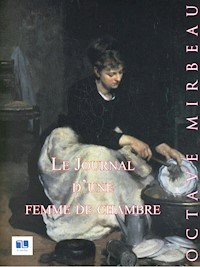



A Chambermaid's Diary
Table of Contents
Introduction
Across city apartments and provincial estates, a chambermaid’s quiet ledger of errands, humiliations, favors, and furtive glances reveals a society whose polished respectability depends on the unseen economies of service and desire, where private vice oils public virtue and where the act of writing—steady, intimate, and unblinking—becomes at once a shield and a weapon, exposing hierarchies built on exploitation while implicating us as readers in the very voyeurism we judge, for each entry opens a keyhole through which power’s disguises are unmasked and the human costs of comfort, order, and propriety are tallied with a precision that is at once merciless and vulnerable.
Octave Mirbeau’s A Chambermaid’s Diary is a French novel in the form of a personal journal, first published around the turn of the twentieth century. Situated within the traditions of realism and social satire associated with fin-de-siècle literature, it follows domestic service in late nineteenth- and early twentieth-century France, moving between provincial houses and urban addresses. The book belongs to Mirbeau’s broader project of exposing complacency and cruelty beneath bourgeois ideals, yet it remains accessible as a narrative of intimate experience. Its diary structure foregrounds immediacy and contingency, offering a vantage point that is both private and uncomfortably public.
At its core, the novel presents the daily record of Célestine, a chambermaid who takes positions in various households and writes down what she sees, thinks, and endures. The premise is simple yet inexhaustible: a servant’s eye roams corridors where propriety is staged and secrecy thrives. Episodes accumulate rather than follow a conventional plot, producing an experience of intimacy, interruption, and return. The voice is edged with irony, alternating between caustic appraisal and moments of vulnerability. Readers encounter sharply drawn vignettes, shifts of mood, and a steady accrual of detail, all arranged to suggest how ordinary routines conceal conflicted desires and power.
Mirbeau’s style harnesses the first person to unsettling effect. The diary entries are elastic—sometimes clipped and practical, sometimes expansive and reflective—so that tone and tempo mirror the demands of the day. Description often dwells on the textures of work, clothing, food, and rooms, while the narrator’s judgments cut through euphemism with mordant wit. The perspective is subjective by design; the book invites attention to how a life in service requires performance, concealment, and strategic candor. As a result, the act of narration itself becomes a theme, raising questions about what can be said, what must be insinuated, and who controls the story.
From this vantage, the novel probes the mechanics of class and gender: obedience negotiated through surveillance; intimacy complicated by dependence; respectability maintained by money, myth, and fear. It measures the distance between public virtue and private behavior, considering how institutions—household, church, and law—authorize domination while claiming to defend order. Desire is not excluded; it is entangled with hierarchy, sometimes tender, often coercive, always revealing. The diary asks what dignity means when one’s labor is both indispensable and disregarded, and it studies how language—pet names, orders, compliments, slurs—organizes power long before any overt conflict erupts.
These concerns resonate beyond their historical moment. Contemporary readers will recognize the invisibility of domestic labor, the ambiguities of care work, and the precarious status of those who keep households running while rarely owning the keys. The book’s preoccupation with observation—what is seen, who is allowed to see, and at what cost—anticipates modern debates about surveillance and testimony. It also offers a rare portrayal of a working woman claiming narrative authority, shaping her account in her own terms even as circumstances limit her options. The result is both socially incisive and emotionally immediate, inviting ethical reflection without prescribing responses.
Approached today, A Chambermaid’s Diary can be read as an exacting guide to the private life of power and a study in how narrative voice can unsettle comfortable certainties. It rewards attentive reading: entries echo across chapters, motifs recur with altered meaning, and minor details acquire weight as they are juxtaposed with later scenes. Without relying on sensational revelations, the novel builds a cumulative pressure that clarifies the stakes of looking closely at ordinary life. Readers seeking a lucid, unsentimental, and mordantly humane portrait of class relations will find in Mirbeau’s work a demanding companion and an enduring provocation.
Synopsis
A Chambermaid’s Diary unfolds as the private journal of Célestine, a young domestic worker who takes a position in a Normandy country house. Her early entries capture first impressions of the estate, the strict routines imposed on servants, and the practical details of keeping house. She writes to fix events in memory and to understand the world she serves. The diary form moves between fresh observations and recollected episodes, establishing a steady rhythm of work, watchfulness, and note-taking. From the outset, the narrative frames service as a mobile occupation, shaped by departures, arrivals, and the fragile hope of better circumstances.
The Lanlaire household is governed by Madame, meticulous and exacting, attentive to household economies and appearances. Monsieur is more withdrawn, concerned with his comfort and habits. Joseph, the coachman and general factotum, stands apart: taciturn, efficient, and difficult to read. Célestine learns the geography of the house, the codes of the pantry and keys, and the lines of authority that define each day. Small slights and precarious privileges structure relations below stairs. The diary registers not only tasks—polishing, sewing, serving—but also the fine negotiations of speech and silence that sustain a servant’s position and secure her margin of autonomy.
Interleaved with present duties, Célestine recounts earlier posts in Parisian and provincial homes. A collector’s caprices, a pious household’s austerity, and an officer’s family’s volatile tempers reveal repeating patterns of exposure and dependence. She notes advances that blur professional boundaries, objects used to test obedience, and the consequences of speaking out or remaining discreet. Episodes involving colleagues—illness, dismissal, and sudden departures—show how quickly fortune can turn. One employer’s private rituals, another’s contradictions between moralizing and conduct, and a tragic outcome for a fellow servant mark her memory. These recollections expand the scope beyond a single house, tracing a wider economy of service.
The surrounding village supplies a social backdrop: church, café, market, gendarmerie, and a handful of notable figures. Public opinion circulates through gossip and newspapers, coloring views on politics and scandal. Célestine watches how the household’s internal calculus intersects with local hierarchies—landowners, tenants, tradesmen, and clerics. National debates seep into conversations: patriotic fervor, anticlerical tirades, and polemics against perceived outsiders. Joseph’s reading and remarks hint at hard-edged convictions, while a retired sailor turned landlord exemplifies thrift and authority. These textures ground the diary in a specific climate of anxieties and resentments, where reputations are made and unmade by rumor as much as by fact.
A disturbing event unsettles this equilibrium when a child from the area is found under suspicious circumstances. The village buzzes with speculation, and the authorities conduct interviews and searches. Fragments of testimony, ambiguous traces, and sudden accusations coalesce into a tense atmosphere that touches every household. Célestine records reactions—from pious indignation to prurient curiosity—and notes how fear and certainty spread together. Inside the Lanlaire home, caution increases and routines tighten. The episode functions as a turning point, concentrating the diary’s interest in hidden motives and the unstable boundary between private conduct and public scandal, without resolving all the questions it raises.
As the investigation proceeds, Célestine measures possibilities for reshaping her future. Encounters with different employers have taught her the value of savings, connections, and timing. Joseph’s competence, reserve, and self-reliance suggest one kind of alliance; the promise of work in town or a small enterprise suggests another. The diary tracks this practical arithmetic alongside sentiment and distrust. Offers and hints arrive from multiple directions—some generous, some self-interested—and Célestine weighs them with an eye to security and independence. She considers how reputation, once compromised or protected, can open or close doors, and she keeps counsel, letting opportunity and caution guide each step.
Within the Lanlaire household, tensions sharpen. Madame’s vigilance grows more pointed, watching keys, inventories, and movements around the pantry. Small losses or misplacements escalate into suspicions that test loyalty. Monsieur’s behavior complicates service, combining expectations of deference with an appetite for exceptions to the rules. Célestine learns to use information as currency, trading discretion for space and a slower pace of demands. The diary shows her adjusting her manner to each interlocutor—firm with tradesmen, compliant with orders, silent when silence protects her position. This delicate balancing act brings her into closer negotiations with those who can influence her next station.
The public matter in the village reaches an official conclusion that leaves private doubts lingering. Célestine records how the community resumes its surface calm while memories persist and alliances harden. The aftermath clarifies what trust means within a world governed by appearances, paperwork, and the weight of opinion. She sees how swiftly explanations can fix themselves, regardless of what remains unproven. That recognition shapes a decisive phase of planning. A concrete path toward greater control—through partnership, a modest venture, or a strategically chosen placement—comes into view. The diary tightens its focus on execution: money to be gathered, permissions secured, and timing aligned.
In closing entries, Célestine acts on her plan, moving from the uncertainty of service to a role promising steadier standing, even as new compromises arise. She appraises the distance traveled from her first arrival, noting gains in prudence and leverage. The book’s throughline—exposing the ordinary mechanisms of power, desire, and respectability—emerges without overt judgment. By preserving both daily minutiae and decisive turns, the diary conveys the conditions that shape a servant’s choices and the routes available to those who seek a measure of independence. The final tone remains practical and unsentimental, framing mobility as possible, contingent, and never free of trade-offs.
Historical Context
Set in the fin-de-siècle years of the French Third Republic, the narrative unfolds across provincial Normandy and bourgeois Paris, locales linked by dense railway networks and a booming service economy. The time frame mirrors the Belle Époque’s glitter (cafés, expositions, new consumer goods) alongside hard-edged hierarchies within households. In rural parishes, the clergy, mayor, gendarme, and notables shape social life; in Paris, concierge-run buildings and placement offices regulate servants. Legal and political change—secular schooling (1881–82), civic republicanism, and intense press culture—coexist with inherited customs of deference. Domestic service is the dominant workplace, turning private homes into microcosms of power, surveillance, and bargaining.
The Third Republic (proclaimed 1870; constitutional laws of 1875) stabilized France after the Franco-Prussian War but was shaken by scandal. The Panama Canal crash (company bankruptcy in 1889; revelations and trials 1892–93) exposed bribery of scores of deputies and the ruin of hundreds of thousands of small investors, tarnishing parliamentarism. Municipal clientelism and rural bossism thrived, with mayors and prefects policing dissent. The book’s gallery of provincial notables—mayor, landowner, doctor—echoes this culture of venality, gossip, and impunity. A subplot involving an unpunished violent crime evokes the era’s frequent investigative failures, linking household secrecy with broader failures of republican justice in the 1890s.
The Dreyfus Affair (1894–1906) convulsed France. Captain Alfred Dreyfus, a Jewish artillery officer, was wrongly convicted of treason in December 1894 and deported to Devil’s Island. The case unraveled as evidence of forgery and cover-up emerged; Émile Zola’s "J’Accuse…!" appeared in L’Aurore in January 1898, triggering mass demonstrations and trials. A retrial at Rennes in 1899 again condemned Dreyfus, followed by a presidential pardon; full exoneration arrived in 1906 via the Court of Cassation. The affair polarized society—Dreyfusards vs. anti-Dreyfusards—over militarism, anti-Semitism, and the rule of law. Mirbeau publicly supported Dreyfus, writing polemics and signing petitions. The novel’s scenes of café talk, domestic chatter, and provincial tirades reproduce commonplaces of the affair—anti-Semitic slurs, blind deference to the army, and conspiratorial rumor—showing how national hysteria saturated private spaces and shaped hiring, trust, and reputation inside households.
Domestic service formed the largest female occupation in late nineteenth-century France, employing over a million workers nationwide by the 1890s; Paris alone counted well over a hundred thousand live-in servants. Young women, often migrants from Brittany, Normandy, or the Massif Central, entered placements through commercial bureaux or word-of-mouth. Typical conditions involved 14–16 hour days, meager wages (roughly 100–300 francs a year), and strict surveillance by employers and concierges. Frequent changes of place, constant negotiations over references, and exposure to harassment were common. The diary’s peripatetic servant-narrator maps precisely this labor market, recording interviews, bargains over uniforms and days off, and the precarious dependence on bonnes notes. By centering the household as workplace, the book anatomizes how the service economy underpinned bourgeois comfort while displacing risk and moral blame onto servants.
The church–state conflict defined the 1880s–1905 trajectory. Jules Ferry’s laws (1881–82) created free, compulsory, secular primary schooling; the Associations Law (1901) and Émile Combes’s ministry (1902–05) targeted religious congregations; the 1905 Law on the Separation of Churches and State ended the Concordat. In villages, however, priests, sacristans, and confraternities retained cultural authority, mediating charity, reputation, and rites. The novel portrays sacristy influence, clerical prudery, and the porous border between piety and hypocrisy, exposing how devotional display coexisted with sexual coercion and economic dependence. By staging religious processions and confessional gossip alongside hidden vice, it mirrors the national unmasking of clerical power culminating in 1905.
Anarchist agitation and repression peaked in 1892–94. Ravachol’s bombings (1892), Auguste Vaillant’s attack on the Chamber of Deputies (December 1893), and Émile Henry’s Café Terminus bombing (February 1894) sparked the lois scélérates (1893–94), curbing press and association, and the assassination of President Sadi Carnot by Sante Caserio in Lyon (June 1894) intensified crackdowns. Mirbeau moved in libertarian circles and denounced state brutality and bourgeois complacency. The book’s corrosive skepticism toward the army, police, courts, and employers resonates with this climate: it does not endorse violence, but its relentless inventory of petty tyrannies and institutional lies aligns with contemporary anarchist critiques of authority embedded in everyday life.
Nationalist leagues and revanchist currents shaped public discourse after the 1870–71 defeat. Boulangism (1886–89) fused militarism and anti-parliamentarianism; Paul Déroulède’s Ligue des Patriotes (founded 1882, revived in the 1890s) and, later, Action Française (founded 1899 by Charles Maurras) mobilized street demonstrations and ritualized flag worship. Édouard Drumont’s bestseller "La France juive" (1886) mainstreamed modern French anti-Semitism. Parades, banquets, and café meetings inculcated a politics of spectacle. The novel’s provincial salons and taverns echo these forms—cockades, toasts, and slanders—revealing how performative nationalism justified exclusion, class hierarchy, and misogyny. References to sensational crimes and the appetite for quick, exemplary punishment further tie household moralism to the period’s punitive public culture.
As social and political critique, the book dissects the microphysics of class power under the republic: the employer’s arbitrary rule, the concierge’s surveillance, the priest’s moral blackmail, and the officer’s borrowed prestige. It exposes sexual exploitation, anti-Semitic contagion, and the translation of public scandals into private impunity. By letting a servant narrate bargains over wages, references, and respectability, it denaturalizes bourgeois virtue and reveals how the era’s institutions—army, church, press, police—sustain inequality. The intimate setting becomes an archive of the age’s injustices, indicting a society that celebrated progress while reproducing domination in kitchens, bedrooms, and parish halls.




