


A Companion to Australian Art E-Book
162,99 €
Mehr erfahren.
- Herausgeber: John Wiley & Sons
- Kategorie: Geisteswissenschaft
- Serie: Blackwell Companions to Art History
- Sprache: Englisch
A Companion to Australian Art is a thorough introduction to the art produced in Australia from the arrival of the First Fleet in 1788 to the early 21st century. Beginning with the colonial art made by Australia’s first European settlers, this volume presents a collection of clear and accessible essays by established art historians and emerging scholars alike. Engaging, clearly-written chapters provide fresh insights into the principal Australian art movements, considered from a variety of chronological, regional and thematic perspectives.
The text seeks to provide a balanced account of historical events to help readers discover the art of Australia on their own terms and draw their own conclusions. The book begins by surveying the historiography of Australian art and exploring the history of art museums in Australia. The following chapters discuss art forms such as photography, sculpture, portraiture and landscape painting, examining the practice of art in the separate colonies before Federation, and in the Commonwealth from the early 20th century to the present day. This authoritative volume covers the last 250 years of art in Australia, including the Early Colonial, High Colonial and Federation periods as well as the successive Modernist styles of the 20th century, and considers how traditional Aboriginal art has adapted and changed over the last fifty years.
The Companion to Australian Art is a valuable resource for both undergraduate and graduate students of the history of Australian artforms from colonization to postmodernism, and for general readers with an interest in the nation’s colonial art history.
Sie lesen das E-Book in den Legimi-Apps auf:
Seitenzahl: 1308
Veröffentlichungsjahr: 2021
Ähnliche




















WILEY BLACKWELL COMPANIONS TO ART HISTORY
These invigorating reference volumes chart the influence of key ideas, discourses, and theories on art, and the way that it is taught, thought of, and talked about throughout the English-speaking world. Each volume brings together a team of respected international scholars to debate the state of research within traditional subfields of art history as well as in more innovative, thematic configurations. Representing the best of the scholarship governing the field and pointing toward future trends and across disciplines, the Wiley Blackwell Companions to Art History series provides a magisterial, state-of-the-art synthesis of art history.
A Companion to Contemporary Art since 1945
edited by Amelia Jones
A Companion to Medieval Art
edited by Conrad Rudolph
A Companion to Asian Art and Architecture
edited by Rebecca M. Brown and Deborah S. Hutton
A Companion to Renaissance and Baroque Ar
edited by Babette Bohn and James M. Saslow
A Companion to British Art: 1600 to the Present
edited by Dana Arnold and David Peters Corbett
A Companion to Modern African Art
edited by Gitti Salami and Monica Blackmun Visonà
A Companion to Chinese Art
edited by Martin J. Powers and Katherine R. Tsiang
A Companion to American Art
edited by John Davis, Jennifer A. Greenhill and Jason D. LaFountain
A Companion to Digital Art
edited by Christiane Paul
A Companion to Dada and Surrealism
edited by David Hopkins
A Companion to Public Art
edited by Cher Krause Knight and Harriet F. Senie
A Companion to Islamic Art and Architecture, Volume 1 and 2
edited by Finbarr Flood and Gulru Necipoglu
A Companion to Medieval Art
edited by Conrad Rudolph
A Companion to Modern Art
edited by Pamela Meecham
A Companion to Modern and Contemporary Latin American and Latino Art
edited by Alejandro Anreus, Robin Greeley and Megan Sullivan
A Companion to Australian Art
edited by Christopher Allen
A Companion to Feminist Art
edited Hilary Robinson and Maria Elena Buszek
A Companion to Curation
edited by Brad Buckley and John Conomos
A Companion to Korean Art
edited by J.P. Park, Burglind Jungmann, and Juhyung Rhi
A Companion to Textile Culture
edited by Jennifer Harris
A Companion to Contemporary Drawing
edited by Kelly Chorpening and Rebecca Fortnum
A Companion to Australian Art
edited by Christopher Allen
Forthcoming
A Companion to Modern and Contemporary Latin American and Latina/o Art
edited by Alejandro Anreus, Robin Adèle Greeley, and Megan A. Sullivan
A Companion to Impressionism
edited by André Dombrowski
A Companion to Contemporary Art in a Global Framework
edited by Amelia Jones and Jane Chin Davidson
A Companion to Australian Art
Edited by
Christopher Allen
This edition first published 2021
© 2021 John Wiley & Sons, Inc
All rights reserved. No part of this publication may be reproduced, stored in a retrieval system, or transmitted, in any form or by any means, electronic, mechanical, photocopying, recording or otherwise, except as permitted by law. Advice on how to obtain permission to reuse material from this title is available at http://www.wiley.com/go/permissions.
The right of Christopher Allen to be identified as the author and has been asserted in accordance with law.
Registered Office:
John Wiley & Sons, Inc., 111 River Street, Hoboken, NJ 07030, USA
Editorial Office
The Atrium, Southern Gate, Chichester, West Sussex, PO19 8SQ, UK
For details of our global editorial offices, customer services, and more information about Wiley products visit us at www.wiley.com.
Wiley also publishes its books in a variety of electronic formats and by print-on-demand. Some content that appears in standard print versions of this book may not be available in other formats.
Limit of Liability/Disclaimer of Warranty
While the publisher and authors have used their best efforts in preparing this work, they make no representations or warranties with respect to the accuracy or completeness of the contents of this work and specifically disclaim all warranties, including without limitation any implied warranties of merchantability or fitness for a particular purpose. No warranty may be created or extended by sales representatives, written sales materials or promotional statements for this work. The fact that an organization, website, or product is referred to in this work as a citation and/or potential source of further information does not mean that the publisher and authors endorse the information or services the organization, website, or product may provide or recommendations it may make. This work is sold with the understanding that the publisher is not engaged in rendering professional services. The advice and strategies contained herein may not be suitable for your situation. You should consult with a specialist where appropriate. Further, readers should be aware that websites listed in this work may have changed or disappeared between when this work was written and when it is read. Neither the publisher nor authors shall be liable for any loss of profit or any other commercial damages, including but not limited to special, incidental, consequential, or other damages.
Library of Congress Cataloging-in-Publication Data
Names: Allen, Christopher, 1953- editor.
Title: A companion to Australian art / edited by Christopher Allen.
Description: Hoboken, NJ: John Wiley & Sons, Inc, [2021] | Includes bibliographical references and index.
Identifiers: LCCN 2020036557 (print) | LCCN 2020036558 (ebook) | ISBN 9781118767580 (hardback) | ISBN 9781118768228 (pdf) | ISBN 9781118767955 (ebook) | ISBN 9781118767979 (ebook other)
Subjects: LCSH: Art, Australian. | Art, Aboriginal Australian.
Classification: LCC N7400 .C649 2021 (print) | LCC N7400 (ebook) | DDC 709.94—dc23
LC record available at https://lccn.loc.gov/2020036557
LC ebook record available at https://lccn.loc.gov/2020036558
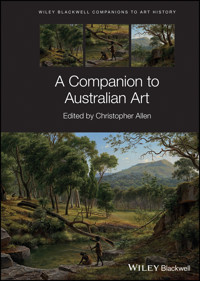
Cover image: © Eugene von Guérard, Warrenheip Hills near Ballarat 1854, National Gallery of Victoria, Melbourne
Cover design by Wiley
Set in 10/12.5pt Galliard by Integra Software Services, Pondicherry, India
Contents
Cover
WILEY BLACKWELL COMPANIONS TO ART HISTORY
Title page
Copyright
About the Editor
Notes on Contributors
List of Figures
Series Editor’s Preface
Part I: Introduction and Historiography
Chapter 1: Introduction
Chapter 2: Historiography of Australian Art
Chapter 3: Public Art Museums in Australia: A Brief History
Part II: Dwelling in Australia
Chapter 4: Early Sydney: A Land of Wonder and Delight
Chapter 5: Art in Van Diemen’s Land
Chapter 6: Eugene von Guérard and Colonial Art in Melbourne, 1850–1880
Chapter 7: The Promised Land: Painting in Nineteenth-Century South Australia
Chapter 8: Crocodiles, Bottle-Trees and Pineapple Fields: Art in Colonial Queensland
Chapter 9: Subject and Object: Locating the Portrait in Nineteenth-Century Australia
Chapter 10: The Heidelberg School
Part III: Dwelling in the World
Chapter 11: Exodus
Chapter 12: The Edwardian Period (1901–1918)
Chapter 13: Color, Commerce and the Culture of Change: Sydney Modernism, 1915–1941
Chapter 14: Angry Penguins
Chapter 15: Australian High Modernism
Chapter 16: Postwar Art: The International Context
Chapter 17: Starting the Sixties Art Boom
Chapter 18: Avant-Gardism and the Triumph of the Postmodern: 1960–1980
Part IV: Artforms and Themes
Chapter 19: Australian Sculpture, Nineteenth and Twentieth Century
Chapter 20: Between the Real and The Imagined Photography in Australia
Chapter 21: Aboriginal Art’s Expanding Field: A New Approach
Chapter 22: Conclusion: From Postmodern to Contemporary
Index
End User License Agreement
List of Table
Chapter 4
TABLE 7.1 Figures in this chapter.
List of Illustrations
Chapter 4
FIGURE 4.1. Hawkesbury Duck. For details please see Table 4.1.
FIGURE 4.2. A view near Grose Head, New South Wales, 1809. For details...
FIGURE 4.3. Neddy Noora/Shoalhaven/Shoalhaven Tribe. For details please...
FIGURE 4.4. Port Jackson. N.S.W. view in Double Bay. For details please...
Chapter 5
FIGURE 5.1. Thomas Bock, Truganini (formerly known as Fanny, Native of Po...
FIGURE 5.2. Benjamin Duterrau, The Conciliation, 1840. Oil on canvas, 121...
FIGURE 5.3. John Glover, ‘Cawood’, on the Ouse River, 1838. O...
FIGURE 5.4. Louisa Anne Meredith, Gum Flowers and Love, c. 1860. Watercol...
Chapter 6
FIGURE 6.1. Eugene von Guérard, Aborigines Met on the Road to the Dig...
FIGURE 6.2. Eugene von Guérard, Ferntree Gully in the Dandenong Range...
FIGURE 6.3. Eugene von Guérard. North-east View from the Northern Top...
Chapter 7
FIGURE 7.1. S.T. Gill, Port Adelaide Looking North along Commercial Road, 1...
FIGURE 7.2. A scene in South Australia by Alexander Schramm. South Australi...
FIGURE 7.3. Hans Heysen, On Prescott’s Farm, 1899.M.J.M. Carter AO Co...
Chapter 8
FIGURE 8.1. R. Godfrey Rivers, Under the Jacaranda 1903, 1859–1925. Oil...
FIGURE 8.2. Richard Daintree (1832–1878), Gold Miners’ Bark Hut (...
FIGURE 8.3. James Gilson (1865–1927). Pioneer Pottery (1907–1914)....
FIGURE 8.4. Oscar Friström (1856–1918). Mother and Daughter, North...
Chapter 10
FIGURE 10.1. Tom Roberts, The Artist’s Camp, 1886. Oil on canvas, 46...
FIGURE 10.2. Arthur Streeton, Golden Summer, Eaglemont, 1889. Oil on canvas...
FIGURE 10.3. Nicholas Chevalier, The Buffalo Ranges, 1864. Oil on canvas, 13...
FIGURE 10.4. Charles Conder (designer), Fergusson and Mitchell (printer), Ca...
FIGURE 10.5. Tom Roberts, Shearing the Rams, 1890. Oil on canvas on composit...
FIGURE 10.6. Frederick McCubbin, The Pioneer, 1904. Oil on canvas, 225...
Chapter 12
FIGURE 12.1. Hugh Ramsay. Miss Nellie Paterson, 1903. Canberra, National Ga...
FIGURE 12.2. E. Phillips Fox. The green parasol c.1912. National Gallery of...
FIGURE 12.3. Hans Heysen. Morning Light, 1913. Canberra, National Gallery o...
Chapter 14
FIGURE 14.1. Arthur Boyd, The Baths (South Melbourne), 1943. Oil on cotton g...
FIGURE 14.2. John Perceval, Boy with cat 2, 1943. Oil on composition board,...
Chapter 15
FIGURE 15.1. Arthur Boyd, Bridegroom Waiting from His Bride to Grow up, 1958....
FIGURE 15.2. Joy Hester, Child with Yellow Bird, 1957. Drawing in brush and i...
FIGURE 15.3. Danila Vassilieff, Stenka Razin, 1953. Carved and waxed Lilydal...
FIGURE 15.4. John Brack, Men’s Wear, 1953. Oil on canvas, 81.0 × 1...
FIGURE 15.5. Fred Williams, Upwey Landscape, 1965. Oil on canvas, 147.5...
Chapter 16
FIGURE 16.1. Peter Upward (1932–1983) June Celebration, 1960. Synthe...
FIGURE 16.2. Dick Watkins (1937–). Painting 1963 wood and house enam...
FIGURE 16.3. Margel Hinder (1906–1995) Sculpture, 1961/1964. Cast cop...
FIGURE 16.4. Janet Dawson (1935–). Yellow Badge, 1964. Oil on canvas 6...
FIGURE 16.5. Wladyslaw Dutkiewicz (1918–1999). Australian Myth c.1953....
Chapter 18
FIGURE 18.1. Mike Brown, The Little King, 1961. Mixed media on wood panel, 4...
FIGURE 18.2. Brett Whiteley. Headache, 1965–1966. Collage, mixed media...
FIGURE 18.3. Peter Kennedy. November Eleven – An Australian History, 1...
Chapter 19
FIGURE 19.1. Edward Hodges Baily, Sir Richard Bourke, 1840. Sydney, NSW (pho...
FIGURE 19.2. Daphne Mayo, with John Theodore Muller, on the Progress of Civi...
FIGURE 19.3. Margel Hinder, Reserve Bank Sculpture. Sydney, Martin Place....
FIGURE 19.4. Robert Woodward, El Alamein Fountain, 1961. Kings Cross, NSW (ph...
FIGURE 19.5. Norma Redpath, Treasury Fountain, 1967, Canberra ACT (photo: ACT...
FIGURE 19.6. Hossein and Angela Valamanesh, Irish Famine Monument, 1999, Sydn...
Guide
Cover
WILEY BLACKWELL COMPANIONS TO ART HISTORY
Title page
Copyright
About the Editor
Notes on Contributors
List of Figures
Series Editor’s Preface
Table of Contents
Begin Reading
Index
End User License Agreement
Pages
i
ii
iii
iv
v
vi
vii
viii
ix
x
xi
xii
xiii
xiv
xv
xvi
xvii
xviii
xix
xx
1
2
3
4
5
6
7
8
9
10
11
12
13
14
15
16
17
18
19
20
21
22
23
24
25
26
27
28
29
30
31
32
33
34
35
36
37
38
39
40
41
42
43
44
45
46
47
48
49
50
51
52
53
54
55
56
57
58
59
60
61
62
63
64
65
66
67
68
69
70
71
72
73
74
75
76
77
78
79
80
81
82
83
84
85
86
87
88
89
90
91
92
93
94
95
96
97
98
99
100
101
102
103
104
105
106
107
108
109
110
111
112
113
114
115
116
117
118
119
120
121
122
123
124
125
126
127
128
129
130
131
132
133
134
135
136
137
138
139
140
141
142
143
144
145
146
147
148
149
150
151
152
153
154
155
156
157
158
159
160
161
162
163
164
165
166
167
168
169
170
171
172
173
174
175
176
177
178
179
180
181
182
183
184
185
186
187
188
189
190
191
192
193
194
195
196
197
198
199
200
201
202
203
204
205
206
207
208
209
210
211
212
213
214
215
216
217
218
219
220
221
222
223
224
225
226
227
228
229
230
231
232
233
234
235
236
237
238
239
240
241
242
243
244
245
246
247
248
249
250
251
252
253
254
255
256
257
258
259
260
261
262
263
264
265
266
267
268
269
270
271
272
273
274
275
276
277
278
279
280
281
282
283
284
285
286
287
288
289
290
291
292
293
294
295
296
297
298
299
300
301
302
303
304
305
306
307
308
309
310
311
312
313
314
315
316
317
318
319
320
321
322
323
324
325
326
327
328
329
330
331
332
333
334
335
336
337
338
339
340
341
342
343
344
345
346
347
348
349
350
351
352
353
354
355
356
357
358
359
360
361
362
363
364
365
366
367
368
369
370
371
372
373
374
375
376
377
378
379
380
381
382
383
384
385
386
387
388
389
390
391
392
393
394
395
396
397
398
399
400
401
402
403
404
405
406
407
408
409
410
411
412
413
414
415
416
417
418
419
420
421
422
423
424
425
426
427
428
429
430
431
432
433
434
435
436
437
438
439
440
441
442
443
444
445
446
447
448
449
450
451
452
453
454
455
456
457
458
459
460
461
462
463
464
465
466
467
468
469
470
471
472
473
474
475
476
477
478
479
480
481
482
483
484
485
486
487
488
489
490
491
492
493
494
495
496
497
498
499
500
501
502
503
504
505
506
507
508
509
510
511
512
513
514
515
516
517
518
519
520
521
522
523
524
525
526
527
528
529
530
531
532
533
534
535
536
537
538
About the Editor
Christopher Allen was born in Algiers to Australian parents and grew up in London, Saigon, and Tokyo before finishing school at Sydney Grammar School. After undergraduate studies at the University of NSW and postgraduate at the University of Aixen- Provence, he taught at the University of NSW from 1978 to 1980; during the 1980s, he pursued doctoral studies at the University of Sydney, while also working in theatre administration, and began writing art criticism for the Sydney Morning Herald (1987–1991) and several other publications. Following the award of his PhD in 1991 and a couple of years at the University of Sydney, he spent much of 1994–1996 in Paris on a postdoctoral appointment at the Collège de France, working with the doyen of French art historians, Professor Jacques Thuillier, for whom he translated Poussin before Rome (Feigen, 1995).
In 1997 Christopher took up a lecturing position at the National Art School in Sydney and redesigned the undergraduate course in Art History and Theory with his colleague Jacques Delaruelle. Over the following decade, he published several books on the history of art and art theory, including Art in Australia from Colonization to Postmodernism (Thames & Hudson, 1997), French Painting in the Golden Age (Thames & Hudson, 2003), Charles-Alphonse Dufresnoy: De Arte Graphica (with Y. Haskell and F. Muecke, Droz, 2005) and Jeffrey Smart: Unpublished Paintings, 1940–2007 (Australian Galleries, 2008).
From 2005 to 2008 he was Art Critic for The Financial Review; since 2008 he has been National Art Critic for The Australian. In 2009 he joined Sydney Grammar School as Head of Art, moving at the end of 2011 to the position of Senior Master in Academic Extension, and now teaches Classical Greek and Latin as well as senior Art History. He has given regular public lectures in art history at the Art Gallery of New South Wales since the mid-1990s and has led over a dozen cultural tours to the Mediterranean and Iran for the Art Gallery Society. He is also a Trustee of the State Library of NSW. Christopher is married to the painter Michelle Hiscock; his older daughter is an editor, continuing a long family association with books, writing and journalism; the younger one, a keen writer, public speaker and environmental blogger, is at school.
Notes on Contributors
Georgina Cole specializes in eighteenth-century art and intellectual history, with a particular interest in the senses. She has recently published articles on representations of blindness in the work of George Romney and Nathaniel Hone and is presently working on the cultural history of ambergris. Her research has been supported with fellowships and grants from the Yale Center for British Art and the Paul Mellon Centre for Studies in British Art. She is currently Lecturer in Art History and Theory at the National Art School and a member of the International Advisory Board of British Art Studies
Glenn R. Cooke, BA (Mel) 1977, MA (GWU.) 1979, was Curator of Decorative Arts and subsequently Queensland Heritage at the Queensland Art Gallery/Gallery of Modern Art 1981–2013. He published: L. J. Harvey & His School (1982), Carl McConnell: Master Potter (1986), Thorns and Petals: 100 Years of the Royal Queensland Art Society (1988), A Time Remembered: Art in Brisbane 1950-1975 (1995), Art Off Centre: Placing Queensland art (1997), Lady Woodcarvers of Rockhampton (2000) and Tropical Pleasures (2004). He curated a major exhibition and publication With Heart and Hand: Art Pottery in Queensland 1900-1950 (2018) and continues to publish actively on aspects of social and visual culture.
He has contributed collections to QAGOMA, Queensland Museum (English porcelain 1770-1820 and Aboriginal inspiration in popular culture), State Library of Queensland (Queensland souvenir textiles, Story Bridge Memorabilia and Queensland Social Dance Ephemera), Griffith University Art Museum (Historic and Contemporary Australian Ceramics) and Ipswich Regional Gallery (Folk art and the handmade). He completed a database on Margaret Olley and that on Jon Molvig added to Art prize exhibitions in Brisbane 1950-1975 in the QAGOMA Research Library. He remains an enthusiastic gardener (shown on Gardening Australia in August 2015) collector and social dancer.
Isobel Crombie began her career as Curatorial Assistant in the Department of Photography at the National Gallery of Australia in 1979. She joined the National Gallery of Victoria as a Senior Curator of Photography in 1988 and was awarded a doctorate from the University of Melbourne in 2000. In 2012 she was appointed Assistant Director, Curatorial and Collection Management, a position she held until her retirement in 2019. She is currently a Board Member of the Centre for Contemporary Photography, Melbourne, and a Non-Executive Director of Craft Victoria. Dr Crombie has curated widely in photography and was a part of all project teams for major exhibitions at the NGV for seven years, including Melbourne Now, the Triennial and all Melbourne Winter Masterpiece exhibitions. She has publishedextensively over her 40-year career including, Body Culture: Max Dupain, Photography and Australian Photography (2004). Her latest publications are Petrina Hicks Bleached Gothic: (2019, with Maria Quirk) and :She Persists: Perspectives on Women in Art and Design (2020, joint editor).
Mark De Vitis is a Lecturer in the Department of Art History at the University of Sydney. His research focuses on the agency of material culture and its capacity to impact social histories of place as well as collective and individual identity. He regularly publishes on the genre of portraiture, currently leading a project on the role of the portrait object in the transmission of heritage from the nineteenth century to the present. His research has received support from the Cité internationale des arts, Paris; The Getty Research Institute, Los Angeles; and the Newberry Library, Chicago.
Molly Duggins is Sessional Lecturer in Australian art in the Department of Art History and Theory at the National Art School, Sydney. Recent publications include “‘The World’s Fernery’: New Zealand and Nineteenth-Century Fern Fever” in New Zealand’s Empire (Manchester University Press, 2015) and “‘Which Mimic Art Hath Made’: Crafting Nature in the Victorian Book and Album” in Of Green Leaf, Bird, and Flower: Artists’ Books and the Natural World (Yale University Press, 2014).
Mary Eagle, PhD, is an art historian, author of a number of books and curator of several exhibitions of Australian art. She studied at The University of Melbourne, and during a long career she has been art critic for The Age newspaper, a curator in various capacities, Head of Australian Art at the National Gallery of Australia, more recently a Research Fellow at the Australian National University, and Harold White Scholar at the National Library of Australia. Her current projects are a monographs about the world wandering Anglo-American artist Augustus Earle (1793–1838) and the art of Dick Watkins (1937–).
Anne Gray was born in Western Australia, where she began her career as Education Officer for the Art Gallery of Western Australia. In 1980 she was appointed Curator of pre-1939 Art at the Australian War Memorial in Canberra and in 1984 became Head of Art at the War Memorial. At the same time she embarked on her PhD in art history at the University of Melbourne, a study of the career of George Lambert. Graduating in 1995, Dr Gray was appointed Director of the Lawrence Wilson Art Gallery at the University of Western Australia. In 2001 she was appointed Head of Australian Art at the National Gallery of Australia in Canberra, where she was responsible for a number of major exhibitions, including George Lambert and The Edwardians: Secrets and Desires. She was also a major contributor to the Australia exhibition that was shown at the Royal Academy in London in 2013 and curated Tom Roberts at the NGA in 2015–2016, after which she retired in 2016.
Sasha Grishin AM, FAHA established the academic discipline of Art History at the Australian National University and until December 2013 was the Sir William Dobell Professor of Art History and Head of Art History at the ANU in Canberra. Professor Grishin studied art history at the universities of Melbourne, Moscow, London and Oxford and has served several terms as visiting scholar at Harvard University. He works internationally as an art historian, art critic and curator. In 2004 he was elected Fellow of the Australian Academy of the Humanities; in 2005 he was awarded the Order of Australia (AM) for services to Australian art and art history and in 2008 was awarded a Citation for Outstanding Contribution to Student Learning. He has published 25 books and more than 2000 articles dealing with various aspects of art. In 2014 his massive Australian Art: A History was published by Melbourne University Publishing and in 2015 his monographs were published on John Wolseley (Thames and Hudson), Inge King (Macmillan) and S.T. Gill (National Library of Australia).
Richard Haese studied art in Adelaide and completed a PhD in history at Monash University, subsequently lecturing in art history at La Trobe University. He is currently honorary Research Associate in history at La Trobe University and Fellow of the Heide Museum of Modern Art. He is the author of the award-winning Rebels and Precursors: The Revolutionary Years of Australian Art (1981) and Permanent Revolution: Mike Brown and the Australian Avant-Garde 1953–1997 (2011).
David Hansen has had an extensive career across the visual arts sector: as Director of the Warrnambool Art Gallery, the Riddoch Art Gallery, Mt Gambier, and the Australian Sculpture Triennial; as Senior Curator of Art at the Tasmanian Museum and Art Gallery; as an Australia Council Senior Fellow; as an art critic for The Age newspaper; and as Senior Researcher and Specialist at Sotheby’s Australia. Since 2014 he has been Associate Professor of Art History and Art Theory at the Australian National University. Over almost 40 years of working with art, artists and collections, Dr. Hansen has curated more than 80 exhibitions, and has published widely: highlights include the exhibition books Dempsey’s People (2017), winner of the William M.B. Berger Prize for British Art History; John Glover and the Colonial Picturesque (2003), winner of the Tasmania Prize; The Fifth Australian Sculpture Triennial (1993) and the Australian Bicentennial Authority’s The Face of Australia: The Land and the People (1988), as well as the essay Seeing Truganini (2010), winner of both the Australian Book Review’s Calibre Prize and the Alfred Deakin Prize for an Essay Advancing Public Debate in the Victorian Premier’s Literary Awards.
Christopher Heathcote is one of Australia’s leading art critics. He is the author of the definitive histories A Quiet Revolution: The Rise of Australian Art 1946–1968, and Inside the Art Market: Australia’s Galleries 1956–1976. He is co-author with Bernard Smith and Terry Smith of Australian Painting 1788–2000, hailed as the “classic” account of Australian art. Dr. Heathcote has also written several artist monographs, including Russell Drysdale: Defining the Modern Australian Landscape, Discovering Dobell and A Quest for Enlightenment: The Art of Roger Kemp. He is a contributor to the Australian Dictionary of Biography
Michael Hill is Head of Art History at the National Art School in Sydney. He has published extensively on Francesco Borromini’s church of San Carlo alle Quattro Fontane in Rome. Michael’s work on Borromini led him to study Leo Steinberg’s critique of modernist art criticism. With Peter Kohane, Michael has also written on decorum in classical architectural theory, which sheds light on how buildings interact in the city. Outside of scholarship, Michael is involved in the curating and exhibition of contemporary sculpture. The chapter in the present volume was developed alongside Michael’s research into the ways civic space is shaped by vantage points and public sculpture.
Jane Hylton graduated from the South Australian School of Art in 1971. From 1975 through 1999 she worked in various roles at the Art Gallery of South Australia, including as Senior Curator of Australian Art for 10 years. During her 15 years as a freelance consultant, she specialized in Australian art, working with state and national collecting institutions, as well as with private collectors. In 2011 she was awarded the title of Emeritus Curator by the Art Gallery Board of South Australia. She has written several books on Australian art and in 2012 her major publication South Australia Illustrated: Colonial Painting in the Land of Promise and the accompanying exhibition were presented by the Art Gallery of South Australia. Jane has served on the Board of Country Arts South Australia, both the Nora Heysen and the Hans Heysen Foundations, and for nine years as a Trustee of the National Gallery of Australia.
Philip Jones has worked as Curator in the South Australian Museum’s Department of Anthropology since 1984. His doctoral thesis concerned the history of the Museum’s anthropological collections. His fieldwork in the Simpson Desert region has resulted in several publications on the region’s history and ethnography. He has curated more than 30 exhibitions at the South Australian Museum, ranging from Aboriginal art to the history of exploration. He is currently writing on Aboriginal material culture, the life and work of the colonial artist George French Angas, and Australia’s Muslim cameleers. Ochre and Rust, his 2007 book of essays on museum objects and the Australian frontier, won the inaugural Prime Minister’s literary award for non-fiction.
Denise Mimmocchi is Senior Curator of Australian art at the Art Gallery of New South Wales, Sydney. She has produced numerous exhibitions and publications on Australian art including Tony Tuckson (2019), O’Keeffe, Preston, Cossington Smith: Making Modernism (2017), Sydney Moderns: Art for a New World (2013, with Deborah Edwards) and Australian Symbolism: The Art of Dreams (2012). She is currently working on an exhibition and publication on the sculptor Margel Hinder for 2021
Richard Neville is Mitchell Librarian and Director, Engagement at the State Library of NSW. Richard has published widely on, and curated many exhibitions about, nineteenth- century Australian art and society, including Mr J. W. Lewin, Painter and naturalist (2012). He has also been extensively involved in the acquisition, arrangement, description and promotion of the Mitchell Library’s renowned Australian research collections.
Barry Pearce studied art in Adelaide and London. He started his career at the Art Gallery of South Australia, where he was Curator of Prints and Drawings from 1975 to 1976; he was Curator of Paintings at the Art Gallery of Western Australia from 1977 to 1978 and Curator of Australian Art at the Art Gallery of New South Wales from 1978 to 2011. He is the author of more than 35 books and exhibition catalogues; major exhibitions that he has curated include nationally touring retrospectives of Sali Herman, Elioth Gruner, John Passmore, Jeffrey Smart, Francis Lymburner, Kevin Connor, Donald Friend, Arthur Boyd, Brett Whiteley, William Dobell, Margaret Olley, Charles Conder, Sidney Nolan and Jeffrey Smart.
Ruth Pullin is an independent art historian, curator and von Guérard specialist. She has curated two major exhibitions of von Guérard’s work: the Art Gallery of Ballarat’s 2018 exhibition, Eugene von Guérard: Artist-Traveller, and, as co-curator, the National Gallery of Victoria’s major travelling exhibition for 2011, Eugene von Guérard: Nature Revealed. She was the principal author and commissioning editor of the catalogue, Eugene von Guérard: Nature Revealed (2011). Her most recent book, The Artist as Traveller: The Sketchbooks of Eugene von Guérard, was published by the Art Gallery of Ballarat in 2018, along with, as co-author, Lieber Freund!, an annotated collection of von Guérard’s letters translated from Old German. She has held research fellowships at the State Library of New South Wales and the State Library of Victoria; has published widely, in Australian and international anthologies and scholarly journals; and presents regularly at national and international symposia. She is currently working on a catalogue raisonné of von Guérard’s oeuvre.
Jacqui Strecker is the Head of Curatorial at the Museum of Applied Arts and Sciences where she leads a large and diverse multidisciplinary team. She is regarded nationally and internationally for her work as a curator and art historian with a specialist knowledge of modernist European avant-gardes and provenance research. She has published and lectured widely across a range of research areas including contemporary culture, early twentieth-century design and decorative arts and Australian history. She has previously held roles as Curator of Special Exhibitions at the Art Gallery of New South Wales, Senior Curator of Art at the Australian War Memorial, Consulting Curator at the National Gallery of Victoria and Lecturer in Art History at the University of Melbourne. Jacqui has delivered a large number of exhibitions and publications including Icons from the Museum of Applied Arts and Sciences Collection, The Ideal Home, The Mad Square: Modernity in German Art 1910–1937, Giacometti from the Maeght Foundation and Rembrandt: A Genius and His Impact.
Gerard Vaughanis a graduate of the universities of Melbourne and Oxford. As an art historian his interests are broad, concentrating above all on the social history of art, ranging from neoclassicism to French Post-Impressionism and twentieth-century modern movements, and especially taste and art collecting, both public and private. From 1994 to 1999 he served as Inaugural Director of the British Museum Development Trust; from 1999 to 2012 he was director of the National Gallery of Victoria in Melbourne; and from 2014 to 2018 he was Director of the National Gallery of Australia in Canberra. He is currently Chair of the Board of the Australian Institute of Art History, based at Melbourne University.
List of Figures
FIGURE 4.1. Artist unknown, Hawkesbury Duck, 1790s. Watercolor on paper, 37.1 × 50.1 cm. In volume 4, Zoology of New Holland. Sydney, Mitchell Library (State Library of NSW).
FIGURE 4.2. George William Evans, A view near Grose Head, New South Wales, 1809, 1809. Watercolor on paper, 27.6 × 37 cm. Sydney, Mitchell Library (State Library of NSW).
FIGURE 4.3. Charles Rodius, Neddy Noora/Shoalhaven/Shoalhaven Tribe, 1834. Lithograph with white highlights, 29.2 × 23.3 cm. Sydney, Dixson Library (State Library of NSW).
FIGURE 4.4. George Edwards Peacock, Port Jackson. N.S.W. view in Double Bay, 1847. Oil on board, 23.5 × 33.5 cm. Sydney, Dixson Galleries (State Library of NSW).
FIGURE 5.1. Thomas Bock, Truganini (formerly known as Fanny, Native of Port Dalrymple), 1837. Watercolor, 29.4 × 22.3 cm. Hobart, Tasmanian Museum and Art Gallery. Presented by the Tasmanian Government, 1889.
FIGURE 5.2. Benjamin Duterrau, The Conciliation, 1840. Oil on canvas, 121 × 170.5 cm. Hobart, Tasmanian Museum and Art Gallery.
FIGURE 5.3. John Glover, “Cawood,” on the Ouse River, 1838. Oil on canvas, 76 × 114.4 cm. Hobart, Tasmanian Museum and Art Gallery.
FIGURE 5.4. Louisa Anne Meredith, Gum Flowers and Love, c. 1860. Watercolor, 35.1 × 22.7 cm. Hobart, Royal Society of Tasmania, Tasmanian Museum and Art Gallery.
FIGURE 6.1. Eugene von Guérard, Aborigines Met on the Road to the Diggings, 1854. Oil on canvas, 46.0 × 75.5 cm. Geelong Art Gallery.
FIGURE 6.2. Eugene von Guérard, Ferntree Gully in the Dandenong Ranges, 1857. Oil on canvas, 92 × 138 cm. Canberra, National Gallery of Australia. Gift of Dr Joseph Brown AO OBE, 1975.
FIGURE 6.3. Eugene von Guérard, North-east View from the Northern Top of Mount Kosciusko, 1863. Oil on canvas, 66.5 × 116.8 cm. Canberra, National Gallery of Australia.
FIGURE 6.4. Louis Buvelot, Winter Morning near Heidelberg, 1866. Oil on canvas, 76.8 × 118.2 cm. Melbourne, National Gallery of Victoria. Purchased 1869.
FIGURE 7.1. S.T. Gill, Port Adelaide Looking North along Commercial Road, 1847. Watercolor on paper, 20.3 × 32 cm. Morgan Thomas Bequest Fund, 1923. Adelaide, Art Gallery of South Australia.
FIGURE 7.2. Alexander Schramm, A scene in South Australia, c. 1850. Oil on canvas, 25.7 × 31.8 cm. Adelaide, Art Gallery of South Australia.
FIGURE 7.3. Hans Heysen, On Prescott’s Farm, 1899. Oil on canvas, 40.9 × 51.1 cm. Adelaide, Art Gallery of South Australia. M.J.M. Carter AO Collection, 2004.
FIGURE 8.1. R. Godfrey Rivers, Under the Jacaranda 1903, 1859–1925. Oil on canvas, 143.4 × 107.2 cm. Brisbane, Queensland Art Gallery.
FIGURE 8.2. Richard Daintree, Gold Miners’ Bark Hut (no. 17 from “Images of Queensland” series), c. 1870. Autotype on paper, 13 × 21 cm. Brisbane, Queensland Art Gallery.
FIGURE 8.3. James Gilson, Bread Plate, c. 1910. Earthenware with majolica glaze, 32.5 × 27.5 cm (irreg.). Ipswich Art Gallery.
FIGURE 8.4. Oscar Friström, Mother and Daughter, North Queensland, 1899. Oil on canvas, 60 × 44.5 cm. Brisbane, State Library of Queensland.
FIGURE 10.1. Tom Roberts, The Artist’s Camp, 1886. Oil on canvas, 46 × 69 cm. Melbourne, National Gallery of Victoria.
FIGURE 10.2. Arthur Streeton, Golden Summer, Eaglemont, 1889. Oil on canvas, 81.3 × 152.6 cm. Canberra, National Gallery of Australia.
FIGURE 10.3. Nicholas Chevalier, The Buffalo Ranges, 1864. Oil on canvas, 132.4 × 183.7 cm. Melbourne, National Gallery of Victoria.
FIGURE 10.4. Charles Conder (designer), Fergusson and Mitchell (printer), Catalogue of the 9 by 5 Impression Exhibition, 1889. Photo-lithograph and letterpress on hand-made paper, 17.7 × 10.6 cm. Melbourne, National Gallery of Victoria.
FIGURE 10.5. Tom Roberts, Shearing the Rams, 1890. Oil on canvas on composition board, 122.4 × 183.3 cm. Melbourne, National Gallery of Victoria.
FIGURE 10.6. Frederick McCubbin, The Pioneer, 1904. Oil on canvas, 225 × 295.07 cm. Melbourne, National Gallery of Victoria.
FIGURE 12.1. Hugh Ramsay, Miss Nellie Patterson, 1903. Oil on canvas, 122.3 × 92.2 cm. Canberra, National Gallery of Australia.
FIGURE 12.2. E. Phillips Fox, The green parasol, c. 1912. Oil on canvas, 117 × 89.5 cm. Canberra, National Gallery of Australia.
FIGURE 12.3. Hans Heysen, Morning Light, 1913. Oil on canvas, 118.6 × 102 cm. Canberra, National Gallery of Australia.
FIGURE 14.1. Arthur Boyd, The Baths (South Melbourne), 1943. Oil on cotton gauze on cardboard, 62.5 × 76 cm. Canberra, National Gallery of Australia. The Arthur Boyd gift, 1975.
FIGURE 14.2. John Perceval, Boy with cat 2, 1943. Oil on composition board, 59 × 43.8 cm. Canberra, National Gallery of Australia. © John de Burge Perceval.
FIGURE 15.1. Arthur Boyd, Bridegroom Waiting from His Bride to Grow up, 1958. Oil and tempera on board, 137.2 × 182.9 cm. Private collection. © Bundanon Trust.
FIGURE 15.2. Joy Hester, Child with Yellow Bird, 1957. Drawing in brush and ink, watercolour and gouache on paper, 39.1 × 57.5 cm. Canberra, National Gallery of Australia. © Joy Hester/Copyright Agency.
FIGURE 15.3. Danila Vassilieff, Stenka Razin, 1953. Carved and waxed Lilydale limestone, 57 h × 40 w × 13.5 d cm. Canberra, National Gallery of Australia.
FIGURE 15.4. John Brack, Men’s Wear, 1953. Oil on canvas, 81.0 × 114.0 cm. Canberra, National Gallery of Australia. © Helen Brack.
FIGURE 15.5. Fred Williams, Upwey Landscape, 1965. Oil on canvas, 147.5 × 183.3 cm. Melbourne, National Gallery of Victoria. © Estate of Fred Williams.
FIGURE 16.1. Peter Upward, June Celebration, 1960 (synthetic polymer paint on 3 panels of composition board, 213.5 × 411.5 cm; Canberra, National Gallery of Australia) being hung by John Olsen, William Rose and Stanislaus Rapotec.
FIGURE 16.2. Dick Watkins, Painting, 1963. Wood and house enamel on composition board, 102.0 × 112.7 × 10.5 cm. Private collection. Copyright Dick Watkins.
FIGURE 16.3. Margel Hinder, Reserve Bank Sculpture, 1961-64. Cast copper with steel core, 762.0 × 457.0 × 226.0 cm. Sydney, Reserve Bank.
FIGURE 16.4. Janet Dawson, Yellow Badge, 1964. Oil on canvas, 63.5 × 80 cm. Private collection. Photograph and copyright Janet Dawson.
FIGURE 16.5. Wladyslaw Dutkiewicz, Australian Myth, c. 1953. Oil on board, 89 × 114 cm. This satirical and political comment was inspired by a racist Australian advertisement for Pelaco shirts that appeared in 1953. Image courtesy Charles Nodrum Gallery; copyright Adam Dutkiewicz.
FIGURE 18.1. Mike Brown, The Little King, 1961. Mixed media on wood panel, 43.0 × 29.2 cm. Melbourne, Heide Museum of Modern Art. Image courtesy Mike Brown estate.
FIGURE 18.2. Brett Whiteley, Headache, 1965–1966. Collage, mixed media on board, 95.3 × 76.2 × 12.7 cm. Private collection. Image courtesy Brett Whiteley estate.
FIGURE 18.3. Peter Kennedy, November Eleven – An Australian History, 1980–1981. Oil on canvas, 274 × 305 cm. University of Sydney, JW Power Collection (purchased 1985). Image courtesy the artist and Museum of Contemporary Art © the artist.
FIGURE 19.1. Edward Hodges Baily, Sir Richard Bourke, 1840. Photo: Charles Pickering, 1871. Sydney, State Library of NSW.
FIGURE 19.2. Daphne Mayo, with John Theodore Muller, working on the Progress of Civilization in the State of Queensland. Photo c. 1930. Brisbane, University of Queensland (Daphne Mayo Collection UQFL119).
FIGURE 19.3. Margel Hinder, Reserve Bank Sculpture, 1961-64. Cast copper with steel core, 762.0 × 457.0 × 226.0 cm. Sydney, Martin Place. Photo: Reserve Bank Archive.
FIGURE 19.4. Robert Woodward, El Alamein Fountain, 1961. Bronze, 381 cm diameter. Sydney, Kings Cross. Photo: Wiki Commons, Public Domain.
FIGURE 19.5. Norma Redpath, Treasury Fountain, 1967. Bronze, 266 × 259 × 369 (first sculpture), and 104 × 244 × 213 cm (second sculpture) Canberra ACT. Photo: M. Lindsey Photographer, 1969. ACT Heritage Library, 06153. Photograph courtesy of Fairfax Media.
FIGURE 19.6. Hossein and Angela Valamanesh, Irish Famine Monument, 1999. Architectural installation, bronze and etched glass. Photo: Wiki Commons, Public Domain.
Series Editor’s Preface
Wiley Blackwell Companions to Art History is a series of edited collections designed to cover the discipline of art history in all its complexities. Each volume is edited by specialists who lead a team of essayists, representing the best of leading scholarship, in mapping the state of research within the sub-field under review, as well as pointing toward future lines of enquiry.
This Companion to Australian Art focuses on the art of the European settlers. While the significance of Aboriginal Australian art is recognised, it is also identified as a separate field of enquiry. The volume aims to make the art of Australia from the past 250 years, including the historical circumstances of its production, more accessible. The essays challenge the established view of Australian art as the product of a colonial periphery forever seeking to imitate a metropolitan centre. Instead of being a mere echo of mainstream European artistic and art historical traditions, Australian art is presented as an original reworking of these practices. This new story of Australian art is told in a series of thematic and chronological sequences that guide the reader through the complexities of the narrative.
Together, these essays combine to provide an exciting and challenging revision of our conception and understanding of Australian art that will be essential reading for students, researchers, and teachers across a broad spectrum of interests. A Companion to Australian Art expands the global purview of volumes in the Wiley Blackwell Companions to Art History series and it is a very welcome addition to it.
Dana Arnold, 2021
I INTRODUCTION AND HISTORIOGRAPHY
1 Introduction
Christopher Allen
Art in the Australian continent has two very different stories, which have become intertwined in recent times, but can never be reduced to a single narrative. The first of these, of course, is the story of the art produced by the original inhabitants of the land, who came here tens of thousands of years before the Neolithic Revolution and the beginning of urban life in the northern hemisphere, and whose way of life seems to have remained remarkably stable, all but untouched by the history of the rest of humanity, until the beginning of British settlement at the end of the eighteenth century. First contact with the Europeans, in fact, was much earlier, at the beginning of the seventeenth, but this encounter and others that followed had virtually no effect on the lives of the Aborigines until the colony of Sydney was established in 1788.
Aboriginal art before settlement is a complex and specialized subject, the study of archaeologists and anthropologists, who work with necessarily limited resources, since the indigenous people left no architecture and had no writing; their cultural artefacts were almost all perishable and discarded after their use in ceremonies, and the earliest samples of such material that we possess today were collected by explorers and missionaries from the late eighteenth century onwards. The most significant permanent monuments of past Aboriginal culture are in remarkable sets of cave paintings and stone engravings, but their significance is not always clear today. Traditional culture was entirely oral, and such a culture requires a constant line of transmission: when people are displaced from their ancestral lands and lose their local languages, such transmission is inevitably compromised.
The study of the ancient culture of the Aboriginal people, including their beliefs, their art and their languages, represents therefore a vast field, or a series of fields of research, but it is not the subject of this book. The Aborigines are constantly present to varying degrees in the art and the consciousness of European Australians throughout the history of modern Australia, and so appear in many of the chapters of this book. Aboriginal artists appear in the story too, as they begin to take part in the European practice of art. And an outstanding chapter by Philip Jones deals with the emergence of a new Aboriginal art and its embrace by the art market in the last decades of the twentieth century.
The second story, which is the main focus of this book, is that of the European settlers in Australia which, if we start with the art of Captain Cook’s voyages, is now some 250 years old. This story is, from one point of view, and like all colonial art histories, that of a branch of a much older tradition, or perhaps a better metaphor is a cutting transplanted and finding its own growth and development in a new soil. This image gives a better sense of the level of adaptation to the new environment, sometimes underestimated by careless observers who see only the rehearsal of imported customs and habits of seeing.
Nonetheless, if we compare what was achieved here with the great movements of Neo-classicism, Romanticism, Realism, Impressionism and the various phases of modernism that succeeded each other during the same two and a half centuries, Australian art will inevitably look like a very small corner of art history. Like all colonial traditions, it suffers from the asymmetry of center and periphery: the inhabitants of the periphery cannot understand themselves or their own history without reference to the metropolitan center from which they originated, while those of the center have no such reciprocal need to understand the colonial periphery.
At least so it seems, and even for American art, which has no real incidence on international art history until America, or New York at least, became part of the center with the postwar explosion of Abstract Expressionism. On the face of it, regional art is primarily of interest to the inhabitants of the region in question. And yet many such regional traditions, including that of Australia, have been extensively written about, especially in the last half-century, with the growth of an academic industry that demands the constant production of discussion, commentary and speculation that is called research in the humanities, even if it frequently adds little of substance to our knowledge of its subject.
Looking at the field of Australian art and at the vast amount of writing surveyed in Molly Duggins’ impressive bibliographic study in this volume, an outsider could be tempted to conclude that this was a rather modest subject crushed by a disproportionate weight of discourse, much of it dull and much ideological, too often engaging in ultimately sterile discussion with other regional academics rather than addressing a broader public of cultivated lay people, the ultimate audience for the art itself. And there would be some truth in this perception: writing about art in Australia reflects the general problems of humanities scholarship in universities today, burdened on the one hand by the ineffectual ideologies of a post-political age and on the other by the mechanical imperatives of production.
This book sets out to avoid, as much as possible, the futility of ingrown academic discussion, and is put together with the aim of helping the intelligent non-specialist reader understand and enjoy the art of Australia. It has no intention of preaching or of attempting to impose any ideological reading of our history. It seeks to present a clear and unbiased account of events from the time of settlement and trusts that readers will be able to draw their own moral and other conclusions. The book’s aim, in other words, is to make the art of Australia more accessible to its readers, including through an awareness of the historical circumstances of its production, but never losing sight of the role of art as an organon of knowledge and consciousness.
For art, in all its manifestations, is not simply a set of artefacts, of material deposits left behind by historical processes; it is a way of thinking that long predates rational thought and self-conscious, theoretical reflection. These tools of the human mind are only some two and half millennia old, dating from the first beginnings of philosophical and theological thinking; literacy itself is only twice as old as that, and alphabetic writing, which immensely amplified the power and range of literacy, is much more recent, only five centuries or so older than the beginnings of philosophy. But for thousands of years before literacy and the rise of rational thinking, art in its various forms, as stories, songs and pictures, was a vehicle for the human mind to represent the world to itself and assign meaning and shape to it.
And because the questions that concern human beings are much more obscure and subtle than can be fully dealt with by rational discourse, art was not made obsolete by the rise of philosophy and later of science. It has continued to be a way of thinking about qualities of experience that are not amenable to logical analysis: an intuitive mode of thinking that is deeply rooted in the beliefs, assumptions and aspirations that make up its ambient culture – as well as the collective memory of its community.
Some art has the power to transcend its specific circumstances, to become foundational to its whole culture and to successive centuries or even millennia, and even to reach beyond the boundaries of its original cultural universe and to impress itself on the minds of people raised in different circumstances. By far the greatest proportion of artistic practice in any form or at any time is much less significant. Even most art of relatively high quality remains more or less bound to its time and place, so that it becomes of interest and even accessible only to those who take the trouble to become acquainted with the culture in which it originated.
Regional or colonial art is a particularly interesting case. Typically, and with occasional exceptions, especially as the colonial societies mature, they are influenced by the center, while, as already noted, the metropolitan center is barely influenced by its colonial offshoots. And this appears at first sight to be true of Australia as well. Few Australian artists have had any influence on the mainstream of art in the last two centuries; some have made reasonable careers abroad or even been appreciated for their distinctive vision, as was the case with Sidney Nolan, Russell Drysdale and Arthur Boyd in the postwar years. But none has made any perceptible difference to the course of western art.
However we may be inclined to temper such a brutal assessment, it is a useful starting-point, mainly in order to be quite clear that the interest of Australian art has nothing to do with its significance or influence outside this country. Its primary value, especially in the first century or more, lies in the way that it speaks of the experience of settlement in a new and strange land. Then the experience that it articulates becomes more complex, pondering the relative importance of local culture and belonging to an international world of modernism; but even in the last half-century, a wider reflection on the evolving ethnic composition of our population and a greater awareness of the prior occupation and the current plight of the Aboriginal people have constantly brought us back to the dialogue of a colonial, if increasingly cosmopolitan society with the land in which it has established itself.
When I first wrote about Australian art over 20 years ago, I was struck by the many fallacies about the subject, and in subsequent years of lecturing, I was astonished to find that these fallacies were extremely hard to weed out, even when I had explicitly refuted them in the course of teaching. One of these was the habit of seeing every style or movement in Australian art as a late and pale copy of something done earlier in the metropolitan center. This was probably a habit of mind born in the postwar years, especially the 1960s and 1970s, when for a time Australian artists became neurotically obsessed with imitating the art fashions of New York. But such imitation was not at all the rule in the first century and half of Australian art.
The second and even more stubborn fallacy was that the colonial artists who came to Australia throughout the nineteenth century brought with them inflexible routines of seeing and painting the world, and lazily repeated these in the new continent, with the result that they could not see what our country was really like. It was not until the Heidelberg School painters, Tom Roberts, Arthur Streeton, Frederick McCubbin and others, that Australian artists finally opened their eyes and saw the brightness of the light and the distinctive forms of the eucalyptus trees. This was clearly the view of the Heidelberg painters themselves, who only recognized Abram Louis Buvelot as a true precursor, and when they were subsequently canonized as the founders of the Australian school, the insignificance of the work of those who had come before them became axiomatic.
The demolition of this second fallacy has been a long and slow process, and although it has probably by now been recognized by Australian art historians and anyone seriously interested in the subject, it will probably survive for generations in the popular mind. The case of Eugene von Guerard, the greatest of the colonial artists, is exemplary. He was barely taken seriously even by the doyen of Australian art history, Bernard Smith, in his Australian Painting (1962), summarily dismissed in Robert Hughes’ youthful and rather impulsive TheArt of Australia (1966) and all but ignored in the first edition of McCulloch’s Encyclopedia of Australian Art (1968). The process of revaluation began in the decades that followed, especially in the work of Tim Bonyhady, and Von Guerard was finally presented as an Australian painter of the first rank in Ruth Pullin’s Eugene von Guerard: Nature Revealed exhibition (2012), followed by her recent The Artist as Traveller (2018) devoted to his notebooks.
When we look at all carefully at the art of the colonial period, it is not lazy habits of seeing the world that strike us, but on the contrary curiosity and openness to a land that was full of new and unfamiliar phenomena. From the Port Jackson painter to Augustus Earle, John Glover, Conrad Martens, Von Guerard himself, Buvelot and others, we realize that these artists are not only alive to the many impressions around them, but also attuned to the collective experience of the community into which they have arrived. Coming as they did from England, Germany, Russia, Switzerland, and via travels that had taken them to places as different as Naples and Brazil, the colonial artists soon adapted to speaking of a new land and for those who were making a new life there.
For Australians, these early pictures of our country are part of a collective memory, part of the process of imaginative inhabitation of our continent. In the work of the colonial artists we can sense the alternation of curiosity and excitement with loneliness and nostalgia, and even moral doubts and melancholy about the dispossession and persecution of the native inhabitants: Aborigines are pervasive figures in colonial art, and almost invisible in the work of the Heidelberg period, reflecting a principle I suggested many years ago, that indigenous figures tend to disappear from Australian art in periods of confidence and return in times of doubt or existential anxiety. These works are part of our memory and our experience, in the same way that the lives of our colonial forebears are part of us. For more recent immigrants to the continent – for Australia is a land of migrants – the art of the nineteenth century helps to explain the deeper history of the land and the ethos to which they too have become heirs.
But the history of Australian art can be of interest even to readers who have no personal stake in the question of being Australian. For the cosmopolitan and traveling artists who came to Australia and so quickly became responsive to both the land and the settler community, tell us much about colonial art in general, and perhaps even more about the role of artists within the society they inhabit: artists are not only influenced by the culture that surrounds them, but respond to and speak for it in an active dialogue. They listen, as it were, to the community within which they find themselves, and then articulate and in turn help to shape the incipient feelings and intuitions of that community.
This is in fact simply a colonial manifestation of a more general principle that we can see at work in artists from Giotto to Picasso. Another principle is more particular to the case of Australia, and it reminds us of the important differences between Australia and America, in spite of the many parallels that were only too apparent to the colonists themselves, as well as to the authorities in London, who duly made sure they granted local self-government at the appropriate time and before there was anything like a unilateral declaration of independence.




