


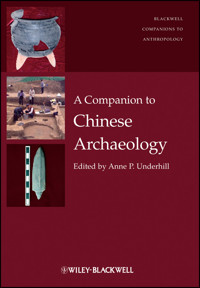
A Companion to Chinese Archaeology E-Book
159,99 €
Mehr erfahren.
- Herausgeber: John Wiley & Sons
- Kategorie: Geisteswissenschaft
- Serie: Blackwell Companions to Anthropology
- Sprache: Englisch
A Companion to Chinese Archaeology is an unprecedented, new resource on the current state of archaeological research in one of the world’s oldest civilizations. It presents a collection of readings from leading archaeologists in China and elsewhere that provide diverse interpretations about social and economic organization during the Neolithic period and early Bronze Age.
- An unprecedented collection of original contributions from international scholars and collaborative archaeological teams conducting research on the Chinese mainland and Taiwan
- Makes available for the first time in English the work of leading archaeologists in China
- Provides a comprehensive view of research in key geographic regions of China
- Offers diverse methodological and theoretical approaches to understanding China’s past, beginning with the era of established agricultural villages from c. 7000 B.C. through to the end of the Shang dynastic period in c. 1045 B.C.
Sie lesen das E-Book in den Legimi-Apps auf:
Seitenzahl: 1526
Veröffentlichungsjahr: 2013
Ähnliche




















Table of Contents
Series page
Title page
Copyright page
Dedication
List of Figures
Notes on Contributors
Notes on Translators and Other Assistants
Translators
Other Assistants
PART I: Current Issues in Chinese Archaeology
CHAPTER 1: Introduction: Investigating the Development and Nature of Complex Societies in Ancient China
CHAPTER 2: “Despoiled of the Garments of Her Civilization:” Problems and Progress in Archaeological Heritage Management in China
Early Looting and Efforts to Curtail the Practice
Early Legislative Efforts
Heritage Protection Legislation in the People’s Republic
International Collaboration to Curb Archaeological Looting
Other Threats to China’s Heritage
Conclusions
PART II: The Northeast
CHAPTER 3: Earlier Neolithic Economic and Social Systems of the Liao River Region, Northeast China
The Topographic and Ecological Setting
History of Research on the Earlier Neolithic Societies in Northeast China
Xinglongwa and Zhaobaogou Material Culture
Agriculture and its Origins in Northeast China
The Early Neolithic Societies of Northeast China in Comparative Perspective
CHAPTER 4: Understanding Hongshan Period Social Dynamics
Ceremonialism and Social Hierarchy
Settlements and Communities
Household Productive Differentiation
Understanding Hongshan Period Social Dynamics
Chronological Concerns
Future Research
Acknowledgments
CHAPTER 5: The Lower Xiajiadian Culture of the Western Liao River Drainage System
Different Kinds of Lower Xiajiadian Sites
Internal Settlement Organization of Hillside and Mound Sites
Site Distribution Patterns and Degree of Social Development
Evidence for Ritual Activities in Settlements
Assessment of Variation in Houses
Analysis of Burials
The Lower Xiajiadian Economic System
Conclusions
PART III: The Upper Yellow River and Upper Yangzi River Regions
CHAPTER 6: The Qijia Culture of the Upper Yellow River Valley
Settlements of the Qijia Culture
Graves of the Qijia Culture
The Economy of the Qijia Culture
Other Aspects of Qijia Spiritual Life
New Discoveries at Qijia Culture Sites
Conclusions
CHAPTER 7: The Sichuan Basin Neolithic
Introduction
Key Neolithic Sites in the Three Gorges Region
Middle Neolithic Sites around the Chengdu Plain
The Baodun Culture
Conclusions
Acknowledgments
CHAPTER 8: The Sanxingdui Culture of the Sichuan Basin
History of Research on the Sanxingdui Site and Culture
Main Characteristics of the Site of Sanxingdui and the Sanxingdui Culture
The Two Large Pits Found at Sanxingdui
What the Artifacts at Sanxingdui Reveal About the Society
The Shi’erqiao Period Site of Jinsha and Similarities to Sanxingdui
Conclusions
PART IV: The Western Central Plain Region and Environs
CHAPTER 9: The Early Neolithic in the Central Yellow River Valley, c.7000–4000 bc
The Early Period
The Middle Period
The Late Period
Conclusions
CHAPTER 10: The Jiahu Site in the Huai River Area
Environment and Subsistence
Settlement Organization
Evidence for Social Differentiation from Burials and Houses
Craft Production at Jiahu: Pottery Vessels, Stone Tools, and Bone Tools
Evidence for Population Movements in the Area
Evidence for Rituals
Other Important Discoveries at Jiahu
Conclusions
Acknowledgment
CHAPTER 11: The Later Neolithic Period in the Central Yellow River Valley Area, c.4000–3000 bc
The Heartland Miaodigou Area
Basic Features of the Miaodigou Type
Analysis of Miaodigou Social Complexity
Peripheral Areas in the Central Yellow River Valley
Changes After the Miaodigou Period
Conclusions
CHAPTER 12: The Longshan Culture in Central Henan Province, c.2600–1900 bc
Earlier Longshan (Miaodigou II) Culture Remains in Central Henan
Later Longshan (Wangwan III) Culture in Central Henan
Settlement Patterns of the Wangwan III Culture
Burial Patterns of the Wangwan III Culture
Agricultural and Craft Production in the Wangwan III Culture
Music, Art, and Religion in the Wangwan III Culture
Conclusions
CHAPTER 13: The Longshan Period Site of Taosi in Southern Shanxi Province
Regional Settlement Patterns
Internal Settlement Organization at Taosi
Cognitive Aspects of Taosi Culture
Conclusions
CHAPTER 14: Production of Ground Stone Tools at Taosi and Huizui: A Comparison
Introduction
Lithic Production at Taosi in the Linfen Basin
Lithic Production at Huizui in the Yiluo Basin
Conclusions
CHAPTER 15: The Erlitou Culture
The Rise of the Erlitou Culture
General Features of the Erlitou Site and Culture
Growth of the Capital
Features of the Core Area at Erlitou, the Walled Palace City
Unique and Complicated Techniques of Bronze Production
Information about Social Hierarchy from Burials
The Importance of Ritual to the State
The Impact of the Erlitou Culture
CHAPTER 16: The Discovery and Study of the Early Shang Culture
Refining the Chronology of the Early Shang Culture and the Geographic Distribution of Sites
Settlement Patterns of the Early Shang Period
Graves as Indicators of Social Hierarchy
Economic Organization During the Early Shang Period
Symbolic Communication During the Early Shang Period
Conclusions
CHAPTER 17: Recent Discoveries and Some Thoughts on Early Urbanization at Anyang
Brief History of Exploration in Anyang
Huanbei
Yinxu
Spatially Segregated Lineage-Based Cemeteries
Neighborhoods within the Great Shang Settlement
The Palace-Temple District
Simplification and Urbanization at Yinxu
Outlook for Future Work
Acknowledgments
CHAPTER 18: Archaeology of Shanxi During the Yinxu Period
Introduction
A Brief History of Archaeological Research in Shanxi
Archaeology of Shanxi During the Yinxu Period
Central Shanxi
Changzhi Basin
The Linfen Basin
Luliang Mountains
Shanxi as the Frontier of Contact and Interaction
The Anyang Centric Model in Chinese Bronze Age Archaeology
The Reason for Contact: Why was Shanxi Interested in Anyang and Vice Versa?
Acknowledgments
PART V: The Eastern Central Plain Region and Environs
CHAPTER 19: The Houli and Beixin Cultures
Subsistence Economy
Craft Production
Settlement Patterns and Social Organization
Analysis of Houli Burials
Search for Origins of the Houli Culture
The Beixin Culture
Beixin Subsistence Economy
Beixin Period Craft Production
Beixin Settlement Patterns and Social Organization
Beixin Social Customs and Beliefs
Conclusions
CHAPTER 20: The Dawenkou Culture in the Lower Yellow River and Huai River Basin Areas
Environment, Subsistence Economy, and Diet
Craft Production and Trade
Settlement Patterns and Social Organization
Social Customs and Ceremonial Activities
Evidence for Early Chinese Characters
Conclusions
CHAPTER 21: The Longshan Culture of Shandong
Introduction: Geography, Dating, and Environment
Research on the Longshan Period
Longshan Settlements in Different Regions of Shandong
The Yi River and Shu River Valleys
A Case Study of the Tonglin Site in Northern Shandong
Longshan Economic Activities
Social, Economic, and Political Organization at the Regional Level
Conclusions
CHAPTER 22: A Study of Lian Sickles and Dao Knives from the Longshan Culture Site of Liangchengzhen in Southeastern Shandong
Stone Tools from the Longshan Period
Methods and Data Collection
Replication Experiments
Discussion
Conclusions
Acknowledgments
CHAPTER 23: The Eastern Territories of the Shang and Western Zhou: Military Expansion and Cultural Assimilation
Archaeological and Historical Evidence for Shang Expansion to the East
Continued Shang Expansion to the East
Relations with the Eastern Yi
The Western Zhou Period in Shandong
Conclusions
PART VI: The Middle Yangzi River Region
CHAPTER 24: The Pengtoushan Culture in the Middle Yangzi River Valley
Regional Settlement Patterns
Subsistence Production
Internal Organization of Settlements
Craft Goods from Pengtoushan Culture Sites
Conclusions
CHAPTER 25: The Qujialing–Shijiahe Culture in the Middle Yangzi River Valley
Changes in Settlements
Identification of Settlement Clusters
The Functions of Moats and Walls
Variation in Internal Settlement Organization
Inferring Social Organization from Residential Remains
Subsistence and Craft Production
Ritual Activities in Residential Contexts at the Shijiahe Site Complex
Interpretations about Ritual and Social Hierarchy from Burials
The Nature of Social Organization during the Qujialing–Shijiahe Period
Conclusions
Acknowledgment
PART VII: The Lower Yangzi River Region
CHAPTER 26: The Kuahuqiao Site and Culture
Establishing the Antiquity of the Kuahuqiao Site and Culture
The Organization of Settlements
Economic Strategies
Variation in Site Function
Craft Goods from the Kuahuqiao Culture
Other Kinds of Artifacts
Special Contributions of the Kuahuqiao Culture
Art and Religious Beliefs
The Relationship of Environmental Change to the Development and Decline of the Kuahuqiao Culture
Conclusions
CHAPTER 27: Recent Research on the Hemudu Culture and the Tianluoshan Site
Significance of Remains from the Hemudu Culture
Remains from Different Periods at the Hemudu Site
Palaeoenvironment and Settlement
Subsistence Techniques
Other Artifacts
Social Organization
Recent Research at the Tianluoshan Site and its Relationship with the Hemudu Culture
Conclusions
CHAPTER 28: The Liangzhu Culture
A Brief History of the Discovery of Liangzhu
Basic Chronology and Geography of the Liangzhu Culture
Cemetery Evidence and Social Differentiation
Emergence of a Regional Center
Jades Production and Craft Specialization
Acknowledgments
PART VIII: The Southeast
CHAPTER 29: The Neolithic Archaeology of Southeast China
The Geographic Setting of Southeast China
The Prehistoric Sequence of Southeast China
The Neolithic Cultures in Southeast China
An Economic Perspective on the Prehistory of Southeast China
CHAPTER 30: First Farmers and Their Coastal Adaptation in Prehistoric Taiwan
Brief Review of Prehistoric Taiwan
Earliest Neolithic Culture in Taiwan
Theoretical Considerations on the Beginning of Agriculture in Prehistoric Taiwan
Rethinking the Beginning of Rice and Millet Cultivation in Prehistoric Taiwan
A Multifactor Explanation of the First Farmers in Prehistoric Taiwan
First Farmers and Their Coastal Adaptation
Terrestrial Hunting
A Scenario for Subsistence Settlement Patterns of Ancient Taiwan
Conclusions
Index
The Blackwell Companions to Anthropology offers a series of comprehensive syntheses of the traditional subdisciplines, primary subjects, and geographic areas of inquiry for the field. Taken together, the series represents both a contemporary survey of anthropology and a cutting edge guide to the emerging research and intellectual trends in the field as a whole.
Forthcoming
This edition first published 2013
© 2013 Blackwell Publishing Ltd
Blackwell Publishing was acquired by John Wiley & Sons in February 2007. Blackwell’s publishing program has been merged with Wiley’s global Scientific, Technical, and Medical business to form Wiley-Blackwell.
Registered Office
John Wiley & Sons Ltd, The Atrium, Southern Gate, Chichester, West Sussex, PO19 8SQ, UK
Editorial Offices
350 Main Street, Malden, MA 02148-5020, USA
9600 Garsington Road, Oxford, OX4 2DQ, UK
The Atrium, Southern Gate, Chichester, West Sussex, PO19 8SQ, UK
For details of our global editorial offices, for customer services, and for information about how to apply for permission to reuse the copyright material in this book please see our website at www.wiley.com/wiley-blackwell.
The right of Anne P. Underhill to be identified as the author of the editorial material in this work has been asserted in accordance with the UK Copyright, Designs and Patents Act 1988.
All rights reserved. No part of this publication may be reproduced, stored in a retrieval system, or transmitted, in any form or by any means, electronic, mechanical, photocopying, recording or otherwise, except as permitted by the UK Copyright, Designs and Patents Act 1988, without the prior permission of the publisher.
Wiley also publishes its books in a variety of electronic formats. Some content that appears in print may not be available in electronic books.
Designations used by companies to distinguish their products are often claimed as trademarks. All brand names and product names used in this book are trade names, service marks, trademarks or registered trademarks of their respective owners. The publisher is not associated with any product or vendor mentioned in this book. This publication is designed to provide accurate and authoritative information in regard to the subject matter covered. It is sold on the understanding that the publisher is not engaged in rendering professional services. If professional advice or other expert assistance is required, the services of a competent professional should be sought.
Library of Congress Cataloging-in-Publication Data
A companion to Chinese archaeology / edited by Anne P. Underhill.
p. cm.
Includes bibliographical references and index.
ISBN 978-1-4443-3529-3 (cloth)
1. China – Antiquities. 2. Excavations (Archaeology) – China. 3. Antiquities, Prehistoric – China. I. Underhill, Anne P.
DS715.C557 2013
931–dc23
2012036668
A catalogue record for this book is available from the British Library.
Cover images: Top: Ceramic ding tripod excavated from pit H31 at Liangchengzhen, Rizhao city district, Shandong, China (photo by Anne P. Underhill). Center: Excavation in progress at the Longshan period settlement of Liangchengzhen in 2001 (photo by Anne P. Underhill). Bottom: Type A1 slate point from trench T007 at Liangchengzhen (photo by Geoffrey Cunnar).
Cover design by Richard Boxall Design Associates.
To Richard Pearson, with gratitude
List of Figures
Notes on Contributors
CHEN Honghai陈洪海 is a professor of archaeology and president of the School of Cultural Heritage at Northwestern University, Xi’an city, Shaanxi province, China. His research focuses on late Neolithic and early Bronze Age sites in the upper Yellow river valley area of Qinghai and Gansu provinces.
CHEN Xingcan陈星灿 is senior fellow and deputy director of the Institute of Archaeology, Chinese Academy of Social Sciences, Beijing, and professor, department of archaeology, Graduate School, Chinese Academy of Social Sciences. His extensive research on the Neolithic and early Bronze in the central Yellow river valley includes issues such as state formation and analysis of settlements.
CUI Qilong崔启龙 is a MA student specializing in ancient technologies in the department of the archaeology and history of technology, University of Science and Technology, Hefei city, Anhui province, China.
Geoffrey CUNNAR柯杰夫 was awarded his PhD from Yale University and specializes in lithic technology. He has decades of field experience in the Rizhao area of Shandong province, Jiangxi province, and the western United States with Western Cultural Resource Management and other organizations.
FANG Hui方辉 is dean of the Institute for Cultural Heritage, professor in the department of archaeology, School of History and Culture, Shandong University, China, and director of the Shandong University Museum in Jinan city. He specializes in the early Bronze Age, regional survey, early textual data, and jade technology, and he has directed several fieldwork projects in Shandong province.
Rowan FLAD傅蘿文 is a professor of archaeology in the department of anthropology at Harvard University. His research is currently focused on the emergence and development of complex societies, production processes, ritual, and the roles of animals in early societies, particularly in the Sichuan basin and the Three Gorges area.
HE Nu何驽 is a research professor at the Institute of Archaeology, Chinese Academy of Social Sciences, Beijing. His research focuses on the origins of Chinese civilization, the organization of settlements, and cognitive archaeology. He has directed fieldwork at the Taosi site in Shanxi province since 2001.
HWANG Ming-chorng黄銘崇 is a researcher at the Institute of History and Philology, Academia Sinica, Taipei, Taiwan.
JIANG Leping蒋乐平 is a research professor at the Zhejiang Province Institute of Archaeology in Hangzhou city, Zhejiang province, China. He specializes in the early Neolithic cultures of Zhejiang and has directed numerous excavations.
Tianlong JIAO焦天龙 is chair of the department of anthropology at the Bishop Museum, Honolulu, Hawai’i. He specializes in archaeology of the prehistoric and historic periods of southeast China and adjacent areas in the Pacific. He has directed several fieldwork projects in China, including Fujian and Hunan provinces.
Zhichun JING荆志淳 is Canada Research Chair in Pacific Asia Archaeology in the department of anthropology, University of British Columbia, Vancouver, Canada. His primary areas of interest include Shang civilization, early urbanization, geoarchaeology, and archaeometry. He has conducted fieldwork at Anyang and Shangqiu in Henan province, China.
LI Kuang-ti李匡悌 is an associate research fellow at the Institute of History and Philology, Academia Sinica, Taipei, Taiwan. His research interests mainly focus on prehistoric settlement and subsistence patterns in Taiwan and surrounding areas using isotopic and zooarchaeological approaches. He is also interested in environmental archaeology and the relationship between diet and the strategy of food-resources procurement.
LI Xinwei李新伟 is a professor at the Institute of Archaeology, Chinese Academy of Social Sciences, Beijing, China. He obtained his doctorate from the archaeology program at La Trobe University, Australia and is currently director of the Zhudingyuan project focusing the development of Miaodigou culture societies in western Henan province.
LI Yung-ti李永迪 is a researcher at the Institute of History and Philology, Academia Sinica, Taipei, Taiwan. His research has focused on late Shang craft specialization and economic organization.
Li LIU刘莉 is a professor in the department of East Asian languages and cultures at Stanford University, Palo Alto, CA. Her research interests include state formation, settlement patterns, zooarchaeology, craft specialization, starch grain analysis, and zooarchaeology, and she has conducted extensive fieldwork in the Yi–Luo area of Henan province.
LU Xueming吕学明 is a professor of archaeology in the school of history at Renmin University, Beijing. His research interests include Neolithic and Bronze Age northeast China, the study of social complexity, regional settlement survey, and ceramics analysis. He has helped direct excavations at the Hongshan period ceremonial center of Niuheliang since 1993.
LUAN Fengshi栾丰实 is a professor in the department of archaeology in the Institute for Cultural Heritage, School of History and Culture, Shandong University, Jinan city, China. He has directed excavations at numerous late Neolithic settlements in Shandong province and has published extensively about late Neolithic social organization.
Robert E. MUROWCHICK慕容杰 teaches East and Southeast Asian archaeology in the department of archaeology at Boston University and is director of the International Center for East Asian Archaeology and Cultural History (ICEAACH). His primary research interests include the development of early Bronze Age societies in China (fieldwork at Shangqiu, Henan province), the development of nonferrous metallurgy, and international cultural heritage management.
PEI Anping裴安平 is a professor at Nanjing Normal University in the Institute of History and Culture, Nanjing city, Jiangsu province, China. His excavations in the central Yangzi river area have focused on early rice-farming villages.
Christian E. PETERSON柯睿思 is assistant professor of anthropology at the University of Hawai’i at Manoa. His research interests include Neolithic north and northeast China, the comparative study of early complex societies (“chiefdoms”), regional settlement patterns, household archaeology, and quantitative methods.
QIN Ling秦岭 is associate professor of Neolithic archaeology and archaeobotany at the School of Archaeology and Museology, Peking University, China. She has done extensive fieldwork and co-directed excavation projects in Zhejiang, Shandong, and Henan.
George RAPP芮朴 is Regents Professor Emeritus of Geoarchaeology at the University of Minnesota. He has conducted geoarchaeological investigations in several world areas, including Anyang and Shangqiu in Henan province.
Gideon SHELACH吉迪 is Louis Freiberg Professor of East Asian Studies at the Hebrew University, Jerusalem, Israel. He is the current chair of the Louis Freiberg Center for East Asian Studies at Hebrew University and he has been engaged in archaeological research in the Chifeng area of northeast China since 1994.
James STOLTMAN司杰慕 is Professor Emeritus of Anthropology at the University of Wisconsin-Madison. His research interests include petrographic ceramic thin-section analysis and environmental archaeology in both China and North America.
SUN Bo孙波 is a researcher and deputy director at the Shandong Provincial Institute of Archaeology in Jinan city, China, specializing in the Neolithic period in Shandong.
SUN Guoping孙国平 is a research professor at the Zhejiang Provincial Institute of Archaeology in Hangzhou city, China. He has directed several excavations in the lower Yangzi river valley, focusing on subsistence economies.
SUN Hua孙华 is a professor in the department of archaeology and museology at Peking University, China, specializing in Neolithic and early Bronze Age cultures of southwestern China.
TANG Jigen唐际根 is a research fellow at the Institute of Archaeology, Chinese Academy of Social Sciences, Beijing. He has directed excavations at Yinxu (Anyang) since 1994. His research interests include Shang archaeology, mortuary analysis, public archaeology, and cultural heritage management.
TENG Mingyu滕铭予 is a professor at the Center for Frontier Archaeology at Jilin University, Changchun city, Jilin province, China. Her research addresses the formation and development of the Qin state in northwest China, the application of GIS methods in archaeology, and environmental archaeology.
Anne P. UNDERHILL文德安 is a professor of anthropology at Yale University and curator at Yale’s Peabody Museum; her collaborative research team since 1995 with Shandong University has focused on late Neolithic and early Bronze Age sites in southeastern Shandong province. Her other research interests include craft specialization and ceramic ethnoarchaeology.
WANG Fen王芬 is an associate professor in the department of archaeology, School of History and Culture, Shandong University, Jinan city, China, specializing in the Neolithic period of the Haidai (eastern seaboard) area of China, pottery analysis, and early Neolithic settlements.
WANG Lixin王立新 is research director of the Center for Frontier Archaeology at Jilin University, Changchun city, Jilin province, China. His extensive research has focused on changes in subsistence and settlement from the late Neolithic to the early Bronze Age in northeast China.
XU Hong许宏 is a professor and director of the Xia, Shang, and Zhou archaeological research department at the Institute of Archaeology, Chinese Academy of Social Sciences, Beijing. He also is director of the Erlitou archaeological research team.
YUAN Guangkuo袁广阔 is a professor of archaeology and chair of the archaeology department at Capital Normal University in Beijing, China. His research focuses on state formation and the origins of Chinese civilization. He has directed several excavations at Neolithic and early Bronze Age sites in northern China.
ZHAI Shaodong翟少冬 obtained her PhD from LaTrobe University in Australia and is currently a researcher at the Institute of Archaeology, Chinese Academy of Social Sciences, Beijing. She specializes in lithic production, political economy, and early urbanism.
ZHANG Chi张弛 is a professor in the department of archaeology and museology at Peking University, China, specializing in Neolithic cultures of the middle Yangzi river area and southeast China.
ZHANG Juzhong张居中 is a professor of archaeology in the University of Science and Technology in Hefei city, Anhui province, China, and curator at the University Museum. His numerous publications focus on topics regarding early Neolithic cultures and environmental archaeology.
ZHAO Chunqing赵春青 is a research professor at the Institute of Archaeology, Chinese Academy of Social Sciences, Beijing. He specializes in the archaeology of the Neolithic period and early Bronze Age in Henan province and adjacent areas in northern China.
ZHU Yanping朱延平 is a research professor at the Institute of Archaeology, Chinese Academy of Social Sciences, Beijing. He has conducted fieldwork in several regions of northern China and specializes in the early Neolithic period.
Notes on Translators and Other Assistants
Translators
Jade d’ALPOIM GUEDES玳玉 (Chapters 8 and 19) is a doctoral student and paleoethnobotanist in the department of anthropology, Harvard University, focusing on southwest China.
Katherine BRUNSON博凯龄 (Chapter 13) is a doctoral student in the department of anthropology, University of California-Los Angeles, focusing on zooarchaeology and the late Neolithic period.
Richard EHRICH李查得 (Chapter 13) holds an MA in prehistoric archaeology and sinology from the Free University of Berlin, Germany, and then worked at the Eurasian department of the German Archaeological Institute. His projected doctoral research at the University of California-Los Angeles focuses on the prehistory of Sichuan.
FANG Kunyang方堃杨 (Chapter 23) is currently finishing her MA in archaeological studies at Yale University.
GUO Mingjian郭明建 (Chapter 20) is an archaeologist at the National Museum of China in Beijing, specializing in the Neolithic period.
GUO Yanlong郭彦龙 (Chapter 25) is a doctoral student in the department of art history, visual art, and theory, University of British Columbia, Vancouver, Canada, focusing on the Han dynasty.
Anke HEIN安可 (Chapters 6 and 25) is studying for a PhD at the Cotsen Institute of Archaeology, University of California-Los Angeles, focusing on cultural contact, ethnic identity, and human–environment interaction in southwest China.
LANG Jianfeng朗剑锋 (Chapter 15) is an assistant professor in the department of archaeology, School of History and Culture, Shandong University, China, specializing in the early Bronze Age.
LIN Hu林鹄 (Chapter 26) is an assistant professor in the department of history, Chinese Academy of Social Sciences, Beijing, specializing in the archaeology of the medieval period nomadic empires of China.
LIU Siran刘思然 (Chapter 16) is a doctoral student in the Institute of Archaeology, University College London, specializing in archaeometallurgy.
Pauline SEBILLAUD史宝琳 (Chapter 5) is a PhD candidate in Chinese archaeology, studying in cooperation with the Ecole Pratique des Hautes Etudes (EPHE) in Paris and Jilin University in Changchun, China, focusing on late Neolithic to early Bronze Age settlement patterns and architectural techniques.
YANG Qian楊謙 (Chapter 21) is a doctoral student at Shandong University focusing on the early Bronze Age.
YEN Ling-Da閻玲達 (Chapter 10) is a doctoral student in the department of anthropology, University of Hawai’i, focusing on the archaeology and zooarchaeology of southeastern China and Taiwan.
Meng YING应萌 (Chapter 24) is an archaeologist with Golder Associates Ltd. in British Columbia, specializing in cultural resource management as well as the early Bronze Age of China.
ZHANG Wenjie张闻捷 (Chapter 12) is an assistant professor at Xiamen University, Fujian province, China, focusing on bronze ritual vessels from the Zhou period.
ZHANG Ying张颖 (Chapter 27) is a doctoral student in archaeology at University College London, specializing in zooarchaeology.
ZHUANG Yijie庄奕杰 (Chapter 9) gained a PhD from Cambridge University, UK and has begun a postdoctoral fellowship at Oxford University focusing on geoscience and analysis of early Neolithic landscapes.
Other Assistants
CHEN Xuexiang陈雪香 is an associate professor in the department of archaeology, School of History and Culture, Shandong University, China, specializing in paleoethnobotany.
Andrea FEUER白小安, a graduate of Yale, plans to use her Chinese language skills as she pursues a career in law. Her passion for Chinese culture stems from being raised in Shanghai.
HUI Xiping惠夕平 is an assistant professor in the department of archaeology, School of History, Zhengzhou University, China, specializing in the late Neolithic period and early Bronze Age.
LIN Minghao林明昊 is a doctoral student in the department of archaeology, Cambridge University, UK, focusing on zooarchaeology.
Jason NESBITT specializes in the archaeology of Peru and is an assistant professor in the department of anthropology, Tulane University, New Orleans.
SONG Yanbo宋艳波 is an assistant professor in the department of archaeology, School of History and Culture, Shandong University, China, specializing in zooarchaeology.
Steve VICTOR is an avocational archaeologist who lives in New Haven, CT, and has field experience in several areas of the world.
WANG Jinping王錦萍 is a Mellon postdoctoral teaching fellow at the department of East Asian languages and civilizations, University of Pennsylvania.
WANG Shifeng王世峰 grew up in Liangchengzhen, Shandong province, China, where he assisted in many aspects (especially mapping and lithics analysis with Geoffrey Cunnar) of the collaborative excavation project directed by Shandong University.
Daniela WOLIN李丹妮 is a doctoral student in the anthropology department at Yale University, focusing on the archaeology of China, with special interests in bioarchaeology and the early Bronze Age.
Andrew WOMACK吴浩森 is a doctoral student in the anthropology department at Yale University, focusing on the archaeology of China with special interests in ceramic production and central China.
Ingrid YEUNG杨悦庭 is a doctoral student in the history of art department at Yale University, specializing in Bronze Age China.
PART I
Current Issues in Chinese Archaeology
CHAPTER 1
Introduction: Investigating the Development and Nature of Complex Societies in Ancient China
Anne P. UNDERHILL 文德安
There are two main goals of this book. One goal is to reveal the diverse methodological and theoretical approaches to understanding prehistoric and early historic era societies that characterize current research efforts in Chinese archaeology. The authors discuss geographical areas that later became part of the People’s Republic of China (PRC) and the Republic of China (ROC) (Figure 1.1). They are major scholars in the field of Chinese archaeology from diverse areas of the globe, including members of collaborative Sino-foreign research teams. The important contributions of some of the authors from mainland China are published in English for the first time. Chinese archaeology is a thriving field with scholars continuing to develop diverse methods of fieldwork and interpretation. The chapters demonstrate a variety of thoughtful approaches to investigating the past. No single theoretical or methodological approach characterizes current research about ancient China.
Figure 1.1 Modern political areas and geographic areas (shaded) referred to in consecutive sections of this book.
(Figure by Pauline Sebillaud and Andrew Womack.)
The second major goal is to provide English readers with new data about ancient China that are significant for understanding regional variation in social, economic, and political organization over time. The chapters offer diverse interpretations about the organization of individual settlements and regions, involving a range from small-scale, sedentary societies, to polities including several settlements. I believe that the archaeological record of East Asia is extremely important for global comparative research on the development and nature of ancient complex societies. The chapters in this book show that it is essential to consider the archaeological record for many regions of China, not just the Central Plain area of the Yellow river valley where the earliest undisputed states and writing systems developed. Furthermore, the chapters reveal significant regional diversity in the trajectories of change and in the nature of the societies that developed. After explaining my decisions about the subject matter and organization of the book, I offer some suggestions for future avenues of research on different kinds of social relations in the past.
The chapters in this book are organized by sections centered on major geographic areas rather than by groupings using the terms “Neolithic period” and “early Bronze Age” as in most other publications about Chinese archaeology. These terms are overly simplistic as chronological indicators, since in some areas such as the Southeast, relatively small-scale societies flourished for millennia after the emergence of early states and the onset of bronze production (tools, ornaments, and/or vessels) further north (Figure 1.2). These terms also mask significant regional variation with respect to social, economic, and political organization over time, often leading to assumptions about homogeneity in social, political, and economic organization.
Figure 1.2 Time line of cultures discussed in this book.
(Figure by Andrew Womack.)
My priority is to illustrate a range of research on prehistoric and early historic era societies (c.7000–1000 bc), rather than attempting to cover briefly several eras over a very long time span. It is not possible, therefore, to include chapters about important issues such as the origins of agriculture during the early Holocene, or chapters emphasizing eras after the late Shang period – the first period with an undisputed, fully developed writing system. For each geographic area covered, the chapters provide interpretations about social relations at various spatial scales on the basis of archaeological remains for more than one era. They make it clear that complex societies of varying forms developed in several regions and during several periods. There are discussions about relatively early, small-scale societies and about large-scale societies, variously defined, for each major geographic area.
It is a challenge to group the contents of the chapters into meaningful geographic areas. The main point to emphasize is that they are macro-regions. Each one contains smaller physiographic regions that deserve intensive study in their own right (Figure 1.1). In each section, some chapters refer to large geographic areas, while others discuss smaller areas. The organization of the book enables readers to trace trajectories of social change from chapter to chapter and to observe diverse approaches to archaeological research within each macro-region. The following major geographic areas are included: the Northeast, the Upper Yellow River and Upper Yangzi River regions, Western Central Plain region and environs, Eastern Central Plain region and environs, the Middle Yangzi River region, the Lower Yangzi River region, and the Southeast. A single book can only take initial steps in portraying the regional variation in social, economic, and political organization that developed in the areas currently comprising mainland China and Taiwan. I hope to see future books discussing in more detail the large, diverse regions that are included in this volume. Other volumes also are needed for different regions in the Southwest and Northwest that could not be covered here, including modern Yunnan, Tibet, and Xinjiang. My decision was to focus on regions that had been more extensively introduced in the English literature, so readers could recognize the significance of the current research efforts. It was not possible to include chapters on all of the fine research being done in the selected regions, either.
Key themes in the chapters include investigation of internal settlement organization, household subsistence production, regional settlement patterns, the nature of early urbanism, craft specialization, political economy, and the ideological basis of social hierarchy. Given the relatively abundant English-language publications about burials from different regions of mainland China in particular, I asked the authors to focus on residential remains whenever feasible. While the chapters reveal significant diversity in the development and nature of early complex societies, they also illustrate general patterns that characterize more than one geographic region such as increase in interaction among communities, development of settlement hierarchies, increase in nucleation of population at single settlements, and increase in degree of social inequality over time. The investigators share many research goals with archaeologists who work in other areas of the world. In addition, as everywhere with professional archaeologists, there are debates about interpretation of remains. At the same time the rich descriptive data provided by authors make it possible for readers to consider their own interpretations.
The chapters focusing on relatively small-scale societies raise issues that are relevant to analysis of many other archaeological sites and regions. For example, what constitutes the community? How can we interpret spatial groups of houses within a settlement? How can we relate these spatial groups to different kinds of social groups that may have existed? Or, what might these spatial groups indicate about the nature of economic organization? At a larger scale, how can we interpret clusters of settlements within a relatively small region? Some scholars make an effort to address these issues by considering the nature of social groups formed on the basis of kinship. Other chapters that discuss larger-scale societies also argue that analysis of kinship relations continued to be very important for the organization of early complex societies. Similarly, some authors emphasize social inequality with respect to social groups, in addition to that for individuals. The tendency in the North American archaeological literature is to focus on the rise of particular kinds of individual leaders and their strategies to increase personal power. Archaeological research in China shows that it is also important to consider agency from the perspective of social groups. In addition, the chapters discuss an often neglected dimension of research on the development of complex societies: change in the degree and nature of social integration at the site and regional levels. For example, some chapters refer to increased cooperation among members of kin groups with respect to economic and ritual affairs. Despite the challenges, the goal of understanding intra-group relations at varying social and spatial scales is essential. It often is assumed that social hierarchy was a key organizing principle, but we also should consider how cooperative relations played a role in social, economic, and political life.
A key issue for authors who write about relatively large-scale societies is the development and nature of urbanism. The chapters reveal fascinating variation in the nature of settlements identified as cities with respect to scale, layout, and organization. In some regions, there is a relatively dispersed pattern of urbanism, while others have sites in a more nucleated pattern. Some of the recently investigated urban areas are enormous in scale. The chapters show that data from several regions of China need to be considered as archaeologists seek to compare and understand the nature and functions of areas that comprise urban centers. For these discussions it is not sufficient to include only sites from areas of the Central Plain in modern Henan province where the Erlitou and Shang states developed. Differences in the degree and nature of settlement nucleation and settlement layout (involving, for example, varying numbers of rammed-earth walls and ditches, with habitation remains in areas beyond the walls as well as within them), need to be explained. These differences are indicative of variation in the processes involved in the establishment and operation of the urban settlements. Some urban centers were built upon earlier settlements, while others were newly established. Research also is providing important new data about subsistence and craft production in urban centers in comparison to the smaller communities around them. It is clear that economic data at the regional level are important for understanding early urbanism in China.
The chapters provide much food for thought about the challenging task of explaining how and why different kinds of social changes took place in various regions of what later became the PRC and ROC. They illustrate a thoughtful process by which scholars continue to evaluate approaches to interpreting the past. Many authors aim to identify major differences in social, economic, and/or political organization from one phase to another. Some authors emphasize an ecological approach to spurring social and economic change, while others emphasize the importance of technological change, or the importance of control over the production, distribution and or use of highly valued goods. Some scholars draw analogies about social organization on the basis of observations regarding cultural traditions during various historical eras. A major concern for every author is the protection of cultural heritage in China, which is the topic of the second chapter in the introductory section of this book.
The chapters in this Companion illustrate the importance of explaining the nature of each form of regional organization that developed during the later prehistoric and early historic eras, rather than focusing on the application of labels such as “state” or “chiefdom.” It is clear that diverse complex societies developed in a number of regions of China. There are several challenges ahead for archaeologists who research this issue, too. One will be to refine the chronology of large, individual sites in order to understand phases of expansion and contraction of settlement areas over time. This will make it possible to refine arguments about social and economic organization at the site and regional levels. Another challenge will be more study of individual regions by means of systematic, regional surveys for information about changes in settlement patterns over time. Research at the regional level also will benefit from more excavation at sites involving similar methods of data collection, including screening and flotation. This will facilitate an understanding of the nature of social relations among communities over time.
I hope that the impressive work of the scholars in this volume inspires more research on social change in different regions of China. The following suggestions are aimed to facilitate this research and to provide greater understanding of the growing data from China about the development and nature of early complex societies. Every year there are striking technological innovations that aid archaeological research, but in my view some basic methodological issues with respect to the research process are equally important for all of us to keep in mind.
We should aim to include explicit statements about the goals of research and how particular kinds of data were collected in order to address specific research questions. There should be more explicit explanations about the methods of analysis that were used to reach particular conclusions. This includes the challenge of explaining how different patterns of material remains may be indicative of particular kinds of social relations. We need to consider alternative explanations for the patterns we see in our data. Explanations about research designs and the supporting evidence to arrive at particular conclusions will help resolve debates. We should think creatively about how different characteristics of features and artifacts may be significant. This should include objective assessments of function and different aspects of stylistic variation. Investigations of production methods, exchange of objects, and consumption patterns, for example, need to include arguments about how particular patterns of material culture would support a given interpretation.
With respect to the issue of economic organization at the local and regional levels, we will benefit from more research on organization involving household strategies and cooperative relations in addition to variation in developing political economies. Another intriguing issue is changing ritual relations among households and communities, in conjunction with related systems of craft production. Explicit statements about research designs, methods of analysis, and interpretations are needed here, too. More sharing of archaeological information about specific research topics through translated publications and international conferences with focused goals, will facilitate discussion and awareness of key methodological issues that are relevant to more than one world area. More translation of archaeological research results from different world areas into Chinese and English would be beneficial as well.
Explaining how and why particular kinds of social change occurred is challenging. The diversity of social formations in different regions requires that we think creatively and expect variation in casual factors of change. More focus on agency from different points of view would be useful, including the perspective of the average household. Here again we need to think about how to collect the kinds of data that would provide evidence for particular processes of change regarding both vertical and horizontal social relations. In addition to research about processes involved in an increase in degree of social inequality, we also need to investigate potential causes of greater social integration in a region, such as increased interregional exchange. Other issues that should be explored in greater depth involve ethnicity and different types of inter-group relations. For example, changes in artifact styles or food ways might be related to changing concepts of ethnicity and/or social cohesion. Studies of interactions involving people from large-scale polities with those in smaller polities should consider the perspectives and social strategies of a range of participants.
In order to address these challenging issues, we should refine our methods of using comparative ethnographic and historic data from different areas of Asia to facilitate archaeological interpretation. More information on relatively small-scale, traditional societies in China and neighboring areas, past and present, would be helpful for linking different aspects of material culture to various types of social relations. This will assist us in developing methods to investigate issues such as the organization of household labor in different ecological zones, production and distribution of different kinds of craft goods, the nature of household ritual practices, and ideological bases of social hierarchy. We will benefit from more communication among archaeologists, historians, and ethnologists beyond modern political borders in different areas of Asia. There is only limited information published in English about the rich cultural diversity during the historic era for the regions covered in this book. At the same time, there seems to be growing interest among archaeologists in Asia for more comparative ethnographic data from other world areas. A more fundamental issue is that we require sufficient discussion about the methods we use to draw analogies from ethnographic accounts to aid in archaeological interpretation.
More communication is also needed among archaeologists and historians about the nature, dating, and interpretation of passages derived from the diverse textual data available from more than one period of Chinese history. The textual data are understandably regarded by more than one author in this book as a source of potential information about earlier eras. Given the insufficient understanding of these diverse textual data among English readers and my own deficiencies with respect to this complex subject, I asked Jinping Wang, an historian of China whom I met at Yale, to help me present passages from various early historical texts consistently, and to provide readers with current information about the approximate dates of these passages. Her additions are presented in the notes to each chapter with the code “[JW].” I also am grateful to Fang Hui for his assistance in understanding these texts and the oracle bone inscriptions from the late Shang dynasty.
It has been a tremendous privilege to make available the work of the scholars represented here, and I am grateful for their enthusiasm to participate in this book project. The completion of this book would not have been possible without a virtual international army of talented graduate students and young scholars specializing in the archaeology of China who spent countless hours translating into English the many chapters that were submitted in Chinese. Other chapters represent some of the results of the many Sino-foreign collaborative fieldwork projects that have taken place in mainland China since the mid-1990s.
This book uses the accepted methods for the romanization of terms according to the locations in which authors work: Pinyin for terms regarding mainland China, and Wade-Giles for Taiwan. Surnames for scholars working in these areas are placed before personal names. At their request, the names of scholars born in mainland China who work in North America and regularly publish in English are presented in the traditional English order. In order to avoid confusion, on the first page of each chapter, in the Contents list, and in the Notes on Contributors and Notes on Translators and Other Assistants, all surnames are placed in CAPS (even English names, for the convenience of the growing number of archaeologists in China who read English). Since all foreign-born scholars doing collaborative fieldwork in mainland China also publish in Chinese, their names in Chinese are included. I hope these editorial decisions help the increasingly linguistically sophisticated younger generation of scholars in all areas of the globe who wish to keep up with the literature in both Chinese and English.
Editing the translated chapters required a balancing act: of preserving the original tone while also presenting the important content in a way that would be meaningful to readers of English who are most familiar with the North American archaeological tradition. It was frequently essential to rephrase the raw translated English and to consolidate discussions about particular issues. Regrettably in some cases the submitted chapters were too long for the space allotted to them, and I chose the content that I judged was the most significant. The editing of these chapters was a long process that involved many communications with translators, authors, and other bilingual volunteers (please see the Notes on Translators and Other Assistants for a list of the many people who made the completion of this book possible). Another dedicated group of individuals read the translated chapters at different stages, offering invaluable suggestions about edits to improve clarity. These volunteers also made helpful suggestions for chapters submitted in English. Any errors are my sole responsibility.
For all chapters, I have standardized figures for site size into hectares (ha) and square meters (sq m), allowing comparison from one site to another and comparison to figures presented in other English-language publications about ancient China. I am very grateful to Wiley-Blackwell for the ability to provide Chinese characters (at the first instance of use) for key sites, types of remains, and concepts; and references. I attempted to provide consistent translations for terms, but no doubt readers will note some differences within this book and with other publications.
After consultation with some of the authors, for convenience of the readers, and to save space, given the already considerable length of the book, I decided to shorten the long names of institutions in the text that often are listed as authors and editors in Chinese language publications. Abbreviations in pinyin, the most common Romanization system for Chinese characters, are provided for institutional names. The proper full names in Chinese are provided in the reference section for each chapter. An effort also was made to provide Latin names for species of plants and animals. Figure 1.3 illustrates generic forms of vessels that are commonly referred to in chapters. In addition, throughout the book I inserted “Editor’s notes” in brackets (followed by “[Ed.]”) when I felt that it was necessary to provide additional explanation for particular terms. I also inserted chapter numbers to refer readers to other chapters in this Companion where they will find additional relevant information.
Figure 1.3 Common generic vessel forms (and assumptions about function). Key: 1, ding鼎 tripod; 2, guan罐 jar; 3, hu壶 necked jar; 4, wan碗 bowl; 5, yan甗 tripod steamer; 6, gu觚 beaker; 7, li鬲 tripod; 8, he盉 pitcher; 9, gui簋 food pedestalled dish; 10, dou豆 stemmed dish; 11, gui鬶 tripod; 12, pen盆 basin; 13, weng瓮 urn; 14, gang缸 vat; 15, fu釜 cauldron; 16, bei杯 cup; 17, jue爵 tripod.
(Figure by Andrew Womack.)
Another editorial decision was to provide equivalent ranges of dates in chapters to facilitate comparison of archaeological remains across space and time. This was another challenge, given debates about dating and the fact many Neolithic specialists present dates in years bp while Bronze Age specialists usually present dates in years bc. The dates in each chapter are as the authors presented them, but equivalent dates in years bc (calculated using the archaeological standard, 1950, for the present) are provided within parentheses when deemed useful. To avoid confusion I felt it was necessary to provide relatively consistent date ranges for each era discussed in the book. In the cases where there were diverging opinions, I attempted to present ranges of dates that would be acceptable to most scholars. Readers should consult the particular literature for each region and era to obtain more detailed information about the radiocarbon dates available and the specific debates that exist. The field will benefit from more radiocarbon dates from all regions.
I wish I could adequately thank each of the numerous individuals, in addition to the authors, who made this book possible. The talented translators and other bilingual assistants are well on their way to productive careers of their own in archaeology. A huge, special thanks is due to the following individuals who helped with a variety of tasks, including assistance with resolving questions about content, editing text, editing figures, and communication with authors: Guo Mingjian, Robert Murowchick, Lin Hu, Lin Minghao, Jason Nesbitt, Pauline Sebillaud, Steve Victor, Daniela Wolin, Andrew Womack, and Ingrid Yeung. I am very grateful to Jinping Wang for her invaluable assistance with the references to early historical Chinese texts. I also thank the following scholars for their advice about proper terms (Chinese, English, Latin) for plants and animals: Jade d’Alpoim Guedes, Chen Xuexiang, and Song Yanbo. My discussions with Zhichun Jing and Rowan Flad were particularly helpful in making a decision about the organization of chapters. I am grateful to Zhichun Jing also for his insightful comments about a draft of this introductory chapter. I thank my Shandong University colleagues Fang Hui and Luan Fengshi for advice about more than one aspect of this book. I will be eternally grateful to Rosalie Robertson and Julia Kirk at Wiley Blackwell for their belief that the long wait for my work to be completed would be worth it. Janey Fisher skillfully dealt with a variety of challenging issues during the copy-editing process. Last but not least, I thank all of the authors for their patience with my numerous questions and requests for clarification. I am glad that readers can now see the results of your important research.




