


A Companion to Chinese Art E-Book
42,99 €
Mehr erfahren.
- Herausgeber: John Wiley & Sons
- Kategorie: Geisteswissenschaft
- Serie: Blackwell Companions to Art History
- Sprache: Englisch
Exploring the history of art in China from its earliest incarnations to the present day, this comprehensive volume includes two dozen newly-commissioned essays spanning the theories, genres, and media central to Chinese art and theory throughout its history.
- Provides an exceptional collection of essays promoting a comparative understanding of China’s long record of cultural production
- Brings together an international team of scholars from East and West, whose contributions range from an overview of pre-modern theory, to those exploring calligraphy, fine painting, sculpture, accessories, and more
- Articulates the direction in which the field of Chinese art history is moving, as well as providing a roadmap for historians interested in comparative study or theory
- Proposes new and revisionist interpretations of the literati tradition, which has long been an important staple of Chinese art history
- Offers a rich insight into China’s social and political institutions, religious and cultural practices, and intellectual traditions, alongside Chinese art history, theory, and criticism
Sie lesen das E-Book in den Legimi-Apps auf:
Seitenzahl: 1383
Veröffentlichungsjahr: 2015
Ähnliche




















WILEY BLACKWELL COMPANIONS TO ART HISTORY
These invigorating reference volumes chart the influence of key ideas, discourses, and theories on art, and the way that it is taught, thought of, and talked about throughout the English-speaking world. Each volume brings together a team of respected international scholars to debate the state of research within traditional subfields of art history as well as in more innovative, thematic configurations. Representing the best of the scholarship governing the field and pointing toward future trends and across disciplines, the Blackwell Companions to Art History series provides a magisterial, state-of-the-art synthesis of art history.
A Companion to Contemporary Art since 1945
edited by Amelia Jones
A Companion to Medieval Art
edited by Conrad Rudolph
A Companion to Asian Art and Architecture
edited by Rebecca M. Brown and Deborah S. Hutton
A Companion to Renaissance and Baroque Art
edited by Babette Bohn and James M. Saslow
A Companion to British Art: 1600 to the Present
edited by Dana Arnold and David Peters Corbett
A Companion to Modern African Art
edited by Gitti Salami and Monica Blackmun Visonà
A Companion to American Art
edited by John Davis, Jennifer A. Greenhill and Jason D. LaFountain
A Companion to Chinese Art
edited by Martin J. Powers and Katherine R. Tsiang
A Companion to Chinese Art
Edited by
Martin J. Powers and Katherine R. Tsiang
This edition first published 2016 © 2016 John Wiley & Sons, Inc.
Registered OfficeJohn Wiley & Sons Ltd, The Atrium, Southern Gate, Chichester, West Sussex, PO19 8SQ, UK
Editorial Offices350 Main Street, Malden, MA 02148-5020, USA 9600 Garsington Road, Oxford, OX4 2DQ, UK The Atrium, Southern Gate, Chichester, West Sussex, PO19 8SQ, UK
For details of our global editorial offices, for customer services, and for information about how to apply for permission to reuse the copyright material in this book please see our website at www.wiley.com/wiley-blackwell.
The right of Martin J. Powers & Katherine R. Tsiang to be identified as the editors of the material in this work has been asserted in accordance with the UK Copyright, Designs and Patents Act 1988.
All rights reserved. No part of this publication may be reproduced, stored in a retrieval system, or transmitted, in any form or by any means, electronic, mechanical, photocopying, recording or otherwise, except as permitted by the UK Copyright, Designs and Patents Act 1988, without the prior permission of the publisher.
Wiley also publishes its books in a variety of electronic formats. Some content that appears in print may not be available in electronic books.
Designations used by companies to distinguish their products are often claimed as trademarks. All brand names and product names used in this book are trade names, service marks, trademarks or registered trademarks of their respective owners. The publisher is not associated with any product or vendor mentioned in this book.
Limit of Liability/Disclaimer of Warranty: While the publisher and authors have used their best efforts in preparing this book, they make no representations or warranties with respect to the accuracy or completeness of the contents of this book and specifically disclaim any implied warranties of merchantability or fitness for a particular purpose. It is sold on the understanding that the publisher is not engaged in rendering professional services and neither the publisher nor the author shall be liable for damages arising herefrom. If professional advice or other expert assistance is required, the services of a competent professional should be sought.
Library of Congress Cataloging-in-Publication Data
A companion to Chinese art / Edited by Martin J. Powers & Katherine R. Tsiang. pages cm Includes bibliographical references and index. ISBN 978-1-4443-3913-0 (cloth)
1. Art, Chinese. I. Powers, Martin Joseph, 1949- editor. II. Tsiang, Katherine R., editor. N7340.C635 2015 709.51–dc23
2015015813
A catalogue record for this book is available from the British Library.
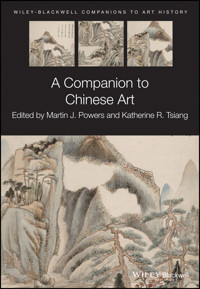
Cover image: Dong Qichang, Landscape after a Poem by Du Fu, “The Rock Cliff Reveals, After the Clouds Passing by, its Face of Brocade and Embroidery”, series Landscapes in the Manner of Old Masters, 1621–25, Ming dynasty, album leaf, ink, and color on paper, 55.9 × 34.9 cm. The Nelson-Atkins Museum of Art, Kansas City, Missouri. Purchase: acquired through the generosity of the Hall Family Foundations and the exchange of other Trust properties, 86–3/7. Photo Jamison Miller.
To our mothers.
CONTENTS
Notes on Contributors
Introduction
Historiographic Perspective
Overview of the Chapters
Note
References
Part I: Production and Distribution
Chapter 1: Court Painting
The Artistic Success of Song Court Painting
The Political Context of Court Paintings
Remaining Issues
Further Exploration
Chinese Terms
References
Further Reading
Chapter 2: The Culture of Art Collecting in Imperial China
Introduction
The Formation and Geographical Distribution of Private Art Collections
Demography
The Issue of
Ya
versus
Su
Connoisseurship and Connoisseurs
Art Collection Catalogs
Art Market, Art Dealers, Art Prices, Forgeries, and Related Phenomena
Conclusion
Chinese Terms
Notes
References
Chapter 3: Art, Print, and Cultural Discourse in Early Modern China
Invention and Innovation
Books and Social Climbing
Painting Albums and Manuals
The Cultural Matrix of Early Modern China
Chinese Terms
References
Chapter 4: Art and Early Chinese Archaeological Materials
Highlights of the Development of Early Tombs and Associated Studies
Archaeological and Theoretical Readings
Chinese Terms
References
Further Reading
Part II: Representation and Reality
Chapter 5: Figure Painting: Fragments of the Precious Mirror
Lessons from the
Admonitions
Scoping the Genre
The Body
Why Ink Outline?
Conclusion: Reflections on the Narratives of Figure Painting
Chinese Terms
Notes
References
Chapter 6: The Language of Portraiture in China
Introduction
Historical Development and the Emergence of Types
Critical Issues in the Art of Chinese Portraiture
Terminology and Typology
Acknowledgments
Chinese Terms
Notes
References
Further Reading
Chapter 7: Visualizing the Divine in Medieval China
Introduction
Figures of Divine Presence
Sacred Spaces and Divine Cosmologies
Landscape as Sacred Geography
Conclusion
Chinese Terms
Notes
References
Further Reading
Chapter 8: Landscape
Bibliographical Note
Chinese Terms
Notes
References
Chapter 9: Concepts of Architectural Space in Historical Chinese Thought
Chinese Terms
Notes
References
Further Reading
Chapter 10: Time in Early Chinese Art
Why Time in Chinese Art?
Mechanism of Cyclical Time
Art as Manipulation of Time
Time and Alchemy
Reconciling Cyclicality and Linearity
Chinese Terms
Notes
References
Further Reading
Part III: Theories and Terms
Chapter 11: The Art of “Ritual Artifacts” (
Liqi
): Discourse and Practice
Eastern Zhou Discourse on
Liqi
The Age of
Liqi
The Legacy of Ritual Artifacts
Chinese Terms
Notes
References
Further Reading
Chapter 12: Classification, Canon, and Genre
Introduction
Key Terms
Canons and Canonicity
Genre, Theory, and History
Chinese Terms
References
Further Reading
Chapter 13: Conceptual and Qualitative Terms in Historical Perspective
Gu Kaizhi on
and
Shen
Shen
Applied to Landscape Painting
Key Terms in Xie He's Six Laws
Five Dynasties and Song Period Developments
Zhen
and
Yi
Concepts in “Literati Painting”
“Poetic Mood” in Painting
Chinese Terms
References
Further Reading
Chapter 14: Imitation and Originality, Theory and Practice
Introduction
The Canonization of Wang Xizhi's
Preface to the Poems from the Orchid Pavilion Literary Gathering
Fang
Imitation and Dong Qichang's Southern School of Painting
Chinese Terms
Notes
References
Further Reading
Chapter 15: Calligraphy
Institutional Foundations of Chinese Calligraphy
Social Functions and the Material Dimension of Calligraphy
Canons and Daily Practice (
Rike
)
Text, Script Type, and Personal Style
Chinese Terms
Notes
References
Further Reading
Chapter 16: Emptiness-Substance:
Xushi
Xu
and
Shi
in the Art of the Chinese Literary Garden
Xu
and
Shi
in Seal Engraving
Xu
and
Shi
in Chinese Calligraphy and Literati Painting
Chinese Terms
References
Further Reading
Part IV: Objects and Persons
Chapter 17: Artistic Status and Social Agency
The Zhou Dynasty and Warring States Period (Eleventh through Third Centuries BCE)
The Han Dynasty
Medieval Period (Third through Tenth Centuries CE)
Early Modern Period: Song Dynasty (960–1278)
Concluding Thoughts on the Late, Early Modern Period (Fourteenth through Eighteenth Centuries)
Conclusion
Chinese Terms
References
Chapter 18: Ornament in China
Definitions and Traits
Early China, ca. 5000–221 BCE
The Early Empires and Their Successors (221 BCE–906 CE)
From Song to Qing
Chinese Terms
Notes
References
Further Reading
Chapter 19: Folding Fans and Early Modern Mirrors
Origins and Originality: Ancient Mirrors
Origins and Originality: Ancient Fans
Early Modern Things: Mirrors
Early Modern Things: Folding Fans
Material Change and the Social Death of Things
Chinese Terms
References
Further Reading
Chapter 20: Garden Art
The Rise of Garden Form: Bronze Age to Han
The Formation of a Genre: Six Dynasties Period to Tang
The Development of Landscape Gardening: Song to Ming
The Turn to a Pictorial Esthetic: Ming to Qing
Gardens as Lyrical Enclaves
Chinese Gardens in the Context of a World History of Gardens
Chinese Terms
Notes
References
Chapter 21: Commercial Advertising Art in 1840–1940s “China”
Commercial Cartoon Genre and the Cliché
Mise-en-Scène
of the Gazing Girl
Badiou and Inaesthetics
What is the Historicity of Commercial Advertising Art?
Advertising and Art Photography
Conclusion
Chinese Terms
Notes
References
Further Reading
Part V: Word and Image
Chapter 22: Words in Chinese Painting
Beginnings: Identifying, Labeling, Naming
Calligraphy and Poetry as Key Factors in the Word–Image Relationship
The Northern Song (960–1127) Integration of Poetry, Calligraphy, and Painting
Painting Became a Vehicle for Expressions of Discontent
Southern Song (1127–1272)
Seal Legends
Comparisons with Western Europe
The Mongol Yuan Dynasty (1272–1368)
Ming Dynasty: The Literati Esthetic Becomes Dominant
The Manchu Qing Dynasty (1644–1911)
Silent Poetry and Vernacular Painting
Conclusion
Chinese Terms
References
Further Reading
Chapter 23: On the Origins of Literati Painting in the Song Dynasty
Paintings by Literati and “Literati Painting”
If Not Khubilai, Then What, When, Why?
“Literati Painting”: How to Think about What We Do and Do Not Know
Chinese Terms
Notes
References
Chapter 24: Poetry and Pictorial Expression in Chinese Painting
Gu Kaizhi (ca. 345–ca. 406)
Guo Xi (after 1000–ca. 1090) and
Huayi
(The Meaning of Painting)
Xieyi
and
Shiyi
The
Shiyi
of Sima Huai and Mi Youren
Conclusion
Chinese Terms
References
Chapter 25: Popular Literature and Visual Culture in Early Modern China
Peeping in the Classical Period
The Topos of Peeping in Medieval and Early Modern Literature
Framed Peeping and Garden Aesthetics
Epilogue
Chinese Terms
Notes
References
Further Reading
Index
EULA
List of Tables
Chapter 5
Table 5.1
Chapter 6
Table 6.1
List of Illustrations
Chapter 1
Figure 1.1 Ma Yuan (act. ca. 1180–1225),
Viewing Plum Blossoms by Moonlight
(
Cai mei tu
). Fan mounted as an album leaf; ink and colors on silk; 25.1 × 26.7 cm, with mat 39.4 × 39.4 cm. Gift of John M. Crawford Jr., in honor of Alfreda Murck, 1986. Photograph: Malcolm Varon.
Source
: © Metropolitan Museum of Art 1986.493.2; Art Resource, New York.
Figure 1.2 Huizong (r. 1100–1125),
Finches and Bamboo
(
Zhuqin tu
). Handscroll; ink and colors on silk; 33.7 × 55.4 cm, overall with mounting 34.9 × 839 cm. John M. Crawford Jr. Collection, purchase, Douglas Dillon Gift, 1981.
Source
: © Metropolitan Museum of Art 1981.278; Art Resource, New York.
Figure 1.3 Xu Yang (act. ca. 1750–1776),
The Qianlong Emperor's Southern Inspection Tour, Scroll Six: Entering Suzhou along the Grand Canal.
Dated 1770. Handscroll; ink and colors on silk; 68.8 × 1994 cm. Purchase, The Dillon Fund Gift, 1988.
Source
: © Metropolitan Museum of Art 1988.350 (detail); Art Resource, New York.
Chapter 2
Figure 2.1 (a) Zhao Mengfu (1254–1322),
Twin Pines and Level Distance
. Handscroll; ink on paper; 26.8 × 107.5 cm, overall with mounting: 27.8 × 781.5 cm. (b) Closer detail.
Source
: © Metropolitan Museum of Art, New York City (1973. 120.5).
Figure 2.2 Qiu Ying (1493–1560),
Zhulin pingu
(Judging antiquities in a bamboo grove). Album leaf; ink and color on silk; 41.1 × 33.8 cm. Palace Museum, Beijing.
Figure 2.3 Wen Zhengming (1470–1559),
Zhenshangzhai tu
(The studio of true connoisseurship). Image 36 cm × 103 cm. Shanghai Museum.
Chapter 3
Figure 3.1 A page from
Xihu zhi
(Gazetteer of West Lake), 1601. 1
tu
: 3b–4a.
Source
: Harvard-Yenching Library.
Figure 3.2 A page from Gu Bing,
Lidai Minggong huapu
, 1603. Japanese reprint of 1798.
Source
: Harvard-Yenching Library.
Figure 3.3
Huazhu suoji
(Things to avoid in bamboo paintings) in
Qiyuan xiaoying
(Shadows over the hills of the Qi River), ca. 1579, 66b–67a. Library of Congress.
Figure 3.4 Chen Hongshou,
The Great Ford on the Yellow River
. Ink and color on silk; 32 × 25.5 cm. Palace Museum, Beijing.
Chapter 4
Figure 4.1 Lacquer vessels with food remains. Northern compartment of Tomb 1, Western Han period, Mawangdui, Changsha, Hunan province.
Source
: Author's collection.
Figure 4.2 Reconstruction of
huangwei
, coffin decor, and outer and inner coffins. Based on archaeological information from the Rui State tombs. Shanghai Museum.
Source
: Photographed by the author.
Chapter 5
Figure 5.1 “Lady Ban declines to ride in the imperial palanquin” from
The Admonitions of the Court Instructress
attributed to Gu Kaizhi (ca. 344–ca. 406; a probable fifth–sixth century copy). Detail of a former handscroll now mounted on two panels; ink and colors on silk; painting panel 24.37 × 343.75 cm.
Source
: Trustees of the British Museum (Asia OA 1903.4-8.1, Chinese Painting 1).
Figure 5.2 “The toilette scene” from
The Admonitions of the Court Instructress
attributed to Gu Kaizhi.
Source
: © Trustees of the British Museum.
Figure 5.3 “The rejection scene” from
The Admonitions of the Court Instructress
attributed to Gu Kaizhi. © Trustees of the British Museum.
Figure 5.4 Lin Yutang, “Charts of Development” (1967: 16–17).
Source
: Reproduced with permission of Curtis Brown Group Ltd., London on behalf of Lin Yutang. © Lin Yutang (1967).
The Chinese Theory of Art: Translations from the Masters of Chinese Art by Lin Yutang
. London: Heinemann.
Figure 5.5 Lin Yutang, “Chart of Derivations” (Lin 1967).
Source
: Reproduced with permission of Curtis Brown Group Ltd., London on behalf of Lin Yutang. © Lin Yutang (1967).
The Chinese Theory of Art: Translations from the Masters of Chinese Art by Lin Yutang
. London: Heinemann.
Chapter 6
Figure 6.1
Portrait of a Censor
, undated, ca. eighteenth century. Hanging scroll; ink and colors on silk; 146 × 91.5 cm.
Source
: Princeton University Art Museum, Gift of DuBois Schank Morris, Class of 1893 (y1947-164). Photograph: Bruce M. White.
Figure 6.2 Ren Xiong (1820–1857),
Self-Portrait
. Hanging scroll; ink and color on paper; 177.5 × 78.8 cm. Palace Museum, Beijing
Figure 6.3
Portrait of Wang Huan
, from the Album
Five Elders of Suiyang
, ca. 1056. Album leaf; ink and color on silk; 41.7 × 31.7 cm.
Source
: Freer Gallery of Art, Smithsonian Institutions, Purchase (F1948.10)
Figure 6.4 Chen Hongshou (1599–1652),
Self-Portrait, Artist Inebriated
, dated 1627. One leaf from the album
Figures, Flowers, and Landscapes
. Album leaf; ink and color on silk; 22.2 × 21.7 cm.
Source
: © The Metropolitan Museum of Art. Gift of Mr. and Mrs. Wan-go H. C. Weng, 1999 (1999.521d).
Chapter 7
Figure 7.1 Western Paradise of the Buddha Amitabha. Limestone relief from Xiangtangshan Cave 2 with traces of pigment; 158.9 × 334.5 cm.
Source
: Freer Gallery of Art, Smithsonian Institution, Washington, DC: Purchase, F1921.2.
Figure 7.2 “Queen Mother of the West,” mural painting, west side of tomb ceiling, Dingjiazha village, Jiuquan, Gansu.
Source
: With permission of Cultural Relics Publishing House, Beijing.
Figure 7.3 Divinities in the heavenly realm, mural painting, Mogao Cave 249 ceiling, Dunhuang, Gansu province.
Source
: With permission of The Lo Archive.
Figure 7.4 Drawing of engraving on the stone funerary bed of Kang Ye, dated 571.
Source
: With permission of the Office of Archeological Research of Xi'an City, Shaanxi Province.
Figure 7.5 Landscape, from
The Admonitions of the Court Instructress
, probably 5th–6th century. Detail of a handscroll painting; ink and colors on silk; H: 24.37 cm.
Source
: © The Trustees of the British Museum.
Chapter 8
Figure 8.1
Hu
vessel. First century BCE, Western Han dynasty. Earthenware with painted decoration, H 56.2 × Dia 34.6 cm.
Source
: © The Metropolitan Museum of Art, New York, Purchase, Mr. and Mrs. Oscar Tang Gift, 1986.
Figure 8.2
River and Mountains on a Clear Autumn Day
, ca. 1624–1627. Dong Qichang (Chinese, 1555–1636). Handscroll; ink on Korean paper; 38.4 × 136.8 cm.
Source
: © The Cleveland Museum of Art, Purchase from the J. H. Wade Fund 1959.46.
Chapter 9
Figure 9.1 Mount Sanwei viewed from the Northern Mogao Caves, Dunhuang, Gansu province.
Source
: Photograph by author, 2010.
Figure 9.2 Interior of Cave 435 with Buddhist sculpture facing the east entryway, Mogao Caves, Dunhuang, Gansu.
Source
: Lo Archive.
Figure 9.3 (a) and (b) Organizational patterns of how a courtyard complex is used.
Figure 9.4 Qing dynasty Hall of Cultural Origins (Wenyuange) imperial library hall, 1776, Forbidden City, Beijing.
Source
: From Imperial [Household] Museum of Tokyo, comp., Photographs of Palace Buildings of Peking (Tokyo: K. Ogawa, 1906), pl. 94.
Chapter 10
Figure 10.1 Chart of “Dark Palace.” Drawing of the decorative design on a damaged circular lacquerware lid recovered from Linzi Langjiazhuang (M1: 54), fifth century BCE.
Source
: Shandong Provincial Museum, “Linzi Langjiazhuang yihao Dong Zhou xunren mu,”
Kaogu xuebao
, no. 1 (1977), p. 82, fig. 14.
Figure 10.2 Bronze
hu
vessel from Liulige Tomb 76, ca. 300 BCE.
Source
: Charles D. Weber,
Chinese Pictorial Bronze Vessels of the Late Chou Period
(Ascona: Artibus Asiae, 1968) p. 138, fig. 44b, 44d.
Figure 10.3 Dragon and tiger converge on a
ding
vessel in the inner zone; four-season cycle marked by four corner trees in the surrounding zone. Line drawing of design on bronze tray. First century CE. Image 69.4 × 43.6 × 2.0 cm. Guangxi Provincial Museum.
Source
: Jiang Tingyu. “Handai zanke huawen tongqi yanjiu”
Kaogu xuebao
, no. 3 (2002), p. 278, fig. 1.1.
Figure 10.4 T-shaped silk painting covering the inner coffin of Tomb 1, Changsha. After 168 BCE. Image 2.05 × 92 × 47.7 cm. Hunan Provincial Museum.
Source
: Hunan Provincial Museum,
Changsha Mawangdui yihao Hanmu
(Beijing: Wenwu chubanshe, 1973), vol. 1, fig. 38.
Figure 10.5 Scenes of a seasonal cycle. Ink rubbing of bas-relief. 2
nd
century CE. 70 cm. × 65 cm. Weishan County Museum of Culture, Shandong Province.
Source
:
Shandong Han huaxiangshi xuanji
, ed. Shangdongsheng Bowuguan and Shandong Wenwu Kaogu Yanjiushuo (Jinan: Qilu shushe, 1982), pl. 6, fig. 9.
Chapter 12
Figure 12.1 Reconstruction drawing of central structure of Han dynasty composite ritual hall. After Wang Shiren, “Han Chang'an cheng nanjiao lizhi jianzhu yuanchuang de tuice” (Conjectures on the original appearance of the architectural remains of ritual structures in the southern suburbs of Han Chang'an),
Kaogu
1963, No. 9, foldout following p. 514. (Also in Nancy Shatzman Steinhardt et al., ed.,
Chinese Traditional Architecture
(New York: China Institute in America China House Gallery, 1984) p. 72, Plate 3.2.
Figure 12.2 Wooden Sculpture of Shaka Nyorai at the Seiryōji Temple, Kyoto, Japan, 985 CE. Wood, 160 cm high.
Source
: From Henderson and Hurvitz (1956), by kind permission of
Artibus Asiae.
Figure 12.3
Maitreya Enthroned
. Woodblock print after a wall painting by Gao Wenjin, engraved by monk Zhili. Ink on paper, 56.4 × 29.2 cm. Seiryōji Temple, Kyoto, Japan.
Source
: From Henderson and Hurvitz (1956), by kind permission of
Artibus Asiae.
Figure 12.4 Stone Classics of the Kaicheng era: 114 stone tablets (now cut into 228 tablets) with engravings of twelve Classic texts. Carved in 837 CE. Each tablet 1.8 meters high, 80 cm. wide. Forest of Steles (
Beilin
), Shaanxi Provincial Museum, Xi'an. From
Xi'an Wen Wu Sheng Ji: Famous Historical Places and Cultural Relics of Sian.
Xi'an: Chang'an mei shu chu ban she, 1959.
Chapter 14
Figure 14.1 Dong Qichang (1555–1636),
Landscape after Guo Zhongshu.
Undated (ca. 1598–1599, inscription dated 1603). Handscroll, ink on silk, 24.5 × 140.4 cm Östasiatiska Museet, Stockholm.
Source
: Photographer Karl Zetterstrom and theMuseum of Far Eastern Antiquities, Stockholm/Ostasiatiska Museet).
Figure 14.2 Dong Qichang (1555–1636),
Landscapes after Wang Meng,
Series:
Landscapes in the Manner of Old Masters.
Various leaves dated 1621–1624, Ming Dynasty (1368–1644). Album leaf; ink and color on paper; 69 × 40.6 cm.
Source
: The Nelson-Atkins Museum of Art, Kansas City, Missouri. Purchase: acquired through the generosity of the Hall Family Foundations and the exchange of other Trust properties, 86-3/3. Photograph: Mel McLean.
Chapter 15
Figure 15.1 Li Yingzhen (1431–1493), Letter to Shen Zhou (1427–1509). Letter mounted as album leaf; ink on paper; 27.5 × 22.5 cm. Private collection.
Figure 15.2 Wang Youdun (1692–1758), Couplet in Running Script. Ink on paper; each scroll 97.5 × 22.8 cm. Private collection.
Figure 15.3 (a) Pu Xuezhai (1893–1966), painting and (b) Guan Pinghu (1897–1967), calligraphy. Folding fan of calligraphy and painting. Ink on paper; Height of arc: 31 cm, width unfolded: 22 × 46 cm. Private collection.
Figure 15.4 Chen Chun (1483–1544), Thousand Character Classic in Cursive Script, undated. Album; ink on paper; each leaf 14.5 × 26.8 cm. Private collection.
Chapter 16
Figure 16.1 Xia Gui (active 1180–1224),
Twelve Views of Landscape
(section), Southern Song Dynasty (1127–1279). Handscroll; ink on silk; 28.0 × 230.5 cm.
Source
: The Nelson-Atkins Museum of Art, Kansas City, Missouri. Purchase: William Rockhill Nelson Trust, 32-159/2. Photograph: John Lamberton.
Figure 16.2 Seal impression from
Wu Rangzhi yinpu
by Wu Xizai (1799–1870).
Source
: After Jason C. Kuo,
Word as Image: The Art of Chinese Seal Engraving
(New York: China House Gallery, 1997), frontispiece.
Figure 16.3 Zhu Da (Bada Shanren, 1626–1705),
Mynah Birds, Old Tree Branch, and Rocks
, Qing dynasty (1644–1911). Hanging scroll; ink on silk; 206.4 × 54.6 cm.
Source
: The Nelson-Atkins Museum of Art, Kansas City, Missouri. Purchase: William Rockhill Nelson Trust, 67-4/1.
Figure 16.4 Wu Changshuo (1844–1927),
Flowers
. Hanging Scroll; ink on paper.
Source
: Tsien-hsiang-chai Collection.
Chapter 17
Figure 17.1 Lidded ritual wine container (
hu
) with masks and dragons, ca. thirteenth century BCE, late Shang dynasty, early Anyang period. Bronze, Anyang, China.
Source
: Freer Gallery of Art, Smithsonian Institution, Washington, DC: Purchase F1949.5a-b.
Figure 17.2
Buffalo and Herder Boy in Landscape.
Detail. Anonymous, Southern Song dynasty, twelfth–thirteenth century.
Source
: Courtesy of the Seattle Art Museum, Thomas D. Stimson Memorial Collection. Photo: Paul Macapia.
Figure 17.3 Illustrations to Su Shi's
Second Prose Poem on the Red Cliff
attributed to Qiao Zhongchang (act. late eleventh century to after 1126), twelfth century, detail handscroll; ink on paper; entire scroll 30.48 × 1,224.28 cm.
Source
: The Nelson-Atkins Museum of Art, Kansas City, Missouri, Nelson Fund, F80-5.
Figure 17.4 Rubbing of a bronze mirror back showing a woman artist explaining her work to companions. The mirror dates to the Southern Song dynasty, thirteenth century. In the author's collection.
Chapter 18
Figure 18.1 (a) and (b) Drawings of the bronze vessels from Tomb M160 at Guojiazhuang, Anyang, Henan province. Shang period, Anyang phase, ca. 1100 BCE.
Source
: After Institute of Archaeology, CASS 1998, 79-104. Drawing John Rawson.
Figure 18.2 Decorated niches on the outer wall of Cave 10 at Yungang, the Buddhist cave temple sponsored by the Northern Wei dynasty in the fifth century. Photograph: Jessica Rawson.
Figure 18.3 Detail of
Court Ladies Preparing Newly Woven Silk
. Color and gold on silk. Possibly Emperor Huizong (r. 1101–1125).
Source
: Photograph © 2015 Museum of Fine Arts, Boston. Special Chinese and Japanese Fund, 12.886.
Figure 18.4 Porcelain double gourd shaped bottle with under glaze blue decoration with emblems of longevity. Ming dynasty, Jiajing mark and period, 1522–1566. Height 44.5 cm.
Source
: ©Trustees of the British Museum.
Chapter 19
Figure 19.1 (a) Wang Ch'iao [Wang Qiao], Chinese, active 1657–1680.
Lady at Dressing Table
, 1657. (b) Detail. Ink and colors on silk.
Source
: Minneapolis Institute of Arts, Gift of Ruth and Bruce Dayton, 2002.4.5.
Figure 19.2 Old- and new-style mirrors compared. Left, square (bronze?) mirror in the chest-of-drawers style.
Source
: “Gujing zhaotu”: Wu Youru
Wu Youru huabao: Shanghai biyuan zhencang. Haishang baiyan tu
, 6, p. 20. (Original held in Asian Collections, National Library of Australia). Right, round, glass mirror popularized in the nineteenth century. “Xiangzan baoji” (Fragrant hairpin, precious chignon) Wu Youru,
Wu Youru huabao: Shanghai biyuan zhencang
.
Haishang baiyan tu
, 6, p. 20. (Original held in Asian Collections, National Library of Australia).
Figure 19.3 Lu Zhi (1496–1576),
Qiushan, huangye
(Autumn Landscape with Yellow Leaves). Published: Shanghai bowuguan, ed., Shanghai bowuguan cang Ming Qing zheshan shuhua (Shanghai: Shanghai renmin meishu chubanshe: Xinhuashudian, 1983), plate 1.
Chapter 20
Figure 20.1 Archeological site photo of the Garden of the Nanyue Kingdom.
Source
: Courtesy of the Museum of the Palace of Nanyue Kingdom, Guangzhou, China.
Figure 20.2 Archeological site photo of the Garden of Shangyang Palace, Luoyang. Photograph by Jiang Bo, 1998.
Figure 20.3 The Dragon's Gate waterfall at Tenryū-ji temple garden. Photograph by Kendall Brown, 2012.
Figure 20.4 Woodblock print of the overview of Grand View Garden from
Dream of the Red Chamber, with Illustrations and Annotations
, © 1900.
Chapter 21
Figure 21.1 Pepsodent boudoir image of sexualized woman gazing in vanity mirror Dongfang zazhi, 25: 7.
Figure 21.2 Colgate girl painting her image while gazing in a mirror, Funv zazhi, 11: 9, 1925, no pagination.
Figure 21.3 A portrait of Xi Chun, taken from an 1839 strike of Hongloumeng,
Dream of the Red Chamber.
Figure 21.4 Du Liniang painting self while gazing in a mirror. Courtesy of the C.V. Starr East Asian Library. University of California, Berkeley.
Chapter 22
Figure 22.1 Shitao (Zhu Ruoji, 1642–1707),
Peach Blossoms Outside My Window.
Leaf six (leaf F) from Wilderness Colors, an album of twelve paintings; ink and color on paper; 27.6 × 21.6 cm.
Source
: The Sackler Fund, 1972 (1972.122f). © Metropolitan Museum of Art, Art Resource.
Figure 22.2 Modern facsimile of “Chu Silk Manuscript,” original datable to ca. 300 BCE. Ink on paper. From Haiwai cang Zhongguo lidai minghua (Hunan Fine Arts Publishing), 1, p. 3. Currently on loan to the Freer Gallery and Sackler Art Museum, Smithsonian, Washington DC.
Figure 22.3 Qiao Zhongchang (act. late eleventh–early twelfth century).
Su Shi's Second Ode to the Red Cliff
.
Illustration to the Second Prose Poem on the Red Cliff
(section), Northern Song dynasty (960–1127). Handscroll; ink on paper; overall 29.5 × 560.4 cm.
Source
: The Nelson-Atkins Museum of Art, Kansas City, Missouri. Purchase: Nelson Gallery Foundation, F80-5. Photo: John Lamberton
Figure 22.4 Ni Zan (1306–1374),
Woods and Valleys of Mount Yu
. Hanging scroll, dated 1372, ink on paper; Image: 94.6 × 35.9 cm, overall with mounting 208.3 × 52.4 cm, overall with knobs 208.3 × 62.5 cm. Ex coll.: C. C. Wang Family, Gift of The Dillon Fund. 1973. 120.8. Photo: Malcolm Varon.
Source
: © The Metropolitan Museum of Art, Art Resource.
Chapter 23
Figure 23.1 Qiao Zhongchang
,
(active late eleventh–early twelfth century).
Illustration to the Second Prose Poem on the Red Cliff
(section), Northern Song Dynasty (960–1127). Handscroll; ink on paper; 29.5 × 560.4 cm.
Source
: The Nelson-Atkins Museum of Art, Kansas City, Missouri. Purchase: Nelson Gallery Foundation, F80-5. Photo: John Lamberton
Figure 23.2 Sima Huai/Mi Youren, Northern-Southern Song dynasty, early-to-mid twelfth century. “Poetry Illustration,” detail
Chan-chan
(
It Flows Between the Stones
). Handscroll (section); ink on paper. Private collection.
Figure 23.3 Detail of Figure 23.2.
Figure 23.4 Zhao Bosu, Southern Song dynasty, mid-twelfth century.
Ten-Thousand Pines and Golden Gates.
Handscroll (section); ink and colors on silk; 27.6 × 135.5 cm (complete).
Source
: Palace Museum, Beijing.
Chapter 24
Figure 24.1 Attributed to Guo Xi (after 1000–ca. 1090),
Clearing Autumn Skies over Mountains and Valleys
, Song Dynasty. Third section of a handscroll; ink and light color on silk; 205.6 × 126.1 cm.
Source
: The Freer Gallery of Art, Smithsonian Institution, Washington, DC: Gift of Charles Lang Freer, F1916.538.
Figure 24.2 Attributed to Guo Xi (after 1000–ca. 1090),
Clearing Autumn Skies over Mountains and Valleys
, Song Dynasty. Fourth section of a Handscroll; ink and light colors on silk; 26.0 × 206.0 cm.
Source
: The Freer Gallery of Art, Smithsonian Institution, Washington, DC: Gift of Charles Lang Freer, F1916.538.
Figure 24.3 Mi Youren (ca. 1075–1151), “Poetry Illustration,” Song Dynasty. First part of a joint handscroll with Sima Huai; ink on paper; 148.6 × 29.2 cm. Private collection.
Figure 24.4 Sima Huai (active in the first part of the twelfth century), “Poetry Illustration,” Song Dynasty. Second part of a joint handscroll; ink on paper; 140.3 × 29.2 cm. Private collection.
Chapter 25
Figure 25.1 Illustration from the 1498 edition of
The Story of the Western Wing
, “The maiden peeps at Student Zhang and Yingying”. By permission of the Library of Peking University.
Figure 25.2 Illustration from the Chongzhen (1628–1644) edition of
Jin ping mei
, “Ximen Qing seduces Wang Liu'er.” By permission of the Shanghai Library.
Figure 25.3 Illustration from the Chongzhen (1628–1644) edition of
Jin ping mei
, “The maiden peeps at Ximeng Qing and Li Ping'er.” By permission of the Shanghai Library.
Figure 25.4 Illustration from the Chongzhen (1628–1644) edition of
Jin ping mei
, “Pan Jinlian eavesdrops at the Grotto of Hidden Spring.” By permission of the Shanghai Library.
Guide
Cover
Table of Contents
1
Pages
xv
xvi
xvii
xviii
1
2
3
4
5
6
7
8
9
10
11
12
13
14
15
16
17
18
19
20
21
22
23
24
25
27
29
30
31
32
33
34
35
36
37
38
39
40
41
42
43
44
45
46
47
48
49
50
51
52
53
54
55
56
57
58
59
60
61
62
63
64
65
66
67
68
69
70
71
72
73
74
75
76
77
78
79
80
81
82
83
84
85
86
87
88
89
90
91
92
93
94
95
96
97
98
99
100
101
102
103
104
105
106
107
108
109
110
111
113
115
116
117
118
119
120
121
122
123
125
126
127
128
129
130
131
132
133
134
135
136
137
139
140
141
142
143
144
145
146
147
148
149
150
151
152
153
154
155
156
157
158
159
160
161
162
163
164
165
166
167
168
169
170
171
173
174
175
176
177
178
179
180
181
182
183
184
185
186
187
188
189
190
191
192
193
194
195
196
197
198
199
200
201
202
203
204
205
206
207
208
209
210
211
212
213
214
215
216
218
219
220
221
222
223
224
226
227
228
229
230
231
233
235
236
237
238
239
240
241
242
243
244
245
246
247
248
249
250
251
252
253
254
255
256
257
258
259
260
261
262
263
264
265
266
267
268
269
270
271
272
273
274
275
276
277
278
279
280
281
282
283
284
285
286
287
288
289
290
291
292
293
294
295
296
297
298
299
300
301
302
304
306
307
308
309
310
311
312
313
314
315
316
317
318
319
320
321
322
323
324
325
326
327
328
329
330
331
332
333
334
335
336
337
338
339
341
343
344
345
346
347
348
349
351
352
353
354
355
356
357
358
359
360
361
362
363
364
365
366
367
368
369
370
371
372
374
375
376
377
378
379
380
381
382
384
385
386
387
388
389
390
391
392
393
394
395
396
397
398
399
402
403
404
405
406
407
408
409
410
411
412
413
414
415
416
417
418
419
420
421
422
423
424
425
426
427
428
429
430
431
432
434
435
436
437
438
439
441
442
443
444
445
446
447
448
449
450
451
452
453
455
457
458
459
460
461
462
463
464
465
466
467
469
470
471
472
473
474
475
476
477
478
479
480
481
482
483
484
485
486
487
488
489
490
491
492
493
494
495
496
497
498
499
500
501
502
503
504
505
506
507
508
509
510
511
512
513
514
515
516
517
518
519
520
521
522
523
524
527
528
530
531
532
533
534
535
536
537
538
539
540
541
542
543
544
545
546
547
548
549
550
551
552
553
554
555
556
557
558
559
560
561
562
Notes on Contributors
Lesen Sie weiter in der vollständigen Ausgabe!
Lesen Sie weiter in der vollständigen Ausgabe!
Lesen Sie weiter in der vollständigen Ausgabe!
Lesen Sie weiter in der vollständigen Ausgabe!
Lesen Sie weiter in der vollständigen Ausgabe!
Lesen Sie weiter in der vollständigen Ausgabe!
Lesen Sie weiter in der vollständigen Ausgabe!
Lesen Sie weiter in der vollständigen Ausgabe!
Lesen Sie weiter in der vollständigen Ausgabe!
Lesen Sie weiter in der vollständigen Ausgabe!
Lesen Sie weiter in der vollständigen Ausgabe!
Lesen Sie weiter in der vollständigen Ausgabe!
Lesen Sie weiter in der vollständigen Ausgabe!
Lesen Sie weiter in der vollständigen Ausgabe!
Lesen Sie weiter in der vollständigen Ausgabe!
Lesen Sie weiter in der vollständigen Ausgabe!
Lesen Sie weiter in der vollständigen Ausgabe!
Lesen Sie weiter in der vollständigen Ausgabe!
Lesen Sie weiter in der vollständigen Ausgabe!
Lesen Sie weiter in der vollständigen Ausgabe!
Lesen Sie weiter in der vollständigen Ausgabe!
Lesen Sie weiter in der vollständigen Ausgabe!
Lesen Sie weiter in der vollständigen Ausgabe!
Lesen Sie weiter in der vollständigen Ausgabe!
Lesen Sie weiter in der vollständigen Ausgabe!
Lesen Sie weiter in der vollständigen Ausgabe!
Lesen Sie weiter in der vollständigen Ausgabe!
Lesen Sie weiter in der vollständigen Ausgabe!
Lesen Sie weiter in der vollständigen Ausgabe!
Lesen Sie weiter in der vollständigen Ausgabe!
Lesen Sie weiter in der vollständigen Ausgabe!
Lesen Sie weiter in der vollständigen Ausgabe!
Lesen Sie weiter in der vollständigen Ausgabe!




