


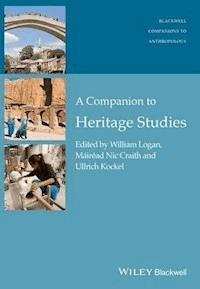
A Companion to Heritage Studies E-Book
177,99 €
Mehr erfahren.
- Herausgeber: John Wiley & Sons
- Kategorie: Geisteswissenschaft
- Serie: Blackwell Companions to Anthropology
- Sprache: Englisch
A Companion to Heritage Studies BLACKWELL COMPANIONS TO ANTHROPOLOGY A Companion to Heritage Studies "This Companion provides a gateway to heritage studies for students and scholars alike. Taken together, the essays testify to how exciting and dynamic this field has become." Valdimar Tr. Hafstein, University of Iceland "Interdisciplinary and international in scope, A Companion to Heritage Studies succeeds in bringing together critical and practical, historicizing and future-oriented scholarship on what has become an all-pervasive global interest and industry, passion and resource." Regina F. Bendix, Göttingen University, Germany "A vast and complete overview of the contemporary challenges of heritage preservation and management. This is an important book for practitioners, planners, and policy makers. The Companion fills a gap and helps address many of the uncomfortable questions heritage preservation is facing today." Francesco Bandarin, Special Advisor to UNESCO for Heritage and Professor, University Iuav of Venice A Companion to Heritage Studies is a comprehensive, state-of-the-art survey of the interdisciplinary study of cultural heritage. Featuring a substantial framework-setting essay by the editors, and contributions from an international array of scholars, including some with extensive experience in heritage practice through UNESCO, the World Heritage Centre, ICOMOS and national heritage systems, this Companion offers a cutting-edge guide to this emergent and increasingly important field that is global in scope, cross-cultural in focus, and critical in approach. The selected essays have been innovatively organized into three sections on the expansion, use and abuse, and the recasting of heritage. The Companion covers all of the key themes in research, including old and new outlooks on cultural heritage and its management, heritage as a form of cultural politics, the emergence of critical heritage studies, the role of heritage in times of rapid change and conflict, heritage in environmental protection, the rise of intangible heritage, museums and digital heritage, World Heritage and tourism, and heritage ethics and human rights. A Companion to Heritage Studies will be an invaluable resource for students and scholars of anthropology, archeology, and cultural studies, as well as anyone interested in better understanding the historical, social, and political significance of heritage.
Sie lesen das E-Book in den Legimi-Apps auf:
Seitenzahl: 1493
Veröffentlichungsjahr: 2015
Ähnliche




















Table of Contents
Cover
Title page
List of Figures and Tables
Notes on Contributors
Acknowledgements
List of Abbreviations
CHAPTER 1: The New Heritage Studies: Origins and Evolution, Problems and Prospects
Expanding Heritage
Using and Abusing Heritage
Recasting Heritage
The New Heritage Studies: Paradigms and Challenges
References
PART I: Expanding Heritage
CHAPTER 2: Heritage Places: Evolving Conceptions and Changing Forms
Touching Eternity: Heritage Places as Tokens of Faith
Belonging to a Nation: Heritage Places as Objects of State Power
Escaping from Everyday Routines: Heritage Places as Entertainment Venues
Asserting Independence: Heritage Places as Symbolic Resistance
Grasping for Meaning: Heritage Places as Reactions to Change
References
CHAPTER 3: From Folklore to Intangible Heritage
Identification and Mapping
Institutionalization and Networking
Knowledge Transfer and Manipulation
Translation and Knowledge Transfer
A Change of Paradigm
Folklore Overboard with a Paradigm Preserved
Acknowledgements
References
CHAPTER 4: Cultural Heritage and Intellectual Property: Convergence, Divergence, and Interface
Some Definitions
Convergence
Divergence
Interface
Two Hundred Years Late: Emerging from Imperial Shadows
Cultural Heritage and Collective Intellectual Property Rights
Human Rights for Cultural Heritage and Intellectual Property
References
CHAPTER 5: Intangible Heritage and Embodiment: Japan’s Influence on Global Heritage Discourse
The International Convention on Intangible Heritage in Context
Japan and the Safeguarding of Its Intangible Heritage: Modernization, Heritage, and National Identity
Constructing the Intangible Cultural Heritage Convention of 2003
Problematizing Intangible Heritage
Reflections: Heritage and Embodiment
References
CHAPTER 6: The Politics of Heritage in the Land of Food and Wine
Introduction
Defining Food Heritage
Anthropological Expertise and the Politics of Scaling
Distinction and Heritage: A Claim for Authenticity and Ecology
“Make Do” rather than Preserve
Conclusion
References
CHAPTER 7: (Re)visioning the Ma’ohi Landscape of Marae Taputapuatea, French Polynesia: World Heritage and Indigenous Knowledge Systems in the Pacific Islands
Introduction
Traditional Knowledge and Its Protection in the Pacific Islands
World Heritage Values in the Pacific
Transnational Values and the International Significance of Marae Taputapuatea
The Traditional Knowledge of Papa Maraehau
Conclusion
References
CHAPTER 8: The Kingdom of Death as a Heritage Site: Making Sense of Auschwitz
The Historical Background
Making Sense of Auschwitz: The Challenges of a Dissonant, Contested Heritage
Post-1989: New Challenges, New Negotiations
Multiple Narratives and Alternative Histories
Contradictions and Paradoxes
Conclusion
References
CHAPTER 9: The Memory of the World and its Hidden Facets
Introduction
The UNESCO Memory of the World Programme
The Heritage of Humanity
The Documentary Heritage of Humanity
Conclusions
References
CHAPTER 10: African Indigenous Heritage in Colonial and Postcolonial Museums: The Case of the Batwa of Africa’s Great Lakes Region
Museums and Indigenous People
Batwa Pygmies, or the Contested Indigenous in the Great Lakes of Africa
Batwa Heritage and Great Lakes Museums
Cultural Heritage Policy and Indigenous Rights in Rwanda
Give Me What Is Mine: African Indigenous People and the Politics of Repatriation
Conclusion
Acknowledgements
References
PART II: Using and Abusing Heritage
CHAPTER 11: Valuing the Past, or, Untangling the Social, Political, and Economic Importance of Cultural Heritage Sites
The Exceptionality of Grand-Pré
The Economics of Tourism
An Uncommon Union
References
CHAPTER 12: Cultural Heritage under the Gaze of International Tourism Marketing Campaigns
Introduction
Heritage Inconsequence
From Heritage Tourism to Emotional Tourism
Tourism Imaginaries
Conclusions
References
CHAPTER 13: Heritagescaping and the Aesthetics of Refuge: Challenges to Urban Sustainability
Addressing the Community
Urban Futures, and the View from Asia
Coffee Table Architecture and Urban Gentrification
Conclusion
Acknowledgements
References
CHAPTER 14: Cultural Heritage as a Strategy for Social Needs and Community Identity
Social Needs and Human Motivation
Heritage and Belonging
Heritage Conflicts: Negotiating Legitimacy and Esteem
Heritage as a Social Need in an Institutionalized Environment
Conclusion
Acknowledgements
References
CHAPTER 15: Heritage in the Digital Age
The Potential of Digital Technologies
Digital Heritage Applications
Discussion
References
CHAPTER 16: World Heritage and National Hegemony: The Discursive Formation of Chinese Political Authority
A Nation’s Preoccupation with World Heritage
World Heritage and Nation-Building
Re-Defining China with World Heritage
World Heritage as Social Discipline
Mapping the Silk Road: Battles over Heritage in Kashgar
The Powerful Nation
References
CHAPTER 17: War Museums and Memory Wars in Contemporary Poland
Background: War Heritage in Postsocialist Europe
The Polish War Heritage Landscape and Memory Wars
The Museum of the Warsaw Uprising
The Gdańsk Museum of World War II Project
References
CHAPTER 18: Heritage in an Expanded Field: Reconstructing Bridge-ness in Mostar
An Expanded Field of Enquiry
Permeability and the Agency of Destruction
Affective Landscapes: Materiality and Space
Representational Politics
Narrative Emplacement, Symbolic Forgetting
Reassembling Authenticity, Reanimating Memory
Memory Ecologies
References
CHAPTER 19: Heritage Under Fire: Lessons from Iraq for Cultural Property Protection
Heritage Under Fire
Iraqi Heritage under Occupation, 2003–2011
The Legacy of Iraq for Cultural Property Protection during Times of War
Conclusion
References
CHAPTER 20: The Intentional Destruction of Heritage: Bamiyan and Timbuktu
The Bamiyan Buddhas of Afghanistan
The Destruction of Tangible and Intangible Heritage in Mali
Conclusions
Acknowledgements
References
CHAPTER 21: Heritage and the Politics of Cultural Obliteration: The Case of the Andes
José María Arguedas: The Politics of
Mestizaje
Guayaquil and its Modern Heritage
Conclusion: Cultural Heritage in the Andes
References
PART III: Recasting Heritage
CHAPTER 22: The Economic Feasibility of Heritage Preservation
Every Crisis Harbors an Opportunity
What, if Anything, Does World Heritage Status Bring?
What Constitutes an Enabling Environment for Heritage Preservation?
How Can We Enhance the Robustness of the Cultural Heritage Preservation System?
What Types of Partnership and Financing Are There for Cultural Heritage Preservation?
Conclusion: The Costs Precede the Benefits
References
CHAPTER 23: UNESCO and Cultural Heritage: Unexpected Consequences
Evolving World Heritage Concepts
Changes in the Role of Experts
The Growing Involvement of Civil Society
Unexpected Consequences
Conclusion
References
CHAPTER 24: The Limits of Heritage: Corporate Interests and Cultural Rights on Resource Frontiers
Introduction
Contentious Terrain: Heritage, Resources, and Rights
Industry Engagement with Heritage
New Expectations and Demands on Heritage Bodies
Heritage and Development Scenarios: Limits and Opportunities
Closing Comments
Acknowledgements
References
CHAPTER 25: Indigenous Peoples’ Rights and the World Heritage Convention
Introduction
Heritage Sites and Indigenous Peoples: Relevant Human Rights Standards
Obligations and Commitments of UNESCO and the UN System
Lack of Implementation of the UNDRIP in the Context of the World Heritage Convention
Conclusions and Assessment
References
CHAPTER 26: UNESCO, the World Heritage Convention, and Africa: The Practice and the Practitioners
Introduction
Setting the Stage: UNESCO’s Historical Background
It’s about Heritage: A Theoretical Framework
Politics, International Relations, and Heritage
The World Heritage Convention: Origins, Practice, and Inherent Contradictions
Hidden beneath the Convention: Challenges and Opportunities for Practice and Practitioners
Changing Dynamics, Paradigm Shift, or Temporary Truce?
The Power of Heritage
Conclusion: Africa, the World Heritage Convention, and the Future
References
CHAPTER 27: World Heritage Sites in Africa: What Are the Benefits of Nomination and Inscription?
Heritage and Development
Heritage and Tourism
The Contribution of Heritage to Development
Infrastructural Development at the Tsodilo Hills
The Great Zimbabwe World Heritage Site
Job Creation at the Cradle of Humankind and Other Sites
Twyfelfontein
Kilwa Kisiwani
Conclusion
References
CHAPTER 28: Heritage in the “Asian Century”: Responding to Geopolitical Change
Questioning the East/West Binary
Asia’s Global Impact on the Heritage Field
Distinctive Asian Heritage Thought and Practice
Critical Issues for Asian Heritage in Twenty-First Century
Conclusion: Communicating Asian Heritage Ideas
Acknowledgements
References
CHAPTER 29: (Re-)Building Heritage: Integrating Tangible and Intangible
Authorized Heritage Discourse
Reframing Heritage
Symbiotic Heritage
Heritage and a Sense of Place
The New Heritage Paradigm: Implications and Challenges
References
CHAPTER 30: The Elephant in the Room: Heritage, Affect, and Emotion
Emotional Heritage: Registers of Engagement
Emotion in Heritage and Museum Studies
Moving Away from Suspicion: Affect, Emotion and Heritage
Conclusion
References
CHAPTER 31: Cross-Cultural Encounters and “Difficult Heritage” on the Thai–Burma Railway: An Ethics of Cosmopolitanism rather than Practices of Exclusion
Conventional Approaches to Heritage and Identity
The Development of More Pluralist Understandings of Heritage
Encounters at the JEATH Museum
Weary Dunlop Peace Park: Contemporary Cross-Cultural Encounters
Acknowledgements
References
CHAPTER 32: Heritage and Cosmopolitanism
A Cosmopolitan Perspective
Cosmopolitan Heritage Rights
Multi-Scalar Approaches
Final Thoughts
References
CHAPTER 33: “Putting Broken Pieces Back Together”: Reconciliation, Justice, and Heritage in Post-Conflict Situations
Justice, Accountability, and Reconciliation
Post-Conflict Heritage and Narrative Construction
Representing the Khmer Rouge in Post-Conflict Cambodia
Contested Narratives of Responsibility and Victimhood: Heritage in Post-War Japan
Conclusion
References
CHAPTER 34: Achieving Dialogue through Transnational World Heritage Nomination: The Case of the Silk Roads
A Dynamic World Heritage Convention
Transnational Nominations: A Challenge
The Silk Roads: A Shared Heritage
Toward the Silk Roads Nomination
The Way Forward
Acknowledgements
References
CHAPTER 35: World Heritage: Alternative Futures
Introduction
Considering the Future
Alternative Futures
Eurocentrism and Global Balance
Inflation and Credibility
Inclusion and Rights
Supporting Conservation
Concluding Remarks
References
CHAPTER 36: Challenges for International Cultural Heritage Law
Introduction
The International Community, Common Heritage, and International Cooperation
Individuals, Groups, and Human Rights
Conclusion
References
CHAPTER 37: The New Heritage Studies and Education, Training, and Capacity-Building
Closing the Knowledge Gaps
Strengthening Ethical Considerations
Education, Training, and Capacity-Building: “Horses for Courses”
Institutional Frameworks and Activities: UNESCO and the Advisory Bodies
Institutional Frameworks and Activities: The World Heritage Capacity Building Strategy
Institutional Frameworks and Activities: UNESCO, Schools, Universities, and Category 2 Centres
Challenges for the Future
References
Index
End User License Agreement
List of Tables
Chapter 12
Table 12.1 Comparison of the key narrative elements in the scripts of
Incredible India 2009–2011
and
Perú 2012
.
Chapter 27
Table 27.1 The contribution of various industries to European GDP.
Table 27.2 Tourism-related employment at the Cradle of Humankind.
Chapter 28
Table 28.1 States Parties to the Intangible Heritage Convention (2003) having the most elements inscribed on the Representative List of the Intangible Cultural Heritage of Humanity, February 2014.
Table 28.2 States Parties to the World Heritage Convention (1972) having the most inscriptions on the World Heritage List, July 2014.
Chapter 37
Table 37.1 Different audiences and learning areas in the heritage sector. Source: Wijesuriya, Thompson, and Young (2013: 51). © UNESCO, ICCROM, ICOMOS, IUCN.
List of Illustrations
Chapter 07
Figure 7.1 Marae Taputapuatea, Ra’iatea Island, French Polynesia.
Figure 7.2 Romy Tavaeari’i, “Papa Maraehau,” at Marae Taputapuatea, November 2007.
Chapter 10
Figure 10.1 Today in Rwanda, the majority of Batwa are still potters.
Chapter 11
Figure 11.1 View of Grand-Pré and the Grand-Pré National Historic Site.
Figure 11.2 Evangeline statue and memorial church.
Chapter 13
Figure 13.1 Industrial warehouses transformed into heritage/art precinct District 798, Beijing.
Figure 13.2 Restoration of housing in Galle Fort.
Figure 13.3 Restoration of housing in Galle Fort.
Figure 13.4 Reconstruction of public infrastructure inside Galle Fort.
Chapter 14
Figure 14.1 Maslow’s hierarchy of social needs. Source: adapted from Huitt (2007) and Maslow (1943).
Figure 14.2 Altaian girl dressed up as the Altai Princess during the biennial El-Oiuyn national festival.
Chapter 18
Figure 18.1 The Stari Most (Old Bridge), Mostar.
Chapter 20
Figure 20.1 Large Buddha niche, Bamiyan.
Figure 20.2 Results of the consolidation of the Small Buddha niche, Bamiyan, 2005.
Figure 20.3 Conservation of fragments of the Large Buddha, Bamiyan, 2006.
Figure 20.4 Ceremony for the start of the restoration of a mausoleum, Timbuktu, 2014.
Chapter 27
Figure 27.1 World Heritage sites contributing to economic growth.
Figure 27.2 A Tsodilo homestead in 1998.
Figure 27.3 The results of World Heritage tourism: a homestead near Tsodilo in 2011.
Figure 27.4 Lodges at Twyfelfontein.
Figure 27.5 The World Heritage site of Kilwa Kisiwani.
Chapter 29
Figure 29.1 The “dual trajectories” of heritage.
Figure 29.2 A symbiotic concept of heritage.
Figure 29.3 The environmental heritage spectrum.
Figure 29.4 National Museum of the American Indian, Washington.
Figure 29.5 Scottish Parliament, Edinburgh.
Chapter 31
Figure 31.1 The JEATH Museum, with its transnational image clearly represented in the range of flags on display.
Figure 31.2 The “Bridge on the River Kwai,” Kanchanaburi.
Figure 31.3 View of the text explaining the Weary Dunlop Peace Park.
Figure 31.4 Australian school choir singing as part of the memorial service for Kanit’s wife.
Figure 31.5 The interactive nature of the ceremony to assuage the spirits of the dead: three of surviving POWs thank Buddhist monks for their prayers with offerings of rice.
Figure 31.6 Wreaths from the ANZAC Day ceremony 2012 at the Kanchanaburi Commonwealth War Graves Cemetery.
Chapter 33
Figure 33.1 Display board in the Tuol Sleng Genocide Museum showing the organizational structure of the Khmer Rouge leadership.
Figure 33.2 Photos of Khmer Rouge soldiers killed by the regime on display amongst photos of civilian victims of the Khmer Rouge in the Tuol Sleng Genocide Museum.
Figure 33.3 Photos of victims of the Khmer Rouge on display in the Tuol Sleng Genocide Museum.
Chapter 34
Figure 34.1 Training in the use of the Silk Roads Cultural Heritage Resource Information System and architectural heritage recording, Chor Bakr, Uzbekistan.
Figure 34.2 The Silk Roads management system.
Guide
Cover
Table of Contents
Begin Reading
Pages
ii
iii
iv
ii
x
xi
xii
xiii
xv
xvi
xvii
xviii
xix
xx
xxi
1
2
3
4
5
6
7
8
9
10
11
12
13
14
15
16
17
18
19
20
21
22
23
24
25
27
29
30
31
32
33
34
35
36
37
38
39
40
41
42
43
44
45
46
47
48
49
50
51
52
53
54
55
56
57
58
59
60
61
62
63
64
65
66
67
68
69
70
71
72
73
74
75
76
77
78
79
80
81
82
83
84
85
86
87
88
89
90
91
92
93
94
95
96
97
98
99
100
101
102
103
104
105
106
107
108
109
110
111
112
113
114
115
116
117
118
119
120
121
122
123
124
125
126
127
128
129
130
132
131
133
134
135
136
137
138
139
140
141
142
143
144
145
146
147
148
149
150
151
152
153
154
155
156
157
158
159
161
163
164
165
166
167
168
169
170
171
172
173
174
175
176
177
178
179
180
181
182
183
184
186
187
188
185
189
190
191
192
193
194
195
196
197
198
199
200
201
202
203
204
205
206
207
208
209
210
211
212
213
214
215
216
217
218
219
220
221
222
223
224
225
226
227
228
229
230
231
232
233
234
235
236
237
238
239
240
241
242
243
244
245
246
247
248
249
250
251
252
253
254
255
256
257
258
259
260
261
262
263
264
265
267
266
268
269
270
271
272
273
274
275
276
277
278
279
280
281
282
283
284
285
286
287
288
289
290
291
292
294
293
295
296
297
298
299
300
301
302
303
304
305
306
307
309
310
311
312
313
314
315
316
317
318
320
319
322
323
324
325
326
327
328
329
330
331
332
333
334
335
336
337
338
339
340
341
342
343
344
345
346
347
348
349
350
351
352
353
354
355
356
357
358
359
360
361
362
363
364
365
366
367
368
369
370
371
372
373
374
375
376
377
378
379
380
381
382
383
384
385
386
387
388
389
390
391
392
393
394
395
396
397
398
399
400
401
402
403
404
405
406
407
408
409
410
411
412
413
414
415
416
417
418
419
420
421
422
423
424
425
426
427
428
429
430
431
432
433
434
435
436
437
438
439
440
441
442
443
444
445
446
447
448
449
450
451
452
453
454
455
456
457
458
459
460
461
462
463
464
465
466
467
468
469
470
471
472
473
474
475
476
477
478
479
480
481
482
483
484
485
486
487
488
489
490
491
492
493
494
495
496
497
498
499
500
501
502
503
504
505
506
507
508
509
510
511
512
513
514
515
516
517
518
519
520
521
522
523
524
525
526
527
528
529
530
531
532
533
534
535
536
537
538
539
540
541
542
543
544
545
546
547
548
549
550
551
553
554
555
556
552
557
558
559
560
561
562
563
564
565
566
567
568
569
570
571
572
573
574
575
576
577
578
579
580
581
582
583
584
585
586
587
588
589
590
591
592
593
594
595
596
597
The Blackwell Companions to Anthropology offer a series of comprehensive syntheses of the traditional subdisciplines, primary subjects, and geographic areas of inquiry for the field. Taken together, the series represents both a contemporary survey of anthropology and a cutting edge guide to the emerging research and intellectual trends in the field as a whole.
1. A Companion to Linguistic Anthropology, edited by Alessandro Duranti
2. A Companion to the Anthropology of Politics edited by David Nugent and Joan Vincent
3. A Companion to the Anthropology of American Indians, edited by Thomas Biolsi
4. A Companion to Psychological Anthropology, edited by Conerly Casey and Robert B. Edgerton
5. A Companion to the Anthropology of Japan, edited by Jennifer Robertson
6.A Companion to Latin American Anthropology, edited by Deborah Poole
7. A Companion to Biological Anthropology, edited by Clark Larsen
8. A Companion to the Anthropology of India, edited by Isabelle Clark-Decès
9. A Companion to Medical Anthropology, edited by Merrill Singer and Pamela I. Erickson
10. A Companion to Cognitive Anthropology, edited by David B. Kronenfeld, Giovanni Bennardo, Victor de Munck, and Michael D. Fischer
11. A Companion to Cultural Resource Management, edited by Thomas King
12. A Companion to the Anthropology of Education, edited by Bradley A.U. Levinson and Mica Pollack
13. A Companion to the Anthropology of the Body and Embodiment, edited by Frances E. Mascia-Lees
14. A Companion to Paleopathology, edited by Anne L. Grauer
15. A Companion to Folklore, edited by Regina F. Bendix and Galit Hasan-Rokem
16. A Companion to Forensic Anthropology, edited by Dennis Dirkmaat
17. A Companion to the Anthropology of Europe, edited by Ullrich Kockel, Máiréad Nic Craith, and Jonas Frykman
18. A Companion to Border Studies, edited by Thomas M. Wilson and Hastings Donnan
19.A Companion to Rock Art, edited by Jo McDonald and Peter Veth
20. A Companion to Moral Anthropology, edited by Didier Fassin
21. A Companion to Gender Prehistory, edited by Diane Bolger
22. A Companion to Organizational Anthropology, edited by D. Douglas Caulkins and Ann T. Jordan
23. A Companion to Paleoanthropology, edited by David R. Begun
24. A Companion to Chinese Archeology, edited by Anne P. Underhill
25. A Companion to the Anthropology of Religion, edited by Janice Boddy and Michael Lambek
26. A Companion to Urban Anthropology, edited by Donald M. Nonini
27. A Companion to the Anthropology of the Middle East, edited by Soraya Altorki
28. A Companion to Heritage Studies, edited by William Logan, Máiréad Nic Craith and Ullrich Kockel
Forthcoming
A Companion to Oral History, edited by Mark Tebeau
A Companion to Dental Anthropology, edited by Joel D. Irish and G. Richard Scott
A Companion to South Asia in the Past, edited by Gwen Robbins Schug and S.R. Walimbe
Lesen Sie weiter in der vollständigen Ausgabe!
Lesen Sie weiter in der vollständigen Ausgabe!
Lesen Sie weiter in der vollständigen Ausgabe!
Lesen Sie weiter in der vollständigen Ausgabe!
Lesen Sie weiter in der vollständigen Ausgabe!
Lesen Sie weiter in der vollständigen Ausgabe!
Lesen Sie weiter in der vollständigen Ausgabe!
Lesen Sie weiter in der vollständigen Ausgabe!
Lesen Sie weiter in der vollständigen Ausgabe!
Lesen Sie weiter in der vollständigen Ausgabe!
Lesen Sie weiter in der vollständigen Ausgabe!
Lesen Sie weiter in der vollständigen Ausgabe!
Lesen Sie weiter in der vollständigen Ausgabe!
Lesen Sie weiter in der vollständigen Ausgabe!
Lesen Sie weiter in der vollständigen Ausgabe!
Lesen Sie weiter in der vollständigen Ausgabe!
Lesen Sie weiter in der vollständigen Ausgabe!
Lesen Sie weiter in der vollständigen Ausgabe!
Lesen Sie weiter in der vollständigen Ausgabe!
Lesen Sie weiter in der vollständigen Ausgabe!
Lesen Sie weiter in der vollständigen Ausgabe!
Lesen Sie weiter in der vollständigen Ausgabe!
Lesen Sie weiter in der vollständigen Ausgabe!
Lesen Sie weiter in der vollständigen Ausgabe!
Lesen Sie weiter in der vollständigen Ausgabe!
Lesen Sie weiter in der vollständigen Ausgabe!
Lesen Sie weiter in der vollständigen Ausgabe!
Lesen Sie weiter in der vollständigen Ausgabe!
Lesen Sie weiter in der vollständigen Ausgabe!
Lesen Sie weiter in der vollständigen Ausgabe!
Lesen Sie weiter in der vollständigen Ausgabe!
Lesen Sie weiter in der vollständigen Ausgabe!
Lesen Sie weiter in der vollständigen Ausgabe!
Lesen Sie weiter in der vollständigen Ausgabe!
Lesen Sie weiter in der vollständigen Ausgabe!
Lesen Sie weiter in der vollständigen Ausgabe!
Lesen Sie weiter in der vollständigen Ausgabe!
Lesen Sie weiter in der vollständigen Ausgabe!
Lesen Sie weiter in der vollständigen Ausgabe!
Lesen Sie weiter in der vollständigen Ausgabe!
Lesen Sie weiter in der vollständigen Ausgabe!
Lesen Sie weiter in der vollständigen Ausgabe!
Lesen Sie weiter in der vollständigen Ausgabe!
Lesen Sie weiter in der vollständigen Ausgabe!
Lesen Sie weiter in der vollständigen Ausgabe!
Lesen Sie weiter in der vollständigen Ausgabe!
Lesen Sie weiter in der vollständigen Ausgabe!
Lesen Sie weiter in der vollständigen Ausgabe!
Lesen Sie weiter in der vollständigen Ausgabe!




