


A Companion to Hong Kong Cinema E-Book
171,99 €
Mehr erfahren.
- Herausgeber: John Wiley & Sons
- Kategorie: Geisteswissenschaft
- Serie: CNCZ - The Wiley-Blackwell Companions to National Cinemas
- Sprache: Englisch
A Companion to Hong Kong Cinema provides the first comprehensive scholarly exploration of this unique global cinema. By embracing the interdisciplinary approach of contemporary film and cultural studies, this collection navigates theoretical debates while charting a new course for future research in Hong Kong film. * Examines Hong Kong cinema within an interdisciplinary context, drawing connections between media, gender, and Asian studies, Asian regional studies, Chinese language and cultural studies, global studies, and critical theory * Highlights the often contentious debates that shape current thinking about film as a medium and its possible future * Investigates how changing research on gender, the body, and sexual orientation alter the ways in which we analyze sexual difference in Hong Kong cinema * Charts how developments in theories of colonialism, postcolonialism, globalization, neoliberalism, Orientalism, and nationalism transform our understanding of the economics and politics of the Hong Kong film industry * Explores how the concepts of diaspora, nostalgia, exile, and trauma offer opportunities to rethink accepted ways of understanding Hong Kong's popular cinematic genres and stars
Sie lesen das E-Book in den Legimi-Apps auf:
Seitenzahl: 1441
Veröffentlichungsjahr: 2015
Ähnliche




















CONTENTS
Cover
Title page
Acknowledgments
Notes on Contributors
Foreword
Introduction
Part I: Critical Paradigms: Defining Hong Kong Cinema Studies
Part II: Critical Geographies
Part III: The Gendered Body and Queer Configurations
Part IV: Hong Kong Stars
Part V: Narratives and Aesthetics
Part VI: Screen Histories and Documentary Practices
References
Part I: Critical Paradigms
1 Watchful Partners, Hidden Currents
Hong Kong Films and Business in the Chinese Mainland
Appropriation and Reinvention in China
Partnership
Partnership Imaginary and Cultural Memory
Watchful Partners, Hidden Currents
References
2 The Urban Maze
Crisis, Topophilia, and the Emergence of Millennial Films
Crisis Cinema and Its Critical Turns
The Eventful Years After 1997
Topophilia in the Crisis City
Concluding Remarks
References
3 Hong Kong Cinema as Ethnic Borderland
Zone of Transition
North–South Division
Ethnic / Dialect Films
Cold War Politics
Transnationalization and Localization
References
4 Hong Kong Cinema in the Age of Neoliberalization and Mainlandization
Stuck with
Kung fu
and Martial Arts? Hollywood as Proxy of Globalization and the Genre Reification of Hong Kong Cinema
Neoliberalization with Colonial Characteristics: Impact on Hong Kong Film
Mainlandization, the Disquieting Binary Impasse: China or the Rest?
Hong Kong SAR New Wave and the Cinema of Anxiety
References
Commentary
References
Part II: Critical Geographies
5 Hong Kong Cinema’s Exotic Others
Introduction
Regionalizing Hong Kong Cinema
Fractured bodies:
Shinjuku Incident
(Derek Yee, 2009)
Exiled bodies:
After This Our Exile
(Patrick Tam, 2006)
Transformative, Transcendent bodies:
Himalaya Singh
(Wai Ka-fai, 2005)
Conclusion: Re-Imagining the Hong Kong Body
References
For Further Reading
6 Animating the Translocal
From Print to Television Series and Cinema:
My Life as McDull
The Local, Dislocated and Constructed:
McDull Prince de la Bun
CEPA and Delocalization: Hong Kong–China Co-productions
Masquerade and Border Crossing:
McDull Kung Fu Ding Ding Dong
Translocal Hong Kong Subjectivity:
McDull: The Pork of Music
(2012)
McDull’s Visual World: Rhizomes, Psychogeographies, and Topographies
Conclusion
References
7 Globalizing Hong Kong Cinema Through Japan
References
8 Creative Cinematic Geographies Through the Hong Kong International Film Festival
Viewing the West in the East
A Swinging Gate to the East
North and South
Conclusions
References
For Further Reading
9 Postmodernity, Han Normativity, and Hong Kong Cinema
The Legislative vs. the Interpretive
Censorship – the High Priest of Chinese Modernism
Wang Shuo vs. Jin Yong
Hong Kong Cinema – The Postmodern Condition
Vulgaria
: Counteracting Han-Normativity
Conclusion
References
For Further Reading
Commentary
References
Part III: The Gendered Body and Queer Configurations
10 Feminism, Postfeminism, and Hong Kong Women Filmmakers
The Way We Are
Night and Fog
All About Love
Conclusion
References
11 Love In The City
Introduction: Romancing a Sunset Industry
Cinema and Urban Heritage
Love at Work: The Commute and the Smoking Break
Migrant Love: Tales of Two Neighborhoods
All Cut Up: Shooting the Heartbroken City
Conclusion: Love of a Fallen Cinema
References
12 Regulating Queer Domesticity in the Neoliberal Diaspora
Introduction
Chinese Diasporas in the West: Regulating Queer Domestic Spaces
Mainland Diasporas in Hong Kong: The Politics of Mobility Governing Queer Domesticity
In the Chinese–Japanese Diaspora: Migrant Masculinity and Action Cinema
Conclusion
References
Commentary
Part IV: Hong Kong Stars
13 Return of the Dragon
Introduction: Hong Kong’s Velvet Prison
Bruce Lee Then and Now
Bruce Lee Here and There
Bruce Lee, Local Foreigner
Bruce Lee’s Return to/of Hong Kong
The Eternal Return of the Dojo
The Return to/of China
Coda
References
14 Transitional Stardom
Early Developments within the Classical Heroic Tradition
Dismemberment and Heroism
The Star as Director
Modern Times
The Dragon in Winter
References
15 Camp Stars of Androgyny
Leslie Cheung’s Phantasmagoric Stage Attire and Cross-dressing
The Legendary Iridescence and Melodramatic Life of Anita Mui
Conclusion
References
Further Reading
16 Cooling Faye Wong
Star of Coolness
Early Works
Chungking Express
After
Chungking Express
2046
Conclusion
References
Commentary
Toward a Poetics of Performance
References
Part V: Narratives and Aesthetics
17 Making Merry on Time
The Festive Chronotope: (New Year) Cinema-going as an Urban Ritual
Locating Family Comedies from
It’s a Mad, Mad, Mad World
to
All’s Well, Ends Well
Anachronizing Nostalgia in
The Eagle-shooting Heroes
and
A Chinese Odyssey 2002
Claustrophilic Festivity: Celebrating Cinematic Experience
References
18 A Pan-Asian Cinema of Allusion
A Pan-Asian Cinema of Allusion?
Going Home
and
Zhongyi
Histories
Dumplings
: Medicinal Meals and Cannibal Allegories
Multilingualism, Pan-Asian, and Pan-Chinese Cinema
Conclusion
References
19 Double Agents, Cameos, and the Poor Man’s Orchestra
A Musical Cartography?
“Circle K” Aesthetics
Punned Personas
Memory as Wish Fulfillment
The Poor Man’s Orchestra
Epilogue
References
20 Documenting Sentiments in Video Diaries around 1997
Overview
Diaries of 1997: A Site of Experimentation, Voices of Everyday Life
1997. Whose Story? The Moment? The Time-space of Thick Description
A (post-)phenomenological Study of Pictures of Minds and Sentiments: The Narratorial and Descriptive “I”
Belly Buttons, Absent Cameras, Moving House, Fooling around: Sentiments Performing Moral Reasoning in Five Video Diaries…
Performed, Enacted Sentiments for 1997 Forming a Contingent Field of Cultural Production
References
Commentary
Space-Time/Genre
Nostalgia/Geography
Reception/Audience
Performance/Affect
Conclusion
References
Part VI: Screen Histories and Documentary Practices
21 The Lightness of History
The Burden of History
Grappling with Lightness: Peripheral Visions
Imagined Modernity Re-considered: Wong Kar-wai’s 1960s
The Politics of Collective Memory and the “Local Heritage Film”
From the City to the Great Society: Counter-thought in
Datong
References
22 The Tales of Fang Peilin and Zhu Shilin
Introduction: A Brief Review of Studies and Research at Hong Kong Film Archive
Fang Peilin: The Legacy of His Musicals
Zhu Shilin: Escapist Filmmaking within the Confines of Harsh Reality
Concluding Remarks
References and Related Publications
23 The Documentary Film in Hong Kong
Introduction
From Edison to the Cultural Revolution: The Earlier Film Period (1896–1960s)
The Postwar Period: From Colonial Film-making (The Hong Kong Film Unit, 1958–1969) to TV Documentaries (1970s onwards)
Aesthetics and Radicalism: The Independent Documentary Film in Hong Kong (1970–2008)
Augmentation and Heterogeneity: Documentaries of the Last 15 years
Conclusion: the Future of Documentary Film in Hong Kong, China, and the Region
References
Further Reading
24 Representations of Law in Hong Kong Cinema
Bodily Evidence and Legal Time
The Temporality of Legal Precedent
References
Commentary
References
Filmography
Music Video
Television
Index
End User License Agreement
List of Tables
Chapter 01
Table 1.1 Hong Kong Directors’ Co-production Films in China (2003–2013)
Chapter 04
Table 4.1 The box office of three films
Chapter 20
Table 20.1 Group 1 – Works from HKAC’s “Hong Kong in Transition” or IFVA 1998
Table 20.2 Group 2 – Works from “Digital Biography of Hong Kong 1997,” Programs I & II, 22nd HKIFF
Table 20.3
Moving Home
– the nine defined events in 1997
List of Illustrations
Chapter 01
Figure 1.1 Citation of Hong Kong film in
Still Life
(Jia Zhangke, 2006), an independent production.
Figure 1.2
American Dreams in China
(Peter Chan, 2013): A returnee (Peter Chan and Hong Kong?) getting trimmed in a partnership ritual.
Figure 1.3
Drug War
(Johnnie To, 2012) has an allegorical image of an involuntary partnership of death.
Chapter 04
Figure 4.1 The vengeful teenage twin ghosts in the mirror in
Rigor Mortis
(Juno Mak, 2013). Although they are twins, only one is caught in the mirror, but the mirroring forces them out of Chin’s body, exposing their doubleness, their duplicity.
Figure 4.2 Spectral Chinese forces towering over Hong Kong people, colonizing, haunting their entire living space in
Rigor Mortis
(Juno Mak, 2013).
Chapter 06
Figure 6.1 A topographical moment in
McDull, Prince de la bun
(Yuen Toe, 2004): As McDull and his mother walk through the Tai Kok Tsui neighborhood, a “redeveloped” housing block collapses into a cubist heap.
Figure 6.2 Time and space are magically compressed in this scene from
McDull, Prince de la bun
(Yuen Toe, 2004), as McDull’s father emerges from an alley to find himself in a photorealistic street scene of Hong Kong in the 1960s.
Chapter 07
Figure 7.1 The feature story about
Miss Kikuko
(Yan Jun, 1956) in
International Screen
boasts of the manner in which the Hong Kong cast, especially Linda Lin Dai, became “thoroughly Nipponised” for the production.
Figure 7.2 An expensive hairpin becomes the agent of fate that sets the action in motion in Hideo Gosha’s
Three Outlaw Samurai
(1964).
Figure 7.3 The hairpin motif is repeated in Chang Cheh’s
The Magnificent Trio
almost exactly as it is used in the Japanese original (1966).
Chapter 09
Figure 9.1 Chapman To (right) plays To Wai-cheung, a down-on-his-luck Hong Kong producer, who seeks backing from Brother Ty, played by Ronald Cheng Chung-kei, a
nouveau riche
PRC gangster with outré taste in sex and food in
Vulgaria
Figure 9.2 Siu Yam-yam (second from left), Hong Kong’s porn screen diva in the 1970s and 1980s, playing herself in
Vulgaria
Figure 9.3 Questionable sexuality – the mule bride in
Vulgaria
Chapter 10
Figure 10.1 Still flashbacks showing women working in Hong Kong’s textile factories and sweatshops.
Figure 10.2 Ling begging an insensitive policeman to accompany her to confront her husband and retrieve her daughters, while he dismisses the case as just “a lovers’ quarrel.”
Figure 10.3 Macy joining a conversation at a bar. Hui included well-known faces within the lesbian community in Hong Kong in the scene.
Figure 10.4 Rare sight in Hong Kong commercial cinema in which women are shown engaging in street demonstrations, fighting for their rights.
Chapter 11
Figure 11.1 Jimmy and Cherie in
Love in a Puff
Figure 11.2 Oi Lin and Loy in
Crossing Hennessy
Figure 11.3 Flora and Joe in
Break Up Club
Chapter 18
Figure 18.1 In
Going Home
(Peter Chan, 2002), the newly dead come to the photographer's studio to have their portraits taken before moving on.
Figure 18.2 The glass door of the photographer's studio is transparent when seen from the interior. However, our view of the same door is obstructed when viewed from the exterior.
Figure 18.3 The only shots of Hai’er (Eugenia Yuan) speaking are of her reflections in mirrors or her recorded image on videotape.
Figure 18.4 The mainland
zhongyi
doctors’ anachronistic costume is reminiscent of the desexualized clothing of the Maoist era.
Figure 18.5 The policeman, Wai (Eric Tsang) watches Hai'er’s video letter to her husband, recorded between 1997 and 1999.
Figure 18.6 Aunt Mei (Bai Ling) eats raw dumpling meat in
Dumplings
(Fruit Chan, 2004).
Figure 18.7 Visual allusions to Maoist-era figures among Aunt Mei's eclectic collection of knickknacks: on the left, a female “barefoot doctor,” and Chairman Mao Zedong; on the right, a peasant woman wearing a Red Guard armband.
Figure 18.8 Though Aunt Mei looks like a woman in her thirties, too young to have experienced the Cultural Revolution firsthand, a photograph taken in 1960, when she was 20 years old, reveals that Mei is actually 64 years old in the narrative present.
Figure 18.9 A shot of Aunt Mei beside her sideboard, prominently featuring the figurines of Chairman Mao, a female “barefoot doctor,” and a female Red Guard.
Figure 18.10 Establishing shots of Aunt Mei's tenement read as a visual pun, since “fourth floor” is a homophone for “death floor” in spoken Chinese.
Chapter 19
Figure 19.1
Chungking Express
Figure 19.2
Chungking Express
Figure 19.3 The California bar…today
Figure 19.4 Brigitte Lin in the Chungking Mansions
Chapter 20
Figure 20.1 A timeline of the public discourse on Hong Kong’s handover.
Figure 20.2 The thought-path of
The Unforgettables
(a.k.a. 97 Tons of Memories).
Guide
Cover
Table of Contents
Begin Reading
Pages
ii
iii
iv
v
x
xi
xii
xiii
xiv
xv
xvi
xvii
xviii
xix
1
2
3
4
5
6
7
8
9
10
11
12
13
15
17
18
19
20
21
22
23
24
25
26
27
28
29
30
31
32
33
34
35
36
37
38
39
40
41
42
43
44
45
46
47
48
49
50
51
52
53
54
55
56
57
58
59
60
61
62
63
64
65
66
67
68
69
70
71
72
73
74
75
76
77
78
79
80
81
82
83
84
85
86
87
88
89
90
91
92
93
94
95
96
97
98
99
100
101
102
103
104
105
106
107
108
109
110
111
112
113
114
115
116
117
118
119
120
121
123
124
125
126
127
128
129
130
131
132
133
134
135
136
137
138
139
140
141
142
143
144
145
146
147
148
149
150
151
152
153
154
155
156
157
158
159
160
161
162
163
164
165
166
167
168
169
170
171
172
173
174
175
176
177
178
179
180
181
182
183
184
185
186
187
188
189
190
191
192
193
194
195
196
197
198
199
200
201
202
203
204
205
206
207
208
209
210
211
212
213
214
215
216
217
218
219
220
221
222
223
224
225
226
227
228
229
230
231
232
233
235
237
238
239
240
241
242
243
244
245
246
247
248
249
250
251
252
253
254
255
256
257
258
259
260
261
262
263
264
265
266
267
268
269
270
271
272
273
274
275
276
277
278
279
280
281
282
283
284
285
286
287
288
289
290
291
292
293
294
295
296
297
298
299
300
301
302
303
304
305
307
308
309
310
311
312
313
314
315
316
317
318
319
320
321
322
323
324
325
326
327
328
329
330
331
332
333
334
335
336
337
338
339
340
341
342
343
344
345
346
347
348
349
350
351
352
353
354
355
356
357
358
359
360
361
362
363
364
365
366
367
368
369
370
371
372
373
374
375
376
377
378
379
380
381
382
383
384
385
386
387
389
391
392
393
394
395
396
397
398
399
400
401
402
403
404
405
406
407
408
409
410
411
412
413
414
415
416
417
418
419
420
421
422
423
424
425
426
427
428
429
430
431
432
433
434
435
436
437
438
439
440
441
442
443
444
445
446
447
448
449
450
451
452
453
454
455
456
457
458
459
460
461
462
463
464
465
466
467
468
469
470
471
472
473
474
475
476
477
478
479
480
481
482
483
484
485
486
487
488
489
490
491
492
493
494
495
496
497
498
499
501
502
503
504
505
506
507
508
509
510
511
512
513
514
515
516
517
518
519
520
521
522
523
524
525
526
527
528
529
530
531
532
533
534
535
536
537
538
539
540
541
542
543
544
545
546
547
548
549
550
551
552
553
554
555
556
557
558
559
560
561
562
563
564
565
566
567
568
569
570
571
572
573
574
575
576
577
578
579
580
581
582
583
584
585
586
587
588
589
590
591
592
593
594
595
596
597
598
599
600
601
602
603
604
605
606
607
608
609
610
611
612
613
614
615
616
617
618
619
Wiley Blackwell Companions to National Cinemas
The Wiley Blackwell Companions to National Cinemas showcase the rich film heritages of various countries across the globe. Each volume sets the agenda for what is now known as world cinema whilst challenging Hollywood’s lock on the popular and scholarly imagination. Whether exploring Spanish, German or Chinese film, or the broader traditions of Eastern Europe, Scandinavia, Australia, and Latin America the 20–25 newly commissioned essays comprising each volume include coverage of the dominant themes of canonical, controversial, and contemporary films; stars, directors, and writers; key influences; reception; and historiography and scholarship. Written in a sophisticated and authoritative style by leading experts they will appeal to an international audience of scholars, students, and general readers.
Published:
A Companion to German Cinema, edited by Terri Ginsberg & Andrea Mensch
A Companion to Chinese Cinema, edited by Yingjin Zhang
A Companion to East European Cinemas, edited by Anikó Imre
A Companion to Spanish Cinema, edited by Jo Labanyi & Tatjana Pavlović
A Companion to Contemporary French Cinema, edited by Raphaëlle Moine, Hilary Radner, Alistair Fox & Michel Marie
A Companion to Hong Kong Cinema, edited by Esther M.K. Cheung, Gina Marchetti, and Esther C.M. Yau
A Companion to Hong Kong Cinema
Edited by
Esther M. K. Cheung, Gina Marchetti, Gina Marchetti, and Esther C.M. Yau
This edition first published 2015© 2015 John Wiley & Sons, Inc.
Registered OfficeJohn Wiley & Sons, Ltd, The Atrium, Southern Gate, Chichester, West Sussex, PO19 8SQ, UK
Editorial Offices350 Main Street, Malden, MA 02148-5020, USA9600 Garsington Road, Oxford, OX4 2DQ, UKThe Atrium, Southern Gate, Chichester, West Sussex, PO19 8SQ, UK
For details of our global editorial offices, for customer services, and for information about how to apply for permission to reuse the copyright material in this book please see our website at www.wiley.com/wiley-blackwell.
The right of Esther M.K. Cheung, Gina Marchetti, and Esther C.M. Yau to be identified as the authors of the editorial material in this work has been asserted in accordance with the UK Copyright, Designs and Patents Act 1988.
All rights reserved. No part of this publication may be reproduced, stored in a retrieval system, or transmitted, in any form or by any means, electronic, mechanical, photocopying, recording or otherwise, except as permitted by the UK Copyright, Designs and Patents Act 1988, without the prior permission of the publisher.
Wiley also publishes its books in a variety of electronic formats. Some content that appears in print may not be available in electronic books.
Designations used by companies to distinguish their products are often claimed as trademarks. All brand names and product names used in this book are trade names, service marks, trademarks or registered trademarks of their respective owners. The publisher is not associated with any product or vendor mentioned in this book.
Limit of Liability/Disclaimer of Warranty: While the publisher and authors have used their best efforts in preparing this book, they make no representations or warranties with respect to the accuracy or completeness of the contents of this book and specifically disclaim any implied warranties of merchantability or fitness for a particular purpose. It is sold on the understanding that the publisher is not engaged in rendering professional services and neither the publisher nor the author shall be liable for damages arising herefrom. If professional advice or other expert assistance is required, the services of a competent professional should be sought.
Library of Congress Cataloging-in-Publication Data
A companion to Hong Kong cinema / edited by Esther M.K. Cheung, Gina Marchetti, and Esther C.M. Yau. pages cm Includes bibliographical references and index. Includes filmography. ISBN 978-0-470-65928-1 (cloth)1. Motion pictures China–Hong Kong–History and criticism. 2. Documentary films–China–Hong Kong–History and criticism. I. Cheung, Esther M.K., editor. II. Marchetti, Gina, editor. III. Yau, Ching-Mei Esther, editor. PN1993.5.H6C88 2015 791.43095125–dc23 2015004135
A catalogue record for this book is available from the British Library.
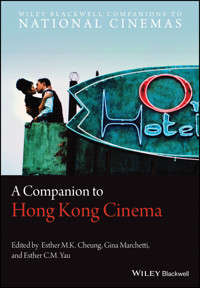
Cover image: Scene from 2046, directed by Wong Kar-Wai, 2004. Photo: Columbia / Block 2 / Jet Tone Films / The Kobal Collection / Shya, Wing
Dr. Esther Mee-kwan Cheung, a pioneering figure in the field of Hong Kong studies and an important force in research on Hong Kong film, literature, and cultural studies passed away on February 9, 2015.
This volume is dedicated to her memory.
Esther Cheung was actively involved in the editing of A Companion to Hong Kong Cinema from the very outset and remained an indispensable member of the editorial team. She wrote an important essay for Part I, “Critical Paradigms,” and took up the editorial work for the same part as well as for Part V, “Narratives and Aesthetics.”
Many months of editorial coordination and checking received assistant support through Esther Cheung’s generous sharing of research funds.
The volume has been enriched by Esther’s intellectual presence, wisdom, attentiveness, and generosity.
Acknowledgments
The editors thank the contributors and the commentators for their excellent work and their patience. We thank all those who helped to make this book possible: Jayne Fargnoli, and Julia Kirk of Wiley-Blackwell for their continuous support throughout this process. Luna Ngai has generously offered her expert help in collating the material, formatting the chapters, compiling the filmography, and keeping us all on schedule. We also wish to thank Man Man (Kasey) Wong, Sonya Wong, and Natalie Wong for their help at various stages of the production of this book.
Research support for portions of this volume come from General Research Fund (GRF) grants. Research for Parts I and V as well as Esther M.K. Cheung’s chapter in Part I was funded by the General Research Fund entitled “Creativity, Crisis and Everyday Life: Studies of Hong Kong Urban Cultural Texts” (HKU 743110H).
Research for sections of Esther C.M. Yau’s chapter was funded by the General Research Fund for the project entitled “Transformative Witnessing and Everyday Ethics: A Study of Cultural Memory in Chinese Films and Public Discourse.”
Research for Gina Marchetti’s chapter was funded by the General Research Fund for the project entitled, “Hong Kong Women Filmmakers: Sex, Politics and Cinema Aesthetics, 1997–2010.”
Lesen Sie weiter in der vollständigen Ausgabe!
Lesen Sie weiter in der vollständigen Ausgabe!
Lesen Sie weiter in der vollständigen Ausgabe!
Lesen Sie weiter in der vollständigen Ausgabe!
Lesen Sie weiter in der vollständigen Ausgabe!
Lesen Sie weiter in der vollständigen Ausgabe!
Lesen Sie weiter in der vollständigen Ausgabe!
Lesen Sie weiter in der vollständigen Ausgabe!
Lesen Sie weiter in der vollständigen Ausgabe!
Lesen Sie weiter in der vollständigen Ausgabe!
Lesen Sie weiter in der vollständigen Ausgabe!
Lesen Sie weiter in der vollständigen Ausgabe!
Lesen Sie weiter in der vollständigen Ausgabe!
Lesen Sie weiter in der vollständigen Ausgabe!
Lesen Sie weiter in der vollständigen Ausgabe!
Lesen Sie weiter in der vollständigen Ausgabe!
Lesen Sie weiter in der vollständigen Ausgabe!
Lesen Sie weiter in der vollständigen Ausgabe!
Lesen Sie weiter in der vollständigen Ausgabe!
Lesen Sie weiter in der vollständigen Ausgabe!
Lesen Sie weiter in der vollständigen Ausgabe!
Lesen Sie weiter in der vollständigen Ausgabe!
Lesen Sie weiter in der vollständigen Ausgabe!
Lesen Sie weiter in der vollständigen Ausgabe!
Lesen Sie weiter in der vollständigen Ausgabe!
Lesen Sie weiter in der vollständigen Ausgabe!
Lesen Sie weiter in der vollständigen Ausgabe!
Lesen Sie weiter in der vollständigen Ausgabe!
Lesen Sie weiter in der vollständigen Ausgabe!
Lesen Sie weiter in der vollständigen Ausgabe!
Lesen Sie weiter in der vollständigen Ausgabe!
Lesen Sie weiter in der vollständigen Ausgabe!
Lesen Sie weiter in der vollständigen Ausgabe!
Lesen Sie weiter in der vollständigen Ausgabe!
Lesen Sie weiter in der vollständigen Ausgabe!
Lesen Sie weiter in der vollständigen Ausgabe!
Lesen Sie weiter in der vollständigen Ausgabe!
Lesen Sie weiter in der vollständigen Ausgabe!
Lesen Sie weiter in der vollständigen Ausgabe!
Lesen Sie weiter in der vollständigen Ausgabe!
Lesen Sie weiter in der vollständigen Ausgabe!




