


A Companion to Indian Cinema E-Book
142,99 €
Mehr erfahren.
- Herausgeber: John Wiley & Sons
- Kategorie: Geisteswissenschaft
- Serie: CNCZ - The Wiley-Blackwell Companions to National Cinemas
- Sprache: Englisch
A new collection in the Wiley Blackwell Companions to National Cinemas series, featuring the cinemas of India
In A Companion to Indian Cinema, film scholars Neepa Majumdar and Ranjani Mazumdar along with 25 established and emerging scholars, deliver new research on contemporary and historical questions on Indian cinema. The collection considers Indian cinema's widespread presence both within and outside the country, and pays particular attention to regional cinemas such as Bhojpuri, Bengali, Malayalam, Manipuri, and Marathi. The volume also reflects on the changing dimensions of technology, aesthetics, and the archival impulse of film. The editors have included scholarship that discusses a range of films and film experiences that include commercial cinema, art cinema, and non-fiction film.
Even as scholarship on earlier decades of Indian cinema is challenged by the absence of documentation and films, the innovative archival and field work in this Companion extends from cinema in early twentieth century India to a historicized engagement with new technologies and contemporary cinematic practices. There is a focus on production cultures and circulation, material cultures, media aesthetics, censorship, stardom, non-fiction practices, new technologies, and the transnational networks relevant to Indian cinema.
Suitable for undergraduate and graduate students of film and media studies, South Asian studies, and history, A Companion to Indian Cinema is also an important new resource for scholars with an interest in the context and theoretical framework for the study of India's moving image cultures.
Sie lesen das E-Book in den Legimi-Apps auf:
Seitenzahl: 1347
Veröffentlichungsjahr: 2022
Ähnliche




















Wiley Blackwell Companions to National Cinemas
The Wiley Blackwell Companions to National Cinemas showcase the rich film heritages of various countries across the globe. Each volume sets the agenda for what is now known as world cinema whilst challenging Hollywood’s lock on the popular and scholarly imagination. Whether exploring Spanish, German, or Chinese film, or the broader traditions of Eastern Europe, Scandinavia, Australia, and Latin America, the 20–25 newly commissioned essays comprising each volume include coverage of the dominant themes of canonical, controversial, and contemporary films; stars, directors, and writers; key influences; reception; and historiography and scholarship. Written in a sophisticated and authoritative style by leading experts they will appeal to an international audience of scholars, students, and general readers.
Published:
A Companion to German Cinema, edited by Terri Ginsberg and Andrea Mensch
A Companion to Chinese Cinema, edited by Yingjin Zhang
A Companion to East European Cinemas, edited by Aniko Imre
A Companion to Contemporary French Cinema, edited by Alistair Fox, Michel Marie, Raphaelle Moine, and Hilary Radner
A Companion to Hong Kong Cinema, edited by Esther M.K. Cheung, Gina Marchetti, and Esther C.M. Yau
A Companion to Spanish Cinema, edited by Jo Labanyi and Tatjana Pavlovic ́
A Companion to Nordic Cinema, edited by Mette Hjort and Ursula Lindqvist
A Companion to Russian Cinema, edited by Birgit Beumers
A Companion to Italian Cinema, edited by Frank Burke
A Companion to Latin American Cinema, edited by Maria M. Delgado, Stephen M. Hart, and Randal Johnson
A Companion to African Cinema, edited by Kenneth W. Harrow and Carmela Garritano
A Companion to Australian Cinema, edited by Felicity Collins, Jane Landman, and Susan Bye
A Companion to British and Irish Cinema, edited by John Hill
A Companion to Indian Cinema, edited by Neepa Majumdar and Ranjani Mazumdar
Forthcoming:
A Companion to Japanese Cinema, edited by David Desser
A Companion to Indian Cinema
Edited by
Neepa Majumdar and Ranjani Mazumdar
This edition first published 2022
© 2022 John Wiley & Sons, Inc.
All rights reserved. No part of this publication may be reproduced, stored in a retrieval system, or transmitted, in any form or by any means, electronic, mechanical, photocopying, recording or otherwise, except as permitted by law. Advice on how to obtain permission to reuse material from this title is available at https://www.wiley.com/go/permissions.
The right of Neepa Majumdar and Ranjani Mazumdar to be identified as the authors of the editorial material in this work has been asserted in accordance with law.
Registered Offices
John Wiley & Sons, Inc., 111 River Street, Hoboken, NJ 07030, USA
John Wiley & Sons Ltd, The Atrium, Southern Gate, Chichester, West Sussex, PO19 8SQ, UK
Editorial Office
The Atrium, Southern Gate, Chichester, West Sussex, PO19 8SQ, UK
For details of our global editorial offices, customer services, and more information about Wiley products visit us at www.wiley.com.
Wiley also publishes its books in a variety of electronic formats and by print-on-demand. Some content that appears in standard print versions of this book may not be available in other formats.
Limit of Liability/Disclaimer of Warranty
While the publisher and authors have used their best efforts in preparing this work, they make no representations or warranties with respect to the accuracy or completeness of the contents of this work and specifically disclaim all warranties, including without limitation any implied warranties of merchantability or fitness for a particular purpose. No warranty may be created or extended by sales representatives, written sales materials or promotional statements for this work. The fact that an organization, website, or product is referred to in this work as a citation and/or potential source of further information does not mean that the publisher and authors endorse the information or services the organization, website, or product may provide or recommendations it may make. This work is sold with the understanding that the publisher is not engaged in rendering professional services. The advice and strategies contained herein may not be suitable for your situation. You should consult with a specialist where appropriate. Further, readers should be aware that websites listed in this work may have changed or disappeared between when this work was written and when it is read. Neither the publisher nor authors shall be liable for any loss of profit or any other commercial damages, including but not limited to special, incidental, consequential, or other damages.
Library of Congress Cataloging-in-Publication Data
Names: Majumdar, Neepa, 1961- editor. | Mazumdar, Ranjani, editor. | John Wiley & Sons, publisher.Title: A companion to Indian cinema / edited by Neepa Majumdar and Ranjani Mazumdar.Other titles: Wiley Blackwell companion to Indian cinema | Wiley-Blackwell companions to national cinemas.Description: Hoboken, NJ : John Wiley & Sons, Inc., 2021. | Series: Wiley Blackwell companions to national cinemas | Series statement from CIP data view. | Includes bibliographical references and index.Identifiers: LCCN 2020058495 (print) | LCCN 2020058496 (ebook) | ISBN 9781119048190 (hardback) | ISBN 9781119048282 (pdf) | ISBN 9781119048268 (epub) | ISBN 9781119048206 (ebook)Subjects: LCSH: Motion pictures--India. | Motion picture industry--India.Classification: LCC PN1993.5.I8 C66 2021 (print) | LCC PN1993.5.I8 (ebook) | DDC 791.430954--dc23LC record available at https://lccn.loc.gov/2020058495LC ebook record available at https://lccn.loc.gov/2020058496
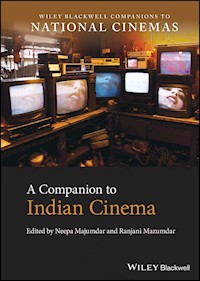
Cover image: @ Future East Film, Still from Ashim Ahluwalia’s Miss Lovely (2012)
Cover design by Wiley
Set in 11/13pt Dante MT Std by Integra Software Services, Pondicherry, India
Contents
Cover
Series page
Title page
Copyright
Notes on Contributors
Acknowledgements
Introduction
Part I Production Cultures and Circulation
1 Risky Business: The Structure and Practice of Formal Film Distribution in the Hindi Film Industry
2 Spectators from the Past: Remakes, Development, and the Bhojpuri Audience
3 (Not So) Far from Bollywood: Videocinemas of India
Part II Cinema and Material Traces
4 Shifty Outfits: Envisioning the Hindi Film Villain
5 Archival Conjugations: Queer Traces of Love and Loss in Debashree Mukherjee
6 Excavating Movie Queens: The Curious Case of the James Burke Photographs
7 Scenes of Horror: Reading the Documents of Indian Film Censorship
Part III Voices, Bodies, and Figures of Influence
8 Dance and Ludic Queerness: A Genealogy of Gestures from Bhagwan to Bachchan
9 Performing the Bhadramahila: Suchitra Sen and Popular Bangla Cinema
10 Volatile Scales, Contingent Bodies: The Many Voices of Asha Bhosle
11 Contemporary Bengali Cinema: Nostalgia, Politics, and the Ghosts of Satyajit Ray
12 The Tamasha Film: Gender, Performance, and Melodramatic Form
Part IV The Nonfiction Impulse
13 The Shikar Film and Photograph: Hunting in Colonial India
14 Moving Images: Documentary, Sexual Dissidence, and Vectors of Desire
15 The Other Song: Gender, Performance, and Aurality in Documentary Film
16 Infrastructures of Political Address: The Film and Media Archive
Part V Transnational and Transregional Circuits
17 In and Out of Alignment: Cold War Sentiment and Hollywood–Bombay Film Diplomacy in the 1950s
18 Coming into Cinema: Critical Cosmopolitanisms of Malayalam Cinema (1930–1955)
19 Affective Logics: Re-making Fidelity and Homosociality in Kaante
20 The “Conscience of Bollywood” in China: Aamir Khan and Transnational Spreadable Media
21 “Get on the Train, Baby!” Joining Kashmir and Kanyakumari through Hinglish and English Accents and Language in Chennai Express (2013)
Part VI Reflections on the Medium/Media Inscriptions
22 Staging the Screen, Screening the Stage: Mediation and the Problem of Cinematic Self-Reflexivity
23 Radical Time: 1971 and Art
24 Technological Obsolescence and Space in Bombay Cinema
25 From Unattainable to Distantly Watched Films: Film Archives and their Digital Futures
Index
End User License Agreement
List of Tables
Chapter 1
Table 1.1 Distribution circuits of India...
Table 1.2 Trade press classification...
List of Illustrations
Chapter 3
Figure 3.1 Women selling...
Figure 3.2 The actress Bala...
Figure 3.3 Akram Khan...
Figure 3.4 Shooting with...
Chapter 4
Figure 4.1 As Mogambo...
Figure 4.2 Ajit as Shakaal...
Figure 4.3 Amitabh Bachchan...
Figure 4.4 The remake of...
Chapter 5
Figure 5.1 “Easy riders” Begum...
Figure 5.2 Publicity portrait...
Figure 5.3 The poster image...
Figure 5.4 a and b. The publicity...
Figure 5.5 Begum Para plays herself...
Figure 5.6 Protima Dasgupta hanging...
Chapter 6
Figure 6.1 A.R Kardar and the...
Figure 6.2 A.R Kardar and the...
Figure 6.3 A.R Kardar and the...
Figure 6.4 A photo shoot...
Figure 6.5 A sketch of...
Figure 6.6 Asha Parekh...
Figure 6.7 The transformation...
Figure 6.8 The moments between...
Figure 6.9 Asha Parekh with...
Chapter 7
Figure 7.1 Censor certificate...
Figure 7.2 Reverse of the...
Figure 7.3 Darwaza poster...
Figure 7.4 The stop motion...
Figure 7.5 Darwaza censor...
Figure 7.6 Disclaimer...
Chapter 8
Figure 8.1 Amitabh Bachchan...
Figure 8.2 Master Bhagwan....
Figure 8.3 Master Bhagwan and Kishore...
Figure 8.4 Shammi Kapoor and Mehmood...
Chapter 9
Figure 9.1 The romantic couple...
Figure 9.2 The iconic lovers...
Figure 9.3 The lonely star...
Figure 9.4 The woman alone...
Chapter 10
Figure 10.1 An album cover...
Figure 10.2 Asha Bhosle sang...
Figures 10.3–10.4 “Acchaji main haari...
Figures 10.5–10.7 “Parde mein rehne...
Figure 10.8 “Dum maro dum”...
Figure 10.9 “Reshmi Salwar Kurta...
Chapter 11
Figure 11.1a Arun Chatterjee...
Figure 11.2a Arun, Shubho...
Figure 11.3a Shubho directs...
Figures 11.1, 11.2, and 11.3 Apur Panchali...
Chapter 12
Figure 12.1a The tamasha...
Figure 12.1b Tamasha performance...
Figure 12.1c Chima ( Hansa Wadkar...
Figure 12.2a Bugadi number,...
Figure 12.2b Hansa ( Jayashri...
Figure 12.2c Krishna (Suryakant...
Figure 12.3 Ganpat Patil as nachya....
Figure 12.4a Guna’s (Atul Kulkarni)...
Figure 12.4b Guna’s (Atul Kulkarni...
Figure 12.4c Guna (Atul Kulkarni...
Chapter 13
Figure 13.1 Frame Grab, Jim Corbett’s...
Figure 13.2 Frame Grab, Jim Corbett’s...
Chapter 14
Figure 14.1 Shyamal and Ranu...
Figure 14.2 Ranu’s spontaneous self-...
Figure 14.3 Anita’s photograph of Laxmi...
Figure 14.4 Anita’s photograph of Laxmi taking...
Figure 14.5 The fascination with non-...
Chapter 15
Figure 15.1 Rasoolan Bai (still from...
Figure 15.2 The tactile camera and the erased...
Figure 15.3 Memories and sounds of a...
Figure 15.4 Sanitized landscapes and...
Figure 15.5 The ghats of the River Ganges....
Figure 15.6 New topographies, sounds, and...
Figure 15.7 Rasoolan Bai’s thumri...
Figure 15.8 Zarina Begum singing...
Figure 15.9 Official canons and...
Chapter 16
Figure 16.1 Gandhi at the All...
Figure 16.2 Gandhi at the All...
Figure 16.3 Information card...
Figure 16.4 Title card from...
Figure 16.5 Films Division icon...
Figure 16.6 Films Division Nehru...
Figure 16.7 Recurrent focus...
Figure 16.8 Museum visitors...
Figures 16.9-16.16 Museum visitors...
Figure 16.17 Museum visitor...
Figure 16.18 Museum visitor...
Figure 16.19 Peasant publics...
Figure 16.20 Peasant women...
Figure 16.21 Backstage for...
Figure 16.22 Narendra Modi...
Chapter 17
Figure 17.1 K.A. Abbas celebrates...
Figure 17.2 The Times of India...
Figure 17.3 Filmindia goes...
Figure 17.4 Filmindia caricatures...
Figure 17.5 Another filmindia...
Figure 17.6 Nargis and Drumright...
Chapter 18
Figure 18.1 Illustration titled ...
Figure 18.2 A cartoon strip titled...
Chapter 19
Figure 19.1 Kaante’s publicity...
Figure 19.2 The image on the...
Figure 19.3 The tenth year special...
Figure 19.4 Film Club Ltd’s...
Figure 19.5 Reservoir Dogs”...
Figure 19.6 Hong Kong Legends...
Chapter 20
Figure 20.1 In a video circulating...
Chapter 21
Figure 21.1 Image from the song...
Chapter 22
Figure 22.1 The screen in Miss...
Figure 22.2 The split screen stage in...
Figure 22.3 The proscenium stage...
Figure 22.4 Glance in Patanga....
Figure 22.5 Reverse glance in Patanga...
Figure 22.6 The beam of light in Kaagaz Ke...
Figure 22.7 Stage...
Chapter 23
Figure 23.1 The Calcutta tram...
Figure 23.2 The Calcutta tram...
Figure 23.3 The Calcutta tram...
Figure 23.4 Frames from the...
Figure 23.5 Frames from the...
Figure 23.6 Frames from the...
Figure 23.7 Frames from the...
Figure 23.8 Frames from the...
Figure 23.9 Badal Sircar’s Satabdi...
Figure 23.10 Somnath Hore, from...
Figure 23.11 Vivan Sundaram’s...
Figure 23.12 Vivan Sundaram’s...
Figure 23.13 Vivan Sundaram...
Figure 23.14 K.G. Subramanyan...
Figure 23.15 Calcutta 71: the young...
Figure 23.16 Calcutta 71: the young...
Chapter 24
Figure 24.1 Miss Lovely ...
Figures 24.2 and 24.3 Miss Lovely...
Figure 24.4 Miss Lovely...
Figure 24.5 Miss Lovely...
Figure 24.6 Miss Lovely...
Figure 24.7 Gangs of Wasseypur...
Figure 24.8 Gangs of Wasseypur...
Figure 24.9 Gangs of Wasseypur...
Figures 24.10 and 24.11 Gangs...
Figure 24.12 Dum Lagake Haisha...
Figure 24.13 Dum Lagake Haisha...
Figure 24.14 Dum Lagake Haisha...
Figure 24.15 Dum Lagake Haisha...
Figure 24.16 Masaan...
Figures 24.17 and 24.18 Masaan...
Figures 24.19 and 24.20 Masaan...
Chapter 25
Figure 25.1 Debashree Mukherjee...
Figure 25.2 Annotation of Achut...
Figure 25.3 Prem Kahani (Franz...
Figure 25.4 Annotation of Jogan...
Figure 25.5 Annotation of Satya...
Guide
Cover
Series page
Title page
Copyright
Table of Contents
Notes on Contributors
Acknowledgements
Begin Reading
Index
End User License Agreement
Pages
i
ii
iii
iv
v
vi
vii
viii
ix
x
xi
xii
xiii
xiv
1
2
3
4
5
6
7
8
9
10
11
12
13
14
15
16
17
18
19
20
21
22
23
24
25
26
27
28
29
30
31
32
33
34
35
36
37
38
39
40
41
42
43
44
45
46
47
48
49
50
51
52
53
54
55
56
57
58
59
60
61
62
63
64
65
66
67
68
69
70
71
72
73
74
75
76
77
78
79
80
81
82
83
84
85
86
87
88
89
90
91
92
93
94
95
96
97
98
99
100
101
102
103
104
105
106
107
108
109
110
111
112
113
114
115
116
117
118
119
120
121
122
123
124
125
126
127
128
129
130
131
132
133
134
135
136
137
138
139
140
141
142
143
144
145
146
147
148
149
150
151
152
153
154
155
156
157
158
159
160
161
162
163
164
165
166
167
168
169
170
171
172
173
174
175
176
177
178
179
180
181
182
183
184
185
186
187
188
189
190
191
192
193
194
195
196
197
198
199
200
201
202
203
204
205
206
207
208
209
210
211
212
213
214
215
216
217
218
219
220
221
222
223
224
225
226
227
228
229
230
231
232
233
234
235
236
237
238
239
240
241
242
243
244
245
246
247
248
249
250
251
252
253
254
255
256
257
258
259
260
261
262
263
264
265
266
267
268
269
270
271
272
273
274
275
276
277
278
279
280
281
282
283
284
285
286
287
288
289
290
291
292
293
294
295
296
297
298
299
300
301
302
303
304
305
306
307
308
309
310
311
312
313
314
315
316
317
318
319
320
321
322
323
324
325
326
327
328
329
330
331
332
333
334
335
336
337
338
339
340
341
342
343
344
345
346
347
348
349
350
351
352
353
354
355
356
357
358
359
360
361
362
363
364
365
366
367
368
369
370
371
372
373
374
375
376
377
378
379
380
381
382
383
384
385
386
387
388
389
390
391
392
393
394
395
396
397
398
399
400
401
402
403
404
405
406
407
408
409
410
411
412
413
414
415
416
417
418
419
420
421
422
423
424
425
426
427
428
429
430
431
432
433
434
435
436
437
438
439
440
441
442
443
444
445
446
447
448
449
450
451
452
453
454
455
456
457
458
459
460
461
462
463
464
465
466
467
468
469
470
471
472
473
474
475
476
477
478
479
480
481
482
483
484
485
486
487
488
489
490
491
492
493
494
495
496
497
498
499
500
501
502
503
504
505
506
507
508
509
510
511
512
513
514
515
516
517
518
519
520
521
522
523
524
525
526
527
528
529
530
531
532
533
534
535
536
537
538
539
540
541
542
543
544
545
546
547
548
549
550
551
552
553
554
555
556
557
558
559
560
561
562
563
564
565
566
567
568
569
570
571
572
573
574
575
576
577
578
579
580
581
582
583
584
585
586
587
588
589
590
591
592
593
594
595
596
597
598
599
600
601
602
603
604
605
606
607
608
609
Notes on Contributors
Helen Ashton is a freelance Accent & Dialect coach working in film, TV, and theatre. Her recent credits include Disney’s live-action Mulan (2020), and Marvel’s Black Widow (2021). Helen trained as a dialect coach on the MA Voice Studies course at the Royal Central School of Speech and Drama, and also holds an MA in History from the University of Edinburgh. Publications include Work on Your Accent, which was first published by HarperCollins in 2012, and an expanded second edition released in 2020. She has taught at most of the major UK drama schools, including RADA, where she delivered the accent training for several years before leaving to pursue freelance work.
Smita Banerjee is Associate Professor in English at Delhi College of Arts & Commerce, Delhi University. She is interested in postcolonial and cinema studies. She has published articles on the Bengali film industry in the 1950s, and on popular Bengali film stars Suchitra Sen and Uttam Kumar. She is currently working on a book manuscript based on her dissertation: “The Suchitra-Uttam Yug: Modernity, Melodrama and Self-Fashioning in Popular Bangla Cinema of the 1950s–70s.”
Rachel Dwyer is Professor Emerita of Indian Cultures and Cinema at SOAS University of London. Her main research is in Hindi cinema where she has researched and published on film magazines and popular fiction; consumerism, the new middle classes, and the middlebrow; love and eroticism; visual culture; religion; emotions; Gandhi and the biopic; stars; Hinglish and language in cinema; and soft power. Among her many publications on Indian cinema are Bollywood’s India: Hindi Cinema as a Guide to Contemporary India (2014); Filming the Gods: Religion and Indian Cinema (2006); Cinema India: The Visual Culture of Hindi Film, with Divia Patel (2006); and Yash Chopra (2002). Her most recent book is Cinema and Soft Power: Configuring the National and Transnational in Geo-politics (co-edited with Stephanie Dennison, 2021).
Sabeena Gadihoke is Professor at the AJK Mass Communication Research Centre at Jamia Millia Islamia, New Delhi, where she teaches Digital Media Arts. She started her career as an independent documentary filmmaker and camera-person and has written a book on India’s first woman press photographer, Homai Vyarawalla, titled Camera Chronicles (2006). A photo historian and curator, her most recent significant curatorial project was a retrospective of photographer Jitendra Arya at the National Gallery of Modern Art, Mumbai and Bangalore, titled Light Works.
Tejaswini Ganti is Associate Professor in the Department of Anthropology and core faculty in its Program in Culture & Media at New York University. She is the author of Producing Bollywood: Inside the Contemporary Hindi Film Industry (2012); and Bollywood: A Guidebook to Popular Hindi Cinema (2004; 2nd edition 2013). Her current research examines the politics of language and translation in the Mumbai media world, the dubbing of Hollywood and Netflix in India, and the formalization of film training through film schools in India.
Shohini Ghosh is Sajjad Zaheer Chaired Professor at the AJK Mass Communication Research Centre, Jamia Millia Islamia, New Delhi. She is the director of Tales of the Nightfairies (2002), a documentary about the Sex Workers’ Rights movement in Calcutta and the author of Fire: A Queer Classic (2010). Ghosh has been Visiting Professor in a number of universities within and outside India and has had a long association with CREA’s Sexuality, Gender and Rights Program. Ghosh writes on contemporary media, speech and censorship, popular cinema, documentary, and issues of gender and sexuality. She is currently working on a book titled Violence and the Spectral Muslim: Action, Affect and Bombay Cinema at the Turn of the 21st Century.
Nitin Govil is Associate Professor of Cinematic Arts at the University of Southern California. His research and teaching focuses on comparative cultural politics with an emphasis on transnational media industries. He is the author of Orienting Hollywood: A Century of Film Culture between Los Angeles and Bombay (2015); and one of the coauthors of Global Hollywood (2001) and Global Hollywood 2 (2004). He is currently working on a book on transnational screen culture during the Cold War titled Out of Alignment.
Kathryn Hardy is an anthropologist who investigates language and other emergent practices in diverse sites such as filmmaking, the mass celebration of Chhath Puja in Mumbai, and the rambling of water buffalo in Varanasi. Her first book project examines the social categories that emerge through the production and circulation of films in the Bhojpuri language. Previously, she was a Singh Fellow at Yale University and a Mellon Fellow at Washington University in St. Louis. She received her BA from Smith College, and her PhD from the University of Pennsylvania. She is currently an Assistant Professor of Sociology and Anthropology at Ashoka University.
Veena Hariharan is Associate Professor of Cinema Studies at the School of Arts and Aesthetics, Jawaharlal Nehru University, Delhi. Her essays and articles on documentary, non-fiction cinema, and the environment have appeared in anthologies and journals. She is currently completing her book on animals and non-fiction cinema in India.
Usha Iyer, Assistant Professor, Film and Media Studies, Stanford University, is the author of Dancing Women: Choreographing Corporeal Histories of Hindi Cinema (2020), which examines constructions of gender, stardom, sexuality, and spectacle in Hindi cinema through women’s labor, collaborative networks, and gestural genealogies to produce a corporeal history of South Asian cultural modernities. Her essays have appeared and are forthcoming in Camera Obscura, South Asian Popular Culture, Figurations in Indian Film, The Oxford Handbook of Film Theory, and the Women Film Pioneers Project, among others.
Anuja Jain is Assistant Professor of Film Studies in College of Film and the Moving Image at Wesleyan University. She is the co-editor of the dossier “The Poetics of Indian Cinema” (Screen 2017). She is completing a book monograph entitled The Art of Dissent: Documentary Film, Video, and Militant Hindu Nationalism in Contemporary India. Her essays have appeared in journals and anthologies including Screen, Marg, The Velvet Light Trap, South Asian Popular Culture, and Indian Cinema Beyond Bollywood.
Shikha Jhingan is Associate Professor at the Department of Cinema Studies, School of Arts and Aesthetics, Jawaharlal Nehru University, Delhi. Her research focuses on music and the technologies of sound dispersal across diverse media platforms. She has published articles in the journals Seminar and Bioscope: South Asian Screen Studies. Jhingan is a founding member of Media-storm, an independent women’s filmmaking collective formed in Delhi in 1986.
Lawrence Liang is a Professor at the School of Law, Governance, and Citizenship, Ambedkar University, Delhi. His work lies at the intersection of law, technology, and media. Trained in law and film studies, he has a special interest in the overlapping worlds of law and cinema and his recent work examines the public life of legal trials in India.
Neepa Majumdar is Associate Professor of Film & Media Studies in the Department of English at the University of Pittsburgh. She is the author of Wanted Cultured Ladies Only! Female Stardom and Cinema in India, 1930s to 1950s (University of Illinois Press, 2009). Her research interests include film sound, star studies, South Asian early cinema, and documentary film. She is co-editor of the journals [In]Transition: Journal of Videographic Film and Moving Image Studies and Music, Sound, and the Moving Image.
Bindu Menon Mannil teaches Media Studies at Azim Premji University, Bangalore, India. Her scholarship and research are at the intersection of Cinema and Cultural Studies and cultural anthropology. Broadly, her work can be thematically located in a history of the early twentieth-century and cinema publics, audio histories, histories of media and migration, and Oceanic Humanities. Her essays have appeared in peer-reviewed journals such as Biography, Migration, Mobility & Displacement, Bioscope, Journal of Creative Communication, Seminar-India, and in edited collections. Her forthcoming monograph titled Cine Assemblages: Senses, Materiality, and Publics in the Princely States (1930–1950) maps a cine-ecology of senses, infrastructures, and publics in early twentieth-century South India. She co-edited Film Studies: An Introduction (Worldview Press, 2021) and serves on the editorial board of Studies in South Asian Film and Media (Intellect Journals).
Ranjani Mazumdar is Professor of Cinema Studies at the School of Arts & Aesthetics, Jawaharlal Nehru University, Delhi. She is the author of Bombay Cinema: An Archive of the City (University of Minnesota Press, 2007) and guest editor of a special issue of Bioscope on cinema and techno materiality (2013). Her current research interests include globalization and film culture, intermedial encounters, and the intersection of technology, travel, design, and color in 1960s Bombay Cinema.
Monika Mehta is Associate Professor of English at State University of New York, Binghamton. She is the author of Censorship and Sexuality in Bombay Cinema (2011). Her articles and chapters examining trans/national film regulation; globalization and cultural production in India; DVD compilations; music awards; cinephilia; film distribution; credit sequences; and authorship have appeared in journals and edited collections. She has co-edited Pop Empires: Transnational and Diasporic Flows of Korea and India (2019); and Industrial Networks and Cinemas of India: Shooting Stars, Shifting Geographies and Multiplying Media (2020).
Debashree Mukherjee is Assistant Professor of Film and Media in the Department of Middle Eastern, South Asian, and African Studies (MESAAS) at Columbia University. She is the author of Bombay Hustle: Making Movies in a Colonial City (Columbia University Press, 2020), which approaches film history as an ecology of material encounters between bodies, machines, aesthetics, and environments. Forthcoming is an anthology titled Beyond the Silver Screen: Josef Wirsching and An Unseen History of Indian Cinema (Mapin, 2021). She is co-editor of the journal BioScope: South Asian Screen Studies, and has published in journals such as Film History and Feminist Media Histories. In a previous life Debashree worked in Mumbai’s film and TV industries as an assistant director, writer, and cameraperson.
Kartik Nair is Assistant Professor of Film Studies in the Department of Film and Media Arts at Temple University. He is working on his first book, Seeing Things: The Spectral Materiality of Bombay Horror, which explores infrastructures of film production, censorship, and circulation by examining their sensory traces in horror films of the 1980s. Nair is a co-editor of BioScope: South Asian Screen Studies and his writing has appeared in the Journal of Cinema and Media Studies (formerly Cinema Journal), Film Quarterly, and the Hollywood Reporter.
Ashish Rajadhyaksha is a film historian and an occasional art curator. He is the author of Ritwik Ghatak: A Return to the Epic (1982); Indian Cinema in the Time of Celluloid: From Bollywood to the Emergency (2009); and The Last Cultural Mile: An Inquiry into Technology and Governance in India (2011); and editor of Encyclopaedia of Indian Cinema (with Paul Willemen, 1994/1999); In the Wake of Aadhaar: the Digital Ecosystem of Governance in India (2013); and a book of Kumar Shahani’s writings, The Shock of Desire and Other Essays (2015). He co-curated (with Geeta Kapur) the Bombay/Mumbai 1992–2001 section of Century City: Art and Culture in the Modern Metropolis at the Tate Modern (2002); the You Don’t Belong festival of film and video in four cities in China (2011); Memories of Cinema at the IVth Guangzhou Triennial, 2011; “Make-Belong”: Films in Kochi from China and Hong Kong, Kochi-Muziris Biennale, 2015; and the exhibition Tah-Satah: A Very Deep Surface: Mani Kaul & Ranbir Singh Kaleka: Between Film and Video at the Jawahar Kala Kendra, Jaipur (January–March 2017).
Bhaskar Sarkar is Associate Professor of Film and Media Studies, UC Santa Barbara, and works in the areas of Indian cinema, post/de-colonial media, the global South, cultures of uncertainty, piracy, and queer subcultures. He is the author of Mourning the Nation: Indian Cinema in the Wake of Partition (2009); and the co-editor of Documentary Testimonies (2009); Asian Video Cultures (2017); and Routledge Companion to Media and Risk (2020). Sarkar is currently completing drafts of two monographs, Cosmoplastics: Bollywood’s Global Gesture, and Pirate Humanities.
Meheli Sen is Associate Professor in the department of African, Middle Eastern, and South Asian Languages and Literatures (AMESALL), and the Cinema Studies program at Rutgers University. Her research area is post-Independence Indian cinema, particularly Hindi and Bengali language films. Sen’s work has been published in journals such as Cinema Journal, Framework: The Journal of Cinema and Media, LIT: Literature Interpretation Theory, and South Asian Popular Culture, among others. She has co-edited an anthology titled Figurations in Indian Film (2013). Sen’s book, Haunting Bollywood: Gender, Genre and the Supernatural in Hindi Commercial Cinema was published in 2017. She is currently working on a second book on media cultures in South Asia.
Krista Van Fleit is Associate Professor of Chinese Studies and serves as Director of the Center for Asian Studies at the University of South Carolina. Her first book, Literature the People Love: Reading Chinese Texts from the Early Maoist Period (1949–1976) (2013), is about the establishment of the new literary system with the founding of the People’s Republic of China. She has in recent years been working on a project comparing film in China and India, traveling to India with the support of a Fulbright-Nehru fellowship and publishing on this topic in edited volumes and journals such as Asian Cinema.
Ravi Vasudevan is a film historian working at the Centre for the Study of Developing Societies Delhi (CSDS). With Ravi Sundaram, he directs Sarai, the CSDS media research program. His publications include Making Meaning in Indian Cinema (ed., 2000); the co-edited Sarai Reader series; the Marg special issue, Documentary Now (ed., 2018); and The Melodramatic Public: Film Form and Spectatorship in Indian Cinema (2010, 2016). Vasudevan co-founded and edits the journal BioScope: South Asian Screen Studies. He is currently working on non-fiction film infrastructures; the film archives and questions of historiography; post-cinema media artefacts and political imaginaries; and the media histories of advertising, publicity, and public relations.
Aarti Wani is Associate Professor of English at the Symbiosis College of Arts and Commerce, Pune. She is the founding co-editor and currently lead editor of the journal Studies in South Asian Film and Media (Intellect Books). She was the 2015 Charles Wallace India Trust Fellow at the University of Edinburgh. Her writings on cinema have appeared in SAFM, Film International, Economic and Political Weekly, and online. Her book, The Fantasy of Modernity: Romantic Love in Bombay Cinema of the 1950s, was published in 2016.
Clare M. Wilkinson earned her PhD in Anthropology from the University of Pennsylvania. She is now Associate Professor of Anthropology at Washington State University. Her research has focused on craft and design, including a monograph on embroidery in Lucknow, Embroidering Lives: Women’s Work and Skill in the Lucknow Embroidery Industry (1999), a co-edited book (with Alicia Ory DeNicola), Critical Craft: Technology, Globalization, and Capitalism (2016), and numerous articles on costume design in Hindi film. Her book on costume, Fashioning Bollywood: The Making and Meaning of Hindi Film Costume, was published in 2013. With Aysha Iqbal Vishwamohan, she co-edited the volume Stardom in Contemporary Hindi Cinema (2020). Currently, she is working on a manuscript on material practices and craft expertise in film production design.
Acknowledgements
Work on this volume on Indian Cinema began in 2014. Subsequently, global and national events, including the recent pandemic, placed many personal and professional challenges and losses our way. We are therefore extremely grateful and would like to thank our contributors for their tremendous patience, goodwill, and support during the production of this book. Our thanks also to Tanushree Sharma for her help with the final stages of the copyediting. Thanks are in order for our editors at Wiley, especially Christy Michael, Sophie Bradwell, Nicole Allen, and Liz Wingett, for taking us through the various stages of the publishing process. For the cover of the book, we want to thank Ashim Ahluwalia for allowing us to use what is a dramatic moment from his film, Miss Lovely. The Asian Studies Center at the University of Pittsburgh helped us with the book’s production, including indexing, and we are very grateful for this support. Thanks to Lisa Rivero and Suneethi R. Raja for their work on the index. We also acknowledge the support of the National Film Archive of India at Pune for helping us with some of the stills that have been used in the book. A project long in the making, this book would have been impossible without the love and support of our friends, colleagues, and spouses, Mark Best and Ravi Sundaram.
Majumdar and Mazumdar!
June 28, 2022
Introduction
Ranjani Mazumdar and Neepa Majumdar
More than a thousand films are released in India every year for the world’s largest film audience. The popular Indian film tends to be globally identified as a cultural form that includes songs and dances, love stories, action, and larger-than-life sets. Glamorous stars adorn the screen in costumes that range from the traditional to the latest fashions. High-voltage drama, comedy, romance, family values, and violence are seen as the staple form of many films. This is the picture of Indian cinema that circulates internationally. Yet the life of Indian cinema has always been more than just its popular existence.
This companion brings together a collection of articles with the aim of raising new questions for the study of Indian cinema. We move across the spectrum of commercial, art, and non-fiction cinema to include scholarship on a range of films and film experiences. The chapters in this book deal with production cultures and circulation, material cultures, media aesthetics, censorship, stardom, non-fiction practices, new technologies, and the transnational networks relevant to Indian cinema. The collection reflects on Indian cinema’s widespread presence both within and outside India, and pays particular attention to regional language cinemas such as Bhojpuri, Bengali, Malayalam, Manipuri, and Marathi. The articles have been written specially for this volume and have drawn on original research by the authors. We have tried to ensure a careful balance between questions of cultural form, industry, circulation, technology, and performance.
Scholarship on Indian cinema began with an interest in issues of form, style, and creativity identified with the work of a few select filmmakers. This was inspired by the film society movement and film appreciation courses conducted in different parts of the country. Some of these early writings on cinema were published in The Journal of Arts and Ideas in the 1980s. These initial forays helped foreground certain auteurs such as Satyajit Ray, Ritwik Ghatak, Mrinal Sen, Kumar Shahani, and Mani Kaul. Academic attention to the vast output of commercial cinema, traditionally vilified as a popular, escapist, and a mass form, actually began in the 1990s with the arrival of a new generation of scholars trained in the disciplines of film studies and anthropology.
Influenced by the global context of film studies as a discipline, the study of Indian cinema has focussed on industrial and institutional practices, star-studies, particularly the relationship between stars, everyday life, and politics, historical spectatorship, ideological and formal analysis of popular melodramas, debates on the nature and specific history of realism in India, national identity and cinema, and a renewed study of particular studios both in the colonial and postcolonial periods. What is significant here is a distinctly interdisciplinary approach where film is viewed as an aspect of public and private life, embedded in everyday transactions of desire, aspirations, and politics, alongside, state regulation and incentives.
Since the 1990s, globalization has initiated a new and vastly expanded context for the study of Indian cinema. New technologies of production, circulation, and exhibition, attempts at industrial consolidation and entries into international markets have shifted the ground to usher in new methodological approaches. Old exhibition spaces like film theaters began to decline initially with the rise of multiplexes, television, pirated DVDs, and VCDs. These have now given way to a mobile-phone economy, cultures of online streaming, subscription, sharing, and piracy, producing communities of cinephiles, and new publics of viewers and film practitioners. It is in this extremely dynamic context that the study of Indian cinema has taken on renewed urgency.
Indian film studies is now an international force that draws on a community of scholars from across the world doing cross-disciplinary work in the fields of anthropology, cinema studies, cultural studies, comparative literature, history, media and communication studies, and South Asian studies. The twenty-first century has, in a sense, witnessed the gradual consolidation and institutionalization of Indian cinema studies in the Academy, with its own dedicated journals and international conferences held across the world. A major agenda at these conferences has been to ensure a broadening focus on the range of Indian cinemas, both along the prestige axis from highbrow to lowbrow, and along the regional axis, drawing in younger scholars working on Bengali, Tamil, Malayalam, Bhojpuri, Telugu, and Bombay Cinema. The emergence of four major journals (Bioscope: South Asian Screen Studies, Journal of South Asian Popular Culture, Studies in South Asian Film andMedia, and Journal of the Moving Image) showcasing the study of Indian cinema testifies to the dynamic range of existing scholarship.
At this point, we would like to provide a map of the key debates in the field, without necessarily making any claims to being exhaustive in our coverage, which, given the prolific spate of publications on Indian cinema today, would be impossible. These debates are placed here on the basis of their thematic and conceptual focus and not with any chronology in mind. The debates are followed by an introduction to the structure of this volume and descriptions of the individual chapters.
Culture, Nation, and the State
The desire to understand the cultural, religious, social, and national concerns of Indian cinema has shaped the work of many scholars who felt a need to establish a history and practices distinct from those of Hollywood. Some of these writings have drawn on Cultural Studies debates on the popular as a site of negotiation. The methodological approaches have ranged from textual analysis of films to historical and anthropological engagement (Bhaskar and Allen 2009; Bhaskaran 1981, 2013; Chakravarty 1993; Dickey 1993; Dissanayake and Gokulsing 1998, 2004; Dwyer 2006; Mishra 2002; Sarkar 2009; Schulze 2003; Thomas 1985; Virdi 2003). In these writings, questions related to memory, identity, and subjectivity have appeared as prime concerns. The ensemble of themes has been diverse – including analyzing the presence of Islamicate iconography (Bhaskar and Allen), the trauma of partition (Sarkar), and cinema as a form of social and cultural history (Virdi 2003). Many of the interventions, barring a few exceptions, have focussed on the Hindi-language Bombay cinema. Uma Bhrugubanda’s (2018) exploration of the relationship between female audiences, popular cinema, religion, and politics in South India is the most recent addition to these debates on identity and subjectivity.
It was the crisis of twentieth-century Marxism in the 1970s and the reversals that followed that led scholars in various disciplines to critically engage with theories of ideology and the state. Cinema was no exception. Postcolonial societies like India with their powerful film industries became the site for serious political analysis. Drawing on Marx’s comments on capitalism’s use of earlier social forms as constituting formal subsumption (as opposed to real subsumption when the commodity form is generalized throughout the social formation), Madhava Prasad (1998) has argued that Hindi cinema maps the contestations over the state form in India through an imaginary promise about the permanence of formal subsumption. Film is seen to operate here through networks of power that enable the state’s gaze to penetrate the image. Influenced in part by this argument, Ashish Rajadhyaksha (2009) has argued specifically about celluloid as a technological medium and apparatus. Distinct from the digital, celluloid is placed in this argument, as a periodizing force that marks the consolidation of the modern state to produce citizen/spectator subjects. In his work on Telugu cinema, S.V. Srinivas (2018) combines discussions on the operations of ideology with theories of mass culture. As an industry and cultural form, Telugu cinema, in Srinivas’s reading, is directly linked to both a powerful elite in Andhra Pradesh, as well as to a culture of mass politics.
Given the different geographical locations of various film industries in India, the use of a national cinema framework has had a particularly difficult journey since films are produced in different languages in cities other than Bombay. Priya Jaikumar (2006) was the first to depart from this paradigm through a stitching together of the intertwined histories of British and Indian film cultures of the colonial period. This comparative focus revealed transnational and global circuits that could not be contained within a national framework. This was followed very soon by Ranjani Mazumdar’s (2007) work on the cinematic city where urban space emerged as a cauldron of global and local imaginations. The tension between the city and the nation was framed in Mazumdar’s work through a focus on space, place, and architecture. Nitin Govil’s (2015) map of a long history of competitive, collaborative, and diplomatic exchanges between the Bombay film industry and Hollywood only reinforces the need to move beyond a national framework to understand how these encounters are staged and imagined.
In all these interventions, the transnational emerges as an established global framework that helps to complicate ideas of the nation. Yet in the Indian context, the “region” exemplified in the different languages of the states within the nation has always existed as a site of contestation. The term “regional cinema” is often used to refer to non-Hindi language cinemas of the country. Ratheesh Radhakrishnan (2016) views this production of the “region” with a degree of ambivalence since it often mirrors the cultural politics of the nation with sub-nationalist zeal. Referring to the context of Kerala and Malayalam cinema, Radhakrishnan foregrounds a need to move beyond binaries so that the subject of the region is allowed to occupy different registers and lay claim to a new horizon of the universal that might bypass the national. This is also the case with Anand Pandian’s (2015) poetic ethnography of the Tamil film industry where films remade from Telugu to Tamil and from Tamil to Hindi are explored along with practitioners who move across different industries; cameramen who process prints in Mumbai; and composers who are known for working with international musical sounds. Similar arguments about the constitution of the region have been voiced in relation to Marathi, Bengali, and Bhojpuri cinema as well (Hardy 2015; Ingle 2017; Kumar 2021; Nag and Bhattacharya 2021).
The New Film Historiography
Although one must acknowledge the pioneering PhD dissertation of Panna Shah, published as The Indian Film (1950), Eric Barnouw and S. Krishnaswamy’s Indian Film (1963, 1980) was perhaps the first comprehensive attempt to historically trace the origin and development of Indian cinema. The book provides a useful account of key figures, studios, and events, and locates these within the sociocultural context of the twentieth century. For its use of primary archival sources, the book is still considered a pioneering contribution to the study of Indian cinema. It is important, however, to think of new methods for the writing of film history, one that must break with some of the existing paradigms that have shaped the historical study of the moving image (Elsaesser 2004; Vasudevan 2010a). Film, as Thomas Elsaesser has stated, needs to move away from a family-tree model to a notion of networked relations, and this requires parallel (or parallax) histories positioned around a series of shifting parameters.
The late nineteenth and early twentieth centuries saw a flourishing presence of public entertainment forms in India’s cities, enabled through transnational circuits of colonial trade and traffic. There were theatrical forms catering to colonial and native elites along with forms like the circus, lowbrow variety shows, and musicals for soldiers, sailors, and a wider Indian populace. Traveling entertainment troupes were performing regularly in makeshift tents in various open grounds in cities like Calcutta and Bombay. Cinema arrived through the same transnational routes and became an additional element in the range of existing entertainment forms (Bhaumik 2011; Hughes 2010). The first decade of silent cinema saw the widespread presence of international films, and the expansion of exhibition networks and traveling cinemas. Even in this early period there were interests competing for a share of India’s domestic market and within this international presence, Bombay, Calcutta, and Madras emerged as prominent sites of film circulation and exhibition. Transactional economies existed across these three cities and later expanded to other cities in the subcontinent such as Lahore and Hyderabad (Hughes, Bhaumik). The growth of the film industry was a result of these complex relationships between exhibition, audience, and empire.
Kaushik Bhaumik (2002) was the first to challenge the overwhelming narrative of pioneers that has always placed Dadasaheb Phalke and his film Raja Harishchandra (1913) at the center. He does this through a focus on early accounts of circulation, distribution, and urban cultures, bringing into view hitherto unknown archival sources. Similarly, Rosie Thomas (2014), in her bold search for an alternative subterranean history, provides a revisionist account of cinema from its inception to the 1960s. She deliberately shifts her attention away from the social and mythological genres to highlight the widespread presence of a globally circulating popular culture evident in lowbrow action and fantasy films. Stephen Putnam Hughes (2010) and Neepa Majumdar (2007, 2009) have also highlighted the role of international networks in facilitating the arrival and movement of cinema in the subcontinent. Hughes focusses on Madras as a space where cinema inserted itself within a variety of pre-existing popular entertainments. Neepa Majumdar (2007) focusses on three surviving Indian Railway non-fiction films produced under colonial rule to raise methodological questions about writing film histories with partial archives. These new histories have shifted the discourse away from singular accounts to focus on networks of transnational and sub-regional mobility, circulation, and exhibition. This is also evident in the way specific geographic locations have been highlighted by a number of film histories (Chatterjee 2014; Joseph 2013; Madhuja Mukherjee 2009; Siddique 2020; Sinha 2013).
Cinema’s entry as a mass medium amid turbulent political contexts has continued to be of scholarly interest. Swarnavel Eswaran Pillai (2015) demonstrates how the studios in Madras were connected to anticolonial impulses, even if in a disguised mode, especially during the censorship regime of pre-Independence India. Pillai also traces the complex relationship between cinema and politics through the major roles played by writers, actors, and technicians who were activists in the Tamil nationalist Dravidian movement. In her comparative account of Kolkata and Mumbai during the interwar years, Manishita Dass (2016) locates a conflict inherent in cinema’s potential to build an ideal citizenry for a modern nation and the anxiety this mass contact with audiences induced among the elite during the studio era. Both these accounts draw our attention to the specific ways in which cinema affectively connected with politically charged audiences and publics.
The contemporary experience of a rapidly changing and proliferating media landscape has brought into sharp focus the multiple ways in which the cinema has traveled across time. It is this juncture that has triggered another kind of historiography that is concerned with a methodological reworking of the media archive. Sudhir Mahadevan (2015) argues that cinema arrived in South Asia alongside photography, old still cameras, lithographs, posters, and paintings. One technological object did not just give way to the other but retained a place within an assemblage of different forms inhabiting everyday life in complex ways. With a media archaeological approach, Mahadevan moves between old and new technologies, between outmoded devices and contemporary multiplexes to establish how present-day street cultures have extended the lives of older media objects. In Priya Jaikumar’s (2019) historical method, the discourse on “the idea of India” is recast through an exploration of its filmed spaces. Opening out a range of cinematic images from the colonial period to the present, Jaikumar includes travelogues, instructional films, documentary, and feature films. She argues that the cinematic transformation of landscape and territory poses a theoretical problematic for the field of film historiography. Thus, in her enquiry, the desire for causality is displaced by a spatialization of historical inquiry. Debashree Mukherjee (2020) focusses on the embodied labor and creative energies of cine workers to resurrect forms of work considered marginal to the practice and history of filmmaking. Mukherjee expands the archive beyond conventional notions of industry to include a wider ecology of life and living, risk and precarity. She shows how bodies, institutions, the environment, technology, finance, colonial power, and legal systems converged to operationalize a “cine ecology.” Her archival method brings together seemingly disconnected fragments to produce montage-like, spatialized understandings of assemblages connected by bodies, materials, and energies.
Genre, Melodrama, Songs, and Stardom
Until recently, the most recognizable of popular Indian cinema’s attractions included song sequences, an amplified acting style performed by major stars, repetitive narrative tropes, and highly choreographed dance and action. Despite widespread circulation in India and other regions arounds the world, critics were quick to dismiss popular Indian cinema for its “underdeveloped theatricality,” narrative implausibility, and escapism. With the consolidation of Indian film studies, these very issues emerged as significant areas of serious research. In 1994, with the focus on India at the Pordenone Silent Film Festival and the publication of Suresh Chabria’s Light of Asia (1994) collection, the interest in commercial cinema took a historically expansive direction. The turn to commercial cinema as a site of scholarly value became the path that led to studies of lowbrow arenas of culture, such as film songs and stars. Scholars became keen to reclaim areas of cinema consumption that may have been invisible in the axis of taste and cultural value. The objective was to historically trace and engage with popular Indian cinema’s referential world (Thomas 1985) within a global context of debates on genre, melodrama, and stardom.
The established genres in 1930s India included mythological, devotional, historical, stunt, costume, and fantasy films. These distinctions weakened with the rise of the social, a term used for a genre that dealt with contemporary issues of Indian society by integrating elements of the other genres (Prasad 1998; Thomas 1985). The social, however, receded into the background with the massive changes that began to transform cinema since the late 1960s. By the 1970s, the industry began to use the term “masala,” suggesting a careful balance of spectacle and familial emotions (Thomas 1985). Unlike Hollywood, genre formations in India have rarely been debated in aesthetic terms, exceptions notwithstanding (Thomas 2014; Vasudevan 2010b). With the onset of globalization and the reorganization of industrial production and exhibition, new research on genre clusters has emerged.
Lalitha Gopalan (2002) used the category of pleasure and cinephilia for her analysis of the action genre. Popular Indian cinema, she argued, is constituted by a logic of interruptions identified as song and dance sequences, the interval, and censorship codes. It is the acceptance of this logic that allows filmmakers to weave in their own storytelling style. The same action form is historically dealt with quite differently by Valentina Vitalli (2008) who explores the intersections of production, distribution, and exhibition to explicitly showcase genre as a structural, economic, and ideological category.
Like in other parts of the world, horror seems to have maintained a relatively steady market in India. Sangita Gopal (2012) has linked contemporary Indian horror to changes in the economy of film exhibition, especially the rise of the multiplex. In these films couples living in modern city apartments find themselves trapped by ghostly forces and inanimate objects. Shaunak Sen (2014) has argued that the transformation of everyday life with digital proliferation, has made the technological the site for a dialogue with the supernatural in films like Ragini MMS (2011) and 13 B: Fear Has a New Address (2001). Meheli Sen (2017) offers an alternative, perhaps subterranean, history of Hindi cinema through the lens of the supernatural. This is a genre that intersects with international horror but is also distinctly placed through its links with vernacular Indian modernity. The use of the supernatural as a framework allows Sen to connect the B circuit Ramsay horror films of the 1970s and 1980s with India’s uneven project of modernity, especially the persistence of feudal mores. Recent scholarship on the B circuit’s popularity with specific audiences has also brought to the fore informal modes of production and circulation infrastructures that have allowed this genre to bypass restrictions and experiment with taboo subjects (Hardy 2015; Nair 2012; Subba 2016, 2017).
Scholars of film studies in India have acknowledged the significance of melodrama’s stylistic and affective presence in Indian cinema. The interest in melodrama developed in tandem with the dominance of melodrama in Anglo-American film theory. Yet only a few had focussed specifically on the transformations and mutations of this global cultural form in the Indian context. Ravi Vasudevan (1993) initially argued that the use of a melodramatic mode in the social genre of the 1950s created a morally coded universe for spectators that was managed through a narrative of excess and containment. In his later work (The Melodramatic Public, 2010), Vasudevan emphasized what he calls a “public-fictional form” where audiences are addressed through public functions and forms of expressivity rather than as private beings. In Ira Bhaskar’s analysis, the sacred is positioned as a persistent force that aids in the negotiation of contemporary political and social concerns. The sacred operates through an amplified emotionalism and a reliance on local performance traditions which include the use of songs (Bhaskar 2018). Aarti Wani (2016) has analyzed the melodramatic universe of the 1950s specifically via the trope of romantic love. She argues that it is the force of love and passion that introduces the fantasy of the modern that is projected on screen. All three scholars recognize the role of songs in the channeling of emotion and affect.
It was Alison Arnold’s exploration of the Hindi film song (1991) and Peter Manuel’s work on cassette culture (1993) that opened the doors for what is now a burgeoning body of work on film songs that has been extended to other forms of film sound. The focus is eclectic – from questions related to form to the operations of aural stardom (Neepa Majumdar 2001) and the technological and industrial contexts of sound production and circulation. While Anna Morcom (2007) has emphasized the visual and aural imagination of songs in relation to the cinematic narrative, Gregory Booth (2008) has explored the role of individual musicians and their performances and working styles to open out hidden layers of creative labor involved in the production of film music. Jayson Beaster-Jones (2014) has argued that film songs are sonic ambassadors with a cosmopolitan quality born out of a densely collaborative production process. The public sphere’s vibrant relationship to music recording technologies has also been illuminated through the gramophone’s role in South India (Hughes 2002, 2007) and through film song requests (farmaish) on radio in North India (Duggal 2018).
There is also now a growing interest in the female voice and stardom that was addressed initially by Amanda Weidman (2006) and Neepa Majumdar (2001), and subsequently by Shikha Jhingan (2013), whose discussion updated the idea of the aural stardom of playback singers like Lata Mangeshkar to a secondary domain of copy and version singers enabled by cassette technology. Pavitra Sundar (2017) extends the discussion, suggesting that with the onset of globalization, the




