


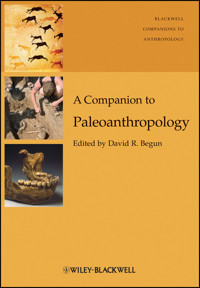
A Companion to Paleoanthropology E-Book
139,99 €
Mehr erfahren.
- Herausgeber: John Wiley & Sons
- Kategorie: Geisteswissenschaft
- Serie: Blackwell Companions to Anthropology
- Sprache: Englisch
A Companion to Paleoanthropology presents a compendium of readings from leading scholars in the field that define our current knowledge of the major discoveries and developments in human origins and human evolution, tracing the fossil record from primate and hominid origins to the dispersal of modern humans across the globe.
- Represents an accessible state-of-the-art summary of the entire field of paleoanthropology, with an overview of hominid taxonomy
- Features articles on the key discoveries in ape and human evolution, in cranial, postcranial and brain evolution, growth and development
- Surveys the breadth of the paleontological record from primate origins to modern humans
- Highlights the unique methods and techniques of paleoanthropology, including dating and ecological methods, and use of living primate date to reconstruct behavior in fossil apes and humans
Sie lesen das E-Book in den Legimi-Apps auf:
Seitenzahl: 1403
Veröffentlichungsjahr: 2012
Ähnliche




















Contents
List of Illustrations
List of Tables
Notes on Contributors
Acknowledgments
CHAPTER 1 The Past, Present and Future of Paleoanthropology
CHAPTER 2 History
DISCOVERING HUMAN PREHISTORY
EARLY THEORIES OF HUMAN ORIGINS
THE ORIGINS OF PALEOANTHROPOLOGY
THEORIES OF HUMAN EVOLUTION
THE SHIFT TO ASIA AND AFRICA
THE RISE OF MODERN PALEOANTHROPOLOGY
PART I Background to Paleoanthropology
CHAPTER 3 Human Systematics
PRINCIPLES OF SYSTEMATICS
FOSSIL HUMANS
PHYLOGENY
ALTERNATIVE PHYLOGENETIC HYPOTHESES
HUMAN CLASSIFICATION
CONCLUSION
CHAPTER 4 Experimental Approaches to Musculoskeletal Function in Primates
INTRODUCTION
BONE STRAIN
MUSCLE ACTIVITY
KINEMATICS AND KINETICS
RECENT DEVELOPMENTS
CHAPTER 5 Multivariate Quantitative Methods in Paleoanthropology
INTRODUCTION
MULTIVARIATE TECHNIQUES
GEOMETRIC MORPHOMETRICS
CHAPTER 6 Growth, Development, and Life History in Hominin Evolution
INTRODUCTION
LIFE HISTORY
APE AND HUMAN MODELS OF GROWTH AND DEVELOPMENT
RECONSTRUCTING LIFE HISTORY
LIFE HISTORY AND GROWTH IN FOSSIL HOMINOIDS AND HOMININS
SUMMARY
SECTION 2 Anatomical Regions
CHAPTER 7 Cranial Evolution in the Apes
INTRODUCTION
BASIC FEATURES OF THE APE CRANIUM
HOMINOID PHYLOGENY AND CRANIAL FEATURES
FUNCTIONAL CONSIDERATIONS
CHAPTER 8 Hominid Brain Evolution
INTRODUCTION
BRAIN SCALING
COMPARATIVE PERSPECTIVES ON BRAIN EVOLUTION
FOSSIL RECORD OF BRAIN EVOLUTION
HOMININ BRAIN EVOLUTION
REORGANIZATION
BRAIN AND BEHAVIOR
INTERPRETING BRAIN EVOLUTION
CHAPTER 9 Hominin Diets
INTRODUCTION
THE FOSSIL EVIDENCE FOR EARLY HOMININ DIET
CONTEXTUAL EVIDENCE FOR EARLY HOMININ DIET
ECOLOGICAL MODELS
NEW APPROACHES
CONCLUSIONS
ACKNOWLEDGMENTS
CHAPTER 10 Origin and Evolution of Human Postcranial Anatomy
INTRODUCTION
ORIGIN AND EVOLUTION OF HOMINOID FORM
ORIGIN OF THE HOMININ CLADE AND BIPEDALISM
ORIGIN OF HUMAN FORM
CONCLUSION
SECTION 3 Environment and Behavior
CHAPTER 11 Multiproxy Paleoecology: Reconstructing Evolutionary Context in Paleoanthropology
INTRODUCTION
TAPHONOMY
FAUNA
FLORA
BIOGEOGRAPHY
PUTTING IT ALL TOGETHER
CHAPTER 12 Reconstructing Social Behavior from Fossil Evidence
ANALOGY
PHYLOGENY
INDIRECT EVIDENCE
DIRECT MORPHOLOGICAL CORRELATES – SEXUAL DIMORPHISM
A BRIEF OVERVIEW OF DIMORPHISM AND BEHAVIOR
BEHAVIORAL-ECOLOGICAL MODELS AND THE COMPARATIVE METHOD
CHAPTER 13 Geochronology
INTRODUCTION
OVERVIEW OF RADIOACTIVE DECAY DATING METHODS
RADIOCARBON (14C) DATING
K–AR AND 40AR /39AR DATING
URANIUM SERIES DISEQUILIBRIUM DATING
COSMOGENIC NUCLIDES
FISSION TRACK
ELECTRON SPIN RESONANCE
LUMINESCENCE
MAGNETOSTRATIGRAPHY
TEPHROCHRONOLOGY
COMBINING TECHNIQUES
SUMMARY
CHAPTER 14 The Origins and Evolution of Technology
ORIGINS OF TECHNOLOGY
PALEOLITHIC OVERVIEW
LOWER PALEOLITHIC/EARLY STONE AGE
MIDDLE STONE AGE/MIDDLE PALEOLITHIC
LATE OR “UPPER” PALEOLITHIC/LATER STONE AGE
CONCLUSION
SECTION 4 Genetics and Race
CHAPTER 15 Genetic Perspectives on Ape and Human Evolution
HOMINOIDS
HUMAN ORIGINS
CONCLUSION
ACKNOWLEDGMENTS
CHAPTER 16 The Genetics of Morphology
INTRODUCTION
PALEOANTHROPOLOGY AND THE GENETICS OF MORPHOLOGY
ANIMAL MODELS FOR HUMAN CRANIOFACIAL GENETICS
THE FUTURE OF GENETIC APPROACHES TO MORPHOLOGY
SUMMARY AND CONCLUSIONS
CHAPTER 17 Paleoanthropology and Race
PREFACE
INTRODUCTION
POLYGENISM ENTERS THE 20TH CENTURY
POLYGENISM IS DISCREDITED
EVOLUTION ACCELERATES, THE PRESENT IS QUITE DIFFERENT FROM THE PAST
PALEOANTHROPOLOGY AND RACE
PART II The Fossil Record
CHAPTER 18 Primate Origins
THE ADAPTIVE CONTEXT OF PRIMATE ORIGINS
TAXONOMY AND ITS IMPACT ON OUR THINKING ABOUT EVOLUTIONARY PROBLEMS
TESTING MODELS OF PRIMATE ORIGINS USING THE FOSSIL RECORD
WHERE DO WE GO FROM HERE?
ACKNOWLEDGMENTS
CHAPTER 19 Anthropoid Origins
INTRODUCTION
ENVIRONMENTAL CONTEXT OF ANTHROPOID ORIGINS
EARLY ASIAN ANTHROPOIDS
EARLY AFRICAN ANTHROPOIDS
CONTROVERSIAL FOSSIL PRIMATES
TIMING OF ANTHROPOID ORIGINS
BIOGEOGRAPHY OF ANTHROPOID ORIGINS
EVOLUTIONARY CHANGES ASSOCIATED WITH ANTHROPOID ORIGINS
PROSPECTUS
CHAPTER 20 Catarrhine Origins
INTRODUCTION
PROPLIOPITHECOIDEA
PLIOPITHECOIDEA
SAADANIOIDEA
DENDROPITHECOIDEA
OTHER STEM CATARRHINES FROM THE MIOCENE OF EAST AFRICA
CONCLUSIONS
ACKNOWLEDGMENTS
SECTION 6 Neogene/Quaternary Hominoids
CHAPTER 21 The Miocene Hominoid Radiations
INTRODUCTION
KAMOYAPITHECUS
PROCONSUL
MOROTOPITHECUS
AFROPITHECUS
THE EARLIEST HOMINIDS: THE GRIPHOPITHS
HOMINIDS OF MORE MODERN ASPECT: THE EARLY DRYOPITHS AND SIVAPITHS
THE PONGINE RADIATION
THE HOMININE RADIATION
AFRICAN LATE MIOCENE APES
SUMMARY AND CONCLUSIONS
CHAPTER 22 Before Australopithecus:The Earliest Hominins
HOW CAN WE IDENTIFY THE EARLIEST HOMININS?
REVIEW OF THE LATE MIOCENE AND EARLY PLIOCENE FOSSILS
LOCOMOTOR ANATOMY
PHYLOGENY
SUMMARY
CHAPTER 23 Australopithecus and Kenyanthropus
AUSTRALOPITHECUS AND KENYANTHROPUS
THE GENUS AUSTRALOPITHECUS
SUMMARY
CHAPTER 24 Paranthropus
INTRODUCTION
HISTORY OF DISCOVERY
TAXONOMY
PHYLOGENETIC EVIDENCE FOR PARANTHROPUS
FUNCTION
CONCLUSIONS
ACKNOWLEDGMENTS
SECTION 7 The Age of Homo
CHAPTER 25 Earliest Homo
HISTORY AND FOSSIL DISCOVERIES
DEFINING EARLIEST HOMO
BRAIN
THE JAWS AND TEETH
POSTCRANIAL EVIDENCE
ADAPTIVE STRATEGIES
HABITAT CHANGES AND BIOGEOGRAPHY
CHAPTER 26 Homo erectus and Related Taxa
INTRODUCTION
HOMO ERECTUS IN TIME AND SPACE – DISPERSAL, MIGRATION, AND MATERIAL CULTURE
A ROSE BY ANY OTHER NAME, HOMO ERECTUS AND OTHER RELATED TAXA
HOMO ERECTUS IS A CRANIALLY DEFINED SPECIES
CRANIODENTAL ANATOMY AND DIET: EVIDENCE OF A FORAGING SHIFT?
POSTCRANIAL CHARACTERISTICS: THE PRIMITIVE, THE DERIVED AND THE UNKNOWN
BODY SIZE, BRAIN SIZE AND SEXUAL DIMORPHISM IN HOMO ERECTUS
POSTCRANIAL ANATOMY: IMPLICATIONS FOR RANGING AND LOCOMOTOR BEHAVIOR
CLIMATIC ADAPTATION IN HOMO ERECTUS
SUMMARY
ACKNOWLEDGMENTS
CHAPTER 27 The Middle Pleistocene Record: On the Ancestry of Neandertals, Modern Humans and Others …
INTRODUCTION
NEANDERTAL ORIGINS
THE AFRICAN ORIGIN OF HOMO SAPIENS
EASTERN ASIA
DISCUSSION AND CONCLUSION
CHAPTER 28 Neanderthals
HISTORICAL BACKGROUND
CHRONOLOGICAL AND GEOGRAPHICAL DISTRIBUTION
ANATOMY AND PALEOBIOLOGY
GENETICS
BEHAVIOR
THE NEANDERTHAL ROLE IN HUMAN EVOLUTION
EXTINCTION
CHAPTER 29 Modern Human Origins
INTRODUCTION
MODELS OF MODERN HUMAN ORIGINS
ANATOMICAL, GENETIC, AND LINGUISTIC EVIDENCE FOR MODERN HUMAN ORIGINS
CONCLUSIONS
ACKNOWLEDGMENTS
CHAPTER 30 Homo floresiensis
INTRODUCTION
BODY SIZE AND SHAPE
CRANIUM
MANDIBLES
TEETH
POSTCRANIUM
INSULAR DWARF OF HOMO ERECTUS OR EARLY EMIGRANT OUT OF AFRICA?
ACKNOWLEDGMENTS
Index
The Blackwell Companions to Anthropology offers a series of comprehensive syntheses of the traditional subdisciplines, primary subjects, and geographic areas of inquiry for the field. Taken together, the series represents both a contemporary survey of anthropology and a cutting edge guide to the emerging research and intellectual trends in the field as a whole.
Forthcoming
A Companion to Chinese Archaeology, edited by Anne Underhill
This edition first published 2013© 2013 Blackwell Publishing Ltd
Blackwell Publishing was acquired by John Wiley & Sons in February 2007. Blackwell’s publishing program has been merged with Wiley’s global Scientific, Technical, and Medical business to form Wiley-Blackwell.
Registered OfficeJohn Wiley & Sons, Ltd, The Atrium, Southern Gate, Chichester, West Sussex, PO19 8SQ, UK
Editorial Offices350 Main Street, Malden, MA 02148-5020, USA9600 Garsington Road, Oxford, OX4 2DQ, UKThe Atrium, Southern Gate, Chichester, West Sussex, PO19 8SQ, UK
For details of our global editorial offices, for customer services, and for information about how to apply for permission to reuse the copyright material in this book please see our website at www.wiley.com/wiley-blackwell.
The right of David R. Begun to be identified as the author of the editorial material in this work has been asserted in accordance with the UK Copyright, Designs and Patents Act 1988.
All rights reserved. No part of this publication may be reproduced, stored in a retrieval system, or transmitted, in any form or by any means, electronic, mechanical, photocopying, recording or otherwise, except as permitted by the UK Copyright, Designs and Patents Act 1988, without the prior permission of the publisher.
Wiley also publishes its books in a variety of electronic formats. Some content that appears in print may not be available in electronic books.
Designations used by companies to distinguish their products are often claimed as trademarks. All brand names and product names used in this book are trade names, service marks, trademarks or registered trademarks of their respective owners. The publisher is not associated with any product or vendor mentioned in this book. This publication is designed to provide accurate and authoritative information in regard to the subject matter covered. It is sold on the understanding that the publisher is not engaged in rendering professional services. If professional advice or other expert assistance is required, the services of a competent professional should be sought.
Library of Congress Cataloging-in-Publication Data
A companion to paleoanthropology / edited by David R. Begun.pages cmIncludes bibliographical references and index.
ISBN 978-1-4443-3116-5 (hardback)1. Paleoanthropology. 2. Fossil hominids. 3. Human evolution. I. Begun, David R., editor of compilation.GN281.C5845 2013569.9–dc23
2012036585
A catalogue record for this book is available from the British Library.
Cover image: Top: © Natalia Lukiyanova / frenta / Shutterstock. Centre: photo of archaeologist © topal / Shutterstock. Bottom: The Mauer Mandible, found in 1907 near Heidelberg, Germany. Type specimen of Homo heidelbergensis. Possibly MIS 15. Heidelberg University Institute of Geology and Paleontology.
Cover design by Richard Boxall Design Associates.
List of Illustrations
List of Tables
Table 3.1
The classification of humans. Humans and their close extinct ancestors and relatives are found within the subtribe Hominina, and are marked in bold text.
Table 4.1
Jaw-loading regimes in anthropoids.
Table 4.2
Mandibular and limb peak shear strains (γmax) in primates and other tetrapods during powerful masticatory and locomotor behaviors.
Table 4.3
EMG analyses of primate appendicular muscles.
Table 4.4
Kinematic and kinetic analyses of primate limb elements.
Table 5.1
Pooled-sex sample size information for populations and fossil hominid groupings.
Table 5.2
Eigenvector loadings and eigenvalues from the principal components analysis.
Table 5.3
Eigenvector loadings and eigenvalues from the canonical discriminant analysis.
Table 5.4
Matrix describing phenotypic distances among groups calculated from the means of the first three principal components.
Table 6.1
Life-history stages of wild chimpanzees.
Table 6.2
Life-history stages of humans.
Table 6.3
Ages or durations of key life-history attributes in great apes and humans (in years and as a percentage of ages or durations for Homo).
Table 6.4
Select immature specimens of Plio-Pleistocene hominins (note: not intended as a comprehensive inventory).
Table 6.5
Hypothesized life-history stages of Australopithecus.
Table 6.6
Hypothesized life-history stages of Homo ergaster/early Homo erectus.
Table 7.1
A list of selected features that have been proposed as derived cranial novelties in the great ape skull.
Table 8.1
Estimated cranial capacities and body weights for primate fossils.
Table 8.2
Estimated cranial capacities and body weights for extant primate species.
Table 11.1
Definitions of terms in paleoecology.
Table 11.2
Habitat reconstructions for some Plio-Pleistocene hominin sites.
Table 13.1
A summary of each of the geochronological methods discussed in Chapter 13.
Table 14.1
Major stages of the Paleolithic.
Table 16.1
Heritability estimates (h2) and standard errors for craniofacial traits. Significant covariates are indicated (Sherwood et al. 2008a).
Table 20.1
Family-group classification of the Catarrhini (after Harrison and Gu 1999; Harrison 2002, 2005, 2010; Andrews and Harrison 2005).
Table 20.2
Classification of the Propliopithecoidea from the Oligocene of Afro-Arabia.
Table 20.3
Classification of the Pliopithecoidea from the Miocene of Eurasia (updated from Harrison and Gu 1999).
Table 20.4
Taxonomy of Saadanioidea, Dendropithecoidea and early catarrhines of uncertain affinity from the Oligocene and Miocene of Afro-Arabia (after Harrison 2002, 2010; Pickford et al. 2010; Zalmout et al. 2010).
Table 21.1
A list of the taxa included in Chapter 21.
Table 21.2
A classification of hominoids described in Chapter 21.
Table 23.1
Key modern human fossil-bearing sites discussed in Chapter 23.
Table 24.1
Site, age and nature of evidence of Paranthropus.
Table 25.1
Sgnificant morphological differences between H. habilis and H. rudolfensis (after Wood 1992).
Table 25.2
Fossil remains of Homo habilis sensu stricto.
Table 25.3
Fossil remains of Homo rudolfensis.
Table 26.1
Selected dimensions by geographic region in H. erectus individuals and isolated elements. (Following Ruff and Walker (1993) or Graves et al. (2010).)
Table 28.1
Some proposed derived Neanderthal features.
Table 29.1
Key modern human fossil-bearing sites discussed in Chapter 29.
Notes on Contributors
Susan C. Antón is a Professor in the Center for the Study of Human Origins, Department of Anthropology, New York University. Her research concerns the origin and evolution of genus Homo in Indonesia and Africa and human impact on island ecosystems in the South Pacific. She recently co-edited with Leslie Aiello Human Biology and the Origin of Homo (2011), a special issue of Current Anthropology. She is co-author with Craig Stanford and John Allen of Introduction to Biological Anthropology: A Natural History of Humankind 2012). She is co-founder of the Bones and Behavior Working group (bonesandbehavior.org) and member of the Koobi Fora Research Project (http://www.kfrp.com/).K. Christopher Beard is curator of vertebrate paleontology at the Carnegie Museum of Natural History (Pittsburgh, PA). A specialist on early primates and the origin of anthropoids, Beard is the author of the award-winning book The Hunt for the Dawn Monkey: Unearthing the Origins of Monkeys, Apes and Humans (University of California Press, 2004). Among his most notable scientific papers are: K. C. Beard, et al. (1996) “Earliest complete dentition of an anthropoid primate from the late middle Eocene of Shanxi Province, China” Science, 272:82–85; K. C. Beard. (2008) “The oldest North American primate and mammalian biogeography during the Paleocene-Eocene Thermal Maximum” 105:3815–3818; K. C. Beard, et al. (2009) “A new primate from the Eocene Pondaung Formation of Myanmar and the monophyly of Burmese amphipithecids” , 276:3285–3294; and J.-J. Jaeger, K. C. Beard, et al. (2010) “Late middle Eocene epoch of Libya yields earliest known radiation of African anthropoids” , 467:1095–1098. is a professor in the Department of Anthropology, University of Toronto. He has directed or co-directed field research at Miocene fossil ape sites in Spain and Hungary and is mainly interested in the origins and evolution of the great ape and human clade. Begun works on issues of hominoid phylogeny, functional anatomy and paleobiogeography. His most recent scientific papers include: D. R. Begun et al. (2012) “European Miocene Hominids and the Origin of the African Ape and Human Clade” 21:10–23; D. R. Begun and T. L. Kivell (2011) “Knuckle-walking in : the combined effects of homology and homoplasy and implications for the origin of human bipedalism.” 60:158-170; D. R. Begun (2010) “Miocene hominids” 39:67–84; and D. R. Begun (2010) “Catarrhine cousins: the origin and evolution of monkeys and apes of the Old World” in C. S. Clark (ed.), . pp. 295–313. Wiley-Blackwell. is an anthropology professor at Modesto College in Northern California. Research on primate life history, growth and development focuses on the integration of information from multiple systems: cranial, dental, skeletal, and from soft tissue, with implications for hominin evolution. She has published growth and development data on vervet monkeys (, 2003), colobines (, 2011), chimpanzees ( 2004; , 2007; , 2011 and 2012), and an overview article (“Primate growth and development” in (2011), Oxford University Press) that lays out her approach to primate growth and development in an evolutionary context., Professor of Anthropology at Central Michigan University, is a paleoanthropologist with a long-standing interest in the relationship between science and the race concept. Recent publications include: “The evolution of grandparents” 305(2):44–49 (2011); “Older age becomes common late in human evolution”(with S. H. Lee) 101:10895–10900 (2004); “Deconstructing race: race, racial thinking and geographic variation” in C. Larsen (ed.) pp.104–122 (2010) Wiley-Liss; and “1918: Three perspectives on race and human variation” 139:5–15 (2009). is a Professor and Canada Research Chair in the Department of Archaeology at Simon Fraser University in British Columbia, Canada. He is also the director of SFU’s Human Evolutionary Studies Program (). Professor Collard works on a number of topics in evolutionary anthropology, including the identification of species in the hominin fossil record, the reconstruction of fossil hominin and nonhuman primate phylogenetic relationships, and the estimation of body mass, stature and age from skeletal material. In addition, he is using methods and theory from evolutionary biology to investigate archeologically- and ethnographically-documented patterns of material culture variation. is a PhD student in the Integrative Anatomy program at the University of Missouri. Her research interests include the plasticity, development and functional morphology of hands and feet in arboreal primates, particularly as such topics relate to climbing and grasping. She is also interested in applying in-vivo experimental methods to questions of locomotor evolution in primates. Her recent work has examined the correlation of pedal phalangeal curvature with frequency of arboreal activity in extant apes, the role of mechanical loading on joint development, and a novel 3D analysis of hominid metatarsals. Recent publications include “Interspecific and ontogenetic variation in great ape pedal phalangeal curvature” , 33:418–427 (2012); K. A. Congdon et al. (2012) “Differential limb loading in miniature pigs (): A test of chondral modeling theory” , 215:1472–1483; and K. A. Congdon et al. (2011) “3D analysis of the first complete fourth metatarsal of from Hadar, Ethiopia” (abstract) 144:111. graduated from U.C. Berkeley in 1985, where he became a founding member of the Berkeley Geochronology Center, a nonprofit institution dedicated to the calibration of the timing of events in Earth’s history. While most of his research has focused on dating important milestones in human and faunal evolution in East Africa, recent work has concentrated on tracking variations in paleoclimatic induced by oscillations in the Earth’s orbit, as revealed in cyclical deposits in the rock record. is a PhD candidate in the Department of Archeology at Simon Fraser University in British Columbia, Canada. She is also a member of SFU’s Human Evolutionary Studies Program (). Her PhD research focuses on hominin systematics. She is attempting to improve the reliability of the methods paleoanthropologists use to reconstruct the evolutionary relationships of the fossil hominins. is based at the Center for the Study of Human Origins, Department of Anthropology, New York University. His research interests are centered upon the theme of primate and human evolution, at all levels from the population to the supra-ordinal. His most recent scientific papers include: J. A. Hodgson and T. R. Disotell “Anthropological genetics: inferring the history of our species through the analysis of DNA” 3:387–398 (2010). is an Associate Professor in the Division of Morphological Sciences and Biostatistics, Departments of Community Health and Orthopaedic Surgery, Wright State University Boonshoft School of Medicine, Dayton, Ohio. Her primary research focuses on the genetic and environmental influences on bone and joint anatomy and function across the life span. Recent publications include quantitative genetics and linkage analysis of childhood bone mass, and heritability of joint cartilage thickness, a precursor to osteoarthritis. is a professor of history of science in the Department of Science and Technology in Society at Virginia Tech. His research focuses on the history of paleoanthropology and the history of prehistoric archeology and their relationship with geology, paleontology, and biology. In addition to many published articles he was the Subject Area Editor responsible for paleoanthropology and physical anthropology for the (2008). More recently he was an associate editor and a major contributing author responsible for historical and biographical entries for the Wiley-Blackwell (2011). is a physical anthropologist with a primary research interest in paleoanthropology. He obtained his PhD in anthropology from the University of Vienna in 2005 and currently works as a Research Fellow at the Max Planck Institute for Evolutionary Anthropology in Leipzig, Germany. He studies developmental and evolutionary changes in the growth patterns and morphology of fossil hominins, extant humans and non-human primates. Philipp works both in the area of “virtual paleoanthropology,” where he applies computer modeling techniques to reconstruct partial and damaged fossils for further analysis, and in the application of statistical methods to analyze shapes of fossil and living primates (geometric morphometrics). His most recent scientific papers include: P. Gunz et al. (2012) “The mammalian bony labyrinth reconsidered, introducing a new geometric morphometric approach” in the ; Gunz P. Gunz et al. (2010) “Brain development after birth differs between Neanderthals and modern humans” 20 (21):R921–922; and P. Gunz et al. (2009) “Principles for the virtual reconstruction of hominin crania” 7 (1):48–62. is a Life Sciences Fellow and PhD Candidate in Integrative Anatomy (Department of Pathology and Anatomical Sciences) as part of the Pathobiology Area Program at the University of Missouri. She has published research evaluating the effects of exercise on joint biology in mammals and finite element evaluations of cranial morphology during growth in apes and humans. In 2012, she was the recipient of the Ernest A. Hooten Prize from the American Association of Physical Anthropologists for her research using novel 3D methods to quantify hip joint size and shape in fossil hominins. is Professor of Anthropology and Director of the Center for the Study of Human Origins at New York University. He obtained his PhD in Biological Anthropology from the University of London. His research focuses on the phylogenetic relationships and paleobiology of fossil catarrhines, including the earliest hominins. He has conducted paleontological fieldwork in Europe, East Africa and Asia, and he is currently co-director of paleoanthropological research at the early hominin locality of Laetoli, Tanzania. He is Editor of the recently published two-volume series on (Springer, Dordrecht). is the Director of Paleoanthropology at the Eberhard-Karls-Universität Tübingen and the Senckenberg Center for Human Evolution and Paleoecology. She is also adjunct Professor of Anthropology at the City University of New York Graduate Center. After obtaining her PhD at the University of New York in 2001, Katerina Harvati worked as an Assistant Professor at New York University. From 2004 she was Senior Researcher at the Max-Planck-Institute for Evolutionary Anthropology in Leipzig. Professor Harvati’s research specializes in Neanderthal evolution, modern human origins and the application of 3-D geometric morphometric methods to paleoanthropology. Her general research interests include primate and human evolution; evolutionary theory; evolution of primate and human life-history; the relationship of morphological variability to population history and the environment; and Paleolithic archeology. She has conducted fieldwork in Europe and Africa, and recently directed paleoanthropological fieldwork in Greece and Tanzania. Her research was named one of the top 10 scientific discoveries of the year 2007 by magazine for demonstrating the African origin of all modern humans. In 2010 she was elected Fellow of the American Association for the Advancement of Science for her contributions to Paleoanthropology. Among her recent publications are: K. Harvati, and T. Harrison, (2006) . Springer; with S. Benazzi et al. (2011) “Early dispersal of modern humans in Europe and implications for Neanderthal behavior” 479:525–528; K. Harvati et al. (2011) “Morphologie und Chronologie der Schädelkalotte aus Iwo Eleru (Nigeria, Later Stone Age)”. PLoS ONE 6(9):e24024; K. Harvati et al. (2010) “Evolution of middle-late Pleistocene human cranio-facial form: A 3-D approach” 59:445–464. is a doctoral candidate in the Hominid Paleobiology Doctoral Program at the Center for the Advanced Study of Hominid Paleobiology at the George Washington University. A 2009 graduate of Duke University, his research interests are in postcranial functional morphology and the evolution of human gait. started his career at the French CNRS, before being hired as Professor of Anthropology at the University of Bordeaux. He is now a Professor and Director at the Max Planck Institute for Evolutionary Anthropology in Leipzig (Germany), where he created the Department of Human Evolution in 2004. His research mainly focuses on virtual paleoanthopology, the processes associated with the emergence of Neandertals and modern humans, and on the interactions between the two groups in Europe. His latest book, co-edited with S. P. McPherron, is entitled , Springer 2012. is Distinguished Teaching Professor and Chairman in the Department of Anatomical Sciences at the School of Medicine, Stony Brook University. His research interests include human evolution, paleontology, and quantitative methods. His publications include the following: B. G. Richmond and W. L. Jungers (2008) “ femoral morphology and the evolution of hominin bipedalism” 319:1662–1665; W. L. Jungers et al. (2009) “” Nature 459:81–84; and (2009) (M. Morwood and W. L. Jungers, eds.) Special Issue 57:437–650. is a research affiliate at Arizona State University’s Institute of Human Origins and associate professor at the University of Illinois, Chicago. His most recent publication is: Jay Kelley and Feng Gao (2012) “Juvenile hominoid cranium from the late Miocene of southern China and hominoid diversity in Asia” 109(18) 6882–6885. is a doctoral candidate in the Integrative Anatomy graduate program at the University of Missouri. Her research investigates the evolutionary and developmental interactions between muscle and skeletal tissues in the mammalian craniofacial complex, incorporating micro- and macro-anatomical techniques to elucidate the relationship between morphology and environment. She is a National Science Foundation Graduate Research fellow and University of Missouri Life Sciences fellow, and has been recognized by the American Association of Physical Anthropologists (2008) and the American Society for Bone and Mineral Research (2012) for her work in bone biology. Recent publications include: R. A. Menegaz et al. (2010) “Evidence for the influence of diet on cranial form and robusticity” 293A:630–641; R. A. Menegaz and E. C. Kirk (2009) “Septa and processes: convergent evolution of the orbit in haplorhine primates and strigiform birds” 59:672–687; R. A. Menegaz et al. (2009) “Phenotypic plasticity and function of the hard palate in growing rabbits” 292A:277–284. is Professor of Anthropology at the University of Arkansas, Fayetteville, and a AAAS fellow. He has published extensively on dental, cranial, and postcranial sexual dimorphism in primate and human evolution, and has carried out field work in North and South America and Africa. Recent publications include: J. M. Plavcan (2012) “Sexual size dimorphism, canine dimorphism, and male–male competition in primates: where do humans fit in?” 23:45–67; (2011) “Understanding dimorphism as a function of changes in male and female traits” 20:143–155. is Professor of Biological Sciences, Aerospace and Mechanical Engineering, and Anthropology at the University of Notre Dame, and a Research Associate in Zoology at the Field Museum. His research investigates major transformations in the mammalian musculoskeletal system during development and across higher-level clades, integrating diverse approaches to increase our understanding of the evolutionary and pathobiological significance of anatomical, functional, behavioral and ecological patterns. In addition to being a lifetime member of the Society for Integrative and Comparative Biology and American Association of Physical Anthropologists, he is a fellow of the American Association for the Advancement of Science. Recent publications include: J. E. Scott, J. B. Lack, and M. J. Ravosa (2012) “On the irreversibility of mandibular symphyseal fusion” 66, in press; M. J. Ravosa et al. (2010) “Allometry of masticatory loading parameters in mammals” 293A:557–571; E. Jašarevi et al. and M. J. Ravosa (2010) “Masticatory loading, function and plasticity: A microanatomical analysis of mammalian circumorbital soft-tissue structures” 293A:642–650. is Professor in the Institute of Human Origins, School of Human Evolution and Social Change, Arizona State University, Tempe. Among her recent publications are: D. Geraads, R. Bobe,and K. E. Reed (2012) “Pliocene Bovidae (Mammalia) from the Hadar Formation of Hadar and Ledi-Geraru, Lower Awash, Ethiopia” 32:180–197; K. E. Reed, and F. Bibi (2011) “Fossil Tragelaphini (Artiodactyla: Bovidae) from the late Pliocene Hadar Formation, Afar Regional State, Ethiopia” 18:57–69; and K. E. Reed, and S. M. Russak (2009) “Tracking ecological change in relation to the emergence of at the Plio-Pleistocene boundary,” in F. Grine, and R. E. Leakey (eds.) . SpringerLink Series in Vertebrate Paleobiology and Anthropology. is an Associate Professor in the Department of Anthropology at The George Washington University. He received his PhD from Stony Brook University in 1998. His research focuses on the origin and evolution of human gait and the functional anatomy of the hand. At The George Washington University he teaches undergraduate and graduate courses in human evolution, functional anatomy, human anatomy, and analytical member. He is a faculty member at the Center for the Advanced Study of Hominid Paleobiology and the Graduate Advisor for the Hominid Paleobiology Program. Recent publications include: D. J. Green, M. W. Hamrick, and B. G. Richmond (2011) “The effects of hypermuscularity on shoulder morphology in myostatin-deficient mice” 218:544–557; and J. Chalk, R. G. Richmond et al. (2011) “A finite element analysis of masticatory stress hypotheses” 145:1–10. is Professor of Anthropology at Indiana University Bloomington and co-director at The Stone Age Institute. She received her PhD in Anthropology from the University of California, Berkeley. Her topical interests include paleoanthropology and African prehistory, and her geographical areas of specialization are Africa and China. She was elected as a Fellow of the American Association for the Advancement of Science in 2004 and received the Distinguished Faculty Research Award from Indiana University in 1997. received his doctorate in anthropology from the University of New Mexico in 2002. He is currently an Associate Professor in the Department of Anthropology at the University of Toronto Scarborough. Dr. Schillaci’s diverse research interests include human and nonhuman primate evolution. His recent publications include “Latitudinal variation in cranial dimorphism in ” 72(2):152–160, and “Estimating the probability that the sample mean is within a desired fraction of the standard deviation of the true mean” 56(2):134–138. is an Associate Professor in Anthropology at Indiana University, a Research Scientist at the Stone Age Institute, and a member of the Cognitive Science Program at Indiana University. His research interests are on the evolution of brain and behavior, with a special focus on language. Previous publications include: “Evolution of the size and functional areas of the human brain” (2006) , v. 35:379–406, and “Evolution of brain and language” (2012) in M. A. Hofman and D. Falk (eds.), , Vol. 195, pp. 443–459. is a doctoral candidate, Center for the Advanced Study of Hominid Paleobiology, the George Washington University. Her research interest is premolar variation, particularly in . She is using an extant primate model to research the morphological integration and developmental processes at work in the molarization of the fourth premolar. Recent publications include: M. M. Skinner, K. E. Schroer et al. (2011) “Mandibular P4 morphology among Plio-Pleistocene hominins: taxonomic implications and morphological trends” uppl. 52 276; K. E. Schroer et al. (2010) “How long were australopithecine toes?” Suppl. 50 209; and K. E. Schroer (2009) “God and the Stegosaurus: presentations of creationism and evolution in American museums” Suppl. 48 330. is Section Head of the Department of Paleoanthropology at the Senckenberg Museum in Frankfurt, Germany. He is Professor of Paleoanthropology at the Johann Wolfgang Goethe University. is a Professor in Cell and Molecular Biology at Northwestern University Feinberg School of Medicine. He received his PhD in bioanthropology from Duke University and completed a postdoctoral fellowship at the American Museum of Natural History. He recently co-authored “Growth hormone binding protein, insulin-like growth factor-I and short stature in two pygmy populations from the Philippines” with N. Dávila et al. 2002 Mar; 15(3):269–76. is a Professor in the Departments of Community Health and Pediatrics, and the Director of the Division of Morphological Sciences and Biostatistics, Boonshoft School of Medicine, Wright State University, Dayton, Ohio. His training is in comparative anatomy and he has spent most of his career investigating the myriad forces influencing variation in the craniofacial complex of modern humans as well as extinct and extant nonhuman primates. His most recent work has focused on the genetic underpinnings of craniofacial morphology. His publications range from descriptions of fossil primates to genome-wide linkage scans for QTL influencing craniofacial morphology. . is Associate Professor of Anthropology at the University of Winnipeg. Her research focuses on understanding the earliest events in the evolution of the Order Primates, using the fossil record. She focuses especially on the evolution, anatomy, and ecology of plesiadapiforms. Recent publications include M.T. Silcox, C.K. Dalmyn, and J.I. Bloch. “Virtual endocast of (Paromomyidae, Primates) and brain evolution in early primates” 106:10987–92; and M.T. Silcox, J.I. Bloch, D.M. Boyer, M. Godinot, T.M. Ryan, F. Spoor, and A. Walker “Semicircular canal system in early primates” 56:315–327. is Professor of Anatomy at Case Western Reserve University School of Medicine, Cleveland, Ohio, USA and at the Laboratory of Physical Anthropology, Cleveland Museum of Natural History. Recent publications include: C. O. Lovejoy,S. W. Simpson et al. (2009) “Careful climbing in the Miocene: The forelimbs of and humans are primitive.” 326:73, 100–106; with G. Suwa et al. (2009) “Paleobiological implications of the dentition” 326:69, 94–99; S. W. Simpson et al. (2008) “A female pelvis from Gona, Ethiopia” 322:1089–1092. is a Professor at the University of Colorado at Boulder. He does research on the ecology of early hominins and associated fauna in Africa. He has also directed and co-directed several multi-disciplinary projects on the ecology of living mammals, both large and small, in South Africa. is an Associate Professor of Anthropology at the University at Albany (SUNY). He is a paleoanthropologist with interests in hominin phylogeny, the evolution of feeding biomechanics in primates and fossil humans, hominin biogeography, and paleoanthropological fieldwork. Among his recent publications are: Strait, D.S. et al. (2009) “The feeding biomechanics and dietary ecology of ” 106:2124–2129; and D. S. Strait, and F. E. Grine (2004) “Inferring hominoid and early hominid phylogeny using craniodental data: the role of fossil taxa” 47:399–452. is a Professor of Anthropology at Indiana University Bloomington and co-director of The Stone Age Institute. He earned his PhD in anthropology at the University of California, Berkeley. His topical interests include paleoanthropology, lithic technology, and African prehistory, and his geographical areas of specialization are Africa and China. He was elected as a Fellow of the American Association for the Advancement of Science in 2004. is a Professor at the University of Arkansas. His publications include , co-authored with Matt Sponheimer, , Johns Hopkins University Press 2010, and , Oxford University Press 2007; his most recent publications include P. S. Ungar, and M. Sponheimer (2011) “The diets of early hominins” 334:190–193. is Professor and Director of Anatomical Sciences in Integrative Anatomy in the University of Missouri School of Medicine Department of Pathology and Anatomical Sciences. She has published papers presenting new fossils of fossil monkeys, as well as , , , , , , and . She is a William T. Kemper Teaching Fellow and a Fellow of the American Association for the Advancement of Science. is a paleoanthropologist, and since 1977, a Professor of Anthropology and Adjunct Associate Research Scientist, in the Museum of Anthropology at the University of Michigan. He is the leading proponent of the multiregional evolution hypothesis that attempts to explain the evolution of as a consequence of evolutionary processes within a single species. He is the author of , 1980 and 1999 editions with McGraw-Hill, New York, and the co-author (with Rachel Caspari) of , which reviews the scientific evidence and conflicting theories about how human evolution has been interpreted, and how its interpretation is related to views about race. is University Professor of Human Origins at the George Washington University Center for the Advanced Study of Hominid Paleobiology. His publications include: (1991) Clarendon Press; B. A. Wood (1992) “Origin and early evolution of genus , 355:783–790; editor of (2011); and Rui Diogo and Bernard Wood (2012) . CRC Press–Taylor and Francis.
Lesen Sie weiter in der vollständigen Ausgabe!
Lesen Sie weiter in der vollständigen Ausgabe!
Lesen Sie weiter in der vollständigen Ausgabe!
Lesen Sie weiter in der vollständigen Ausgabe!
Lesen Sie weiter in der vollständigen Ausgabe!
Lesen Sie weiter in der vollständigen Ausgabe!
Lesen Sie weiter in der vollständigen Ausgabe!
Lesen Sie weiter in der vollständigen Ausgabe!
Lesen Sie weiter in der vollständigen Ausgabe!
Lesen Sie weiter in der vollständigen Ausgabe!
Lesen Sie weiter in der vollständigen Ausgabe!
Lesen Sie weiter in der vollständigen Ausgabe!
Lesen Sie weiter in der vollständigen Ausgabe!
Lesen Sie weiter in der vollständigen Ausgabe!
Lesen Sie weiter in der vollständigen Ausgabe!
Lesen Sie weiter in der vollständigen Ausgabe!
Lesen Sie weiter in der vollständigen Ausgabe!
Lesen Sie weiter in der vollständigen Ausgabe!
Lesen Sie weiter in der vollständigen Ausgabe!
Lesen Sie weiter in der vollständigen Ausgabe!
Lesen Sie weiter in der vollständigen Ausgabe!
Lesen Sie weiter in der vollständigen Ausgabe!
Lesen Sie weiter in der vollständigen Ausgabe!
Lesen Sie weiter in der vollständigen Ausgabe!
Lesen Sie weiter in der vollständigen Ausgabe!
Lesen Sie weiter in der vollständigen Ausgabe!
Lesen Sie weiter in der vollständigen Ausgabe!
Lesen Sie weiter in der vollständigen Ausgabe!
Lesen Sie weiter in der vollständigen Ausgabe!
Lesen Sie weiter in der vollständigen Ausgabe!
Lesen Sie weiter in der vollständigen Ausgabe!
Lesen Sie weiter in der vollständigen Ausgabe!
Lesen Sie weiter in der vollständigen Ausgabe!
Lesen Sie weiter in der vollständigen Ausgabe!
Lesen Sie weiter in der vollständigen Ausgabe!
Lesen Sie weiter in der vollständigen Ausgabe!
Lesen Sie weiter in der vollständigen Ausgabe!
Lesen Sie weiter in der vollständigen Ausgabe!
Lesen Sie weiter in der vollständigen Ausgabe!




