


A Companion to Public Art E-Book
53,99 €
Mehr erfahren.
- Herausgeber: John Wiley & Sons
- Kategorie: Geisteswissenschaft
- Serie: Blackwell Companions to Art History
- Sprache: Englisch
A Companion to Public Art is the only scholarly volume to examine the main issues, theories, and practices of public art on a comprehensive scale.
- Edited by two distinguished scholars with contributions from art historians, critics, curators, and art administrators, as well as artists themselves
- Includes 19 essays in four sections: tradition, site, audience, and critical frameworks
- Covers important topics in the field, including valorizing victims, public art in urban landscapes and on university campuses, the role of digital technologies, jury selection committees, and the intersection of public art and mass media
- Contains “artist’s philosophy” essays, which address larger questions about an artist’s body of work and the field of public art, by Julian Bonder, eteam (Hajoe Moderegger and Franziska Lamprecht), John Craig Freeman, Antony Gormley, Suzanne Lacy, Caleb Neelon, Tatzu Nishi, Greg Sholette, and Alan Sonfist.
Sie lesen das E-Book in den Legimi-Apps auf:
Seitenzahl: 1175
Veröffentlichungsjahr: 2016
Ähnliche




















Table of Contents
Cover
Title Page
List of Illustrations
Notes on Contributors
Acknowledgements
A Companion to Public Art
References
Part I: Traditions
Introduction
References
Suggested Further Reading
Artists’ Philosophies
Memory Works
References
Public Art?
Natural Phenomena as Public Monuments
Reference
1 Memorializing the Holocaust
Germany
Poland
Israel
The United States
References
Suggested Further Reading
2 Chilean Memorials to the Disappeared
Introduction
Chilean Memorials of the Disappeared under the Dictatorship
Circulating Textiles:
The Arpilleras
Post‐Dictatorial Chilean Government Sponsorship and Memorial Construction
Monumento a Detenidos Desaparecidos y Ejecutados Políticos
, Santiago General National Cemetery
Visitor Responses to the
MDDEP
Carving Names in Stone
Site Specificity in Chilean (Un)Official Commemoration
Parque por la Paz Villa Grimaldi
Conclusion
References
Suggested Further Reading
3 Modern Mural Painting in the United States
Introduction
American Murals before the 1893 World’s Columbian Exposition
Mural Painting in the Gilded Age and Progressive Era
Mural Painting in the United States, 1920–1945
Post‐World War II to the 1980s
Community‐Based Mural Painting in the Civil Rights Era
Conclusion
References
Suggested Further Reading
4 Locating History in Concrete and Bronze
Cultural Politics and Monuments in the Third Republic, Mali
Monuments, Urban Renewal, and Good Governance
Monuments and the Nationalist Project
A “Living Museum”
Conclusion: Bamako’s Monuments Beyond the Konaré Era
References
Suggested Further Reading
5 The Conflation of Heroes and Victims
The 1960s as Radical Break
The Long Shadow of the Holocaust
The Vietnam Veterans Memorial
: A New Memorial Archetype
A New Hybrid: The Conflation of Cemeteries and Memorials
Categories of Victims
The Persistent Need for Heroes
Memorial Museums and the Creation of Diversionary Narratives
Conclusion
Epilogue
References
Suggested Further Reading
Part II: Site
Introduction
References
Suggested Further Reading
Artists’ Philosophies
Give That Site Some Privacy
References
Suggested Further Reading
The Grandiose Artistic Vision of Caleb Neelon
6 Sculptural Showdowns
Introduction
Public Art in Chicago
Commemorating Haymarket
Haymarket
[Police]
Monument
Haymarket
[Martyrs]
Monument
Samuel Gompers
/Gompers Park
James Connolly
Lucy Parsons and Wicker Park
Charles Gustavus Wicker
Conclusion
References
7 In the Streets Where We Live
HIV/AIDS
Women
Disability
Indigenous Culture
Conclusion
References
8 Powerlands
Acknowledgements
References
Suggested Further Reading
9 Waterworks
The Prototype and the Readymade
References
10 Augmented Realities
Public Space, the Networked Commons, and Public Art
Forms of Digital Public Art
Augmented Realities: Agency, Context, and Meaning Making
References
Suggested Further Reading
Part III: Audience
Introduction
References
Suggested Further Reading
Artists’ Philosophies
Practical Strategies
The Narrative of the Work Itself
The Narratives Produced by the Work: Public Pedagogy and Developing Voice
References
Public Art in a Post-Public World
The Political Economy of Art
Tactics, Occupations, and Beyond
Complicity with Dark Matter
References
Further Suggested Reading
11 Audiences Are People, Too
Introduction
Dewey’s Location of Art
Experience as Process
People in the Process
People with a Future
Process is Practice
References
Suggested Further Reading
12 Contextualizing the Public in Social Practice Projects
Imagining an Audience
Opening Doors for Others
Expanding the Artist’s Role
Context at the Center
Creating Platforms
Gaining Trust through Exchange
Conclusion
Artist Biographies in Alphabetical Order
References
Suggested Further Reading
13 Art Administrators and Audiences
Audience as the Driving Force
Balancing Requirements
Prioritizing the Artist’s Voice
Conclusion
References
Suggested Further Reading
14 Poll the Jury
Selecting the Jury
The Role of the Administrator
Arts Professionals on the Jury
The Parameters of Jury Obligations
The Role of the Artist
Permanent Projects: A Case Study
Temporary Projects: A Case Study
Conclusion: Additional Tips for Jurors
Postscript
References
15 Participatory Public Art Evaluation
Introduction
Background: Researching Audience Response to Public Art
Identifying Reliable Indicators
Groundswell and Brownsville Community Justice Center:On‐Site Surveying and Community Partnerships
The FIGMENT Summer‐Long Interactive Sculpture Garden: On‐Site Surveying and Observation by Volunteers
Interactive Technology and Public Art Evaluation
Conclusion: The Future of Participatory Public Art Evaluation
APPENDIX A: GROUNDSWELL/BROWNSVILLE COMMUNITY JUSTICE CENTER MURAL SURVEY, 2013
APPENDIX B: SURVEY FROM 2012 FIGMENT SCULPTURE GARDEN
APPENDIX C: SURVEY FROM 2013 FIGMENT SCULPTURE GARDEN
References
Suggested Further Reading
Part IV: Frames
Introduction
Reference
Suggested Further Reading
Artists’ Philosophies
The Virtual Sphere Frame
Memory and Identity Formation
Invention and the Technological Continuum
Political Discourse and the Public Sphere
References
The Elusive Frame
Interview with Tatzu Nishi
16 The Time Frame
Introduction
Ephemeral Public Art as Cultural Probe and Research Machine
Transitional Democracies
Tactical Transience
Performed Ephemerality
Retail Value: Acts of Exchange
Disappearance as a Strategy
Heterotopias
Conclusion
References
17 The Memory Frame
Postscript
Suggested Further Reading
18 The Patronage Frame
The Moses Era (1933–1965)
The Lindsay Administration (1966–1973)
Doris Freedman
Suzanne Randolph
Anita Contini
Margot Wellington
Legislating Permanence (1965–1982)
The Koch Administration (1978–1989)
Municipal Authorities (1968 to the Present)
Conclusion
Acknowledgements
References
19 The Process Frame
Vandalism: Public Art’s Vulnerability
Vandalism: Treasure Taking/Treasure Making
Symbolic Vandalism
Symbolic Vandalism and Monuments to the Southern Confederacy
Symbolic Vandalism and “Semiotic Disobedience”
Vandalism: The
Prada Marfa
Story
Removal and Re‐Siting
Destruction
Rethinking Public Art’s Permanence
References
20 The Marketing Frame
References
21 The Mass Media Frame
Shared Culture, Television, and the Art of the Prank
Primetime: Melodrama Into Social Commentary
Daytime: Celebrity Into Performance Art
The End
References
Suggested Further Reading
Epilogue
But What Does It Mean to Practice in Public?
The Practice of Working Together
Forgetting Our Own History
Is There Such a Thing as “Public Art”?
Don’t Deny It’s Public Art
References
Index
End User License Agreement
List of Illustrations
Part 1-4
Figure I.1
Figure I.2
Figure I.1–I.3 Wodiczko + Bonder.
Mémorial de l'Abolition de l’Esclavage
(
Memorial to the Abolition of Slavery
). 2012. Nantes, France.
Part 1-6
Figure I.4 Alan Sonfist.
Time Landscape
. 1965–Present. 45 feet × 200 feet. LaGuardia and Houston Streets, New York City.
Chapter 02
Figure 2.1
Memorial del Detenido Desaparecido y del Ejecutado Político
. 1994. Marble. 30 × 4 m. Santiago General Cemetery, Santiago, Chile.
Figure 2.2 Mosaic dedicated to Benjamín Adolfo Camus Silva.
Memorial de Paine.
2008. Paine, Chile.
Chapter 03
Figure 3.1 Robert Reid.
Touch
and another of
The Five Senses
. 1898. Ceiling mural, second floor, north corridor.
Figure 3.2 Thomas Hart Benton.
America Today
, panel b) titled “City Activities with Dance Hall.” 1930–1931. Egg tempera with oil glazing over Permalba on a gesso ground on linen mounted to wood panels with a honeycomb interior. 92 × 134 ½ in (233.7 × 341.6 cm). Gift of AXA Equitable, 2012. © VAGA, NY. Image copyright © The Metropolitan Museum of Art.
Chapter 04
Figure 4.1 (l) M. Sidibe, architect.
Independence Monument
. 1995. Concrete, marble and bronze tablets. (r) M. Soumare, architect, mural design by Ishmael Diabate.
Monument to the Martyrs.
1996. Concrete, ceramic tile, bronze.
Figure 4.2 SOCOMADE (La société Coreo‐malienne de décoration).
Les Fresques Murales de Koulouba
(
The Fresco Wall at Koulouba
). 2000. Concrete and paint. Images repainted and colorized by Jamana in 2006. Photograph in 2007 by Donald E. Hurlbert.
Figure 4.3 (l) SOCOMADE (La société Coreo‐malienne de décoration).
Sogolon Kondé
. 2000. Concrete and paint. (r) COVEC (China Overseas Engineering Group, Ltd.).
La Tour d'Afrique
. 2000. Concrete and paint. Photographs in 2007 by Donald E. Hurlbert.
Part 2-10
Figure II.1 eteam.
Artificial Traffic Jam
. 2004. Cars, dirt road, 10‐acre lot in Nevada. Credit/Copyright: eteam 2004.
Figure II.2 eteam.
100 m behind the future
. 2012. Two vehicles, street theater, tablet computer, laptop, custom programming, closed wifi network. Credit/Copyright: eteam 2012.
Chapter 06
Figure 6.1 (l) Johannes Gelert.
Haymarket
[Police]
Monument.
1889. Bronze. Current location at Chicago Public Safety Headquarters as of 2007. Granite, metal, and glass pedestal with interior lighting by Mike Baur. Photo credit: Eli Robb. (r) Frederick Hibbard.
Carter Henry Harrison
. 1907. Bronze on granite pedestal. Bronze plaque missing.
Figure 6.2 Mary Brogger.
Haymarket Memorial
. 2004. Red patinated bronze on concrete base with bronze plaques.
Figure 6.3 (l) Susan Clinard.
Samuel Gompers
. 2007. Bronze on laser‐engraved granite pedestal. Photo credit: Eli Robb. (r) Tom White.
James Connolly
. 2008. Bronze on pink granite laser‐engraved pedestal.
Chapter 07
Figure 7.1 Maria Kozic.
Maria Kozic Is Bitch
. 1990. Billboard. Sydney.
Figure 7.2 Deborah Kelly.
Big Butch Billboard
. 2009. Billboard. Sydney, various locations. Photography credit: Tina Fiveash. Image Credit: Vic Giovenco.
Figure 7.3 Reko Rennie.
Always Was, Always Will Be
. 2012. Taylor Square, Sydney.
Chapter 09
Figure 9.1 Michael Asher.
Untitled
. 1991. Stuart Collection. UC San Diego, La Jolla, California. Photo by Grant Kester.
Figure 9.2 Manuelita Brown.
Triton
. 2008. UC San Diego, La Jolla, California.
Figure 9.3 Louis Kahn. Gildred Court. 1963. Salk Institute, La Jolla, California.
Figure 9.4 Roberts Engineering Hall. 2008. Carnegie Mellon University, Pittsburgh, Pennsylvania.
Chapter 10
Figure 10.1 Rafael Lozano‐Hemmer.
Voice Tunnel
. 2013. Interactive installation. Park Avenue Tunnel, DOT Summer Streets, New York City.
Figure 10.2 Tamiko Thiel.
Shades of Absence.
2011. Augmented reality.
Chapter 15
Figure 15.1 Groundswell.
Intersections Humanized
. Acrylic on wall. 1550 Pitkin Avenue, Brooklyn, New York.
Figure 15.2 Asha Ganpat.
Live!
Wood and paint.
Part 4-4
Figure IV.1 John Craig Freeman.
Orators, Rostrums, and Propaganda Stands
. 2013. Augmented reality public art. Speaker’s Square, Singapore.
Figure IV.2 John Craig Freeman.
Border Memorial: Frontera de los Muertos
. 2013. Augmented reality public art. Organ Pipe Cactus National Monument, Lukeville, Arizona.
Part 4-5
Figure IV.3 Tatzu Nishi.
Engel
. 2002. Basel, Switzerland.
Figure IV.4 Tatzu Nishi.
Discovering Columbus
. 2012. New York City.
Figure IV.5 Tatzu Nishi.
The Merlion Hotel
. 2011. Marina Bay, Singapore.
Chapter 17
Figure 17.1 Paul Druecke.
Poor Farm
. 2012.
Chapter 18
Figure 18.1 Lyman Kipp.
Boss Linco
. 1967. Central Park Mall, New York City. “Sculpture in Environment” exhibition, 1967.
Figure 18.2 Richard Hunt.
Harlem Hybrid
. 1976. Roosevelt Triangle, New York City (http://www.nycgovparks.org/parks/M189/monuments/681). Photo, 1987. Please note: In consultation with the artist, the monumental sculpture and Roosevelt Park underwent conservation through the Citywide Monuments Conservation program of the Department of Parks and Recreation in 2008.
Figure 18.3 Jorge Luis Rodríguez.
Growth
. c. 1985. Harlem Art Park, East 120th Street and Sylvan Place, New York City.
Chapter 21
Figure 21.1 GALA Committee.
RU486 Quilt
. c. 1996. Appliqué on cotton fabric. 62 × 53 inches.
Figure 21.2 GALA Committee.
Rodney King
. c. 1996. Acrylic on canvas. 24 × 36 inches (framed).
Guide
Cover
Table of Contents
Begin Reading
Pages
ii
iii
iv
v
x
xi
xi
xii
xiii
xiv
xv
xvi
xvii
xviii
xix
xix
xx
1
2
3
4
5
6
7
8
9
10
11
12
13
14
16
17
18
19
20
21
22
23
25
26
27
28
29
30
31
32
33
34
35
36
37
38
39
40
41
42
43
44
45
46
47
48
49
50
51
52
53
54
55
56
57
58
59
60
61
62
63
64
65
66
67
68
69
70
72
73
74
71
75
76
77
78
79
80
81
82
83
84
85
86
87
88
89
90
91
92
93
94
95
96
97
98
99
100
101
102
103
104
105
106
107
108
109
110
111
112
113
114
115
116
117
118
119
121
122
123
124
125
126
127
129
130
131
132
133
134
137
136
138
139
140
141
142
143
144
145
146
147
148
149
150
151
152
153
154
155
156
157
158
159
160
161
162
163
164
165
166
167
168
169
170
171
172
173
174
175
176
177
178
179
180
181
182
183
184
185
186
187
188
189
190
191
197
192
193
194
195
196
198
199
200
201
202
203
204
205
206
207
208
209
210
211
212
213
214
215
216
217
218
219
220
221
222
223
224
225
227
229
230
231
232
233
234
235
237
229
240
241
242
243
244
245
246
247
248
249
250
251
252
253
254
255
256
257
258
259
260
261
262
263
264
265
266
267
268
269
270
271
272
273
274
275
276
277
278
279
280
281
282
283
284
285
286
287
288
289
290
291
292
293
294
295
296
297
298
299
300
301
302
303
304
305
306
307
308
309
310
311
312
313
314
315
316
317
318
319
320
321
322
323
324
325
326
327
328
329
330
331
332
333
334
335
337
339
340
342
343
345
347
348
349
350
351
352
354
355
356
357
358
359
360
361
362
363
364
365
366
367
368
369
370
371
372
373
374
375
376
377
378
379
380
381
382
383
384
385
386
387
388
389
390
391
392
393
394
395
396
397
398
399
400
401
402
403
404
405
406
407
408
409
410
411
412
413
414
415
416
417
418
419
420
421
422
423
424
425
426
427
428
429
430
431
432
433
434
435
436
437
438
439
440
441
442
443
444
445
446
447
448
449
450
451
452
453
454
455
456
457
458
459
460
461
462
463
464
465
466
467
468
469
470
471
472
473
474
475
476
477
478
479
480
481
482
483
484
485
486
487
488
489
490
491
WILEY BLACKWELL COMPANIONS TO ART HISTORY
These invigorating reference volumes chart the influence of key ideas, discourses, and theories on art, and the way that it is taught, thought of, and talked about throughout the English‐speaking world. Each volume brings together a team of respected international scholars to debate the state of research within traditional subfields of art history as well as in more innovative, thematic configurations. Representing the best of the scholarship governing the field and pointing toward future trends and across disciplines, the Blackwell Companions to Art History series provides a magisterial, state‐of‐the‐art synthesis of art history.
A Companion to Contemporary Art since 1945
edited by Amelia Jones
A Companion to Medieval Art
edited by Conrad Rudolph
A Companion to Asian Art and Architecture
edited by Rebecca M. Brown and Deborah S. Hutton
A Companion to Renaissance and Baroque Art
edited by Babette Bohn and James M. Saslow
A Companion to British Art: 1600 to the Present
edited by Dana Arnold and David Peters Corbett
A Companion to Modern African Art
edited by Gitti Salami and Monica Blackmun Visonà
A Companion to Chinese Art
edited by Martin J. Powers and Katherine R. Tsiang
A Companion to American Art
edited by John Davis, Jennifer A. Greenhill and Jason D. LaFountain
A Companion to Digital Art
edited by Christiane Paul
A Companion to Dada and Surrealism
edited by David Hopkins
A Companion to Public Art
edited by Cher Krause Knight and Harriet F. Senie
A Companion to Islamic Art and Architecture, Volume 1 and 2
edited by Finbarr Flood and Gulru Necipoglu
A Companion to Public Art
Edited by
Cher Krause Knight and Harriet F. Senie
This edition first published 2016© 2016 John Wiley & Sons, Inc.
Registered OfficeJohn Wiley & Sons, Ltd, The Atrium, Southern Gate, Chichester, West Sussex, PO19 8SQ, UK
Editorial Offices350 Main Street, Malden, MA 02148‐5020, USA9600 Garsington Road, Oxford, OX4 2DQ, UKThe Atrium, Southern Gate, Chichester, West Sussex, PO19 8SQ, UK
For details of our global editorial offices, for customer services, and for information about how to apply for permission to reuse the copyright material in this book please see our website at www.wiley.com/wiley‐blackwell.
The right of Cher Krause Knight and Harriet F. Senie to be identified as the authors of the editorial material in this work has been asserted in accordance with the UK Copyright, Designs and Patents Act 1988.
All rights reserved. No part of this publication may be reproduced, stored in a retrieval system, or transmitted, in any form or by any means, electronic, mechanical, photocopying, recording or otherwise, except as permitted by the UK Copyright, Designs and Patents Act 1988, without the prior permission of the publisher.
Wiley also publishes its books in a variety of electronic formats. Some content that appears in print may not be available in electronic books.
Designations used by companies to distinguish their products are often claimed as trademarks. All brand names and product names used in this book are trade names, service marks, trademarks or registered trademarks of their respective owners. The publisher is not associated with any product or vendor mentioned in this book.
Limit of Liability/Disclaimer of Warranty: While the publisher and authors have used their best efforts in preparing this book, they make no representations or warranties with respect to the accuracy or completeness of the contents of this book and specifically disclaim any implied warranties of merchantability or fitness for a particular purpose. It is sold on the understanding that the publisher is not engaged in rendering professional services and neither the publisher nor the author shall be liable for damages arising herefrom. If professional advice or other expert assistance is required, the services of a competent professional should be sought.
Library of Congress Cataloging‐in‐Publication Data
Names: Knight, Cher Krause, editor. | Senie, Harriet F., editor.Title: A companion to public art / Edited by Cher Krause Knight and Harriet F. Senie.Description: Hoboken : John Wiley & Sons Inc., 2016. | Includes bibliographical references and index.Identifiers: LCCN 2015042771 | ISBN 9781118475324 (cloth) | ISBN 9781118475348 (ePub) | ISBN 9781118475355 (Adobe PDF)Subjects: LCSH: Public art.Classification: LCC N8825 .C64 2016 | DDC 711/.57–dc23LC record available at http://lccn.loc.gov/2015042771
A catalogue record for this book is available from the British Library.
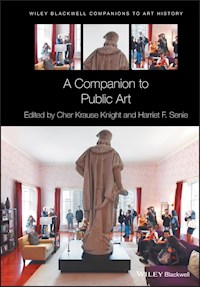
Cover image: Tatzu Nishi, Discovering Columbus. Presented by Public Art Fund in Columbus Circle, New York City, September 20 – December 2, 2012.Photo by Tom Powel Imaging, Courtesy of Public Art Fund, NY.
For our daughters:
Beatrix Marcel Knight – I love you the whole world.andLaura Kim Senie – like always!
List of Illustrations
I.1
–
I.3
Wodiczko + Bonder.
Mémorial de l'Abolition de l’Esclavage
(
Memorial to the Abolition of Slavery
). 2012. Nantes, France.27–28
I.4
Alan Sonfist.
Time Landscape
. 1965–present. LaGuardia and Houston Streets, New York City.35
2.1
Memorial del Detenido Desaparecido y del Ejecutado Político
. 1994. Santiago General Cemetery, Santiago, Chile.57
2.2
Mosaic dedicated to Benjamín Adolfo Camus Silva.
Memorial de Paine.
2008. Paine, Chile.67
3.1
Robert Reid. Detail of
The Five Senses
. 1898. Ceiling mural, second floor, north corridor, Library of Congress.79
3.2
Thomas Hart Benton.
America Today
, panel b) titled “City Activities with Dance Hall.” 1930–1931.82
4.1
(l) M. Sidibe, architect.
Independence Monument
. 1995. Bamako, Mali. (r) M. Soumare, architect, mural design by Ishmael Diabate.
Monument to the Martyrs
. 1996. Bamako, Mali.97
4.2
SOCOMADE (La société Coreo‐malienne de décoration).
Les Fresques Murales de Koulouba
(
The Fresco Wall at Koulouba
). 2000. Bamako, Mali.99
4.3
(l) SOCOMADE (La société Coreo‐malienne de décoration).
Sogolon Kondé
. 2000. Bamako, Mali. (r) COVEC (China Overseas Engineering Group, Ltd.).
La Tour d’Afrique
. 2000. Bamako, Mali.103
II.1
eteam.
Artificial Traffic Jam
. 2004. Nevada.132
II.2
eteam.
100 m behind the future
. 2012.133
6.1
(l) Johannes Gelert.
Haymarket
[Police]
Monument.
1889. Chicago.(r) Frederick Hibbard. Carter Henry Harrison. 1907. Chicago.144
6.2
Mary Brogger.
Haymarket Memorial
. 2004. Chicago.150
6.3
(l) Susan Clinard.
Samuel Gompers
. 2007. Chicago.(r) Tom White.
James Connolly
. 2008. Chicago.153
7.1
Maria Kozic.
Maria Kozic Is Bitch
. 1990. Sydney.168
7.2
Deborah Kelly.
Big Butch Billboard
. 2009. Sydney, various locations.169
7.3
Reko Rennie.
Always Was, Always Will Be
. 2012. Taylor Square, Sydney.172
9.1
Michael Asher.
Untitled
. 1991. Stuart Collection. UC San Diego, La Jolla, California.192
9.2
Manuelita Brown.
Triton
. 2008. UC San Diego, La Jolla, California.193
9.3
Louis Kahn. Gildred Court. 1963. Salk Institute, La Jolla, California. 196
9.4
Roberts Engineering Hall. 2008. Carnegie Mellon University, Pittsburgh, Pennsylvania.197
10.1
Rafael Lozano‐Hemmer.
Voice Tunnel
. 2013. Park Avenue Tunnel, DOT Summer Streets, New York City.216
10.2
Tamiko Thiel.
Shades of Absence
. 2011.219
15.1
Groundswell.
Intersections Humanized
. 1550 Pitkin Avenue, Brooklyn, New York.317
15.2
Asha Ganpat.
Live
! From the 2012 FIGMENT Summer‐Long Sculpture Garden on Governors Island, New York City.322
IV.1
John Craig Freeman.
Orators, Rostrums, and Propaganda Stands
. 2013. Speaker’s Square, Singapore.348
IV.2
John Craig Freeman.
Border Memorial: Frontera de los Muertos
. 2013. Organ Pipe Cactus National Monument, Lukeville, Arizona.351
IV.3
Tatzu Nishi.
Engel
. 2002. Basel, Switzerland.354
IV.4
Tatzu Nishi.
Discovering Columbus
. 2012. New York City.356
IV.5
Tatzu Nishi.
The Merlion Hotel
. 2011. Marina Bay, Singapore.357
17.1
Paul Druecke.
Poor Farm
. 2012.377
18.1
Lyman Kipp.
Boss Linco
. 1967. Central Park Mall, New York City. “Sculpture in Environment” exhibition, 1967.389
18.2
Richard Hunt.
Harlem Hybrid
. 1976. Roosevelt Triangle, New York City.392
18.3
Jorge Luis Rodríguez.
Growth
. c. 1985. Harlem Art Park, East 120th Street and Sylvan Place, New York City.396
21.1
GALA Committee.
RU486 Quilt
. c. 1996.443
21.2
GALA Committee.
Rodney King
. c. 1996.444
Notes on Contributors
Mary Jo Arnoldi is curator of African Ethnology and Arts in the Department of Anthropology at the Smithsonian’s National Museum of Natural History. She has conducted research in Mali since 1978 and publishes widely on its arts and performance, cultural heritage, social life, and history. Her books include Playing with Time: Art and Performance in Central Mali (1995); and the edited volume African Material Culture (1996). She has curated numerous exhibitions including the museum’s permanent “African Voices” installation, and co‐curated the Mali program “From Timbuktu to Washington” at the 2003 Smithsonian Folklife Festival.
Michele H. Bogart is professor of art history at Stony Brook University (SUNY). She is the author of Public Sculpture and the Civic Ideal in New York City, 1890–1930 (University of Chicago Press, 1989); Artists, Advertising, and the Borders of Art (University of Chicago Press, 1995); The Politics of Urban Beauty: New York and Its Art Commission (University of Chicago Press, 2006); and the forthcoming Public Sculpture as Urban Rewnewal in New York City.
Julian Bonder is an architect and educator. He is principal of Julian Bonder + Associates; and partner at Wodiczko + Bonder, Architecture‐Art‐Design (an interdisciplinary firm with artist and professor Krzysztof Wodiczko, established 2003 in Cambridge, Massachusetts). Bonder served as professor of architecture at Universidad de Buenos Aires and currently teaches architecture, design, and theory as professor of architecture at Roger Williams University, Bristol, Rhode Island. His work on architecture, public space, and memory has received numerous awards, and is often found outside the traditional boundaries of architecture. Projects include: Center for Holocaust and Genocide Studies at Clark University, Worcester, Massachusetts; Museo de la Shoah, Desaparecidos, and AMIA (all in Buenos Aires). Projects with Krzysztof Wodiczko include the Memorial to the Abolition of Slavery (recipient of the 2012 Special Mention, Biannual European Award for Urban Public Space; shortlisted for the 2013 European Union Contemporary Architecture Award – Mies van Der Rohe Prize; and exhibited at the 2014 Venice Biennale – US Pavilion). Bonder delivered the keynote address at the fourth Annual Human Rights Conference in Lima (2008), a special presentation at the Memorial Democratic Conference in Barcelona (2007); and plenary presentations at Slavery and the University: Histories and Legacies (Emory, 2011), and Democracy and Memory in Latin America (Harvard, 2013).
Cameron Cartiere is an associate professor in the Faculty of Culture + Community at Emily Carr University of Art + Design, Canada. She is a practitioner, writer, and researcher specializing in public art, curatorial practice, urban renewal, sculpture, and sculpture parks. She is the author of RE/Placing Public Art (2010, VDM Verlag Dr. Müller); co‐editor of The Practice of Public Art (Routledge, 2008); and co‐author of the Manifesto of Possibilities: Commissioning Public Art in the Urban Environment (Academia.edu, 2007). Her most recent book (with Martin Zebracki, University of Leeds, United Kingdom) is The Everyday Practice of Public Art: Art, Space, and Social Inclusion (Routledge, 2016).
Charlotte Cohen is executive director of Brooklyn Arts Council. Previously she was a fine arts officer with the United States General Services Administration (GSA) Fine Arts Collection, one of our nation’s oldest and largest public art collections. She managed the GSA’s collection and its Art in Architecture commissions in the New York and Caribbean region. Prior to joining GSA in 2005, Cohen directed the New York City Percent for Art Program for nine years.
Erika Doss is professor of American Studies at the University of Notre Dame. Her wide‐ranging interests in American art and visual culture are reflected in the breadth of her publications which include: Benton, Pollock, and the Politics of Modernism: From Regionalism to Abstract Expressionism (University of Chicago, 1991); Spirit Poles and Flying Pigs: Public Art and Cultural Democracy in American Communities (Smithsonian Institution Press, 1995); Elvis Culture: Fans, Faith, and Image (University Press of Kansas, 1999); Looking at Life Magazine (editor, Smithsonian Institution Press, 2001); Twentieth‐Century American Art (Oxford University Press, 2002); The Emotional Life of Contemporary Public Memorials: Towards a Theory of Temporary Memorials ( Amsterdam University Press, 2008); and Memorial Mania: Public Feeling in America (University of Chicago Press, 2010). Doss is also co‐editor of the “Culture America” series at the University Press of Kansas, and is on the editorial boards of Memory Studies, Public Art Dialogue, and Material Religion: The Journal of Objects, Art, and Belief.
Amanda Douberley’s research focuses on the experience of art in the urban environment. Her dissertation, “The Corporate Model: Sculpture, Architecture, and the American City, 1946–1975,” situates large‐scale abstract sculpture within the contexts of post‐World War II public relations practices and urban renewal. She is currently a lecturer in art history, theory, and criticism at the School of the Art Institute of Chicago.
Paul Druecke's work was included in the 2014 Whitney Biennial. His site specific piece, 96th Street Aperture, was installed in New York City as part of Marlborough Chelsea’s “Broadway Morey Boogie” exhibition along Broadway on the Upper West Side. Druecke’s work has been featured in Camera Austria and InterReview, and written about in Artforum, Art in America, Artnet.com, and Metropolis.com.
Hajoe Moderegger and Franziska Lamprecht (who have collaborate under the name eteam since 2001) have conceived frictions between technology, land, and the local. Through the employment of relational aesthetics, land art, and the Web, eteam triggers local responses often resulting in delays, videos, collective hallucinations, installations, simulations, or books. eteam’s projects have been featured at: MoMA PS1, New York; MUMOK Vienna; Centre Pompidou, Paris; Transmediale, Berlin; Museo Centro de Arte Reina Sofía, Madrid; Rotterdam International Film Festival; and the Biennale of Moving Images in Geneva. Moderegger and Lamprecht have received grants and commissions from: Art in General; New York State Council for the Arts; Rhizome; Creative Capital; and the John Simon Guggenheim Memorial Foundation. They were also residents at: the Center for Land Use Interpretation; Eyebeam; Smack Mellon; Yaddo; and the MacDowell Colony. Moderegger is also an associate professor of Emerging Media at The City College of New York, CUNY.
Wendy Feuer is the Assistant Commissioner for Urban Design + Art + Wayfinding at the New York City Department of Transportation. Feuer was the founding director of the New York Metropolitan Transportation Authority’s Arts for Transit office and served as Director of Arts & Design for over ten years. She worked as an independent consultant on public art, planning, and design projects for 11 years.
John Craig Freeman is a public artist with over 25 years of experience using emergent technologies to produce large‐scale public works at sites where the forces of globalization are impacting the lives of individuals in local communities. His work seeks to expand the notion of public by exploring how digital networked technology is transforming our sense of place. Freeman has produced work and exhibited around the world including: the Los Angeles County Museum of Art; the San Francisco Museum of Modern Art; FACT Liverpool; Kunsthallen Nikolaj, Copenhagen; Triennale di Milano; the Institute of Contemporary Art, Boston; and the Museum of Contemporary Art Beijing. His writing has been published in Rhizome, Leonardo, the Journal of Visual Culture, and Exposure. Freeman is a professor of new media at Emerson College in Boston.
Antony Gormley is widely acclaimed for his sculptures, installations, and public artworks that investigate the relationship of the human body to space. His work has been exhibited throughout the United Kingdom and internationally with recent solo exhibitions at: Zentrum Paul Klee, Bern (2014); Centro Cultural Banco do Brasil, São Paulo, Rio de Janeiro, and Brasília (2012); Deichtorhallen, Hamburg (2012); and the State Hermitage Museum, St. Petersburg (2011). Permanent public works include the Angel of the North (Gateshead, England); Another Place (Crosby Beach, England); Inside Australia (Lake Ballard, Western Australia); and Exposure (Lelystad, the Netherlands). Gormley was awarded the Turner Prize in 1994, and the Praemium Imperiale in 2013. In 1997 he was made an Officer of the British Empire (OBE), and knighted in the New Year’s Honours list in 2014. He has been a Royal Academician since 2003, and a British Museum Trustee since 2007. See www.antonygormley.com
Katherine Gressel is a New York City based independent curator, artist, and writer. She has written and presented for Createquity.com and the Americans for the Arts Public Art Network. She was a contributing editor and writer to Street Art: San Francisco (Abrams, 2009). Gressel has curated exhibitions for No Longer Empty, the Brooklyn Historical Society, and FIGMENT, among others, and received grants from the Puffin Foundation, Brooklyn Arts Council, and the Brooklyn Historical Society. Her exhibitions have been featured by hyperallergic.com, Time Out NY, Brooklyn.news12.com, and thelmagazine.com. Gressel was a 2008 Abbey Mural Fellow at the National Academy of Fine Arts, and a recipient of a 2009 CEC ArtsLink travel grant. She has worked in arts education, community outreach, and fundraising at such organizations as Smack Mellon, Times Square Alliance, and Creative Time.
Mary Jane Jacob is a curator and the Executive Director of Exhibitions and Exhibition Studies and professor at the School of the Art Institute of Chicago. Shifting her workplace from museums to the street, she critically engaged the discourse of public space with landmark exhibitions “Places with a Past” in Charleston, South Carolina; “Culture in Action” in Chicago; and “Conversations at the Castle” in Atlanta. Artists’ practices in relation to audiences and within the realm of society have been the subject of her co‐edited volumes: Buddha Mind in Contemporary Art (University of California Press, 2004); Learning Mind: Experience into Art (University of California Press, 2009); Chicago Makes Modern: How Creative Minds Changed Society (University of Chicago Press, 2012); The Studio Reader: On the Space of Artists (University of Chicago, 2010); and the four‐volume Chicago Social Practice History series (University of Chicago, 2014–2015).
Grant Kester is professor of art history in the Visual Arts Department at the University of California at San Diego. His publications include: Art, Activism and Oppositionality: Essays from Afterimage (Duke University Press, 1998); Conversation Pieces: Community and Communication in Modern Art (University of California Press, 2004); and The One and the Many: Contemporary Collaborative Art in a Global Context (Duke University Press, 2011). He is currently completing work on Collective Situations: Dialogues in Contemporary Latin American Art 1995–2010, an anthology of writings by Latin American art collectives, with Bill Kelley, Jr.
Cher Krause Knight is professor of Art History at Emerson College in Boston. Among her numerous publications are the books: Power and Paradise in Walt Disney’s World (University Press of Florida, 2014); and Public Art: Theory, Practice and Populism (Blackwell, 2008). Knight is the co‐founder of Public Art Dialogue, an international professional organization devoted to providing an interdisciplinary critical forum for the field. She co‐founded and co‐edits the journal Public Art Dialogue (Routledge/Taylor & Francis) with Harriet F. Senie, with whom she also co‐edited this volume.
Suzanne Lacy’s work includes installations, video, and large‐scale performances based upon social themes. Recent projects include: Between the Door and the Street, for Creative Time in New York City (NYC); Drawing Lessons, with Andrea Bowers for the Drawing Center, NYC; Cleaning Conditions: An Homage to Allan Kaprow for the Manchester Art Gallery; and The Tattooed Skeleton, at the Museo Nacional Centro Reina Sofía, Madrid. Also known for her writing, Lacy edited the influential Mapping the Terrain: New Genre Public Art (Bay Press, 1994), and Leaving Art: Writings on Performance, Politics, and Publics, 1974–2007 (Duke University Press, 2010). Suzanne Lacy: Spaces Between is a monograph on the artist by Sharon Irish (University of Minnesota Press, 2010). Lacy has shown her work in exhibitions at: the Tate Modern in London; the Museum of Contemporary Art in Los Angeles; and Museo Pecci in Milan, Italy. She is the founding chair of the Graduate Public Practice Program at Otis College of Art and Design in Los Angeles.
Marisa Lerer is an assistant professor of Art History at Manhattan College. Her areas of specialization are modern and contemporary Latin American art. She has published essays in Public Art Dialogue, and Artists Reclaim the Commons: New Works/New Territories/New Public. Her current book project investigates patronage and artistic strategies for memorializing Argentina’s victims of state sponsored terrorism.
Kate MacNeill is an associate professor in the School of Culture and Communication at the University of Melbourne, where she is the head of the graduate program in arts and cultural management. Her doctoral studies examined counter‐identities in Australian contemporary art, and she has published on art, controversy, and censorship in the public sphere. With a professional background as a lawyer she teaches art and the law. Her research interests also extend to: the intersection between intellectual property law and the arts; co‐leadership in performing arts companies; and ethics and creative practices. She is currently the managing editor of the Asia Pacific Journal of Arts and Cultural Management.
Jennifer McGregor is the Director of Arts and Senior Curator at Wave Hill, a world‐ renowned public garden and cultural center overlooking the Hudson River in the Bronx, New York City. She organizes adventurous exhibitions that explore nature, culture, and site such as “Remediate/Re‐vision: Public Artists Engaging the Environment.” Throughout her career she has worked with non‐traditional public spaces, diverse audiences, and accomplished artists. She frequently consults nationally on commissions, exhibitions, and master plans. With Renee Piechocki she spearheaded the Public Art Network of Americans for the Arts, and recently completed a five‐year public art strategy for the Rose Kennedy Greenway in Boston, Massachusetts. As the first director of New York City’s Percent for Art Program in the 1980s McGregor implemented the program guidelines and launched the first 60 projects, opening the door for artists to work with city agencies and communities throughout the five boroughs.
Caleb Neelon’s bright, folksy works, frequently incorporating nautical and quilting motifs, can be seen in gallery and museum exhibitions and on walls around the world. Neelon regularly writes for national magazines and is the author of several books, among them the landmark book The History of American Graffiti (2011), which he co‐authored with Roger Gastman.
Tatzu Nishi works and lives in Berlin and Tokyo; he has been living in Germany since 1987 after studying at Musashino Art University in Japan. Nishi now practices all over the world executing large‐scale projects that focus on the notion of public space. His representative works construct living room‐like spaces that enclose everyday public objects such as town monuments and street lamps. Recent projects include The Merlion Hotel at the Singapore Biennale (2011), and TATZU NISHI Discovering Columbus in New York City (2012).
Christiane Paul is associate professor at the School of Media Studies, The New School, and Adjunct Curator of New Media Arts at the Whitney Museum of American Art. She has written extensively on new media arts and lectured internationally on art and technology. Her books include: Context Providers – Conditions of Meaning in Media Arts (Intellect, 2011; Chinese edition 2012), co‐edited with Margot Lovejoy and Victoria Vesna; New Media in the White Cube and Beyond (University of California Press, 2008); and Digital Art (Thames and Hudson, 2003/2008/2014). At the Whitney Museum she curated several exhibitions (including “Cory Arcangel: Pro Tools,” 2011), and is responsible for the artport website devoted to Internet art. Other curatorial work includes “The Public Private” (Kellen Gallery, The New School, 2013); “Eduardo Kac: Biotopes, Lagoglyphs and Transgenic Works” (Rio de Janeiro, Brazil, 2010); and “Feedforward–The Angel of History,” co‐curated with Steve Dietz (Laboral, Gijón, Spain, 2009).
Patricia C. Phillips is a writer and curator whose interests include public art, urban interventions, architecture, and landscape. She is on the editorial advisory boards of Public Art Dialogue (and serves as that journal’s book reviews editor), Public Art Review, and Public (an online journal of Imagining America). She is co‐curator of a major exhibition at the Queens Museum, New York, which opens in fall 2016 on the work of artist Mierle Laderman Ukeles. She will contribute the central essay for a monograph on the artist to accompany that exhibition. She is Dean of Graduate Studies at Rhode Island School of Design.
Renee Piechocki is an artist and public art consultant. She has worked in the field of public art from many vantage points including the New York City Department of Cultural Affairs’ Percent for Art Program, Acconci Studio, and with the Public Art Network of Americans for the Arts. She founded the Office of Public Art, a public‐private partnership in Pittsburgh, Pennsylvania, in 2005, and has helped develop public art plans and strategies for the Rose F. Kennedy Greenway in Boston, Massachusetts; the city of Charleston, West Virginia; and the City of Lancaster, Pennsylvania. She is a partner in the collaboration Two Girls Working with artist Tiffany Ludwig. Their projects include Trappings and Taking Stock, socially engaged projects that explore issues connected to power and value.
Sylvia Rhor is associate professor of Art History at Carlow University in Pittsburgh. She has written extensively about murals in educational institutions, the history of museum education, and political cartoons, including most recently “The Evolution of the Chicago School Mural Movement” in The Decorated School: Essays in the Visual Culture of Schooling (Black Dog Press, 2013). Also a museum educator and curator, Rhor served on the curatorial team for “To Inspire and to Instruct: The Art Collection of Chicago Public Schools” at The Art Institute of Chicago. She also co‐curated two exhibitions at The Andy Warhol Museum: “Too Hot to Handle: Creating Controversy Through Political Cartoons after 9/11,” and “Drawn to the Summit: A G‐20 Exhibition of International Political Cartoons.” Her current research focuses on early twentieth‐century labor murals in Pittsburgh.
Eli Robb is a practicing artist and associate professor and Chair of the Department of Art and Art History at Lake Forest College. He has an active sculpture practice, conducts non‐publicized social interventions, and is profoundly interested in the public life of art. Robb recently served as guest editor for the special “Perspectives on Relational Art” issue of Public Art Dialogue, and has exhibited his work at ThreeWalls in Chicago, the Evanston Art Center, and the Sonnenschein Gallery in Lake Forest, Illinois.
Harriet F. Senie is professor of Art History and director of the City College MA program in art history and its art museum studies track. She also teaches at the CUNY Graduate Center. She is the author of Memorials to Shattered Myths: Vietnam to 9/11 (Oxford University Press, 2016); Dangerous Precedent? The ‘Tilted Arc’ Controversy(University of Minnesota Press, 2001); and Contemporary Public Sculpture: Tradition, Transformation, and Controversy (Oxford University Press, 1992). She is co‐editor with Sally Webster and contributor to Critical Issues in Public Art: Content, Context, and Controversy (HarperCollins, 1992; Smithsonian Institution Press, 1998) and co‐editor of this volume with Cher Krause Knight. In 2008, together with Knight, she founded Public Art Dialogue, an international organization that is also a College Art Association affiliate. The journal, Public Art Dialogue, which she co‐edits with Knight, has appeared twice annually since March 2011; it is the first peer‐reviewed journal devoted to public art.
Gregory Sholette is a New York based artist and writer whose recent art projects include Our Barricades at Station Independent Gallery; and Imaginary Archive at Institute of Contemporary Art, University of Pennsylvania, Philadelphia (2015) and at Las Kurbas Center, Kyiv, Ukraine (2014). His recent publications include: It’s The Political Economy, Stupid, co‐edited with Oliver Ressler (Pluto Press, 2013); and Dark Matter: Art and Politics in an Age of Enterprise Culture (Pluto Press, 2011). Sholette served as a board member of the College Art Association (1999–2004), and was a founding member of the artists’ collectives Political Art Documentation/Distribution (PAD/D: 1980–1988); and REPOhistory (1989–2000). He is still active today with Gulf Labor Coalition and serves on the curriculum committee of Home Workspace Beirut, Lebanon. He is on the Associate Faculty for the Art, Design and the Public Domain program of Harvard University’s Graduate School of Design. Sholette is an associate professor in the Queens College CUNY Art Department where he co‐developed and teaches in its MFA concentration of Social Practice Queens.
Alan Sonfist is an artist/designer who engages with natural landscapes to evoke the hidden narratives of the Earth. His vision and green art projects cross borders to inspire ecological sensibility and conservation.
Erika Suderburg is the co‐editor of Resolutions: Contemporary Video Practices (1995), and Resolution 3: Global Video Praxis (2013). She is also the editor of Space, Site, Intervention: Situating Installation Art (2000). Her films have been exhibited internationally in festivals, museums, and on television. She is currently on the faculty of the University of California, Riverside, in the Department of Media and Cultural Studies.
Mary M. Tinti is the Curator of the Fitchburg Art Museum (FAM) in Fitchburg, Massachusetts. Prior to joining the staff at FAM, Tinti was the Koch Curatorial Fellow at deCordova Sculpture Park and Museum (2011–2013), the first Public Art Fellow at the New England Foundation for the Arts (2010–2011), and Deputy Artistic Director of WaterFire Providence (2008–2010). An inaugural officer of Public Art Dialogue (2008–2012), Tinti also served as the organization’s editorial assistant and artists’ projects liaison for its peer‐reviewed journal of the same name. Her writing credits include essays and editorial projects for FAM and deCordova exhibitions, articles for Collections and Woman’s Art Journal, entries for the Grove Encyclopedia of American Art, and blog posts for WGBHArts.
Jonathan Wallis is associate professor of Art History and Curatorial Studies and the Penny and Bob Fox Distinguished Professor at Moore College of Art & Design in Philadelphia. His current research interests and scholarly work focus upon the intersection of ethics, socially engaged art, and critical pedagogy. His work has been published in The Journal of Curatorial Studies, Woman’s Art Journal, and Papers of Surrealism. He has written several book chapters on the post‐Surrealist work of Salvador Dalí. In 2011 he curated the exhibition “Jenny Drumgoole: The Real Women of Philadelphia,” in the Levy Gallery at Moore College of Art & Design. Wallis is a recipient of the Christian R. and Mary F. Lindback Award for Distinguished Teaching (2013).
Sally Webster is a writer in residence in the New York Public Library’s Wertheim Study, and Professor Emerita of American Art at Lehman College and the Graduate Center, CUNY. She is author of Eve’s Daughter/Modern Woman: A Mural by Mary Cassatt (2004), and other articles on mural painting including most recently, “Fables of Abundance: The Huntington Murals at the Yale University Art Gallery,” The Magazine Antiques (2012). Her latest book is The Nation’s First Monument and the Origins of the American Memorial Tradition: Liberty Enshrined (Ashgate, 2015).
James E. Young is Distinguished University Professor of English and Judaic Studies at the University of Massachusetts Amherst and Director of the university’s Institute for Holocaust, Genocide, and Memory Studies. He is the author of Writing and Rewriting the Holocaust (Indiana University Press, 1988); The Texture of Memory (Yale University Press, 1993), which won the National Jewish Book Award in 1994; and At Memory’s Edge: After‐images of the Holocaust in Contemporary Art and Architecture (Yale University Press, 2000). He was also the guest curator of an exhibition at the Jewish Museum in New York City, “The Art of Memory: Holocaust Memorials in History” (March–August 1994, with venues in Berlin and Munich, September 1994–June 1995), and the editor of The Art of Memory (Prestel Verlag, 1994), the exhibition catalogue for this show. Young also serves as Editor‐in‐Chief of The Posen Library of Jewish Culture and Civilization, a ten‐volume anthology of primary sources, documents, texts, and images from Yale University Press (2012–2015).
Acknowledgements
In a project as comprehensive as this one, there are many people to thank. First and foremost we want to thank all of our contributors; without them, clearly, this volume would not exist. We are grateful for their thoughtfulness, expertise, and critical acumen, and we hope they are as pleased with this book as we are.
Jayne Fargnoli at Wiley‐Blackwell initially invited us to undertake this Companion and has provided valuable guidance throughout the process. We are very thankful for this invitation that allowed us to help shape our field and codify its history, theory, and practice. Thanks also go to many other folks at Wiley‐Blackwell including Mark Graney, Stephanie Halks, Mary Hall, Julia Kirk, and Allison Kostka for their assistance at different points in the project.
Our wonderful editorial assistant, Sierra Rooney, kept the various elements of the book organized and on schedule. She worked tirelessly corresponding with contributors, alerting us to potential problems, checking final formats, and keeping every version of the volume accessible as it evolved. We could not have managed this vast undertaking so well or efficiently without her considerable skill and efforts.
We also wish to thank our colleagues at and the administrations of Emerson College in Boston and The City College of New York (City University of New York) for their support and encouragement as we engaged in this lengthy project.
Thanks must also go to our friends and families for their patience and good humor while we worked on this book. In particular we thank Beatrix Marcel Knight, Brooke Knight, Elaine Krause, Harold Krause, and Laura Kim Senie.
And finally, the co‐editors wish to thank each other – without one another the project would have been lonely and not nearly as much fun.
A Companion to Public Art: Introduction
Cher Krause Knight and Harriet F. Senie
From its conception, this book was meant to be open and inclusive. Surely any Companion is expected to offer a panoramic view of the given discipline, and to be as holistic in its treatment as feasible. But we wanted more than that for A Companion to Public Art. In a field as widely diverse as ours is so too, we decided, must be the writings brought together to represent it. And so we set out with the intention to gather as many different types of voices as possible that could illuminate the theory and practice of public art. We are grateful to everyone who contributed to this volume: individually each of their writings makes a major contribution to the discipline, but together they enrich and amplify one another. In this book we have pieces by art historians and critics, artists and architects, curators and administrators: their writings here are a form of service to the field, evidence of their commitment to public art. We have purposefully included both established and emerging figures in public art, and they write on everything from legendary artworks to projects that were little known before their discussion in this Companion.
The artists’ philosophies included here comprise an extremely important part of the book. Too often the artist’s voice is excluded or marginalized in art history texts such as this one that are supposed to survey the field with breadth and depth. Our idea was to invite artists to contribute writings on their philosophies rather than the more conventional artists’ statements. No doubt artists’ statements are useful, but they are usually written to frame a specific piece or body of artwork, and therefore can be too limiting in their focus. We wanted something broader, and more ideological, for this volume. The philosophies are intended for the artists to express, in their own words, the underlying processes, purposes, and possible meanings of their art. In many instances they tackled larger issues related to their own work, but also frequently extending beyond such to the field in general. We are very appreciative of the artists who have agreed to share their philosophies here, providing us a glimpse inside the workings of their minds and their art.
The Companion is divided into four distinct parts: Traditions, Site, Audience, and Frames; each is defined in more detail in a separate introduction. Briefly, Traditions considers approaches to conventional forms of public art such as memorials and murals, which define the legacies for more contemporary iterations. Site considers the various ways this defining element of public art may be addressed today, including but extending far beyond physical manifestations. Audience tackles the vagaries of trying to identify and serve the individuals for whom public art is presumably created. And Frames suggests further ways our expansive field may be discussed in order to bring some of its most important but often overlooked elements into clearer focus. Of necessity, none of these parts can be completely overarching or conclusive. Rather this volume is intended to provide food for thought prompting further dialogue and discourse. Toward that end we want to suggest ongoing critical issues as they pertain to specific topics as well as the entire field.
The matters so aptly addressed in the Traditions part might be expanded by considering further analysis of memorials in light of recent research in memory studies. Barbara Misztal’s 2003 study Theories of Social Remembering offers a useful summary of prevalent approaches. Recent discoveries in neuroscientific research are also related to understanding individual memory. In this context Daniel L. Schacter’s Searching for Memory: The Brain, the Mind, and the Past (1996) is a good general introduction to the way people remember, while Joseph LeDoux’s Synaptic Self: How Our Brains Become Who We Are (2002) summarizes the latest developments in neuropsychology, which are relevant to comprehending how individuals directly involved with commemorated events might react to memorials dedicated to these subjects. This point suggests that it would also be useful to look at the literature of trauma studies, in particular the way the body remembers as analyzed, for example, by Babette Rothschild in The Body Remembers: The Psychophysiology of Trauma and Trauma Treatment (2000). These areas of research can provide information critical to considerations both in the commissioning and design of memorials, as well as in understanding the various responses these structures might prompt. Together with the theories outlined by Misztal they provide a basis for analyzing both collective and collected memories. Since memorials are almost always political, memories of political events figure significantly in their conception and interpretation. Useful approaches to these elusive and complex factors are found in James W. Pennebaker, Dario Paez, and Bernard Rimé’s anthology Collective Memory of Political Events: Social Psychological Perspectives (1997).
There has been much discussion in recent years about the relationship between history and memory – their distinctions and overlaps – and the confusions between them. Sparked perhaps by Pierre Nora’s foundational essay, “Between Memory and History: Les Lieux de Mémoire” (1989), this subject was also the basis of more in‐depth explorations such as Jacques Le Goff’s History and Memory (1992). Such considerations prompted a different interpretation of Maya Lin’s Vietnam Veterans Memorial by Daniel Abramson, who in his article “Make History, Not Memory” suggested that listing the names in chronological order could actually be considered a historical chronicle (1999).
The field could also use more nuanced studies into the vagaries of the commissioning process for memorials. Patrick Hagopian provides an excellent model with his The Vietnam War in American Memory: Veterans, Memorials, and the Politics of Healing (2009). Within recent decades a number of memorials have been commissioned with museums as essential components of their respective projects (most notably the Oklahoma City National Memorial & Museum, and the National September 11 Memorial & Museum); additionally a number of existing memorials have added museums after the fact (for example, the Liberty Memorial in Kansas City added the National World War I Museum, and the Vietnam Veterans Memorial in Washington, D.C., is in the process of adding an education center). Which narratives do these museums present, and do they reflect the implicit content of the memorials with which they are associated? What is the significance of adding a museum years or decades after a memorial is built? Such museums have been analyzed as a general topic by Paul Williams in Memorial Museums: The Global Rush to Commemorate Atrocities (2007), while Harriet F. Senie concentrates on a select few American examples in Memorials to Shattered Myths: Vietnam to 9/11 (2016). Senie also addresses the ways memorials inscribe concepts of national identity – be they myths or not – as root elements of their essential resonance.
There have been quite a few scholars and commentators who have remarked that memorials are as much about forgetting as remembering. That is to say, that once a memorial is built it grants a kind of implicit permission to forget. This predicament is addressed from both historical and geographical perspectives in the volume edited by Adrian Forty and Susanne Kuchler, The Art of Forgetting (1999). Memorials are kept alive by rituals, which are often accompanied by or concretized through material objects, linking their study also to the fields of material culture. Significant studies here include the following anthologies: Acts of Memory: Cultural Recall in the Present (2009), edited by Mieke Bal, Jonathan Crewe, and Leo Spitzer; Death, Memory & Material Culture (2001), edited by Elizabeth Hallam and Jenny Hockey; and Material Memories: Design and Evocation (1999), edited by Marius Kwint, Christopher Breward, and Jeremy Aynsley. But perhaps the most significant question to consider is which subjects are not commemorated. Which individuals or groups and which subjects have been omitted from the collective imaginary of our local and national shared spaces?
While memorials have proliferated at various times in history and as of late, murals have been both omnipresent and somehow invisible as Sally Webster and Sylvia Rohr point out in their chapter in this volume. Billboards constitute another similar form of public art. Commissioned both for advertising and public service purposes, they reach the driving (and sometimes pedestrian) public, a very large segment of our society often defined by its mobility (Senie 1999). These forms serve to highlight that public art, however delineated, has never been confined to a single definition any more than has art in the museum. But just as there historically have been critically favored subjects or modes of expressions for museum art, so too with public art. Favored forms of public art have included: object sculptures; public art that references or takes the forms of landscape elements; public art with a function such as seating or lighting; and most recently social practice public art (Senie 1992; Knight 2008). How we understand and interpret these various forms of public art is largely determined by their sites.
In the part on Site




