


0,49 €
Niedrigster Preis in 30 Tagen: 1,99 €
Niedrigster Preis in 30 Tagen: 1,99 €
Mehr erfahren.
- Herausgeber: Booksell-Verlag
- Kategorie: Gesellschafts- und Liebesromane
- Sprache: Englisch
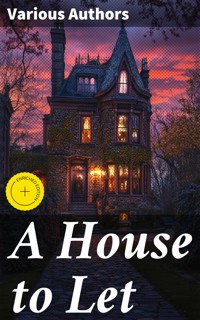
A House to Let is an exemplary anthology that assembles a tapestry of Victorian literary brilliance, seamlessly weaving together the genres of mystery, drama, and social commentary. This collection, anchored by the collective creativity of four distinguished authors, captivates with its central theme of the enigmatic and transformative space within a single, unassuming house. The varied literary styles contribute to a narrative mosaic, each piece offering a unique lens through which the central theme unfurls, effortlessly guiding readers through the layers of intrigue that lie within the walls of 'a house to let.' The anthology showcases the formidable talents of its contributors'—Adelaide Anne Procter, Wilkie Collins, Elizabeth Cleghorn Gaskell, and Charles Dickens'—each leaving their indelible mark on the cultural landscape of Victorian England through their literary prowess. Procter's poignant poetry adds depth, while Collins's penchant for suspense enriches the plot. Gaskell's nuanced portrayal of social issues offers critical insights, complemented by Dickens's vivid characterization and social critique. Together, these authors illuminate the shared thematic thread, revealing the diverse cultural and social currents of their era. A House to Let presents an unparalleled opportunity to immerse oneself in the rich narrative and thematic sophistication of the Victorian era. This collection is not only a testament to the collaborative spirit of its authors but also a portal into the social and cultural dialogues of their time. Readers will find themselves enlightened by the anthology's multi-faceted perspectives and encouraged to reflect on the dynamic interplay of themes that resonate across each distinct contribution. A House to Let is indispensable for anyone eager to investigate the confluence of mystery, society, and the human condition. In this enriched edition, we have carefully created added value for your reading experience: - An Introduction draws the threads together, discussing why these diverse authors and texts belong in one collection. - Historical Context explores the cultural and intellectual currents that shaped these works, offering insight into the shared (or contrasting) eras that influenced each writer. - A combined Synopsis (Selection) briefly outlines the key plots or arguments of the included pieces, helping readers grasp the anthology's overall scope without giving away essential twists. - A collective Analysis highlights common themes, stylistic variations, and significant crossovers in tone and technique, tying together writers from different backgrounds. - Reflection questions encourage readers to compare the different voices and perspectives within the collection, fostering a richer understanding of the overarching conversation.
Das E-Book können Sie in Legimi-Apps oder einer beliebigen App lesen, die das folgende Format unterstützen:
Veröffentlichungsjahr: 2019
Ähnliche
















A House to Let
Table of Contents
Introduction
A House to Let brings together works by Adelaide Anne Procter, Wilkie Collins, Elizabeth Cleghorn Gaskell, and Charles Dickens under a unifying motif: a dwelling as the stage on which curiosity, community, and secrecy intersect. Across these pieces the threshold of a house becomes a point of entry into neighboring lives and a mirror for social hopes and anxieties. The result is a sequence that uses a single address as a catalyst for multiple angles of approach.
Over the Way signals a vantage point across the street, attentive to observation and interpretation from a distance. Three Evenings in the House suggests interior glimpses shaped by time, while Let at Last hints at resolution through occupancy. Number One., Number Two., and Number Three. introduce a measured progression, as if piecing together facets of a larger question.
The Manchester Marriage grounds domestic life within a named place, tying union to locality and the pressures that accompany it. Going into Society turns attention toward aspiration and belonging, mapping how private ambitions meet the public world. Together they place the house within wider networks of work, reputation, and the desire to find a proper place among others.
Trottle’s Report implies inquiry, evidence, and the authority of a voice charged with making sense of scattered signs. Read alongside Over the Way and the numbered sections, it suggests a mosaic of testimony, hearsay, and reflection, where certainty is provisional and perspective matters. The house draws witnesses as much as it shelters residents.
The four authors gathered here bring distinct sensibilities to this shared terrain, creating productive contrasts in tone and emphasis. Comedy rubs shoulders with sobriety, intimacy with public spectacle, and the familiar with the uncanny. The interplay of their approaches keeps the focus nimble, returning to the house while allowing each piece to stand on its own terms.
The questions animating these works remain resonant. They consider how neighbors watch and imagine one another, how movement into new circles changes self-understanding, and how domestic spaces can both conceal and reveal. In an era of crowded streets and porous boundaries between home and world, the ethical stakes of curiosity, hospitality, and judgment feel immediate.
Approached as a sequence, Over the Way, The Manchester Marriage, Going into Society, Three Evenings in the House, Number One., Number Two., Number Three., Trottle’s Report, and Let at Last form an evolving conversation about how a single house can refract many lives. The path traced by these titles moves from observation to encounter, from fragments to reports, and toward the moment a house becomes lived in. The collection invites attention to the links between pieces while leaving ample room for discovery.
Historical Context
Socio-Political Landscape
Composed for mid-Victorian readers, A House to Let and its constituent tales—Over the Way, The Manchester Marriage, Going into Society, Three Evenings in the House, Number One., Number Two., Number Three., Trottle’s Report, and Let at Last—were produced under a constitutional monarchy negotiating rapid industrial capitalism. Parliamentary reform remained partial, with franchise limits preserving elite power while municipalities wrestled with sanitation, housing, and poor relief. The narratives’ attention to tenancy, spectacle, and domestic precarity mirrors anxieties about urban property and the fluid borders of respectability. Gendered “separate spheres” ideology shaped expectations of marriage and work, even as women’s economic vulnerability and informal authority complicate those norms.
In the background stood imperial campaigns and shocks: the Crimean conflict’s bureaucratic lessons and the recent uprising on the subcontinent, both amplifying debates on discipline, logistics, and moral responsibility. Railways, docks, and police forces restructured daily life and surveillance. Class stratification hardened alongside philanthropic display, with performers and servants occupying ambiguous thresholds that Going into Society and Over the Way probe obliquely. Print culture transformed as newspaper taxes fell, enabling mass weeklies; yet libel laws and genteel gatekeepers like circulating libraries filtered tone and themes. Editorial stewardship by Charles Dickens coordinated Wilkie Collins and Elizabeth Gaskell, channeling misgivings into accessible holiday entertainment.
Reformist legislation edged forward unevenly: the Matrimonial Causes Act altered access to divorce; public health boards confronted cholera; and factory regulations contested child and female labor while preserving employer prerogatives. Coverture underwrote The Manchester Marriage’s domestic stakes, as property and liability norms constrained women’s choices without erasing their practical agency. Irish and colonial diasporas reshaped London streets, feeding nativist stereotypes that polite fiction often sidestepped yet could not ignore. Policing of speech persisted through prosecutions and the moral economy of subscription, so that social critique traveled by indirection—through eccentric narrators, rented rooms, and reports like Trottle’s, which translate bureaucratic scrutiny into narrative curiosity.
Intellectual & Aesthetic Currents
Philosophically, these writers navigated a late-Enlightenment faith in rational inquiry alongside evangelical conscience and a market-inflected ethic of self-improvement. Charles Dickens mobilizes comic grotesque and social satire in Going into Society, pressing moral feeling into civic critique. Wilkie Collins experiments with inference, surveillance, and testimony—central to Three Evenings in the House, Number One., Number Two., Number Three., and Trottle’s Report—testing how knowledge is pieced from partial signs. Elizabeth Gaskell’s The Manchester Marriage applies sober causality to domestic conduct, aligning sympathy with accountability. Across the collection, prudential calculation meets unruly affect, producing narratives that reason about care without abandoning surprise.
Aesthetically, the Christmas number format fused heterogeneous modes: sketch, confession, investigative report, and sentimental tableau. Theatrical melodrama and music-hall spectacle inform Going into Society’s fascination with display, while the investigative poise of Trottle’s Report absorbs contemporary faith in files, timetables, and the telegraph. Gaslight, railways, and photography reoriented vision and pace, encouraging plots that pivot on seeing and misrecognition. Realist observation, associated with Gaskell’s steadiness, converses with Collins’s emergent sensation techniques, while Dickens’s caricatural energy channels carnival traditions. Rivalries were commercial rather than doctrinaire: competing weeklies prized nimble seriality, and this composite venture showcased multiple signatures without issuing a partisan manifesto.
Intellectually, emerging social sciences prized observation and classification, encouraging narrative experiments with evidence and doubt. Three Evenings in the House and its numbered sequences refine the case-history’s cadence, while Over the Way turns the street-facing window into a moral lens on urban life. The house itself becomes an aesthetic problem: how interiors encode class aspiration, secrecy, and tenancy law. Advances in sanitation engineering and domestic architecture made dwelling a public matter, not purely private refuge. The result is a cross-pollination of Realism’s minute surfaces with the anticipatory thrills of mystery, a hybrid well suited to collective authorship and to readers trained by fast, illustrated print.
Legacy & Reassessment Across Time
Twentieth-century upheavals—two world wars, municipal reform, and welfare legislation—reframed the collection’s tenancy anxieties as precursors to debates on surveillance, social housing, and the precarity of entertainment labor. Sensation methods once dismissed as mere contrivance gained esteem as proto-detective architecture; Wilkie Collins’s contributions rose in scholarly visibility. Elizabeth Gaskell’s domestic ethics attracted feminist and labor-focused readings, while Charles Dickens’s popular authority was sifted for the politics of spectacle. Post-colonial perspectives complicated the anthology’s urban parochialism by tracking empire’s shadows in policing and charity. Housing crises and gig economies further renewed interest in how Going into Society and Over the Way stage performance, debt, and display.
Critical fortunes have tracked access. With copyright expiry and the digitization of Household Words, the anthology circulates freely in annotated editions that restore original punctuation and illustrations. Radio drama and occasional television anthologies have adapted sequences such as Let at Last or Trottle’s Report, emphasizing ensemble narration. Scholars debate collaborative authorship—how Dickens’s editorship mediates Collins’s detection and Gaskell’s restraint—and use stylistic analysis to parse the numbered installments. Contemporary approaches test new lenses: environmental historians read smoggy streets and drains; gender studies revisit coverture and care; urbanists and decolonization projects interrogate empire’s logistics. The result is a supple archive for teaching, adaptation, and debate.
Synopsis (Selection)
OVER THE WAY
An observant gentlewoman becomes intrigued by a supposedly empty house across the street that shows puzzling signs of occupancy, prompting an inquiry into its past and present.
THE MANCHESTER MARRIAGE
In industrial Manchester, a woman’s settled second marriage is unsettled by the return of a figure from her past, testing loyalty, secrecy, and domestic stability.
GOING INTO SOCIETY
A former showman recounts how a troupe of fairground performers rented the house to ‘enter society,’ only to find that wealth and ambition cannot easily buy acceptance.
THREE EVENINGS IN THE HOUSE
Across three visits, a narrator senses shifting moods within the house—unease, tenderness, and hope—hinting at lives once intertwined there and a quiet, redemptive affection.
NUMBER ONE / NUMBER TWO / NUMBER THREE
Three linked testimonies from people connected to the house supply complementary clues; together, their recollections assemble the hidden story behind its strange comings and goings.
TROTTLE’S REPORT
A methodical investigation by the narrator’s servant collates interviews, documents, and observations into a coherent account that points to a human mystery rather than a supernatural one.
LET AT LAST
The conclusion resolves the intrigue by revealing the true connection among the house’s figures and placing the right tenants within its walls, turning a haunted vacancy into a home.
Author Biography
Introduction
Charles Dickens, born on February 7, 1812, in Portsmouth, England, stands as one of the most significant literary figures of the Victorian era. Renowned for his vivid characters and explorations of social issues, Dickens authored beloved novels such as 'A Tale of Two Cities', 'Great Expectations', and 'Oliver Twist'. His works were often critical of the social disparities and injustices of his time, making substantial contributions to discussions surrounding poverty, child labor, and the condition of the working class. Dickens's ability to captivate readers with engaging storytelling and his poignant social commentary has cemented his legacy as a timeless author.
Early Life
Charles Dickens was born into a family with multiple financial struggles. His father, John Dickens, was a naval clerk, while his mother, Elizabeth Barrow, was a homemaker. The family faced significant hardships, leading to Dickens's father's imprisonment for debt when Charles was just 12 years old. This experience forced Charles to leave school and work at a blacking factory, a pivotal moment that would later influence his writing, especially in his depictions of child labor and systemic injustices. The traumatic conditions of his childhood remained a profound influence on his work.
In his youth, Dickens was significantly shaped by his encounters with a range of social classes. During his early years, he was often exposed to the less fortunate, refining his awareness of the struggles of the impoverished. His parents' tumultuous dynamics and their inability to navigate financial constraints provided him with a nuanced understanding of familial complexities, which often found reflections in his characters and plots. Notably, the character of Pip in 'Great Expectations' mirrors some of Dickens's own childhood experiences and desires. Dickens's early life was, therefore, marked by cultural and social contrasts that would later become themes in his literary works.
Education and Literary Influences
Dickens's formal education was limited due to financial difficulties, but he had an insatiable appetite for literature. He frequented the local library, immersing himself in works by authors like Robert Louis Stevenson and Edward Bulwer-Lytton, organizations such as the Society for the Advancement of Truth and Knowledge profoundly influenced his burgeoning literary ambitions. Dickens often took inspiration from his voracious reading, drawing from books that combined adventure, moral dilemmas, and social commentary. His lack of formal schooling also instilled a lifelong determination to educate himself and improve his writing skills.
Among the literary influences that shaped Dickens's style were the works of the Gothic and Romantic movements, as well as the moralistic tales of social reformers like Thomas Carlyle. He was particularly inspired by the narrative styles found in Balzac and Scott, learning the power of character development and intricate plots. As he honed his voice, Dickens adopted a sardonic edge and employed humor despite tackling grim topics, such as poverty and child exploitation. These literary influences and his keen observations of society would culminate in a distinctive style characterized by rich characterizations, intricate plots, and sharp social critiques.
Adulthood and Key Life Events
In 1836, Dickens married Catherine Hogarth, and their union produced ten children. The early years of their marriage were marked by burgeoning success as Dickens began publishing serialized novels, drawing public attention. However, the family dynamic frayed over time, primarily due to Dickens’s obsessive work ethic and the strains of raising a large family. In 1857, Charles and Catherine separated, an event that deeply impacted Dickens personally and influenced his view on marriage and family dynamics, subjects that pervade several of his works.
Following the success of his initial literary pursuits, Dickens embarked on extensive public readings of his works, which became an essential aspect of his career. These performances not only elevated his public persona but also solidified his status as a literary celebrity. However, the tremendous pressure and pace of these readings took a toll on his health, leading to increased stress and periods of reflection on the moral condition of society, themes he often explored in subsequent novels, such as 'A Tale of Two Cities'.
In 1843, Dickens penned 'A Christmas Carol', a novella that became emblematic of his literary prowess and advocacy for social justice. This work not only reinforced his belief in redemption and the potential for change in human character but also became a significant part of Christmas tradition in Britain and beyond. Dickens's personal experiences with charity, poverty, and the spirit of human kindness culminated in this iconic story, showcasing his mastery of message-laden narratives.




