


Erhalten Sie Zugang zu diesem und mehr als 300000 Büchern ab EUR 5,99 monatlich.
- Herausgeber: Parthian Books
- Kategorie: Gesellschafts- und Liebesromane
- Sprache: Englisch
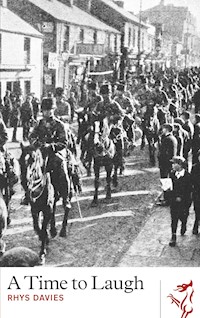
A Time to Laugh is set in a coal-mining valley on the eve of the 20th century against a background of industrial unrest and social change. The old certainties of pastoral Rhondda have given way to a new age of capital and steam, and life in the Valley has been transformed by strike, riot and gruelling poverty. Tudor Morris, a young doctor, has returned to the valley where his father has a practice, and is immediately drawn into the tumult and excitement of the fight for fair pay and conditions. He is expected to marry his childhood sweetheart Mildred, the daughter of a local solicitor but he is inexorably drawn to the passionate ideals and charms of Daisy, the sister of one of the leaders of the workers movement. Is Tudor going to follow the conventions of his class or break with tradition or gamble his life and future with the fortunes of the struggle of the people?
Sie lesen das E-Book in den Legimi-Apps auf:
Seitenzahl: 576
Veröffentlichungsjahr: 2015
Das E-Book (TTS) können Sie hören im Abo „Legimi Premium” in Legimi-Apps auf:
Ähnliche



















Contents
About Rhys DaviesTitle PageFOREWORDCHAPTER ICHAPTER IICHAPTER IIICHAPTER IVCHAPTER VCHAPTER VICHAPTER VIIAbout Chris WilliamsLibrary of WalesAdvertisementsCopyright
Rhys Davies (1901–1978) was one of the most prolific and unusual writers to emerge from the Welsh industrial valleys in the twentieth century. Born in Clydach Vale, a tributary valley of the Rhondda arising from Tonypandy, he was the fourth child of a small grocer and an uncertified schoolteacher. He spurned conventional education and left the valley, which was to be the basis of much of his work, at the age of nineteen, settling in London, which was to remain his base until he died.
Early in his literary career, he travelled to the south of France where he was befriended by D. H. Lawrence, who remained an influence in his writing. Though sex remained, for Davies, the primary determinant of human relations, he differed radically from Lawrence in that he saw the struggle for power rather than love, either sexual or emotional, as the crucial factor.
Though the bulk of his work was in the novel he achieved his greatest distinction in the field of the short story. Having few predecessors, Welsh or English, he drew his inspiration and models from continental European and Russian masters; Chekhov and Maupassant, Tolstoy and Flaubert. His view of humanity was Classical in that he saw people as being identically motivated whether in biblical Israel, Ancient Greece or the Rhondda valley. Much of his output was concerned with women, whowould almost invariably emerge triumphant from any conflict.
He was a gay man at a time when it was difficult to live openly with his sexuality. He lived alone for most of his life and avoided relationships which seemed to betoken commitment on his part. His closest friendships were with women. He avoided literary coteries and groups, though he might have joined several, and held no discernible religious or political convictions. He lived, to an intense degree, for his art.
A TIME TO LAUGH
RHYS DAVIES
LIBRARY OF WALES
FOREWORD
I live seven miles by road from Rhys Davies’s boyhood home – what was once The Royal Stores, Clydach Road — in Clydach Vale. It’s a steep climb on a bike, even when you start in Pontypridd. Thirty-five minutes there, but only twenty minutes back, so that gives you some idea of the gradient. But when you arrive, heart pounding and out of breath, you’re in the world ofA Time to Laugh. The mines have gone, there are some incongruous new buildings – not many – there are some derelict old buildings – too many – but this is recognisably the built landscape Rhys Davies described when he wrote about it in the 1930s.
A Time to Laughitself is set in the 1890s: its closing pages herald the beginning of the new century. So Rhys Davies (born 1901) did not enjoy eye-witness knowledge of the years about which he wrote here, but that matters little. The events which are packed into its seven chapters stand for the period between the introduction of the Sliding Scale system for determining miners’ wages by the sale price of coal in 1875 and the outbreak of the First World War in 1914. The fact that the author could recall the Cambrian Combine strike of 1910-11 and the Tonypandy Riots of November 1910 allowed him to draw on these episodes for his vivid opening scenes.
The novel is almost entirely set in Clydach Vale and mid Rhondda, with the occasional sortie into neighbouring valleys, and one section set in Bristol. It’s almost what Davies described (in his 1969 autobiographyPrint of a Hare’s Foot) as a ‘sealed valley’ – what sociologists would later refer to as an ‘isolated mass’ or an ‘occupational community’.
A Time to Laughis clearly, defiantly, a Welsh novel: one episode has the miners noting that ‘still the mountains were theirs’ after turning back ‘the interfering invaders’ (the cavalry). But Rhys Davies was not writing predominantly for a Welsh audience. My second-hand copy spent many years (from 1939 to 1981) on the shelves of Fulham Central Library (and in the homes of its borrowers). Davies once used the phrase ‘Down with passports to Art!’ to deny that he was ‘an Anglo-Welsh writer’ (his preferred term was simply ‘a writer’). But withA Time to Laughhe provided his readers, few of whom could have shared his intimate knowledge of his ‘truly democratic valley’, with a passport to Wales’s own El Dorado of the Rhondda.
Yet Davies does not write from the epicentre of that community. He is the boy in the upstairs window above his father’s grocery stores, gazing out, looking down on the miners and their families as they go about their epic struggle for humanity. Neither he nor the novel’s central character Tudor Morris are ‘of’ the workers, and although Davies defined his family’s position as ‘neutral but threatened’, for many others of the mid Rhondda shopocracy the strikers’ verdict as to their ‘neutrality’ was delivered in the form of a volley of flints shattering plate glass windows. Perhaps Davies’s semi-detachment allows him to lay bare what he evidently felt was the scarcely suppressed violence (‘bitter ferocity’, ‘savage beliefs’) lurking beneath the surface of mining communities. He is not unsympathetic to the rioters, but he does not shy away from suggesting that the rioting (and looting) was not always guided by motives which social historians would later be able to explain as the ‘moral economy’ of the crowd: ‘private enmities broke into lawless behaviour’. Elsewhere in 1937 (inMy Wales) he would write of the Rhondda’s strikes and riots that ‘probably in times to come those ugly chapters will acquire a significance pertaining to a religious crusade’, but for him, at that time, it was ‘a sombre past’.
A Time to Laughis the middle volume in what has become known as Davies’s ‘Rhondda trilogy’, the others beingHoney and Bread(1935), set in the early decades of the nineteenth century, andJubilee Blues(1938), which begins in 1925.Honey and Breadended with the character of Bronwen about to give birth to Tudor’s father Elwyn, with ‘shouts and noise and movement … all about them – the clamour of new, changing life surging everywhere all through the valley.’ By the time ofJubilee BluesTudor is in his fifties and ‘still a socialist’ although ‘his idealism had almost gone’. But one need not have readHoney and Breadto understandA Time to Laugh, nor should knowledge ofJubilee Bluesbe permitted to clarify or confuse the messages one takes from its immediate predecessor.
In his trilogy Rhys Davies came to terms with the narrative arc of ‘the rise, decline, and fall of an industrial civilization’ – ‘a struggle which is the very breath of modern life’ (My Wales). It was this ‘strangely exhilarating’ ‘vital chronicle’, containing ‘elements of nobility, passion, determination, and bravery’ which, for Davies, connected Wales to the rest of the world. And it is inA Time to Laughthat we see these qualities at their starkest and most glorious in the depiction of a society that ‘stank with abundant life’. For it was in that late Victorian / Edwardian moment that that society was burgeoning, prosperous, undefeated, pregnant with possibilities.
Tudor Morris is attracted by that life, vital, unrestrained and vivid. He wants real and honest passion, heedless of puritanical ethics and inhibitions. Tudor’s father Elwyn has a reproduction of the late Victorian favourite George Frederick Watts’s ‘Hope’ hanging above his ‘collection of oppressive books’ in his study. His son’s more radical tastes in art encompass the satirical cartoonist Thomas Rowlandson, the visionary William Blake and the controversial Aubrey Beardsley. In renouncing the privileged opportunities into which he had been born, in following the democratic instinct he senses in the spirit of the colliers and their families Tudor comes to socialism. His socialism is not an abstract, arid creed but one put into practice through guiding and advising the miners and by providing them and their families with medical care. The ideological core to the novel is provided by the ‘subversive’ Melville Walters, who brokers Tudor’s engagement with the colliers and who bears the autodidact’s awareness of the coalfield’s working-class heritage. Rhys Davies knew revolutionaries: Clydach Vale’s Marxian Club (the legacy of a rare Welsh interest in the Social Democratic Federation) was on Court Street, within a pebble’s lob of the Royal Stores.
The idea that a doctor such as Morris would have had the opportunity to exert such influence in the 1890s as is suggested here stretches credulity: they had their own Member of Parliament by this time in the substantial form of William Abraham (‘Mabon’). Yet, redressing the balance of historical fidelity, one can identify elements of the characters of the coalowners D. A. Thomas and W. T. Lewis and the colliery manager Leonard Llewelyn mixed up in the fictional creations of C. P. Meredith, John Johns and Sir Rufus Morgan. We get a strong sense of the associational flavour of Rhondda life – the cricket club, the ambulance brigade, the naturalist society. And the novel is full of period detail: Osborne biscuits, phonographs, fried fish shops, ‘imperial moustaches’ in the plural, shag tobacco, brake-rides, life preservers and ‘striped blancmange shape’. The scarred landscape is powerfully conveyed: this is a society experienced not just on the streets but on the hillsides above the terraces, in the rocky clefts, in the man-made quarries and amidst the industrial spoil heaps, the tips.
And the human society itself? This is no collective monolith.A Time to Laughis full of people. Over a hundred characters are named – colliers, patients, husbands, wives, shopkeepers, mine officials, revivalists and marble-swallowing adolescents. There’s a Noah and a Nellie, a Bertha and a Beriah, a Melville and a Myfanwy; there are Beynons, Bowens, Clarkes and Pratts, and behind them, implicitly, hundreds more – individuals and families together constituting a ‘raucous, teeming valley’.
Perhaps the novel’s greatest achievement is in the laying bare of the diverse social gradations of this community. There are so many strata, such fine grained distinctions: Max Weber would have been impressed. It is a society with two main languages, even if one is clearly already dominant. Notwithstanding the ‘thin brotherhood of the mines’ it remains aware of ethnic markers: Welsh, English (‘Bristols’), ‘raw’ Irish. There are the religious and the agnostic, the church-goers and the chapel-goers, the Baptists and the Congregationalists (the blanket anonymity of ‘Nonconformity’ is explicitly refused). The young men swear, sit in their pit clothes in the pub and don’t attend chapel. Bay windows, lace curtains, fine furniture, ‘corpulent umbrellas’ and ‘frisky aspidistras’ are markers of respectability and elevated status, semi-detached houses and villas clear expressions of income differentials. Few works of fiction focused on the South Wales coalfield have captured so convincingly that society’s multiple layering.
A Time to Laughis also a novel about love, sex and power between men and women. The closest the inaccessible and inhibited solicitor’s daughter Mildred comes to animal passion is the squirrel’s fur she wears around her neck, but Tudor still treats her with an unbecoming brutality, manhandling her more than once (‘he suddenly … touched her sexually’) and deliberately offending her (‘ “bugger off to the kitchen” ’). Tudor’s behaviour towards Melville’s sister Daisy’s ‘athletic glowing body’ is assumptive and proprietorial (‘he put out his hand and touched her breast’), but where the ‘fastidious’ Mildred shrinks from physical love the ‘elemental’ Daisy revels in it. Their first bout of passion in a bed as ‘high and substantial as a boxing-ring’ is profoundly rewarding for them both – ‘she was luxuriously roused’, he ‘aware … of a most satisfying sense of excellency in the world’. Their accidental post-coital discovery in a police raid on the house Daisy shares with her brother prompts a crisis in the Morris family: Tudor’s father suggests he finds a job in Pembrokeshire, his mother has ‘a slight stroke’. Tudor worries Daisy might become ‘a cosy slattern’, but a bout of love-making al fresco carries him beyond doubt. Daisy is a force of nature, she ‘smells like a young tree after rain’, and Tudor is free to treat ‘her superb body as though it were put on the earth merely to illustrate technical accomplishments of love’.
This is not an enlightened novel in terms of gender relations and sexual politics. Tudor Morris is ill-at-ease with the working-class abortionist Violet Fox, unlike the Promethean colliery manager C. P. Meredith, and admits he ‘had never devoted any thought to the female aspect of socialism’. ‘Women are best for staying at home’ affirms Daisy, whose ambition is instead to go to bed with Tudor every night and bear him a dozen children. ‘Cantankerous wives’ are a brake on collective action, the forty-year-old ‘day-woman’ Hannah ‘liked being pulled about schoolgirl fashion’, and it is said that one character ‘was a wife-beaterwithout reason’ (my emphasis). Should we accept this simply as an accurate depiction of the undoubted imbalance of power in mining communities in the 1890s? Or could it reveal an author striving for a heterosexual persona, generating a smokescreen of machismo in the process?
Does Tudor Morris succeed in his quest to ‘wrest something remarkable out of the world, something that was granted very seldom’? When we leave him and Daisy in the early hours of New Year’s Day, on the cusp of a new century, it was still possible he might. Whatever, his future is that of the people of his valley: ‘They were the world with its beauty, mystery and pain; they fought and yielded, they were garlanded and they were battered. They had the full tarnished brilliance of life in them.’ They would need it in the century that was about to break over them.
Chris Williams
CHAPTER I
I
SUDDENLY there was a huge sound of smashed glass and the window of the shop at the corner dropped in fragments to the road. The stiff double row of policemen ranked in the street, headed by a sergeant with tense reddish moustaches, received a growled order: the rank jumped into movement and, batons drawn, went careering round the corner opposite the shop, where the rioters had advanced from one of the lanes backing the main street.
The gang of rioters was already at the far end of the lane, a mass of crouched figures ragged in the early evening light. But the policemen were young athletic chaps whose stomachs had been receiving proper nourishment: they pursued like eagles. In two minutes they were among the scuffled rioters and distributing cracks successfully.
Yells, oaths and groans filled the bleak January air. Policemen roared, kicked on their fed bellies and swiped vengefully across jaws; rioters yelled with the scratched hysteria of men fed for days on rage—but they were laid low, red-flecked foam at their lips. They tumbled like dummies to the ground. But half of the gang got away, plunging round the end of the lane; they were allowed to escape. A good catch remained, some already recovering from a brief knock-out and promptly handcuffed.
The policemen trundled their captives back into the main street; some had to be carried. The mounted sergeant, left with half a dozen protectors in this dangerous thoroughfare, nodded approvingly. The upstairs windows above the closed and threatened shops were full of watching faces—the tradespeople and their families, neutral but threatened, owning goods needed for empty insides and shivering bodies.
But suddenly from the corner at the other end of this shopping-centre, a new swelled horde appeared, flints in hands and loaded in pockets. The sergeant’s swift order cracked the air: the policemen abandoned their captives and advanced again with their bristling batons. A voice cried out with harsh power among the rioters:
“Smash, boys, smash! Them or us. At them! Keep it up.”
They met. Flints whirled and truncheons crashed. The sergeant, a reared dark bulk stiff upon his horse, trampled into the midst of the roaring fray. Flints met shop windows and the sound of smashed glass cracked the air. Children were hastily withdrawn from the upper windows, and now only pale, helpless women’s faces peered forth watchfully: the men-folk had gone below to guard their property as well they could.
“Kill the bastards!” screamed the powerful voice, now scarcely human.
The sergeant, riding bulkily above the writhing dark mass of the battle, was soon wrecked. Struck, he shuddered, drooped, slid down and sagged among arms that were raised like spears all about the amazed mare…. A fist crashed with a sickening thud among the imperial moustaches, and the fine body was chucked into the door space of a house wedged among the shops.
Triumphant, the rioters stared round. Some slavered with blood, others could scarcely see. Dark blue uniformed bodies sprawled on the road. The great gang of rioters, cunningly peering round in that moment of respite when a strange silence fell through the street, tested their bitter success with a sensual exaltation. Then immediately rose the cry:
“At the windows!”
Used flints were again picked up. The riderless mare fled at a gallop, but leaping with delicacy over the sprawled uniforms on the road. A series of splintering noises sprang along the streets: window after window fell in, fell out, and boots ground among the glass on the pavement. Doorways were smashed in. From the upper floor, shopkeeping wives saw the rioters infest the wares in opposite gaping windows like swarms of rats.
The two food-stuff shops were the most favoured. In one window a display of tinned foods—tomatoes, salmon, plums and such-like—disappeared in a twinkling. They did not stop at the windows, but crammed into the shops, and thereafter a rioter emerged with a ham under his arm, another with a mass of butter hastily wrapped, another with tins of biscuits…. Happy cries filled the darkening street.
Butcher, draper, tobacconist, hosier, baker—each shop spurted goods out into the road. The burly draper, William Matthews, appeared on the half-way landing of the staircase in his shop and brandished a rifle at the rioters, purple of face. They roared laughter at him; he flung the empty rifle at them, screamed, “Swine of thieves”, and sprang, headlong with helpless rage, back up the stairs. For his insult he paid dearly; they needlessly wrecked his shop and tore up those women’s costumes and blouses which they could not take away. The tobacconist, Eddie Curl, who had at one time worked in the mines, attempted a deprecating appeal: “Now, boys, you know I’m with you. Go and steal off Shenkin next door. Very rich he is and I’m only a beginner….” Perhaps if he had not been a tobacconist they would have been lenient with him. Weeping, he was hustled back into the living-room behind his shop.
The more discreet rioters had laden themselves quickly and disappeared; the successful coup might be a short-lived one. Policemen were recovering in the roadway and slinking off…. But no relieving force arrived in the bleak vale. For an hour the rioters plundered, some enjoying themselves on the spot off cheese, bread and the newly discovered taste of butter…. They smoked, and fitted themselves with caps at the hosier’s mirror; one man succeeded in donning the jackets of three women’s costumes and, carrying the skirts and a great pile of nondescript towelling, underwear and odd blouses, staggered out of the draper’s like a clown in a sinister pantomime.
At last they were gone. The street, strewn with broken glass and goods from the shops, stood struck in a desolate silence. It was almost dark now. None of the policemen remained; those who had not recovered had been borne off by their more fortunate mates: the meagre police station, that had not been built in preparation for such a business as these riots, was not far off down the road. The sergeant was one of the last to gain consciousness.
And nearly all the gas-lamps in the street had been smashed. The lighter came along in trepidation with his long pole, muttering personal little threats before him in case any rioter still lurked in the dark doorways. At last he found a lamp which functioned. It shed a wan gleam across the hacked street. Splintered glass and oddments thrown out of the shops were strewn everywhere: women’s stockings, men’s pants, dummy packets of cocoa, cigarettes and, abandoned for some reason, a large dirty leg of mutton. Joshua Jones, the lamplighter, stared at the joint desirously, but shook his head. The pallid face of Andrews the baker peered out of his splintered doorway.
“They are gone?” he asked hoarsely, “the…the…” But he curbed himself. It was dangerous to express abuse.
“Aye,” muttered Joshua, “apes and demons as they are.” He was a strict chapel-man of law and order.
“S’sh,” warned Andrews, “you never know where they’re hiding.”
“The lamps all smashed!” cried Joshua indignantly, as if he owned them.
“Ha,” whined Andrews, “and where’s my bread and cakes gone!” Angrily he peered up and down the street. Two or three shopkeepers were venturing forth to examine the damage. None of them appeared excited now; there was the calm after the passing of the whirlwind. They bemoaned and swore a little, but accepted the calamity with that strange perverse indifference that people feel after a wholesale destruction of property—providing their own flesh and bones are left intact.
Then high on a low slope of the mountain far down the vale crimson and yellow flames began to shoot, a livid mass of fire that made the mountains around shine in a green splendour.
“Jesus!” somebody shouted, “they’ve got hold of C.P.’s house.”
The mansion of C. P. Meredith, the general manager of one of the collieries, stood isolated on that slope, an ugly mongrel of a dwelling that sprawled offensively amid one of the few little woods still left on the valley sides. It was raw and new and sham-impressive with its beetling gables and Gothic windows. Meredith’s family had moved out of it since the strike began, but C.P. himself still lived in the house, obstinate and wrathful and contemptuous of the strikers.
People now ran in hordes out of the long rows of dwellings to watch the conflagration. Which of the gangs had dared this! Most of the watchers exclaimed in horror at this new outrage. But they watched the massed nasturtium-coloured flames with thrilled and excited faces. How the high new house burned! Large dragons of flames sprang to the heavens. The roar and hiss of the falling roof could be heard up and down the valley. The first week of the strike a wonderful new grand piano had been delivered at the house. It created a scandal: grand pianos and starving miners! But where was the piano now?
“It’s the Irish gang that’s done this,” some said. Opinion was that the Welsh gangs stole for food and clothing, but did not wantonly destroy. The Irish revelled in destruction for its own sake, but the Welsh rioted in the sacred cause of belly and pocket. The sprinkling of raw Irish who had arrived in the coalfields from dark barbarous bogs and isolate pre-Christian villages often shocked the Welsh, though they were accepted with a deeper sense of familiarity than the quiet English, who had settled in sprinklings also. The English seemed not to riot or agitate at all: they were able to ignore their empty stomachs and ill-clad backs, causing a sniffing wonder.
A rumour passed round that C. P. Meredith had been burnt to death in his mansion. As yet the reign of terror, begun three days ago after only two weeks of strike, had proceeded without loss of life. C.P. the first! Nervous women ran back into their dwellings and locked and bolted their doors. Surely the military would arrive soon with guns and swords. The fire had died down to a brooding gold glow. Police were now patrolling the streets with stern faces, many of which bore the marks of mutilation.
Men advancing from the big main valley to their homes up the vale were closely scanned by these police. Any parcels or bulging pockets? Rioting and thieving had been proceeding elsewhere that fierce day. The various attacks had, apparently, been well organised; probably they had been planned in secret meetings of strikers well up among the mountains. Wherever there was a group of shops there had been an attack, either big or petty. In some cases the strikers had been routed by the extra police already drafted into the district, and numbers of arrests had been made.
And at many a bleak hearth that January night a fire was somehow raised and a meat meal prepared. Those men who had been fortunate enough to secure a ham, a lump of bacon or a joint, shared it with neighbours. The taste of meat was again wedded to back-yard grown potatoes: a golden dab of butter shone like treasure on the table. Young children were withdrawn from bed and older children hung round the table with brilliant and gluttonous eyes…. The sacred odour of cooking meat was enough to make one swoon.
Tradespeople nailed boards across their gaping windows; some sat up all night, suspecting odd marauders and further nocturnal attacks from the demented rioters. But more police were arriving already from the outlying districts. Tomorrow, it was whispered, a battalion of soldiers would camp on a hill-side. Meredith’s house continued to smoulder all through the night, now and again spluttering and coughing out sparks.
But the general manager himself had not been burnt; he was not even scorched. He was sitting quietly, but grinding the end of a burnt-out cigar, in a room of the Glan Ystrad colliery offices. He sat alone, in that long big room that had once been the drawing-room when, in the old days, the p1ace had been the manor-house of the valley. A heavy figure, with the grey motionless face of a man who has struggled with a large intricate industry and governed masses of workmen, he did not feel the coldness of the bleak room—for there was no fire under the old carved marble mantelpiece. And he had not set a light to the gas brackets inserted round the walls: he sat in the darkness, chewing his cigar, now and again glancing with an uncommenting eye through one of the tall windows from where he could see his smouldering mansion. But the arson had given to him too a certain detached satisfaction. From the day he had entered the house he had disliked its barn-rooms and draughty corridors. He had been reared in a thatched cottage in the country, simple and pleasant as a square loaf of bread, and almost as small.
II
On the bank of the stream was an oblong of dwellings, dirty-looking and squalid, that seemed even in the daytime to have always a damp shrouded look. Long ago the oblong, divided into eight dwellings, had been plastered white, but now the wash was peeling and caked with coal-dust. At the end of the strips of garden bony bushes spread out writhing arms above the stream, black branches that were barren or sometimes productive of a grey shrivelled bud or two. The stream was slimy with dust, washing like some desolate stream of the underworld, under a grey mountain-heavy landscape.
One would have thought that the human beings who lived in such a corner, among garbage and foul water, would be of melancholy disposition. But the interiors of the dwellings were far from desolate; in each, except number six, breathed a large family given to non-chapel habits—drinking, quarrelling in the open and suchlike. The poorest of colliery labourers settled here, and in the early evening, after school hours, many children squealed and yelled round the sore oblong, finding delight in the odourful earth and the mournful stream.
Number six contained, however, only adults. Normally, it was occupied by a brother and sister, Melville and Daisy Walters, and their lodger, Billy Saunders. Tonight they sat in the kitchen, where an oil-lit globe, perched on the head of a china owl, gave a shallow light, and also sitting on the sofa and odd chairs were five or six youngish men. The curtains of the window were closely drawn, and when one of the men in his anger raised his voice, Daisy warned him to be quiet. Now and again she would lift a corner of the curtain and peer out.
It was about two a.m., and some of the men had been sitting there for three or four hours. One or two had come in since midnight with what reports they had been able to gather.
“What about some tea, Daisy?” said Melville at last, wearily.
“There’s no sugar or milk,” she said, looking at the men.
“Never mind. Anything to wet our whistles.”
Daisy sank the kettle deep amid the dying fire. She thrust a few sticks in the grate and blew up a blaze. She was in the middle twenties and seemed uncommonly tall, in a land of short women. She behaved with a familiar confidence among the men; there was no putting forth of her sex. She had just accepted from one of them half of his cigarette, for she had a passion for smoking, and all day she had been without a fag. While waiting for the kettle to boil she pushed her athletic glowing body between two of the men on the sofa, easing herself down and narrowing her eyes, emitting a cloud of smoke through her nose.
“Someone,” she said, looking round the men, “might have brought a tin of salmon or a bit of bacon.”
Everyone in the room was unmarried and though all of them except Daisy and Melville had been out among the rioters, no one had obtained even a packet of fags or a penny cake.
“We done our share,” said Billy, the lodger, “urging them to it.”
“And got nothing for it,” one man with a blackening eye-socket was disposed to complain.
“The glory!” another said ironically, and passed his tongue again over a swollen blue lip.
Daisy’s brother, Melville, sat at the table drumming his fingers against it. He was tall, like Daisy, but more worn and nervous. His face was haggard and alive with a keen fierce light: he was good-looking in a remote non-physical way, as if his features were transcended by some glowing spirit looking out from them, fierce with some inner half-tragic strength. A mat of black hair was shoved forward untidily over his high forehead, his long lips were of a thin pure curve. The quality of his voice was harsh, but his words, as he spoke them seemed to be torn out of his mind in a weary agony, so that he was listened to with wonder and attention.
“You know,” he said, “you can steal if you want to. I’m against it personally, but that might be a limitation peculiar to myself.”
“A gammon of meat was staring at me out of Price’s window,” said a rioter woefully, “and just as was turning it over in my mind, someone nabbed it like a cat a mouse.”
“Oh,” cried Daisy ecstatically, pushing up her face, “oh, the smell of frying ham!”
Melville looked at his sister with strained, remote amusement. Daisy! When she was flushed with thick colour like a dahlia, high-springing as a sunflower.
“Did you hear what time the soldiers are arriving?” he asked the man who had entered last, with the news.
“No.”
“They can’t interfere with our meeting up the mountain” Billy Saunders said. “Free speech’s allowed anyhow.”
Melville shook his head. “There’ll be warrants out by tomorrow afternoon,” he said. “If the police discover about the meeting they’ll be there searching. Soldiers with them, probably.”
“Why,” someone said, “that battalion’s nearly made up of chaps from places like this.”
“Soldiers,” said Melville, “never stop to think. Military training eats into a man’s brain like a disease. They’re good at two things, are soliders—killing and copulating, both of which functions brainless animals perform with equal success.”
Daisy rose to brew the tea. As she passed her brother she smoothed her hand over his mat of hair. The bitterness that gnawed at him so constantly hurt her too. But as she set out the cracked thick cups she hummed a gay tune to herself. No one in the room had had a decent meal all day. A dejected evil atmosphere could so easily fall on them…. She had kept back in the pantry half a loaf of bread and a thick slice of cheese—breakfast for Melville, the lodger and herself. But now she brought the food out and divided it.
“Sure it can be spared?” one of the men asked anxiously.
“Oh yes,” said Daisy.
An injured foot, earned in the first minor skirmish of three days ago, had kept Melville indoors. But it was he who had organised the battle with the police of that evening, the men in the room leading the different gangs that had attacked from the lanes. But the pillaging of the shops had not been included, officially, in his campaign. All he had wanted was a demonstration of physical power and solidarity… a warning.
Billy Saunders, who had gone to an upstairs window to look out, returned and said:
“C.P.’s castle still showing a bit of flame.”
A short cocky young man of tenacious flesh and sudden jumping movements like a frog’s, he drank up the cup of hot amber tea at once, and swallowed the bread and cheese in one gulp. Everyone supposed that he was Daisy’s lover.
“They are saying that the Irish did it,” a man said, “but if it wasn’t Ianto Game Leg’s doing I’ll eat my boot, nails and all.”
“You mustn’t say that outside this house,” Melville said.
Ianto was a very angry agitator with a strictly personal grievance. For four years, since his left leg had begun to betray signs of being a shoddy limb, he had blamed the colliery for its decay—because of a slight wound he had sustained in the mine years before. Not a penny of compensation had been granted him, and he was unable to work owing to the cancerous limb. He had gone so far as to insult C.P. in the street and had never ceased to promise vengeance.
“He wouldn’t be able to hop out of the house in time,” someone else said, “poor Ianto. Nowadays his old leg’s thick as a barrel with stuffing and wadding.”
“He has plenty of mates.”
“All of them got game legs or arms or broken down insides. Too sick they are to hide in a house and set fire to it. They sit about and grumble, but they do nothing.”
“Ianto’s old woman, perhaps, was the one. Hot as hell she is about his leg.”
“Indeed now,” agreed another, “that’s likely enough. Old Gwyneth’s got rare blood in her.”
There was a light tap, repeated twice, on the kitchen door, which led to the backyard and a lane. Daisy unbolted the door and opened. A young man, wearing a good but shabby tweed overcoat buttoned up to the chin, stepped into the room with an unsmiling greeting, pulling off a cap.
“You’re late,” Daisy said. She peered into the teapot. “Have a cup of half-stale tea? With no sugar or milk.”
“Please.”
With his entrance the atmosphere of the room changed. Two or three of the men looked dimly hostile; the others, except Melville, eyed him inscrutably. As he unbuttoned his coat he said:
“Well, they’ve made pretty messes of the shops.”
“I was one that helped,” said a man on the sofa, aggressively.
“No one’s brought loot here,” Melville said quietly.
“Our pantry’s still bare.”
“You’ve heard the soldiers are coming tomorrow?” asked the newcomer, sitting down and beginning to sip his tea.
Melville nodded. He was looking at the newcomer with a glimmer of an ironical smile. But a certain softness had entered into his manner as he spoke. The young man laid down his teacup and looked round vaguely and hesitatingly at the men on and grouped near the sofa.
“Infantry arriving in the morning and cavalry in the afternoon,” he said.
“The bastards won’t frighten us at all,” a man growled.
“No,” said Melville, “but they’ll suppress you. Cavalry too!” he said. “How many brigades of artillery?”
The newcomer shook his head. “It seems we can’t riot and plunder,” he said. “It does no good.”
“That’s for them who’s starving to decide,” exclaimed the growler on the sofa. “I bet you don’t know the feel of an empty belly, Tudor Morris.”
“No,” said Tudor, “I don’t.”
“Well then—”
“Doctor Morris,” interrupted Daisy, “couldn’t help being born where there’s no shortage.”
The men subsided into an unwilling silence. They could not quite accept Tudor Morris into their workmen’s sacred revolutionary circle. Ringleaders of that day’s riots, they were inclined to suspect that he was quite capable of being a spy. His family belonged to the order of those in authority, with connections among the managers of the collieries. They found it difficult to believe that a man belonging to that set could be honestly sympathetic.
“Are you coming to our meeting on the mountain tomorrow?” Melville asked him.
“They’ll rout that, after today’s business, you know…. Still, I’ll be there.”
Daisy sat looking at Tudor with her shrewd good humour still evident. She asked him if he had a cigarette. He threw her a packet across the room; she caught it accurately. Tudor was blond and restless looking, with curly hair and a fine curved aristocratic nose: his body seemed strung up to a quivering pitch, slim, finely-tempered, and long of limb. He and Melville were oddly alike in their personalities, the makeup of their characters, except that Tudor’s restlessness did not break forth in such weary fierceness: It was more curbed. And Melville belonged to the real workingclass, the slum variety, except that he had studied and read and become the leader of a particularly subversive group of men, dragging along his amiable but quite intelligent sister with him.
“If there’ll be a row,” Daisy said to Tudor, “you’ll be best out of it.”
“Yes,” put in one of the men, still distrustful, “nothing to gain has Doctor Tudor Morris.” He spoke the full name with a jeering obsequiousness.
Tudor turned his blue restless eyes upon the speaker. “No?” he said. “Why do you imagine that only strikers can learn something at the meetings? Your intolerance is as silly as the capitalist’s.” He smiled. “Come now, you mustn’t be snobs, you’re no more blue-blood than I am.”
“Us workers,” said the other stubbornly, a man with a swarthy bullet-head, “got no use for such as you. What have you done to help us?” he demanded truculently. “Hanging round at our meetings and talking like a book, while us chaps do jobs, jobs with danger in ’em—”
Melville tapped the table as the speaker’s voice began to shout.
“Doctor Morris,” he told the men, “has been a great help to us. He’s helped our funds with money and he has helped us in our discussions.” He addressed the man who had just ceased growling. “You mustn’t become conceited because you do jobs, as you call it. There are other men who serve the cause by doing other kinds of jobs, if it’s only breaking away from the upperclass environment they’ve been brought up in and sympathising with the workers—”
Tudor broke into a laugh. “Oh, hell, I’m not annoyed with him, Melville,” he protested. Then he began to preach himself, turning to the men: “Remember, this movement is still in its infancy. You’ve got a long way to go yet, a nasty stony way. You workers have plenty of courage and strength among you. But it’ll help you a great deal to win into your ranks some of the middle-classes—win them by ideas, by your religion, not by smashing up shops and plundering and arson—”
He was stopped in his turn by Daisy, who began to bustle about the kitchen, clattering up the teacups and declaring:
“It’s too late to begin a meeting. Three o’clock!” She turned to Melville remindingly: “What about those blacklegs?”
“Yes,” said Melville, “we’ve got to do something to them.” He looked at the men. “Three hauliers went back to work today.” He named them, with their addresses. “There’s a pail of tar and a brush outside. If you want something to do tonight, I suggest you go and write ‘blackleg’ on the front walls of their houses.”
Two of the men undertook this task. They rose, tightening their belts and answering Melville’s grin in a secretive, malign stretching of their lips. Melville added, with a brisk sharpening of his voice, “But no other damage, please, no smashing or robbery.”
“Right-o, boss,” said one of the men, easily and satirically.
“There’ll be a few policemen out tonight,” warned Melville.
“There are policemen hidden in the back lanes of the main street,” Tudor gave information.
Melville glanced at him. One of the men whistled and muttered desiringly, “Now would be the time to call up the boys—”
“No, no more tonight,” Melville said.
“Why, a fresh day it is now—”
“No more, I say. We’ve done a bit of good this last bout, brought it off all right, and I don’t want it spoilt.”
As they left, two by two after intervals, they nodded with more liking to Tudor. When they had gone, the brother and sister and their lodger and Tudor gathered round the last glow of the fire.
“They’re not getting easier to handle,” sighed Melville. “God, if they had had their way, they’d have smashed up the whole place tonight and set fire to any house boasting a bay-window or a set of lace curtains.”
“All the same,” Tudor said, “I like their fury.” His voice became casual. “There are times when everyone would like to see the whole damned world go up in flames and be licked clean.”
Billy Saunders cocked up his tight-skinned little head at Tudor and demanded suddenly:
“Why don’t you leave your home and come among us!”
Tudor smiled under his fine arched nose, the colour of his eyes gleaming. “I’m not fond enough of you,” he said.
Billy cocked his head again, glowering a little. “You don’t want to be one of us then?” he asked.
“I’m after the same things, perhaps,” Tudor answered. “But we’re going a different path.”
Daisy seemed slightly nettled and disapproving at his reply, glancing at him. But she said nothing. The lodger, sitting next to Daisy and insisting on touching her knee with his, went on turbulently:
“There’s only one path in our movement—the road to smashing up the bosses.”
“My fight,” said Tudor, slowly and as if he hadn’t heard the last observation, “is inside myself, yours outside. But the goal seems to be the same—physical and spiritual ease.”
“There doesn’t seem any use for you to come among us then,” Billy said, a little sullenly.
Melville, who was leaning forward as if tensely, his shoulders contracted, gazing into the fire, said in his strange voice of pain:
“He comes among us because I suppose we’ve chucked away most of the fears and taboos of organised society. He feels a certain amount of freedom among us.” He twisted himself round on his hard kitchen chair and looked at Tudor with a sudden bright assumption of intimacy. “Isn’t that true, Tudor?” he asked, his voice dragging. “Wedomean something to you, don’t we?”
“You’re alive,” Tudor said.
“We’re alive,” repeated Daisy with smile. “And not stuffed up with a lot of dead mess. Even if,” she laughed, “there’s nothing in the house for breakfast.”
“I’ve got some money on me,” Tudor said.
“Good,” she said, “I’m glad I spoke.”
They sat for a couple of hours talking. No one seemed to want to go to bed. They discussed past strikes and disputes between the workers and the coal-owners, and past rioting. Melville, who had a small library, told of the band of terrorist agitators known as the Scotch Cattle, who operated earlier in the century. As a warning to a blackleg, a bull’s head was painted in red on his front door, and if he continued working, the gang of cattle, with turned coats and blackened faces and headed by a man blowing a horn, attacked the blackleg’s house in the night, destroying the furniture and beating the inmates with thorough brutality. Engine houses of the collieries were wrecked and whole rows of houses destroyed. Imported military and large proffered rewards were useless in bringing these picturesque bulls to justice; they hid in the mountains like the marauding tribes of old; but they were fighting for recognition of the first Union of the Workers, a revolting idea that the mine-owners sat on, as Melville put it, with “behinds quivering like jelly-fish in fright”,
The history of the miners was a long tale, dark with squalor, noisy with yells, savage with violence, smelly with sweat—from the beginning of the century, when strike-leaders such as Dick Penderyn and Lewis the Huntsman were sacrificed at the gibbets, to this last year of it when he, Melville, supposed he’d soon be doing stretch of hard labour for his organising ability.
“They’ll get you over my dead body,” declared Daisy with a laugh that squatted grimly in her throat. She had kept house for him for six years; their parents were dead, the father killed in a particularly gruesome accident in the mine; the mother, one of those many grey wasted women who have not sufficient animal mindlessness to emerge triumphant from the bitter life of those early colliery days, had followed her husband a few months afterwards. The life that the brother and sister had looked upon seemed full of angry mutilations, arid efforts to feed off bones, and worship of a God who kept the honey, walnuts and roast duck of life safe and remote for a meal after death. Their parents were strictly religious. It was Melville, wayward and studious in his adolescence, who detected the insolence of the life that was mapped out for them—and the people all about them—by those in authority. He began to spit venom and fire. Daisy learned to see too.
The house became a secret centre of the insurgent elements in the district. The men who went there were mostly the rawest stuff. Often Melville felt himself helpless before the crude fire of mutiny that shot from them. Perhaps already he had burnt himself out in hopeless visions and could only serve now with proletarian lamentation and canticles of anarchy. He had taken part in the first riots of the present strike and had been in misery, sick with a sense of futility. But consciousness of a sacred duty still gnawed at him, he felt himself driven on to some bitter fulfilment of his being. Daisy watched, and calmed him with her cool, half-sexual laugh, her mixture of domestic solidity and liberated mental warmth. She refused to marry, but had taken a couple of lovers, philosophically and rather drably, as if to spite the rigid puritanism of her upbringing. Billy Saunders was paying court to her now, but she had not yet given way to him.
They always lived in extreme poverty, strike or no strike. Melville had worked at odd jobs about the mine—in the lamp-rooms, the offices, the power-house; but his subversive ideas were always discovered and soon no colliery would employ him. Now, in the front room of the house, he made pieces of simple furniture—plain serviceable chests of drawers, chairs and dressers—and sold them now and again, at a low profit. And there was the lodger, and Daisy occasionally took in the washing of such tradesmen’s wives who would employ her. Books were bought, and many wandering young miners of no family ate in the house when there was money, sometimes being provided with a shirt, socks or a cap.
“What’s going to be the next move?” Tudor asked, rising in preparation to go. He lifted a corner of the curtain at the window. A grey streak was in the sky.
“These blasted soldiers—” Melville said.
“Looks as if the men will have to sit still.”
“By their temper,” Daisy said, “I think they’re going to hold out this strike, sitting still or no.”
“They want to burn down a couple of chapels next,” Melville said meditatively. He named the two. Billy flashed him a frowning look; he could not quite get over his mistrust of Tudor.
There was a general move. Daisy vaguely brushed off a smudge of dust on Tudor’s jacket. Billy watched her with a scowl now. Tudor laid half a sovereign on the table.
“We’ll pay you back sometime,” Daisy smiled.
“Sure you can spare as much?”
“Oh yes.” And catching her bright companionable smile, he smiled back with a certain hesitation; it was as if something should have been communicated between them, some understanding which had not crystallised in their minds.
When he had gone, Melville went up to bed, taking a book with him; he suffered from insomnia. The kitchen had become cold in the slow January dawn, for the fire had long since gone out. Daisy sat on the sofa to unlace her boots. She yawned and said to Billy:
“Don’t expect your breakfast too soon. But if you’re up before me, you might go and do some shopping with that money. I suppose there’s something left in the shops?”
He made one of his quick, jumping-frog movements across the kitchen, and tumbled against her on the sofa.
“You’re after that Tudor Morris, aren’t you?” he said, thickly and crudely.
She boxed his ears, annoyed. He pushed her back on the sofa, untidily, but his body alert and tenacious.
“Kiss me, Daisy,” he begged in a whisper, “kiss me.”
“Kiss you!” she exclaimed stridently. But again there was the short dark laugh in her throat.
Then suddenly he seemed to crumple up against her, his face became oddly contracted and as though he was about to weep. But his hands still gripped her shoulders. “You’ve got no pity,” he whispered miserably. “You don’t know what I’m going through.” As suddenly he sat up and said contemptuously, “Teasing bitch that you are.”
Now she laughed openly and uproariously. She half lay on the sofa and her healthy, warm, well-shaped body shook with laughter. Fists on knees he sat beside her and took no notice of her amusement, staring with glowering meditation across the kitchen. Then Daisy lifted herself a little and wound her arm about his gruff, sturdy neck.
“We don’t get much out of life, do we, Billy?” she gurgled. “Kiss me.”
III
Tudor walked away from the oblong of dwellings a little unwillingly. He had wanted to stay, to sleep for an hour or two in the house, and then share the morning with its small family. There was in it a kind of spiritual warmth, an atmosphere of released forces and independent bravado, which was vaguely comforting to him. And exhilarating too—even Billy Saunder’s hostility, compounded of jealousy and class contempt. And he liked and respected Melville.
Daisy was attractive, too. She had no sexual limitations, no coyness or conceit, no virtuous locking-up of her treasures, and she wasn’t on guard for marauders. There were not any like her among the lot that trod his walk of life. All the same, he suspected she was rather too free game…. His short mouth under the fine arched nose set itself for a moment in a fastidious grimace.
After the turmoil and disorder of the previous day he would have liked to have been roused to belief by Melville’s antiseptic idealism, that went cleansingly amid the squalor of the local conflict—brawling warfare over a pitiably small reduction in wages. Melville was working for a firmer consolidation of the miners, an impregnable Union. If a strike failed, the miners, submitting to the owners’ decrees and creeping back ignominiously to work, he became ill in a kind of vitriolic nervous storm that was unattractive and yet purifying in its bitter wrath. He was so faithful to his vision of a properly rewarded, healthy, liberated community of workers. But again and again he was shoved back brutally into darkness by the frequent surrender of the men. His dream of a gigantic strike of all workers through the country, prelude to revolution, seemed very remote and unattainable. Such small, infrequent triumphs came of these niggardly local stoppages.
“A kind of nineteenth-century little Jesus, I suppose,” murmured Tudor to himself, reaching the main street. “Except that he’s working for comfort in this world.”
A couple of policemen on the corner greeted him— “Morning, Doctor.” He stopped and talked to them for a moment, opening a fresh packet of fags. Hiding the cigarettes in their fists, they took furtive whiffs. They supposed, he thought, that he was out on a case.
He climbed the low slope of a mountain-side to an upper road winding through the valley among a few groups of better-class houses, semi-detached villas and the like, where lived clerks, officials and the middleclass. Dawn was well on the way to full flowering, a burst of clear grey veined faintly with red. The sky had a cold watery stillness; the vale beneath slept in brief forgetfulness of its woes. That gleam of dawn seemed to offer a delicate peace. Quiet slept the jumbled rows of ugly dwellings, the long lines of slate roofs were a shadowy blue, and vague white mists hung within sulky, coal-dusty back gardens. Tudor paused for a few moments to gaze down on the unusual, placid aspect of the place…. Soon doors would open and short two-legged creatures scuttle restlessly up and down raw streets, opening mouths out of which would jump noises of dissatisfaction, warfare, threats. Would it always be so? There had been such a long, long chorus of jangled noises.
The other side of the vale, immediately opposite from where he paused, and thrust up from a ragged little wood, stood the old beautifully-shaped house about which his grandmother had such tales to tell. It was still a little apart from the drably-climbing rows of dwellings, but even so, on its promontory, it seemed out of place, a fragile relic of forgotten times.
Tudor smiled as he thought of his grandmother and began to move on. Today was her birthday, her eightieth. And she still woke regularly at seven o’clock: he wanted to be the first to greet her. Ten minutes later he was entering the gate of a dark-grey stone villa bulging with many bay-windows and boasting quite a stretch of bushy garden around it—hard stunted bushes they were, which looked as though they had pushed their way with extreme suspicion through the coal-dusty earth. He plucked a sprig of evergreen.
The domestic was busy in the kitchen, clattering on the grate, but no one else was down. He ran upstairs and knocked at his grandmother’s door. A wideawake voice bade him go in. She was sitting up in bed, knitting in the half-light, a white shawl across her shoulders. He drew the stem of evergreen through the lace of her night-shift and tickled her chin.
“Eighty!” he said.
“And I don’t feel old at all,” she complained. “I wish I had aches in my joints or was deaf or daft, so that I could have something to cry about…. But perhaps I am daft, Tudor? An old woman’s likely to make mistakes about herself.”
Her round crinkled face was buxom with health, a faint flush of pink showing through the tanned skin. Lively full eyes had become fragile but shrewd and her wealth of hair had turned to cloudy silver. Tudor sat beside her on the bed and laughed into her kind face that for all its age and experience still preserved a look of wonder.
“Quite daft. You’re not really eighty, you’re ageless. You’ve lived for ever and you’re likely to go on doing so. You’re a piece of the original world and you saw the sun along with the first buttercup.”
Bronwen looked at him vaguely for a few moments. She was looking down into his eyes, far past the iris. Her hands rested limply on the quilt and the shadow of some remote spasm crossed her face.
“What is it ?” he asked tenderly.
“You were talking exactly like someone I used to know. With the same voice.”
“Who?” he demanded.
She took up her knitting and began to work industriously. “Someone connected with my past,” she murmured with a little prudent sigh.
“When you were a wicked girl—?” he laughed.
“That’ll do,” she said severely.
The episode in her past was more or less common knowledge. But sometimes Bronwen was disposed to be secretive and touchy about it, though other times she would allude in a veiled, romantic fashion to its details. For a lifetime she had been a faithful member of the Congregational chapel, and in the Sunday School had shepherded hordes of girls through the bumpy meadows of strict virtue.
“Anybody would think you had something dreadful to hide,” he teased.
“You’ve been out all night!” she accused, looking at him again, sharply, in the brightening light.
“Well?”
“You been with patients?” she demanded inquisitively. “A lot of them there must be, with all this rioting.”
“I’ve been with some friends,” he answered, getting up from the bed.
He was always rather reticent and mysterious about his private life. Bronwen suspected, with regretful but helpless disapproval, that he was having a love affair with some idle, good-for-nothing girl, who couldn’t be produced with any pride…. “Go and have some sleep,” she suggested. “I expect your father can go down to the surgery alone this morning.”
“There may be a great deal of work with all these bashed heads and cracked jaws.”
Bronwen sighed. “The place is going mad,” she murmured. “When will it have peace?”
“Not this side of a revolution.”
“Oh, go away, you with your revolution,” she exclaimed. She shivered a little, in the mellow withdrawn backwash of her eightieth year.
“I shall be up in time for the surgery,” he said at the door. “Here’s Lily with your tea.” He grinned at Bronwen, as the domestic, with a smudged, early-morning face, pushed past him importantly with the tray of tea-things.
“Many happy returns, mum,” Lily cried excitedly. “And a very fine morning it is for your birthday. There’s a day it will be, with all the soldiers coming to the place and all.” She was thrilled as when the big Fair arrived.
“You’d better not go outside the door for the next few weeks, Lily,” laughed Tudor, going off. “Call me at ten o’clock.”
He went to his room and was soon asleep. After two and a half hours he was called and got downstairs as his father was preparing to go down to the little building in the main street which was the consulting-room, dispensary and general meeting-place for ailing miners and their wives.
“I’ll be along after a bit of food,” Tudor said.
Elwyn nodded. He was wrapping a muffler round his neck in the hall. He had a gaunt aspect, grey-headed and dignified of feature. Gazing with a long pondering stillness at people and things, he was thought to be aloof and critical, but it was because he required to absorb hungrily and intensely all that his eyes saw.
“You’ve been out all night, I hear,” he said reprovingly. “You had no cases, did you?”
“No, but I hung about to see if I was needed. I treated two or three rioters on the quiet.”
“I was out until midnight,” his father said. “Up in White Terrace mostly. A nice lot of bruised heads there. The police got kicked about too, I hear. They had Nicholls in to them.” Nicholls was the rival doctor and favoured by the conservative.
“No one in C.P.’s house when it was burned down?”
“No. C.P. walked out quietly and disappeared—they say he didn’t mind the place being set on fire. And the domestics got away safely.”
Tudor helped his father with his overcoat. Elwyn, hatted and coated, looked imposing now, an upright figure with his strong and didactic face, powerfully moulded. No one would have suspected a streak of unworldly mysticism in him; his look seemed so deliberately matter of fact. But over each local baby that he helped to bring to birth he said a prayer tinged with melancholy, ordering the harassed or stodgy midwife to her knees and impressing the exhausted mother into calm. And he mixed with the local bards and wrote hymns in the Welsh language and occasionally preached a passionate sermon in a chapel pulpit left vacant for a while.
“Do you think you’ll be busy this morning?” Tudor asked.
“No,” his father answered, gripping his corpulent umbrella, “the wounded men won’t show themselves in the street by day—a bruise will mark them rioters. And the women will be too excited to remember they’ve got bodily complaints. But there’s a couple of measles I’ve to visit. You’d better be down in the surgery by eleven.”




