


4,79 €
Mehr erfahren.
- Herausgeber: Parthian Books
- Kategorie: Gesellschafts- und Liebesromane
- Sprache: Englisch
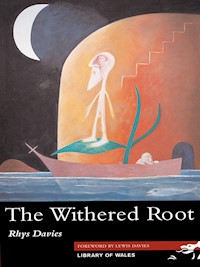
The Withered Root recounts the troubled life of Reuben Daniels, reared in a south Wales industrial valley, in the bosom of the Nonconformist culture. Therein lies his downfall and that of his people, for The Withered Root is as thoroughly opposed to Welsh Nonconformity as My People (Caradoc Evans), though for different reasons. Revivalist passions constitute nothing but a perverse outlet for an all too human sexuality which chapel culture has otherwise repressed. Nonconformity has withered the root of natural sexual well-being in the Welsh, and then feeds off the twisted fruits.
Das E-Book können Sie in Legimi-Apps oder einer beliebigen App lesen, die das folgende Format unterstützen:
Veröffentlichungsjahr: 2014
Ähnliche



















Contents
About the authorTitle PageFOREWORDTHE WITHERED ROOTBook One Chapter IBook One Chapter IIBook One Chapter IIIBook One Chapter IVBook One Chapter VBook Two Chapter IBook Two Chapter IIBook Two Chapter IIIBook Two Chapter IVBook Two Chapter VBook Two Chapter VIBook Three Chapter IBook Three Chapter IIBook Three Chapter IIIBook Three Chapter IVBook Three Chapter VBook Three Chapter VIBook Three Chapter VIIBook Four Chapter IBook Four Chapter IIBook Four Chapter IIIBook Four Chapter IVBook Four Chapter VBook Four Chapter VIForeword by Lewis DaviesLIBRARY OF WALESCopyright
Rhys Davies (1901–1978) was one of the most prolific and unusual writers to emerge from the Welsh industrial valleys in the twentieth century. Born in Clydach Vale, a tributary valley of the Rhondda arising from Tonypandy, he was the fourth child of a small grocer and an uncertified schoolteacher. He spurned conventional education and left the valley, which was to be the basis of much of his work, at the age of nineteen, settling in London, which was to remain his base until he died.
Early in his literary career, he travelled to the south of France where he was befriended by D. H. Lawrence, who remained an influence in his writing. Though sex remained, for Davies, the primary determinant of human relations, he differed radically from Lawrence in that he saw the struggle for power rather than love, either sexual or emotional, as the crucial factor.
Though the bulk of his work was in the novel he achieved his greatest distinction in the field of the short story. Having few predecessors, Welsh or English, he drew his inspiration and models from continental European and Russian masters; Chekhov and Maupassant, Tolstoy and Flaubert. His view of humanity was Classical in that he saw people as being identically motivated whether in biblical Israel, Ancient Greece or the Rhondda valley. Much of his output was concerned with women, who would almost invariably emerge triumphant from any conflict.
He was a gay man at a time when it was difficult to live openly with his sexuality. He lived alone for most of his life and avoided relationships which seemed to betoken commitment on his part. His closest friendships were with women. He avoided literary coteries and groups, though he might have joined several, and held no discernible religious or political convictions. He lived, to an intense degree, for his art.
THE WITHERED ROOT
RHYS DAVIES
LIBRARY OF WALES
FOREWORD
It is early February. A blue cold sky but out of the wind the sun is warm. There is a promise in it – of almond flowers and cypresses. Rhys Davies knew he was living a dream when he caught the night train from Gare d’Austerlitz to Marseille in the autumn of 1927. His first novel was a success. It had been published, reviewed, talked about and bought. In the tight literary coterie of London he was a young man to watch. On the slim royalties of the first and an ambitious advance on a second from a group of Oxford graduates trying to start a publishing company he found he had enough to live on for a winter. He had created a currency out of his youth – the Rhondda was beginning to pay.
The Withered Roothad put a young man, living with only his ideas and some ambition on the road to a life of writing. It is a novel of its time. The story of the last great Welsh Revival – a religious thrust of feeling – chapels and coal mines, righteous fervour and fertile, febrile carousal which swept across Wales in the year of the Lord 1904. The Revival was led by a Calvinistic lay preacher Evan Roberts who inThe Withered Rootbecomes Reuben Daniel but both share the characteristics of being young, charismatic, Welsh-speaking colliers.
Reuben is a man absorbed – driven – to expound the gospel, seek out the devil, wherever or whoever that may be from the land in a pilgrimage of conversion. He is a young man full of life and its desires but still unsure of its meaning. He progresses from village pulpit at the head of a small band of followers called the Corinthians to Valley’s saviour, and beyond in a few hectic months of sermons, pilgrimage and passion.
Rhys Davies didn’t make the classic mistake of putting everything of his life into a first novel. Reuben Daniel is a fully formed character based on the true story of the last great revival but he is used by Davies to explore the tensions of a spiritual and physical life in the Valleys.
Beginning in a valleys’ town, depicted as a den of iniquity in the classic mode of Victorian moral outrage, the revival takes the lives and souls of the valley as a battleground – pubs serving miners and chapels serving miners, with strays between both heightening the tension – drink was a way out – temperance another passion. The revival spread quickly reaching communities in north Wales and Liverpool but within a year the fever had passed and its architect Reuben Daniels, wrecked by the stresses, mentally and physically exhausted, withdraws from public and chapel life.
By the time Rhys Davies was writingThe Withered Root– in the mid 1920s – he had already escaped to a smoky London paved with stories. An escape from an education he had grown out of. The regime of school at Porth County had held little attraction for him. It was a long walk and a bus journey away. He usually arrived soaked from the rain. He simply gave up on formal education at seventeen and it too seemed easily to let go of him.
Rhys was an outsider then and he knew it. An observer of life – a mystery to his father but indulged by his mother and sisters – loving this strange, reserved older brother. In his memoirPrint of a Hare’s Foot, Rhys Davies recalls offering to visit the corpse of a recently killed school acquaintance who was laid out in the best front room before burial – a popular custom in a valley always looking for diversions.
He was an astute chronicler of the Rhondda that he had left and would periodically return to in the hard years of the Twenties when funds from his writing ran from a trickle to a drought.
It was a world he would return to in his fiction all his life, with over forty books published including essays, novels and short stories. He did use London and the south of France as settings for his fiction but it was the Rhondda which continued to fascinate him and which became the setting for much of his best work. It was a place he had only really lived in as a boy and young man and he knew it could be a restrictive place to someone who was at heart an outsider. He knew he could get sent to prison for being part of what he was. To be a gay man in 1920s Rhondda was not easy but London offered an escape. Rhys was fortunate enough to make a way out, becoming part of the Welsh diaspora in London in the first decades of the twentieth century. He supported himself with a string of odd menial jobs, while observing and writing, and he found early success with a string of short stories in small magazines. He was fortunate to meet the Soho bookseller and publisher Charles Lahr who encouraged his work and even helped him to type the manuscript ofThe Withered Root.
Rhys Davies was strongly influenced by the major writer of his time – D. H. Lawrence – with whom he shared a mining background. They also both had mothers who had been teachers and who had harboured intellectual aspir-ations for their sons. Lawrence seeps intoThe Withered Rootin the form of the hero, the descriptions of striving for a life in the blood and the search for something beyond the industrial capitalist society enveloping them.
Although searching for a fusion of the spiritual and the physical – the sex is missing fromThe Withered Root– Rhys shies away from any physical descriptions, content to talk on the margins of frustration which were perhaps his experience of being a young man in the Rhondda. Sex of the mind.
But London gave him more freedom and by the time he had enough money to embark on the second step of escape into the warm winter of the Cote d’Azur – thecambiowas good to English pounds – he is already anticipating further freedoms which he chronicled in his playful memoirPrint of a Hare’s Foot. A freedom of catching crabs in the brothels of Marseille and living with a new manuscript and new lovers.
It was at Nice that a letter arrived from D. H. Lawrence, who was also wintering on the Cote d’Azur. Lawrence had readThe Withered Rootand enjoyed it. He saw the disciple in Rhys and always wanting guests to help smooth the passage of his marriage he invited Rhys to stay with him. ‘Would you care to come here and be my guest at this small and inexpensive hotel for a few days? Bandol is on the Marseille side of Toulon. My wife and I would both be pleased if you come.’ Rhys caught the train.
It is raining heavily now. A news stand offersLa Provenceacross a street running with water. I listen to music in a bar of words and smoke while watching the street above theVieux port. A couple of men talk across a table, eyes flirting with each other, blowing smoke and words into the air. Bandol is only a short train journey east. Nice a bit further on.
Lewis Davies
THE WITHERED ROOT
BOOK ONE
CHAPTER I
Hugh Daniels at last got married, and immediately after the ceremony in Pisgah Chapel, Martha and he settled down to life in the little cottage that was part of Martha’s legacy from her deceased father – a dwelling in one of those naked rows, chiefly occupied by colliers, that rise, shrouded in grey coal-dust, on the Valley hills.
At this time the Valley was a community to itself, its squat rock-crowned hills imprisoned hardly any but the native Welsh, and in their bleak isolation the people lived their lives with all the primitive force of the Welsh – a natural life of toil, lust, and worship. Existence was not yet vitiated; the schools were disliked; each man worked long without question, and each woman lived to fulfil, without quavers, the function of her sex. The men obeyed the ancient law of the labourer, and the pits gave forth coal rhythmically and generously; the women nurtured their children in the old bare way. These people toiled and died and the world knew little of them. Only in Heaven could be realized the complete bliss they sometimes dreamed of, a Heaven that was to be an everlasting eisteddfod – all singing and recitals and organ-playing. Pieces of earth, they sank back into the earth in that hope.
Hugh had lived in the same part of the Valley all his life; he had been a collier there, and his brothers, colliers also, were scattered in various parts of its mine-torn ramifications. He knew no other place, he had never once ventured over the hills: the local pits, the public-houses and the chapels were a satisfactory world – all beyond was an alien unknown that he had no desire to penetrate. One of the old colliers – reared so satisfactorily – unknown to rancour or despair, satisfied with his day in the earth’s interior, to be followed, according to his temper, with a booze in the pub, or a little meeting in the chapel.
He was forty when he married Martha. He had been almost content with his state, a bachelor, having the chapel for wife and beer for servant, and perhaps he would never have really troubled himself about marriage had not Martha herself proposed to him, revealing also her fortune of two hundred pounds, beside the long lease of her home. Martha was thirty and had kept a widowed father going until a fall of roof in the pit killed him. Then she began to look around with increased energy for a husband, buying herself new clothes and perfumes and cultivating attractive manners as she went about. She met Hugh one gloomy night as he was returning, almost drunk, to his lodgings. In a little lane that runs between two rows of cottages, where there are a few rickety, blackened trees and, at night, always clasped couples. When Martha and Hugh emerged from the lane they were holding each other’s hand and laughing together.
Hugh saw that she had a strong body and, after a few enquiries, found out that she was honest and that her father never had occasion to complain about his food and house. There was, however, a rumour that she was sometimes fond of a little drink. But to Hugh that was a virtue then – for he courted her during one of his prolonged inebriated periods. ‘More attractive is a female with a bit of spirit inside her,’ he had said.
For though Hugh feared and respected God and paid regularly for a pew in chapel, alas, he loved the drink too well. He wavered continually from a state of grace to sottish behaviour and was in despair of Pisgah, the chapel that had fostered his religious boyhood. But though he had long spells of drink, and the little woman living alone in her house of sin near the cemetery was not unknown to him, Pisgah had the greater part of his love. In true contrition and shame Hugh never failed to return to the old chapel after his drunken bouts, hanging his head before the fierce glances of the deacons, but proudly asserting his repentance by singing the hymns louder than anyone else. And he would attend every service, Sunday and week-days, for two or three months, until his disgusting thirst came upon him again and he would creep back to his scandalous other love. He believed that God would always forgive him. Also, he intended becoming the most religious man in the Valley – later on.
Faith burned in him as clearly and simply as love in a child, and even when drunk he was always aware of God and could sing all the verses of a Welsh hymn without a mistake and with deep emotion. (He was often asked, in the pub, to give this performance.) God, he felt sure, in spite of the minister, always winked an eye if one intended to return, faithful and contrite, to his worship.
So Hugh, when he married Martha on August Bank Holiday, said to her after they had entered their home:
‘Now let our lives be sweet-scented in the nostrils of God, Mrs Daniels. Kneel you down with me and speak a little prayer.’
And as it was the wedding-day Martha humoured him, but said: ‘Speak you for us both, Daniels. A suitable way you have got for such speeches.’
The house was neat and bright, with many brass candle-sticks, painted tea-pots, large pictures, and shining lamps; the fireplace in the living-room as imposing as any to be seen in a Welsh collier’s house – brilliant and black, with brass gleaming here and there, two brass-handled kettles and strips of brass nailed round the mantelpiece. A large piece of Welsh bacon hung from a hook in the ceiling and a stout tabby-cat usually sat between the two andirons on the hearth.
‘Cosy, this is,’ Hugh remarked, looking round the living-room. ‘There’s nice and fat that bacon is. How much a pound paid you for it?’
From the back of the house, beyond the strip of garden, the mountain curved up steeply, a greyish green. In winter the winds swept down fiercely from the wide uplands, and the snow drifted, half-burying the back of the Row. A single railroad track, leading to the pit, was cut on the breast of the mountain and, about half-a-mile from the Row, the pit sprawled, an amorphous collection of dim sheds and structures coated thickly with black dust, the tall chimney stacks rising up barrenly, smoke issuing from them slowly like black thin banners of submission.
‘A little home of my own at last,’ murmured Hugh in the bedroom. ‘Dear me, empty my life has been before, without a woman and all.’
Martha wound the clock.
‘Say what o’clock you want to get up,’ she said, a little peevishly. ‘A change it will be for me, to get up so early. Working on the night-shift was father.’
Hugh did not offer to get up alone and prepare his breakfast himself. And Martha supposed she would have to see him off to the pit for the present, as they’re only just married.
‘Not a lady’s life, is it, being married to a collier,’ she grumbled, getting into bed.
They lived without mishap for a year or two. Martha was indeed a good housewife, and Hugh worked regularly, dimly conscious, as he sweated in the pit, of the hearth, the food, the warm atmosphere of Martha’s presence at home. He became quite fond of her, in the Welsh collier’s bleak fashion, and on his way back from the pit he would sometimes buy for her one or two sticks of barley-toffee, of which she could never eat enough. She would rise to light the lamp as evening darkened the living-room.
‘Leave the lamp alone, Mrs Daniels,’ he would ask.
‘Nice it is to sit by the fire like this.’ But she was no sentimentalist.
‘Go on with you: cheap enough is oil. Miserable it is without a bit of light. And dress yourself, man. Lazy you are getting.’ She lit the lamp.
For, like all married colliers, Hugh loved, after he had eaten and bathed, to sit in his shirt at the side of the fireplace and feel the heat on his naked legs.
‘Down the pit you ought to work for a day. Lazy you’d be in the evening then.’
Perhaps she would prod him in the ribs and say:
‘Well, do as you like then. Just going out I am for a little walk with Mrs Williams.’
‘Where to now?’ he asked suspiciously.
‘Mind your own business, Hugh Daniels,’ she would tell him. ‘Ach, man, don’t interfere in a woman’s little pleasure. Go you and talk to the men in the Club.’
He did not like this friendship with Mrs Williams, who was an abundant woman with hefty arms and a habit of glowering at a man and denouncing him in her strident voice as a beast only suitable for woman’s utmost contempt. Her husband was one of the best-known drunkards in the district, and late on a Saturday night it was a privilege to listen to the couple displaying their reward for each other in no uncertain language.
‘An unnatural woman is that Mrs Williams,’ Hugh com-plained. ‘Thoughtless of me you are, to go out with her. The people from the chapel will say this and that.’
‘Yes, indeed,’ Martha observed sarcastically. ‘Very holy they are.’
Hugh sighed.
‘There’s a lot I would give to see you join Pisgah,’ he said. ‘Happy my life would be then.’ He had not entered the pub for two months.
‘Ho!’ she said, tittering, ‘time it is you had a spell from there yourself.’ And she went out humming a little tune happily.
Hugh sat for a little time looking into the fire. The lamplight shone on the washed ivory of his thin face. He twisted his beard in a nervous fashion, opening and closing his mouth restlessly. Should he go down to the pub, or not? The two months without a glass of beer had seemed very long, and the sermons of Mr Hughes-Williams, he was sure, were getting poor lately.
He stood up and began to pull on his black trousers. Yes, the chapel was getting richer, but the fire in the sermons was dwindling. Putting strips of carpet in the pews and rugs in the Big Seat! Ach, Pisgah was beginning to stink of money as bad as a Methodist chapel.
Wrinkling his nose and pushing out his lower lip aggressively, he went down to the Angel. Martha was gratified when he returned home, late.
‘Ha,’ she laughed enjoyably, ‘funny are your little ways!’ He looked at her with hostility; he was not quite drunk. ‘Woman,’ he said darkly, ‘dragging me down to your old fleshpots you are.’
She clapped her hands in delight.
‘Ho, ho, Hugh Daniels, a funny old thing you are.’
Her plump cheeks and small childish nose glowed warmly and she danced happily about, getting the supper.
She had only just come in herself, and to please him, though she had intended keeping it for her breakfast the next day, she went to get a flagon of stout she had hidden in the umbrella-stand – a sewer-pipe, painted dark green, that stood in the passage.
So Daniels wavered from the Bright Courts of Pisgah to the pubs, and back again. Martha would wake up early some morning and find him on his knees, praying mourn-fully for forgiveness. And she would turn over and go to sleep again, grunting and muttering at this disturbance of her rest.
‘Lead my wife Martha, too, out of her piggish ways,’ she sometimes heard drowsily.
Thus their married life proceeded.
If only she would not drink so much! And if only she kept to beer and ale! For to his horror and indignation, he discovered she liked spirits best – whisky especially. She had a little cupboard in the kitchen, which was always locked, the key usually hidden about her garments. But one evening when she was out, he saw the key lying on the floor of the bedroom. And in the cupboard were four bottles of whisky and gin.
When he chided her she flared up hot like a flame and declared it was her own money she was spending.
‘Not the money is it I am thinking of, Martha fach,’ he admonished, ‘it’s the sot you will become I am worrying about. And when you have drunk your two hundred pounds, too costly you will become for my wages.’
‘Hark at the old hypocrite!’ she cried with disgust. ‘You old owl, ashamed I’d be to preach at others.’
‘Complaining I am of the expensive taste you have,’ he pointed out. ‘Whisky and gin ladies always drink,’ she answered. ‘Vulgar is beer.’
Hugh did not know how to battle triumphantly with women, and after a few vacillating attempts to reform Martha he shut his eyes to the addiction of the female, though in his religious moods he prayed for extra long periods about her.
And he read the Bible far into the night for comfort.
Sometimes, when he sat up late thus, Martha would come out on the landing upstairs and in her warm woman’s voice shout to him:
‘Hugh Daniels, come you up to bed now. Burning dear oil all night! Put away the Bible, Hugh bach, and come you up to me. Asleep I want to be.’
Then he would put out the lamp and go slowly up to bed, sighing and sorrowful, but his large religious eyes shining with peace. He liked her to talk to him caressively. And the drink never interfered with her energy as a housewife. His dinner, tasty and generous, was always ready the moment he came in from the pit, the water for his bath always plentiful and hot enough, fire bright, his evening shirt and stockings hanging from the brass rod under the mantelpiece. She made cakes and tarts and baked her own bread, she pickled onions and red cabbage and there was always a piece of bacon hanging and a sack of potatoes in the kitchen.
She was not extravagant, never going into debt in the shops, and spoke of loose girls with the contempt and disgust of the respectably married woman.
‘There’s an example among women you’d be if control you’d use when you was thirsty,’ Hugh said.
Then in the third year of their marriage Martha found herself with child. She told Hugh the news one evening, a few days after her discovery, as she scrubbed the coal-dirt from his back. He was kneeling over the tub of water washing his face.
‘Well, well, say it you do as if telling me a bladder of lard you had bought,’ he said when he had dried himself. ‘Careful you’ll have to be now. Rest, and have a girl in to do the floors and the washing.’
‘Hugh Daniels,’ she said, ‘mind your own business. No girl shall do my washing; sluttish is their work. And when I am confined, take you care no neighbour looks here and there in my home.’
Later in the evening she went off to meet Mrs Williams in the little room reserved for ladies at the back of the Royal. And as he had been on the booze himself lately, Hugh made his way meditatively to the Angel and celebrated the news with glasses of bitter.
Martha did not mention the subject to Hugh again; she considered it unsuitable for discussion with a male. When Hugh made one or two tentative efforts to tell her of his satisfaction, she looked at him ominously and cried:
‘Go on, Hugh Daniels, don’t you interfere in these women’s affairs.’
And she went apart from him and treated him as a lodger in the house. But Mrs Williams (mother of seven) called often, and the two would remain closeted for hours in the parlour.
She did not drink much during the period of waiting, and Hugh prayed that the coming of the child would destroy her disgusting and expensive habit. When he came back from the pit one July afternoon he found the child arrived and Martha sitting up in bed, pale and serious as a preacher.
‘What is it?’ he asked excitedly.
‘A female I wanted,’ she replied in her usual pointed fashion, ‘but a boy it is. Glad I am for his sake though and glad you ought to be, Daniels, that not a woman you are.’ His soul was proud with holy joy as he went downstairs.
Laughing to himself, he ate the dinner that had been prepared for him by Mrs Williams. And as he bathed he chanted a Psalm.
Afterwards he walked a long way to the house of a man who cultivated roses. Roses are rare in the Valley: few flowers bloom in that arid soil and dusty air.
‘Say how much the roses are, Davy Evans,’ he asked.
‘A penny each. A hard job I’ve had to raise them this year.’
‘Dear they are. But a shillingsworth I’ll have if you’ll give me sixteen.’
He took them with an almost frightened air into Martha’s bedroom, the red and white bunch thrust into a jug. ‘There’s extravagance!’ she exclaimed. ‘And he always peevish because I spend a bit on liquor. But had them for nothing you did, perhaps?’
‘No, indeed now. One-and-four’s worth there is here,’ he said. ‘Just cut they are, and look you, the dew from the evening is on the petals.’ He laid the jug on the table by the bed. ‘Say you like them?’ he asked anxiously.
‘Ach, go away,’ she said, smiling at him. ‘Willie Morgans will be waiting for you in the Angel.’
‘Staying away from there from now on I am,’ he answered resentfully.
‘Go you and call Mrs Williams for me then. A little chat I want to have with her.’
‘A little chat with me you ought to have,’ he grumbled, going off.
She took the child up, shook him gently, and held him before the bunch of perfumed flowers. He opened his eyes vaguely for a few moments, looked at the red and white with a grave scrutiny, then slipped into sleep again.
CHAPTER II
They called him Reuben. And he was a passionate and troublesome child to rear.
As a baby his kicking lusty body seemed to quiver with a young devil that looked out in hostility from his big black restless eyes, and when his mother fed him, his vicious gums often made her cry out with pain. Sometimes his tight fist would land her a sharp blow on her face or breast, and in those moods he would utter short animal noises, like the anger of a little savage, and his ugly face, wrinkled like a shrivelled brown leaf, assumed an expression of indignant disgust.
But he could be oddly tranquil too, especially when Martha sang to him the old Welsh lullabies and hymns – then he lay and stared at her with fascination like a trance in his eyes and remain appeased for several hours.
Hugh made for him a rocking cradle, painting it a dark green, with yellow flowers here and there. And when he was four and nearly died of a cold, God heard the father’s prayer and the child remained in this world of weeping and pale joys.
Hugh was very fond of the boy and always resented Martha’s habit of smacking the noisy little beast’s bottom. He never failed to take home every Saturday night, when the boy was older, a packet of pear-drops or black-and-white mints, giving the sweets to him on Sunday morning, to eat in chapel. Thus and in many other ways he displayed his love for his only child.
Martha, too, was fond of the child, in her off-hand rasping manner. She, however, did not believe in surrounding a child with the sickly heat of pronounced affection. Let the brats grow themselves and feel themselves alone as much as possible – so much better for them later. So she ignored Reuben as much as possible and looked at him with harsh eyes. When he was irritable and screamed with a peculiar intensity, she would fly into a fury and screech back at him, her voice brutal with threats. And after he was breeched – with puce velvet knickers and a silk blouse to match – she left off singing to him at nights, and the distance between them widened. So now when he climbed to her lap and put his arms round her neck she thrust him away in mocking derision and called him a little girl.
When she mocked him he hated her violently and desired to inflict upon her some of the pain and rage her derision created in his heart. Once he spat at her, his eyes lit with yellow lights of anger, his voice shrieking murderously. Often he would sit on his stool by the side of the fire and with clear inscrutable eyes watch her doing this and that, watch silently, his face never betraying the thoughts behind. Yet for all their animosity, their brawls, their scorn, each was always keenly aware of the other, aware with a kind of unacknowledged pain.
As he got older a sullen cruelty seemed to be his chief idiosyncrasy.
He liked to drown kittens and slit open their bodies, examining the organs with minute precision, and once he brought in a live toad and threw it in the kitchen fire, watching it burn with gleaming eyes vacant of joy or pity. Another time, when alone in the house, he got hold of a mouse and cooked it alive in the oven. He loved to linger near the slaughter-house of the butcher and listen to the noises of beasts being killed. To inflict torture on living creatures, to know they were being destroyed, gave his bowels a peculiar emotion, an emotion that seemed to soothe and soften the tense nerves of his being.
But, growing, he wearied of these pleasures and became almost gentle and affectionate, secretly longing for his mother’s touch, her kind words, the comfortable feminine atmosphere about her. Only occasionally he gave vent to the feverish temper hoarded somewhere within him. And to his father, whom hitherto he treated with indifference, he turned with a bright gentle appeal also.
Hugh took him for long walks, speaking to him during them as though the boy were fully grown. Up over the grey hills and along the railroad track to the colliery, which Reuben, listening to his father’s grave explaining voice, would survey silently, thinking of the time when he too would wear long moleskin trousers and go in a cage down to the inside of the earth. He thought of that time with a kind of chill foreboding.
And since he could walk Reuben always accompanied his father to chapel, Sundays and other days. At first, unless he had sufficient pear-drops to keep him occupied through the service, he used to drop off to sleep – but eight of the sweets, if sucked slowly, usually lasted through the sermon. But as he grew he became more attentive and he would watch with steady examining eyes the writhings and fervour of the Rev. Hughes-Williams during the sermon. Hugh noticed his interest and asked on the way home:
‘Liked you the sermon tonight, Reuben bach?’
Reuben thought he did and exclaimed, ‘There’s awful red Mr Williams’ face went, and the vein on his forehead stood out, I thought it was going to burst. Excited he becomes when he preaches. Why does he go like that?’
‘Given him a strong power has God,’ Hugh answered. ‘Known all over the Valley for his preaching is Mr Williams. Better than the Old Testament his words are sometimes. And there’s fire for you, there’s inspiration! At the Big Meetings blaze like a furnace he does.’
Reuben pondered for some time. Then he said: ‘I would like to be a preacher.’
His father sighed. ‘Costly that would be, bachgen,’ he replied sadly, ‘and poor we are.’
‘But if I could preach!’ continued the boy.
‘A local preacher you could become. But thankless is that task.’
Nothing was dearer to Hugh’s heart than to think of his son as a minister. But he knew the dream could never be realized. Little was saved from his wages, and Martha’s small fortune, he was sure, had gone long ago. How could the boy become a minister with his mother a drunkard! Hugh’s heart burned with anger as he thought of it. And he resolved to pray harder and longer for the salvation of his wife. God would surely interfere soon.
Almost nightly, now, she went, after Reuben had been put to bed, down to the Royal to drink and meditate with her friends. But usually she would come back cheerful, in her brassy way, and with her little rush-bag containing a piece of fried fish or sliced corned beef for ‘my old preacher’s supper’. Regularly at about half past ten she arrived back home, snorting vehemently, for it was a stiff long climb up the stony hill.
‘Duw, Duw,’ she would exclaim, sinking into a chair, ‘short my breath is becoming. Spiteful and mad was the one who built houses up here and an old idiot was my father to buy one of them.’
Hugh would look up from the Bible, sniff down his long nose and resume his reading. But Martha went on chattering and would noisily get the supper and put before Hugh the dainty she had bought for him alone.
He seldom had drinking bouts now, though he sorely missed the tranquil joy of mixing with men in public-houses and smoking his long clay-pipe over the huge “commercial-room” fire. But his desire to sit in the Big Seat at Pisgah kept him steadfast in sacrifice and the chapel had begun to look upon him as finally ‘saved’ at last. In the Sunday evening service his reverent voice would often begin to repeat the last verse of the hymn, when everybody was preparing to sit down again, and the congregation would follow in a swelling chorus. So his reputation with the Pisgah people improved and they would say to each other, ‘There’s religious Hugh Daniels is now! Pity he is burdened with such a slut of a wife.’
She looked with disfavour on Hugh’s habit of discussing religion with Reuben.
‘Daniels,’ she said, ‘idiotic you are with that child. Left alone he ought to be. Make an old man of him you will, talking to him about the sermon! Clear out, you silly sheep. Dear me, glad I’ll be when you go on the drink again.’
‘Enough it is for one in the house to be – ’ began Hugh with sudden heat.
‘Now then, now then,’ she finished, her voice rising, ‘grudge me a little pleasure, would you! Not enough is it to make my back crooked, working in this house for you, cooking your old food, washing filthy clothes and bringing up that little bag of mischief. A nigger you ought to have for a wife, you cruel slave-driver.’
Hugh slowly shook his head in despair. How he wished he had the courage to take and beat the woman, as Will Jones boasted of doing to his wife. He tugged at his beard hopelessly and longed to be a bachelor again.
CHAPTER III
Reuben grew into a tall good-looking boy full of a vigour that seemed to hold itself tight within him. His mouth was strong and fleshy: and under the dark brows his eyes were naked with a strange gleam of unhappiness. Some thought seemed to be forever brooding in sombre meditation behind those eyes. But he did not give utterance to that thought; indeed, after the age of twelve, he had very little to say for himself. The hitherto noisy, bawling child became so austere and silent that Martha thought there was something organically wrong with him. Ignoring him before, she now bought him cod-liver oil and various medicines. But there was nothing physically wrong with Reuben: cod-liver oil and emulsions could never interfere with his malady. He was brooding about God.
God lived behind the sky and he never showed himself to anybody. All people went down on their knees and worshipped God, every human being. God demanded that, insisted upon it, and everyone obeyed because they lived in fear of God. God could blast the eyes out of them: without appearing for one moment this side of the sky, God could destroy the earth into a handful of ashes and array everyone in awful judgment before him in Heaven. The power of God was terrible, and no one on earth had ever seen him, no one knew what he was like, though all said he was great and terrible, the owner of the whole world and everyone in it, their Master.
Reuben had learned that from the Rev. Hughes-Williams’ sermons. And he was afraid. The thought of God behind the sky, constantly watching with his dreadful eyes that never missed anything, watching the smallest action of his life and always condemning, condemning. At night he was afraid to look at the stars because he thought they let through the glance of God: when there was thunder and lightning his being crouched within him because God was angrier than usual and meditated destroying the world. But why should God be always angry?
Reuben listened attentively to the Rev. Williams’ sermons, and he found that all creatures born on the earth are evil, that each is burdened with a load of sin that can never be shaken off while living on the earth, and that God bore a grudge against us for this mysterious inescapable sin which, however, would be forgiven in the next world if one’s life in this had been stainless.
‘What are you thinking of, boy?’ Daniels demanded, one Sunday evening after chapel as they sat in the living-room, the father reading the Bible as usual.
Reuben looked at his father with sombre eyes. ‘Will I go to hell when I die?’ he muttered.
‘For why you ask that?’ Hugh replied in astonishment. ‘I don’t want to burn in the fire,’ the boy said fearfully. ‘There’s awful is the hell Mr Williams preached of tonight. What can I do not to go there?’
‘For why should you go to hell?’ asked Hugh seriously. ‘Born in sin we are,’ Reuben repeated from the sermon.
‘Unclean is our lives and the body is a sink of iniquity.’ ‘Tut, tut, boy bach, not understand these things do you.
Time enough is there later for you to use your head about them.’ And Hugh returned to the Bible.
But presently, after a further meditation, Reuben said: ‘Jesus Christ I like better than Moses.’
Hugh twisted his beard nervously. ‘Why, boy bach?’
Reuben shook his head. ‘I don’t know,’ he said slowly, his eyes darkened. And he leaned over to his father with a sudden beseeching gesture. ‘More I want to know about Jesus. Tell me about him.’
Hugh sighed. ‘No preacher am I, Reuben.’ He turned the pages of the Bible lovingly. ‘But read you about his life from Saint Matthew I will, if you like.’
He moved the lamp a little nearer, settled his spectacles and, his finger following the words, began:
‘“Now the birth of Jesus Christ was on this wise…”’
Reuben listened to the simple words, followed that life of sorrow and wonder as his father selected the suitable verses, listened with dropped brows and far-gazing eyes to the vivid tale unfolded in the calm of St. Matthew and the love of his father’s voice. How beautiful it was, he thought. And how different to the sermons of Mr Williams!
He saw Jesus calling the little child to him, caressing its hair while he spoke to the disciples of the kingdom of heaven. A sweetness flowed within Reuben: he would like to have been that child and feel the hands of Jesus upon his head.
‘“And Jesus came and spake unto them, saying, All Power is given unto me in heaven and in earth. Go ye, therefore, amid teach all nations, baptizing them in the name of the father, and of the Son, and of the Holy Ghost. Teaching them to observe all things whatsoever I have commanded you: and, lo, I am with you always, even until the end of the world.”’
Hugh closed the book and, his hand over his eyes, remained silent for some time. Reuben gazed into the fire. His being glowed with an inner ecstasy that seemed to quiver with pain… A desire to serve and worship as no other had served and worshipped the man who had suffered and died in agony for the world gathered dimly in the boy’s breast. How beautiful it would be to serve, suffer, and die for Christ. Yes, he would gladly die for him; he too could bear the nails in his hands, in his feet…
And father and son remained silent in their meditations, both feeling the mystic harmony of the religion that is the glory of the Welsh.
Until Martha came in. She had been spending the evening with a kindred neighbour and there had not been quite enough to drink.
‘Jesus Mawr,’ she cried shrilly, ‘there’s a pair of wooden donkeys you are. Where’s the supper? Waiting for the old slave to come in, to be sure. And the fire nearly out. Daniels, a lunatic you are getting with your Bible. Out of my way.’ And she swept the Bible from the table to the floor.
Reuben darted to it with a cry.
‘Don’t you throw the Bible down like that,’ he cried angrily, gazing at his mother with fierce eyes.
‘Ho!’ she exclaimed, hands on hips, leaning towards him ominously, ‘who are you then, my lord, talking to me like that?’
Reuben clasped the Bible and stared at her with burning eyes. She suddenly grasped him and shook him violently. He began to cry – his peculiar dull scream of rage, that greatly irritated Martha. Hugh stood up and began to protest feebly. But the woman had worked herself into a fury that darted like arrows from her eyes and mouth.
‘Teach him to hold his snotty tongue I will. Looking at me like murder! An insulting little devil he is. But beat it out of him I will.’
And the emotion that lay buried in mother and son, that each was dimly conscious of and that bound them, sprang into being. Violently she began to slap his bare legs. But Reuben, a curious snarl escaping his lips, suddenly wriggled round and buried his teeth in his mother’s wrist. She screamed shrilly, let him go, and hopped about the room.
‘Bit me he has, bit me he has,’ she cried in pain.
Hugh stood still in horror, seeing the blood on his wife’s wrist. ‘The little b—,’ she screamed, weeping.
Reuben crouched on the floor against a leg of the table. His mother’s cries of pain made him shudder. He looked at her fearfully as, still howling, she collapsed into a chair. And when he too saw the blood he hung his head and began to cry softly.
Then his father took him into the kitchen and beat him soundly. He accepted his punishment without further cries, his face white and mournful as the stick descended on his body.
Later he crept up to bed, silent and ashamed. He was sorry, he was sorry. The tears burst forth again in a flood. And as he lay weeping in the darkness his father came up with a lamp and the Bible.
‘A wicked ruffian you were, to bite your mother, Reuben,’ Hugh said sorrowfully. ‘Not worthy of Jesus Christ are you.’
Reuben sobbed.
‘Shut you up crying now,’ continued his father, ‘and we will pray together, for forgiveness. Come you and kneel with me.’
And afterwards he read to his son a few psalms.
The next morning Reuben went downstairs in fear. His father, working on the day-shift, had long ago departed to the pit. He would have to face his mother alone. He entered the living-room with sullen eyes, scowling.
‘Come on, wolf,’ his mother sang. ‘Little wolf, come to your food then.’
He saw that her wrist was bandaged, and he wanted to weep. He sat down at the table without a word, his eyes still sullen. If only she said something kind and gentle! He drank his tea and ate his food, silent. And suddenly she said: ‘Tell me sorry you are for biting me last night.’
He looked at her in misery. And he seemed to see her face differently. It was older, almost pitiful, with puffy cheeks and a sad mouth. A feeling of strength and protection came into his heart. He bowed his head on the table and began to cry.
‘All right, all right,’ she murmured soothingly, stroking his head, ‘forget it we will.’
‘I didn’t mean to bite you,’ he wept. The caresses, rare and unexpected from her, made his heart burst with grief. He turned and clasped her round the waist. But she thrust him away.
‘Now then, baby,’ she cried mockingly, ‘get off to school.’ His suffering eyes looked at her beseechingly. He wanted her love so much. But, singing briskly, she went into the kitchen with some dishes and he knew she would ignore him as before.
But as he walked to school he carried preciously in his soul the memory of her caress.
It was decided to send him to the pit. Hugh talked with Martha on the possibility of making him a minister, or, failing that, putting him in a draper’s shop. But Martha swept away these suggestions.
‘No brains has he to become a minister,’ she said, ‘and not crafty enough is he to make success in a draper’s. Strong and healthy enough for the pit he is. Goodness me, Daniels, what a toad you are, to scorn your own work. A manly living it is.’
‘Indeed now,’ he answered, ‘different to most boys he is. Delicate seems his mind.’
‘What rubbish,’ she cried. ‘And where is the money for his schooling?’
‘Some of yours is left now?’ he suggested, half afraid. Martha resented her husband’s prying into her affairs.
From the first she had treated her marriage as a business transaction. Hugh laboured and brought money for the upkeep of the house, she gave her services in return, and because it was the fashion since the days of the Bible she gave herself also as a woman to him. But anything else in her life was her own private affair.
‘Mind your business,’ she said ominously. ‘My father left me the money I had when I married you. For my own comfort it is. Enough I want to leave for my own funeral, and if any is left over, Reuben must have it for himself. But none have I got to waste on schooling.’
‘All right,’ he sighed. ‘But no imagination have you, Mrs Daniels.’
And so, like nearly all the boys in the Valley, after his fourteenth birthday Reuben went to work in the colliery. He set out one June morning with his father, his new moleskin trousers white and spotless, and proud enough of his food-tin and the ‘jack’ of cold tea in his pocket. Everything was thrilling; the swift descent in the cage down the shaft, down through the round black hole into the earth, the eerie journey through the workings below to the gallery where he and his boss were to work. He had left his father about a mile from the shaft and continued his journey with the man who was to employ him. And following the collier through the twisted narrow tunnels he thought fearfully of the awful weight of earth above them.
If there were a fall of roof and they were shut in! This silence and darkness was different to any he had experienced before. He listened to the drip, drip of some water, and the sound seemed peculiar, a dead, shrouded sound. This was another world, a dead world of stale and heavy silence, where the darkness never lifted and where he might die. It was strange, to think of himself wandering about in these caves inside the earth – it was as though it made him another being, as though a light had been darkened within him. However, presently they passed some stables and groups of colliers already at work, and the men hailed them in cheerful and worldly language that made the place seem more human.




