



Erhalten Sie Zugang zu diesem und mehr als 300000 Büchern ab EUR 5,99 monatlich.
- Herausgeber: Books on Demand
- Kategorie: Fantasy und Science-Fiction
- Sprache: Englisch
The book is about a woman who, in the period 1981 to 1995, moves her residence not less than 36 times. Is it an obsession, asks George Manus in the book, and is even in doubt, even though he has been in close contact with the woman for all 14 years. The author describes each move from house to cottage, to apartment, back to cottage, mess and whirl, and then to a new house in an infinite range, so you get exhausted. Is it a kind of hobby asking George Manus?
Sie lesen das E-Book in den Legimi-Apps auf:
Seitenzahl: 373
Veröffentlichungsjahr: 2017
Das E-Book (TTS) können Sie hören im Abo „Legimi Premium” in Legimi-Apps auf:
Ähnliche


















La Paloma
Table of Contents
Vestheimgata 8 - Oslo
Bygdøy Allé 123 B - Oslo
Dops gate 5 - Oslo (2 months)
Niskinnveien 7 ”Log Cabin at Sollihøgda”
The Neighbouring Cabin at no. 9 - ”The Country Estate” - (2 years)
Eugeniesgate 21 - Oslo - (Top Floor)
Krokskogen - 20 acre wooded plot off Niskinnveien - ”Dampsteredet”
Cabin Yard between Lommedalen and Kleivstua: ”Knuterøysa”-
Grønsundåsen 39 - Municipality A - Asker: (June 88 - sold Aug. 89
Bygdøy Allé 35 - Oslo - (Sold quickly)
Presteveien 20 B - Blommenholm - (89 - sold after a month)
Kirkeveien 147 B - Oslo - (89)
Jordbærstien 7 - Rykkinn
Sognsvannsveien 49 - Oslo
Vallegaten - Oslo
The Garden Colony Sogn - Oslo
Eugeniesgate 21 - Oslo (1st floor)
Workshop at Wilhelmsgate 4 - Oslo - (Rented)
Cottage near Nærsnes - On the west side of Oslofjord - ”Muggbo”
Akersbakken 39 - Oslo - Renting the octagon/appatment complex
Stensgata 35 - Oslo
Ullevålsveien 109 B - Oslo - (3rd Floor)
Sollihøgda - Cabin - “Klonkelia” - (Rented)
Sollihøgda - “Setra” - (“Mountain Farm”) - (Never moved in)
The Student Village at Sogn - Oslo
Takes over her mother´s house in Asker
Åsmund Vinjes vei 24 - Vinderen - (One room - 1st Floor)
Holtegaten 24 - Oslo - Owned by the Borgen Family - (Rented)
Ringeriksveien 495 - Sollihøgda - (The little dream house)
Ringeriksveien 342 - Sollihøgda
Åsmund Vinjes vei 24 - Oslo (One room 3rd Floor)
Ringeriksveien 615 - Skui - (Workshop and second hand business)
Frognerseterveien - Oslo - Bedsit
Sollihøgda - Astrup’s Forest Rangers’s Recidence - (Rented)
Stasjonsveien 51 C - Oslo
Sollihøgda - The Last Cabin
Foreword
This book is dedicated to her.... my first quivering love.
I could never have written this book if we were still living together. The result of the termination of our relationship, have made me see her the way she really is.
I have long since realized that living with a woman like her is far more than a coincidence. If it is so that we learn from life, then that period of my life surpassed all others. Not least did I get a clearer idea of what respect and tolerance mean, through living with her for almost fifteen years.
What brought us together, the way I see it now in retrospect, was simply a natural consequence of her particular personality.
We went to school together and at some point during our last year of secondary school, we fell deeply in love with each other. It probably happened after a couple of years’ ripening process.
I was one of those who always sat as far back in the classroom as I could get, while she, always with top grades, sat in the front row.
It was back in 1955 that the flame was lit, but even though the thoughts from that time, now, a good 40 years later, are sure to be somewhat dated, there was something very special about the relationship, when we became aware of it. It was in a manner of speaking on a higher level, had a different dimension from that which we had experienced until that time, separately.
It became nothing more than hugs and kisses, but even today in a certain frame of mind, I can conjure up the quivering sensation which shot through my body as we during a school trip to Norefjell, in a blustering gale, stood at the top of the ski lift at a height of 1,200 meters, tightly embraced in an everlasting kiss, or when we during the noon recess, had slipped down into the school basement in order to experience the same feeling.
The relationship took on something sacred, which there and then excluded any thoughts of an accelerated further development.
Neither was it to be, at that time, for us to experience a continuation.
All of 25 years went by until our next crossroads and a further 14 years of living together before the thoughts of putting this to paper became reality. The manuscript was ready in 1997.
We have often talked about why we didn’t end up together at the time. According to her it had something to do with my coming between two other boyfriends and that such a drastic change as for her to drop the two of them to take up with a third, seemed insurmountable. Strange really, after having later seen so many examples of her spontaneity. This matchless spontaneity have always teased and intimidated me at the same time.
It’s strange to think about how things happen. The direction it all takes, what we often call coincidence, has to have some sort of basis. Either life’s sequence of events are directed by one’s own intuitive pattern of actions or, and here is probably the reason why this book was written, it is directed by an inexplicable force which is definitely stronger in some than in others.
It is this force in all its nuances which fascinates me and which I from my own experience, and not least from my time with this special woman, would like others to gain insight into.
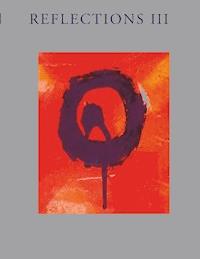
I thank Anne Schild for her help with the translation from Norwegian to English, Morten Løfberg for his vignettes, Jan Arnt for his coloured front page illustration and my friend Ole Praud for his invaluable consultancy work.
Spain 2017
George Manus
e-mail: [email protected]
A Woman’s Many Migrations.
We had been sitting at the kitchen table sharing a bottle of red wine, letting our thoughts flow freely. It wasn’t a special occasion. It had just turned out that way, our getting together once in a while, for no other reason than to talk about this and that.
As our friendship developed, I became more and more fascinated by him.
His name was Viggo Berman.
He wasn’t especially well read, but had an autodidactic philosophy of life which, despite his using a lot of words to express himself, appealed to me. I let myself go along, had no problems entering his world.
He was curious about life at the same time as his nature made him very down to earth.
His almost total lack of respect for entering into all manner of subjects made it natural for him to always have a meaning, a philosophy. This he often, at least when we were together like this, let come to expression.
It was probably his wide range which fascinated me the most, even though I discovered quite early that he didn’t always have a very deep knowledge of all the subjects we discussed.
Of course it also happened that subjects were raised that he had a detailed knowledge of, but then the dialogue or should I say monologue, as in those cases it had a tendency to become monologues, turned more rigid. He became intense and excited. He immersed himself totally in the subject and tended to lose his natural, easy form of expression. This also meant that I paid more attention and became more critical and less tolerant.
These situations, however, were few and far between.
Our get-togethers were almost always of the easy-going kind. I can hardly remember a single time sitting together at the kitchen table when the subject of discussion wasn’t rounded off by him with an observation or a relevant story which lasted a few minutes, a sort of summary.
It could be a reflection which he had already put to paper and read to me, or reflections which he made on the spur of the moment, while sitting there.
These reflections or happenings are what I remember best and what created the backbone of our relationship. Taken to mean that not everything was just allowed to drift, but was filed away in the appropriate drawer.
It would be wrong to say that he couldn’t also be a good listener, but he usually ended up doing most of the talking.
I have now known Viggo for many years and to be fair, he has improved with time. Improved in the sense that he no longer interrupts others in the middle of their performance.
He had an annoying tendency to do this earlier. One always had the feeling that he considered others to be talking too slowly. Their conclusions could, according to him be drawn long before they had finished and thus he, not too infrequently, chose to draw them on their behalf, in order to continue making his own point.
Rather insensitive, but when one got to know him, it was easy to understand that this was a result of his intensity and feeling and not lack of respect, nor was it a conscious attempt at misleading others.
I don’t remember how we got onto the subject, but we ended up discussing the inexplicable forces which are released when people are in certain situations. Especially in situations of extreme stress according to what I had heard and I mentioned an example from a series I had seen on TV about someone who in an accident had ended up underneath a car.
As if by a miracle, he was saved by a completely ordinary man who like a Goliath had lifted the car up to free the person in question.
“Yes, what is it that governs us?”, Viggo asks, sipping his wine and staring into space.
He stayed like that for what seemed like minutes.
With six candles and myself as his only witness, he clears his throat, puts his glass down and starts reading:
Mountaineering
This story I’ve told to very few people. Have sort of kept it as one of my secrets.
Not because it had to stay secret but simply because all these years I’ve felt it best to keep it to myself.
Have probably felt that there was no reason to put myself in a position of not being believed.
Now it’s no longer important to me whether I’ll be believed or not.
After all, I know what happened.
The change of attitude may also have something to do with my own maturity and development.
I no longer see any reason why the experience should be mine alone.
Those who witnessed what happened at the time are probably still alive and well and if I think about it I’m sure I can remember some names.
It is, however, some 46 years since the episode took place and the question is whether anyone will be able to come up with a 100% accurate reconstruction of events.
What happened was certainly strange, as we all thought at the time, and totally inexplicable.
I grew up on a 20 acre property, which at the time was definitely classed as being ‘in the country’, more specifically on Landøya in Asker.
Thinking back and trying to see it as I would have in those days, I would describe the property as woodland.
There were birch-trees, spruce and pine of all sizes interspersed with various types of smaller deciduous trees and there was an apple orchard, not that it has anything to do with this story, the apple orchard that is, but it brings back many other memories.
And then there was the characteristic cliff. It’s an episode from there that this story is all about.
This steep rock-face plummeting seven or eight meters straight down from one of the long sides of the property and ending in a scree.
It is still there.
It was here that the mountaineering expeditions took place.
Oh well, I expect a further explanation is necessary before I get to the point.
Tarzan and Liana`s played an important role in those boyhood days.
A number of huts were built in some of the tallest trees on the property and because of the hilly terrain, we had rigged up several so-called Liana`s.
They consisted mostly of solid ropes strung between massive pine trunks, often placed on the edge of steep hills.
From the middle of each rope, at a height of about 8 to 10 meters, hung the Liana itself.
The Liana, which with its few knots at the bottom and the aid of the centrifugal force, was to prevent a boy’s body from losing its grip when swinging above the abyss.
Some of the largest Liana`s were used by climbing the tree behind, utilizing this as a platform in order to achieve the optimum gliding effect.
Despite all these challenges, there were no serious injuries. As far as I can recall, the most dramatic incident was a broken leg which gave one of the gang member’s hero status for several weeks.
Other injuries were normally limited to sprains, grazes and bruises.
No one ever fell from the greatest height. Such a fall nobody would have survived as in retrospect I can see that in some cases we must have been 10 to 12 meters above the abyss.
Anyway, enough said, lets get back to the case in point, the cliff and the climbing.
Whenever we were short of ideas and football as well as cowboys and Indians became boring, the rock-face and its challenges beckoned.
Watching it today on TV, mountaineering has become a sport where its practitioners seem able to climb the steepest face of any mountain, when it’s been properly prepared for the exercise that is.
Even if we take into consideration that the participants always have their safety ropes strapped on, the challenges seem great.
What then of a ten years old`s experiences with height, obstacles and the demands he imposed on himself in order to reach his goal?
Things are easily put into perspective upon hearing that the idea of safety ropes never entered our minds.
A five or six meter fall into the scree could easily have serious consequences for a small boy.
And then it happens.
Why he was called ‘Boyman’ I still don’t know.
Perhaps it was a combination of two things, the ‘man’ pertaining to his having the strongest build of us all, and the ‘boy’ to the fact that he at the time definitely wasn’t the most developed.
No matter, that’s what he was called.
From the middle of the steepest rock-face we suddenly hear a cry for help. The rest of us who at the time are much lower down the ‘challenge’, immediately come out of our deep concentration on trying to find tiny cracks with room for fingers and toes.
Boyman is stuck on the rock-face three quarters of the way up and he’s panicking.
He is so high up that any attempt at letting go would be fatal.
He has definitely reached the critical point, the point from where by turning one’s head, to the extent that this is possible, one can look out across the leafy tops of trees grown to a height of five or six meters.
We know that the view from there is overwhelming, but we also know that that’s not what he’s thinking about at the moment, but only of how to hang on for life so as not to fall.
The rest of us down there feel locked and paralysed in the grip of the jungle.
There is hardly any time in which to act and what I write from now on has only been retold to me by someone else as I, at the time of Boyman`s primal scream, experienced a sort of black out and all further action on my part happened motorically.
I climb the rock-face like the wind, though from a point much lower than where we had been, no problem there. Then with the speed of lightning run through the wood to the nearest large Liana, a distance of about 200 meters.
I here make a short digression to lend support to the unexplained in the events to come; the Liana in question must have been hanging there in all kinds of wind and weather for at least two years.
I’m seen climbing monkey-like straight up the branch-less trunk of the pine.
Arms grabbing hold, legs bending then stretching, arms grabbing hold again, legs bending then stretching, arms grabbing hold, etc. The arms reaching less than halfway around the trunk.
I get to the place where the rope is fastened, eight to ten meters up, in seconds. As I’ve said, the knot is at least two years old.
I loosen it, according to the others, as it was knotted like an elegantly tied shoelace, with a couple of tugs.
Then the incredible happens, when the knot comes loose, the rope lets go of the pine trunk I’m in and the Liana which is looped around it, comes away from the rope and is free.
Apparently I slide straight down the trunk, grab the Liana and reach the cliff edge at breakneck speed.
The rope goes over the edge just as Boyman loses his grip on the rock but with the last of his strength he manages to grab hold of the Liana.
Grey-faced from fright and with the Liana tightly held in a white-knuckled fist, he stands safely anchored in the middle of the group of boys a few meters away from the edge of the cliff.
Six or eight ten year old`s stare horrified at one another and say nothing for a long time.
Slowly, as if through fog, I come to again and am told what happened.
Buried somewhere deep down in the subconscious, it was probably there all those years, in a small chamber. It probably occupied just a tiny fragment of its storage capacity, but it was there, and every so often it aimed a kick at the nervous system.
I seem to recall that this kick usually happened when things were at their most difficult in my marriage. At those times I was blinded by thoughts of what had been.
Seemingly naïve, it was, after all, based on an adolescent infatuation, but that relationship in particular stood out from the rest.
It had, in a way, been at a higher level than the rest. As I’ve already said, not a long-term infatuation, but a there and then awareness. A spot which sometimes had to be scratched.
The times could be few and far between, but the spot never disappeared.
Strangely enough, I seldom thought about what could have happened to her later in life, but only of her as a person.
I myself had early left the environment. Going to school abroad, then straight into challenging work, engagement, marriage and children.
What I remembered most clearly was the photo from our graduation class, characterized by my standing in the corner at the back and she at the front, as well as a picture from a school championships in slalom, from our graduation year 1955.
She’s sitting there at the wooden fence with a smile and a freshness which I could never ignore. But wasn’t that what she’d done to me, hadn’t she rejected me, weighed me and found me wanting? As I recall, I even became school champion that day, without it making the least bit of difference.
A month later I accompanied her to the station for the last time after she’d been in my part of the world. Later she explained that when she arrived home, he was standing there making it clear that she’d have to choose.
Some twenty years and a lot of scene changes have taken place since then.
I was in no way indifferent to my children’s upbringing, rather the opposite, but parent teacher meetings at the school didn’t really belong to my department. I found all sorts of excuses for not having to participate, whenever the subject arose.
No joy is everlasting, however, and the day came when I was caught. No excuse was good enough, it was my turn.
I arrive as one of the first and find my way to the last desk near the window. There I sit staring vacantly into the yard as the classroom slowly fills with parents, the meeting is under way.
During the teacher’s monotonous mass, which I didn’t pay much attention to, my gaze slid from desk to desk.
I have always had perceptive eyes. Five desks ahead of me, my gaze stops at a cheekbone, yes, just a cheekbone. Not just any kind of cheekbone, however, a very special one indeed.
Dwell on it a bit, then lower my gaze. What catches my eye? A pair of almost turquoise jogging shoes, it can’t be possible, undoubtedly one of the ugliest sights I’d ever seen. We have to remember that this was at a time long before this type of footwear was accepted for something other than sports.
Today most people wouldn’t have reacted at all, but at that time....
The cheekbone once again, there was something familiar about it, placed high up with an almost perfect shape. It must be, yes, of course, it had to be her.
The rest of the parents meeting took place without my spiritual presence.
She hadn’t turned her head during the entire meeting, but her voice asking several questions, dispelled all doubt, it was really her.
At the very second when the teacher thanks us for coming, I quickly move forward, touch her on the shoulder and turn her around: “It’s you, my old girlfriend, isn’t it?”
As she, to my offer of a ride home, answered that she lived only a few hundred meters from the school, we ended up sitting in the car, which was parked in the school yard, exchanging information about the main happenings in our lives since the last time.
I got to know that she was the stepmother of a classmate of my youngest, that she was divorced, remarried and recently widowed by the death of her second husband.
It was undeniably a bit special to find out that we for the last 9 years had lived less than half a kilometre apart without realizing it.
No special excitement was felt on this occasion as far as I recall, we were both seemingly settled in our respective situations.
A further two years go by without any contact, then there’s another change of scene.
Spring, church, a beautiful May day with people clad in national costumes. Proud parents attending their children’s confirmations. Our youngest daughter and her friends are standing in the choir awaiting the blessing of the priest.
The sun is shining through the beautiful glass painting of the Ris church as the congregation stands. Invisible forces turn my head to the left, slowly but surely as if in a vice. Then it stops as if on a signal. All other colours flow into one another and turn to mist.
The light green suit and the big hat of the same colour, decorated with a white flower ribbon, surround head and body. The smile, the expression, it is all there.
I come to again as the church bells start ringing, am suddenly awake and back in the ceremony.
A stuttering, confused introduction of my family at the exit. My mother told me later that I had blushed and she hadn’t doubted for a moment that there was tension in the air.
The next change of scene takes place about a year later. Our graduation class celebrates its 25 anniversary in September.
Large, black clouds had descended upon my marriage, and the parties had agreed to disband the orchestra and recall the instruments.
Confused as I was in the situation, I don’t remember if there was something tactical in my suggestion of shared transport to the party. First there’s a glass of champagne at our place, we were still living as friends under one roof, then a taxi to the party. Quite suddenly, just outside town, there it was again that quivering sensation, which had shot through my body an ocean of time ago.
The new class photo shows two people standing together in the back row holding hands.
Not long after the anniversary party, I’m sitting once again with my friend in the south-facing kitchen at Gulleråsen with its beautiful view of the Oslofjord.
He had already been told of the reunion and had dropped in to see how I was now that the former mistress of the house had moved abroad and I had sole responsibility for the two girls of 14 and 16 respectively.
We were sitting there with a large cup of tea each, and it seemed natural for us to talk about retrospection and causal connection. In a situation like that the time span is great, and one pursues the development all the way back to the origin.
I’ve always had a philosophy when it comes to time and development. It goes something like this: “When one describes the development of others over time, it is essential to remember that one has oneself developed parallel to them. One has oneself been part of the race. It is thus probable that one has oneself also changed in the process”.
Might seem confusing but for me it’s quite clear, gives me a sense of security.
I feel that I’m standing on a platform which lets me be objective.
“Apropos time”, Viggo suddenly says, “it can be both friend and foe. I’ve thought about it a lot. I’ve brought along something I put down on paper long ago to do with time, thought it might mean something in this context”. He pulls out a couple of A4 sheets from his breast pocket, unfolds them and starts reading:
Time
I’ll do that when I retire, many people say, I’ll have more time when I become a pensioner.
Nonsense, do it now, I say.
That, of course, is impossible. It’s only when one becomes a pensioner that one has the opportunity to do what one wants to do now.
The decision seldom or never has to do with economy – always with time. Time – the fourth dimension, perhaps humanity’s most important concept.
Do we make the most of our time, or more accurately put, how do we make the most of our time?
We measure most things in what we get done and what we don’t get done.
In any case, we blame it on time when we’re dissatisfied, it’s always time which is to blame – as if it’s responsible for our inability to organize ourselves better.
Regardless of priority, there’s always something which remains undone, something we would have liked to have done – time again.
We say we don’t have time for this or that. The question of priority has a different meaning for each of us.
Poor old time, does it ever have a bad conscience?
My view of time is that I see it in relation to eternity, only ideally speaking, of course – am probably quite realistic as regards my own physical life here on earth, but I still like to see time from a “perspective of eternity”.
Has it something to do with the fact that things live on? In that case, in which way and through what or whom, is not really of great significance. The most important for me is the belief that things live on.
History proves that things live on – I don’t actually mean things I guess, they disappear, but time? History doesn’t exist without time.
If something lasts forever it must be time and nothing but time.
Everything is regulated according to time. Absolutely everything – can’t think of a single thing which in one form or other isn’t related to time.
Our time of birth is for astrologers crucial and determinate both for the way we are and for the way we develop – here it hasn’t got to do with just the day, the hour and the minute are also of the utmost significance.
Time is of the essence.
It was in the past that one had plenty of time. Was it perhaps less important to be on time for everything in those days, or did one have more time as, for instance, timetables weren’t as developed as they are today?
Do opportunities create the rush for time?
With all the alternatives to be found for everything, it seems to be in the nature of things to have so much to be on time for.
Or is it the rush for time which creates the opportunities?
What came first, the rush for time or the opportunities?
Probably a balanced development.
Do we control time, or does it control us?
One competes in milliseconds – without time, no winners, and if there are no winners there are also no losers.
Does that mean that we can blame time for having losers? Someone has to take the blame, everything becomes much easier then.
“Timing”, it is said, is an important factor in all things. It means that the time aspect has to be correct.
Despite all the analysis in the world, correct “timing” is difficult to calculate.
History repeats itself it is said – rightly or wrongly. I don’t know, but in my opinion there is never a repetition, precisely because of time.
When the repetition takes place at a different time, it can’t be the same which is being repeated – that makes me happy.
It’s also good that we don’t know too much about the future.
Time has to be the greatest invention in the world.
Viggo had arrived in the late morning. It was now after four, and the fjord down there no longer reflected the sun, trapped as it was by the October afternoon.
In the wake of the anniversary, I invited her to a concert followed by dinner in one of the city’s better restaurants.
It was Iona Brown who was on the menu at the concert house that evening and it was wonderful to have that event as the start of a magnificent dinner.
During dinner she told me, full of excitement, about her different relationships.
Left herself open in a way. Normally she probably wouldn’t have done so, but I’ve since realized that I still hadn’t told her that my marriage had come to an end. I had only mentioned that my wife who, among other things, was interested in figurative art and she herself an artist, travelled a lot.
She had thought about this when I invited her and the reason she had agreed probably had to do with my somewhat evasive explanation.
She went on about jealousy as well as her personal relational patterns in different situations.
She didn’t know, of course, that my plan went further, that I’d already set the trap.
I saw more and more clearly that I couldn’t let the challenge get away from me. I had to outwit her, there had to be a relationship.
It probably sounds strange, but as far as we can both remember, the evening came to an end without my having let it be known that I was single.
The following Sunday we went for a walk in Nordmarka. Outside a coffee shop beautifully situated by a tarn, over a coffee and some waffles with strawberry jam, we exchanged information about the more detailed matters in our respective lives.
It seemed natural to tell her about the “disbanding of the orchestra and the recalling of the instruments” and I thus made it clear that my further actions could easily have consequences for both of us.
There was nothing inside me holding back when I invited her home for dinner. She said yes, and we both must have felt that it would be the official start of a relationship, the start of something more than an infatuation.
I went to great pains to prepare everything down to the smallest detail. Large birch logs on the fire, an ocean of burning candles. Had assured myself in advance that she liked steak tartar. Worked on it for quite a long time, there was no way the condiments would be laid out as for self-service. No, I mixed all the ingredients with the meat. My best red wine was decanted, and there would be champagne on arrival.
In my slightly nervous state, the excitement, the feeling of elation, I believed I had the situation under control.
I don’t think I’ve read it anywhere but I have often used the expression: “There’s no future without the present and no present without the past”. Since it’s so obvious, it has probably been said far better by someone else, but for me it makes perfect sense, especially when I think of what triggered her perhaps greatest passion.
It’ll have to wait a bit longer, as when I think about the past more than fourteen years of living with her and try to embark on seeing her as a person in the role she has played, I remember down to the smallest detail how it all got started.
She had partly moved into my house, but only partly. Partly, because she still had the responsibility of running her own house, her own two children and her stepson.
Hurt as I felt myself in connection with the breaking up of my relationship, establishing a new large family wasn’t on the cards from my side either.
At the beginning there were thus many late night trips from one house to the other.
At the time when even my two English setters started getting confused and didn’t know where to find their master, we realized something had to be done.
Things became more settled and the day came when our nights were shared without interruption.
At that time she didn’t have a permanent job, working for an employment agency, she flaunted her ever-changing, non-committal work routine.
It went very well with her studies at the university.
I understood from the first day of our living together, that there could be no question of any kind of restriction. Not that it would have been possible for me to restrict her in any way, nor would I have wanted to, she was definitely not like that.
It was a question of complete freedom. Not in the partnership itself, here there were clear lines, it was the freedom of movement which mustn’t be interfered with. The merest tendency towards this led to immediate consequences.
“La Paloma”, the dove, has to be able, without forewarning, to set off from the highest tower. First in a dive towards the abyss, after which it at maximum speed shoots upwards again until the force of gravity takes hold and pulls it in slow motion over the top and into another dive.
Her day always had a meaning, regardless of what she did.
The family was at the forefront, had priority in every context.
She seemed overprotective at times, but life had been hard on her in many ways.
My square, probably very conservative and stereotype way of life, she forced herself to accept, but I would be lying if I said that she liked it.
She was like all sensitive warm people, vulnerable. Gave a lot of herself, was intense in everything she said and did.
Empathy and imagination are two qualities which are strongly developed in her and she could in a matter of hours read books which I barely managed in weeks.
She was and is very much into the unexplained, without finding it in the least unnatural.
From day one I noticed how her intuition was hardly ever wrong. It seemed quite natural that she should know who was calling before answering the phone and she often predicted phone calls before they happened.
Every so often she got the feeling that someone in her wast circle of friends needed help. A phone call or unannounced visit from her, came almost always as ordered.
That this one life on earth wasn’t the end but only a continuation of a previous life which was on-going, was quite natural to her. The migration of the soul was part of the universe. In each life we humans were to learn something.
The difference between people lay in her opinion, in how far into this learning process we were. But again, there was no trace of fanaticism, only intensity, whenever things were talked about.
She was also distinctly conservative. I’ve been led to understand that she has never been anything else, that she, like myself, had never been through a leftist period.
She dresses herself in many strange things, but the violet scarf she has never worn.
She can also dress most elegantly. Beautiful as she was and still is, she can leave many a man breathless and often make other women look like grey mice.
She doesn’t often take advantage of this fact as it’s not a role she likes to play. It’s not her type of weapon.
Intelligence is her strong point. As she put the foundation courses in philosophy and psychology behind her as well as an intermediate course in pedagogy and received her Master’s degree, I got the impression that she had caught up with something left behind.
An early start in life had prevented her getting her A-levels, but she did them later together with her daughter. When she’s frightened, which is not seldom, it almost always has to do with inner fears.
I think her well-developed imagination at times makes situations appear which frighten her. Things are put together, by herself, in such a way that they make her afraid.
If she’s hurt or sad, it can lead to a violent rage. It doesn’t usually last long, but it’s very strong when it’s happening. It serves, I find, as a safety valve.
She identifies with all sorts of situations, plays every imaginable role, takes part in events which often have nothing to do with her.
In all situations she’s accomplished. Facing challenges, it’s seems as though the solutions appear automatically, always a question of spontaneous action.
I have still, after all these years, to see her take the side of anyone but the weakest party, in any given situation.
Wherever she can lend a hand, she does.
I myself find it strange that I only now in retrospect realize how valuable she is as a friend. In the midst of all this, it seems important to add that she in no way can be characterized as an “everyday housewife”. Probably because “everyday”, or at least the “grey” part of every day, doesn’t exist for her. Without putting the role of the housewife in a negative light, I believe that it is somewhat trivial in her world.
Life can be used for something far more interesting.
I have to characterize her as somewhat chaotic, but only superficially.
Things which for me are important, for example for pictures to hang straight, have normally for her no significance whatsoever. That kind of mess is life, and life is important.
Not that I have a different view of life, but as I say, superficially the differences are marked.
Her relationship with alcohol has always been characterized by caution, and is sometimes non-existent.
At times she’s allergic to grapes in its liquid form. A glass can, when this happens, put her out of commission for several days, but it has also occurred that the barrier has been lifted and that a bottle of champagne has more or less evaporated before my very eyes.
She loves using her hands. Whether it be carpentry or painting, she gets down to it, without having any special talents.
Perhaps it’s not fair to say that about talents, because there’s no hiding her love of colours. Daring, funny, but often very unusual combinations, are to be seen in most of what she does.
That the angle is absent in most of her carpentry efforts, only adds extra charm to the result.
She has a special ability to create a cosy and warm atmosphere.
At every possible occasion, even the smallest room is filled with furniture, knick-knacks, pictures and textiles in a strange jumble. But warm and cosy it always ends up and, not least, with a personal touch. And that’s just what she is, a personality, both great and small at the same time. She embraces almost everything, she has soul.
A Danish friend wrote her a poem one May day in 1983, which she has always greatly appreciated.
To the Children of the Rainbow
You must never be afraid to seem stupid at all.
Your inner colours paint even the greatest hall.
Of heaven and of hell,
believe all they have yet to tell.
Feelings can never kill,
a storm cannot break a reed at will.
Even when trees have been uprooted in anger,
never believe in safety and danger.
You must smile at every greatness,
and only trust in strangeness, so great it cannot be explained.
For only thus can all your colours for ever be maintained.
On this particular Thursday evening he had been there for a simple dinner.
She was visiting her parents in Asker.
It was one of those really cold January evenings. It hadn’t been possible to get the inside temperature to rise above 16 or 17 degrees Celsius all week.
Sitting there in front of the fireplace enjoying the rays of heat, I cast envious glances towards the highest part of the ceiling, about four meters above. That’s where the heat was. The south-facing walls of the house were almost entirely of glass, which also contributed to one’s wanting to head south.
We remained sitting there talking about spending one’s winters in Southern Europe. Wouldn’t one miss the snow, the cold and the skiing in Nordmarka? Earlier we had both been keen skiers, but the keenness had become less over the years.
It was in connection with imagined stays under the southern sun, that Viggo came to mention the soul. Where would one’s soul be and how would it feel, if one decided to up and leave like migratory birds?, he wondered.
As if to order and without waiting for an answer, not that I had a specific view on the matter, he put his hand in his pocket and pulled out some folded sheets of paper.
Two large birch logs joined the others, which had almost finished burning and were glowing the sort of red one sees when the evening sun is bidding its final farewell to the day.
He unfolds the sheets of paper and starts reading:
The Soul
It’s not easy to write about the soul – at least not when one has lost it.
Not the soul itself, of course, but what I meant to write about it.
My dictation about the soul has been lost – it’s just gone – it’s good that it wasn’t the soul itself that got lost.
Something as important as souls shouldn’t be able to become lost – disappear – at least not easily.
A dictation doesn’t get lost either unless one makes a mistake. In my eagerness to dictate some reflections about something as trivial as a “water-pipe” - yes, just a normal “water-pipe” - I happened to dictate on top of the soul – and it disappeared.
I had just taken a bath which made me think of the “water-pipe”.
I grab my Pocket Memo and start – discovering too late that the soul has been rewound and that my reflections about the “water-pipe”, have taken the place of the soul.
Could hardly have been worse – not for the soul – but for me. My poor brain barely remembers bits of what I had dictated – pity.
It was, in fact, quite good – at least according to the woman I played it back to. Easy to say now that the proof is gone.
The soul lives on. Some of the best things I meant to write about the soul, I’ll remember as I go along – putting pen to paper.
It made me more than a little nervous when I discovered that I’d dictated on top of the soul.
This is consequently written without a prior dictation.
It’s like being in an accident – just something I’ve heard – but it’s supposed to be essential to put oneself as quickly as possible in a similar situation - or, it is said, one never will again.
It would be a pity if I stopped dictating for fear of losing what I dictate – not for the soul – it will go on living. At least the one I’m talking about. I’ll continue to dictate.
My soul, for example, it is said at home, never returns from my travels when I do – it always gets there a day later.
It’s not something I notice myself – I don’t have a feeling of loss – I’m convinced that my soul is securely anchored in my body.
The question is what happens to the soul when it’s time for the body to say goodbye. Does the soul live on in art, literature and music?
Hardly – Our Lord was probably a democrat – normal souls should also be given a chance.
It is said that houses have souls. This as an example of our apparent acceptance that also things have souls. Quite possibly – I don’t believe it – and don’t for a second doubt that it, in that case, would have to be a totally different type of soul – not the real soul – the one with a capital S.
Reflections on that soul, the one with a capital S – was what the dictation was all about – it wasn’t especially mysterious – only expressed that it would be strange if there wasn’t something more – something more than the life we “miserable” people lead here on earth.
I myself have a number of experiences behind me, which leave no doubt about the “great beyond”.
Something else altogether is that I’ve never quite understood those who are always looking for their soul– searching for it, as if it were lost. They themselves must have convinced themselves that it’s lost, or they wouldn’t be searching for it.
Can the soul be lost – not in the form of a dictation or a piece of writing – and in that case, can it be found again?
What for instance does the soul do when we are sleeping?




