


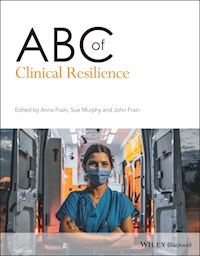
ABC of Clinical Resilience E-Book
37,99 €
Mehr erfahren.
- Herausgeber: John Wiley & Sons
- Kategorie: Fachliteratur
- Serie: ABC Series
- Sprache: Englisch
ABC of Clinical Resilience
ABC of Clinical Resilience
For the healthcare professional, clinical resilience is about reconnecting with those stirrings which first motivated us to spend a career in the service of others. It is about recovering and maintaining the ???joy of practice??? which nourishes and satisfies our curiosity about the uniqueness of every person in our care. Being a resilient practitioner is essential for our personal wellbeing and also for the safety of our patients, who depend on our ability to optimise our physical and cognitive performance. Yet many healthcare professionals report experiencing burnout.
ABC of Clinical Resilience summarises current evidence on how cognitive performance and wellbeing of healthcare professionals are affected by the emotional context of providing care and the organisational culture of working environments. As well as considering impacts of individuals and teams, we also consider how resilience can be recovered for the benefit of everyone. Topics include:
- The emotional impact of working in healthcare
- Resilience and cognitive performance
- Practicing self-care
- The physiology of resilience
- Intelligent kindness
- Kindness in teams
- Resilience in practice
- Organisational kindness
- Teaching resilience
Perfect for both novice and experienced healthcare professionals, including those working in mental health, ABC of Clinical Resilience will also earn a place in the libraries of professionals who treat healthcare workers and readers interested in the psychology and prevention of burnout, vicarious trauma, and moral injury.
About the ABC series
The ABC series has been designed to help you access information quickly and deliver the best patient care, and remains an essential reference tool for GPs, junior doctors, medical students and healthcare professionals.
Now offering over 80 titles, this extensive series provides you with a quick and dependable reference on a range of topics in all the major specialties.
The ABC series is the essential and dependable source of up-to-date information for all practitioners and students in primary healthcare.
To receive automatic updates on books and journals in your specialty, join our email list. Sign up today at www.wiley.com/email
Sie lesen das E-Book in den Legimi-Apps auf:
Seitenzahl: 256
Veröffentlichungsjahr: 2021
Ähnliche




















Table of Contents
Cover
Title Page
Copyright Page
Contributors
Preface
CHAPTER 1: Why resilience? Why now?
Introduction
‘First, do no harm’
Increasing patient expectations, complaints and litigation
Why now?
Equality, diversity and inclusion in healthcare resilience
Conclusion
Further reading/resources
CHAPTER 2: Emotional Impact of Working in Healthcare
Introduction
The cost of caring
Burnout
Moral distress
Compassion fatigue
Vicarious trauma
Effects of erosion of empathy, compassion and disengagement
Disengagement
Media reports on healthcare
The joy of practice
Compassion satisfaction
Empathy
Reducing risk and burnout
Conclusions
Further reading/resources
CHAPTER 3: Resilience and Cognitive Performance
Introduction
Clinical reasoning
Biases and contextual factors
Burnout and cognitive function
The negativity bias
Effect of experience
Training needs
Conclusions
Further reading/resources
CHAPTER 4: Practising Self‐care
Introduction
Self‐aware not self‐critical
Resilience through the career cycle
The healthcare student
The first five years of qualification
The established clinician
The last five years
Conclusions
Further reading/resources
CHAPTER 5: The Physiology of Resilience and Well‐being
Introduction
The physiology of stress and well‐being
The physiological impact of stress today
‘Challenge stress’ versus ‘threat stress’
Measuring stress and well‐being: heart rate variability and coherence
Cortical inhibition and facilitation
Making a shift: influencing HRV and coherence
The physiology of emotion
Becoming aware of a perception change
Making the shift back to well‐being
Conclusion
Further reading/resources
CHAPTER 6: Intelligent Kindness: A Systemic Perspective on Resilience
Resilience and recovery – definitions and questions
Reflection and self‐care
The emotional costs of caring
Kinship
A therapeutic alliance
The benefits of compassion and kindness
Cultivating intelligent kindness
Factors that undermine the work
A healthy ‘relational’ system
Conclusion
Further reading/resources
CHAPTER 7: Kindness in Healthcare Teams
Introduction
Kindness in teams
Bullying in the workplace and the toxic individual
Conclusion
References
Further reading/resources
Websites
CHAPTER 8: Organisational Kindness
Introduction
The effects of moral injury
Levels of organisational kindness
Improving joy at work
Conclusions
Further reading/resources
CHAPTER 9: Resilience in Practice
Introduction
Individual resilience and practice
What is 'team resilience'?
The impact on patient care
Hierarchy and conflict
The student experience
Perception vs intention: bridging the interpersonal gap
Most respectful interpretation
Moral courage and psychological safety in teams
Conclusion
Further reading/ resources
CHAPTER 10: Can We Really Teach Resilience, Intelligent Kindness and Compassion?
Introduction
Personal factors
Interpersonal factors
Contextual/environmental factors
Developing the curriculum
Assessment of resilience
Conclusion
Further reading/ resources
Recommended Books, Articles and Websites
For students and teachers
Academic
Websites (all accessed November 2020)
Index
End User License Agreement
List of Tables
Chapter 3
Table 3.1 Characteristics of Type 1 and Type 2 thinking.
Table 3.2 Examples of cognitive errors (bias) in clinical reasoning.
Table 3.3 Contextual factors relevant to clinical decision‐making and patient...
Table 3.4 Strategies for improving tolerance of uncertainty in decision‐makin...
Chapter 4
Table 4.1 Self‐criticism versus self‐awareness.
Table 4.2 Summary of positive and negative coping strategies throughout a car...
Table 4.3 The last five years.
Table 4.4 A systematic review of physician retirement planning.
List of Illustrations
Chapter 1
Figure 1.1 Change in reason for leaving given by staff (for voluntary resign...
Chapter 2
Figure 2.1 Conceptual model of compassion satisfaction.
Chapter 3
Figure 3.1 A modified universal model of diagnostic reasoning.
Figure 3.2 Situated cognition as a framework for context within a sample cli...
Figure 3.3 Hierarchy of needs for optimal clinical decision‐making.
Chapter 4
Figure 4.1 Self‐care checklist
Figure 4.2 Wheel of wellness, Cooper N. (2020).
Chapter 5
Figure 5.1 How the Autonomic Nervous System (ANS) innervates and influences ...
Figure 5.2 Activation of the hypothalamic–pituitary–adrenal (HPA) axis under...
Figure 5.3 The relationship between challenge and performance.
Figure 5.4 The relationship between heart rate (HR) and heart rate variabili...
Figure 5.5 Incoherent versus coherence heart rhythms.
Figure 5.6 How heart rhythms influence cortical activity.
Figure 5.7 The relationship between emotions and physiology.
Figure 5.8 The physiological relationship between thoughts and behaviours....
Figure 5.9 Improvements in students using regular self‐regulation techniques...
Figure 5.10 HRV tracing capturing Sarah’s stressful moment.
Chapter 6
Figure 6.1 A Therapeutic Alliance.
Figure 6.2 The task and role system.
Figure 6.3 The ‘kinship’ or relational system.
Chapter 7
Figure 7.1 Incivility the facts poster.
Chapter 8
Figure 8.1 Maslach Burnout Inventory (MBI).
Figure 8.2 Moral injury: the challenge of simultaneously knowing what is rig...
Figure 8.3 General Medical Council Duties of a Doctor.
Figure 8.4 Four levels of change.
Figure 8.5 The price of incivility.
Figure 8.6 Herzberg’s hygiene factors and motivators.
Figure 8.7 Four steps for leaders.
Figure 8.8 A practical example of improving joy at work: redesigning junior ...
Chapter 9
Figure 9.1 Why team‐based care?
Figure 9.2 The cycle of diminishing resilience.
Figure 9.3 The interpersonal gap.
Chapter 10
Figure 10.1 Visual presentation of interrelated factors influencing resilien...
Guide
Cover Page
Title Page
Copyright Page
Contributors
Preface
Table of Contents
Begin Reading
Recommended Books, Articles and Websites
Index
WILEY END USER LICENSE AGREEMENT
Pages
iii
iv
vii
ix
1
2
3
4
5
7
8
9
10
11
12
13
15
16
17
18
19
20
21
22
23
24
25
26
27
29
30
31
32
33
34
35
36
37
39
40
41
42
43
44
45
46
47
48
49
50
51
52
53
54
55
56
57
58
59
60
61
62
63
64
65
66
67
68
69
70
71
72
73
75
76
77
ABC of Clinical Resilience
EDITED BY
Anna Frain
University of Nottingham
Nottingham, UK
Sue Murphy
University of British Columbia
Vancouver, Canada
John Frain
University of Nottingham
Nottingham, UK
This edition first published 2021© 2021 John Wiley & Sons Ltd
All rights reserved. No part of this publication may be reproduced, stored in a retrieval system, or transmitted, in any form or by any means, electronic, mechanical, photocopying, recording or otherwise, except as permitted by law. Advice on how to obtain permission to reuse material from this title is available at http://www.wiley.com/go/permissions.
The right of Anna Frain, Sue Murphy and John Frain to be identified as the authors of the editorial material in this work has been asserted in accordance with law.
Registered Office(s)John Wiley & Sons, Inc., 111 River Street, Hoboken, NJ 07030, USAJohn Wiley & Sons Ltd, The Atrium, Southern Gate, Chichester, West Sussex, PO19 8SQ, UK
Editorial Office9600 Garsington Road, Oxford, OX4 2DQ, UK
For details of our global editorial offices, customer services, and more information about Wiley products, visit us at www.wiley.com.
Wiley also publishes its books in a variety of electronic formats and by print‐on‐demand. Some content that appears in standard print versions of this book may not be available in other formats.
Limit of Liability/Disclaimer of WarrantyThe contents of this work are intended to further general scientific research, understanding and discussion only and are not intended and should not be relied upon as recommending or promoting scientific method, diagnosis or treatment by physicians for any particular patient. In view of ongoing research, equipment modifications, changes in governmental regulations and the constant flow of information relating to the use of medicines, equipment and devices, the reader is urged to review and evaluate the information provided in the package insert or instructions for each medicine, equipment or device for, among other things, any changes in the instructions or indication of usage and for added warnings and precautions. While the publisher and authors have used their best efforts in preparing this work, they make no representations or warranties with respect to the accuracy or completeness of the contents of this work and specifically disclaim all warranties, including without limitation any implied warranties of merchantability or fitness for a particular purpose. No warranty may be created or extended by sales representatives, written sales materials or promotional statements for this work. The fact that an organisation, website or product is referred to in this work as a citation and/or potential source of further information does not mean that the publisher and authors endorse the information or services the organisation, website or product may provide or recommendations it may make. This work is sold with the understanding that the publisher is not engaged in rendering professional services. The advice and strategies contained herein may not be suitable for your situation. You should consult with a specialist where appropriate. Further, readers should be aware that websites listed in this work may have changed or disappeared between when this work was written and when it is read. Neither the publisher nor authors shall be liable for any loss of profit or any other commercial damages, including but not limited to special, incidental, consequential or other damages.
Library of Congress Cataloging‐in‐Publication Data
Names: Frain, Anna, editor. | Murphy, Sue (Physical therapist), editor. | Frain, John (John Patrick James), editor. Title: ABC of clinical resilience / edited by Anna Frain, Sue Murphy, John Frain. Other titles: ABC series (Malden, Mass.) Description: First edition. | Hoboken, NJ : Wiley‐Blackwell, 2021. | Series: ABC series | Includes bibliographical references and index. Identifiers: LCCN 2020054591 (print) | LCCN 2020054592 (ebook) | ISBN 9781119693437 (paperback) | ISBN 9781119693475 (adobe pdf) | ISBN 9781119693444 (epub) Subjects: MESH: Interprofessional Relations | Empathy | Resilience, Psychological | Clinical Medicine Classification: LCC RC46 (print) | LCC RC46 (ebook) | NLM W 62 | DDC 616–dc23 LC record available at https://lccn.loc.gov/2020054591LC ebook record available at https://lccn.loc.gov/2020054592
Cover Design: WileyCover Image: © serts/E+/Getty Images
Contributors
John Ballatt, FRCGP (Hon)Director, The Openings Consultancy, Leicester, UK
Julie Carlson, MSW, RCSWRegistered Clinical Social WorkerFraser Developmental Clinic, British Columbia, Canada
Nicola Cooper, MBChB, FAcadMEd, FRCPE, FRACP, SFHEAConsultant Physician & Clinical Associate Professor in Medical EducationUniversity Hospitals of Derby & Burton NHS Foundation TrustandMedical Education Centre, University of Nottingham, UK
Barry Evans, BMBS (Hons), MRCP (UK)Consultant PhysicianUniversity Hospitals of Derby & Burton NHS Foundation Trust, UK
Anna Frain, MBChB, MRCGP, PGCert Medical EducationGeneral Practitioner PartnerGP Teaching Fellow, University of Nottingham Graduate Entry Medical SchoolProgramme Director, Derby Speciality Training Programme for General Practice, Nottingham, UK
John Frain, MB ChB, MSc, FRCGP, DCH, DGM, DRCOG, PGDipCard, AFHEAClinical Associate Professor & GEM Director of Clinical Skills,Division of Medical Sciences and Graduate Entry MedicineUniversity of Nottingham, UK
Susanne Hewitt, MBE, MBChB (Hons), FRCS, FRCEMConsultant Emergency MedicineUniversity Hospitals of Derby & Burton NHS Foundation Trust, UK
Carrie Krekoski, RDH, BDSc (Dental Hygiene), MEdPractice Education ManagerOffice of the Vice President, HealthUniversity of British Columbia, Canada
Sue Murphy, BHSc (PT), MEdFaculty of Medicine, Department of Physical TherapyUniversity of British Columbia, Vancouver Campus, Canada
Lynn Musto, PhD, RN, RPNAssistant ProfessorSchool of Nursing, Trinity Western University, British Columbia, Canada
Sarah Nicholls, BSc, BMBSJunior Doctor, Emergency DepartmentQueens Medical Centre, Nottingham, UK
Betsabeh Parsa, BEd, MEdFaculty of Medicine, Department of Physical TherapyUniversity of British Columbia, Vancouver Campus, Canada
Carla Stanton, BMBS, BMedSci, MRCGP, PgDip, DPDGeneral PractitionerFunctional Medicine Doctor, Hertfordshire, UK
Victoria Wood, MAStrategic Lead, Health SystemsOffice of the Vice President, HealthUniversity of British Columbia, Canada
Preface
‘To err is human’ but so is to excel. Resilience recognises this. It is about bouncing back, regaining our shape – about not merely carrying on, but becoming more self‐aware rather than more self‐critical. Clinical resilience is not about standing apart from our patients but embracing the humanity we share and planning for the physical, emotional and cognitive effects our work has upon us. Our work is intense, and it is a paradox of modern healthcare systems that, despite the incredible treatment pathways and technological advances we have achieved, our most precious resource – those who deliver the care – report feeling increasingly burned out and unable to carry on.
We are human beings trying to help other human beings. Our professional role often requires us to be bigger than who we believe we are capable of being. When we fall short of this self‐imposed expectation, many of us feel we have failed, that we have let ourselves down as well as our patients and our colleagues. Though we must be aware of our limitations, we should not be bound by them.
A recurring theme of this book is the need in healthcare for greater kindness. Not kindness as simply an emotional feeling – important though this is – but intelligent kindness, the kindness that motivates us to be cooperative rather than competitive with one another; to feel connected, thoughtful and with a sense of kinship towards other people. This connectedness starts with thoughtfulness towards ourselves, and learning about the impact on our physiology and our cognitive performance of the stressful environments in which we are all working. The potential gains are substantial. First, there is our own well‐being, and a recovery of that ‘joy of practice’ which first alerted us to the attraction and fulfilment of working in healthcare. Secondly, greater safety and well‐being of staff means improved safety for patients and a reduction in the medical error related to staff burnout. There is a particular responsibility on healthcare regulators, leaders and providers to develop the intelligent kindness towards healthcare staff which has too often been absent, so that staff and their patients remain safe.
We are grateful for the contribution of our authors, all of whom committed to this project before the outset of the Covid‐19 pandemic, an event which has bought into much sharper focus so many of the themes we set out to explore in this book. They have shown resilience in completing their chapters in such a timely way despite the challenging circumstances. We work in Canada and the UK, and so this book inevitably reflects perspectives on resilience in our particular countries. However, from our professional conversations, we believe the themes we have explored reflect concerns in many countries and health systems worldwide.
We hope the individual reader will find this book of interest. With our emerging understanding of resilience and its importance to patient care, training programmes are increasingly considering how to incorporate resilience into healthcare education. We hope our work will be helpful to them as well.
Anna Frain
Sue Murphy
John Frain
February 2021




