


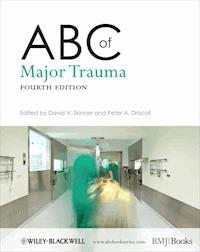
ABC of Major Trauma E-Book
37,99 €
Mehr erfahren.
- Herausgeber: John Wiley & Sons
- Kategorie: Fachliteratur
- Serie: ABC Series
- Sprache: Englisch
Prehospital care is a growing area in medicine, and emergency treatments are becoming more sophisticated as the potential to save lives grow.
The fourth edition of this ABC has been thoroughly updated and includes new chapters on nuclear and biological emergencies.
Each chapter gives concise and clear guidance and is accompanied by excellent photographs and diagrams.
Edited and written by leading UK trauma authorities, this is a truly comprehensive and practical book for everyday use by emergency medicine staff, nurses, hospital doctors, paramedics, and ambulance services.
This title is also available as a mobile App from MedHand Mobile Libraries. Buy it now from iTunes, Google Play or the MedHand Store.
Sie lesen das E-Book in den Legimi-Apps auf:
Seitenzahl: 637
Veröffentlichungsjahr: 2013
Ähnliche




















Table of Contents
Series Page
Title Page
Copyright
List of Contributors
Foreword
Preface
Acknowledgements
List of Abbreviations
Chapter 1: Initial Assessment and Management: Primary Survey and Resuscitation
The trauma team
Before the patient arrives
Roles of trauma team members
Reception and transfer
Primary survey and resuscitation
Team leader co-ordination
Further reading
Chapter 2: Initial Assessment and Management: Secondary Survey
Objectives
History
Analgesia
Head-to-toe assessment
Further reading
Chapter 3: The Upper Airway
First vital minutes
Indications for oxygenation and ventilation
Hospital management
Anaesthetic considerations
Intubation technique
Summary
Acknowledgement
Further reading
Chapter 4: Thoracic Trauma
Mechanisms and patterns of chest injury
Primary survey and resuscitation
Diagnostic adjuncts to the primary survey
Immediate life-threatening injuries
Procedures associated with the primary survey
Secondary survey
Diagnostic adjuncts to the secondary survey
Analgesia
Summary
Chapter 5: Hypovolaemic Shock
Early symptoms and signs
Factors affecting response to blood loss
Pulmonary oxygenation
Control of haemorrhage and replacement of blood loss
Monitoring progress and treatment
Analgesia
Summary
Further reading
Chapter 6: Head Injuries
Epidemiology and causes of head injury
Pathophysiology of head injury
Initial assessment of head injuries
Radiological assessment in head injuries
Admission or discharge?
Inpatient management
Transfer to a neurosurgical unit
Paediatric head injuries
Delayed effects of head injury
Further reading
Chapter 7: Maxillofacial Trauma
Primary survey
Secondary survey
Imaging: brain and facial trauma
Medication
Further reading
Chapter 8: Spine and Spinal Cord Injury
Management at the scene of the accident
Transfer to hospital
Arrival at hospital
Radiology
Treatment
The future
Further reading
Chapter 9: Abdominal Trauma
Anatomical considerations
Mechanism of injury
Assessment
Abdominal treatment
Treatment
Further reading
Chapter 10: The Urinary Tract
Upper urinary tract
Ureteral injuries
Lower urinary tract
Acknowledgements
Further reading
Chapter 11: Limb Injuries
Prehospital care
Hospital care
Definitive management of fractures
Summary
Further reading
Chapter 12: Eye Injuries
Applied anatomy
Assessment of ophthalmic trauma
Practical approach to ophthalmic trauma
Summary
Further reading
Chapter 13: Medical Problems in Trauma Patients
Why are medical problems important?
Avoidable mortality and morbidity
Medical problems that cause trauma
Medical problems caused by trauma
Medical problems that may complicate trauma
The future
Further reading
Chapter 14: Radiological Assessment
Head
Cervical spine
Chest
Abdomen
Post processing
Ultrasound
Pathways
Further reading
Chapter 15: Role of the Trauma Nurse
Preparation
On arrival
Pain
Investigations
What next?
Transfer
Special circumstances
Summary
Further reading
Chapter 16: Scoring Systems for Trauma
Input measures
Trauma outcome prediction methodology
Comparing systems of care
Trauma Audit and Research Network
References
Chapter 17: Handling Distressed Relatives and Breaking Bad News
Initial contact
Arrival of relatives at the hospital
Breaking the news
Advice for the doctor (or other breaker of news)
Management of relatives
Staff support
Summary
Acknowledgement
Further reading
Chapter 18: Trauma in Pregnancy
Airway and breathing
Circulation
Primary survey
Secondary survey
Fetomaternal haemorrhage
Blunt trauma
Penetrating trauma
Cardiac arrest
Burns
Further reading
Chapter 19: Paediatric Trauma
Which hospital?
Trauma team activation
Primary survey and resuscitation
Secondary survey
Burns
Pain relief in children
Non-accidental injury
Should relatives be present in the resuscitation room?
Summary
Acknowledgements
Further reading
Chapter 20: Trauma in the Elderly
Primary survey and resuscitation
Secondary survey: AMPLE
Head injuries
Chest trauma
Abdominal trauma
Fractures
Summary
Further reading
Chapter 21: Prehospital Trauma Care
Tasking and dispatch
Scene management
Clinical management
Road traffic crash entrapment
Emergency department pre-arrival alert
Mode of transport
Handover
Future developments in prehospital trauma care
Further reading
Chapter 22: Transfer of the Trauma Patient
Primary transfer
Secondary transfer
Summary
Further reading
Chapter 23: Management of Severe Burns
Evacuation from the scene
Reception and resuscitation
Reassessment
Chemical burns
Electrical burns
Summary
Further reading
Chapter 24: Chemical Incidents
Common problems encountered
What is a chemical incident?
How can emergency departments plan for chemical incident response?
What are the local chemical hazards?
Health effects from chemical incidents
What emergency facilities are required?
Actions
How to obtain help following a chemical incident
Summary
References
Chapter 25: Ballistic Injury
Bullets and firearms
Explosive injury
Managing the ballistic incident
Surgical treatment of ballistic injuries
Summary
Online resources
Further reading
Chapter 26: Trauma in Hostile Environments
Threat and levels of care
The ballistic environment: key points
Isolation
External environment
Trauma in a chemical environment
Further reading
Chapter 27: Psychological Trauma
Psychological responses to trauma
Management of psychological responses to trauma
Summary
Further reading
Chapter 28: Major Incidents
The initial response
Preparation for major incidents
Hospital response
Recovery phase
Further reading
Chapter 29: Trauma Systems in Developing Countries
Appropriate
Affordable
Adaptable
Sustainable
The scale of the problem
Advanced Trauma Life Support
Primary Trauma Care
Further reading
Index
Advertisement
This edition first published 2013, © 1991, 1996, 2000, 2013 by Blackwell Publishing Ltd
BMJ Books is an imprint of BMJ Publishing Group Limited, used under licence by Blackwell Publishing which was acquired by John Wiley & Sons in February 2007. Blackwell's publishing programme has been merged with Wiley's global Scientific, Technical and Medical business to form Wiley-Blackwell.
Registered office: John Wiley & Sons Ltd, The Atrium, Southern Gate, Chichester, West Sussex, PO19 8SQ, UK
Editorial offices: 9600 Garsington Road, Oxford, OX4 2DQ, UK
The Atrium, Southern Gate, Chichester, West Sussex, PO19 8SQ, UK
111 River Street, Hoboken, NJ 07030-5774, USA
For details of our global editorial offices, for customer services and for information about how to apply for permission to reuse the copyright material in this book, please see our website at www.wiley.com/wiley-blackwell.
The right of the author to be identified as the author of this work has been asserted in accordance with the Copyright, Designs and Patents Act 1988.
All rights reserved. No part of this publication may be reproduced, stored in a retrieval system, or transmitted, in any form or by any means, electronic, mechanical, photocopying, recording or otherwise, except as permitted by the UK Copyright, Designs and Patents Act 1988, without the prior permission of the publisher.
Wiley also publishes its books in a variety of electronic formats. Some content that appears in print may not be available in electronic books.
Designations used by companies to distinguish their products are often claimed as trademarks. All brand names and product names used in this book are trade names, service marks, trademarks or registered trademarks of their respective owners. The publisher is not associated with any product or vendor mentioned in this book. This publication is designed to provide accurate and authoritative information in regard to the subject matter covered. It is sold on the understanding that the publisher is not engaged in rendering professional services. If professional advice or other expert assistance is required, the services of a competent professional should be sought.
The contents of this work are intended to further general scientific research, understanding, and discussion only and are not intended and should not be relied upon as recommending or promoting a specific method, diagnosis, or treatment by physicians for any particular patient. The publisher and the author make no representations or warranties with respect to the accuracy or completeness of the contents of this work and specifically disclaim all warranties, including without limitation any implied warranties of fitness for a particular purpose. In view of ongoing research, equipment modifications, changes in governmental regulations, and the constant flow of information relating to the use of medicines, equipment, and devices, the reader is urged to review and evaluate the information provided in the package insert or instructions for each medicine, equipment, or device for, among other things, any changes in the instructions or indication of usage and for added warnings and precautions. Readers should consult with a specialist where appropriate. The fact that an organisation or website is referred to in this work as a citation and/or a potential source of further information does not mean that the author or the publisher endorses the information, the organisation or website may provide or recommendations it may make. Further, readers should be aware that internet websites listed in this work may have changed or disappeared between when this work was written and when it is read. No warranty may be created or extended by any promotional statements for this work. Neither the publisher nor the author shall be liable for any damages arising herefrom.
Library of Congress Cataloging-in-Publication Data
ABC of major trauma / edited by David Skinner and Peter Driscoll.—4th ed.
p. ; cm.
Includes bibliographical references and index.
ISBN 978-0-7279-1859-8 (pbk. : alk. paper)
I. Skinner, David V. II. Driscoll, P.A. (Peter A.), 1955-
[DNLM: 1. Wounds and Injuries–therapy. 2. Emergencies. 3. Emergency Medical Services–methods. WO 700]
617.1′026–dc23
2011043617
A catalogue record for this book is available from the British Library.
Wiley also publishes its books in a variety of electronic formats. Some content that appears in print may not be available in electronic books.
Cover image: iStock (17389284)
Cover design by Meaden Creative
1 2013
List of Contributors
Foreword
As a contributor and user of this book, I am delighted to see a fourth edition published. It represents a most useful core text for those seeking a contemporary practical guide to assess and deliver the best trauma care for those patients who are “candidate major traumas”. All counties and healthcare systems are different and some changing, but the core principles of management are common. This text, through its breadth of expert contributors, succinctly describes these. Reading each chapter feels like you've just had a really good tutorial on the subject and represents a very efficient method of acquiring knowledge. I would certainly recommend you keep a copy of this publication close by whether preparing for your on-call day or a teaching session.
Keith WillettProfessor of Trauma SurgeryJohn Radcliffe HospitalOxford, UK
Preface
This edition of the ABC of Major Trauma has had a long gestation, being 12 years since the third edition.
Trauma care continues to evolve and improve both in the ‘front line’ and nationally with the development of Trauma Centres and supporting networks. Prevention is also playing its part, with deaths on the roads continuing to fall.
There is, however, no room for complacency and we hope this fourth edition will remind our readership of the crucial importance of a thorough, stepwise assessment of the trauma patient and that attention to detail, not least in spinal care, can avoid the devastating consequences of the ‘second’ injury.
This edition sees extensive revision of all its chapters and the addition of further material. At the time of publishing all information is current.
The book is aimed at all clinicians involved in front line trauma care, paramedics, hospital doctors and nurses as well as those members of the ‘team’, crucial to optimal management, including radiographers, radiologists and laboratory staff.
Chapter 29 reminds us of the excellent facilities available to us in UK practice. However, this chapter also shows us that simple manoeuvres can be life saving in the Third World environment.
The continuing conflicts around the world involving UK armed forces has resulted in improved trauma management in these conflict zones. Lessons learnt and techniques developed have been shared with civilian clinicians to the benefit of patients. Many authors in this edition have put themselves in ‘harms way’ to manage victims of conflict. This edition is dedicated to them.
David V. Skinner
Acknowledgements
I would like to acknowledge the help and guidance afforded to me by all at Wiley-Blackwell during the course of the production of this fourth edition of the ABC of Major Trauma.
I would like in particular to thank Adam Gilbert, Vicki Donald, Ilaria Meliconi, Laura Quigley, Kate Newell, Cathryn Gates and Helen Harvey whose support, encouragement, good humour and pure professionalism have seen this task to completion.
David V. Skinner
List of Abbreviations
5-HT
5-hydroxytryptamine
ABC
airway, breathing, circulation
ACE
angiotensin-converting enzyme inhibitor
AIC
ambulance incident commander
AIS
Abbreviated Injury Scale
AP
anteroposterior
APLS
Advanced Paediatric Life Support
ARDS
acute respiratory distress syndrome
ASD
acute stress disorders
ATLS
Advanced Trauma Life Support
ATP
adenosine triphosphate
BATLS
Battlefield Advanced Trauma Life Support
BP
blood pressure
BVM
bag-valve-mask
CAT
computed axial tomography
CBF
cerebral blood flow
CBT
cognitive-behavioural therapy
CCS
casualty clearing station
CHaPD
Chemical Hazards and Poisons Division
COPD
chronic obstructive pulmonary disease
CPB
cardiopulmonary bypass
CPP
cerebral perfusion pressure
CPR
cardiopulmonary resuscitation
CRT
capillary refill time
CSF
cerebrospinal fluid
CT
computed tomography
CXR
chest X-ray
DCLHb
diaspirin cross-linked haemoglobin solution
DIC
disseminated intravascular coagulation
DPL
diagnostic peritoneal lavage
DVT
deep venous thrombosis
ECG
electrocardiogram
ECMO
extracorporeal membranous oxygenation
ED
emergency department
EEG
electroencephalogram
ET
endotracheal
ETA
expected time of arrival
ETCO
2
end-tidal carbon dioxide concentration
FAST
focused assessment with sonography in trauma
FBC
full blood count
FFP
fresh frozen plasma
FiO
2
fraction of inspired oxygen
FRC
functional residual capacity
GCS
Glasgow Coma Scale
GDP
Gross Domestic Product
GP
general practitioner
HART
hazardous area response team
HBOC
haemoglobin-based oxygen carrier
HCT
hospital co-ordination team
HCVR
hypercapnic ventilatory response
HPA
Health Protection Agency/hypothalamo-pituitary-adrenal
HR
heart rate
HVR
hypoxic ventilatory response
ICP
intracranial pressure
ICU
intensive care unit
I/E
inspiratory/expiratory
IED
improvised explosive device
IO
intraosseous
IPE
individual protective equipment
ISS
Injury Severity Score
ITU
intensive therapy unit
IV
intravenous
MAP
mean arterial pressure
MERIT
medical emergency incident response team
MIC
medical incident commander
MODS
multiorgan dysfunction syndrome
MRI
magnetic resonance imaging
NAI
non-accidental injury
NGT
nasogastric tube
NICE
National Institute for Health and Clinical Excellence
NPIS
National Poisons Information Service
NSAID
non-steroidal anti-inflammatory drug
PEEP
positive end-expiratory pressure
PPE
personal protective equipment
PPH
postpartum haemorrhage
PTA
post-traumatic amnesia
PTC
Primary Trauma Care
PTSD
post-traumatic stress disorder
RSI
rapid-sequence induction
RTA
road traffic accident
RTC
road traffic crash
RTS
Revised Trauma Score
SaO
2
oxygen saturation
SCIWORA
spinal cord injury without radiological abnormality
SHO
senior house officer
SIGN
Scottish Intercollegiate Guidelines Network
SIRS
systemic inflammatory response syndrome
SXR
plain radiograph of the skull
TARN
Trauma Audit and Research Network
TNF
tumour necrosis factor
US
ultrasound
USAR
urban search and rescue
WHO
World Health Organization
ZPP
zone of partial preservation
Chapter 1
Initial Assessment and Management: Primary Survey and Resuscitation
David V. Skinner1 and Peter A. Driscoll2
1John Radcliffe Hospital, Oxford, UK
2Hope Hospital, Salford, UK
Morbidity and mortality in seriously injured patients, managed in UK hospitals, remain higher than necessary. Recognition of this problem over the last 25 years has seen a variety of initiatives designed to improve the situation, including the introduction of Advanced Trauma Life Support (ATLS) to clinical practice, the widespread use of the auditing tool TARN (Trauma Audit and Research Network), and the deployment of multidisciplinary trauma teams to manage trauma victims in emergency department (ED) resuscitation rooms. Increasingly, consultant-delivered services, where available, will further enhance care.
For each individual patient, however, survival and reduction of long-term disability depend on the rapid deployment of skilled prehospital clinicians (paramedics and/or doctors), the skills and experience of the receiving clinicians (trauma team) and the human and other resources available round the clock to deal with patient injuries in a timely and effective fashion.
Lesen Sie weiter in der vollständigen Ausgabe!
Lesen Sie weiter in der vollständigen Ausgabe!
Lesen Sie weiter in der vollständigen Ausgabe!
Lesen Sie weiter in der vollständigen Ausgabe!
Lesen Sie weiter in der vollständigen Ausgabe!
Lesen Sie weiter in der vollständigen Ausgabe!
Lesen Sie weiter in der vollständigen Ausgabe!
Lesen Sie weiter in der vollständigen Ausgabe!
Lesen Sie weiter in der vollständigen Ausgabe!
Lesen Sie weiter in der vollständigen Ausgabe!
Lesen Sie weiter in der vollständigen Ausgabe!
Lesen Sie weiter in der vollständigen Ausgabe!
Lesen Sie weiter in der vollständigen Ausgabe!
Lesen Sie weiter in der vollständigen Ausgabe!
Lesen Sie weiter in der vollständigen Ausgabe!
Lesen Sie weiter in der vollständigen Ausgabe!
Lesen Sie weiter in der vollständigen Ausgabe!
Lesen Sie weiter in der vollständigen Ausgabe!
Lesen Sie weiter in der vollständigen Ausgabe!
Lesen Sie weiter in der vollständigen Ausgabe!
Lesen Sie weiter in der vollständigen Ausgabe!
Lesen Sie weiter in der vollständigen Ausgabe!
Lesen Sie weiter in der vollständigen Ausgabe!
Lesen Sie weiter in der vollständigen Ausgabe!
Lesen Sie weiter in der vollständigen Ausgabe!
Lesen Sie weiter in der vollständigen Ausgabe!
Lesen Sie weiter in der vollständigen Ausgabe!
Lesen Sie weiter in der vollständigen Ausgabe!
Lesen Sie weiter in der vollständigen Ausgabe!
Lesen Sie weiter in der vollständigen Ausgabe!




