


Erhalten Sie Zugang zu diesem und mehr als 300000 Büchern ab EUR 5,99 monatlich.
- Herausgeber: TWENTYSIX
- Kategorie: Fantasy und Science-Fiction
- Sprache: Englisch
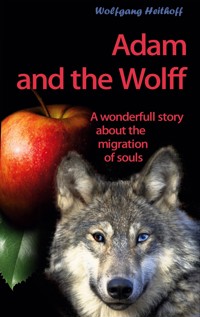
Cornwall, Rhodes, South Dakota, ancient Alexandria ... The hero of this story undertakes a journey through space and time, at first involuntarily. He meets Jesus, Mohammed, a mysterious wolf and many more. Adam dances around the Beltane fires, experiences the invasion of the Huns in Europe and gets stranded in the desert with a caravan. Is it a transmigration of souls that the young geologist from Cambridge experiences? What are the intentions of Reverend Wilson, who encourages Adam to strengthen his abilities? Do they know each other from a previous life? An entertaining story with many twists and turns and insights into other times and cultures. It ends in a snow-covered mountain hut. Or is it just beginning?
Sie lesen das E-Book in den Legimi-Apps auf:
Seitenzahl: 235
Veröffentlichungsjahr: 2024
Das E-Book (TTS) können Sie hören im Abo „Legimi Premium” in Legimi-Apps auf:
Ähnliche




















It's a chilly November day. I'm on my way to Cornwall. 'Coombe Vallye', as it is called today. A small settlement of five or six 17th century cottages. Restored a few years ago and now rented out to well-heeled tourists.
Long before these historic cottages were built, my great-great-grandfather's little fishing hut stood there somewhere. And a few more "ur" ones. Nobody knows for sure anymore.
Now I'm sitting in the passenger seat of a rusty, dark beige Land Rover, lost in thought.
When had I set off anyway? What had driven me out of my two-bedroom apartment on St. George Road in Cambridge? Chased out into this empty, unfriendly landscape?
Sure, for years there had been this subliminal feeling that magically drew me to this place. But never so strong that I would have given in for even a second.
But yesterday I gave in! I turned off the electricity and pulled the heavy velvet curtains in front of the only window in my apartment. It is now in complete darkness until I come back. At some point.
I ordered the daily bottle of milk from Mrs. McGibbon in the store on the corner and asked my landlady to tell the paperboy that I was going away. I paid the outstanding bill at Sam's pub. Sixteen pounds thirty-four. And another stout to say goodbye.
Farewell!
That was all just yesterday afternoon! At 12 noon, while watching the news on BBC, I had decided to start the journey. And now I've burned all my bridges, it seems. I'm still wondering about myself.
Fortunately, there were no more orders, and I had sent my last report to the National Geographic Institute in Edinburgh on Monday.
Evelyne has been in the States on a one-year scholarship since the beginning of the month.
It was a strange accumulation of clues from my surroundings that it was time for me to hit the road. Nothing was keeping me in Cambridge anymore.
Get on the road! What a thought! As if I had been planning this trip for a long time and was just waiting for the right moment. Not at all!
And then this taciturn, red-haired plumber from Bideford came into the picture. About two years younger than me, 33, also my height, about six feet, but unlike me broad-shouldered, massively built, hands like paws, a typical 'country lad'. I had just arrived in Exeter by train, had left this small Victorian station, was standing on the street and was wondering what to do next.
It was only slowly that I realized how hasty my departure had been. I had bought a ticket for the next train yesterday lunchtime. Four hours until departure. Pack my bags and off I went. Sleeping car. Leaden tiredness, no time for thoughts.
And now I was standing there at the side of the road, my father's old leather suitcase in one hand, my waterproof rucksack in the other, wondering how I could get on. How could I have driven so haphazardly? And where exactly was I going anyway? And what if there was no bus service?
The last thought burst like never before. This beige Rover was already standing next to me, the driver rolled down the window, held his pipe with his teeth and asked: "Can I give you a lift?"
Nothing else.
I nodded silently and got in.
I don't think we had even talked about the destination. But I'm sure he's going to the west coast. Somehow...
He, my silent driver. Paul Smith was written on the magnetic sign on the dented, dirty car door.
Paul Smith
Harbour Lane 16
Bideford
Services of all kinds
What a stark contrast, this new bright blue magnetic sign with its black lettering on the door of the old Rover.
Just like Paul Smith himself. Anyway, I assume he is Paul Smith, he hasn't said so. But somehow I'm sure.
I feel safe in general. Ever since I got into his car, I've been surrounded by this strange feeling of security. I don't even know where he's going, but I'm sure he'll take me to my destination.
Light and confident, he steers the Rover out of the city traffic and onto the country road heading west. The rays of the setting sun play with his curly red hair, which hangs down to his shoulders. They light up his smooth face, which doesn't quite match the greasy overalls he is wearing.
The monotonous hum of the engine makes me sleepy. My thoughts drift off. To my ancestor, whose footsteps I will now follow. My thoughts fly by like the trees at the side of the road. I think of my grandmother, who is said to have lived here somewhere on the coast. It is said that she lived in a small house with a view of the sea. Unfortunately, I never got to know her.
*
I see her standing at the hob in the middle of the room. Gaunt, dirty, wrapped in coarse linen. A black metal pot hangs above the fire, in which the water bubbles and boils. The smoke from the wet logs, which does not escape upwards through the hole in the roof, leaves a warm but musty atmosphere in the old house. It stings the eyes.
It smells earthy. Like mushrooms or something. I look into the pot. Finely chopped turnips, roots and herbs dance their idiosyncratic dance from the bottom to the edge and back again.
*
I'm looking in the pot?!
I am suddenly wide awake again. Where am I? What happened?
My taciturn driver points ahead with the mouthpiece of his whistle. A few sheep had crossed the road. He must have had to brake. Now they move slowly along the right-hand side of the road, then round the bend and disappear from our sight. A few scrawny pine trees stand in the meadow on the right and dance in the wind.
My heart is pounding in my throat. I must have fallen asleep. Strange! I can still smell the vegetable soup in my nose.
Mr. Smith smiles.
While he sets his Rover in motion again with a jerk, I carefully stretch my feet away from me. A little exercise would do me good.
How long have we actually been sitting here in the car? 3.05 pm. My watch has stopped! As if he had guessed my thoughts, Mr. Smith points to the sign that has just whizzed past us:
Petrol station/tea room 12 miles
I understand.
So I stretch my legs again, sigh comfortably and concentrate on the landscape, which passes me by like a video cassette played too quickly.
What a stark contrast to the area where I grew up. Even if you can't see for miles, you still get a sense of the almost endless expanse. Sheep scurry past us.
It begins to dawn outside.
*
I open the door.
A cold, clear evening. There should have been snow by now. The surf can be heard from afar. It is high tide. It smells like snow. It will fall this night. Covering the ground like a great white shroud. The time of hardship will begin. For humans and animals.
Hopefully the supplies will last. The harvest on the beds between the forest and the coastal cliff, which keeps the strong wind away from the interior, was meagre this time. A very wet summer. The sun had not been seen very often.
Bad omens. I shudder. Not just because of the cold that is slowly taking hold of me. Who are the bad omens for? The absence of schools of fish off the coast! The mysterious disease that has killed most of the animals in the forest!
It was out of the question to stock up on dried meat. The evil spirit had taken possession of the carcasses as well as the living animals. They had lost their usual shyness and were easy prey for our hunters. Too easy a prey. The other members of the tribe had also spurned the game meat. It was inedible. It was evil.
Marga is waiting in our house with the food. A strange change has happened to her recently. Since her monthly periods have stopped, an unfamiliar restlessness has taken hold of her. Her calm, even-tempered nature has given way to a tense sensitivity. I, too, sometimes sense the presence of another being in our house. It's there very delicately. Barely perceptible, it gropes for my thoughts. As if it wanted to prepare me for its coming in spring.
I'm looking forward to becoming a father. If only the signs weren't so ominous this year!
I go back into the house. The familiar smell of turnips and fried fish wafts through a crack in the door. I open the door and see Marga standing over the kettle, holding a large iron ladle and two wooden bowls.
The door closes with a loud bang.
*
I startle and hit my head on the windshield of the Rover. Mr. Smith has now walked around the car and opens the door for me.
"Get out of the car. There's some good food inside. And a cup of tea won't hurt in this weather."
Only now do I realize that it's raining. A weak, drizzling sleet has turned the parking lot into a slippery ice rink. As I slowly put foot in front of foot to avoid slipping, Mr. Smith walks with somnambulistic certainty towards the tea room. It's a large, old house on the left-hand side of the street, directly behind the parking lot. It must be 200 years old, built of rough, gray stone and unplastered.
In stark contrast to this is the garage made of prefabricated parts, which is located directly on the road. It is set up as a repair shop and, just like the two petrol pumps, is painted in the colors of the petrol company, yellow and green. As if it were necessary to draw attention to the petrol station and the tea room, the only two buildings for miles around.
Mr. Smith is already waiting for me at the door of the pub and pulls the door open with an elegant swing. His eyes have a mischievous expression, as if he were the doorman of a hotel opening the entrance for his regular guest.
Inside, we are greeted by the familiar smell of roast ham, fish and chips and freshly cleaned wooden tables.
I didn't pay attention to whether there were any other cars in the parking lot outside, but the room itself is almost empty. There are five, six, eight, twelve chairs around three round wooden tables, only one is occupied.
In the corner, directly opposite the entrance, sits an old man in the pale blue haze of his pipe. His left eyebrow raised briefly when we entered. Now he looks at us and, obviously satisfied, turns back to a small black book that he is slowly leafing through.
Mr. Smith heads for the table by the window and sits down. I take the chair opposite him and look out of the window. Outside, the drizzle slowly turns to sleet. White, sticky snow settles on the windowsill.
A woman approaches us from behind to take our order. She is slim, almost thirty years old, well-groomed and exudes a slight peppermint scent. Her long, chestnut brown hair is tied back with a yellow silk ribbon. She moves gracefully and somehow doesn't seem to belong here. Most of the waitresses, whether owners or employees, quickly identify with the restaurant and somehow become part of it.
Peggy doesn't.
I think her name is Peggy. The old man must have called her that. Anyway, I suddenly seem to know her name.
Maybe she's just here to help out? She notes down our order with a smile and a barely visible wink. Did she mean me?
I'm still thinking about the daydreams that haunted me on the journey. Man oh man, they were realistic! Quite different from my usual night-time dreams.
Peggy brings us our tea. Mr. Smith winks at her with his left eye. Does he know her? Does he come here often?
I ask him what he was doing in Exeter, where he had picked me up.
"What to do," is the short answer.
Well, if he doesn't want to talk, he doesn't have to. Although I would have liked to know a bit more, for example, where exactly he's going and how he thinks he's going to continue.
At that moment, the old man calls over from the other corner of the room.
"You probably won't get any further. Horrible weather, this. The roads will turn to ice in no time and you'll slide your jeep into the nearest tree or hole.
This time last year, the Postbus got caught in such bad weather. It wasn't until the next morning that they found the poor guy two hundred meters off the road by the course of a small stream. Nobody knows how he got there. He must have completely missed the road.
The front axle was broken, but thankfully the driver himself was almost unharmed. Only the night in the cold and the darkness took its toll on the poor guy. He hasn't been quite right up there since that day."
The old man taps his pipe against his temple and grins. Immaculate white teeth gleam at us from the dark corner of the room.
"You can sleep with me if you want, and continue your journey at sunrise. If you ride in the light, nothing can happen to you."
Somehow the old man doesn't seem to be in his right mind either. Just this strange way of expressing himself!
Mr. Smith only nodded briefly at the offer, it seems to be a done deal. Should I set off on foot alone? Actually, I should be furious at how easily decisions are made over my head. For whatever reason, it all feels so right. So I agree to it too, intending to think long and hard in bed about my current situation, which is completely out of my control.
But first I devote myself to dinner, I'm ravenous. The fried boiled ham is delicious, the chips crispy, the salad crunchy and fresh.
I have suppressed the feeling of hunger for too long and now, as if I didn't know when I would next get something, I stuff everything into me. The dark beer washes the food down like clear mountain water. Only when my plate is empty do I realize how tired I am. I'm sure the beer has played its part.
A glance at my watch. It's still standing. It must be at least ten o'clock. I look around the restaurant. There's not a clock in the whole room.
A little louder than necessary, the old man puts down his beer glass and stands up. This is probably the sign to leave.
I wave Peggy over and pay the bill. Mr. Smith defends himself briefly, but probably more as a gesture of decency, when I also settle his bill. That's the least I owe him.
I also pay for the old man's beer, who will now be our hostel warden. He taps the brim of his hat with two fingers and grins. It's difficult to estimate his age. At first I thought he was about seventy, but when he gets up from his chair as nimbly as a cat, I have to correct myself. Certainly not older than fifty! Or is he?
Mr. Smith has already gone to the car to get our luggage. He puts the suitcase in my hand and follows the old man to the street.
On the other side of the street, right opposite the tea room, there is a small, old house. I must have overlooked it when we arrived. Thick, white smoke curls out of the chimney and rises steeply into the clear, cold air.
Mr. Smith has already gone ahead with the old man and is waiting for me in the entrance. In a slightly beery mood, I shuffle along behind them. It's no longer snowing, but at least fifteen centimetres have fallen.
All around me now lies a white, glistening, completely untouched carpet. Behind me I can see my deep footprints, in front of me a smooth sea of untouched snow. Behind me, the entrance to the house beckons with its warm, yellow light shimmering from the living room. The two men are waiting for me. Something is wrong here, but I can't figure out what. Must be the beer.
Mr. Smith and Mr. Gordon ("Jesiah Gordon", as the name plate on the fence had said) have probably already discussed everything important when I enter with my suitcase. They give me a friendly look.
The house welcomes me with a pleasant warmth, the hallway is bathed in a soft, flickering light, which probably comes from the gas lamps on the walls. Opposite the entrance, a dark wooden staircase leads to the upper floor, where five rooms branch off from the spacious hallway. As far as I can make out, there is a bedroom and bathroom to the right, the kitchen immediately to the left and the living room and another room at the bottom of the stairs at the far left. With the exception of the kitchen and the bathroom, all the rooms, as well as the hallway and the stairs, are covered with the same reddish-brown carpet. An interesting pattern that somehow reminds me of runes or old characters. All the doors are ajar, as if to satisfy my curiosity.
Our host assigns Paul the room at the bottom of the stairs and me the first room above the stairs.
The first floor is also decorated in the same colors, the same carpet, the same beautiful dark brown wooden doors. At the bottom of the stairs, a gnarled walking stick with a silver-tipped handle stands in a silver-colored milk churn. Above it hangs a dark picture: the man with the gold helmet. Two rooms face the street, at the other end of the narrow corridor there is a third room, the door to which is closed.
Mr. Gordon opens the door to my room for the night with a youthful verve that doesn't match his appearance at all. A nicely furnished room with an old, black wooden bed on the left against the outside wall. Some light filters in through the half-closed curtains, right onto the Celtic cross on the opposite side of the room. Under the window is a brown upholstered chair, on the right wall a chest of drawers with three large drawers, on top of which is a jug with a wash bowl. Above it, Dürer's "Praying Hands" hangs on the otherwise bare wall. There is no wallpaper here at all, the plaster is painted over in a delicate shade of pink that matches the patterned curtains and the comforter cover perfectly. The bed is freshly made and uncovered.
Mr. Gordon bids me a friendly farewell and wishes me a good night. Then he quietly leaves the room after lighting the candlestick on the sideboard. A calm, yellow-white light spreads through the room.
Strange that the house is not yet connected to the power supply, when the petrol station and the other buildings opposite are already connected. Perhaps the old man has refused to allow the 'blessing of modern times' to enter his house?
I wash my face and hands in the basin before getting changed. The water is pleasantly warm, which only increases my tiredness. I quickly draw the curtains all the way and crawl into bed.
Despite all the thoughts that were still circling in my head, I fall asleep immediately.
*
The fire crackles in the middle of the room while the wind slowly picks up outside.
Time flies by. Without highs, without lows.
Today is the day before Beltaine, the festival of the beginning of summer and fertility. Preparations for the big celebrations are in full swing. I am assigned with two others to collect and pile up the wood for the ceremony. Marga and the other women are preparing the food for the feast after the ritual.
Tomorrow, at dusk, the large piles of oak and yew wood will be lit. While the cattle are driven past the blazing flames to be cleansed of evil spirits by the smoke, the druids sing the sacred chant. In doing so, they ask the gods for their blessing for the year.
The Beltaine festival is the most important and most beautiful in the entire annual cycle, but the day before belongs to the evil spirits. On the eve of the beginning of summer, they roam around and can bewitch the cattle and cause great mischief. For this reason, we are glad to have finished our preparations before dusk and to be able to retreat to our homes.
Gloomy rain clouds have drifted up from the sea, hanging heavy over the forests and on the mountain slopes. If it rains tonight, it will be difficult to light the cleaning fires tomorrow. To be on the safe side, we have already covered them with greased skins, but it is uncertain whether they will be able to withstand continuous rain at night.
Before I close the entrance to the hut, I see the full moon being released by a thick, black cloud. Its glow bathes the fairground in an unearthly light. The druids move ghostly in the glow of the torches and sing verses of appeasement.
The hairs on the back of my neck stand on end as I sit down to eat by the fire. Marga is in a good mood despite her considerable corpulence and the resulting immobility and is already in the mood for tomorrow's feast.
But I eat without appetite and toss and turn on my bed until the cloak of sleep finally covers me completely.
It is a deep, dreamless sleep.
As if struck by a thunderclap, I suddenly wake up. A slight rumble is still running through the air when the inside of our hut is suddenly bathed in dazzling light by a flash of lightning. And the thunder is already there. Above us, beside us, inside us, even before the light has faded.
Marga cries out, holding both hands tightly on her abdomen. If only the contractions didn't start now!
Once again, thunder and lightning envelop us with their icy grip, even paralyzing our breath.
In the sudden silence, I hear screams and shouts outside. I gather up my coat, put it around my shoulder and run out. I barely notice Marga trying to hold me by the cloak and pull me back.
"No, Anamh, no!"
I am greeted by acrid smoke outside the cave. I look at the fairground. The Beltaine fires are ablaze.
Too soon! But not today, on the night of the evil spirits!
Apparently the lightning ignited it.
All of them?
How is that possible?
The two druids lie motionless on the ground in the glow of the fire lamps.
The cattle grunt and stamp anxiously in their pen. I run to the fairground. Some huts are also on fire.
But there is still no one to be seen. They are probably all still paralyzed by the crescendo of light and noise.
At the edge of the forest, a wild boar is rolling in the grass. Its back bristles are on fire. A fireball strikes right next to the boar. Squealing in horror, it jumps up and races into the middle of the pen, where our animals panic.
The cows spin wildly in circles. They try to avoid the shaggy firebug and break through the gate. The herd runs in wild fear between the blazing Beltaine fires.
Right up my alley.
I am pushed to the ground
Earth around me. Hooves. Roaring fear.
Shout. Marga!
My child! I suddenly know that I will never see it.
My life passes me by in the time of a hoofbeat.
Fear. Pain. Blackness.
It is over.
Glistening light.
*
I get out of bed. The glow of another flash falls through the gap in the curtains onto the Celtic cross on the wall.
I am bathed in sweat. I have just experienced my own death.
No! Just a dream! But terribly close to reality.
I have difficulty finding my bearings in the unfamiliar surroundings. My mind first has to figure out where up and down are. Where the window is, where the door is. I'm not at home in my bed in Cambridge.
Nor am I lying on a muddy, rutted floor wrapped in furs.
I'm lying in a bed somewhere between Exeter and the west coast of Cornwall. I'm Adam Jefferson, a geophysicist currently on vacation.
Evelyne, my girlfriend 'left' me two weeks ago because we agreed that the scholarship in the States was more important than her 'career' at the royal court.
Of course, we hadn't split up lightly, but had discussed all the pros and cons again and again and thought them through carefully. For nights on end. After all, you can't just break off a five-year relationship for a year like that.
Apart from her telegram on the day she arrived in Los Angeles, I haven't heard anything more from her. I hope she's doing well. The days leading up to her departure had given her quite a hard time: depression, insomnia, nausea.
But we had made our decision, and a year is not an eternity. Maybe I'll fly over to visit them one day?
But first of all ...
But first I turn back onto my other side, close my eyes and wait for sleep, which is already waiting to cover my leaden bones with its warming black cloak.
*
I pull my coat tighter around me.
It has become cold since the sun hid behind the trees on the mountain to the west on its way to its night quarters. Only a few red-yellow rays still leak between the trees up to the mountain where we have gathered. They bathe the speaker and his followers in a shimmering light. It makes them look as if they are floating above the rocky ground, which seems to swallow up the sun's rays.
Now the Nazarene looks over at us, the setting sun illuminating his face. He couldn't have chosen a better place to give his words the right effect.
Hundreds of us have followed behind him and his small group, inspired by curiosity as to what he has to tell us this time.
They say he is an agitator, a charlatan, a thorn in the side of the Romans, who has been standing firmly on our homeland for a long time. He is said to have claimed that he was the new king of the Jews. Not to be believed, given the simple appearance he gives off.
But his speeches are unique. Not fiery or heated. No, more rapturous, figurative, without a spark of anger or hatred. Words with wings that fly straight into your heart.
I have heard many of his speeches. He never laid claim to rule. Or even openly condemned the rulers. He only ever wove a picture of a more beautiful, more peaceful world that he held before our eyes. An image in which the Romans with their dictatorship certainly had no place.
He calls them parables, his stories from another world. Stories that take place here and now, but which we have only been able to see with our eyes, never with our hearts.
An idealist. Certainly!
An insurgent? No!
Otherwise I wouldn't have followed him and the others here, where I was able to witness what was probably his longest and most expressive speech to date.
But now he seems to have nothing more to say to us. He turns his back on us and turns to his followers. Unrest arises. Some grumble. They shout loudly.
"Why did you call us here of all places? So far away from home?"
"It's getting dark. We can't make our way back in the dark."
"Didn't you think about torches?"
"Should we sleep on the bare rock?"
"What should we eat? We've been following you since noon. We're hungry!"
The unrest spreads upwards from the foot of the mountain like a wave. Now it spills over to the Nazarene and his entourage. They begin to debate. One of them, probably Yehuda, had wisely brought two baskets of bread and carafes of water and wine. However, he doesn't seem to be prepared to share his provisions with those of us standing around. He clutches a basket tightly.
How could he give anything away? It's just enough to feed the small group there. If he handed out everything, everyone would be left with just a crumb.
However, the preacher talks to Yehuda like a mother to a small child. Finally, he grumbles and gives up his resistance and lets go of the basket.
The Nazarene turns back towards us, the rays of the evening sun still falling on his face. And on his hands. And now also on the flat rock on which he places the basket. Slowly, he takes out the bread and breaks it into small pieces. I can't understand what he's saying. The light wind that rises blows his words away.
With a wave of his hand, he draws those standing at the front closer.




