


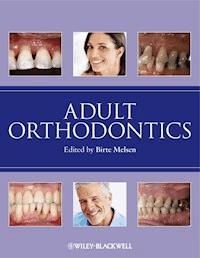
Adult Orthodontics E-Book
134,99 €
Mehr erfahren.
- Herausgeber: John Wiley & Sons
- Kategorie: Fachliteratur
- Sprache: Englisch
This is a major new work dedicated to the increasingly prominent area of adult orthodontics. Written by renowned contributors from the orthodontic community and beyond, and compiled by a world-class editor, it provides an authoritative resource on the subject, marrying together clinical guidance with a thorough evaluation of the evidence base. The opening chapters provide the context for adult orthodontics, including patient demographics and aetiology, and the book goes on to detail treatment planning considerations, including patient case profiles, suggesting initial outcomes and longer term expectations. Interdisciplinary and multidisciplinary approaches are discussed, including the links between adult orthodontics and periodontics, prosthetics and temporomandibular disorders. The book is accompanied by a website containing further examples of case studies and a wealth of clinical images. Set to become the gold standard resource on the subject, this book will be invaluable to all those providing orthodontic treatment to adults and those dealing with orthodontics as part of the inter-disciplinary management of the adult dentition. KEY FEATURES * A major new work on an expanding area of orthodontic treatment * Covers patient demographics, aetiology, treatment planning and maintenance issues * Includes case studies, suggesting realistic and optimal short and long term outcomes * Highly illustrated with full colour clinical photos * Accompanied by a website with further material: www.wiley.com/go/melsen
Sie lesen das E-Book in den Legimi-Apps auf:
Seitenzahl: 918
Veröffentlichungsjahr: 2012
Ähnliche




















Table of Contents
Cover
Title page
Copyright page
Dedication
List of Contributors
Introduction: More than a Century of Progress in Adult Orthodontic Treatment
1 Potential Adult Orthodontic Patients – Who Are They?
Introduction
Who are the patients?
How do the patients express their needs?
The first visit
Communicating with the patient
Summary
2 Diagnosis: Chief Complaint and Problem List
Introduction
Work-up of a problem list – the interview – chief complaint
General health
Clinical examination
Extraoral examination
Extraoral photographs
Function of the masticatory system
Intraoral analysis – oral health
Evaluation of dental casts – arch form
Occlusal analysis
Space analysis
Cephalometric analysis
Final problem list
Indication for treatment
The presentation of the problem list – the tip of the iceberg
Concluding remarks
3 Aetiology
Introduction
Biological background
Aetiology of malocclusions in adults
Age-related changes in the skeleton
Age-related changes in the craniofacial skeleton
Age-related changes in the local environment
Consequences of deterioration of the dentition
Case reports
Conclusion
4 Interdisciplinary Versus Multidisciplinary Treatments
Interdisciplinary or multidisciplinary treatments
Establishment of an interdisciplinary team
Treatment sequence
Essential and optional treatment procedures
Interaction during treatment
Post-orthodontic treatment
Patient satisfaction
Examples of interdisciplinary cases
5 Treatment Planning: The 3D VTO
Determining the treatment goal
Producing an occlusogram
Combining the occlusogram with the head film
The computerized occlusogram
Responding to patients’ needs
Orthodontic treatment: Art or science?
6 Tissue Reaction
Orthopaedic effects
Orthodontic effects in adult patients
7 Appliance Design
Introduction
Definition of the necessary force system
Anchorage evaluation
Sequencing the treatment into phases
Appliance selection and design
Sliding mechanics
Segmented mechanics
Conclusion
8 Anchorage Problems
Introduction
Definition
Classification of anchorage
Intramaxillary anchorage
Soft tissue anchorage
Free anchorage
Intermaxillary anchorage
Occlusion
Differential timing of force application
Extraoral anchorage
Skeletal anchorage
9 Bonding Problems Related to Adult Rehabilitated Dentitions
Introduction
Brackets
Basics of bonding
Bonding to crowns and restorations
Debonding
Reconditioning of stainless steel attachments
Banding
Auxiliary attachments
10 Material-related Adverse Reactions in Orthodontics
Introduction
Fixed appliances
Bonding and banding materials
Removable appliances
Miscellaneous materials
Concluding remarks
11 Patients with Periodontal Problems
Prevalence of periodontal disease
Malocclusion and periodontal disease
Orthodontics and periodontal disease
Indications for orthodontic treatment in periodontally involved patients
Treatment of patients with flared and extruded upper incisors
Tissue reaction to intrusion of teeth with horizontal bone loss
Treatment of patients with vertical bone defects
What are the periodontal limits for orthodontic tooth movement?
Sequence of treatment in periodontally involved patients
Conclusion regarding Influence of orthodontic treatment on periodontal status
12 A Systematic Approach to the Orthodontic Treatment of Periodontally Involved Anterior Teeth
Single tooth gingival recession
Progressive spacing of incisors
Case reports
Management of periodontally involved teeth
13 Interdisciplinary Collaboration Between Orthodontics and Periodontics
Introduction
Periodontal diagnosis
History taking, clinical and radiographic examination
Screening for periodontal disease
Local factors predisposing to periodontal therapy
Timing of ortho-perio treatment
Periodontal therapy
Surgical therapy
Mucogingival and aesthetic surgery
Regenerative surgical therapy
Supportive periodontal treatment
Ortho-perio and multidisciplinary clinical cases
Conclusion
Acknowledgements
14 The Link Between Orthodontics and Prosthetics
Introduction
Edentulousness and space management: the mesiodistal dimension
The vertical dimension
Orthodontics, periodontal disease and prosthetic splinting
Conclusion
Acknowledgements
15 Patients with Temporomandibular Joint (TMJ) Problems
Orthodontics and dysfunction
Controversy in the literature regarding TMD and occlusion
Treatment and TMD
Treatment of clicking joints
Orthodontic treatment of patients with TMD
Organization of the treatment
Conclusion
16 Patients with Temporomandibular Disorders
Introduction
Classification and epidemiology
Diagnostic procedures
Risk factors and etiology
Pathophysiology
Management
Summary
17 Invisalign®: as Many Answers as Questions
Is Invisalign® new?
How does Invisalign work?
What are the pre-treatment considerations?
How does the Invisalign System differ from conventional orthodontics?
What characterizes patients seeking Invisalign treatment?
What is the most favourable approach to resolving crowding in Invisalign patients?
How can the alternatives to IER be evaluated?
What are the problems related to resolution of crowding?
When are extractions indicated?
Does an Invisalign treatment plan differ from a regular orthodontic treatment plan?
How does one take an adequate impression for the Invisalign System?
What is required to be evaluated in ClinCheck®?
What material are aligners made of?
What are aligner attachments?
How are attachments fabricated on the teeth?
What has to be controlled after insertion of aligners?
What are the consequences of good or poor aligner fit?
What if an aligner is lost?
What can be done if a severe discrepancy between ClinCheck® and the clinical situation becomes evident during treatment?
What can be done if a slight discrepancy between ClinCheck® and the clinical situation becomes evident at the end of treatment?
How can complications during treatment with the Invisalign system be avoided?
18 Progressive Slenderizing Technique
Definition and objectives
Anthropological justification of slenderizing
Influence of slenderizing on dental plaque, caries and periodontal disease
Indications
Contraindications
Advantages of slenderizing
How much enamel can be stripped?
Special considerations
Instrumentation for slenderizing
Progressive slenderizing technique
Case reports
19 Post-treatment Maintenance
Stability?
Biological maintenance
Mechanical maintenance – retention
Intermaxillary retention
Active retention plates
Conclusion
20 What are the Limits of Orthodontic Treatment?
What determines the limits?
Index
This edition first published 2012
© 2012 by Blackwell Publishing Ltd
Blackwell Publishing was acquired by John Wiley & Sons in February 2007. Blackwell’s publishing program has been merged with Wiley’s global Scientific, Technical and Medical business to form Wiley-Blackwell.
Registered office: John Wiley & Sons, Ltd, The Atrium, Southern Gate, Chichester, West Sussex, PO19 8SQ, UK
Editorial offices: 9600 Garsington Road, Oxford, OX4 2DQ, UK
The Atrium, Southern Gate, Chichester, West Sussex, PO19 8SQ, UK
2121 State Avenue, Ames, Iowa 50014-8300, USA
For details of our global editorial offices, for customer services and for information about how to apply for permission to reuse the copyright material in this book please see our website at www.wiley.com/wiley-blackwell.
The right of the author to be identified as the author of this work has been asserted in accordance with the UK Copyright, Designs and Patents Act 1988.
All rights reserved. No part of this publication may be reproduced, stored in a retrieval system, or transmitted, in any form or by any means, electronic, mechanical, photocopying, recording or otherwise, except as permitted by the UK Copyright, Designs and Patents Act 1988, without the prior permission of the publisher.
Designations used by companies to distinguish their products are often claimed as trademarks. All brand names and product names used in this book are trade names, service marks, trademarks or registered trademarks of their respective owners. The publisher is not associated with any product or vendor mentioned in this book. This publication is designed to provide accurate and authoritative information in regard to the subject matter covered. It is sold on the understanding that the publisher is not engaged in rendering professional services. If professional advice or other expert assistance is required, the services of a competent professional should be sought.
Library of Congress Cataloging-in-Publication Data
Adult orthodontics / edited by Birte Melsen.
p. ; cm.
Includes bibliographical references and index.
ISBN 978-1-4051-3619-8 (hardback)
ISBN 978-1-4443-5573-4 (epdf)
ISBN 978-1-4443-5574-1 (epub)
ISBN 978-1-4443-5575-8 (mobi)
I. Melsen, Birte.
[DNLM: 1. Orthodontics, Corrective. 2. Adult. WU 400]
617.6'43–dc23
2011034162
A catalogue record for this book is available from the British Library.
Wiley also publishes its books in a variety of electronic formats. Some content that appears in print may not be available in electronic books.
Dedicated to Alain who wrote this book with me, and to all the people who helped me during the process.
List of Contributors
Delfino Allais MSc
Certified Specialist in Orthodontics
Private Practice
Torino, Italy
Dorthe Arenholt Bindslev DDS, PHD
Associate Professor, Certified Specialist in Orthodontics
School of Dentistry
Aarhus University
Aarhus, Denmark
Vittorio Cacciafesta DDS, MSc, PhD
Certified Specialist in Orthodontics
Private Practice
Milano, Italy
and
Assistant Clinical Professor
Department of Orthodontics
University of Pavia
Pavia, Italy
Pablo Echarri DDS
President of the Scientific Committee of Catalonian Dental Association (COEC)
and
President of the Ibero-American Society of Lingual Orthodontics (SIAOL)
and
Visiting Professor of Master in Orthodontics at the University of Sevilla
Barcelona, Spain
Giorgio Fiorelli MD, DDS
Specialist in Orthodontics
Orthodontic Department
University of Siena
and
School of Specialization/Postgraduate Master Course
Siena, Italy
Carmen Giudice DDS
Postgraduate Resident
Department of Orthodontics
University of Pavia
Pavia, Italy
Jaume Janer DDS, MD
Postgraduate in Orthodontics
Certified Specialist in Orthodontics
Private Practice
Barcelona, Spain
Sonil Kalia B.D.S., L.D.S.R.C.S., MOrth.R.D.C MSc
Specialist in Orthodontics (private practice)
Visiting Assistant Clinical Professor
Orthodontic Department
Aarhus, Denmark
Marco Antônio Masioli PhD, MSc
Professor of Dentistry
Federal University of Espírito Santo (UFES)
Brazil
Dimitrios Mavreas DDS, MS, Dr Dent
Private Practice
Chalandri, Greece
Birte Melsen DDS, Dr Odont
Professor, Head of Department
School of Dentistry
Aarhus University
Aarhus, Denmark
Rainer-Reginald Miethke Prof em Dr med Dent
Senior Consultant in Orthodontics
Dental Department
Hamad Medical Corporation
Doha, Qatar
Francesco Milano DDS
Private Practice
Bologna, Italy
Laura Guerra Milano DDS
Certified Specialist in Orthodontics
Private Practice
Bologna, Italy
Sheldon Peck DDS, MScD
Adjunct Professor of Orthodontics
School of Dentistry
University of North Carolina
Chapel Hill, North Carolina, USA
and formerly
Clinical Professor of Developmental Biology
Harvard School of Dental Medicine
Boston, Massachusetts, USA
Yves Samama DDS
Certified Specialist
Private Practice
Paris
and
Former Assistant Professor
Paris Descarte University
France
M Francesca Sfondrini DDS
Certified Specialist in Orthodontics
Assistant Clinical Professor
Department of Orthodontics
University of Pavia
Pavia, Italy
Peter Svensson DDS, PhD, Dr Odont
Professor
Department of Clinical Oral Physiology
MINDLab, Center of Functionally Integrative Neuroscience
Aarhus University Hospital
School of Dentistry
Aarhus University
Aarhus, Denmark
Carlalberta Verna DDS, PhD
Associate Professor
and
Certified Specialist in Orthodontics
School of Dentistry
Aarhus University
Aarhus, Denmark
Introduction: More than a Century of Progress in Adult Orthodontic Treatment
Orthodontics for adults is not new. A hundred years ago and earlier, orthodontics was considered a division of prosthetics in the minds of most dentists. The problems related to the common loss of permanent teeth from uncontrolled caries were among the most frequent chief complaints of adult patients evaluated for ‘orthodontia.’ Unwitting extraction of posterior teeth during youth allowed adjacent teeth to tip into the spaces over time. Often, orthodontic uprighting of tipped teeth in adult patients was performed by the same doctor who afterward prepared the teeth as anchor units for fixed or removable dental prostheses.
We are fortunate to have details of an adult orthodontic treatment performed by Edward H. Angle, MD, DDS (1855–1930), the man acknowledged worldwide as the first specialist in orthodontics. In addition to his skill at creating ingenious ‘tooth-regulating’ appliances, Angle was a bold and talented clinician. In 1901 a 38-year-old woman, Mrs. ‘A’, came to him from Louisville, Kentucky, referred by her dentist. She was from a leading Kentucky family and she traveled the 400 kilometers to Dr. Angle’s office in St. Louis, Missouri, because of his reputation as the ‘world’s best’ clinical orthodontist.
Mrs. ‘A’s four permanent first molars, all healthy, were ‘sacrificed’ at nine years of age by a dentist who said this course of action would prevent the development of malocclusion of the other teeth. She came to Dr. Angle three decades later with severe tipping of the mandibular molars into the extraction sites (Fig. 0.1a,b). In the maxillary dental arch, complete closure of the first molar sites had occurred with associated retroclination of the anterior teeth and loss of lip support. Furthermore, Angle reported that ‘not only have the remaining teeth been rendered almost useless for mastication, but in recent years there has been chronic pericementitis, resulting from wrongly directed force from the molars in their tipped and abnormal positions’ (Angle 1903, 1907).
A century ago, orthodontic treatment was not frequently undertaken for adult patients. Dentists perceived grave uncertainties of response and outcome associated with orthodontic tooth movement in adults, regardless of their absolute need for improved dental health. Even the great Dr. Angle was doubtful in his prognosis for Mrs. ‘A’, saying her age was ‘the most advanced age recorded for such an extensive operation’ (Angle 1903, 1907).
Nonetheless, Angle commenced a pre-prosthetic orthodontic treatment for his patient. He used his own design of nickel-silver fixed appliances to regain the lost spaces of the four first molars in preparation for fixed bridgework. First, Angle placed bands with buccal tubes (his ‘D-bands’) on the second molars. He then fabricated heavy labial arches (‘E’ arches) for insertion into the tubes to provide three-dimensional expansion of both dental arcades. In addition to regaining the lost molar spaces, he wanted to procline the anterior teeth, ‘lengthen the bite’ and give Mrs. ‘A’s lips more support for better facial esthetics. She was a very cooperative patient and all objectives were met within six months of treatment (Fig. 0.2 a,b). Angle was elated that her ‘teeth were moved as easily and as rapidly as is usual in the case of a miss of eighteen, and with no unfavorable symptoms following the movement of any of the teeth’ (Angle 1903, 1907). After active treatment, vulcanite removable plates were fitted for an additional six months of retention, until the teeth were set firmly enough in their new positions to receive space-filling bridgework from her dentist in Louisville.
Dr. Angle was proud of Mrs. ‘A’s treatment results and included her case in his published lectures and textbook (Angle 1903, 1907). In these written accounts, he described Mrs. ‘A’ as 38 years old. But in his private correspondence from 1899 to 1910 – recently available to us (Peck 2007) – he consistently referred to her as a woman of 42 years. Perhaps a sympathetic Angle made her appear four years younger in his professional publications as a concession to the vanity of this charming adult patient, whom his letters show he held in high esteem.
Today, adult orthodontics involves much more than regaining lost arch space. The enlightening chapters in this book demonstrate an unrestricted range of orthodontic problems and solutions for the adult patient that more than match those associated with conventional adolescent treatments. Adult orthodontics demands additional skills, such as the ability to work with compromised dentitions and to accept less-than-ideal results as the best possible outcome in many cases.
We often have several choices in adult treatment plans. Sometimes financial cost becomes a significant factor from the adult patient’s point of view. We must seriously attempt to weigh the costs of various treatment alternatives against the technical virtues of each. As socially sensitive clinicians, we must acknowledge differences within each society and between societies in the ability to absorb escalating costs of certain procedures. For example, consider the problem of a space resulting from the loss or absence of a tooth, that can be managed by either space reopening or space closing methods. Within a free-market healthcare system, the combined costs of pre-prosthetic orthodontics and a dental implant with crown are often greater than a full-treatment orthodontics fee. Thus, it may be economically prudent to manage the space in this instance with orthodontic closure rather than with a multidisciplinary prosthetics solution.
If we may speculate based on the historical record, Edward H. Angle would likely be very pleased with this elaborately designed book on adult orthodontics. It contains the elements he considered essential for solid scientific problem-solving. First, the diagnostic aspects and problems are clearly defined. Then, various solutions and limitations are elucidated in the simplest terms possible, using case studies. Beautifully illustrated case reports are featured in a supplemental CD disk which is conveniently provided in a pocket on this book’s inside cover. And finally, Angle greatly respected those who explained and thoughtfully encouraged new and promising materials, methods and techniques.
Birte Melsen is exceptionally well suited to the task of orchestrating the production of a state-of-the-art text on adult orthodontics. She is both a biologic researcher and a talented, experienced clinician. She knows how to plan practical, biologically sound treatments and she has pioneered innovative therapeutic pathways. Dr. Melsen, with the contributed expertise of her extremely capable team of hands-on authorities, has given us a book that will surely extend the boundaries of the specialist’s abilities and vision in the management of complex adult orthodontic problems.
Sheldon Peck, DDS, MScD
Adjunct Professor of Orthodontics
School of Dentistry
University of North Carolina
Chapel Hill, North Carolina, USA
(formerly Clinical Professor of Developmental Biology
Harvard School of Dental Medicine
Boston, Massachusetts, USA)
References
Angle EH (1903) Some basic principles in orthodontia. Int Dent J 24, 729–768.
Angle EH (1907) Treatment of Malocclusion of the Teeth: Angle’s System, 7th edn, p. 438–445. Philadelphia, PA: SS White Dental Manufacturing.
Peck S (ed.) (2007) The World of Edward Hartley Angle, MD, DDS: His Letters, Accounts and Patents, 4 volumes. Boston, MA: EH Angle Education and Research Foundation.
1
Potential Adult Orthodontic Patients – Who Are They?
Birte Melsen
Introduction
Who are the patients?
How do the patients express their needs?
The first visit
How can the orthodontist advise such patients?
Communicating with the patient
Summary
References
Introduction
The number of adult patients receiving orthodontic treatment is increasing worldwide. According to the editor of the Journal of Clinical Orthodontics, the time when orthodontics was just for children is definitely over (Keim et al. 2005a,b). The increase in the number of adult patients requesting orthodontic treatment is also reflected in European countries (Burgersdijk et al. 1991; Stenvik et al. 1996; Kerosuo et al. 2000). Vanarsdall and Musich (1994) listed five reasons for this change. Three concerned the improved capacity of the profession to treat problems in adult patients either only orthodontically or in combination with orthognathic surgery. Two points referred to the patient’s desire to maintain their natural teeth.
Proffit (2000) explained that the increase in the number of adult patients seeking treatment was due to greater availability of information, and analyzed the motivation necessary to seek orthodontic treatment as an adult. However, the patients referred to by Proffit are mostly well informed about the possibilities and limitations of orthodontic treatment, and while this assertion may be valid within certain socioeconomic groups in the USA, it is rarely the case in Europe. A possible explanation of this difference between the USA and Europe could be the marketing of orthodontics in the USA. In Europe it is often ignorance and insecurity that characterize the adult patients seen in the orthodontist’s office. Patients may come on their own initiative because they are dissatisfied with either the appearance of their teeth or their ability to chew, or due to a combination of both, or they may have been referred by their family dentist.
Who Are the Patients?
How can we characterize the adult population presenting to an orthodontic office? Adult patients can be classified according to several criteria. While they all share the fact that they are no longer growing, we must differentiate between young adults, who have recently stopped growing, and older adults, who have experienced deterioration of their dentition and changes in their occlusion over time (Figs 1.1 and 1.2).
Fig. 1.1 Classification of adult patients.
Fig. 1.2 (1–3) An adult patient demonstrating a gradual increase in overjet over time.
Young adult patients are those who, from a professional point of view, should have been treated earlier, or those in whom optimal treatment can be carried out only after cessation of growth. Based on the importance of the impact of genetics on the final skeletal morphology (Savoye et al. 1998), it is frequently considered desirable to postpone treatment of severe skeletal deviations that can be recognized in other members of the family until adulthood, at which time surgical treatment can be carried out (Fig. 1.3).
Fig. 1.3 Extraoral photograph of a young woman whose treatment was postponed until adulthood as a surgical solution was foreseen. The malocclusion had worsened over puberty but since it was reflecting a family facial pattern, treatment was delayed until cessation of growth.
Some young adult patients with severe malocclusions should, however, have been treated earlier. Their malocclusion, which was not considered as an indication for treatment when younger, worsens with time and leads them to seek treatment as adults (Figs 1.2 and 1.4). Proffit (2006) diagrammatically illustrated where tooth movement alone can solve the problem, where tooth movements combined with growth modification is needed and where surgery is considered necessary. However, the lines indicating the limits should not be considered as sharp cut-off points but rather as indicative of a ‘grey zone’ in which more than one treatment option can be considered (Fig. 1.5). Cassidy et al. (1993) discussed making a decision about surgery based on the advantages and disadvantages of surgical and orthodontic approaches to the treatment of these patients. On the basis of analysis of post-treatment changes and a risk analysis they concluded that conventional orthodontic treatment is a better choice in borderline cases.
Fig. 1.4 (1–3) A slight increase in overjet which did not qualify for publicly funded treatment. The overjet increased over the years and a medial diastema developed, leading to a more severe malocclusion. (4) In addition to the increased overjet there was extrusion of the upper incisors.
Fig. 1.5 Diagrammatic illustration of the changes in incisor position in growing and non-growing individuals that are possible with orthodontic tooth movement, growth adaptation and orthognathic surgery. The teeth in the centre of the coordinate system illustrate the ideal position. The inner envelope of each diagram illustrates the possible correction that can be obtained by tooth movements alone. It should be noted that the envelope is elliptical in shape as the limits of movement in the labial and lingual direction are not the same. Labial movement is easier in the maxilla and lingual movement is easier in the mandible. The middle envelope indicates what can be achieved if orthodontic tooth movement is combined with growth modification. The outer envelope indicates the possibilities of treatment when surgery is performed.
(From Profitt [2006], with permission from Elsevier.)
Surgery should not be a substitute for orthodontic treatment but when treatment is delayed beyond the time when growth modification is possible, surgery is often the only possible solution. A lack of treatment at the most convenient time thus adds to the number of surgical candidates. Another factor contributing to the increased demand for orthognathic surgery is the simplification of orthodontic techniques. The use of pre-adjusted brackets and the ‘straightwire appliance’ (SWA) has certain limitations and may contribute to the increased indication for orthognathic surgery. When the available mechanics are limited to ‘straight wires’ only, however, for patients in ‘grey zone’, the most suitable treatment option seems to be leaning more and more towards surgery (Burstone 1991).
Lack of availability or financial considerations may also be a reason for not having orthodontics at the optimal time. Third-party payments may have an impact on which children will be offered orthodontic treatment and in several countries such as Denmark, the percentage of children who will be offered conventional orthodontic treatment is politically determined. Orthodontic treatment will not be performed if the severity of the malocclusion is below the criteria established by law (National Board of Health 2003), and as a consequence the patient in Figure 1.4 might not be offered treatment today either.
Very few features of malocclusion reduce with time (Harris and Behrents 1988), with both Class II and Class III malocclusions becoming more severe (Fig. 1.6). Therefore, if a skeletal deviation which could have been handled by growth modification is left to worsen until growth ceases, the only possible treatment may be a combination of orthodontics and surgery. A reason, although not acceptable, for the increase in the number of patients receiving orthognathic surgery is the fact that treatment comprising orthognathic surgery is frequently paid for by a third party, i.e. insurance or public funds. This has led to a preference for a surgical solution in borderline patients who could be treated either with or without surgery. Third party involvement in orthodontic services may thus result in the unfortunate development of an increase in the number of adult patients needing treatment when the indication for treatment depends on the severity of the malocclusion as based on static morphological criteria. Where the percentage of children who can be offered publicly funded treatment is determined politically, the orthodontist has only limited freedom in determining how the resources available should be used in the most efficient way (National Board of Health 2003). As a result, the orthodontist may opt not to treat the most difficult cases but refer them to surgery, thus shifting the responsibility for these cases to another part of the health service. Excessive tightening of the criteria for reimbursing treatment costs may therefore increase rather than reduce the total costs for the ‘third party’ in the long run (Mavreas and Melsen 1995).
Fig. 1.6 Graphic illustration of the development of occlusion with age. Note that the Class II and III malocclusions have worsened.
(Redrawn from Harris and Behrents 1988, with permission from Elsevier.)
Older adult patients, over age 40, present with signs of ageing, deterioration or a dentition often characterized by extensive rehabilitation (Proffit 2000). The number of these patients is also increasing and the patients often present with a ‘secondary malocclusion’, i.e. malocclusion that has developed or has worsened in adulthood. This may occur as a result of deterioration of the dentition and the periodontium due to poor dental care. The aetiology of these malocclusions will be dealt with in more detail in Chapter 3.
In addition to age, adult patients can also be classified based on reasons for the first consultation. Some patients may come on their own intuition; others are referred by family or friends or a general dentist. Family and friends may hear about the possible treatments offered by orthodontists or they may have noted an ongoing deterioration in the patient’s occlusion, e.g. increasing spacing or crowding. Aesthetics plays a major role as a motive for treatment among these patients (Fig. 1.7). Functional problems related to speaking (Fig. 1.8), chewing or temporomandibular disorder (TMD) symptoms are other motives for seeking orthodontic treatment. The family dentist may also refer a patient because he or she considers orthodontic treatment necessary in order to halt ongoing deterioration of a dentition or because the present tooth position and/or occlusion do not provide a satisfactory basis for planned prosthodontic rehabilitation (Fig. 1.9).
Fig. 1.7 This patient came with a photograph taken at home and declared, ‘I was not aware that my teeth were sticking out that much’.
Fig. 1.8 As a young person (1), this patient had been a singer. With the increase in overjet (2), this was no longer possible but it was not until she saw a periodontist that she became aware that something could be done about her occlusion. The intraoral photographs (3–5) demonstrated extreme periodontal involvement, elongated clinical crowns following periodontal surgery, flaring of the upper incisors and crowding of the lower incisors.
Fig. 1.9 (1–2) This patient had a bridge to replace the left first and second lower molars. The bridge was made after the upper molar had overerupted and the third molar had tipped mesially. The adverse direction of loading of the bridge led to fracture of the second premolar. The patient then required orthodontic treatment in addition to three implants. This could have been avoided had the bridge been fitted soon after the extraction.
An alternative classification of adult patients could therefore also be based on the chief complaint: aesthetics, function or difficulty in achieving suitable occlusal rehabilitation due to, for example tooth malposition (Melsen and Agerbaek 1994).
Malocclusions detected by adult patients are generally confined to the anterior teeth and comprise spacing or crowding, often related to changes in the overjet and overbite. Factors of importance for development of secondary malocclusion within the masticatory apparatus are, among others, loss of one or more teeth in the buccal segments and periodontal disease. Both factors influence the internal balance (Fig. 1.10).
Fig. 1.10 (1) Patient who had ‘always’ had a diastema. However, it increased in size following the extraction of two lower molars. (2) Situation 2 years later.
How Do the Patients Express Their Needs?
Some adult patients indicate that they have desired treatment for some time, but for various reasons, it had not been possible – some would have grown up in areas where orthodontic services were not available; others would not have received treatment for financial reasons. With increasing availability of orthodontic services, the first type of adult patient may be less prevalent in the future. The increased sensitivity to deviation in appearance within many societies will eventually lead some patients to seek treatment (Lazaridou-Terzoudi et al. 2003). Appearance is becoming increasingly more important and the level of deviation from socially determined norms is reducing. This tendency is reflected in the increased desire for aesthetic treatment, including cosmetic surgery, orthodontics and aesthetic dentistry (Schweitzer 1989a,b; Nathanson 1991; Matarasso 1997; Figueroa 2003).
Some patients who did not perceive a need for treatment earlier will, as a result of continuing deterioration of the dentition, find themselves no longer satisfied with the function or the appearance of their dentition. Some of these patients may have been treated earlier, but were not aware of the possibility for treatment or did not perceive a need for it until recently (Fig. 1.11). The individual level of acceptance varies greatly. The mere thought of having to wear braces keeps some patients from consulting the orthodontist. Awareness of this problem within the profession has led to the development of various attempts to reduce or even totally avoid visibility of the necessary appliances. Placement of the appliances on the lingual side has been one way of preventing their being seen. Smaller sized or transparent brackets have also made labial appliances more acceptable. The introduction of Invisalign® reflects the desire to develop and use orthodontic appliances that are not seen while in the mouth (Smith et al. 1986a,b; Fontenelle 1991; Bishara and Fehr 1997; Sinha and Nanda 1997; Norris et al. 2002; Vlaskalic and Boyd 2002; Wong 2002; Bollen et al. 2003; Joffe 2003; Wiechmann 2003; Wiechmann et al. 2003; Wheeler 2004; Eliades and Bourauel 2005; Nedwed and Miethke 2005; Turpin 2005).
Fig. 1.11 (1–3) This patient brought in a series of personal photographs clearly demonstrating the development of a malocclusion. It was, however, not until the dentist explained that an incisor was at risk but no replacement was possible due to the diastema that the patient requested treatment.
It is well known that most minor malocclusions become more pronounced with increasing age (Harris and Behrents 1988; Baumrind 1991).
The First Visit
At the first consultation, on the one hand, adult patients may seem insecure due to lack of knowledge regarding the aetiology of their malocclusion and the available treatment alternatives. They are, on the other hand, conscious regarding their desire to improve the appearance or function of their teeth, but there may be some doubts and even a reluctance to undergo orthodontic treatment.
How Can the Orthodontist Advise Such Patients?
Which malocclusions require orthodontic correction? Only scarce evidence indicates a relationship between the existence of a malocclusion and the prevalence of other dental problems such as caries, periodontal disease and gnathological problems (Gher 1998).
On this basis, how can the orthodontist give appropriate advice to the patient? Recently Johnston (2000) proposed that a need for treatment in this group of adult patients is identical to the demand for treatment, and that the demand for improved aesthetics would usually be the main reason for undertaking treatment. This implies that the priority given by an individual patient to aesthetics determines his or her need for treatment. The present author does not share this opinion. The reasons for seeking an orthodontic consultation are often: fear of losing teeth; lack of the possibility of a fixed prosthodontic solution; or functional problems. In any case, it is important to inform the patient of the likelihood of further deterioration of the malocclusion if left untreated.
Even a patient given adequate information may refrain from having treatment. If the patient is in doubt, it may be advisable to produce a set of study casts, preferably digital, and then observe the changes over one or more years. Based on the changes seen, the patient can then reconsider whether to initiate orthodontic treatment (Fig. 1.12). Another approach is to ask the patient to present with personal photographs from over his or her lifetime, which could illustrate the development of the malocclusion. Changes within the dentition occur slowly and it is often only when seeing together pictures taken after long intervals of time that patients realize what is happening.
Fig. 1.12 Virtual models. Images can be printed or downloaded by the patient at home where she or he can discuss the problems with family and friends and also follow the eventual deterioration of the occlusion over time.
Other patients will have noted changes in their dentition, and will describe either deterioration of a previously acceptable malocclusion or the development of a secondary malocclusion in relation to the loss of one or more teeth or periodontal disease. They may request intervention to prevent further development or treatment that can restore the original occlusion. Should we fulfil this request or even establish an occlusion that is better than the original? Do these patients really need orthodontic treatment?
The event that triggers the patient to seek treatment may differ from patient to patient. The problems most frequently mentioned are related to flaring of the front teeth. A patient may have had an increased overjet as long as they can remember, but slow and gradual worsening, and the development of an anterior diastema, makes the situation unacceptable. A photograph taken at a social event may be the primary trigger (Fig. 1.7). Comparison of this image with an earlier photograph would clearly demonstrate the aggravation of the situation and the patient may decide to seek treatment to stop this, or they may at least seek advice from an orthodontist.
Communicating with the Patient
The first visit to the orthodontist may result in conflict (Kalia and Melsen 2001) between the orthodontist and the general dentist, between the patient and the orthodontist, or even between the patient and the general dentist. The orthodontist may wonder why the patient was not referred earlier and remark on the rehabilitation that has been done so far, and even indicate that this may interfere with the solution considered best by the orthodontist. If the orthodontist approaches the general dentist for information on the patient’s dental care and recent development, the general dentist may well consider it undesirable interference, especially when the patient consults an orthodontist without a referral from their general dentist. It may, however, also occur if the patient is referred to the orthodontist from the general dentist but without sufficient information of the situation. The general dentist may not have worked up a comprehensive problem list but used a single symptom as the basis of referral to the orthodontist. If the patient also perceives the cause of referral as a minor problem, the orthodontist’s explanation of the situation may generate a problem. The patient in Figure 1.13 was referred for flaring of a single incisor without their being aware that this may be related to crowding in the lower jaw and a deepening of the bite. The patient may react negatively to the information about the complexity of the problem and confront their general dentist with the new information; this may create conflict between the patient and dentist. The patient may feel that he or she has been misinformed by the general dentist and therefore even choose to change their family dentist, or the patient may perceive the complexity of the problem as an overreaction from the orthodontist’s side. This is particularly difficult in cases where previous prosthodontic work has to be redone following the treatment suggested by the orthodontist (Fig. 1.14).
Fig. 1.13 The patient’s main problem was the flared incisor. The patient was not aware of the deep bite and the crowding in the lower teeth.
Fig. 1.14 A group of colleagues discussing possible treatment options with a patient.
An orthodontic consultation may thus result in problems between the two colleagues involved in the treatment. This can be further aggravated when a third colleague is consulted, for example a periodontist, who may find that insufficient periodontal maintenance has contributed to the present situation. Neglect on the part of a colleague who has been taking care of a patient in the period when a secondary malocclusion has developed may result in negative feelings between the patient and the involved dentist.
The scenario that an apparently small problem can be a sign of a severe condition often occurs in other professions as well: ‘The strange noise in my car proved to be the sign of a gearbox breaking down.’ Pain in the arm can temporarily be alleviated with analgesics but it may be a symptom of a severe heart condition. In the medical profession, it is not unusual to find patients with a simple problem where it turns out to be a symptom of a more complex disease. Why does it then seem so difficult for the dental profession to accept such a diagnosis?
In order to avoid conflicts related to adult patients, close teamwork between dental colleagues, maintaining a high level of communication, should be established. The information given to the patient by different colleagues should not be contradictory. The consequences of failing to give or giving insufficient information can lead to neglect on the patient’s side, for instance insufficient interest in replacing a tooth that was extracted.
A crucial requirement in relation to treatment planning where multiple disciplines are involved is agreeing on a common problem list and treatment plan in which there are no disagreements among the colleagues involved. Possible and unavoidable differences of opinion should be discussed but never in front of the patient. The final problem list and the treatment plan agreed by all specialists should then be communicated to the patient and all dental colleagues involved.
The patient may desire a more detailed explanation of both the problem list and treatment plan (Boxes 1.1 and 1.2). This should be carried out by the team member who is in closest contact with the patient or by the one bringing the team together. The level of information must be the same among the team members and all data of importance for the treatment decision should be presented to the patient in a diplomatic way. When explaining the problem and possible treatment options to the patient, it is of the utmost importance also to explain the consequences of completing versus not completing the treatment.
Box 1.1 Problem list for the patient in Figure 1.8
Chief complaint:
‘I used to sing, this is not possible anymore. My top teeth are moving. I do not bite very well.’History:
Previous orthodontic treatment with a removable appliance to align the upper incisors.Problem list:
Extraoral: Insufficient lip closure, prominent lower lip.Function: Lip pressure during swallowing, hyperactive mentalis muscle, inactive upper lip, unstable occlusion, dual bite.Dental status: Heavily restored permanent dentition with temporary fillings in some teeth, endodontic treatment of 16 and 25.Periodontal status: 30–40% bone loss but following periodontal surgery, no pathological pockets.Tooth position anomalies: Mesial rotation: 16, 17, 23, 25, 27; distal rotation: 24.Occlusion: Distal relationship of canines and molars bilaterally, 14 mm overjet, 2.5 mm overbite, scissors bite corresponding to 24, 34; dental midline discrepancy, with the lower incisors off the midline compared with the upper.Space relationship: upper arch: spacing of 4 mm; lower arch: crowding of 3 mm; deep curve of Spee.Box 1.2 Treatment goal for patient in Figure 1.8
Treatment goal
Function: To find the structural position of the mandible; prepare for occlusal onlays to facilitate lip closure, making it possible for the patient to sing again.Occlusion: Close spaces in the upper arch by retraction and intrusion of the incisors, expand sagittally to align in the lower arch. Reduction of the overjet to achieve incisal contact. Correction of scissors bite by buccal movement of 44 and of the midline discrepancy by differential space closure.Maintenance: cast upper retainer optimizing the load transfer to the upper anterior teeth.Summary
Adult patients consulting the orthodontist present with a large variety of problems and a dentition often characterized by deterioration and extensive rehabilitation that may make treatment planning complicated. In most cases the treatment will have to be done as a team approach because periodontal, functional and prosthodontic problems also have to be taken into consideration. The importance of good communication both between the involved team members and between the patient and the clinicians cannot be sufficiently stressed. Sharing information on the various treatment options with various specialties will improve the likelihood that patients receive the best possible outcome (Fig. 1.14).
References
Baumrind S (1991) Prediction in the planning and conduct of orthodontic treatment. In Melsen B (ed.) Current Controversies in Orthodontics, pp. 25–44. Chicago, IL: Quintessence.
Bishara SE and Fehr DE (1997) Ceramic brackets: something old, something new, a review. Semin Orthod 3, 178–188.
Bollen AM, Huang G, King G, Hujoel P and Ma T (2003) Activation time and material stiffness of sequential removable orthodontic appliances. Part 1: Ability to complete treatment. Am J Orthod Dentofacial Orthop 124, 496–501.
Burgersdijk R, Truin GJ, Frankenmolen F, Kalsbeek H, van’t Hof M and Mulder J (1991) Malocclusion and orthodontic treatment need of 15–74-year-old Dutch adults. Commun Dent Oral Epidemiol 19, 64–67
Burstone CJ (1991) The biomechanical rationale of orthodontic therapy. In Melsen B (ed.) Current Controversies in Orthodontics, pp. 147–180. Chicago, IL: Quintessence.
Cassidy DW Jr, Herbosa EG, Rotskoff KS and Johnston LE Jr (1993) A comparison of surgery and orthodontics in ‘borderline’ adults with Class II, division 1 malocclusions. Am J Orthod Dentofacial Orthop 104, 455–470.
Eliades T and Bourauel C (2005) Intraoral aging of orthodontic materials: the picture we miss and its clinical relevance. Am J Orthod Dentofacial Orthop 127, 403–412.
Figueroa C (2003) Self-esteem and cosmetic surgery: is there a relationship between the two? Plast Surg Nurs 23, 21–24.
Fontenelle A (1991) Lingual orthodontics in adults. In Melsen B (ed.) Current Controversies in Orthodontics, pp. 219–268. Chicago, IL: Quintessence.
Gher ME (1998) Changing concepts. The effects of occlusion on periodontitis. Dent Clin North Am 42: 285–299.
Harris EF and Behrents RG (1988) The intrinsic stability of Class I molar relationship: a longitudinal study of untreated cases. Am J Orthod Dentofacial Orthop 94, 63–67.
Joffe L (2003) Invisalign: early experiences. J Orthod 30, 348–352.
Johnston LE (2000) Stop me before I write again … Am J Orthod Dentofacial Orthop 117, 540–542.
Kalia S and Melsen B (2001) Interdisciplinary approaches to adult orthodontic care. J Orthod 28, 191–196.
Keim RG, Gottlieb EL, Nelson AH and Vogels DS III (2005a) 2005 JCO orthodontic practice study. Part 1: trends. J Clin Orthod 39, 641–650.
Keim RG, Gottlieb EL, Nelson AH and Vogels DS III (2005b) 2005 JCO orthodontic practice study. Part 2. Practice success. J Clin Orthod 39, 687–695.
Kerosuo H, Kerosuo E, Niemi M and Simola H (2000) The need for treatment and satisfaction with dental appearance among young Finnish adults with and without a history of orthodontic treatment. J Clin Orthod 61, 330–340.
Lazaridou-Terzoudi T, Kiyak HA, Moore R, Athanasiou AE and Melsen B (2003) Long-term assessment of psychologic outcomes of orthognathic surgery. J Oral Maxillofac Surg 61, 545–552.
Matarasso A (1997) Facialplasty. Dermatol Clin 15, 649–658.
Mavreas D and Melsen B (1995) Financial consequences of reducing treatment availability in a publicly-funded orthodontic service. A decision analysis problem. Br J Orthod 22, 47–51.
Melsen B and Agerbaek N (1994) Orthodontics as an adjunct to rehabilitation. Periodontol 2000 4, 148–159.
Nathanson D (1991) Current developments in esthetic dentistry. Curr Opin Dent 1, 206–211.
National Board of Health, Denmark (2003) Bekendtgørelse nr. 1073 af 11. december om tandpleje.
Nedwed V and Miethke RR (2005) Motivation, acceptance and problems of Invisalign ((R)) patients. J Orofac Orthop 66, 162–173.
Norris RA, Brandt DJ, Crawford CH and Fallah M (2002) Restorative and Invisalign: a new approach. J Esthet Restor Dent 14, 217–224.
Proffit WR (2000) Treatment for adults: special consideration in comprehensive treatment for adults. In Proffit WR (ed.) Contemporary Orthodontics, p. 648. St Louis, MO: Mosby.
Proffit WR (2006) Combined surgical and orthodontic treatment. In Proffit WR (ed.) Contemporary Orthodontics, p. 690, Fig. 17.4. St Louis, MO: Mosby.
Savoye I, Loos R, Carels C, Derom C and Vlietinck R (1998) A genetic study of anteroposterior and vertical facial proportions using model-fitting. Angle Orthod 68, 467–470.
Schweitzer I (1989a) The psychiatric assessment of the patient requesting facial surgery. Aust N Z J Psychiatry 23, 249–254.
Schweitzer I (1989b) The psychiatric assessment of the patient requesting facial surgery. Aust N Z J Psychiatry 23, 314.
Sinha PK and Nanda RS (1997) Esthetic orthodontic appliances and bonding concerns for adults. Dent Clin North Am 41, 89–109.
Smith JR, Gorman JC, Kurz C and Dunn RM (1986a) Keys to success in lingual therapy. J Clin Orthod 20, 604.
Smith JR, Gorman JC, Kurz C and Dunn RM (1986b) Keys to success in lingual therapy. Part 2. J Clin Orthod 20, 330–340.
Stenvik A, Espeland L, Berset GP, Eriksen HM and Zachrisson BU (1996) Need and desire for orthodontic (re-)treatment in 35-year-old Norwegians. J Orofac Orthop 57, 334–342.
Turpin DL (2005) Clinical trials needed to answer questions about Invisalign. Am J Orthod Dentofacial Orthop 127, 157–158.
Vanarsdall RL and Musich DR (1994) Adult orthodontics: diagnosis and treatment. In Graber L and Vanarsdall RL (eds) Orthodontics Current Principles and Techniques, 2nd edn, pp. 750–834. St Louis, MO: Mosby.
Vlaskalic V and Boyd RL (2002) Clinical evolution of the Invisalign appliance. J Calif Dent Assoc 30, 769–776.
Wheeler TT (2004) Invisalign material studies. Am J Orthod Dentofacial Orthop 125, 19A.
Wiechmann D (2003) A new bracket system for lingual orthodontic treatment. Part 2: First clinical experiences and further development. J Orofac Orthop 64, 372–388.
Wiechmann D, Rummel V, Thalheim A, Simon JS and Wiechmann L (2003) Customized brackets and archwires for lingual orthodontic treatment. Am J Orthod Dentofacial Orthop 124, 593–599.
Wong BH (2002) Invisalign A to Z. Am J Orthod Dentofacial Orthop 121, 540–541.
2
Diagnosis: Chief Complaint and Problem List
Birte Melsen, Marco A Masioli
Introduction
Work-up of a problem list – the interview – chief complaint
General health
Clinical examination
Extraoral examination
Lesen Sie weiter in der vollständigen Ausgabe!
Lesen Sie weiter in der vollständigen Ausgabe!
Lesen Sie weiter in der vollständigen Ausgabe!
Lesen Sie weiter in der vollständigen Ausgabe!
Lesen Sie weiter in der vollständigen Ausgabe!
Lesen Sie weiter in der vollständigen Ausgabe!
Lesen Sie weiter in der vollständigen Ausgabe!
Lesen Sie weiter in der vollständigen Ausgabe!
Lesen Sie weiter in der vollständigen Ausgabe!
Lesen Sie weiter in der vollständigen Ausgabe!
Lesen Sie weiter in der vollständigen Ausgabe!
Lesen Sie weiter in der vollständigen Ausgabe!
Lesen Sie weiter in der vollständigen Ausgabe!
Lesen Sie weiter in der vollständigen Ausgabe!
Lesen Sie weiter in der vollständigen Ausgabe!
Lesen Sie weiter in der vollständigen Ausgabe!
Lesen Sie weiter in der vollständigen Ausgabe!
Lesen Sie weiter in der vollständigen Ausgabe!
Lesen Sie weiter in der vollständigen Ausgabe!




