


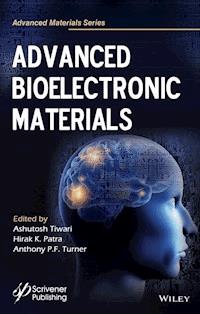
Advanced Bioelectronic Materials E-Book
197,99 €
Mehr erfahren.
- Herausgeber: John Wiley & Sons
- Kategorie: Fachliteratur
- Serie: Advance Materials Series
- Sprache: Englisch
This book covers the recent advances in the development of bioelectronics systems and their potential application in future biomedical applications starting from system design to signal processing for physiological monitoring, to in situ biosensing. Advanced Bioelectronic Materials contributions from distinguished international scholars whose backgrounds mirror the multidisciplinary readership ranging from the biomedical sciences, biosensors and engineering communities with diverse backgrounds, interests and proficiency in academia and industry. The readers will benefit from the widespread coverage of the current literature, state-of-the-art overview of all facets of advanced bioelectronics materials ranging from real time monitoring, in situ diagnostics, in vivo imaging, image-guided therapeutics, biosensors, and translational biomedical devices and personalized monitoring.
Sie lesen das E-Book in den Legimi-Apps auf:
Seitenzahl: 783
Veröffentlichungsjahr: 2015
Ähnliche




















Contents
Cover
Half Title page
Title page
Copyright page
Dedication
Preface
Part 1: Recent Advances in Bioelectronics
Chapter 1: Micro- and Nanoelectrodes in Protein-Based Electrochemical Biosensors for Nanomedicine and Other Applications
1.1 Introduction
1.2 Microelectrodes
1.3 Nanoelectrodes
1.4 Integration of the Electronic Transducer, Electrode, and Biological Recognition Components (such as Enzymes) in Nanoscale-Sized Biosensors and Their Clinical Applications
1.5 Conclusion
Acknowledgment
References
Chapter 2: Radio-Frequency Biosensors for Label-Free Detection of Biomolecular Binding Systems
2.1 Overview
2.2 Introduction
2.3 Carbon Nanotube-Based RF Biosensor
2.4 Resonator-Based RF Biosensor
2.5 Active System-Based RF Biosensor
2.6 Conclusions
Abbreviation
References
Chapter 3: Affinity Biosensing: Recent Advances in Surface Plasmon Resonance for Molecular Diagnostics
3.1 Introduction
3.2 Artists of the Biorecognition: New Natural and Synthetic Receptors as Sensing Elements
3.3 Recent Trends in Bioreceptors Immobilization
3.4 Trends for Improvements of Analytical Performances in Molecular Diagnostics
3.5 Conclusions
References
Chapter 4: Electropolymerized Materials for Biosensors
4.1 Introduction
4.2 Electropolymerized Materials Used in Biosensor Assembly
4.3 Enzyme Sensors
4.4 Immunosensors Based on Redox-Active Polymers
4.5 DNA Sensors Based on Redox-Active Polymers
4.6 Conclusion
Acknowledgments
References
Part 2: Advanced Nanostructures in Biosensing
Chapter 5: Graphene-Based Electrochemical Platform for Biosensor Applications
5.1 Introduction
5.2 Graphene
5.3 Synthetic Methods for Graphene
5.4 Properties of Graphene
5.5 Multi-functional Applications of Graphene
5.6 Electrochemical Sensor
5.7 Graphene as Promising Materials for Electrochemical Biosensors
5.8 Conclusion and Future Outlooks
References
Chapter 6: Fluorescent Carbon Dots for Bioimaging
6.1 Introduction
6.2 CDs as Fluorescent Probes for Imaging of Biomolecules and Cells
6.3 Conclusions and Perspectives
References
Chapter 7: Enzyme Sensors Based on Nanostructured Materials
7.1 Biosensors and Nanotechnology
7.2 Biosensors Based on Carbon Nanotubes (CNTs)
7.3 Biosensors Based on Magnetic Nanoparticles
7.4 Biosensors Based on Quantum Dots
7.5 Conclusion
References
Chapter 8: Biosensor Based on Chitosan Nanocomposite
8.1 Introduction
8.2 Chitosan and Chitosan Nanomaterials
8.3 Application of Chitosan Nanocomposite in Biosensor
8.4 Emerging Biosensor and Future Perspectives
Acknowledgments
References
Part 3: Systematic Bioelectronic Strategies
Chapter 9: Bilayer Lipid Membrane Constructs: A Strategic Technology Evaluation Approach
9.1 The Lipid Bilayer Concept and the Membrane Platform
9.2 Strategic Technology Evaluation: The Approach
9.3 The Dimensions of the Membrane-Based Technology
9.4 Technology Dimension 1: Fabrication
9.5 Technology Dimension 2: Membrane Modelling
9.6 Technology Dimension 3: Artificial Chemoreception
9.7 Technology Evaluation
9.8 Concluding Remarks
Abbreviations
References
Chapter 10: Recent Advances of Biosensors in Food Detection Including Genetically Modified Organisms in Food
10.1 Electrochemical Biosensors
10.2 DNA Biosensors for Detection of GMOs Nanotechnology
10.3 Aptamers
10.4 Voltammetric Biosensors
10.5 Amperometric Biosensors
10.6 Optical Biosensors
10.7 Magnetoelastic Biosensors
10.8 Surface Acoustic Wave (SAW) Biosensors for Odor Detection
10.9 Quorum Sensing and Toxoflavin Detection
10.10 Xanthine Biosensors
10.11 Conclusions and Future Prospects
Acknowledgments
References
Chapter 11: Numerical Modeling and Calculation of Sensing Parameters of DNA Sensors
11.1 Introduction to Graphene
11.2 Numerical Modeling
References
Chapter 12: Carbon Nanotubes and Cellulose Acetate Composite for Biomolecular Sensing
12.1 Introduction
12.2 Background of the Work
12.3 Materials and Methodology
12.4 Characterisation of Membranes
12.5 pH Measurements Using Different Membranes
12.6 Conclusion
Reference
Chapter 13: Review of the Green Synthesis of Metal/Graphene Composites for Energy Conversion, Sensor, Environmental, and Bioelectronic Applications
13.1 Introduction
13.2 Metal/Graphene Composites
13.3 Synthesis Routes of Graphene
13.4 Green Synthesis Route of Metal/Graphene Composites
13.5 Green Application of Metal/Graphene and Doped Graphene Composites
13.6 Conclusion and Future Perspective
Acknowledgments
References
Chapter 14: Ion Exchangers – An Open Window for the Development of Advanced Materials with Pharmaceutical and Medical Applications
14.1 Introduction
14.2 Characteristics of IER and Methods of Characterization
14.3 Resinate Preparation
14.4 Pharmaceutical and Medical Applications
14.5 Conclusions
References
Index
Advanced Bioelectronic Materials
Scrivener Publishing100 Cummings Center, Suite 541JBeverly, MA 01915-6106
Advanced Materials SeriesThe Advanced Materials Series provides recent advancements of the fascinating field of advanced materials science and technology, particularly in the area of structure, synthesis and processing, characterization, advanced-state properties, and applications. The volumes will cover theoretical and experimental approaches of molecular device materials, biomimetic materials, hybrid-type composite materials, functionalized polymers, supramolecular systems, information- and energy-transfer materials, biobased and biodegradable or environmental friendly materials. Each volume will be devoted to one broad subject and the multidisciplinary aspects will be drawn out in full.
Series Editor: Dr. Ashutosh TiwariBiosensors and Bioelectronics CentreLinköping UniversitySE-581 83 LinköpingSwedenE-mail: [email protected]
Managing Editors: Revuri Vishnu and Sudheesh K. Shukla
Publishers at ScrivenerMartin Scrivener([email protected])Phillip Carmical ([email protected])
Copyright © 2015 by Scrivener Publishing LLC. All rights reserved.
Co-published by John Wiley & Sons, Inc. Hoboken, New Jersey, and Scrivener Publishing LLC, Salem, Massachusetts.
Published simultaneously in Canada.
No part of this publication may be reproduced, stored in a retrieval system, or transmitted in any form or by any means, electronic, mechanical, photocopying, recording, scanning, or otherwise, except as permitted under Section 107 or 108 of the 1976 United States Copyright Act, without either the prior written permission of the Publisher, or authorization through payment of the appropriate per-copy fee to the Copyright Clearance Center, Inc., 222 Rosewood Drive, Danvers, MA 01923, (978) 750-8400, fax (978) 750-4470, or on the web at www.copyright.com. Requests to the Publisher for permission should be addressed to the Permissions Department, John Wiley & Sons, Inc., 111 River Street, Hoboken, NJ 07030, (201) 748-6011, fax (201) 748-6008, or online at http://www.wiley.com/go/permission.
Limit of Liability/Disclaimer of Warranty: While the publisher and author have used their best efforts in preparing this book, they make no representations or warranties with respect to the accuracy or completeness of the contents of this book and specifically disclaim any implied warranties of merchantability or fitness for a particular purpose. No warranty may be created or extended by sales representatives or written sales materials. The advice and strategies contained herein may not be suitable for your situation. You should consult with a professional where appropriate. Neither the publisher nor author shall be liable for any loss of profit or any other commercial damages, including but not limited to special, incidental, consequential, or other damages.
For general information on our other products and services or for technical support, please contact our Customer Care Department within the United States at (800) 762-2974, outside the United States at (317) 572-3993 or fax (317) 572-4002.
Wiley also publishes its books in a variety of electronic formats. Some content that appears in print may not be available in electronic formats. For more information about Wiley products, visit our web site at www.wiley.com.
For more information about Scrivener products please visit www.scrivenerpublishing.com.
Library of Congress Cataloging-in-Publication Data:
ISBN 978-1-118-99830-4
We dedicate this book to Prof. Anthony P. F. Turner on the occasion of his 65th birthday. It is because of his persistence, foresight and proficiency in establishing biosensor principles that millions of patients worldwide are benefiting.
To Tony forfathering biosensors and bioelectronics&for every kidwho walks with him.
AshuHirak
Preface
The interface between electronics and medicine has resulted in extraordinary benefits for recent generations in clinical practice. The development of electrocardiography nearly a century ago can be considered a key milestone for chronicling the electrical activity of the heart, thus providing one of the defining moments in the field of cardiology. A similarly important advance was the development of the heart pacemaker, which has transformed the lives of millions of people and continues to serve an ever-aging population. The legacy of biomedical research at the interface between electrical engineering and human physiology has empowered these discoveries.
In recent times, however, “bioelectronics” has diversified into a multifarious and cross-disciplinary field. In this book, a selection of leading scientists and technology experts describe advances in nanoscale electronics and how they mesh with the bioengineering community to deliver specific applications. The contributors chronicle a wide span of opportunities, possibilities and challenges for this diverse interdisciplinary field. The principal themes of this volume on advanced bioelectronic materials are: miniaturization of bioelectronics, smart biosensing, and a systemic approach for the development of bioelectronics. The machinery and procedures that will facilitate these areas will also have a significant impact on other areas such as advanced security systems, forensics and environmental monitoring. The evolution of all these segments entails innovations in cross-cutting disciplines ranging from fabrication to application.
We hope that this collection of articles will help convince stakeholders from academia, government and industry to cooperate in developing a comprehensive bioelectronics roadmap to accelerate the commercialization of bioelectronic materials for novel biomedical devices. This work provides a comprehensive description of some of the emerging opportunities in bioelectronics facilitated by the development of novel materials. While it is challenging to evaluate the exact economic benefits from this technology at the current stage, a clear sense of the magnitude of the benefits to mankind and society are apparent.
In order to reflect the promise of bioelectronics at this time, we have endeavored to include research that crosses several disciplines, including electronics, materials science, human physiology, chemistry and physics. It is intended for a wide spectrum of readers, offering perspectives on aspects of both fundamental and advanced materials of the field and covering:
Molecular-electronic interfaces;
Stimuli-responsive (mechanical, electrical, chemical and thermal) materials;
Real-time monitoring of essential parameters to assess the state of biomolecules; and
Smart biosensing.
The successful translation of this multidisciplinary research to commercial reality needs a deep understanding at a very early stage of the interface between electronics and biology. This book addresses researchers in a range of sectors and disciplines who do not necessarily speak with the same ‘language,’ but who are willing to commit to a collaborative effort in areas such as this, where interdisciplinary contributions are key for success.
The EditorsAugust 22, 2015Ashutosh TiwariHirak K. PatraAnthony PF Turner
Part 1: RECENT ADVANCES IN BIOELECTRONICS
Chapter 1
Micro- and Nanoelectrodes in Protein-Based Electrochemical Biosensors for Nanomedicine and Other Applications
Niina J. Ronkainen*
Department of Chemistry and Biochemistry, Benedictine University, Lisle, IL, USA
*Corresponding author: [email protected]
Abstract
Electrochemical biosensors have gradually decreased in size from devices containing electrodes with micrometer critical dimension to nanoelectrodes over the past 35 years. Nanoelectrodes are now also being used both in vivo and in vitro, in the quantification of various analytes of biological interest such as dopamine, serotonin, glutamate, lactate, glucose, and cancer biomarkers. Their small size is an advantage, allowing the study of biological analytes in small intracellular and extracellular environments to be less invasive, compared to larger electrodes. Micro- and nanoelectrodes have been used in applications such as single-cell or single-molecule studies, point-of-care clinical analysis, coordinated biosensor development, and fabrication of microchips. Indeed, biosensor applications in medicine utilizing nanoelectrodes and nanoelectrode arrays are a rapidly developing research area due to significant advancements in materials science, more cost-effective and reproducible nanomaterial fabrication methods. The electrochemistry, common applications as well as integration of the electronic transducer, and the biological recognition components into the appropriate biosensors will be described.
Keywords: Biosensors, electroanalytical methods, microelectrodes, nanoelectrodes, nanomaterials, voltammetry, amperometry, clinical analysis
1.1 Introduction
Electrochemical biosensors may be divided into biocatalytic devices such as enzyme electrodes and affinity biosensors based on a highly specific immunochemical reaction between an antibody and an antigen. Over the past 35 years, electrochemical biosensors have gradually decreased in size from devices containing electrodes with micrometer critical dimension to nanoelectrodes. In addition, since single micro- or nanoelectrodes generate rather small currents that can be difficult to distinguish from background noise using standard electrochemical equipment, electrode arrays and ensembles which amplify the measured current are an active area of research. Furthermore, the fabrication of electrodes and biosensors that incorporate nanomaterials as well as their characterization once prepared have also been studied extensively. Indeed, the integration of electronic transducers and the biological recognition components into biosensors is critical in the development of highly sensitive, nanobiosensors suitable for clinical analysis.
Many nanobiosensors for clinically relevant analytes, to which nanomaterials have been incorporated, have shown significantly improved electrochemical performance when utilizing electroanalytical methods such as voltammetry and amperometry. Specifically, the incorporation of highly conductive nanomaterials such as carbon nanotubes (CNTs) and metal nanoparticles into electrochemical biosensors has led to increased signal-to-noise (S/N) ratios and significantly lower limits of detection. These properties are the result of significant changes in diffusion profiles and mass transfer of redox-active species at electrodes with small dimensions. The transition from mass transport by primarily linear diffusion at larger electrodes to the domination of radial diffusion at micro- and nanoelectrodes will be described in this chapter. Another reason for the amplified sensitivity in biosensor devices is the high loading of the biological protein components (i.e., enzymes or antibodies) on the large, often three-dimensional surface areas of nanomaterials. A number of key nanoscale biosensor applications which utilize biocatalytic and bioaffinity sensors will be described in detail. The main concerns with the use of nanotechnology in the fabrication of the clinical devices include the biocompatibility and toxicity of some nanomaterials which is currently an area of research. These concerns are important because many nanomaterial-based electrodes are being considered for implantable devices to be used for real-time diagnosis, management and monitoring of certain disease states. For instance, cancer diagnosis and management are one of the most common applications for affinity biosensors, while glucose monitoring remains the largest and most profitable catalytic biosensor application. In addition, biosensor applications also exist for cardiovascular, infectious, autoimmune, psychiatric, and neurogenerative diseases. However, there remain challenges in the fabrication of protein-based nanobiosensors for clinical applications such as the low concentrations of analyte molecules in relatively complex biological sample matrix (e.g., blood), the requirement of ultralow detection limits (DLs) (nM and below) for certain analytes, the biocompatibility and safety of the nanobiosensors, a need for multiplexing capabilities, practical detection times, sample size requirements, selectivity of in vivo biosensors in the presence of multiple similar molecules as well as various interfering species, ease of use, the ability to scale up developed prototypes into mass production, and the storage stability of the biological components of nanobiosensors such as enzymes and antibodies. Some of these challenges will also be discussed.
Many well-established methods used in clinical analysis are based on spectrophotometric detection which often requires bulky light sources, monochromators, sample cells with fixed path lengths, and complex detectors to obtain adequate sensitivity. These methods usually require a fair amount of the sample and cannot be performed in colored, turbid, or complex sample matrices (such as blood) without sample preparation. Therefore, these methods are not amenable to in vivo studies of biological systems. Electrochemical detection methods, which are based on interfacial phenomenon, are better suited for detection in ultralow volumes (with samples from microliters to as low as nanoliters) because the sensitivity of these methods is independent of the sample volume [1]. The analyte molecules usually investigated in electroanalytical experiments are either freely diffusing in aqueous solution or have adsorbed or been attached to an electrode surface or a membrane. The main focus in this chapter will be on freely diffusing redox-active species in aqueous solution environments.
Lesen Sie weiter in der vollständigen Ausgabe!
Lesen Sie weiter in der vollständigen Ausgabe!
Lesen Sie weiter in der vollständigen Ausgabe!
Lesen Sie weiter in der vollständigen Ausgabe!
Lesen Sie weiter in der vollständigen Ausgabe!
Lesen Sie weiter in der vollständigen Ausgabe!
Lesen Sie weiter in der vollständigen Ausgabe!
Lesen Sie weiter in der vollständigen Ausgabe!
Lesen Sie weiter in der vollständigen Ausgabe!
Lesen Sie weiter in der vollständigen Ausgabe!
Lesen Sie weiter in der vollständigen Ausgabe!
Lesen Sie weiter in der vollständigen Ausgabe!
Lesen Sie weiter in der vollständigen Ausgabe!
Lesen Sie weiter in der vollständigen Ausgabe!
Lesen Sie weiter in der vollständigen Ausgabe!
Lesen Sie weiter in der vollständigen Ausgabe!
Lesen Sie weiter in der vollständigen Ausgabe!




