


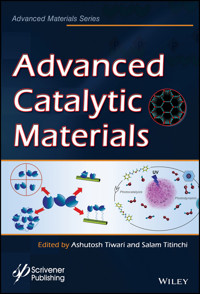
Advanced Catalytic Materials E-Book
171,99 €
Mehr erfahren.
- Herausgeber: John Wiley & Sons
- Kategorie: Fachliteratur
- Serie: Advance Materials Series
- Sprache: Englisch
The subject of advanced materials in catalysisbrings together recent advancements in materials synthesis and technologies to the design of novel and smart catalysts used in the field of catalysis. Nanomaterials in general show an important role in chemical processing as adsorbents, catalysts, catalyst supports and membranes, and form the basis of cutting-edge technology because of their unique structural and surface properties. Advanced Catalytic Materials is written by a distinguished group of contributors and the chapters provide comprehensive coverage of the current literature, up-to-date overviews of all aspects of advanced materials in catalysis, and present the skills needed for designing and synthesizing advanced materials. The book also showcases many topics concerning the fast-developing area of materials for catalysis and their emerging applications. The book is divided into three parts: Nanocatalysts - Architecture and Design; Organic and Inorganic Catalytic Transformations; and Functional Catalysis: Fundamentals and Applications. Specifically, the chapters discuss the following subjects: * Environmental applications of multifunctional nanocomposite catalytic materials * Transformation of nanostructured functional precursors using soft chemistry * Graphenes in heterogeneous catalysis * Gold nanoparticles-graphene composites material for catalytic application * Hydrogen generation from chemical hydrides * Ring-opening polymerization of poly(lactic acid) * Catalytic performance of metal alkoxides * Cycloaddition of CO2 and epoxides over reusable solid catalysts * Biomass derived fine chemicals using catalytic metal bio-composites * Homoleptic metal carbonyls in organic transformation * Zeolites: smart materials for novel, efficient, and versatile catalysis * Optimizing zeolitic catalysis for environmental remediation
Sie lesen das E-Book in den Legimi-Apps auf:
Seitenzahl: 650
Veröffentlichungsjahr: 2015
Ähnliche




















Contents
Cover
Half Title page
Title page
Copyright page
Preface
Part I: Nanocatalysts – Architecture and Design
Chapter 1: Environmental Applications of Multifunctional Nanocomposite Catalytic Materials: Issues with Catalyst Combinations
1.1 Introduction
1.2 Proposed Solutions to the Lean-Burn NOx emission Problems
1.3 Multifunctional Materials to Combine NH3-SCR and NSR Cycles
1.4 Particulate Matter, Formation, Composition and Dangers
1.5 Use of Multifunctional Materials to Combust C(s) and Trap NOx
1.6 Multifunctional Materials in Selective Catalytic Oxidation
1.7 Proposed Tandem Catalysts for “Green” Selective Epoxidation
1.8 Conclusions
Acknowledgements
References
Chapter 2: Chemical Transformation of Molecular Precursor into Well-Defined Nanostructural Functional Framework via Soft Chemical Approach
2.1 Introduction
2.2 The Chemistry of Metal Alkoxides
2.3 The Chemistry of Nanomaterials
2.4 Preparation of Monometallic Alkoxides and Its Conversion into Corresponding Metal Oxides
2.5 Techniques used to Characterization of Precursor and Inorganic Material
2.6 Conclusion
Acknowledgement
References
Chapter 3: Graphenes in Heterogeneous Catalysis
3.1 Introduction
3.2 Carbocatalysis
3.3 G Materials as Carbocatalysts
3.4 G as Support of Metal NPs
3.5 Summary and Future Prospects
References
Chapter 4: Gold Nanoparticles–Graphene Composites Material: Synthesis, Characterization and Catalytic Application
4.1 Introduction
4.2 Synthesis of Au NPs–rGO Composites and Its Characterization
4.3 Catalytic Application of Au NPs–rGO Composites
4.4 Future Prospects
Acknowledgements
References
Part II: Organic and Inorganic Catalytic Transformations
Chapter 5: Hydrogen Generation from Chemical Hydrides
5.1 Introduction: Overview of Hydrogen
5.2 Hydrogen Generation
5.3 Type of Catalysts and Catalyst Morphologies
5.4 Kinetics and Models
5.5 Hydrogen Generation for PEMFCs
5.6 Conclusions
Acknowledgements
References
Chapter 6: Ring-Opening Polymerization of Lactide
Abbreviation
6.1 Introduction
6.2 Aluminum Metal
6.3 Importance of Polylactic Acid
6.4 Ring-Opening Polymerization (ROP)
6.5 Application of Different Catalytic System in ROP of Lactide
6.6 Concluding Remarks
Acknowledgments
References
Chapter 7: Catalytic Performance of Metal Alkoxides
7.1 Introduction
7.2 Metal Alkoxides
7.3 Polymerization Reactions Catalyzed by Metal Alkoxides
7.4 Reduction Reactions Catalyzed by Metal Alkoxides
7.5 Oxidation Reactions Catalyzed by Metal Alkoxides
7.6 Other Miscellaneous Metal Alkoxide Catalysis Reactions
7.7 Conclusion
Acknowledgment
References
Chapter 8: Cycloaddition of CO2 and Epoxides over Reusable Solid Catalysts
8.1 Introduction: CO2 as Raw Material
8.2 Properties and Applications of Cyclic Carbonates
8.3 Synthesis of Cyclic Carbonates from the Cycloaddition Reaction of CO2 with Epoxides
8.4 Concluding Remarks and Future Perspectives
References
Part III: Functional Catalysis: Fundamentals and Applications
Chapter 9: Catalytic Metal-/Bio-composites for Fine Chemicals Derived from Biomass Production
9.1 Introduction
9.2 Metal Composites with Catalytic Activity in Biomass Conversion
9.3 Catalytic Biocomposites with Heterogeneous Design
9.4 Conclusions
References
Chapter 10: Homoleptic Metal Carbonyls in Organic Transformation
10.1 Introduction
10.2 Cycloaddition
10.3 Carbonylation
10.4 Silylation
10.5 Amidation of Adamantane and Diamantane
10.6 Reduction of N,N-Dimethylthioformamide
10.7 Reductive N-Alkylation of Primary Amides with Carbonyl Compounds
10.8 Synthesis of N-Fused Tricyclic Indoles
10.9 Cyclopropanation of Alkenes
Conclusion
References
Chapter 11: Zeolites: Smart Materials for Novel, Efficient, and Versatile Catalysis
11.1 Introduction
11.2 Structures and Properties
11.3 Synthesis of Zeolites
11.4 Application of Zeolites in Catalysis
11.5 Medical Applications of Zeolites
11.6 Conclusions
References
Chapter 12: Optimizing Zeolitic Catalysis for Environmental Remediation
Acronyms
Definition of Terms
12.1 Introduction
12.2 Structure of Zeolites
12.3 Categorization and Characterization of Zeolites
12.4 Properties of Zeolites and Their Effects
12.5 Effects of Chemical Modification
12.6 Summary
References
Index
Advanced Catalytic Materials
Scrivener Publishing100 Cummings Center, Suite 541JBeverly, MA 01915-6106
Advanced Materials SeriesThe Advanced Materials Series provides recent advancements of the fascinating field of advanced materials science and technology, particularly in the area of structure, synthesis and processing, characterization, advanced-state properties, and applications. The volumes will cover theoretical and experimental approaches of molecular device materials, biomimetic materials, hybrid-type composite materials, functionalized polymers, supramolecular systems, information- and energy-transfer materials, biobased and biodegradable or environmental friendly materials. Each volume will be devoted to one broad subject and the multidisciplinary aspects will be drawn out in full.
Series Editor: Dr. Ashutosh TiwariBiosensors and Bioelectronics CentreLinköping UniversitySE-581 83 LinköpingSwedenE-mail: [email protected]
Publishers at ScrivenerMartin Scrivener([email protected])Phillip Carmical ([email protected])
Copyright © 2015 by Scrivener Publishing LLC. All rights reserved.
Co-published by John Wiley & Sons, Inc. Hoboken, New Jersey, and Scrivener Publishing LLC, Salem, Massachusetts.Published simultaneously in Canada.
No part of this publication may be reproduced, stored in a retrieval system, or transmitted in any form or by any means, electronic, mechanical, photocopying, recording, scanning, or otherwise, except as permitted under Section 107 or 108 of the 1976 United States Copyright Act, without either the prior written permission of the Publisher, or authorization through payment of the appropriate per-copy fee to the Copyright Clearance Center, Inc., 222 Rosewood Drive, Danvers, MA 01923, (978) 750-8400, fax (978) 750-4470, or on the web at www.copyright.com. Requests to the Publisher for permission should be addressed to the Permissions Department, John Wiley & Sons, Inc., 111 River Street, Hoboken, NJ 07030, (201) 748-6011, fax (201) 748-6008, or online at http://www.wiley.com/go/permission.
Limit of Liability/Disclaimer of Warranty: While the publisher and author have used their best efforts in preparing this book, they make no representations or warranties with respect to the accuracy or completeness of the contents of this book and specifically disclaim any implied warranties of merchantability or fitness for a particular purpose. No warranty may be created or extended by sales representatives or written sales materials. The advice and strategies contained herein may not be suitable for your situation. You should consult with a professional where appropriate. Neither the publisher nor author shall be liable for any loss of profit or any other commercial damages, including but not limited to special, incidental, consequential, or other damages.
For general information on our other products and services or for technical support, please contact our Customer Care Department within the United States at (800) 762-2974, outside the United States at (317) 572-3993 or fax (317) 572-4002.
Wiley also publishes its books in a variety of electronic formats. Some content that appears in print may not be available in electronic formats. For more information about Wiley products, visit our web site at www.wiley.com.
For more information about Scrivener products please visit www.scrivenerpublishing.com.
Cover design by Russell Richardson
Library of Congress Cataloging-in-Publication Data:
ISBN 978-1-118-99828-1
Preface
The subject of advanced materials in catalysis brings together recent advancements in materials synthesis and technologies to the design of novel and smart catalysts used in the field of catalysis. Nanomaterials in general play an important role in chemical processing as adsorbents, catalysts, catalyst supports, and membranes and form the basis of cutting-edge technology because of their unique structural and surface properties. Advanced Catalytic Materials is written by a distinguished group of contributors, and the chapters provide comprehensive coverage of the current literature, up-to-date overviews of all aspects of advanced materials in catalysis, and presents the skills needed for designing and synthesizing advanced materials. The book also showcases many topics concerning the fast-developing area of materials for catalysis and their emerging applications.
The goal of this volume is to assemble recent advances in material syntheses and technologies in the design of novel and smart catalysts used in a wide range of applications. Catalysis covers diverse fields of chemistry and chemical engineering and plays a vital role in chemical processes. Over the past several decades, a large variety of catalysts has been synthesized and studied ranging from macromolecules to mesoporous silica to nanocatalysts. “Advanced catalytic materials” offers detailed chapters on the current syntheses of various types of catalysts and their wide range of applications. The design of materials with specific functional and effective properties is of great interest and enormous potential in their application in biomedical sciences and drug delivery. The remarkable growth in synthetic methods for new advanced materials during the last decade has led to the development of new approaches based on the state-of-the-art nanotechnology and is still receiving significant attention.
This book is written by a distinguished group of contributors suitable for a diverse readership by science and engineering scholars from different backgrounds, interests, and expertise in both academia and industry. It provides comprehensive coverage of the current literature, an up-to-date overview of all aspects of advanced materials in catalysis, and the skill required in designing and synthesizing advanced materials as catalysts. However, the scope of this book is much broader and includes topics concerning the growing area of materials for catalysis and their applications. The book is divided into two parts. Part 1: Nanocatalysts – Architecture and Design and Part 2: Organic and Inorganic Catalytic Transformations.
Chapter 1 discloses the environmental applications of multifunctional nanocomposite catalytic materials, the preparation of various combinations of materials with two or more distinct catalytic functionalities and application of these in three different cases which are relevant to environmental and sustainable catalysis viz. (i) coupling NOx storage systems with urea hydrolysis and selective catalytic reduction (SCR) catalysts, (ii) constructing a material that would act as a four-way catalyst, and (iii) studies on the generation of a material to promote selective oxidation of an organic molecule using H2O2 synthesized in situ from H2/O2 mixtures. This is an example of an attempt to couple two heterogeneously catalyzed reactions (in an atom efficient and “clean” manner) to replace other reactions that would be considered environmentally troublesome.
Chapter 2 highlights the state of the art with cost-effective synthesis of ultra-pure functional nanomaterials from single source molecular precursors, to understand the structural–functional surface properties relationship based on chemical–thermal stability of metal ions as well as Lewis acidic behavior of the metal ion in the coordinated state.
Nanoscience demands efficient synthetic methods for materials with controlled particle properties by tuning the preparative chemistry and has led to several methods adopted for hierarchical inorganic materials for potential applications. Aided by the soft chemical approach, highly stabilized crystalline and monodispersed nanomaterials may be synthesized on bench scale and may subsequently be scaled up for higher production level with an important facet of the “molecules-to-materials approach.” By tuning the desired functional properties of precise size and shape, this may offer exciting possibilities to fabricate new nanodevices with reproducible results based on structural–performance–activity relationships with high reliability.
Active carbon has played a key role in heterogeneous catalysis as a support for precious novel nanoparticles (NPs), such as palladium, platinum, and gold. In the 1990s, novel allotropic forms of carbon displayed a better-defined structure of active carbons which became commercially available. This triggered an interest for comparing active carbons with carbon allotropes until finally controls have been developed to show that these carbons have intrinsic active sites. Chapter 3 covers the state-of-the-art use of graphene either as a carbon catalyst or as a support of metal NPs. Considering the relatively short time that has elapsed since graphenes and related materials have become available in sufficient quantities for evaluation of their catalytic properties, it is easy to foresee that in the near future there should be a remarkable growth in this area. Novel preparation methods will make larger quantities of known doped graphenes available for evaluation as catalysts or supports for virtually any catalytic reactions. The design and modification of graphene supports are the key concept in increasing the interaction with the metal. The target in this area is to show the advantages in terms of optimal use of the support, fine tuning of the catalytic activity of the metal, and stability of the graphene-based supported catalyst with respect to any other support including metal oxides. Considering the features of graphene as a one-atom-thick surface, and combining the possibility to imprint the active site or support the metal NPs, in a few years use of graphene could lead to a drastic change in the panorama of catalysis optimizing the use of noble and critical metals and reducing the dependency of catalysis on these inorganic elements.
As catalysis, Au-NPs appear to be particularly important and efficient in organic reactions. They offer a most favorable combination of activity and selectivity in various catalytic reactions, viz., electro-catalysis, redox catalysis, carbon–carbon bond formation, and photocatalytic reactions. Moreover, recent literature reports that Au-NPs deposited on graphene nanosheets exhibit unprecedented catalytic activity for CO oxidation, reduction of nitro-aniline, and Suzuki–Miyaura coupling reactions of chlorobenzene with arylboronic acid. Chapter 4 mainly focuses on the synthesis and characterization of Au-NPs on graphene nanosheets and its catalytic activity toward synthesis and transformation. Au-NPs–graphene composite materials prove to be promising owing to their wide range of applications, viz., semiconductors, catalysis, photocatalysis, sensing platforms, surface-enhanced Raman scattering (SERS), electronics, and optics.
Chapter 5 gives insights into the synthesis of novel catalysts and their morphologies for the highest possible hydrogen generation kinetics. It further demonstrates that morphology can be tailored to achieve high-performance hydrogen generation. Ruthenium (Ru), platinum (Pt), nickel (Ni), palladium (Pd), cobalt (Co), Ni–B, Co–B, Co–P, Ni–Co–B, carbon nanotubes (CNT), and graphene are examples of these catalysts. Moreover, platinum supported on carbon (Pt/C), which is extensively utilized in proton exchange membrane fuel cells (PEMFCs), is also appropriate for hydrogen gas generation. Precious metal catalysts are costly, whereas metal and alloy catalysts from iron, nickel, and cobalt are less expensive. Therefore, replacement of precious metal catalysts with inexpensive materials for hydrogen generation would reduce the cost significantly.
A search for environmentally benign and sustainable material that could replace the commonly used petroleum-based materials will lead to less pollution to our environment. Polylactic acid (PLA) has recently attracted much interest as a replacement for conventional oil-based materials due to their biorenewability, biodegradability, and biocompatibility. Although several methods for synthesis of PLAs exist, the most convenient and promising route is the ring-opening polymerization (ROP) of lactide, in which the break of ring strain is the driving force. Using ROP makes it possible to control the chemistry of polymerization accurately, and thus, the properties such as molecular weight, molecular weight distribution, and architecture of the resulting polymer can be varied to suite the application. The method also provides the possibility to achieve desired end groups and copolymerization of various monomers, depending on the type of catalyst utilized. ROP has been carried out by solution polymerization, bulk polymerization, melt polymerization, and suspension polymerization. Chapter 6 emphasizes polymerization kinetics and the control exhibited by the different types of aluminum initiators/catalysts.
Metal alkoxides have a well-established role in catalytic reactions. In Chapter 7, a brief review on the history, characteristics and synthetic routes for preparing metal alkoxides are illustrated. The catalytic processes performed by these catalysts include polymerization of different olefin oxides and cyclic esters, asymmetric reduction of aldehydes and ketones, oxidation of sulfides and olefins, and a variety of asymmetric reactions. The remainder of the chapter discusses characteristics of these catalytic systems. Other challenges separate from the metal alkoxide catalysis involve development of catalytic protocols in solvent-free or in green solvent conditions, viz., H2O or liquid CO2. The second challenge is recovery of catalyst without loss of its activity. Supporting metal alkoxide onto inorganic solids, especially magnetic ones, may effectively solve the later problem.
Chapter 8 addresses the synthesis of cyclic carbonates between CO2 and epoxides and alkenes/arenes using reusable solid catalysts. The state-of-the-art reaction performance using reusable solid catalysts is highlighted relative to reaction mechanisms which are categorized into three groups, viz., (i) inorganic materials (layered mixed oxides, metal oxides, micro/mesostructured inorganic materials, and clays), (ii) organic materials (polymers, resins, and ionic liquids), and (iii) organic–inorganic hybrids composites (Metal Organic Frameworks (MOFs) and organic-functionalized inorganic materials). Finally, future perspectives of the synthesis of cyclic carbonates from CO2 and epoxides are given. Compared to homogeneous catalysts, heterogeneous catalysts have the advantages of typically being superior in stability and reusability, thereby facilitating process intensification. However, most heterogeneous catalysts have drawbacks such as limited catalytic activity and the necessity of solvents and/or cocatalysts. For this reason, development of new heterogeneous catalysts with industrial relevance is a great challenge. Detailed understanding of the reaction mechanisms over different catalysts in the cycloaddition of CO2 and epoxides with olefins will have significant impact on the rational design of catalysts and process engineering. Application of in situ spectroscopic characterization techniques and advanced data analysis are necessary to identify fundamental reaction steps, possibly leading to an in-depth understanding of the reaction and active sites. This information will be important for establishing catalyst structure versus catalytic activity/selectivity relationships. It has been clearly shown that effective catalysts have a dual feature, viz., combining the Lewis acid nature to activate the epoxide with a nucleophile to open the ring of the epoxide and also Lewis or Bronsted base nature to activate the CO2.
Chapter 9 presents an overview of architectures adopted for the catalytic/biocatalytic composites widely used in applications, viz., biomass valorization or the fine chemical industry. Information presented will update the reader with the most recent examples of construction designs and concepts considered for the synthesis of such composites whose catalytic properties result from the introduction of catalytic functionalities and vary from inorganic metal species (e.g., Ru, Ir, Pd, or Rh) to well-organized biochemical structures like enzymes (e.g., lipase, peroxidase, and β-galactosidase) or even whole cells.
Chapter 10 briefly discusses the role of homoleptic metal carbonyls in organic transformations. Metal carbonyls belong to a unique class of organometallic compounds where carbon monoxide is bonded to the metal atom through the carbon end. They enjoy their relevance in the synthesis of various complex and cluster compounds as well as acting as an agent in organic transformations and occasionally catalyze some unique chemical transformations. A fair effort has been made to accommodate organic reactions developed in the past few decades to illustrate how these may be employed to overcome difficulties experienced in conventional organic synthesis which requires the adoption of multistep syntheses. Discussion is confined to groups 6 and 8 transition metal carbonyls with a limited focus on some other metal carbonyls within the scope of the book.
Zeolites are smart materials that provide very attractive insights into the field of catalysis. Chapter 11 covers the fundamentals of zeolite materials science and their application as catalysts and includes the background and history of evolution of zeolites in the field of catalysis. Zeolites are solid acids, and the chemical nature, density, strength, and location of the acid sites are discussed. Shape-selective catalysis, which is a unique feature of zeolites, is also briefly addressed. The chapter summarizes their syntheses, application in organic transformations, medical application, disease control, and wastewater treatment.
Chapter 12 discusses the effects of chemical and physical properties of zeolites as they affect the catalytic efficacy and applications in environmental remediation. Heterogeneous catalysts, which reflect the majorly, have been extensively used in various technologies for several decades. Use of solid catalysts, especially for environmental remediation technologies, requires adapting the characteristics of the solid with respect to those generally used in conventional catalytic applications. Studies of different catalytic activities of some zeolites on selected organic pollutants demonstrated that optimization of zeolitic working conditions in purification of contaminated waters is paramount. Lastly, when the available zeolite is not suitable for a desired reaction, chemical modifications of the zeolite to display the required chemical and physical characteristics is an option. These different properties have a profound influence on the size, type, and nature of the molecules they adsorb. Due to their unique properties, zeolites have a great potential as effective sorbent materials for a large number of environmental treatment applications, such as water softening, ammonia removal from municipal sewage, fertilizer factory wastewaters, fish-breeding ponds, swimming pools, removal of heavy metals from natural waters, acid mine drainage treatment, industrial wastewater treatment, removal of phosphate, removal of dissolved organic compounds and dyes, oil spillages treatment, separation of solid impurities, radioactive wastewater purification, seawater desalination, permeable reactive barriers PRB, and many others.
The book is written for readers from diverse backgrounds across chemistry, physics, materials science and engineering, environmental and chemical engineering, and biotechnology. It offers a comprehensive view of cutting-edge research on advanced catalytic materials of a range of technological significance.
EditorsAshutosh Tiwari, PhD, DScSalam Titinchi, PhDJanuary 12, 2015
Part I
NANOCATALYSTS – ARCHITECTURE AND DESIGN
Chapter 1
Environmental Applications of Multifunctional Nanocomposite Catalytic Materials: Issues with Catalyst Combinations
James A. Sullivan*, Orla Keane, Petrica Dulgheru and Niamh O’Callaghan
UCD School of Chemistry and Chemical Biology, Belfield, Dublin, Ireland
*Corresponding author: [email protected]
Abstract
The combination of two or more catalytically active heterogeneous catalysts into a composite material which can perform more than one catalytic function allows improvements in situations where single catalytic beds might be used in place of a series of catalysed processes. This chapter describes attempts to combine catalytic materials (or processes) of environmental and green chemistry interest which would normally be separated. The specific combinations of catalysts and processes discussed are (a) NOx storage and reduction with NH3-selective catalytic reduction, (b) particulate matter combustion with NOx trapping materials and (c) H2O2 synthesis with selective epoxidation catalysts. In each case study, we present an introduction to the specific field detailing the current state of the art and discussing why these reactions, catalysts and processes are of interest in environmental and sustainable chemistry. Then we present a synopsis of our efforts to generate combined materials and processes and the various materials, process control and kinetics issues that arise during each of these combinations.
Keywords: Heterogeneous catalysts, multifunctional materials, nanocomposite materials, process integration, environmental and sustainable catalysis
1.1 Introduction
The use, where possible of catalysed processes is one of the tenets of green chemistry [1] and most reactions or processes of environmental importance utilise some catalytic step. The combination of two or more catalytically active heterogeneous catalysts into a composite material which can perform more than one catalytic function would allow improvements in several situations where single catalytic beds could be used in place of a series of catalysed processes.
Successful combinations of such catalysts and processes would allow
This approach would lead to savings in the number of catalytic steps required in multistep processes and also perhaps to synergies between the catalysed processes.
1.1.1 The Three Way Catalyst
The most successful example of this approach is the development of the three way catalyst [2]. These automotive emissions aftertreatment systems are exceptionally effective, being able to selectively remove pollutants (some of which are initially only at ppm levels within the engine’s exit gas stream) from gasoline engine exhausts. The catalysts consist of a range of components, each with a specific purpose within the process stream, be it either to catalyse some reaction or to allow the overall composite catalyst to operate under non-optimum conditions. In order for them to operate most effectively significant changes to the processes generating the reactant stream in which they operated had to be developed.
Lesen Sie weiter in der vollständigen Ausgabe!
Lesen Sie weiter in der vollständigen Ausgabe!
Lesen Sie weiter in der vollständigen Ausgabe!
Lesen Sie weiter in der vollständigen Ausgabe!
Lesen Sie weiter in der vollständigen Ausgabe!
Lesen Sie weiter in der vollständigen Ausgabe!
Lesen Sie weiter in der vollständigen Ausgabe!
Lesen Sie weiter in der vollständigen Ausgabe!
Lesen Sie weiter in der vollständigen Ausgabe!
Lesen Sie weiter in der vollständigen Ausgabe!
Lesen Sie weiter in der vollständigen Ausgabe!
Lesen Sie weiter in der vollständigen Ausgabe!
Lesen Sie weiter in der vollständigen Ausgabe!
Lesen Sie weiter in der vollständigen Ausgabe!
Lesen Sie weiter in der vollständigen Ausgabe!




