


93,99 €
Mehr erfahren.
- Herausgeber: John Wiley & Sons
- Kategorie: Wissenschaft und neue Technologien
- Sprache: Englisch
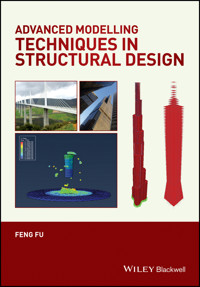
The successful design and construction of iconic new buildings relies on a range of advanced technologies, in particular on advanced modelling techniques. In response to the increasingly complex buildings demanded by clients and architects, structural engineers have developed a range of sophisticated modelling software to carry out the necessary structural analysis and design work.
Advanced Modelling Techniques in Structural Design introduces numerical analysis methods to both students and design practitioners. It illustrates the modelling techniques used to solve structural design problems, covering most of the issues that an engineer might face, including lateral stability design of tall buildings; earthquake; progressive collapse; fire, blast and vibration analysis; non-linear geometric analysis and buckling analysis . Resolution of these design problems are demonstrated using a range of prestigious projects around the world, including the Buji Khalifa; Willis Towers; Taipei 101; the Gherkin; Millennium Bridge; Millau viaduct and the Forth Bridge, illustrating the practical steps required to begin a modelling exercise and showing how to select appropriate software tools to address specific design problems.
Sie lesen das E-Book in den Legimi-Apps auf:
Seitenzahl: 262
Veröffentlichungsjahr: 2015
Ähnliche



















Table of Contents
Cover
Title Page
Copyright
About the Author
Preface
Acknowledgements
Chapter 1: Introduction
1.1 Aims and scope
1.2 Main structural design problems
1.3 Introduction of finite element method
1.4 Conclusion
References
Chapter 2: Major modelling programs and building information modelling (BIM)
2.1 Fundamentals of analysis programs
2.2 Building information modelling (BIM)
2.3 Main analysis programs in current design practice
2.4 Major draughting program
2.5 Method to model complex geometry
References
Software and manuals
Chapter 3: Tall buildings
3.1 Introduction
3.2 Structural systems of tall buildings
3.3 Lateral resisting systems and modelling examples
3.4 Modelling example of the Burj Khalifa
3.5 Modelling example of Taipei 101 with tuned mass damper (TMD)
3.6 Conclusion
References
Codes and regulations
Chapter 4: Earthquake analysis of buildings
4.1 Introduction
4.2 Basic earthquake knowledge
4.3 Basic dynamic knowledge
4.2 Modelling example of the response spectrum analysis using SAP20001
4.5 Time history analysis and modelling example using SAP2000
4.4 Push-over analysis and modelling example using SAP2000
References
Codes and building regulations
Software and manuals
Chapter 5: Progressive collapse analysis
5.1 Introduction
5.2 Design guidance for progressive collapse analysis
5.3 Risk assessment
5.4 Design and analysis method
5.5 Modelling example of progressive collapse analysis using SAP2000 – nonlinear dynamic procedure
References
Codes and building regulations
Chapter 6: Blast and impact loading
6.1 Introduction
6.2 Fundamentals of blast loading
6.3 Introduction of SPH theory
6.4 Modelling examples of impact loading analysis using the coupled SPH and FEA method in Abaqus®
References
Codes and building regulations
Software and manuals
Chapter 7: Structural fire analysis
7.1 Introduction
7.2 Basic knowledge of heat transfer
7.3 Fire development process
7.4 Fire protection method
7.5 Fire temperature curve
7.6 Determination of the thermal response of structural members
7.7 Structural fire design
7.8 Major modelling techniques for structural fire analysis
7.9 Modelling example of heat transfer analysis using Abaqus®
References
Building Codes and regulations
Chapter 8: Space structures
8.1 Introduction
8.2 Type of space structures
8.3 Design load
8.4 Stability analysis of space structures
8.5 Modelling example of a single layer dome using SAP2000 (including global buckling analysis
8.1 Nonlinear geometric analysis of Tensegrity structures
8.3 Modelling example of Tensigrity dome using SAP2000 (nonlinear geometrical analysis
References
Building Codes and regulations
Software and manuals
Chapter 9: Bridge structures
9.1 Introduction
9.2 Structural types of bridges
9.3 Structural design of bridge structure
9.4 Design loading
9.5 Modelling example of Milau Viaduct using CSI Bridge
9.6 Defining abutments
9.7 Modelling example of Forth Bridge using SAP2000
References
Codes and regulations
Chapter 10: Foot-induced vibration
10.1 Introduction to vibration problems in structural design
10.2 Characteristics of foot-induced dynamic loads
10.3 Acceptance criteria
10.4 Loading representation of foot-induced vibration
10.5 Modelling example of vibration analysis for the Millennium Bridge using SAP2000 (time-based method)
10.6 Modelling example of vibration analysis of hospital floor using Abaqus® (frequency-based method)
References
Codes and building regulations
Software and manuals
Index
End User License Agreement
Pages
1
2
3
4
6
5
7
8
9
10
11
12
13
14
15
16
17
18
19
20
21
22
23
24
25
26
27
28
29
30
31
32
33
34
35
36
37
38
39
40
41
42
43
44
45
46
47
48
49
50
51
52
53
54
55
56
57
58
59
60
61
62
63
64
65
66
67
68
69
70
71
72
73
74
75
76
77
78
79
80
81
82
83
84
85
86
87
88
89
90
91
92
93
94
95
96
97
98
99
100
101
102
103
104
105
106
107
108
109
110
111
112
113
114
115
116
117
118
119
120
121
122
123
124
125
126
127
128
129
130
131
132
133
134
135
136
137
138
139
140
141
142
143
144
145
146
147
148
149
150
151
152
153
154
155
156
157
158
159
160
161
162
163
164
165
166
167
168
169
170
171
172
173
174
175
176
177
178
180
179
Lesen Sie weiter in der vollständigen Ausgabe!
Lesen Sie weiter in der vollständigen Ausgabe!
Lesen Sie weiter in der vollständigen Ausgabe!
Lesen Sie weiter in der vollständigen Ausgabe!
Lesen Sie weiter in der vollständigen Ausgabe!
Lesen Sie weiter in der vollständigen Ausgabe!
Lesen Sie weiter in der vollständigen Ausgabe!
Lesen Sie weiter in der vollständigen Ausgabe!
Lesen Sie weiter in der vollständigen Ausgabe!
Lesen Sie weiter in der vollständigen Ausgabe!
Lesen Sie weiter in der vollständigen Ausgabe!
Lesen Sie weiter in der vollständigen Ausgabe!
Lesen Sie weiter in der vollständigen Ausgabe!
Lesen Sie weiter in der vollständigen Ausgabe!
Lesen Sie weiter in der vollständigen Ausgabe!
Lesen Sie weiter in der vollständigen Ausgabe!
Lesen Sie weiter in der vollständigen Ausgabe!




