


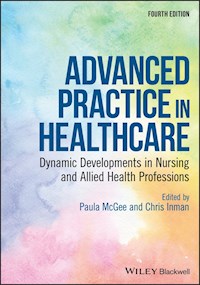
Advanced Practice in Healthcare E-Book
49,99 €
Mehr erfahren.
- Herausgeber: John Wiley & Sons
- Kategorie: Fachliteratur
- Serie: Advanced Healthcare Practice
- Sprache: Englisch
The definitive resource for advanced practice within nursing and the allied health professions--revised, expanded, and updated throughout. Advanced practice is an established and continuously evolving part of healthcare workforces around the world as a level of practice beyond initial registration. Advanced practitioners are equipped to improve health, prevent disease, and provide treatment and care for patients in a diverse range of settings. This comprehensively revised fourth edition emphasises the importance of practice in advanced healthcare, presenting a critical examination of advanced practice roles in nursing and allied health professions through a series of learning features designed to facilitate the development of vital knowledge and skills. Advanced Practice in Healthcare presents: * International developments in advanced practice as a global response to the need to modernise services, reduce costs and increase access to healthcare services * Country-specific examples of advanced practitioners' roles in delivering patient care in diverse settings * The impact of advanced practice in nursing and the allied health professions * Controversial issues including prescribing, regulation and credentialing, and the interface with medical practice * Ethical and legal dimensions of advanced practice * The preparation of advanced practitioners Advanced Practice in Healthcare is an essential resource for all students, practitioners, managers and researchers of advanced practice in healthcare.
Sie lesen das E-Book in den Legimi-Apps auf:
Seitenzahl: 675
Veröffentlichungsjahr: 2019
Ähnliche




















Table of Contents
Cover
NOTE ON CONTRIBUTORS
INTRODUCTION
i.1 The Aims of this Book
i.2 Key Features of This New Edition
References
PART 1: Advanced Practice as a Global Phenomenon
CHAPTER 1: The Conceptualization of Advanced Practice
1.1 Introduction
1.2 Competence
1.3 Variations in Advanced Practice
1.4 Conclusion
Key Questions
Glossary
References
CHAPTER 2: An International Perspective of Advanced Nursing Practice
2.1 Introduction: Overview of Advanced Nursing Practice
2.2 Advanced Nursing Practice Defined: An International Position
2.3 Drivers and Motivation
2.4 Influence of International Organizations
2.5 Regional and Country Profiles of Advanced Nursing Practice
2.6 Country‐specific Initiatives
2.7 International Collaboration for a New Initiative
2.8 Controversial Issues
2.9 Challenges
2.10 Conclusion
Key Questions
Glossary
References
CHAPTER 3: Development of Advanced Practice Nursing Roles in the Netherlands
3.1 Introduction
3.2 The Dutch Healthcare System
3.3 Development of Advanced Nursing Practice in the Netherlands
3.4 Regulation of Advanced Practice
3.5 Preparation of Advanced Nurse Practitioners
3.6 Issues in Advanced Practice in the Netherlands
3.7 Education
3.8 The Future of Advanced Nursing Practice: Innovation in Healthcare and Education
3.9 Conclusion
Key Questions
Glossary
Acknowledgment
References
CHAPTER 4: Advanced Practice in Nursing and Midwifery
4.1 Introduction
4.2 Advanced Practice in Australia
4.3 Current Issues in Advanced Practice in Australia
4.4 Advanced Practice in Midwifery
4.5 Conclusion
Key Questions
Glossary
References
CHAPTER 5: Influences on the Development of Advanced Nursing Practice in the UK
5.1 Introduction
5.2 The National Health Service in the UK
5.3 Health Policy
5.4 Influence of Health Policies and Reform of the National Health Service
5.5 Influence of Nursing Strategies
5.6 Influence of Nursing Organizations
5.7 Conclusion
Key Questions
Glossary
References
PART 2: Advanced Practice in Allied Health Professions
CHAPTER 6: The Development of Advanced Practice in the Allied Health Professions in the UK
6.1 Introduction
6.2 Background to the Development of Advanced Practice in Allied Health Professions
6.3 Advanced Practice in Allied Health Professions
6.4 Advanced Practice in Physiotherapy
6.5 Advanced Practice Paramedics
6.6 Current Issues in Advanced Practice in Allied Health Professions
6.7 Conclusion
Key Questions
Glossary
References
CHAPTER 7: Advanced Practice in the Radiography Professions
7.1 Introduction
7.2 Worldwide Variation in the Adoption of Advanced Practice in Radiography
7.3 Four‐tier Service and Advanced Practice in Radiography
7.4 Educational Preparation for Advanced Practice Roles in Radiography
7.5 Defining Advanced Practice – Do Role Specialism and Role Extension in Radiography Truly Lead to “Advanced Practice”?
7.6 Taking Stock: The Deployment of Advanced Practitioners within the Diagnostic Imaging, Radiotherapy, and Ultrasound Communities of Practice
7.7 Future Developments and Opportunities
7.8 Conclusion
Key Questions
Glossary
References
CHAPTER 8: Advanced Practice in Speech and Language Therapy
8.1 Introduction
8.2 The Role of the Advanced Practitioner Speech and Language Therapist
8.3 Current Challenges in Advanced Speech and Language Therapy
8.4 Conclusion
Key Questions
Glossary
Acknowledgments
References
PART 3: The Advanced Practitioner in Direct Patient Care
CHAPTER 9: Prescribing and Advanced Practice
9.1 Introduction
9.2 The History of Non‐medical Prescribing in the UK
9.3 Registered Non‐medical Prescribers in England
9.4 Preparing for Prescribing
9.5 Who May Prescribe What?
9.6 The Principles of Effective Prescribing
9.7 Safety and Clinical Governance
9.8 The Future of Non‐medical Prescribing
9.9 Conclusion
Acknowledgment
Key Questions
Glossary
References
CHAPTER 10: The Advanced Clinical Nurse Practitioner and Direct Care
10.1 Introduction
10.2 Holistic Health Assessment
10.3 Conclusion
Key Questions
Glossary
References
CHAPTER 11: The Advanced Critical Care Practitioner
11.1 Introduction
11.2 The Advanced Critical Care Practitioner Role
11.3 Scope of Practice
11.4 Competences for the Advanced Critical Care Practitioner Role
11.5 Processes in the Development of the Advanced Critical Care Practitioner Role
11.6 Current Issues in Advanced Critical Practice
11.7 Conclusion
Key Questions
Glossary
References
CHAPTER 12: The Interface between Advanced Nursing and Medical Practice
12.1 Introduction
12.2 General Practice in the UK
12.3 Current Issues in General Practice
12.4 Advanced Nursing Practice
12.5 The Advantages and Disadvantages of Advanced Nursing Practice in General Practice
12.6 Conclusion
Key Questions
Glossary
References
PART 4: Developing Advanced Practitioners' Skills
CHAPTER 13: Legal and Ethical Issues Related to Professional Practice
13.1 Introduction
13.2 Ethical Theories
13.3 The Mental Capacity Act
13.4 Deprivation of Liberty Safeguards
13.5 Consent, Autonomy, and Advocacy
13.6 Negligence
13.7 Handling Complaints
13.8 Whistleblowing
13.9 Duty of Candor
13.10 Improving Care Quality
13.11 Conclusion
Key Questions
Glossary
References
CHAPTER 14: Advanced Practice in a Diverse Society
14.1 Introduction
14.2 Human Rights
14.3 Tackling Discrimination
14.4 Advanced Practice Competences
14.5 A Way Forward – Having That Difficult Conversation
14.6 Conclusion
Key Questions
Glossary
References
CHAPTER 15: Educational and Professional Influences on Advanced and Consultant Practitioners
15.1 Introduction
15.2 The Education of Advanced Practitioners in the UK
15.3 Collaboration with the Netherlands
15.4 Consultant Practitioners
15.5 Consultant Roles and Research
15.6 The Interface between Medicine and Advanced and Consultant Practitioners
15.7 The Advanced Practitioner’s Role – Enhancing the Impact on Care
15.8 Conclusion
Acknowledgment
Key Questions
Glossary
References
CHAPTER 16: Assessment of Advanced Practice
16.1 Introduction
16.2 Stages and Subject Areas of Advanced Practice Master's Courses in the UK
16.3 Advanced Health Assessments and OSCEs in Universities in the UK
16.4 OSCEs – Recent Published Research
16.5 Practice Assessments and Requirements for a Portfolio of Evidence
16.6 The Second and Third Stages of Assessment for a Master's Degree
16.7 End‐point Assessment – Master's‐degree Apprenticeship
16.8 Conclusion
Key Questions
Glossary
References
CHAPTER 17: Leadership in Advanced Practice
17.1 Introduction
17.2 The Nature of Leadership
17.3 Attributes of the Leader
17.4 Leadership and Management
17.5 Leadership in Advanced Practice
17.6 Conclusion
Key Questions
Glossary
References
CHAPTER 18: Research Competence in Advanced Practice
18.1 Introduction
18.2 Research Competence in Advanced Practice
18.3 Direct Patient Care
18.4 Publication of Research Results
18.5 An Agenda for Research
18.6 Conclusion
Key Questions
Glossary
References
CHAPTER 19: Conclusion
19.1 Introduction
19.2 Full Practice Authority
19.3 The Relationship with Medicine
19.4 The Preparation of Advanced Practitioners
References
Index
End User License Agreement
List of Tables
Chapter 1
TABLE 1.1 Additional areas of competence for advanced practice.
Chapter 2
TABLE 2.1 Definition of an advanced practice nurse (APN).
TABLE 2.2 Educational preparation for an advanced practice nurse.
TABLE 2.3 The nature of advanced practice.
TABLE 2.4 Regulatory mechanisms.
TABLE 2.5 Assumptions about advanced practice.
TABLE 2.6 Country issues that shape the development of advanced practice.
TABLE 2.7 Drivers for the development of advanced practice roles.
TABLE 2.8 Six factors that influence the promotion of advanced practice nurse (AP...
Chapter 3
TABLE 3.1 Examples of learning objectives linked to the seven CanMEDS roles.
Chapter 4
TABLE 4.1 Nurses and medical practitioner numbers by geographic location.
Chapter 5
TABLE 5.1 The Five year Forward View – models of care.
TABLE 5.2 The values and behaviors essential to nursing.
TABLE 5.3 The NMC’s first view of advanced nursing practice.
TABLE 5.4 Factors to consider in assessing the risk posed by occupational groups ...
TABLE 5.5 Credentialing of advanced nurse practitioners: Initial application requ...
Chapter 6
TABLE 6.1 Allied health professions.
TABLE 6.2 Ten key roles for allied health professionals.
TABLE 6.3 Questions for determining the impact of an advanced practice post.
Chapter 9
TABLE 9.1 Numbers of registered Non‐Medical Prescribers in England, 2018.
TABLE 9.2 Criteria for training to become a Non‐Medical Prescriber.
Chapter 10
TABLE 10.1 SOCRATES.
TABLE 10.2 OPQRST.
TABLE 10.3 Quick guide to history taking about past injuries, operations, and com...
TABLE 10.4 Assessing alcohol intake – CAGE.
TABLE 10.5 Guide to assessing social circumstances – the BATHE technique.
Chapter 11
TABLE 11.1 ACCP scope of practice.
Chapter 12
TABLE 12.1 Competences for advanced nurse practitioners in GP practice.
TABLE 12.2 Comparison of core and specific competences for advanced nurse practit...
TABLE 12.3 Comparison of competences for advanced nurse practitioners and GPs....
TABLE 12.4 Is an advanced nurse practitioner really needed?
TABLE 12.5 Applying for advanced practitioner posts.
Chapter 13
TABLE 13.1 Legal cases.
Chapter 14
TABLE 14.1 The Millennium Development Goals.
TABLE 14.2 Equality Act 2010: protected characteristics.
TABLE 14.3 Equality Act 2010: when protection against discrimination applies.
TABLE 14.4 Questions to consider in promoting equality and tackling discriminatio...
Chapter 16
TABLE 16.1 Postgraduate certificate clinical subjects identified in a survey of n...
TABLE 16.2 Assessment methods for university‐delivered clinically related modules...
TABLE 16.3 Assessment methods for practice.
Chapter 17
TABLE 17.1 Professional leadership: indirect care activities within the healthcar...
TABLE 17.2 Professional leadership: indirect care activities outside the healthca...
TABLE 17.3 Eight habits for strategic leadership.
TABLE 17.4 Clinical leadership issues: what the advanced practitioner ensures....
Chapter 18
TABLE 18.1 Ten key research skills for advanced practice.
TABLE 18.2 CASP critical appraisal guides.
TABLE 18.3 A hierarchy of evidence.
TABLE 18.4 Questions to ask about the use of social and other online media to col...
TABLE 18.5 Strategies for informing participants about the outcomes of a research...
TABLE 18.6 Tips for writing a research article.
Chapter 19
TABLE 19.1 A summary of Sustainable Development Goal No. 3.
List of Illustrations
Chapter 6
FIGURE 6.1 Assessment of impact as a continuous process.
Chapter 15
FIGURE 15.1 Potential to strengthen motivation for study.
Chapter 18
FIGURE 18.1 Key steps in evaluation.
FIGURE 18.2 Brainstorming.
FIGURE 18.3 Repeat brainstorming.
Guide
Cover
Table of Contents
Begin Reading
Pages
iii
iv
xi
xii
xiii
xiv
xv
xvi
xvii
xviii
1
3
4
5
6
7
8
9
10
11
12
13
14
15
16
17
18
19
20
21
22
23
24
25
26
27
28
29
30
31
32
33
34
35
36
37
39
40
41
42
43
44
45
46
47
48
49
50
51
52
53
54
55
56
57
58
59
60
61
62
63
65
66
67
68
69
70
71
72
73
74
75
76
77
78
79
80
81
82
83
85
86
87
88
89
90
91
92
93
94
95
96
97
98
99
100
101
102
103
104
105
106
107
108
109
110
111
112
113
115
116
117
118
119
120
121
122
123
124
125
126
127
129
131
132
133
134
135
136
137
138
139
140
141
142
143
144
145
146
147
148
149
150
151
152
153
154
155
156
157
159
160
161
162
163
164
165
166
167
168
169
170
171
172
173
174
175
176
177
178
179
180
181
182
183
187
189
190
191
192
193
194
195
196
197
198
199
200
201
202
203
204
205
206
207
208
209
210
211
212
213
214
215
216
217
218
219
220
221
223
224
225
226
227
228
229
230
231
232
233
234
235
236
237
238
239
240
241
242
243
244
245
246
247
248
249
251
252
253
254
255
256
257
258
259
260
261
262
263
264
265
266
267
268
269
270
271
272
273
274
275
276
277
278
279
280
281
282
283
284
285
286
287
288
289
Advanced Practice in Healthcare
DYNAMIC DEVELOPMENTS IN NURSING AND ALLIED HEALTH PROFESSIONS
Fourth Edition
Edited by
Paula McGee
Emeritus ProfessorBirmingham City UniversityBirmingham, UK
Chris Inman
Birmingham City UniversityBirmingham, UK
This edition first published 2019© 2019 John Wiley and Sons Ltd
Edition HistoryJohn Wiley and Sons (3e, 2009)
All rights reserved. No part of this publication may be reproduced, stored in a retrieval system, or transmitted, in any form or by any means, electronic, mechanical, photocopying, recording or otherwise, except as permitted by law. Advice on how to obtain permission to reuse material from this title is available at http://www.wiley.com/go/permissions.
The right of Paula McGee and Chris Inman to be identified as the authors of the editorial material in this work has been asserted in accordance with law.
Registered Office(s)John Wiley & Sons, Inc., 111 River Street, Hoboken, NJ 07030, USAJohn Wiley & Sons Ltd, The Atrium, Southern Gate, Chichester, West Sussex, PO19 8SQ, UK
Editorial Office9600 Garsington Road, Oxford, OX4 2DQ, UK
For details of our global editorial offices, customer services, and more information about Wiley products visit us at www.wiley.com.
Wiley also publishes its books in a variety of electronic formats and by print‐on‐demand. Some content that appears in standard print versions of this book may not be available in other formats.
Limit of Liability/Disclaimer of WarrantyThe contents of this work are intended to further general scientific research, understanding, and discussion only and are not intended and should not be relied upon as recommending or promoting scientific method, diagnosis, or treatment by physicians for any particular patient. In view of ongoing research, equipment modifications, changes in governmental regulations, and the constant flow of information relating to the use of medicines, equipment, and devices, the reader is urged to review and evaluate the information provided in the package insert or instructions for each medicine, equipment, or device for, among other things, any changes in the instructions or indication of usage and for added warnings and precautions. While the publisher and authors have used their best efforts in preparing this work, they make no representations or warranties with respect to the accuracy or completeness of the contents of this work and specifically disclaim all warranties, including without limitation any implied warranties of merchantability or fitness for a particular purpose. No warranty may be created or extended by sales representatives, written sales materials or promotional statements for this work. The fact that an organization, website, or product is referred to in this work as a citation and/or potential source of further information does not mean that the publisher and authors endorse the information or services the organization, website, or product may provide or recommendations it may make. This work is sold with the understanding that the publisher is not engaged in rendering professional services. The advice and strategies contained herein may not be suitable for your situation. You should consult with a specialist where appropriate. Further, readers should be aware that websites listed in this work may have changed or disappeared between when this work was written and when it is read. Neither the publisher nor authors shall be liable for any loss of profit or any other commercial damages, including but not limited to special, incidental, consequential, or other damages.
Library of Congress Cataloging‐in‐Publication Data
Names: McGee, Paula, editor. Title: Advanced practice in healthcare : dynamic developments in nursing and allied health professions / edited by Paula McGee, Emeritus Professor, Birmingham City University, Birmingham, UK, Chris Inman, Birmingham City University, Birmingham UK, AAPE UK longstanding committee member.Other titles: Advanced practice in nursing and the allied health professions.Description: 4th edition. | Hoboken, NJ : Wiley‐Blackwell, 2019. | Revision of: Advanced practice in nursing and the allied health professions / edited by Paula McGee. 2009. 3rd ed. | Includes bibliographical references and index. |Identifiers: LCCN 2019001698 (print) | LCCN 2019003059 (ebook) | ISBN 9781119439127 (Adobe PDF) | ISBN 9781119439110 (ePub) | ISBN 9781119439097 (pbk.)Subjects: LCSH: Nurse practitioners–Great Britain. | Nursing–Great Britain.Classification: LCC RT82.8 (ebook) | LCC RT82.8 .A365 2019 (print) | DDC 610.73/7–dc23LC record available at https://lccn.loc.gov/2019001698
Cover Design: WileyCover Image: © Pobytov / Getty Images
NOTE ON CONTRIBUTORS
Susan Beaumont, BSc Speech Pathology and Therapeutics, MSc Advanced Practice, MRCSLT, HCPC Reg
Principal Speech and Language Therapist, Worcestershire Health and Care NHS Trust, UK
Sue Beaumont has worked in the field of dysphagia (swallowing disorders) for 18 years and leads this specialism for the pediatric speech and language therapy service across Worcestershire Health and Care NHS Trust. During this time, she has significantly developed the service. She is well known for her clinical expertise and as a resource for advice within the Trust and regionally through her links with other Acute and Community NHS Trusts. She chaired the Speech and Language Therapy Clinical Excellence Network and continues to serve as a member. She is passionate about improving both care for children with dysphagia and support for their parents. She is fascinated by the challenges presented by increasingly complex cases and the ethical dilemmas they present in health and social care.
Andrew Campbell, BSc (Hons) Pharmacy, PG Dip. Clinical Pharmacy, PG Cert. Psychiatric Therapeutics, MSc Clinical Pharmacy, PG Cert. Independent Prescribing, Professional Doctorate in Pharmacy
Chief Pharmacist, Dudley & Walsall Mental Health Partnership NHS Trust, UK
Andrew Campbell is currently the Chief Pharmacist for Dudley and Walsall Mental Health Partnership Trust and is a qualified non‐medical prescriber. He has several years' experience as a visiting lecturer on the non‐medical prescribing program at Birmingham City University, and was formerly the West Midlands regional Non‐Medical Prescribing Lead. Andrew is committed to education and training and has recently completed his professional doctorate, which explored attitudes to prescribing practice in a mental health context.
Jonathan Downham, RN, ACCNP, MSc
Advanced Critical Care Nurse Practitioner, Intensive Care, Warwick Foundation NHS Trust, UK
Jonathan Downham holds a Master’s degree in anesthetic practice and provides a wide range of educative materials for critical care practitioners at Critical Care Practitioner, www.criticalcarepractitioner.co.uk.
Mary Hutchinson, RGN, BSc (Hons), MSc, FFEN
Senior Lecturer, Birmingham City University, and Advanced Nurse Practitioner, BADGER Medical Services, UK
Mary Hutchinson has a dual role as a Senior Lecturer in Advanced Clinical Practice and an Advanced Nurse Practitioner (ANP) with an out‐of‐hours service co‐located with a local Emergency Department. Her clinical career encompasses many aspects of urgent and emergency care, from Staff Nurse in a community hospital Casualty Department to eight years as Sister in an Emergency Department, during which time she project‐managed development of the Emergency Nurse Practitioner role. Mary has been Service Manager/Professional Lead of two long‐established Minor Injury Units and a Community Rapid Response Team. She served for two years as an ANP in primary care, and latterly has worked as Clinical Lead in a nurse‐led Urgent Care Centre. As a Founding Fellow and Board Member of the Faculty of Emergency Nursing (FEN), and a committee member of the Royal College of Nursing (RCN) Advanced Nurse Practitioner Forum, she continues to work to update the FEN career and competence framework, and is an active participant in the RCN ANP credentialing process.
Chris Inman, RN, DEd, MSc
Former long‐standing Program Director, Master’s in Advanced Practice, Birmingham City University, UK
Having consolidated her nursing qualification for 18 years with experience in a variety of clinical and educational settings and locations, Chris Inman completed an MSc in Sociological Research Methods at Warwick University and became a lecturer at Hull University. She then accepted a post as Head of Nursing developments at the Open University, and was subsequently appointed Program Director for the first MSC Advanced Practice course in the UK. This course developed dynamically over several years, expanded to recruit students from The Netherlands, and continues to produce high‐flying graduates, many of whom have become non‐medical consultants and leaders in healthcare. Christine's doctoral research at King’s College London explored the learning needs of senior healthcare professionals undertaking PhD study. Later investigation involved exploration into the syllabi of advanced practice programs in the UK, which challenged the assumption that courses were consistent across the country. Her recent interest is in exploring the assessment of advanced practitioners and variations in examination. Chris is a long‐standing committee member of the Association of Advanced Practice Educators UK.
Lesley Kavi, MB ChB, DRCOG, DFSRH
General Practitioner (primary care physician), Birmingham, UK.
Lesley Kavi obtained her medical degree at Glasgow University in 1983 and undertook GP training in the Lake District. Having previously worked as a GP partner in inner‐city Dundee, she is currently practicing in Birmingham. Lesley holds postgraduate diplomas in syncope and related disorders, obstetrics and gynecology, and contraception. In addition, she has an interest in heritable connective tissue disorders. She currently teaches physical examination techniques and differential diagnosis on the MSc in Advanced Practice at Birmingham City University. Lesley is a volunteer managing trustee and chair of PoTS UK, a charity that supports patients with postural tachycardia syndrome. She has written a number of journal papers on PoTS and syncope in primary care.
Grainne Lowe, RN, PhD
Lecturer, Deakin University, Australia
Grainne Lowe is a Nurse Practitioner in the specialty area of emergency nursing. She has over 30 years’ experience in a variety of nursing positions, including clinical practice, research, and education, with her current role as a Lecturer at Deakin University. Grainne has researched the Nurse Practitioner role over a number of years, including completion of her doctoral thesis specifically focusing on the integration of Nurse Practitioners into the Australian healthcare system.
Paula McGee, RN, RNT, PhD, MA, BA, Cert. Ed.
Emeritus Professor of Nursing, Birmingham City University, UK
Paula McGee has researched and published about advanced practice for many years and is committed to advancing expertise in this developing field of nursing. She has launched and edited several professional journals, including the British Journal of Nursing, Research Ethics, and Diversity in Health and Care. She has also been an associate editor of the Journal of Transcultural Nursing and has guest edited other journal publications.
Virginia Plummer, RN, RM, PhD
Associate Professor, Director of International Engagement, Monash University and Peninsula Health, Australia
Virginia Plummer’s research interests include local and international approaches to health service management, the nursing workforce, and costing studies. During her PhD she undertook an analysis of nearly two million nursing hours in three countries in a study of patient dependency and nurse–patient ratios. Virginia received an Australian Research Council Linkage grant toward enhancing patient management at point of care using electronic‐based clinical pathways. She has supervised more than 50 Honors, Master’s, and PhD students to completion in research related to midwifery, emergency care, critical care, disaster management, advanced practice roles, and health service evaluation. Virginia is Chair of the Human Research Ethics Committee at Peninsula Health; Executive Member of the Nursing Section, World Association Disaster and Emergency Medicine; and Associate Editor, BMC Nursing and on the International Emergency Nursing Editorial Board.
Madrean Schober, PhD, MSN, RN, ANP, FAANP
President, Schober Global Healthcare Consulting, International Healthcare Consultants, Indiana, USA
Madrean Schober is President of Schober Global Healthcare Consulting. She is a nurse practitioner, educator, writer, lecturer, and consultant with an aim to promote insightful healthcare services to diverse populations, which includes strategic planning for improved access to all. Her consultancy experience extends to over 40 countries in the process of developing advanced practice nursing roles with expertise in healthcare policy, curriculum design, and program development.
Nicola J Stock, RN, MPhil, MSc, BSc, PGDip, PGCert
After completing nurse training with the British Army, Nicola Stock worked in various locations throughout the world, but predominantly in the UK. Her experience and post‐registration in the UK were in orthopedics. Whilst studying for a BSc (Hons) in Military Nursing Studies with the University of Portsmouth, she developed a greater interest in healthcare law and clinical ethics as drivers to promote standards of patient care, following up her degree with a PGDip in Healthcare Ethics from King’s College London and an MPhil in Medical Law from the University of Glasgow. With a conviction that education was another key to the delivery of good patient care, during this time Nicola also qualified as a Practice Educator and spent 10 years working between Birmingham City University and military deployments, before leaving the army in 2011. Since then she has continued to work as a sessional lecturer and in clinical practice, dividing her time between the UK and an oil and gas project in the Middle East.
Christine de Vries de Winter, MScN, RN
Head of Department Nursing Studies, Faculty Health, Behavior and Society, University of Applied Science Arnhem en Nijmegen, The Netherlands
Christine de Vries de Winter studied nursing in Leiden and nurse science at the University of Antwerp, together with management and leadership at the TIAS School for Business and Society. As national chair of the Master in Education for Advanced Nursing Practice, she was closely involved in the development of advanced nursing roles in The Netherlands, one of the few European countries to develop full advanced practice roles during the early part of the twenty‐first century.
Helen White, MEd, PGDip Clin. Onc., PG Cert L&T in HE, BSc (Hons) Radiotherapy
Head of Department of Radiography, Birmingham City University, UK
Helen White has worked in radiography education for over 15 years, teaching across clinical and academic components of a variety of healthcare programs at undergraduate and postgraduate levels of academic study. She is currently working with postgraduate students studying leadership and advanced practice, and works with clinical service leaders to promote advanced and consultant practice opportunities. Helen is a Visitor for the Health and Care Professions Council, offering expert advice and contributing to decision‐making processes on whether educational programs meet the Council's standards. She is a member of the College of Radiographers' Approval and Accreditation Board and the Radiotherapy Advisory Group, which reports to the College's UK Council on issues relating to therapeutic radiography, including career development pathways. She is also an experienced assessor for the professional body the College of Radiographers.
Nick White, MSc Radiography, BSC (Hons) Human Anatomy, BSC (Hons) Radiotherapy, BA Open
Clinical tutor, Radiotherapy Department, University Hospitals Birmingham, and Senior Lecturer, Department of Radiography, Birmingham City University, UK
Nick White has a dual role as clinical tutor and senior lecturer. He has worked in radiography education for 15 years, teaching on undergraduate and postgraduate courses in radiography and the health professions. He is an experienced lecturer in advanced practice and leadership, and is module leader for post‐registration radiographers studying leadership within programs which support development as advanced and consultant practitioners. He is a Senior Fellow of the Higher Education Academy, this award being received in recognition of his innovative approach to healthcare education, including MSc supervision, the use of skills simulation, and the involvement of students as academic partners. Nick is an experienced course assessor for the College of Radiographers. His current research includes the development and delivery of approaches to the teaching of palliative and end‐of‐life care within healthcare programs, and how this is implemented within clinical practice.
INTRODUCTION
Advanced practice is an evolving field of healthcare in which experienced nurses and members of allied health professions undergo further preparation to improve health, prevent disease, and provide treatment and care for patients in a wide range of settings. Their enhanced expertise enables advanced practitioners to address inequalities in access to healthcare, particularly for people who are marginalized and socially excluded. Tackling what may be entrenched disadvantage requires a willingness to try new approaches to ensure that health services are designed and provided in ways that meet the needs of local populations. Advanced practitioners are, therefore, pioneers of new forms of practice that may not only increase the availability of healthcare, but also provide it in ways that are experienced by patients as appropriate and meaningful. This last point is important because, whilst care and caring are universal phenomena, the actions, values, and beliefs that underpin them vary considerably between and within social groups. Thus, care and caring require a deep engagement with people in order to understand what is important to them and a flexible, adaptable approach to professional practice.
The development of advanced practice challenges established ideas about professional roles. It forms part of the global reconceptualization of the current and future healthcare workforce as being at the forefront of meeting Sustainable Development Goals to ensure “equitable access to health workers within strengthened health systems” by 2030 (United Nations 2015; World Health Organization [WHO] 2016, p. 3). Nurses in particular form the largest part of any healthcare workforce and have the potential to make a considerable difference, particularly in underserved areas. Members of allied health professions also have potential which could be more widely used. Utilizing this potential places non‐medical health professionals at the forefront in the global plan to reduce significantly the complex factors that affect health: changing needs, finance, quality, new technology, workforce preparation, gender, deployment, and accessibility, urban versus rural settings, and health policies (WHO 2014). In this context, advanced practitioners have the expertise to make a significant contribution to the achievement of the Sustainable Development Goals.
i.1 The Aims of this Book
Advanced practitioners are now an established part of healthcare workforces, in many countries, as a level of practice beyond initial registration. Advanced practitioners are clinical experts whose main activity is the provision of direct patient care in their specialty. They practice autonomously in many settings, particularly those in which they deliver complete episodes of care and treatment. Their work in direct care is complemented by a set of generic competences which inform their ability to challenge professional boundaries and pioneer innovations.
The aims of this book are to consider the following:
The contribution of diverse advanced practice roles, in different countries, professions, and care settings.
The influence of health policy and professional organizations on the conceptualization and development of advanced practice.
The dynamic interface between medicine and advanced nursing practice.
Legal and ethical issues in advanced practice.
The preparation of advanced practitioners and assessment of their competence.
Meeting healthcare needs in a diverse society and the role of the advanced practitioner in tackling discrimination.
The future of advanced practice 2018–2030.
i.2 Key Features of This New Edition
Each chapter in this book begins with an introductory panel which highlights the key issues and objectives. Interaction with the text is facilitated through short exercises which are set within the text and can be undertaken individually or in a group discussion. Each chapter also contains a case study through which different aspects of advanced practice are examined, with particular reference to the
Country in which the case study takes place.
Profession of the advanced practitioner.
Context of care and treatment.
Dependency and acuity of the patient.
At the end of each chapter there are:
Key questions which provide a basis for further debate and investigation.
A glossary of terminology.
This book is divided into four sections.
Part 1: Five chapters focus on the diverse nature of advanced practice at an international level and introduce a number of issues that are further explored later in the book. Chapter 1 focuses on the conceptualization of advanced practice in relation to competence and variation. The specific areas of competence in advanced practice are well rehearsed in the literature, as is the belief that preparation for the role should be at Master’s level. However, as this chapter points out, the term “Master's level” is open to interpretation, which raises potential concerns about whether all advanced practitioners are equipped to practice at the same level. Competence, it is argued, is not enough; advanced practitioners must also demonstrate capability to cope effectively with unpredictable situations and adapt practice accordingly. Variation is discussed through the medium of a case study which demonstrates how advanced practice has developed in different ways in each of the four countries that make up the UK, and provides insight into factors that will continue to have an impact over the next decade.
This concept of variation leads into the following four chapters. Chapter 2 presents a broad overview of the global development of advanced nursing practice and the disparate issues that shape it. Chapters 3, 4, and 5 offer detailed accounts of advanced practice in the Netherlands, Australia, and the UK. Each account gives a different perspective, which reflects variation in the nature and stage of development and provides insight into local needs and issues. Despite the differences, there are similarities in practice which are illustrated through the case studies: direct patient care, holistic patient assessment based on a body systems approach, and the management of long‐term conditions. There are also some similarities in the issues faced in every country: acceptance by medical staff, determining the impact of advanced practice, and the influence of health policies.
Part 2: Three chapters focus on advanced practice in allied health professional roles. This is a development that seems only have occurred in the UK, and that has expanded considerably since the last edition of this book. The chapters demonstrate the diverse and multifaceted advanced roles that are developing in allied health professions and their potential on a global scale with regard to the achievement of the Sustainable Development Goals (United Nations 2015).
Part 3: Four chapters examine particular aspects of advanced practice in the clinical setting and focus particularly on nursing. Chapter 9 presents an updated account of the prescribing regulations for non‐medical practitioners in the UK: nurses, pharmacists, optometrists, and some allied health professionals. Whilst this is a country‐specific example of one approach to regulation, it also takes the reader through the principles of good prescribing, which are applicable in any setting and are illustrated in the case study. That is followed by a discussion of the systematic and detailed assessment performed by an advanced clinical nurse practitioner in Chapter 10. This is based around a case study which takes the reader through a complete episode of care, beginning with meeting the patient and progressing to history taking and the physical examination, using simple tools that can be memorized as mnemonics. This process informs the formulation of a differential diagnosis and the choice of subsequent interventions. This case study also raises issues about the nature of advanced practice, and whether it is an extension of a professional role or a means of plugging gaps in services because of a shortage of doctors.
Chapter 11 takes up this point by examining the advanced nurse practitioner's role in relation to critical care, an environment in which patients are seriously ill and require support with two or more vital systems. This is an intellectually and ethically challenging context, and we are indebted to Dr. Pat James of Birmingham City University for clarifying some aspects of the physiology of acute respiratory distress syndrome. This chapter discusses two important issues in relation to advanced critical care practice and advanced practice more generally. The first is the process of developing new professional roles, which may, over time, lead to the establishment of a new profession. That raises questions about whether it is absolutely necessary to have a background in an already established health profession, or whether direct entry to, for example, advanced critical care practitioner roles might be possible as part of workforce transformation. The second is the relationship between advanced practice and medicine, particularly in fields such as critical care, where there is a certain amount of overlap between medical and nursing roles.
Chapter 12 examines the interface between advanced nursing practice and medicine more closely within the context of general practice. The pressures facing general practitioners have created opportunities for advanced nurses to develop new skills, plug gaps in services, and develop new approaches to care. Here again, a close alignment with medicine is evident through collaboration between the Royal Colleges of Nursing and General Practitioners, which culminated in the publication of specific competences for advanced nurses in general practice. This is a positive sign that doctors and advanced nurses can work together, and provides balance to the image that medical practitioners are inevitably hostile. However, doctors do have to be confident that advanced practitioners are competent in providing treatment and care. Variations in the level of preparation undertaken by advanced practitioners can cause some unease among doctors, and may also affect what the advanced nurse can achieve.
Part 4: This part looks beyond competence in direct patient care to examine the wider role of advanced practitioners. Modern healthcare is very complex. It requires the ability to make decisions not only about what is possible, but also about what is appropriate. The increasing range of new technologies creates many exciting possibilities, but this must not be allowed to obscure the needs and wishes of individual patients. An ethical working environment is one in which day‐to‐day practice is conducted in an open, respectful manner among professionals and between patients and professionals. As clinical and professional leaders, advanced practitioners must be able to play a leading role in developing and sustaining this environment. Ethical practice is not limited to direct patient care, but applies to all aspects of their work, so that patients, relatives, and staff are treated equally, irrespective of any individual distinguishing characteristics. Thus, ethical practice also informs the advanced practitioner's ability to identify and investigate what needs to change and why, to challenge accepted ways of doings things, and to lead others toward new and better patient care. All of these raise issues about preparation of advanced practitioners and the methods used to determine proficiency.
The final chapter brings the book to a close with a reflection on the issues raised and how advanced practice may develop in future as a vital part of health services.
Paula McGeeChris Inman
References
United Nations (2015) Transforming our world. The 2030 agenda for sustainable development.
https://sustainabledevelopment.un.org
(accessed January 14, 2019).
World Health Organization (2014).
A Universal Truth: No Health without a Workforce
. Geneva: WHO.
World Health Organization (2016).
Global Strategy on Human Resources for Health: Workforce 2030
. Geneva: WHO.
PART 1Advanced Practice as a Global Phenomenon
CHAPTER 1The Conceptualization of Advanced Practice
Paula McGee and Chris Inman
Birmingham City University, Birmingham, UK
Key Issues
Concepts of “competence” and “capability”
Critical practice
Collaborative practice
Factors in pioneering innovations
Master's level preparation of advanced practitioners
LEARNING OBJECTIVES
By the end of this chapter you will be able to:
Explain the global context in which advanced practice has developed.
Critically examine the concepts of “competence” and “capability” in relation to advanced practice.
Critically discuss the concept of “critical practice” in relation to advanced practice.
1.1 Introduction
Healthcare has never been as good as it is now, in the early twenty‐first century. New knowledge, technology, and the expertise of doctors, nurses, and allied health professionals (AHPs) now make it possible to prevent many diseases, cure others, and alleviate the suffering caused by factors that we cannot yet overcome. The world is now a much better place for human beings than it was, for example, in 1800 (Rosling et al. 2018). As a result, human beings can now lead healthier, more productive, and longer lives than their forebears, providing that they are able to access good‐quality services, which meet their needs and which they experience as acceptable. Unfortunately, this is not always the case, because these advances and advantages are not evenly distributed within or between countries. Escalating costs, poverty, geography, conflict, violence, malnutrition, and lack of basic infrastructure such as electricity and roads are among the many factors that delay, prevent, or even reverse the equitable distribution of healthcare. As a result “many of the 7 billion people who inhabit our planet are trapped in health conditions of a century earlier” (Frenk et al. 2010, p. 7).
Alongside this situation is an increase in communicable diseases. These include viral infections for which there is, as yet, no cure or vaccine: Ebola, Zika, Marburg, and the Lassa virus. The incidence of preventable communicable diseases, such as measles, is rising among unvaccinated populations, including those previously protected by immunization programs; in Europe, 31 deaths from measles were reported in July 2018 (European Centre for Disease Prevention and Control 2018). The influence of the anti vaccination movement is one of the many factors that have affected the uptake of vaccination. Gonorrhea, syphilis, and other sexually transmitted infections are also increasing, particularly among young people (Public Health England 2018a). Even diseases for which cures are available remain highly prevalent. Each year, viral, parasitic, and bacterial diarrheal diseases due to poor sanitation and lack of clean drinking water account for over half a million deaths among children aged under 5 (WHO 2017). The incidence of tuberculosis is declining, but not fast enough to meet Sustainable Development Goal 3; the multi‐drug‐resistant strain of tuberculosis is a major threat to health (United Nations 2015).
Noncommunicable diseases, often associated with increasing affluence and lifestyle, are also increasing in prevalence. Obesity, smoking, alcohol and other substance abuse, lack of exercise, and eating insufficient fruit and vegetables all contribute to the development of disease. An estimated 451 million adults have diabetes, usually Type 2, and many more may be undiagnosed (International Diabetes Federation 2018). Cancer, heart disease, stroke, and respiratory diseases are among the leading causes of death worldwide. Approximately one in four adults and an increasing number of children will suffer from some form of mental illness at least once during the course of their lives. Lack of education and understanding about mental illness can prevent individuals from seeking help and lead some to suicide.
Populations are also changing as large numbers of people seek better economic or social opportunities elsewhere. Some 68.5 million people have become refugees, seeking to escape violence and persecution outside their own countries, and many are displaced within their own nations (United Nations High Commission for Refugees 2018). Their health needs are often complex and multifaceted: untreated long‐term conditions such as diabetes and asthma, injuries sustained as a result of conflict or torture, sexual abuse, pregnancy, and mental health problems arising from these and other health issues.
It is in this context that advanced nursing practice has gradually developed from the work of individual practitioners in rural areas of the USA into a movement that now spans many different countries, societies, and cultures across five continents. Advanced nurse practitioners have shown that, given suitable preparation, they are competent to meet everyday healthcare needs, reduce pressures on hospital services, and develop local solutions to specific health challenges. In doing so, they have also revealed the previously untapped creative potential of nurses to innovate and improve the accessibility and acceptability of health service delivery and care, particularly to members of underserved groups. Local and country‐specific needs have been at the forefront of these developments and, consequently, there is considerable variation in advanced nursing practice roles, work activities, preparation, and regulation (Schober and Affara 2006). In comparison to nursing, the development and impact of advanced practice in allied health professions is less well documented and there is no evidence of a global movement. The UK appears to be one of the few countries that has invested in advanced allied health practitioners; preparation is at the same level as that of advanced nurses. Given the inequitable distribution of health services and care, we argue that advanced allied health professionals have untapped potential to provide accessible, affordable and appropriate care to patients in many parts of the world (WHO 2014).
This chapter examines two issues in advanced practice: competence and variation. It begins with a discussion about competence. There are numerous ideas about this and lists of what advanced practitioners should be competent in, and usually these are examined separately. This discussion differs by emphasizing their interrelatedness under three broad topics: professional maturity, challenging professional boundaries, and pioneering innovations. It also builds on ideas about advanced practice developed through the last two editions of this book, our own research, one author's (PM) experience as a consultant nurse in National Health Service (NHS) Trusts, and, as educationalists, our many years' experience in preparing nurses and AHPs to become advanced practitioners.
The second discussion is based around a case study about the four countries in the UK. This highlights variation in the development of advanced practice. It introduces the concept of capability in advanced practice; this is discussed here with reference to the difference between “capability” and “competence.” The discussion brings the chapter to a close by highlighting how lack of clarity about Master’s‐level preparation for advanced practice and local issues, for example, changes in initial nurse education may have implications for this level of practice.
1.2 Competence
Competence, as a personal, educational, and professional attribute, is a central feature of the discourse about advanced practice. There appears to be a general agreement that competence in the provision of treatment and care directly to patients is the essential criterion for all advanced practice roles (Department of Health 2010; Hamric 2014; Manley 1998; McGee 2009; International Council of Nurses [ICN] 2008; Royal College of Nursing [RCN] 2018a). Health professionals who do not engage in practice cannot be advanced practitioners. As clinical experts, advanced practitioners are professionally mature. They work collaboratively, across professional boundaries, as clinical and professional leaders; provide education for patients, families, carers, and fellow professionals; and pioneer new, evidence‐based approaches to care. Thus, competence in direct patient care is complemented and enhanced by competence in other domains and the integration of additional skills through which advanced practitioners can broaden their sphere of influence (Hamric 2014). Leadership, educating others, research skills, collaborative working, and ethical reasoning are regarded as generic competences for all advanced practice roles (Department of Health 2010; Hamric 2014; Manley 1998; McGee 2009; International Council of Nurses 2008; RCN 2018a). These are complemented by specialty‐specific competences, which receive rather less attention in the advanced practice literature. In addition, individual theorists have added other competences, for example acting as a consultant for others is a domain for Hamric (2014) but not the RCN (2018a). Some of this may be due to the ways in which competences are described: the RCN's (2018a) standards for advanced nursing practice leave room for broad interpretation, whereas Hamric's (2014) descriptions are more detailed. However, as advanced practice has evolved, we question if it is necessary to consider whether new generic competences are needed (Table 1.1).
TABLE 1.1Additional areas of competence for advanced practice.
Competence
Examples of attributes of competence to include
Interpersonal skills
Ability to communicate effectively with:
A wide range of people at different levels in the organization and outside.
Patients, families and carers, and different age groups.
Ability to adapt different communication styles, broker communication between parties, manage and resolve conflict.Effectively manage situations in which patients and professionals do not share a common language.
Computer and information technology
Familiarity with and ability to use a variety of packages, conduct internet searches, contribute to the development of online research for patients and families.Ability to advise and guide patients in using the internet to learn about/manage their health problems.
Promoting equality and diversity
Identifying and acting on organizational, professional, and individual factors that help/hinder appropriate, accessible, and acceptable care and treatment.Developing and sharing accurate and up‐to‐date knowledge about diverse individuals and communities with other health professionals.Developing own and others' practice to provide care and treatment for diverse individuals and communities.Recognizing and tackling discrimination.
Legal issues
Familiarity with relevant legal issues in treatment and care as they relate to specific fields of advanced practice.
Policy issues
Understanding of current national health policy and how this is made, as well as the implications of this for the organization and for the treatment and care of patients.Ability to apply understanding of policy to advocate for and bring about change.
1.2.1 Professional Maturity
Direct patient care is a performance art requiring the integration of knowledge and skill that go well beyond those needed for usual professional practice. Advanced practitioners, particularly those who provide complete episodes of care and treatment, need to be able to listen attentively and respectfully to patients' explanations of their health problems and respond in ways that are meaningful. Listening is an active skill that is difficult to learn, mainly because it is taken for granted. People assume that they know how to listen, that they are listening to what is being said to them, but, if questioned afterward, they may remember very little. True listening means being open to the experiences of another person and being attuned to their preferred communication style, language, and emotional expression. It requires empathy and compassion in order to recognize and respond to another's difficulties and suffering (Papadopoulos 2018). Listening means paying full attention to what another person is saying, rather than thinking about what one is going to say in return or the information that one has to record (Covey 2006). Listening properly is hard work, because concentrating on what another person is saying can be very tiring. However, it is through paying full attention and synthesizing the information gained with clinical knowledge that the advanced practitioner is able to identify an individual patient's particular needs. Inherent in this process is critical practice, which facilitates ethical decision making about the best course of action to be taken (Brechin 2000). Personalized interventions can then be selected from a wide range of clinical and technical skills and developed through broad experience with members of diverse populations (Tracy 2014). Their outcome can be evaluated in the light of the individual's response.
Critical practice (see Exercise 1.1) is an “open minded, reflective appraisal that takes account of different perspectives, experiences and assumptions” that is essential in dealing with the unpredictable and changing nature of individual patients’ health problems (Brechin 2000, p. 26). It is also essential to advanced practice. Critical practice begins with analysis of a patient's needs and progresses to critical reflection, which synthesizes different forms of knowledge to create practical knowledge, “knowledge that accrues over time in the practice of an applied discipline” and is not acquired through formal teaching or reading (Benner 1984, p. 1). Critical reflection provides the reasoning which, in turn, informs critical action, the decisions and actions taken. This is mastery of practice, “an active synthesis of skill, an art of practice which goes beyond established boundaries” (Schön 1983, p. 19).
EXERCISE 1.1
Select an episode of care from your own practice. To what extent did/might critical practice inform your actions?
Developing and sustaining mastery in practice depend first on the preparation of the advanced practitioner. There is no international agreement about the educational level of courses preparing nurses to become advanced practitioners. The ICN (2008, p. 20) originally stated that “there is a growing global acceptance that this education should be set at Master's level,” but this has now softened to “educational preparation at advanced level” (ICN 2018). The terminology used invites a broad interpretation of educational level, and consequently courses and preparation can vary in length and standard. For example, in the UK the framework for advanced clinical practice requires successful completion of a Master's‐level course which addresses the key theoretical and practical elements; this could be a full Master's degree or a graduate diploma. Alternatively, aspiring advanced practitioners may undertake “a formal accredited work‐based programme” or “submit a portfolio of evidence or work‐based learning,” which will be assessed through “a process of accrediting or recognising prior formal or informal learning and experience” (NHS Health Education England 2017, pp. 16–17). Unfortunately, the shelf life of “informal learning and experience” is not stated.
In contrast, in the USA, the American Association of Colleges of Nursing (AACN) has reported on the development of doctoral‐level programs. These are justified if there is a need for higher‐level study that goes well beyond that required for Master's level, and the “challenge will be to identify, using an evidence‐based approach, the curricular standards associated with both master's and doctoral APN education and provide for a seamless interface between educational programs” (AACN 2004, p. 12). Variations in the level of preparation of advanced practitioners must, therefore, be a matter of concern. If the level, content, and quality of preparation differ, then there may be inequalities in the knowledge and competence of advanced practitioners produced via diverse routes. This may also undermine acceptance of advanced practice by medical and other colleagues, and may even prevent career progression. These issues are not addressed in current advanced practice research. However, it is also important to acknowledge that broad statements about “Master's level” may be advantageous in countries that do not have the resources to fund higher‐level study. Sending their health professionals abroad for Master’s degrees creates a temporary loss of experienced, capable practitioners who may not return. In addition, individual practitioners, even in wealthy countries, may not be able to meet the cost or find the opportunity to become advanced practitioners.
1.2.2 Challenging Professional Boundaries
Health professions have tended to develop in response to either the needs of underserved populations, such as those requiring physical rehabilitation, or technological advances, for example the use of radiation. Each grew to occupy a specific niche within health services, providing treatment and care at the discretion of the patient's doctor, who was regarded as having overall control and responsibility. Thus, the doctor could decide to refer a patient for physiotherapy, but if that therapist thought that the patient would benefit from help with speech problems, the physiotherapist could only recommend this to the doctor, who could then choose whether to act on the suggestion.
The complexity of modern healthcare means that this system, in which all decisions can only be made and initiated by the doctor, is no longer viable. What is needed is “interprofessional and transprofessional education that breaks down professional silos while enhancing collaborative and non‐hierarchical relationships in effective teams” (Frenk et al. 2010, p. 6). This will not be easy to achieve. Medicine is a very diverse field with multiple specialities in which traditional responsibility for all aspects of patient treatment have lain with doctors. In this context, there are challenges to be faced in gaining full acceptance of advanced practitioners’ expertise. However, it must also be recognized that no profession can encompass all the expertise needed to treat and care for patients. In all health professions, technological and clinical advances have not only brought changes to professional practice, but also contributed to an increase in the amount and level of post‐qualifying education required to specialize. There is also no doubt that the cost of healthcare continues to rise. In the UK, spending on the NHS is expected to be around £126.269 billion in the 2018/19 financial year, but this may not be enough to meet demand (NHS Confederation 2017). NHS England (2014, p. 5) has predicted a shortfall of “nearly £30 million a year by 2020/21.” Consequently, funders and providers are challenged to use resources, including staff, more economically and to find the best value for money, which includes allowing professionals to practice in more efficient and effective ways. Referring every decision to a single professional who has the absolute power of veto is potentially wasteful in terms of certain types of decision. It creates a cumbersome system that can work to patients' disadvantage, and can undermine other professionals, especially if their expertise is ignored or overridden.
Patients' needs and expectations are changing as their lifespans increase (see Chapter 12). Global life expectancy increased by five and a half years during the first 16 years of the twenty‐first century, which means that the number of adults aged over 65 is rising (Office for National Statistics 2017; WHO 2018). Members of this age group are likely to have more than one long‐term condition as well as the problems that arise with the process of aging. Younger people with long‐term conditions from which earlier generations died can now lead longer lives. These changes call for new approaches to patient care. Patients with multiple and complex needs are currently treated by a similar number of professionals who have specialized in one area. This system can place considerable demands on patients as they attend multiple appointments to receive advice and treatment from different people; they struggle to make sense of everything they have been told and balance what may seem like conflicting ideas. In this context, being a patient is like having a full‐time job.
Modern healthcare and professional education have not kept pace with these changes. What is needed is a different approach, and it is here that advanced practitioners can effect change by applying their expertise, and interpersonal competence in particular, in working across professional boundaries and acting as a care coordinator for patients. Care coordination is a vital role. Advanced practitioners can act as lynchpins for patients with complex needs, streamlining their care, advocating on their behalf, and improving their quality of life. People are more than the various illnesses or conditions that affect them. What they need is not always more specialized services, but the equivalent of a “one‐stop shop” where the majority of their needs can receive attention from generalists who are skilled in tackling an individual's multiple health problems and who can call on specialists when necessary.
Advanced practitioners could lead the way in developing such an approach by collaborating with fellow professionals. Collaboration is “a dynamic, interpersonal process in which two or more individuals make a commitment to each other to interact authentically and constructively to solve problems and learn from each other to accomplish identified goals, purposes or outcomes” (Hanson and Spross 2005, p. 34; see Exercise 1.2




