


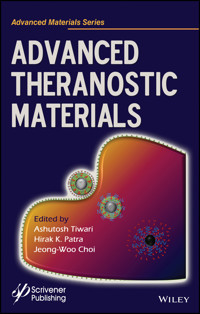
Advanced Theranostic Materials E-Book
171,99 €
Mehr erfahren.
- Herausgeber: John Wiley & Sons
- Kategorie: Fachliteratur
- Serie: Advance Materials Series
- Sprache: Englisch
The present book is covers the recent advances in the development on the regulation of such theragnosis system and their biomedical perspectives to act as a future nanomedicine. Advanced Theranostics Materialsis written by a distinguished group of contributors and provides comprehensive coverage of the current literature, up-to-date overview of all aspects of advanced theranostics materials ranging from system biology, diagnostics, imaging, image-guided therapy, therapeutics, biosensors, and translational medicine and personalized medicine, as well as the much broader task of covering most topics of biomedical research. The books focusses on the following topics: Part 1: System biology and translational medicine * Aberrant Signaling Pathways: Hallmark of Cancer Cells and Target for Nanotherapeutics * Application of Nanoparticles in Cancer Treatment * Biomacromolecule-Gated Mesoporous Silica Drug Delivery Systems * Construction of Functional DNA Nanostructures for Theranostic Applications * Smart Polypeptide Nanocarriers for Malignancy Therapeutics Part 2: Imaging and therapeutics * Dimercaptosuccinic acid-coated magnetic nanoparticles as a localized delivery system in cancer immunotherapy * Cardiovascular nanomedicine * Chitosan-based systems for sustained drug release * Nanocapsules in biomedicine: promises and challenges * Chitosan-based polyelectrolyte complexes: characteristics and application in formulation of particulate drug carriers Part 3: Diagnostics and featured prognostics * Non-invasive Glucose Biosensors based on Nanomaterials * Self/directed Assembly of Nanoparticles: A review on various approaches * Ion exchangers - an open window for the development of advanced materials with pharmaceutical and medical applications New Titanium Alloys for Biomedical Applications
Sie lesen das E-Book in den Legimi-Apps auf:
Seitenzahl: 537
Veröffentlichungsjahr: 2015
Ähnliche




















Contents
Cover
Half Title page
Title page
Copyright page
Preface
Part 1: System Biology and Translational Medicine
Chapter 1: Aberrant Signaling Pathways
1.1 Cancer
1.2 Pathways Deregulated in Cancer: Introduction
1.3 Introduction to Nanotechnology
1.4 Current Uses in Cancer Diagnostic
Acknowledgment
References
Chapter 2: Application of Nanoparticles in Cancer Treatment
2.1 Introduction
2.2 Nanoparticles in Cancer Treatment
2.3 Nanoparticle Platforms as Drug Delivery Systems for Cancer Therapy
2.4 Theranostic Nanomedicine
2.5 Selective Drug Delivery and Encapsulation for Chemotherapy
2.6 Stimuli-Sensitive Nanopreparations
2.7 Multifunctional Nanopreparations
2.8 Cancer Nanotechnology: Future and Challenges
References
Chapter 3: Biomacromolecule-Gated Mesoporous Silica Drug Delivery Systems for Stimuli-Responsive Controlled Release
3.1 Introduction
3.2 Protein-Gated MSN Drug Delivery Systems
3.3 DNA-Gated MSN Drug Delivery Systems
3.4 Conclusions and Perspectives
Acknowledgments
References
Chapter 4: Construction of Functional DNA Nanostructures for Theranostic Applications
4.1 The Progress of Structural DNA Nanotechnology
4.2 DNA Nanostructures for Diagnostics
4.3 DNA Nanostructures for Diagnostics on the Interface
4.4 Diagnostic in Homogeneous Solution
4.5 DNA Nanostructures for Therapeutics
4.6 Integration of Diagnosis and Therapy: Smart DNA Theranostic Nanodevices
4.7 Targeted Delivery
4.8 Controlled/Triggered Release
4.9 Summary and Perspectives
References
Part 2: Imaging and Therapeutics
Chapter 5: Dimercaptosuccinic Acid-Coated Magnetic Nanoparticles as a Localized Delivery System in Cancer Immunotherapy
5.1 Introduction
5.2 Nanoparticle Detection and Quantification: In Vitro and In Vivo Techniques
5.3 Evaluation of Nanoparticle-Induced Toxicity
5.4 Magnetic Targeting of Nanoparticles
5.5 A Specific Example: DMSA-Coated Magnetic Nanoparticles
5.6 Conclusions
Acknowledgments
References
Chapter 6: Cardiovascular Nanomedicine
6.1 Introduction
6.2 Nanoscale Cardiovascular Diagnostics
6.3 Nanotechnology in Cardiovascular Therapeutics
6.4 Nanotechnology in the Surgery of Cardiovascular Disease
6.5 Conclusion
References
Chapter 7: Chitosan-based Interpenetrating Polymeric Network Systems for Sustained Drug Release
7.1 Introduction
7.2 IPNs and Their Uses in Drug Delivery
7.3 Chitosan
7.4 Chitosan-Tamarind Seed Polysaccharide IPN Microparticles and Matrix Tablets for Sustained Release of Aceclofenac
7.5 Chitosan-Hydroxyethyl Cellulose IPN Microspheres of Isoniazid
7.6 Chitosan-Methyl Cellulose IPN Microspheres of Theophylline
7.7 Chitosan-Acrylamide-Grafted-Poly(Vinyl Alcohol) and Hydrolyzed Acrylamide-Grafted-Poly(Vinyl Alcohol) IPN Microgels of Cefadroxil
7.8 Chitosan-Poly(N-Isopropylacrylamide) IPN Discs of Diclofenac Sodium
7.9 Chitosan-Poly(Ethylene Oxide-Grafted-Acrylamide) Semi-IPN Hydrogel Microspheres of Capecitabine
7.10 Acrylamide-Grafted Dextran-Chitosan Semi-IPN Microspheres of Acyclovir
7.11 Chitosan-Acrylamide-Grafted Hydroxyethylcellulose Semi-IPN Microspheres of Diclofenac Sodium
7.12 Poly [N-Acryloylglycine-Chitosan] IPN Hydrogel of 5-Fluorouracil
7.13 Chitosan-N,N′-Dimethylacrylamide Semi-IPN Microspheres of Chlorothiazide
7.14 Conclusion
References
Chapter 8: Nanocapsules in Biomedicine
8.1 Nanocapsules: A Novel Nano-Drug Delivery System
8.2 Magic Bullets: Nanocapsules in Future Medicine
8.3 In Vitro Applications of Nanocapsules
8.4 In Vivo Applications of Nanocapsules
8.5 Conclusions
References
Chapter 9: Chitosan-based Polyelectrolyte Complexes
9.1 Introduction
9.2 Chitosans: Chemical Structure, Physicochemical Properties, and Toxicological and Regulatory Aspects
9.3 Polyelectrolyte Complexes: Theoretical Background, Structure, and Basic Properties
9.4 Chitosan-based Polyelectrolyte Complexes in Particulate Drug Carriers
9.5 Characterization of Chitosan-Based PECs and Chitosan-based PEC Particulate Drug Carriers
9.6 Conclusion
Acknowledgment
References
Part 3: Diagnostics and Featured Prognostics
Chapter 10: Non-invasive Glucose Biosensors Based on Nanomaterials
10.1 Diabetes and Its Prevalence
10.2 Importance of Glucose Monitoring
10.3 Glucose Measurement Methods
10.4 Non-invasive Glucose Determination
10.5 Glucose Biosensors
10.6 New Generation of Non-invasive Glucose Biosensors-Based Nanomaterials
10.7 Future Perspective in Glucose Monitoring
10.8 Conclusion
References
Chapter 11: Self-Directed Assembly of Nanoparticles
11.1 Introduction
11.2 Self-Assembly through Molecular Interactions/Forces
11.3 Hydrogen-Bonding Interactions
11.4 Directed Self-Assembly by External Forces
11.5 Conclusion
Acknowledgment
References
Index
Advanced Theranostic Materials
Scrivener Publishing 100 Cummings Center, Suite 541J Beverly, MA 01915-6106
Advanced Materials Series The Advanced Materials Series provides recent advancements of the fascinating field of advanced materials science and technology, particularly in the area of structure, synthesis and processing, characterization, advanced-state properties, and applications. The volumes will cover theoretical and experimental approaches of molecular device materials, biomimetic materials, hybrid-type composite materials, functionalized polymers, supramolecular systems, information- and energy-transfer materials, biobased and biodegradable or environmental friendly materials. Each volume will be devoted to one broad subject and the multidisciplinary aspects will be drawn out in full.
Series Editor: Dr. Ashutosh Tiwari Biosensors and Bioelectronics Centre Linköping University SE-581 83 Linköping Sweden E-mail: [email protected]
Managing Editors: Revuri Vishnu and Sudheesh K. Shukla
Publishers at Scrivener Martin Scrivener([email protected]) Phillip Carmical ([email protected])
Copyright © 2015 by Scrivener Publishing LLC. All rights reserved.
Co-published by John Wiley & Sons, Inc. Hoboken, New Jersey, and Scrivener Publishing LLC, Salem, Massachusetts. Published simultaneously in Canada.
No part of this publication may be reproduced, stored in a retrieval system, or transmitted in any form or by any means, electronic, mechanical, photocopying, recording, scanning, or otherwise, except as permitted under Section 107 or 108 of the 1976 United States Copyright Act, without either the prior written permission of the Publisher, or authorization through payment of the appropriate per-copy fee to the Copyright Clearance Center, Inc., 222 Rosewood Drive, Danvers, MA 01923, (978) 750-8400, fax (978) 750-4470, or on the web at www.copyright.com. Requests to the Publisher for permission should be addressed to the Permissions Department, John Wiley & Sons, Inc., 111 River Street, Hoboken, NJ 07030, (201) 748-6011, fax (201) 748-6008, or online at http://www.wiley.com/go/permission.
Limit of Liability/Disclaimer of Warranty: While the publisher and author have used their best efforts in preparing this book, they make no representations or warranties with respect to the accuracy or completeness of the contents of this book and specifically disclaim any implied warranties of merchantability or fitness for a particular purpose. No warranty may be created or extended by sales representatives or written sales materials. The advice and strategies contained herein may not be suitable for your situation. You should consult with a professional where appropriate. Neither the publisher nor author shall be liable for any loss of profit or any other commercial damages, including but not limited to special, incidental, consequential, or other damages.
For general information on our other products and services or for technical support, please contact our Customer Care Department within the United States at (800) 762-2974, outside the United States at (317) 572-3993 or fax (317) 572-4002.
Wiley also publishes its books in a variety of electronic formats. Some content that appears in print may not be available in electronic formats. For more information about Wiley products, visit our web site at www.wiley.com.
For more information about Scrivener products please visit www.scrivenerpublishing.com.
Library of Congress Cataloging-in-Publication Data:
ISBN 978-1-118-99829-8
Preface
Since ancient times, the advancement of human civilization has always been driven by smart engineering. Counted among the ancient professions, technicians still continue to be a compelling force for advancing civilization. However, advancement always brings new challenges followed by smarter solutions followed by more challenges. Scientists and doctors have created outstanding advancements in medicine, but those improvements have also posed several obstacles. Biochemists, who for centuries have been leaders in the biomedical research field, are facing newfangled challenges in developing medicine, along with suggestions for potential solutions. Since the future of medicine is going to be personalized, bioengineers are are working very hard in a cross-disciplinary manner to find a way to craft auspicious personalized drugs.
The most promising approach for individualized medicine is known as ‘theranostics,’ a term coined in 2002 which is defined as a blend of therapeutics and diagnostics. The development of a theranostic approach would not only guide the clinician in prescribing the appropriate drugs to patients, but would also ensure spatio-temporal distribution of drugs within the patient’s body in order to ensure a safe and healthy recovery. Though a lot of research and development still needs to be done before theranostics becomes a reality, the potential outcome of the use of this approach is incredible, constructive, and ethical.
This book strives to accumulate current advances in the design and optimization of biocompatible material and technologies by formulating novel and smart ‘theranostic’ modules for next-generation applications. Theranostics itself covers the cross-disciplinary fields of chemistry, biology, materials and engineering and plays a vital role in medical science and technology. Over the entire past decade, an enormous assortment of theranostic modules have been formulated and optimized for potential clinical trial. ‘Advanced Theranostics Materials’ offers comprehensive chapters on the current status of concrete approaches and their potential range of applications. The concept of design with precise functions and effective self-reporting is of great interest and has massive prospective application in personalized medicine.
Written by an eminent group of scientists, this book is appropriate for a wide spectrum of readers from diverse backgrounds, including clinicians, and would be of great interest for experts in both academia and industry. It not only provides readers with a comprehensive exposure to the current status, but also gives up-to-date approaches for all aspects of advanced theranostic materials. For those who want to start working in related fields, the required fundamental background necessary for future design and optimization is presented, though the scope of this book is far broader and focuses on the emergent area of theranostics and their applications.
The editors dedicate this first-ever book on ‘Advanced Theranostics’ to their respective grandparents (Tiwari and Patra) who passed away during the editing of this book cognizant with the belief that departing souls always bring incredible blessings to the newcomers such as ‘theranostics’.
The Editors Ashutosh Tiwari, PhD, DSc Hirak K Patra, PhD Jeong-Woo Choi, PhD
Part 1
SYSTEM BIOLOGY AND TRANSLATIONAL MEDICINE
Chapter 1
Aberrant Signaling Pathways
Hallmark of Cancer Cells and Target for Nanotherapeutics
Gulnaz T. Javan1, Sheree J. Finley2, Ismail Can1, Amandeep Salhotra3, Ashim Malhotra4, and Shivani Soni5,*
1Forensic Science Program, Physical Sciences Department, Alabama State University, Montgomery, AL, USA
2Physical Sciences Department, Alabama State University, Montgomery, AL, USA
3Department of Hematology & Hematopoietic Cell Transplantation, City of Hope, Duarte, CA, USA
4Department of Pharmaceutical Sciences, School of Pharmacy, Pacific University, Hillsboro, OR, USA
5Department of Biological Sciences, Alabama State University, Montgomery, AL, USA
*Corresponding author:[email protected]
Abstract
Nanotechnology is the field that applies to the design, engineering, and validation of manufacture processes and application of entities that exist at the scale of 1 × 10⁻⁹ m. The advent of this technology has revolutionized both basic and applied sciences. One prime usage of this technology that has recently emerged is in the field of medicine, specifically in diagnostic, interventional, pharmacological, and formulation sciences as applicable to the treatment of cancers. Interestingly, nanotechnology and cancer research and treatment are naturally consanguineous due to multiple challenges that are posed by cancer and the solutions that are readily offered by nanotechnology. This chapter seeks to address the use of advanced materials for the construction of nanoscale vectors that simultaneously addresses the issues of neoplastic therapy. We shall discuss the problem of scale, with particular reference to the recently unraveled molecular biology of cancer and how nanotechnology provides the adequate medium to intervene and inject pharmacological molecules at this intracellular dimension. The use of nanoparticles in targeting specific receptors such as the protein tyrosine kinases or nonfunctioning second messenger systems downstream of these kinases such as the ras-rak system, which become aberrant in cancer, will be discussed. The emerging roles of nanotechnology-based targeted delivery, the manufacture of nanoscale controlled release formulations, and the effects of advanced materials used for the construction of nano-vehicles on pharmaceutical formulation and stability will be discussed.
1.1 Cancer
Cancer is clonal spread of cells with impaired growth characteristics [1]. It is the most complicated and most common of the somatic genetic diseases. Cancer is blamed on multi-factors which include bacteria, virus, inheritance, chemicals, radiation, diet, environment, and life style to name a few [2–5].
Cancer is a costly and fatal disease. In 2012, 56 million people died worldwide out of which 8.2 million died from cancer. About 30% of cancers are curable and statics show that 60% of new cancer cases occur in Africa, Asia, and central and South America. Non-communicable diseases accounted for more than 68% of all deaths globally in 2012. The top four non-communicable diseases include cancers, chronic lung diseases, cardiovascular diseases, and diabetes.
1.2 Pathways Deregulated in Cancer: Introduction
Cancer is a genetically complex, fatal, and hard to treat disease. It is the second leading cause of death which causes an average of 1500 deaths a day in United States [6]. Despite recent advances in understanding of the fundamentals of cancer, advances in clinical treatment of cancer and successful prevention are far too few. Some reasons for this lack of advancement in treatment include toxic effects of chemotherapy agents on healthy cells and rapid acquisition of resistance against these treatments by cancerous cells [6]. Introduction of nanotechnology to medicine has opened up an array of different approaches to cancer treatment and target poisoning of the cancer cells. This new approach enables scientists to use nanoscaled structures to carry payloads of chemotherapeutic agents, diagnostic chemical, or imaging agents to site of cancer and conduct precise intervention. Advances in nanotechnology are making target treatment of cancer cells a reality; however, the challenge of overcoming cells resistance to treatment is still a more important goal to achieve. To understand and appreciate the complexity of cancer and how a normal cell turns into a cancerous cell, one must understand normal cell growth as well as all pathways and signals that lead to cell growth, division, metabolism, and survival. It is also as important to use correct molecular classification, instead of traditional methods of using morphological appearance to classify cancer to streamline treatment. Gene expression can be used for class prediction and class discovery [7]. Moreover, miRNA which has a role in almost all aspects of cell behavior is the major regulator of gene expression. This is why miRNA is the target of different studies to discover extent of its involvement in cancer and its role as oncogene or tumor suppressor gene (TSG) [8]. Normal cell growth and division are controlled by many signals and follows specific pathways. Any damage to pathways or signaling system which results in abnormal cell growth or division is generally corrected by apoptosis; however cancer cells do not follow or resist this complex cell division and growth. Discovery of proto-oncogenes and TSGs has changed over ever-expanding understanding of cancer cells. Proto-oncogenes influence cell proliferation and extend their survival rate whereas TSGs keep cell growth in check and prevent or inhibit their growth and survival. This disruption of normal cell development by proto-oncogenes causes growth rate of cells to increase and exceed normal cell ability to keep equilibrium between growth and survival [9]. Deregulation of gene expression is another distinguishing property of cancer cells. This deregulation in expression of gene happens due to modifications of DNA’s nucleotides [6]. Douglas Hanahan and Robert Weinberg [10–11] two cancer researchers have simplified complexity of the cancer into a number of underlying principles. They list hallmarks of the cancer cells as (i) self-stimulated cell growth, (ii) resistance against cell’s inhibitory signals, (iii) resistance against apoptosis, (iv) capable of angiogenesis, (v) endless multiplication, (vi) capable of metastasis, (vii) abnormal metabolic pathways, and (viii) eluding immune system. Normal cell growth and division controlled by mechanisms that are governed by several proteins. When a critical protein is damaged due to acquired or somatic mutations, and cell apoptosis does not happen, cancerous cell will result which must have the above mentioned hallmarks in order to multiply and grow.
Lesen Sie weiter in der vollständigen Ausgabe!
Lesen Sie weiter in der vollständigen Ausgabe!
Lesen Sie weiter in der vollständigen Ausgabe!
Lesen Sie weiter in der vollständigen Ausgabe!
Lesen Sie weiter in der vollständigen Ausgabe!
Lesen Sie weiter in der vollständigen Ausgabe!
Lesen Sie weiter in der vollständigen Ausgabe!
Lesen Sie weiter in der vollständigen Ausgabe!
Lesen Sie weiter in der vollständigen Ausgabe!
Lesen Sie weiter in der vollständigen Ausgabe!
Lesen Sie weiter in der vollständigen Ausgabe!
Lesen Sie weiter in der vollständigen Ausgabe!
Lesen Sie weiter in der vollständigen Ausgabe!
Lesen Sie weiter in der vollständigen Ausgabe!




