


132,99 €
Mehr erfahren.
- Herausgeber: John Wiley & Sons
- Kategorie: Wissenschaft und neue Technologien
- Sprache: Englisch
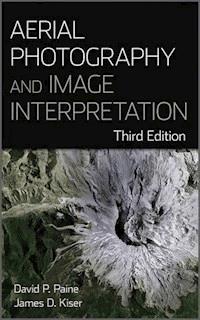
The new, completely updated edition of the aerial photography classic Extensively revised to address today's technological advances, Aerial Photography and Image Interpretation, Third Edition offers a thorough survey of the technology, techniques, processes, and methods used to create and interpret aerial photographs. The new edition also covers other forms of remote sensing with topics that include the most current information on orthophotography (including digital), soft copy photogrammetry, digital image capture and interpretation, GPS, GIS, small format aerial photography, statistical analysis and thematic mapping errors, and more. A basic introduction is also given to nonphotographic and space-based imaging platforms and sensors, including Landsat, lidar, thermal, and multispectral. This new Third Edition features: * Additional coverage of the specialized camera equipment used in aerial photography * A strong focus on aerial photography and image interpretation, allowing for a much more thorough presentation of the techniques, processes, and methods than is possible in the broader remote sensing texts currently available * Straightforward, user-friendly writing style * Expanded coverage of digital photography * Test questions and summaries for quick review at the end of each chapter Written in a straightforward style supplemented with hundreds of photographs and illustrations, Aerial Photography and Image Interpretation, Third Edition is the most in-depth resource for undergraduate students and professionals in such fields as forestry, geography, environmental science, archaeology, resource management, surveying, civil and environmental engineering, natural resources, and agriculture.
Sie lesen das E-Book in den Legimi-Apps auf:
Seitenzahl: 832
Veröffentlichungsjahr: 2012
Ähnliche



















Table of Contents
Title Page
Copyright
Dedication
Preface
Chapter One: Introduction
1.1 Electromagnetic Spectrum and Energy Flow
1.2 The Imaging Process
1.3 Types of Cameras
1.4 Comparison of Film and Digital Cameras
1.5 Printed Information on Large-Format Aerial Photography (LFAP)
1.6 Units of Measure
Questions and Problems
References
Part One: Geometry and Photo Measurements
Chapter Two: Geometry of a Vertical Aerial Photograph
2.1 Classification of Photographs
2.2 Focal Length and Angle of Coverage
2.3 The Coordinate Axes
2.4 The Three Photo Centers
2.5 Distortion and Displacement
2.6 Numerical Examples
2.7 Inferences Based on the Relief Displacement Equation
2.8 Combined Effects of Tilt and Topographic Displacements
Questions and Problems
Chapter Three: Principles of Stereoscopic Vision
3.1 Definitions
3.2 Geometry of Stereoscopy
3.3 Theory of Stereoscopy
3.4 Proper Orientation of a Stereo Model
3.5 Stereoscopic Viewing without a Stereoscope
3.6 A Test for Stereoscopic Perception
Questions and Problems
References
Chapter Four: Scale of a Vertical Aerial Photograph
4.1 Scale Classification
4.2 The Theory of Scale
4.3 Types of Scale
4.4 Variation in Scale
4.5 Basic Scale Equations
4.6 Photo Scale Determination
Questions and Problems
Chapter Five: Horizontal Measurements—Distance, Bearings, and Areas
5.1 Ground Distance
5.2 Horizontal Angles
5.3 Area Measurements
Questions and Problems
Chapter Six: Vertical Measurements
6.1 Measuring Heights on Single Aerial Photos
6.2 Measuring Heights by Parallax Differences
Questions and Problems
Chapter Seven: Acquisition of Aerial Photography
7.1 Acquisition of Existing Photography
7.2 Planning the Photo Mission for New Photography
7.3 Mosaics
7.4 Contracts for New Aerial Photography
7.5 Photo Mission Planning—An Example
Questions and Problems
Reference
Part Two: Mapping from Vertical Aerial Photographs
Chapter Eight: Orthophotography
8.1 Orthophotography—What is It?
8.2 How Orthophotos are Made
8.3 Annotation
8.4 Image Quality
8.5 Classification of Instruments
8.6 Stereoscopic Orthophotography
8.7 Applications in Natural Resources Management
8.8 Digital Orthophotos
8.9 Advantages of Digital Orthophotography
Questions and Problems
References
Chapter Nine: Map Projections, Grid Networks, and Control
9.1 Geometry of the Earth
9.2 Map Projections
9.3 The Public Land Survey System
9.4 Ground Control
9.5 Steps in Making Maps from Aerial Photographs
Questions and Problems
References
Chapter Ten: The Global Positioning System
10.1 The Global Positioning System
10.2 The Conceptual GPS Model
10.3 Obtaining Precise Positioning
10.4 The GPS Signal
10.5 Factors that Affect GPS Accuracy
10.6 Signal Error Solution: Differential GPS
10.7 Applications of GPS for Natural Resources
Questions and Problems
References
Chapter Eleven: The Transfer of Detail
11.1 Effective Areas
11.2 Classification of Photo-Mapping Instruments
11.3 Accuracy of Stereoscopic Plotters
11.4 Soft Copy Stereo Imaging Systems
11.5 Mono Imaging Systems
Questions and Problems
References
Chapter Twelve: Geographic Information Systems
12.1 Geographic Information Systems
12.2 GIS Structure
12.3 Data Types
12.4 Vector and Raster Data Types
12.5 Topology
12.6 Aerial Photography Input to a GIS
Questions and Problems
References
Part Three: Photo Interpretation
Chapter Thirteen: Small Format Aerial Imagery
13.1 Early Development
13.2 Advantages of SFAI
13.3 Disadvantages of SFAI
13.4 Stereoscopic Viewing of Film SFAI
13.5 Fixed Air-Base Aerial Imagery
13.6 Using A Radar Altimeter and A TIP-TILT Indicator with SFAI
Questions and Problems
References
Chapter Fourteen: Films, Filters, and The Photographic Process
14.1 The Theory of Color
14.2 Filters for Aerial Photography
14.3 Photographic Film Types
Questions and Problems
References
Chapter Fifteen: Principles and Techniques of Aerial Image Interpretation
15.1 Basic Principles of Photo Interpretation
15.2 Additional Hints for Photo Interpretation of Panchromatic Film
15.3 Techniques and Aids for Photo Interpretation
15.4 Shadowless Photography
Questions and Problems
References
Chapter Sixteen: Landforms and Drainage Patterns
16.1 Landform
16.2 Recognition of Landform
Questions and Problems
References
Chapter Seventeen: Geology, Soils, and Engineering Applications
17.1 Sedimentary Landscapes
17.2 Igneous Landscapes
17.3 Metamorphic Landscapes
17.4 Glaciated Landscapes
17.5 Eolian and Fluvial Landscapes
17.6 Mass Wasting
17.7 The Cuesta Landform
17.8 Geologic Erosion
17.9 Surface Erosion
17.10 Soil Mapping on Aerial Photos
17.11 Obtaining Geologic, Hydrologic, and Topographic Maps
17.12 The Land Manager's Responsibility
Questions and Problems
References
Chapter Eighteen: Land-Use Planning
18.1 Land-Use Planning Defined
18.2 Phases of Land-Use Planning
18.3 Map Legend Systems
18.4 Urban–Suburban Land-Use Planning
Questions and Problems
References
Chapter Nineteen: Environmental Monitoring
19.1 Historical Use of Aerial Photography
19.2 Methods for Environmental Monitoring with Aerial Photography
19.3 General Interpretation: The 1996 Oregon Flood
19.4 Photogrammetric Mapping: River Channel Changes
19.5 Spatial Analysis: Earth Movement in a Landslide Analysis
References
Chapter Twenty: Additional Topics in Natural Resources Management
20.1 Outdoor Recreation
20.2 Range Management
20.3 Fish and Wildlife Management
20.4 Agriculture
20.5 Water Pollution Detection
20.6 Archeology
Questions and Problems
References
Chapter Twenty-One: Forestry
21.1 Timber-Type Mapping
21.2 Aerial Photos and Timber Sales
21.3 Forest Fire Protection
21.4 Forest Insect and Disease Detection
Questions and Problems
References
Part Four: Natural Resources Inventory
Chapter Twenty-Two: Elementary Statistics and Sampling Techniques
22.1 Types of Statistics
22.2 Reasons for Sampling
22.3 Definitions of Selected Mathematical Terms
22.4 Definitions of Basic Sampling Terms
22.5 Frequently Used Statistical Symbols
22.6 Frequency Distributions
22.7 Probability
22.8 The Central Limit Theorem
22.9 Degrees of Freedom
22.10 Basic Statistical Calculations
22.11 Elementary Sampling Designs
22.12 Double Sampling With Regression
Questions and Problems
References
Chapter Twenty-Three: Mapping Accuracy Assessment
23.1 The National Map Accuracy Standards
23.2 Ground Truth
23.3 Spatial Accuracy (The Overlay Method)
23.4 Classification Accuracy (The Matrix Method)
23.5 Additional Topics
Questions and Problems
References
Chapter Twenty-Four: Aerial Photo Mensuration
24.1 Direct Measurements
24.2 Indirect Measurements
24.3 Using Aerial Photo Mensurational Tables
24.4 Photo Mensuration Using SFAI and Fixed Airbase Aerial Imagery*
24.5 Photo Mensuration Using SFAI Without FABAI
Questions and Problems
References
Chapter Twenty-Five: An Example Photo Timber Cruise
25.2 Description of Cruise and Cruise Area
25.3 Adjusting the Photo Volumes
25.4 Statistical Analysis
Questions and Problems
References
Part Five: An Introduction to Remote Sensing
Chapter Twenty-Six: Additional Characteristics of Electromagnetic Energy
26.1 Data Acquisition
26.2 Characteristics of Electromagnetic Energy Flow
26.3 Data Interpretation
Questions and Problems
References
Chapter Twenty-Seven: Radar and Lidar—Active Remote Sensors
27.1 Side-Looking Airborne Radar
27.2 Lidar
Questions and Problems
References
Chapter Twenty-Eight: Scanning Remote Sensors
28.1 Thermal Scanners
28.2 Characteristics of Thermal Scanner Images
28.3 Multispectral Scanners
28.4 Landsat
28.5 Landsat Imagery Versus Aerial Photography
Questions and Problems
References
Appendixes
Appendix A: Summary of Photogrammetric Formulas
Scale and Distance
Height and Elevation Difference on Stereoscopic Pairs
Topographic Displacement or Height on Single Photo
Area Measurement
Vertical Exaggeration and Percent Slope
Appendix B: Summary of Statistical Formulas
Standard Deviation, Standard Error, and Sample Size
Double Sampling with Regression and Sample Plot Allocation
Stratified Sampling
Appendix C: Specimen Contract for Aerial Photography
Appendix D: Selected Aerial Photo Volume Tables
Appendix E: Partial Answers to Questions and Problems
Chapter 1
Chapter 2
Chapter 3
Chapter 4
Chapter 5
Chapter 6
Chapter 7
Chapter 8
Chapter 9
Chapter 10
Chapter 12
Chapter 15
Chapter 17
Chapter 19
Chapter 21
Appendix F: Partial Answers to Laboratory Exercises
Chapter 3
Chapter 15
Appendix G: Metric Conversion Charts
Color Plates
Index
This book is printed on acid-free paper.
Copyright © 2012 by John Wiley & Sons, Inc. All rights reserved
Published by John Wiley & Sons, Inc., Hoboken, New Jersey
Published simultaneously in Canada
No part of this publication may be reproduced, stored in a retrieval system, or transmitted in any form or by any means, electronic, mechanical, photocopying, recording, scanning, or otherwise, except as permitted under Section 107 or 108 of the 1976 United States Copyright Act, without either the prior written permission of the Publisher, or authorization through payment of the appropriate per-copy fee to the Copyright Clearance Center, 222 Rosewood Drive, Danvers, MA 01923, (978) 750-8400, fax (978) 646-8600, or on the web at www.copyright.com. Requests to the Publisher for permission should be addressed to the Permissions Department, John Wiley & Sons, Inc., 111 River Street, Hoboken, NJ 07030, (201) 748-6011, fax (201) 748-6008, or online at www.wiley.com/go/permissions.
Limit of Liability/Disclaimer of Warranty: While the publisher and the author have used their best efforts in preparing this book, they make no representations or warranties with respect to the accuracy or completeness of the contents of this book and specifically disclaim any implied warranties of merchantability or fitness for a particular purpose. No warranty may be created or extended by sales representatives or written sales materials. The advice and strategies contained herein may not be suitable for your situation. You should consult with a professional where appropriate. Neither the publisher nor the author shall be liable for any loss of profit or any other commercial damages, including but not limited to special, incidental, consequential, or other damages.
For general information about our other products and services, please contact our Customer Care Department within the United States at (800) 762-2974, outside the United States at (317) 572-3993 or fax (317) 572-4002.
Wiley publishes in a variety of print and electronic formats and by print-on-demand. Some material included with standard print versions of this book may not be included in e-books or in print-on-demand. If this book refers to media such as a CD or DVD that is not included in the version you purchased, you may download this material at http://booksupport.wiley.com. For more information about Wiley products, visit www.wiley.com.
Library of Congress Cataloging-in-Publication Data:
Paine, David P.
Aerial photography and image interpretation / David P. Paine, James D. Kiser.–3rd ed.
p. cm.
Includes index.
ISBN 978-0-470-87938-2 (cloth); ISBN 978-1-118-11099-7 (ebk); ISBN 978-1-118-11101-7 (ebk); ISBN 978-1-118-11102-4 (ebk); ISBN 978-1-118-11262-5 (ebk); ISBN 978-1-118-11263-2 (ebk); ISBN 978-1-118-11264-9 (ebk)
1. Aerial photography. 2. Photographic interpretation. 3. Aerial photography in forestry.
I. Kiser, James D. (James Donald) II. Title.
TR810.P25 2012
778.3′5–dc23
2011028235
This book is dedicated to my wife, Janet; daughters, Carolyn and Mary; son-in-law, Theme; and grandsons, Matthew and Andrew.
Dave Paine
In Memoriam
David P. Paine,
I had the privilege of meeting David in 1985 and shortly after becoming his graduate student and subsequently a senior researcher under David's guidance. His combination of humor and utmost respect for everyone made our work together a real and genuine pleasure. After his retirement from academia, he continued to visit and always had an active interest in my work and later in my doctoral program. I am indebted as well to David's wife, Janet, and his daughters Mary and Caroline, who always treated me as one of their own.
His memory will be treasured by generations of foresters now and to come.
Jim Kiser
Oregon State University
Preface
A number of new technologies were developed following the first edition of the textbook in 1981, and these were incorporated in the second edition in 2003. Most of these technologies were developed for use in outer space, but some techniques, such as digital imagery and its transmission through space, global positioning systems (GPS), and lidar, are now used in aircraft sensing systems.
Five new chapters were added in the second edition to cover global positioning systems (GPS), geographic information systems (GIS), small-format aerial imagery (SFAI), environmental monitoring, and mapping accuracy assessment. In addition, information on LIDAR was added to the chapter on active remote sensors.
Like the first and second editions, this book is organized into an introduction and five parts: Part 1—Geometry and Photo Measurements (six chapters), Part 2—Mapping from Vertical Aerial Photographs (five chapters), Part 3—Photo Interpretation (nine chapters, with six chapters devoted to specific disciplines), Part 4—Natural Resources Inventory, using timber cruising as an example (four chapters), and Part 5—An Introduction to Remote Sensing (three chapters).
The beginning student may wonder why we included a chapter on statistics in an aerial photo interpretation textbook. The answer is not obvious at first, but it is essential to the understanding of sampling techniques used for inventorying natural resources. Sampling combined with thematic maps can provide a complete (estimated) inventory of specific natural resources or at least an essential first step in the inventory process.
The only math required for using this text is an elementary knowledge of algebra and geometry. It would be helpful to have completed a beginning course in statistics but that is not necessary because statistics and sampling is thoroughly covered in Chapter 22. In addition, we have kept the use of statistical symbols and subscripts/superscripts to a minimum.
Each chapter begins with a set of objectives and ends with questions and problems based on the objectives. Suggested laboratory exercises are provided for selected chapters. Answers to selected mathematical problems can be found in Appendix E, and a summary of most of the equations used throughout the book can be found in Appendixes A and B. Answers to the laboratory exercises presented in Chapters 3 and 15 are in Appendix F.
This book is designed to be covered in a four- or five-credit course taught over a 10-week term or a three- to four-credit hour course taught over a 13- to 15-week semester. If time or credit hours is limited, selected chapters can be eliminated, depending on the instructor's objectives and the specific disciplines of interest involved.
However, in order to become a competent photo interpreter, the introductory chapter, all of Part 1, Chapters 10, 12, 13, 14, 15, 23, and selected chapters, depending on your specific discipline or disciplines of interest, should be thoroughly covered.
If your primary interest is in satellite imaging systems, we recommend Remote Sensing and Image Interpretation by Lillesand and Kiefer, also published by John Wiley & Sons.
We wish to express our sincere appreciation to all those who contributed to this and the previous editions of this book. Specifically, we wish to acknowledge the following individuals who reviewed the entire first edition: Professors Joseph J. Ulliman, University of Idaho; Marshall D. Ashley, University of Maine at Orono; Garland N. Mason, Stephen F. Austin State University; and L. G. Arvanitis, University of Florida. We also appreciate the cursory review by Professor Roger M. Hoffer, Purdue University. Portions of the manuscript were also reviewed by Professor Roger G. Peterson, Bo Shelby, and John “Dick” Dilworth, all at Oregon State University.
Special recognition goes to Dick Dilworth, formerly the Department Head of Forest Management, and Robert B. Pope of the U.S. Forest and Range Experiment Station. These two men, with their knowledge of photo interpretation, were instrumental in the writing of the first edition.
We are grateful for the help of Dr. Charles E. Poulton of NASA-Ames, Moffit Field, California, who helped in the writing of Chapter 18. We also thank Bruce Ludwig, Charlene Crocker, and Jessica Adine (graduate assistants) for verifying the mathematics, and Sue Mason (instructor in journalism) for her very valuable proofreading. In addition, we thank the many individuals, government agencies, instrument manufacturers, and other commercial firms who provided information and illustrations for this and the first edition. In addition, we wish to recognize Gordon Wilkenson, WAC Corp., who provided illustrations for, and reviewed the chapters on, acquisition of photography and films and filters, and to Dr. Michael Lefsky (formerly at Oregon State University and currently at Colorado State University) for his help and expertise on lidar, for his review of the chapter on radar and lidar, and for providing illustrations for Plate VII and the bottom half of Plate VIII.
Jim Kiser
Chapter One
Introduction
As a natural resources manager, would you be interested in using aerial photography to reduce costs by up to 35 percent for the mapping, inventorying, and planning involved in the management of forest and rangelands? This was the cost savings estimated by the staff of the Department of Natural Resources, State of Washington (Edwards 1975).
Because of advanced technology and increased availability, this estimate may be low for all natural resources disciplines, as well as for land-use planning (state, urban, and suburban), national defense, law enforcement, transportation route surveys, hydroelectric dams, transmission lines, flood plain control, and the like. With savings of this magnitude, it becomes increasingly important for all agencies, whether county, state, federal, or private, to make maximum use of aerial photography and related imagery.
The study of aerial photography—whether it be photogrammetry or photo interpretation—is a subset of a much larger discipline called remote sensing. A broad definition of remote sensing would encompass the use of many different kinds of remote sensors for the detection of variations in force distributions (compasses and gravity meters), sound distributions (sonar), microwave distributions (radar), light distributions (film and digital cameras) and lidar (laser light). Our eyes and noses are also considered to be remote sensors. These detectors have one thing in common: They all acquire data without making physical contact with the source. A narrower definition of remote sensing, as used in this book, is the identification and study of objects from a remote distance using reflected or emitted electromagnetic energy over different portions of the electromagnetic spectrum.
Photogrammetryis the art or science of obtaining reliable quantitative information (measurements) from aerial photographs (American Society of Photogrammetry 1966). Photo interpretation is the determination of the nature of objects on a photograph and the judgment of their significance. Photo interpretation necessitates an elementary knowledge of photogrammetry. For example, the size of an object is frequently an important consideration in its identification. The end result of photo interpretation is frequently a thematic map, and mapmaking is the primary purpose of photogrammetry. Likewise, photogrammetry involves techniques and knowledge of photo interpretation. For example, the determination of acres of specific vegetation types requires the interpretation of those types. The emphasis of this book is on image interpretation, but it includes enough information on basic photogrammetry to enable one to become a competent photo interpreter. A good interpreter must also have a solid background in his or her area of interest.
Because of the introduction of digital technology into remote sensing, the terminology used throughout this book to distinguish between digital and film-based technology is important. This is because: (1) digital sensors (including cameras) produce images, not photographs; and (2) film sensors produce photographs, but it is also correct to call a photograph an image. Therefore, to clarify our terminology, the following scheme will be used:
Terminology
1.When reference is made to a digital camera, the word digital will always be used.
2.When reference is made to a film camera, film may be used (for emphasis), but in many cases film will not be present.
3.The term photograph will be used only when it is produced by a film camera.
4.The term image will always be used when reference is made to a digital image, but this term may also be used when reference is made to a photograph.
Objectives
After a thorough understanding of this chapter, you will be able to:
1. Write precise definitions to differentiate clearly among the following terms: remote sensing, photogrammetry, and photo interpretation.
2. Fully define the following terms: electromagnetic spectrum, atmospheric window, f-stop, film exposure, depth of field, and fiducial marks.
3. Draw a diagram and write a paragraph to explain fully reflectance, transmittance, absorption, and refraction of light.
4. List the wavelengths (bands) that can be detected by the human eye, film, and terrestrial digital cameras (both visible and photographic infrared bands).
Lesen Sie weiter in der vollständigen Ausgabe!
Lesen Sie weiter in der vollständigen Ausgabe!
Lesen Sie weiter in der vollständigen Ausgabe!
Lesen Sie weiter in der vollständigen Ausgabe!
Lesen Sie weiter in der vollständigen Ausgabe!
Lesen Sie weiter in der vollständigen Ausgabe!
Lesen Sie weiter in der vollständigen Ausgabe!
Lesen Sie weiter in der vollständigen Ausgabe!
Lesen Sie weiter in der vollständigen Ausgabe!
Lesen Sie weiter in der vollständigen Ausgabe!
Lesen Sie weiter in der vollständigen Ausgabe!
Lesen Sie weiter in der vollständigen Ausgabe!
Lesen Sie weiter in der vollständigen Ausgabe!
Lesen Sie weiter in der vollständigen Ausgabe!
Lesen Sie weiter in der vollständigen Ausgabe!
Lesen Sie weiter in der vollständigen Ausgabe!
Lesen Sie weiter in der vollständigen Ausgabe!
Lesen Sie weiter in der vollständigen Ausgabe!
Lesen Sie weiter in der vollständigen Ausgabe!
Lesen Sie weiter in der vollständigen Ausgabe!
Lesen Sie weiter in der vollständigen Ausgabe!
Lesen Sie weiter in der vollständigen Ausgabe!
Lesen Sie weiter in der vollständigen Ausgabe!
Lesen Sie weiter in der vollständigen Ausgabe!
Lesen Sie weiter in der vollständigen Ausgabe!
Lesen Sie weiter in der vollständigen Ausgabe!
Lesen Sie weiter in der vollständigen Ausgabe!
Lesen Sie weiter in der vollständigen Ausgabe!
Lesen Sie weiter in der vollständigen Ausgabe!
Lesen Sie weiter in der vollständigen Ausgabe!
Lesen Sie weiter in der vollständigen Ausgabe!
Lesen Sie weiter in der vollständigen Ausgabe!
Lesen Sie weiter in der vollständigen Ausgabe!
Lesen Sie weiter in der vollständigen Ausgabe!
Lesen Sie weiter in der vollständigen Ausgabe!
Lesen Sie weiter in der vollständigen Ausgabe!
Lesen Sie weiter in der vollständigen Ausgabe!
Lesen Sie weiter in der vollständigen Ausgabe!
Lesen Sie weiter in der vollständigen Ausgabe!
Lesen Sie weiter in der vollständigen Ausgabe!
Lesen Sie weiter in der vollständigen Ausgabe!
Lesen Sie weiter in der vollständigen Ausgabe!




