


Erhalten Sie Zugang zu diesem und mehr als 300000 Büchern ab EUR 5,99 monatlich.
- Herausgeber: Nick Hern Books
- Kategorie: Poesie und Drama
- Serie: NHB Modern Plays
- Sprache: Englisch
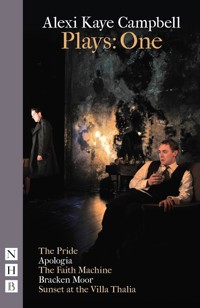
A collection of five plays by Alexi Kaye Campbell. The premiere of The Prideat the Royal Court Theatre in 2008 marked the emergence of Alexi Kaye Campbell as a distinctive new talent. With its bold and ingenious structure and its daring take on sexual politics in the 1950s and today, the play combined thrilling dramaturgy with profound insight into the affairs of the human heart. It went on to win an Olivier Award, the Critics' Circle Award for Most Promising Playwright, and the John Whiting Award for Best New Play, and was revived in the West End in 2013. Published here alongside that remarkable debut are Alexi's four subsequent plays, which together demonstrate his rare ability to harness theatricality in pursuit of emotional truth. Apologia(Bush Theatre, London, 2009; revived in the West End in 2017), a perceptive look at what has happened to 1960s idealists and their children. 'Sharp, funny, wise and humane, Alexi Kaye Campbell is a writer to cherish' Telegraph The Faith Machine (Royal Court, 2011), an exploration of the relationship between faith and capitalism that asks fundamental questions about the true meaning of love. 'An urgent play of expansive ambition and largeness of spirit' Guardian Bracken Moor (Tricycle Theatre and Shared Experience, 2013), a haunting tale of grief and denial, set against the economic crisis of the 1930s. 'A superior kind of ghost story… intellectually as well as emotionally haunting' The Stage Sunset at the Villa Thalia (National Theatre, 2016), a passionate and deeply personal play about the impact of foreign influence, planned and unintentional, on a nation and its people. 'This play is a winner, a thought-provoking slow-burn story that works on many levels' The Times Also included is an introduction by the author.
Sie lesen das E-Book in den Legimi-Apps auf:
Seitenzahl: 590
Veröffentlichungsjahr: 2017
Das E-Book (TTS) können Sie hören im Abo „Legimi Premium” in Legimi-Apps auf:
Ähnliche











ALEXI KAYE CAMPBELL
Plays: One
The Pride
Apologia
The Faith Machine
Bracken Moor
Sunset at the Villa Thalia
with an Introduction by the author
NICK HERN BOOKS
London
www.nickhernbooks.co.uk
Contents
Introduction
The Pride
Apologia
The Faith Machine
Bracken Moor
Sunset at the Villa Thalia
About the Author
Copyright and Performing Rights Information
Introduction
I started writing plays through frustration. I had been an actor for almost twenty years and even though for the most part I had loved my job, I reached a point where I began to feel powerless and creatively thwarted. I had always written – my mother insists that I was penning reams of dialogue at the age of six – but I had found it difficult to complete anything. My drawers were full of half-finished plays, scraps of scenes, plot summaries.
And then one day, in between acting jobs, I finished something. It was a black comedy called Death in Whitbridge. It was messy but it was a finished play. Even then I was aware of the significance of the moment. Galvanised by what felt at the time like a substantial victory against the forces of procrastination, I sent the play out to a handful of theatres and awaited responses.
When those responses came, they were encouraging but non-committal. It was the producer Matthew Byam Shaw who most liked the play and organised a reading of it. The reading went well but afterwards, in his office, he told me that the large cast made it impossible to produce. ‘Write a play with fewer actors in it,’ he advised me and then added: ‘But whatever you do, keep writing.’ Something about the conviction with which he uttered these words encouraged me to do just that. I started writing my next play, The Pride, almost immediately.
Again I sent it out and again I received encouraging replies – but more importantly Anthony Clark offered me a production at Hampstead Theatre. I was about to accept the offer when my partner Dominic Cooke read the play. At the time, he was the artistic director at the Royal Court. He admired the play, but for obvious reasons was reluctant to offer me a production. It was Ruth Little, the then literary manager of the theatre who championed The Pride and put it into the script meeting under a pseudonym so as not to prejudice the response. The reaction was positive. After some soul-searching and discussions with the theatre’s board and staff, Dominic decided, very bravely, to programme it in the Theatre Upstairs.
Jamie Lloyd directed a luminous production of it, and the play went on to be produced in New York and then in many countries across the world. I have watched it being performed in Sweden and Germany, Italy and Japan, and every time I have been humbled by the love and dedication of its actors.
Josie Rourke had commissioned me to write a play for the Bush before The Pride had even been programmed. In this way, Josie was the first person who decided to put her money – or at least the Bush’s money – where her mouth was as far as my writing potential was concerned. I wrote her a first draft of Apologia and I thought it was a mess. Josie read it and asked to meet me. I expected she was going to advise me to stick to the acting. Instead, she told me that she was going to programme it. I reeled. I realised of course that the play needed a huge amount of rewriting, but Josie’s faith in it was overwhelming. I knew I then had to honour that faith with a lot of hard work, which is what I proceeded to do. After substantial rewrites and some great pointers from Josie, I delivered the rehearsal draft and she directed an exquisite production with beautifully detailed performances from the actors she cast.
Meanwhile, following the success of The Pride I received a commission from the Royal Court. I set off to write a play for the main stage and knew that the space demanded something more ambitious in scale. I turned to a subject I had always been excited by, the legacy of Christianity and its role in the development of humanism. The play was The Faith Machine and I wanted Jamie to direct it because I felt he would have an instinctive grasp of its tone and how to make the play’s epic qualities immediate and approachable. I was right – once again I marvelled at the result.
Bracken Moor was a commission for Shared Experience. I had worked with the company as an actor and had a real affinity with Polly Teale, one of the company’s artistic directors. I wrote a play that I felt would suit Polly’s passions – the play’s sensibility, its metaphysical dimensions, its world of suppressed emotions, were all tailored to suit. Again, I was spoilt by a riveting production and an exceptional cast. I will never forget Helen Schlesinger’s performance as the mother crippled by grief after the death of her son – it is quite simply one of the finest performances by an actor that I have ever seen on stage, and that it should be in a play that I had written filled me with pride.
Nick Hytner had commissioned me to write a play for the National Theatre after he had seen Apologia. Daunted by the task of writing a play for a theatre of which I had always been slightly in awe, it took me a very long time to write it and unfortunately I was able to deliver Sunset at the Villa Thalia only after Nick had programmed his last season. The new team under Rufus Norris did a reading of it and its flaws were evident, but with Ben Power and Simon Godwin’s astute dramaturgical advice I did a major rewrite and the play was programmed in the Dorfman Theatre. I was thrilled by Simon Godwin’s production and by all the performances, led by Ben Miles’ thrillingly accurate portrayal of charismatic but tortured Harvey.
Looking back now I realise quite how spoilt I’ve been to have had the first incarnations of all these plays brought into being by some of the most extraordinary directors, designers and actors working in this country – and for that I will always be profoundly grateful.
And I have many unforgettable memories of these first ten years of my life as a playwright from overseas as well: watching Robyn Nevin bring a wounded, angry heart to her performance as Kristin at the Melbourne Theatre Company. Stepping out of the Lucille Lortel Theatre after watching Joe Mantello’s haunting production of The Pride and realising that we were just one block away from The Stonewall Inn. Sitting in an auditorium in Tokyo, dazzled by the stark poetry of a production of Apologia at the Bungakuza Theatre Company.
But more than anything else as I now consider these five plays as they are about to be published together for the first time, I am reminded more than ever of what it was that drove me to work in the theatre in the first place: a curiosity about how personal lives are connected to a larger social and historical context, and an urgent need to try and figure out something of why we behave in the strange ways that we often do. Discussions about form will always continue, theatrical fashions will come and go. But for me, both as actor and writer, the theatre will always be one thing above all else – a place where we can question and explore what it means to be alive and how we live with each other.
Alexi Kaye Campbell July 2017
THE PRIDE
The Pride was first performed at the Jerwood Theatre Upstairs at the Royal Court Theatre, London, on 21 November 2008, with the following cast:
PHILIPJJ FeildOLIVERBertie CarvelSYLVIALyndsey MarshalTHE MAN / PETER / THE DOCTORTim SteedDirectorJamie LloydDesignerSoutra GilmourLighting DesignerJon ClarkMusic and Sound DesignersBen and Max RinghamThe Pride received its American premiere at the Lucille Lortel Theatre, produced by MCC Theater, on 27 January 2010, with the following cast:
PHILIPHugh DancyOLIVERBen WhishawSYLVIAAndrea RiseboroughTHE MAN / PETER / THE DOCTORAdam JamesDirectorJoe mantelloDesignerDavid ZinnLighting DesignerPaul GalloSound DesignerJill B.C. DuBoffThe Pride was revived at the Trafalgar Studios, London, on 8 August 2013, with the following cast:
PHILIPHarry Hadden-PatonOLIVERAl WeaverSYLVIAHayley AtwellTHE MAN / PETER / THE DOCTORMathew HomeDirectorJamie LloydDesignerSoutra GilmourLighting DesignerJon ClarkSound and MusicBen and Max RinghamAssociate DirectorEdward StambollouianVoice CoachCharmian HoareFight DirectorKate WatersAuthor’s Note
The main challenge in any production of this play is to handle effectively the constant scene and costume changes between the two different eras it is set in. How the director and designer deal with this challenge is up to them. Here, though, are a couple of thoughts.
When the play begins we should feel as if we are watching a 1950’s drawing-room play. Only as the play progresses does this world slowly start to disintegrate and break up. The furniture and walls gradually disappear until we find ourselves in the multi-locational second half.
One idea is to make a virtue of the costume changes – perhaps they take place somewhere on stage and are partly visible to the audience. Something more stylised. This might help the transitions between scenes become easier and more fluid.
The most important quality is one of confluence. The two different periods should meld into each other. They are distinct from each other in appearance but they know each other in spirit: a young woman standing next to her elder self. Different clothes, different hairstyles, different textures of skin… but the eyes are the same. The past is a ghost in the present just as the present is a ghost of prescience in the past.
Characters
1958
OLIVER, mid-thirties
PHILIP, mid-thirties
SYLVIA, mid-thirties
THE DOCTOR, late thirties
2008
OLIVER, mid-thirties
PHILIP, mid-thirties
SYLVIA, mid-thirties
THE MAN
PETER
OLIVER, PHILIP and SYLVIA are to be played by the same actors in both periods. One actor plays the DOCTOR, the MAN and PETER.
ACT ONE
1958
PHILIP and SYLVIA’s apartment in London. It is modest but tasteful. Lots of books, a sofa and armchairs, a few pictures on the wall.
PHILIP is standing by the front door. He is dressed for a night out. OLIVER has just arrived.
OLIVER. Philip.
PHILIP. Oliver.
OLIVER. Yes.
PHILIP. At last.
OLIVER. Yes.
PHILIP. I’ve heard so many things.
OLIVER. Have you?
PHILIP. So many things about you.
OLIVER. Gosh.
PHILIP. All good.
OLIVER. That’s a relief.
PHILIP. Sylvia’s always talking about you.
OLIVER. Is she?
PHILIP. I’m beginning to get rather jealous.
OLIVER. No need, I’m sure.
PHILIP. She thinks you’re a genius.
OLIVER. There are many things I am, but a genius is definitely not one of them.
PHILIP. Extraordinary is what she calls you.
OLIVER. Does she?
PHILIP. Out of the ordinary.
A slight pause.
Let me take your coat.
OLIVER. Thank you.
OLIVER takes off his coat and hands it to PHILIP, who hangs it up carefully.
PHILIP. I’m afraid the lady is running a little late. Applying the face paint, I believe. That ancient ritual.
OLIVER. I’m early.
PHILIP. Not at all. You’re right on time.
OLIVER. I walked. I thought it would take me slightly longer.
PHILIP. It’s a lovely evening.
OLIVER. Well, no rain in any case.
PHILIP. All the way from Maida Vale?
OLIVER. Yes, Maida Vale.
PHILIP. Across the park, eh?
OLIVER. Yes.
PHILIP. That’s a long walk.
OLIVER. I enjoyed it.
PHILIP. It’s the season for it.
OLIVER. Everything in full bloom.
PHILIP. Lovely.
A slight pause.
What can I get you to drink?
OLIVER. A Scotch?
PHILIP. Ice and water?
OLIVER. Perfect.
PHILIP. I think I’ll have the same.
PHILIP walks over to a small drinks table and pours them a couple of drinks.
She thinks your stories are wonderful.
OLIVER. She’s certainly captured the spirit of the thing.
PHILIP. She seems to care. About the book, I mean.
OLIVER. She’s very, very talented.
PHILIP. Can’t stop talking about it. Something about a garden.
OLIVER. Well, it’s more of a jungle, really.
PHILIP. A jungle.
OLIVER. Let’s call it a jungle in the heart of England. Or at least a very overgrown and rather tropical garden.
PHILIP. What is it with children’s writers and gardens? There seems to be a proliferation of them. Most of them secret, I dare say.
OLIVER. You’re right.
PHILIP. Well, she’s very busy with it in any case. Sketches of strange creatures all over the place. I came across a rather alarming picture of something that resembled a two-headed antelope in the bathroom the other day. Fascinating.
OLIVER. That’ll be the Bellyfinch. I’m supposed to be having a first look at it on Friday morning, I believe.
PHILIP. Bellyfinch indeed. I’m afraid by comparison my life seems rather lacklustre.
OLIVER. I don’t honestly believe there is such a thing as a lacklustre life.
PHILIP. You haven’t sold property for a living.
OLIVER. Unexplored perhaps, but not lacklustre.
PHILIP hands him his drink. They sit.
PHILIP. I’ve never met anyone like you before. A writer, I mean.
OLIVER. Haven’t you?
PHILIP. Apart from this ghastly friend of my mother’s who’s published a book on baking cakes.
OLIVER. Baking cakes?
PHILIP. I’m not sure that really counts.
OLIVER. That sounds a little unfair. Nothing wrong with books about cakes.
PHILIP. Have you only ever written for children?
OLIVER. For the most part. But I’ve written two travel books as well.
PHILIP. Sylvia mentioned it. One on Athens.
OLIVER. I lived there for a year.
PHILIP. And the other?
OLIVER. The other on the Lebanon.
PHILIP. The Lebanon?
OLIVER. But mostly I’m drawn to writing for children.
PHILIP. I wonder why.
OLIVER. I don’t really know. I think it might have something to do with running completely wild.
PHILIP. Wild?
OLIVER. The possibilities are infinite. The parameters and conventions of adult fiction I find a great deal more restrictive.
PHILIP. I see.
OLIVER. I feel a lot happier in a world of talking tigers and magic mirrors. More in my element, really.
PHILIP. Fair enough.
OLIVER. Maybe one day adult fiction will embrace my more extravagant flights of fancy, but for the time being I’m quite happy writing for the under-twelves.
PHILIP. Well, it seems to keep a roof over your head.
OLIVER. A leaking one, but yes, just about.
PHILIP. Well, here’s to the book anyway.
OLIVER. The book.
They toast.
PHILIP. It’s strange.
OLIVER. What is?
PHILIP. When I opened the door.
OLIVER. Yes?
PHILIP. You look familiar, is what I think I’m saying.
OLIVER. Yes, I thought so too.
PHILIP. Did you?
OLIVER. Yes, I think I did.
PHILIP. Well, maybe we’ve bumped into each other. On the Underground or something.
OLIVER. Maybe.
PHILIP. Stranger things have happened.
Pause.
Or maybe it’s just because she talks about you so often.
OLIVER. Talks about me?
PHILIP. So perhaps that’s why I felt like I’d seen you before.
OLIVER. How d’you mean?
PHILIP. Oh, it’s just that sometimes if you’ve heard a great deal about someone, if you’ve been expecting them in some way, you sort of imagine them before they actually arrive.
OLIVER. Yes.
PHILIP. If you know what I mean.
OLIVER. Yes, I think I do.
SYLVIA enters. She is smartly dressed for an evening out.
PHILIP. Here she is.
SYLVIA (to OLIVER). Has he been interrogating you?
PHILIP. Mercilessly.
OLIVER. Hello, Sylvia.
SYLVIA. He’s a very jealous kind of man.
PHILIP. Rabid with it.
SYLVIA. Can easily become violent. Philip, be a darling and do me up.
She turns her back to him so that he can help her with the top hook of her dress.
Comes in handy though from time to time, I must say. I see he’s offered you a drink.
OLIVER. He’s been the perfect host.
SYLVIA. So all that training wasn’t a complete waste of time after all.
PHILIP. I’m learning fast. Gin?
SYLVIA. I’ve booked the table for eight.
PHILIP. A quick one.
SYLVIA. Thank you, darling.
PHILIP goes to the bar to pour her a drink.
PHILIP. I’ve been telling Oliver how you keep talking about him.
SYLVIA. You haven’t been embarrassing me in front of my employer, have you?
PHILIP. Probably.
SYLVIA. I’ve been rather nervous, you know. God knows why.
OLIVER. Nervous?
SYLVIA. About the two of you meeting.
PHILIP. She has been putting it off, hasn’t she, Oliver?
OLIVER. Now that you mention it.
SYLVIA. It’s a silly thing, really. I suppose it’s just that I want you to get on.
PHILIP. We were doing just fine.
SYLVIA. To like each other, I mean.
OLIVER. I don’t see why we shouldn’t.
PHILIP. As long as I don’t discover you’ve been having a torrid affair behind my back we should get on just fine.
SYLVIA. I did warn you about his sense of humour, Oliver.
PHILIP. Sense of humour?
SYLVIA. Or lack of it, I should say.
PHILIP. You’re heartless.
SYLVIA. Just honest.
A slightly awkward pause. PHILIP hands SYLVIA her drink.
I hope you like Italian food, Oliver.
PHILIP. We’ve made a reservation at a little Italian place around the corner.
OLIVER. Lovely.
SYLVIA. Philip’s always making fun of it but I find it charming.
PHILIP. It’s extremely red. Everything in it is red.
OLIVER. I’m partial to a little red.
PHILIP. The walls, the tablecloths, the waiter’s face. Everything’s red.
SYLVIA. Philip’s convinced they’re not real Italians.
PHILIP. They’re Yugoslavians. I’m convinced they’re Yugoslavians pretending to be Italians.
OLIVER. It sounds interesting.
SYLVIA. But the food is good.
PHILIP. With a strong Serbian flavour to it.
OLIVER. Delicious, I’m sure.
A slight pause as they all sit down.
I’m very pleased to hear that a Bellyfinch has been spotted hanging around the house.
SYLVIA. Just a preliminary sketch, I’m afraid, but it’s getting there.
OLIVER. I can’t wait to see it.
SYLVIA. Hopefully by Friday it will be a little more confident. As we speak it’s looking a trifle too purple for its own good.
PHILIP. All this talk of Bellyfinch and Hampshire jungles has made me very curious. I can’t wait to read the damn thing.
SYLVIA. Well, you’ll have to be patient, won’t you?
OLIVER. Nearly there.
SYLVIA. Nearly. And in the meantime, you’re not to snoop.
PHILIP. It’s not my fault if you leave pictures of alarming things scattered across our home.
OLIVER. Is he a snooper?
SYLVIA. Of the very worst kind.
PHILIP. In the bathroom. On the sofa. Even in the fridge.
OLIVER. The fridge?
SYLVIA. Just once.
PHILIP. Something brown crawling up a tree. In the fridge. It was most disconcerting.
SYLVIA. The doorbell was ringing. I was preparing dinner. A moment of absent-mindedness, that’s all.
PHILIP. Your story has invaded us. And then I’m accused of being a snooper.
OLIVER. Please accept my apologies.
PHILIP. Apologies accepted.
They laugh. There is a pause.
I am envious of you two, you know.
OLIVER. Envious?
SYLVIA. Whatever of?
PHILIP. Oh, you know, your work. Doing something creative I suppose is what I mean. Being able to invest a certain amount of passion in what you do for a living.
OLIVER. It doesn’t feel passionate. Lonely more like.
SYLVIA. Philip is very frustrated in his work, aren’t you, darling?
PHILIP. I sell houses, Oliver.
OLIVER. You were saying.
PHILIP. Houses and flats.
SYLVIA. The thing that you really ought to know is that Philip came into his line of work almost by accident.
OLIVER. Accident?
PHILIP. My father died.
SYLVIA. Philip’s father died when he was just twenty-one.
PHILIP. I’d just left university.
SYLVIA. Philip’s father had spent years running his own business buying and selling property. Philip’s brother was all set up to take it over.
PHILIP. Well, he was being groomed for it, really. Father was grooming him for it. I was the useless one. Rather aimless, I’m afraid.
SYLVIA. But then two years later, Roger –
PHILIP. That’s my brother.
SYLVIA. Roger was killed.
PHILIP. It was an accident.
SYLVIA. A car accident. A terrible thing.
PHILIP. I had to look after my mother.
SYLVIA. And your sister.
PHILIP. So I had no choice, really. The business just sort of fell into my hands, as it were.
SYLVIA. I sometimes wonder what you would have done. What you would have been. If things had turned out differently, I mean.
PHILIP. God knows, so do I. I’d have emigrated, probably.
OLIVER. Emigrated?
SYLVIA. Philip’s always had this terribly mad idea of emigrating.
OLIVER. How exciting.
SYLVIA. Australia, Canada, that sort of thing.
PHILIP. Somewhere new.
SYLVIA. Do you remember you became obsessed with the whole idea of moving to Africa?
PHILIP. Africa, yes.
SYLVIA. He read every possible book that he could get his hands on. Books on Kenya, books on Rhodesia. They were strewn all over the house.
OLIVER. I’d love to visit Africa.
PHILIP. Never did make it further than Brighton, I’m afraid.
SYLVIA. One day.
OLIVER. One day.
PHILIP. Then next thing you know you wake up and you’ve spent the good part of your life showing people around empty flats.
SYLVIA. There are worse things one could do with one’s life.
PHILIP. Are there?
OLIVER. I’m sure Sylvia’s right.
PHILIP (kindly). She always is.
Pause.
Now you on the other hand, Oliver, have made it beyond Brighton.
OLIVER. I’ve been to a few places.
SYLVIA. Oh, stop being modest, you’ve been absolutely everywhere.
OLIVER. Not quite everywhere.
SYLVIA. Oliver lived in Greece.
PHILIP. Yes, he was saying…
SYLVIA. And Italy. And Beirut. And Syria.
OLIVER. I do have an affinity with that part of the world.
PHILIP. How exciting. To have lived there.
SYLVIA. Oliver was based in Athens.
PHILIP. How wonderful.
OLIVER. I lived in a tiny little house at the foot of the Acropolis. Infested with mice, but absolutely charming.
SYLVIA. How utterly romantic.
OLIVER. If you craned your neck outside the kitchen window you could just about catch a glimpse of the Parthenon.
PHILIP. The Parthenon.
SYLVIA. Philip and I are determined to drive down to Greece one day, aren’t we, darling?
PHILIP. If you say so.
SYLVIA. Down through France and Italy and across the Adriatic.
PHILIP. One day.
SYLVIA. And then on to the islands.
OLIVER. The islands are beautiful.
SYLVIA. Philip, myself, a couple of copies of The Odyssey and a chessboard.
PHILIP. Not forgetting the gin, of course.
OLIVER. Not forgetting the gin.
SYLVIA. One day.
There is a pause. Suddenly, SYLVIA remembers something. She turns to OLIVER.
Tell him about Delphi.
PHILIP. Delphi?
SYLVIA. Yes, Delphi. The story about what happened to you in Delphi.
OLIVER. Oh, that…
SYLVIA. Your epiphany in Delphi.
PHILIP. What epiphany in Delphi?
SYLVIA. Oliver told me a wonderful story…
OLIVER. It’s nothing really.
PHILIP. An epiphany in Delphi.
SYLVIA. It’s wonderful.
PHILIP. Sounds like the title of a dreadful novel. An Epiphany in Delphi.
OLIVER. I don’t know whether Philip…
SYLVIA. We took a break from work the other day and Oliver told me he’d been to Delphi.
OLIVER. It’s not much of a story. Maybe some other time.
SYLVIA. And that something had happened to him there. Is it fair to call it a mystical experience?
PHILIP. Oh, you must say.
OLIVER. I really don’t think…
PHILIP. Please.
OLIVER. It’s not really that exciting or interesting. In a matter of fact it’s not much of a story at all. It was just this funny thing that happened.
PHILIP. I’m all ears.
OLIVER. You’ll be very disappointed, I’m afraid.
SYLVIA. Oh, go on, Oliver.
OLIVER. Well, I’d gone up to Delphi because it was one of the places in Greece, one of the sites I most wanted to visit.
SYLVIA. The oracle.
OLIVER. So I’d taken this rickety old bus from Athens and it took hours and hours and it twisted its way through the mountain roads and I remember we arrived just before the sun was going down and it dropped us off just outside this little hotel. The Hotel Zeus or something. And there were a few other foreigners – an old American couple and a German and a few other English people including this insufferable woman with a loud pompous voice and very confident opinions.
PHILIP. Not the most winning combination.
OLIVER. And we all had a bite for dinner and then went straight to sleep.
PHILIP. I’m riveted already.
OLIVER. And the next morning I woke up and opened the shutters and, well… the view was absolutely…
SYLVIA. Breathtaking.
OLIVER. The view was absolutely breathtaking. I mean, I can’t do it justice. I can’t attempt to describe it. You’d have to go and see it for yourself. To believe it.
PHILIP. One day.
OLIVER. The landscape, you see, the position of it. It is quite mesmerising. Very, very dramatic. Because you are high up in the mountains and on the peaks above us there was even snow, but then you look down, down through these silver slanting olive groves and you can see the sea.
SYLVIA. How beautiful.
OLIVER. You can see the waters of the Corinthian Gulf. So there is something very spectacular. I mean, truly, truly beautiful. And you begin to realise why it is that the Greeks chose that place for their oracle. That maybe in a place of such beauty and stillness you could have a sense of things to come. It takes you out of your time, out of time. You could see the bigger picture in a way.
PHILIP. Is that it? Your epiphany?
OLIVER. I’ve barely started.
SYLVIA. Oh, Philip, give the man a chance.
OLIVER. So after breakfast I set off towards the ancient theatre and the site of the oracle and I had the old Americans in tow. I think they thought I was a classics scholar or something. They kept asking me these questions and were very disappointed when my answers weren’t quite as thorough as they were expecting.
SYLVIA. You do look the part. Especially when you’re wearing your specs.
OLIVER. Well, eventually I succeeded in shrugging them off. I lost them somewhere and was able to continue on my own. Which was rather a relief, I must say.
PHILIP. I’m not surprised. One does not want to have a spiritual experience with American tourists in close proximity.
OLIVER. I just started wandering around the site. I was completely on my own and it was very, very quiet. All you could hear was the incessant humming of the cicadas. And a bit of a breeze playing through the trees. And I just walked through the place in a bit of a daze, really.
PHILIP. I feel an epiphany coming.
OLIVER. And then I heard it.
PHILIP. Told you.
OLIVER. I suppose I can only describe it as a voice. Not a voice in any conventional sense. Not the kind of voice one could immediately identify as in any way recognisable.
PHILIP. Are you sure it wasn’t one of the Americans?
SYLVIA. Oh, Philip, do be quiet.
PHILIP. Pearls before swine.
OLIVER. I just stood there and I heard this voice. And it pretty much said that everything was going to be all right.
PHILIP. All right? What was going to be all right?
OLIVER. Well, that one day, maybe many, many years from now, there will be an understanding of certain things, a deeper understanding of certain aspects of our natures that would make all the difficulties we now feel, all the fears we now hold onto and the sleepless nights we now have seem almost worthwhile… And that the people who live in those times, be it fifty or five hundred years from now will be happy with that understanding and wiser for it. Better.
SYLVIA. How wonderfully Chekhovian.
OLIVER. And it sort of felt that this voice was coming to me in some way from that very future. Some future awareness of ourselves as it were. And that’s it, really. That was my epiphany.
SYLVIA. There are certain places which have an effect on one. Certain places that touch one.
PHILIP. Yes, I know what you mean. I can’t imagine experiencing a similar sort of self-revelation in Pimlico.
OLIVER. Knightsbridge maybe, but certainly not Pimlico.
PHILIP. In any case, my darling, I wish you’d informed me that we were having dinner tonight with a man who regularly hears voices. I’d have been more prepared.
SYLVIA. Oh, Philip, you’re awful.
OLIVER. I feel positively embarrassed now.
SYLVIA. Oh, don’t. He’s just being silly.
They laugh and then there is a pause.
We ought to get a move on.
OLIVER. Yes.
PHILIP. We don’t want to upset the Yugoslavians.
SYLVIA. God forbid. I have to fetch my cardigan. I’ll only be a minute.
PHILIP. You can’t possibly leave us alone. We’ll have nothing to talk about.
SYLVIA. You could have fooled me.
PHILIP. Well, hurry along then.
SYLVIA. All right, all right, stop being a bully.
PHILIP. Hurry up.
SYLVIA leaves the room and the two men are left alone. There is a pause and then they both begin to talk at the same time.
I can’t begin to tell you…
OLIVER. There’s something that…
PHILIP. After you.
OLIVER. No, please…
PHILIP. I was just going to say I can’t tell you what this job means to Sylvia. How much she enjoys working for you.
OLIVER. It means a great deal to me too.
PHILIP. I don’t think she’s ever thrown herself into a project with such zeal. And the timing was so fortunate.
OLIVER. The timing?
PHILIP. The commission. It’s what she needed after everything that happened.
OLIVER. She did mention that she hadn’t been very well.
PHILIP. Yes.
An awkward pause.
You know she used to be an actress, don’t you?
OLIVER. She told me.
PHILIP. Before she took up illustrating.
OLIVER. Yes.
PHILIP. Only for a couple of years.
OLIVER. I wish I’d seen her on the stage.
PHILIP. Then she decided to give up. She said she was doing it for us.
OLIVER. Oh.
PHILIP. But I think it scared her in some way.
OLIVER. Scared her?
PHILIP. She was exceptionally good. It was rather terrifying how good she actually was. She would become these people. Enter these people’s lives so fully, so completely. Her imagination, I suppose.
OLIVER. I can believe she was very good.
PHILIP. Of course, that whole world…
OLIVER. The theatre?
PHILIP. Not really her cup of tea, I don’t think.
OLIVER. Wasn’t it?
PHILIP. But she was very good. Instinct, I suppose, intuition. And empathy. Those sort of qualities.
OLIVER. Yes.
PHILIP. But I think it’s wise.
OLIVER. Wise?
PHILIP. That she gave up, I mean.
OLIVER. Do you?
PHILIP. She’s fragile.
There is a pause.
Have a lot of sleepless nights, do you?
OLIVER. I beg your pardon?
PHILIP. You said earlier. In your story. The oracle. You said something along the lines of one day there will be an understanding of certain things that will make all the sleepless nights we now have seem almost worthwhile.
OLIVER. Oh.
PHILIP. And I was just wondering if there’s lots of them. Sleepless nights.
OLIVER. A few.
PHILIP. All those Bellyfinches floating around in your head no doubt.
OLIVER. Probably.
A long pause. Something has happened. Then SYLVIA enters.
SYLVIA. I’m ready.
PHILIP. It’s about time.
OLIVER. You look lovely.
SYLVIA. Thank you, Oliver.
PHILIP starts turning off the lights.
I was thinking.
PHILIP. What?
SYLVIA. How important this evening is.
PHILIP. Is it?
SYLVIA. For me. For all three of us, really.
PHILIP. Why?
SYLVIA. Oh, I don’t know.
PHILIP. Have you got the keys?
SYLVIA. Yes.
PHILIP. Come on then.
They make a move towards the door. As they move towards it, a MAN enters the room. He is wearing a Nazi uniform. He is invisible to them but on his entrance he brushes up close to them.
SYLVIA. What was that?
PHILIP. What was what, darling?
SYLVIA. I felt… I felt something.
PHILIP. You felt what?
The MAN moves to the centre of the room and stands there silently.
SYLVIA. Nothing.
PHILIP. Don’t forget your coat.
OLIVER. It’s not warm.
SYLVIA picks up her coat. They open the door to leave.
PHILIP. So why is tonight so important then?
SYLVIA. Don’t mind me. Just thinking out loud.
OLIVER. Do that often, do you?
SYLVIA. That’s all.
PHILIP. Mad as a hatter, Oliver.
OLIVER. Is she?
SYLVIA. Don’t be a beast.
PHILIP. Mad as a hatter.
They close the door behind them. Slowly, a scene change happens imperceptibly, in semi-darkness. Perhaps some music could be played – something that could well have been played in the scene change of a 1950’s production – something soft, elegant. A couple of changes to the room – maybe a giant modern photograph is revealed or a plasma screen appears – so that now this could be a modern flat decorated in a 1950’s retro style. But the room is essentially the same, the changes are superficial and decorative. The 1950’s music begins to meld into something new, something loud, maybe violent. All the while, the MAN in the Nazi uniform remains in the centre of the room, still and silent.
2008
Still in semi-darkness, OLIVER enters, but he is now in his underwear. Behind him he drags a dressing gown. He sits on the floor somewhere in the room with the MAN standing over him, looking down at him. The lights return and the music comes to an abrupt end. For the first few lines, the MAN speaks in a German accent.
MAN. Don’t fucking look at me, you fucking piece of shit.
OLIVER. I’m sorry. I’m sorry.
MAN. You better be.
OLIVER. I’m sorry.
MAN. You never fucking look at me, you worthless piece of shit. What are you?
OLIVER. What am I?
MAN. What are you? Tell me what you are!
OLIVER. What am I.
MAN. You fucking tell me what you are, you fucking piece of human shit.
OLIVER. I’m a fucking piece of human fucking shit.
MAN. Yeah, das ist good. Now lick my fucking boots.
OLIVER bends over to lick the MAN’s boots, but before he gets there he stops.
OLIVER. Okay, I’m sorry, I’m going to stop you.
MAN. Shut your fucking mouth.
OLIVER. No, seriously, can you just stop. Please. Time out. Stop. Abracadabra.
MAN. Abracadabra?
OLIVER. Yes. Please. Stop. Abracadabra. Definitely abracadabra.
MAN (in his own rather camp London voice now). You’ll have to pay me.
OLIVER. Yes.
MAN. I mean, I spent two fucking hours trying to get here. From Earls Court.
OLIVER. Yes. The Victoria line. It broke down. You told me.
MAN. And I got wet. Soaking.
OLIVER. I’m sorry.
MAN. Soaking wet.
OLIVER. Yes.
MAN. You’ll have to pay me.
OLIVER. Of course. Of course I’ll pay you.
MAN. I came a long way.
OLIVER. I know.
Pause.
I’m just not in the mood. I should never have called. I was bored.
MAN. Okay.
OLIVER. And a bit lonely.
MAN. A lot of them are.
OLIVER. I think I just drank a bit too much.
MAN. All right.
Pause.
OLIVER. Have a drink with me.
MAN. You’re paying.
OLIVER. You might as well.
MAN. It’s still pissing it down.
OLIVER. Have a Scotch.
MAN. Oh, go on then.
OLIVER pours the MAN a Scotch and hands it to him. They sit in silence for a while and listen to the sound of the rain.
OLIVER. You’re very good at it. Convincing, I mean.
MAN. Oh.
OLIVER. The accent and everything.
MAN. Thank you.
OLIVER. You’re welcome.
Pause.
The picture’s good as well. On the website.
MAN. So they say.
OLIVER. Is the Alsatian yours?
MAN. My sister’s.
OLIVER. Glad you didn’t bring him along.
MAN. Yes.
OLIVER. Effective though.
Pause.
You an actor?
MAN. Was.
OLIVER. Thought so.
MAN. Couldn’t really make ends meet.
OLIVER. Theatre?
MAN. Mostly. All over the place. Northampton. Bristol. Fucking Ipswich.
OLIVER. Rep.
MAN. Did an ad once though. Dog food. Made a mint.
OLIVER. I thought you looked familiar.
MAN. And the odd voice-over.
OLIVER. It’s a hard life.
MAN. You’re telling me.
Pause.
OLIVER. So what do you do now?
MAN. Oh, you know. Bits and pieces. This, for a start.
OLIVER. Of course.
MAN. Help out in a florist’s twice a week.
OLIVER. Nice.
MAN. Teach drama.
OLIVER. Great.
MAN. That kind of thing.
OLIVER. Okay.
Pause.
My boyfriend’s left me.
MAN. Oh right.
OLIVER. Third time this year.
MAN. Makes a habit of leaving you, does he?
OLIVER. But this time it’s for real. Took his vinyls.
MAN. How long you been together?
OLIVER. Year and a half.
MAN. That’s a lifetime.
OLIVER. It is, isn’t it?
MAN. I’ve never managed anything longer than eight months.
OLIVER. Haven’t you?
MAN. No.
Pause.
Had a thing with this guy from Ecuador last year. Asked me to marry him. Had a dick the size of my forearm.
OLIVER. That’s nice.
MAN. Never seen anything like it.
OLIVER. I’m sure I have.
MAN. Weird though.
OLIVER. Weird?
MAN. Wanted to shit on me. Come out of nowhere. T want to shit on you,’ he says. Some people.
OLIVER. Strange.
MAN. Fucking perverts.
Pause.
You sad about your boyfriend leaving you then?
OLIVER. Yes. Yes, I think I am.
MAN. Oh right.
Pause.
No.
Pause.
OLIVER. It’s been three days.
MAN. Three days?
OLIVER. Since he left.
MAN. Oh.
OLIVER. I haven’t really gone anywhere.
MAN. Right.
OLIVER. Just sat here. Thinking about stuff.
MAN. You’ll get over it.
OLIVER. I don’t know.
MAN. You get over things.
OLIVER. No food left. Have to make the trip to Tesco’s.
MAN. You don’t want to starve.
OLIVER. No.
MAN. You’ll get over it.
OLIVER. Who knows?
Pause.
MAN. So what is it you do for a living?
OLIVER. I’m a journalist. I write.
MAN. Oh, nice.
OLIVER. Is it?
MAN. Proper job. Not like me.
OLIVER. If you say so.
MAN. Not like dressing up.
OLIVER. Freelance. Write for the Mail a lot.
MAN. Got to pay the bills.
OLIVER. Yes. About to start working on a new magazine though.
Pause. The sound of keys in the front door. It opens. PHILIP enters. He sees OLIVER and the MAN and looks surprised. OLIVER jumps up.
PHILIP. Fuck.
OLIVER. Shit.
PHILIP. Fuck it.
OLIVER. It isn’t…
PHILIP. I thought…
OLIVER. Fuck.
Pause.
PHILIP. I thought you were going to Glasgow.
OLIVER. I cancelled.
PHILIP. You said you were going to Glasgow.
OLIVER. I didn’t realise you still had keys.
PHILIP. You said you wouldn’t be here.
OLIVER. I thought you left the keys.
PHILIP. I came to get the case. The last case.
OLIVER. Yes.
PHILIP. The books.
OLIVER. I know.
OLIVER notices PHILIP looking at the MAN and taking in the uniform.
This is…
PHILIP. It’s fine. I’ll be quick.
OLIVER. Take your time.
PHILIP. They’re in the bedroom.
OLIVER. I know. By the bed.
PHILIP. I’ll be quick.
OLIVER. Okay.
PHILIP hovers for a second, then darts out of the room and into the bedroom.
Fuck. Fuck, fuck, fuck, fuck, fuck, fuck. Please go.
MAN. Sorry?
OLIVER. Just go. Please. Go.
MAN. I’ve only just started my drink.
OLIVER. Just please go.
MAN. You haven’t paid me.
OLIVER. Yes.
MAN. I’m not moving till you pay me.
OLIVER runs over to where his wallet is and takes out a few twenty-pound notes.
OLIVER. There. Keep the change. Just go.
MAN (counting the money). I need to get out of this.
OLIVER. No. You really must go. It’s important to me.
MAN. I’m not travelling on the fucking Victoria line dressed up as a Nazi.
OLIVER. You know where it is. Just be quick. Please.
The MAN takes his bag and starts walking towards the bathroom, then turns around.
MAN. He’s not coming back to you.
OLIVER. Fucking get dressed.
The MAN exits. PHILIP returns carrying a small suitcase.
PHILIP. Got it.
OLIVER. Great.
PHILIP. I’ll be off.
OLIVER. No.
Pause.
Please. Just wait. Just for a minute. A drink. That’s all. Promise.
PHILIP. Not a good idea.
OLIVER. Please.
PHILIP. You have company.
OLIVER. Oh, him.
PHILIP. Yes.
OLIVER. He’s just… he’s…
PHILIP. You needn’t explain.
OLIVER. Friend of Nick’s. Fancy dress. Fancy-dress party. On his way to Nick’s. Had a drink. That’s all. He’s leaving.
PHILIP. Nick’s in Brazil.
OLIVER. Of course he is. I know that.
PHILIP. For fuck’s sake.
OLIVER. I know Nick’s in Brazil.
PHILIP. For fuck’s sake, Oliver.
OLIVER. Yes.
Pause.
Please. Please just stay for a minute. Fifteen minutes. That’s all.
Pause.
PHILIP. That man.
OLIVER. Yes.
PHILIP. That man is wearing a Nazi uniform.
OLIVER. I know. Weird, isn’t it?
PHILIP. You must wonder sometimes to yourself: what’s next?
OLIVER. Yes. I do. I do.
Pause.
Please stay.
PHILIP. I don’t want to.
OLIVER. Please.
Pause.
The cupboards look empty.
PHILIP. What?
OLIVER. What I’m saying is I hadn’t quite realised how many clothes you had.
PHILIP. Oh.
OLIVER. All of a sudden they look empty.
Pause.
You look well.
PHILIP. I haven’t changed.
OLIVER. No.
PHILIP. It’s been three days, Oliver. People don’t change in three days.
OLIVER. Feels like longer. You look different.
PHILIP. Yes.
OLIVER. Like I’ve lost you.
Pause.
The thing is, Philip, I’m not sure I can live without you.
The MAN returns from the bathroom dressed in his own clothes and carrying his bag.
MAN. It’s still pissing it down.
OLIVER. Right.
The MAN walks over to the table and drinks down what’s left of his Scotch. OLIVER and PHILIP just watch him.
MAN. I don’t actually mind the job. For the most part. You meet some interesting people. And there’s definitely variety. I’d never be any good at the whole office thing. Hours and hours behind a desk staring at a computer screen. And I don’t even mind travelling around London on the Tube and walking around in the pissing rain. But you do expect to be treated with a modicum of respect.
He walks towards the door.
I’m not asking for much, am I? I suppose it’s what everybody’s after. The thing is this, you see. I’m not a piece of furniture or a wind-up doll. I’m a human being. And I deserve to be treated as one. You can’t just discard me like a piece of rubbish. I may dress up for your entertainment but I do have feelings, is what I’m saying.
(To PHILIP.) Nice to meet you.
He exits. A pause. Just the sound of the rain.
OLIVER. Some people.
PHILIP. I better go.
OLIVER rushes to the bottle of Scotch. Pours him one.
OLIVER. Just the one.
PHILIP takes it reluctantly.
Sit. Five minutes. Then you go.
They sit. Pause.
Had Sylvia on the phone this morning. Trying to console me. Bless.
PHILIP. How is she?
OLIVER. Sylvia? Oh, Sylvia’s fine. ‘I’ll come by on Saturday,’ she says. ‘Come by with Mario. We’ll go to Pride. Have a laugh.’
PHILIP. Pride?
OLIVER. On Saturday. I said… I said, ‘I don’t know if I’ll be in the mood. Philip’s gone. I don’t… I don’t know if he’s coming back.’
PHILIP. I’m not, Oliver.
OLIVER. That’s what I said to her. I said, ‘Sylvia, I don’t think he’s coming back.’ ‘Well, you can’t just sit there,’ she said. ‘Sit there being sad. We have to get you out. Out of the house. Cheer you up.’
PHILIP. What did you say?
OLIVER. I said, ‘It’s going to take a bit more than a park full of fairies to cheer me up.’
Pause.
I didn’t love him, Philip. The American guy. I didn’t love him.
PHILIP. I don’t want to talk about it.
OLIVER. It’s not love. I love you.
PHILIP. I’m going.
OLIVER. No.
Pause.
Okay. Here goes. There are things about myself that I don’t understand. Things I want to but can’t. It’s as if it’s something in me. Something in my DNA.
PHILIP. For fuck’s sake.
OLIVER. With you it’s different. With you it’s love.
PHILIP. You lied to me.
OLIVER. It didn’t mean anything. The other thing. You know that.
PHILIP. So why did you do it?
OLIVER. Because I need it.
PHILIP. You lied to me.
OLIVER. I know.
PHILIP. Over and over again.
OLIVER. Yes.
PHILIP. Fucking lying all the time. A year and a half of lies.
OLIVER. D’you remember when we met?
PHILIP. It’s as if I don’t know you.
OLIVER. At that party.
PHILIP. As if I don’t know who the fuck you are.
OLIVER. At Sylvia’s party.
PHILIP. Of course I fucking remember.
OLIVER. She knew we’d get on. She knew we’d fancy each other. There’s this photographer, she said. Always travelling. You’ll like him, she said.
PHILIP. I’ve got to go.
OLIVER. You’d just got back from Israel.
PHILIP. The West Bank.
OLIVER. Yes…
PHILIP. So?
OLIVER. So we talked. About your trip. About the photographs you’d taken.
PHILIP. Why the fuck are you saying this now?
OLIVER. I wonder what happened to that woman.
PHILIP. What woman?
OLIVER. The one you talked about. The one whose photograph you’d taken. The Palestinian woman.
PHILIP. Oliver.
OLIVER. You spent an hour describing her. You said her eyes were the blackest you’d ever seen and the most demanding.
PHILIP. Fucking hell.
OLIVER. Her son had died.
PHILIP. Why the fuck are you saying all this?
OLIVER. And I asked you what they were demanding.
PHILIP. So?
OLIVER. And you said they were demanding the dignity that comes with being heard. Not responded to. Just heard. The dignity that comes with being heard. The privilege of having a voice.
PHILIP. For fuck’s sake.
OLIVER. That’s when I recognised something in you.
Pause.
PHILIP. I’m leaving.
OLIVER. I felt a connection with you. There. At the party. And then here, when we came back. And now, I feel it now. I feel it now, Philip.
Pause.
And I think it’s rare.
PHILIP. You’re a cunt, Oliver. You’re a stupid, stupid cunt.
OLIVER. Thank you.
PHILIP. You’re welcome.
Pause.
A month and a half after we met, you fucking shagged someone.
OLIVER. I know.
PHILIP. I was in Brussels. The night before I went we were together. In that fucking bed. You saying I’ve never loved anyone like this. Then you drove me to Waterloo.
OLIVER. I know.
PHILIP. Eight – what? – ten hours after that, you’re sucking someone else’s dick.
OLIVER. I know.
PHILIP. What’s that about, Oliver? What’s that about?
OLIVER. I don’t know.
PHILIP. To be fair, you told me. You said, ‘I’ve done this thing. I don’t know why but I’ve done this thing.’
OLIVER. I did tell you.
PHILIP. ‘I’ve sucked a man’s dick,’ you said. ‘In the park.’
OLIVER. I told you.
PHILIP. ‘I could hardly see him,’ you said. As if that made a difference. ‘I could hardly see his face.’
OLIVER. It was dark.
PHILIP. ‘I could hardly see his face.’ You said that like it would make me feel better.
Pause.
The fact is, it depresses me. There. I’ve said it. The reason I can’t stay with you. It depresses me.
OLIVER. Depresses you?
PHILIP. I did think about it. I thought maybe there’s something wrong with me. Maybe I’m a fucking prude. A puritan. God knows. Maybe I should be a fucking priest. He never saw his face, I kept thinking. Sucked his dick, maybe…
OLIVER. Philip –
PHILIP. Sucked his dick, maybe, but never saw his face. Perhaps I’m the one who has the problem. They’re not out on a date, they’re not spooning, they’re not planning their fucking holidays together, all they’re doing is sucking each other off in a park. But it bothered me.
OLIVER. It’s not your problem.
PHILIP. It’s because we’re men, I thought. That’s what they say, isn’t it? It’s because we’re men. It’s not a gay thing. It’s a man thing. Men need it.
OLIVER. That’s what they say.
PHILIP. But all I know is what I felt. And that night, when I got back from Brussels, after you’d told me, I just lay in bed and looked at the ceiling. And I felt the loneliest I’d ever felt in my life.
OLIVER. I’m sorry.
Pause.
Sylvia’s got that job.
PHILIP. What job?
OLIVER. That job she went up for. The Shakespeare. She said it’s a break. The lead. Viola. Twelfth Night. Stratford.
PHILIP. She deserves it.
OLIVER. And Mario. The Italian boyfriend. It seems to be good. They’re in love. He’s a good man, she says. And very, very straight.
PHILIP. Good.
Pause.
OLIVER. I don’t know what it is about me, Philip. Something about my name. It feels as if someone’s calling me by my name.
PHILIP. What are you talking about?
OLIVER. The name I respond to. Like the other night. I’m walking by the gay place on the corner.
PHILIP. Right.
OLIVER. And I’m walking by it and I’m thinking, you need to go home, you need to work. Had to write a piece for the Mail on God knows what. The end of the world is nigh, that kind of thing. And I’m walking by the pub and it’s as if this voice is calling my name.
PHILIP. Your name?
OLIVER. As if this voice knows my name. So I walk in. Coz this voice is calling me by my name. Have a couple of drinks. And there’s a guy there… and he’s not even good-looking. Actually, come to think of it, he’s actively quite ugly. And you can smell the beer. You’re six feet away from him and you can smell it. Wafting off his breath. And he’s got a look in his eyes and he’s looking at me as if he knows my name too. He’s a bit pissed and he’s leering… I mean leering, and I’m thinking, God, you’re really kind of gross and next thing you know I’m actually standing next to him and he’s telling me he’s married and his wife’s at her mother’s for the week and he’s kind of talking to me and rubbing his groin at the same time…
PHILIP. I’m not sure I want to hear the rest of this.
OLIVER. And the next thing I know we’re in a cubicle. And I’m on my knees.
Pause.
PHILIP. Thanks for that.
OLIVER. It’s an addiction is what I’m trying to say.
PHILIP. An addiction.
Pause.
OLIVER. There’s something I never told you.
PHILIP. I’m beginning to miss your economy with the truth.
OLIVER. This thing that happened when I was young. Once, I must have been seventeen or something and I was staying at my aunt’s. My mother’s sister. The one you met.
PHILIP. Right.
OLIVER. And this woman came by. A friend of hers. And I was on my way out. So my aunt introduced me to this woman and I said hi, how are you and all that and then ran out. But a minute later I realised I’d left something. My sweater or something. Sol ran back in the house to get it and then I realised that the two women – my aunt and her friend – were talking about me. But they hadn’t heard me come back in the house. And I stood there, rooted to the spot. And listened. I couldn’t hear everything but then – then this thing happened. I heard my aunt saying something along the lines of, ‘He’s a good boy but a bit of a lost soul.’ Actually, it wasn’t along the lines of. It was her exact words. I heard them. ‘He’s a good boy but a bit of a lost soul.’ And the weird thing is – the weirdest – was that even before she said it, I kind of knew what she was going to say, like I’d heard her speak the words before, like her saying it and me knowing what she was going to say was all kind of tied up. Happening at the same time. ‘He’s a good boy but a bit of a lost soul.’
Pause.
PHILIP. I must leave.
OLIVER. Yes.
PHILIP. I can’t stay.
OLIVER. No. You can’t.
PHILIP. There is a part of you I’ll always care about.
OLIVER. Thank you.
PHILIP. But this other thing… this thing you call your addiction. I can’t deal with it.
OLIVER. No.
Pause.
PHILIP. Okay.
OLIVER. Yes. Yes. Okay.
Pause. PHILIP stands. Picks up the suitcase.
PHILIP. I’m sorry. I really am.
OLIVER. Don’t go.
PHILIP. I have to.
PHILIP walks towards the door. He stops and turns to OLIVER.
I still don’t know why I hung around as much as I did. I was thinking that on my way over. I mean, it’s not as if I didn’t know. And yet I kept… I kept at it. I believed in something. You. I don’t know. I believed. I thought I knew you is what I think I’m saying.
He leaves. OLIVER is left alone in the room. He stands and walks over to where the Scotch is to pour himself a drink. Then, suddenly he stops. There is a gesture – a move of the hand to the head, a bowing of the head, something – a gesture that suggests aloneness.
He walks over to one of the light switches and turns off the lights. In semi-darkness, SYLVIA emerges from the door that leads to the bedroom. She is wearing a dressing gown. The room reverts to its previous state. OLIVER slowly drifts off, walking into the room that SYLVIA has just entered from.
1958
SYLVIA comes to sit on the sofa. After a few seconds, PHILIP enters. He too is wearing pyjamas and a dressing gown.
PHILIP. There you are.
SYLVIA. Darling.
PHILIP. I woke up. You weren’t there.
SYLVIA. I had a dream.
PHILIP. One of your nasty dreams, darling?
SYLVIA. Yes.
PHILIP. All that Serbian food.
SYLVIA. Probably.
He joins her on the sofa. They sit in silence for a few seconds.
Did you enjoy yourself tonight?
PHILIP. I had a perfectly pleasant evening.
SYLVIA. Did you?
PHILIP. Drank a little too much of that awful wine perhaps.
SYLVIA. We all did.
PHILIP. But it was a nice enough evening.
Pause.
SYLVIA. You were quiet.
PHILIP. Was I?
SYLVIA. Not to start off with. Not at the beginning of the evening.
PHILIP. I thought –
SYLVIA. You were chatty before. In a good mood. But then during dinner you became quiet.
PHILIP. I’m sorry you thought I was quiet.
SYLVIA. I didn’t mean it like that. It wasn’t a criticism. Just an observation.
PHILIP. An observation?
SYLVIA. It didn’t bother me… I just felt that you became slightly pensive. Melancholy.
PHILIP. That’s a big word.
SYLVIA. Maybe as if something was bothering you.
PHILIP. I was listening, that’s all. I felt I didn’t have all that much to contribute, but I’m sorry you thought I was an awful bore.
SYLVIA. I didn’t mean it like that.
PHILIP. No.
SYLVIA. I wish I hadn’t said anything now.
Pause.
So you liked him then?
PHILIP. Liked whom?
SYLVIA. Oliver, of course.
PHILIP. He seems like a nice enough chap.
SYLVIA. Isn’t he though?
PHILIP. I’m not sure that we have an awful lot in common, but he’s a perfectly decent fellow.
SYLVIA. Why do you say that?
PHILIP. Why do I say he’s a perfectly decent fellow?
SYLVIA. No, why do you say that you don’t have a lot in common?
PHILIP. Because we don’t. That seems clear enough.
SYLVIA. I thought you’d get on.
PHILIP. Well, it’s true, isn’t it? I mean, the man’s a writer and all that. Very intelligent and outgoing, isn’t he?
SYLVIA. Whereas you…
PHILIP. Well, I’m nothing like him, really. There isn’t an artistic bone in my body.
SYLVIA. I don’t know.
PHILIP. Anyway, what does it matter what I think of him? The point is the two of you get on famously and that’s all that really matters.
SYLVIA. Well, I wanted you to like each other.
PHILIP. And the work, of course. That’s important.
SYLVIA. Yes.
PHILIP. You seem to have discovered a way of understanding each other when it comes to the work and that’s the most essential thing.
SYLVIA. I suppose so.
PHILIP. So what I think of him is irrelevant, really.
SYLVIA. Well, I wouldn’t go that far.
PHILIP. The work is what matters.
Pause.
SYLVIA. You sound as if you loathed him.
PHILIP. I protest.
SYLVIA. As if you absolutely hated him.
PHILIP. I can’t win with you, can I?
SYLVIA. Poor Oliver.
PHILIP. Why is it so important to you that I should like him?
SYLVIA. I think he’d be upset.
PHILIP. Why is it so important?
SYLVIA. If he even suspected how much you loathe him.
PHILIP. Now you’re exaggerating.
SYLVIA. How you detest him.
PHILIP. Why is it so important?
Pause.
He has a manner to him, that’s all.
SYLVIA. A ‘manner’?
PHILIP. That’s all.
SYLVIA. What sort of ‘manner’? How do you mean, he has a ‘manner’?
PHILIP. I can’t put my finger on it.
SYLVIA. What sort of ‘manner’?
PHILIP. I don’t know. Just a manner.
SYLVIA. How do you mean?
PHILIP. We just don’t have a lot in common.
Pause.
I don’t know about you but I’m very, very tired.
Pause.
SYLVIA. I think of you, my darling, sometimes.
PHILIP. That’s reassuring.
SYLVIA. No, I mean I think of you sometimes when you’re at work. During the day, when I’m here. I’ll be sitting in this very room, having my cup of tea or listening to the wireless, and I think of you at work. I see you in one of those large flats standing in the corner of the room in your brown suit as they look around. Then I see you locking those large doors behind you and walking down the road and back to the office.
PHILIP. What a strange thing to say.
SYLVIA. And I think you must be lonely. Philip must be lonely.
PHILIP. What a strange and funny thing to say, my darling.
SYLVIA. What you were saying tonight about not being happy in your work. About being envious of Oliver and me. I found it sad.
PHILIP. Oh, that.
SYLVIA. And I thought about you and the things that make you happy.
PHILIP. You needn’t worry about me, darling.
SYLVIA. And I thought how terrible it will be if you never attain them. If you never hold close to you the things that really make you happy.
PHILIP. You needn’t worry about me.
SYLVIA. Is there anything sadder?
PHILIP. You’re exaggerating.
SYLVIA. Than a life lived like that?
PHILIP. You make me happy.
SYLVIA. And even if Dr Marsden is right –
PHILIP. Darling.
SYLVIA. Even if there isn’t a reason –
PHILIP. We said we wouldn’t –
SYLVIA. Even if we can, and will –
PHILIP. Sylvia.
SYLVIA. I’m wondering if that will –
PHILIP. We said we wouldn’t.
SYLVIA. If it will make a difference.
Pause.
If having children will make a difference. To that.
Another pause. PHILIP stands.
PHILIP. Maybe you did have too much wine.
SYLVIA. We’ve never talked about it.
PHILIP. I think I’m going back to bed.
SYLVIA. Please don’t.
PHILIP. I’m tired. And tomorrow’s a long day.
SYLVIA. Please wait. Just for a moment.
PHILIP. I have to be up at seven.
SYLVIA. Stay.
Pause.
Please stay.
Pause.
I should have felt relief when Dr Marsden said that he couldn’t identify a reason we couldn’t have children. He seemed to imply that if we just kept trying…
PHILIP. For God’s sake, Sylvia…
SYLVIA. But then I started to question why I wanted it so much. A child. Why it meant everything to me. The desperation. Sometimes, I prayed with my whole body. I would lie next to you in bed and pray with my whole body to feel it… the beginnings of it. The stirrings. A new life inside me. I was sure I’d know the very night it happened.
PHILIP. For God’s sake.
SYLVIA. And I thought it’s natural, it’s because I’m a woman. To be a mother. That’s all. So I prayed and prayed and prayed.
PHILIP. What are you saying?
SYLVIA. But then I realised that there was something else. I wanted a child because I was frightened of us being left alone, Philip. The two of us. Just us. Alone.
Pause.
There was something I didn’t tell you. Something that happened.
PHILIP. I don’t understand you.
SYLVIA. Do you remember that actor I worked with?
PHILIP. Not now. Not the way you’re speaking to me.
SYLVIA. Richard his name was. Richard Coveley.
PHILIP. Sometimes I simply don’t understand you.
SYLVIA. He was in The Cherry Orchard with me. You came to see it.
PHILIP. What about him?
SYLVIA. He was tall and fair. He played Yepihodov.
PHILIP. I remember the play.
SYLVIA. You met him. After the performance one night we all went to have a drink together. We went to that little pub just off Shaftesbury Avenue. Do you remember?
PHILIP. Why are you telling me about this now?
SYLVIA. I liked him. He was a kind man. Unusual and quite private. But kind.
She pauses.
You didn’t like him very much. I remember you said you didn’t like him.
PHILIP. That was years ago. I met the man for a quick drink. There were many other actors there. I can hardly remember. Why is it important all of a sudden what I thought of this one man?
SYLVIA. You took exception to him. You said, I think you said, ‘I find him offensive.’
PHILIP. I honestly can’t remember.
SYLVIA. ‘He offends me,’ you said.
PHILIP. What has this to do with anything?
SYLVIA. You may have even called him mannered. Like you did Oliver tonight. You may have said he had a ‘manner’.
PHILIP. I’m not quite sure of the significance of this conversation. But I’m very tired. Maybe you can explain to me in the morning what this is all about.
SYLVIA. Three days ago I read in The Times that he had killed himself. I didn’t tell you at the time. I don’t know why. But I didn’t.
PHILIP. Well, I’m sorry to hear it.
SYLVIA. Maybe it’s because I remembered that you hadn’t liked him. That he’d offended you in some way.
PHILIP. You’ve obviously been very affected by it.
SYLVIA. He hung himself. There’d been a scandal. A court case. Gross indecency, that sort of thing.
PHILIP. I see.
SYLVIA. I think he was homosexual. I think Richard Coveley must have been a homosexual.
Pause.
When I read it I just thought of that night. Of why it was that you seemed to take such a dislike to him.




