


15,49 €
Mehr erfahren.
- Herausgeber: Nick Hern Books
- Kategorie: Poesie und Drama
- Serie: NHB Modern Plays
- Sprache: Englisch
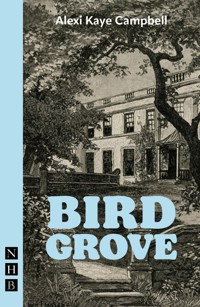
'As long as you only have one sort of person telling the stories, well then our world will just end up looking very like that one sort of person. It makes sense, doesn't it?' 1841. Mary Ann Evans is of marriageable age. Her father has recently moved with her to Bird Grove House, with the sole purpose of finding her a suitable husband. But Mary Ann's remarkable intellect and growing self-confidence are forming progressive new ideas in her mind; ideas that challenge her father's most strongly held beliefs. If she is to become the writer she has always dreamt of being, Mary Ann will have to break every societal convention expected of her. A funny and poignant exploration of family ties and self-determination, Alexi Kaye Campbell's play Bird Grove tells the untold story of the woman who was to become one of England's greatest writers: George Eliot. It premiered at Hampstead Theatre, London, in 2026, directed by Anna Ledwich.
Das E-Book können Sie in Legimi-Apps oder einer beliebigen App lesen, die das folgende Format unterstützen:
Seitenzahl: 131
Veröffentlichungsjahr: 2026
Ähnliche








Alexi Kaye Campbell
BIRD GROVE
NICK HERN BOOKS
London
www.nickhernbooks.co.uk
Contents
Original Production
Dedication
Epigraph
Characters
Bird Grove
About the Author
Copyright and Performing Rights Information
Bird Grove was first performed at Hampstead Theatre, London, on 13 February 2026. The cast was as follows:
HORACE GARFIELD
Jonnie Broadbent
ISAAC EVANS
Jolyon Coy
MARY ANN EVANS
Elizabeth Dulau
DOROTHEA
Katie Eldred
CHARLES BRAY
Tom Espiner
CARA BRAY
Rebecca Scroggs
MONSIEUR LAFONTAINE/ HUGO BARING
James Staddon
ROBERT EVANS
Owen Teale
MARIA
Sarah Woodward
Director
Anna Ledwich
Designer
Sarah Beaton
Lighting Designer
Matt Haskins
Sound Designer & Composer
Harry Blake
Co-Composer
Clara Pople
Movement
Chi-San Howard
Casting Director
Juliet Horsley CDG
To Janet
‘Family likeness has often a deep sadness in it. Nature, that great tragic dramatist, knits us together by bone and muscle, and divides us by the subtler web of our brains; blends yearning and repulsion; and ties us by our heart-strings to the beings that jar us at every movement.’
George Eliot, Adam Bede
Characters
MARY ANN EVANS, the young George Eliot, in her twenties
ROBERT EVANS, her father, in his sixties
ISAAC, her brother, in his thirties
HORACE GARFIELD, in his thirties
MARIA LEWIS, in her forties
MONSIEUR LAFONTAINE, in his fifties
CHARLES BRAY, in his fifties
CARA BRAY, in her forties
HUGO BARING, in his fifties
DOROTHEA, in her twenties
Setting
The play takes place entirely within the walls of Bird Grove, a large, middle-class house on the outskirts of Coventry in the years 1841/42 and 1849.
Bird Grove is a Georgian building.
Five of its ground-floor rooms must be visible to the audience during the play, at some points there are scenes being played simultaneously in more than one of the rooms. At other moments, when we are following the action in one room, the action in the other rooms freezes, and is in shadow.
The five rooms are:
The parlour
The dining room
The kitchen
Robert’s study
The entrance hallway, from which the staircase leads to the upstairs floor.
The design for any production of this play does not need to be literal, it can be more abstract, metaphorical.
A little like the house in a memory, or a dream.
This ebook was created before the end of rehearsals and so may differ slightly from the play as performed.
ONE
December, 1841.
In darkness, the harmonious sounds of a pastoral idyll: birds tweeting their morning song, the trickle of a running brook, a distant barking of dogs, a horse galloping across a field. A restful, soothing soundtrack.
Then, gradually, it begins to change. The birds start to sound distressed, and the gentle tweeting turns to something more agitated. Then new birds can be heard, predatory ones. Eagles or kestrels swooping down and attacking the robins and blue tits, the violent flapping of wings. The dogs are closer now and turn on each other – savage growling, barking, biting. The horse neighs in terror. A world at war with itself, deafening and terrible.
Then, suddenly, silence.
Lights up.
MARY ANN stands centre-stage, speaks directly to the audience.
MARY ANN. Do you not have days when you are aflame with all that you want to say, with all that you want to be? When you feel that all that simmering of mind and soul will reach a boiling point, and then combust and make your head explode? All that blood pulsating through every fibre of your body with these feelings – and your brain bristling with these thoughts!
Before another one arrives, and that other thought chastises you, and points at your egotistical ambition and calls you petty, and proud, and arrogant. For who are you to think you have any power? Who are you, but a plain, inconsequential girl, a provincial nobody, a young woman with ideas above her station in life and foolish dreams to be a writer, a sorry creature who has made the error of filling her mind with too much information, too much knowledge? Who do you think you are, Mary Ann Evans?
We move to Robert’s study:
ROBERT is sitting on a chair, polishing his boots. ISAAC hovers a little anxiously, looking out of the window; he is waiting for somebody.
ROBERT. Your sister has turned her mind to geology.
ISAAC. What on earth can a young woman have to do with geology? It is absurd.
ROBERT. No harm in it.
ISAAC. Unless it hinders her from the main task at hand. Let me remind you, Father, it is the sole reason you came to the area. Why else would one move to Coventry?
ROBERT. The only prospective husband the girl’s erudition could intimidate would be a fool, and she deserves better than that.
ISAAC. Which brings me to the reason for my impromptu visit.
ROBERT is done with the polishing; he bends over and starts to put on his boots, but it isn’t easy.
ROBERT. This Garfield boy.
ISAAC. Horace Garfield is a man, Father, and an excellent match. Is due to come into a substantial fortune. I bumped into him at market the other day, and he asked if he could drop by this afternoon – (He checks his pocket watch.) He should be arriving any minute. It is a matter of some urgency, I believe.
ROBERT. But, the timing is not perfect. Help me with my boots, will you, my cursed back.
ISAAC kneels down, gives him a hand.
ISAAC. The timing, Father?
ROBERT. We have visitors already. At least, your sister does. The Brays. And they have brought a Frenchman with them, with a beard that almost sweeps the floor.
ISAAC is flabbergasted.
ISAAC. The Brays of Rosehill? Charles Bray, the ribbon manufacturer?
ROBERT. And his wife, Cara, yes.
ISAAC. I must confess, Father, I am astounded that you should invite the Brays to Bird Grove.
ROBERT. Did you not hear what I said? They are your sister’s guests.
The boots are on, ROBERT stands, walks to the mirror. ISAAC picks up Robert’s waistcoat and jacket, helps him into them.
You do not like the Brays?
ISAAC. They are extreme freethinkers, Father, and entertain a whole manner of disreputable people at Rosehill, including, I am told from a reliable source, the socialist Robert Owen. If word gets around that Mary Ann is part of their coterie, I believe it would alienate any of the more sensible interested parties and all she’ll be left with are Chartists and Radicals. And I don’t believe either of those make good husbands.
Waistcoat and jacket are on, ROBERT takes one last look at himself in the mirror.
ROBERT. Let us at least try and look respectable.
ISAAC. Let’s. But, the timing is most unfortunate, you are correct in that. I do not think that having the Brays and their Frenchman here is helpful to us in the least. Perhaps they will not stay long.
The doorbell rings.
ROBERT. Ah, no doubt that is your eligible young man.
ISAAC. I shall fetch him.
ROBERT. Yes, do that, do that, then bring him in here.
ISAAC. You are too tolerant, Father.
ROBERT returns one last time to the mirror to comb his hair. ISAAC runs into the hallway. MARY ANN arrives at exactly the same time from the parlour room; they almost bump into each other.
MARY ANN. Isaac!
ISAAC. Mary Ann.
MARY ANN. I wonder who it is. You are expecting someone?
ISAAC. No. Yes. I mean, yes, I am.
MARY ANN. Whom are you expecting?
ISAAC. A man. I mean, a friend. A very fine man.
MARY ANN. Well, do join us for tea, if you like, my own friends are here. And very fine men are always welcome!
ISAAC. Splendid.
She is about to return to the parlour room, when he stops her.
Your visitors, how long are they staying, Mary Ann?
MARY ANN. I’m not sure, really. Miss Lewis and myself will be serving tea and the apple cake I made earlier, so a couple of hours I imagine, or thereabouts.
ISAAC. Two hours to eat a slice of apple cake? Are they slow eaters?
MARY ANN. What is the matter, Isaac?
ISAAC. Never mind. Just please ask the Brays to…
MARY ANN. To what, Isaac?
ISAAC. Just to keep to certain subjects… just to discuss, oh I don’t know, country walks, that sort of thing. They are big walkers, are they not? They must have lots of local walks to recommend.
MARY ANN. Doubtlessly.
ISAAC. Very good. My guest is always interested in country walks. Excellent!
The doorbell rings again, this time insistently.
Anyway, off you go, I shall open the door.
Perplexed, MARY ANN returns to the parlour room.
ISAAC opens the door, and HORACE GARFIELD is standing there, looking somewhat absurd.
Mr Garfield, how do you do?
HORACE. Not well, I’m afraid, not well at all.
ISAAC. I am sorry to hear it. What is the matter?
HORACE starts to take his coat, hat, scarf, and gloves off; ISAAC takes them one by one and hangs them.
HORACE. I was passing through Nuneaton last night, on my way back from Elmesthorpe, where I was visiting a cousin who is veritably purple with gout, when I was overcome with ravenous hunger. And so I stopped off at the Wild Boar, do you know it, lovely little inn on the edge of the green, and I indulged in a plate of venison and potatoes. The venison tasted very nice indeed, until about six o’clock this morning, when it decided to take revenge for being eaten. I shall omit the details, only to say it has been a relentless onslaught.
ISAAC. That’s most unpleasant for you, perhaps you ought to come back at another time? You must be feeling very uncomfortable.
HORACE. I cannot indulge the luxury of rescheduling, Mr Evans, I am due to meet my father this evening at seven o’clock, and would love to be able to share cheerful news with him. In fact, it is imperative. May I ask where your delightful sister is? Reading and writing, I suspect?
ISAAC. Ah, not quite, in fact she is entertaining some… acquaintances of hers in the parlour room, but perhaps it is best if you converse with my father beforehand?
HORACE. Of course, of course, how remiss of me, that is the right way around!
ISAAC. Would you like to… before I introduce you… use the… so you can be more comfortable?
HORACE. A kind offer but I think I will be alright for the time being. Mind over matter, you know.
ISAAC. Yes, of course, but I am sorry about the venison.
HORACE. Let’s discuss it no further.
ISAAC. Agreed! Follow me.
And he leads him into Robert’s study.
Father, this is Mr Horace Garfield, but I believe you know each other already.
ROBERT. From Trinity, yes, indeed.
ISAAC. This is my father, Robert Evans.
They shake hands, HORACE vigorously.
HORACE. It is a delightful church, is it not? And you, sir, are an exemplary sideman.
ROBERT. Thank you, I enjoy it, and it fills my free hours, now that I am retired.
ISAAC. My father is a pillar of the community, a veritable oak.
ROBERT frees his hand from HORACE’s grasp.
ROBERT. Enough of all that, Mr Garfield, would you care to join me in a drop of whisky, to put you in the festive spirit?
HORACE. It will do me good, Mr Evans, thank you.
ROBERT walks to the table and pours HORACE a whisky, hands it to him.
I believe your son, sir, may have communicated something of the reason I am here today.
ISAAC. I have, yes.
ROBERT. He has.
HORACE. Marvellous. So we can jump right in.
ROBERT. Into what, sir? A pond?
HORACE. You may be surprised by my urgency.
ROBERT. A little, yes.
HORACE. My father is dying, sir.
ROBERT. Ah, yes, I believe you mentioned that in the summer.
HORACE. He has been dying for the last seven years. But this time it is serious.
ROBERT. I am happy to hear it.
HORACE. I beg your pardon?
ROBERT. No, what I mean is he will no longer be suffering. To suffer for seven years must be a test on his patience. And yours. So for him to be dying at last, after all that dying, will be a relief, I imagine. So, I am happy he will no longer be dying. I mean, suffering.
HORACE. In any case, I am in an unfortunate pickle.
ROBERT. What sort of a pickle?
HORACE. It is to do with my inheritance. My father is in the process of writing a will. He has been preparing it for a few years, now.
ROBERT. Seven, I imagine.
HORACE. And he is of a temperamental character and flexible opinions. So you understand, there have been constant alterations to the document.
ROBERT. That must be a cause of great anxiety to you.
HORACE. I cannot lie, Mr Evans, it is most distressing. Especially the latest draft which is iniquitous and cruel in the extreme.
ROBERT. It is not in your favour?
HORACE. Quite the opposite. It favours my younger brother, Hector, whose name is appropriate to his character. Hector hectors from morning to night, and is a bully to boot. And rapacious for property, and money.
ROBERT. You are not close, then?
HORACE. I loathe the man, but that is by the by. My father is threatening to leave Hector all of his fortune and his estate, Carrington House, which has been in the family since the time of Charles the First.
ROBERT. But you are the first-born.
HORACE. And that is the iniquity. My father, whose days are numbered, I believe –
ROBERT. We’ll take his word for it.
HORACE. Is suddenly attaching conditions to his will. Namely, that I shall only be the recipient of my rightful fortune should I find myself a wife and procreate.
ROBERT. So, you are in a hurry to do both.
HORACE. My brother has three children – nasty little brats, I hasten to add – and my father expects me to work towards matching my brother’s output.
ROBERT. That should keep you busy.
HORACE. My marriage to a suitable woman would reassure my father that I have begun the process in earnest and hopefully inspire him to alter his will for the final time before his demise and to do so to my advantage.
ROBERT. And this is where my Mary Ann enters the picture.
HORACE. She is a delightful creature. Modest, and well-mannered and altogether perfect for a man like me. I shall look after her, rest assured.
ISAAC. It is a good match, Father.
ROBERT. Allow me though to play the part of devil’s advocate.
HORACE. Please.
ROBERT. The impetus of your necessity to find a wife is urgent and compelling.
HORACE. It is.
ROBERT. May not that impetus be colouring your judgement and overwhelming your decision-making? Maybe to the extent that should one introduce you to… oh, I don’t know, let’s say an available horse, a mare I’ll grant you, decked in a lace dress, and wearing a string of pearls around her neck, you should be inclined to take her as your wife?
HORACE. Sir!
ISAAC. Father!
ROBERT. I am merely suggesting that your driving need to accomplish your objective in matters of inheritance has perhaps clouded your discernment and persuaded you that my beloved daughter is a good match for you, when indeed there are not many criteria to fulfil the role?
HORACE. Mr Evans, I protest, I am smitten.
ROBERT. You are?
HORACE. How joyful it is when life surprises you. It surprised me when I first laid my eyes on your daughter on the steps of the church.
ROBERT. Did it indeed?
HORACE. All I can say is that it was a miracle, the complete confluence of my economic and romantic aspirations.
ROBERT. We should notify my daughter of this miraculous confluence, as it concerns her.
HORACE. It is the purpose of my visit this afternoon, Mr Evans.
ISAAC. Good man.




