


Erhalten Sie Zugang zu diesem und mehr als 300000 Büchern ab EUR 5,99 monatlich.
- Herausgeber: Nick Hern Books
- Kategorie: Poesie und Drama
- Serie: NHB Modern Plays
- Sprache: Englisch
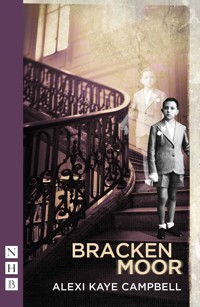
A boldly theatrical tale of grief and denial, set against the economic crisis of the 1930s. After years apart, two families come together to rediscover their lost friendship. Instead, they conjure up the spirit of a buried tragedy. Alexi Kaye Campbell's play Bracken Moor was first performed at the Tricycle Theatre, London, in June 2013, in a co-production with Shared Experience.
Sie lesen das E-Book in den Legimi-Apps auf:
Seitenzahl: 115
Veröffentlichungsjahr: 2013
Das E-Book (TTS) können Sie hören im Abo „Legimi Premium” in Legimi-Apps auf:
Ähnliche
















Alexi Kaye Campbell
BRACKEN MOOR
NICK HERN BOOKS
London
www.nickhernbooks.co.uk
Contents
Title Page
Original Production
Dedication
Acknowledgements
Epigraph
Characters
Bracken Moor
About the Author
Copyright and Performing Rights Information
Bracken Moor was first performed at the Tricycle Theatre, London, in a co-production between Shared Experience and the Tricycle Theatre, on 6 June 2013, with the following cast:
JOHN BAILEY/DR GIBBONS
Antony Byrne
HAROLD
Daniel Flynn
EILEEN
Natalie Gavin
ELIZABETH
Helen Schlesinger
GEOFFREY
Simon Shepherd
TERENCE
Joseph Timms
VANESSA
Sarah Woodward
COMPANY
Bili Keogh & Jamie Flatters
Director
Polly Teale
Designer
Tom Piper
Lighting Designer
Oliver Fenwick
Composer & Sound Designer
Jon Nicholls
Movement Director
Liz Ranken
For Angie
Acknowledgements
With thanks to Juliet Gardiner, Rosemary Preece at the National Coal Mining Museum, Susie Sainsbury, and everyone at the National Theatre Studio.
Alexi Kaye Campbell
We must go down into the dungeons of the heart,
To the dark places where modern mind imprisons
All that is not defined and thought apart.
We must let out the terrible creative visions.
Return to the most human, nothing less
Will teach the angry spirit, the bewildered heart,
The torn mind, to accept the whole of its duress,
And pierced with anguish, at last act for love.
May Sarton, 1912–1995
Characters
EDGAR PRITCHARD, twelve
JOHN BAILEY, fifties
HAROLD PRITCHARD, late forties/early fifties
EILEEN HANNAWAY, early twenties
TERENCE AVERY, twenty-two
VANESSA AVERY, late forties
GEOFFREY AVERY, fifties
ELIZABETH PRITCHARD, late forties
DR GIBBONS, fifties
The parts of John Bailey and Dr Gibbons should be played by the same actor.
The play takes place entirely in the drawing room of the Pritchards’ home on the hills overlooking a mining village in Yorkshire in December 1937.
This ebook was created before the end of rehearsals and so may differ slightly from the play as performed.
With the house lights still up, the actors playing HAROLD and JOHN walk on stage. The actor playing HAROLD is carrying his shoes, not wearing them. He sits in a chair and puts them on, tying the laces. He then stands and buttons up his waistcoat.
Meanwhile, the actor playing JOHN stands in front of a mirror which happens to be positioned somewhere on stage as part of the set and combs his hair.
We watch the ritual of two actors in the last moments of preparation before a performance. Then, when their checks are complete, they both take their starting positions and look at each other as if to confirm that they are now both ready for the play to begin.
Blackout.
We can hear EDGAR’s voice but we can’t see him. The voice of an anguished child in the dark.
EDGAR. Mother? Father?
Pause.
Mother, where are you? Father. Father!
Pause.
Mother, Father, please. I’m scared.
Pause.
Please, Father, please!
Pause.
Mother. Father. Where are you?
ACT ONE
Scene One
Lights up.
The drawing room of the Pritchards’ home in Yorkshire. This is the main room in a grand old house of an affluent, land-owning family. It is a large, imposing room that announces wealth but not great style. It is masculine and somewhat oppressive in its dark hues and in its scale. The furniture too is heavy and graceless though undoubtedly expensive. The overall impression is one of formality but little joy; as if, in some way, the house has become unloved over the years.
It is an evening in December 1937.
HAROLD PRITCHARD stands in the middle of the room. He is a man of magnetic and intimidating presence – handsome in an austere way and confident with the knowledge of his position in the world. He is smartly dressed.
Opposite him stands JOHN BAILEY, a well-built man who speaks in a strong Yorkshire accent and is wearing a well-worn suit and overcoat that have been exposed to the elements.
JOHN. I urge you to reconsider.
Pause.
If we let Ramshaw Drift go – if you decide to close it – the village will be decimated.
Pause.
There is no alternative work – nothing left for these men to do. And they have given their best – as have their fathers and their fathers’ fathers before them – to help make this industry the proudest Britain has to offer. But of course you know this already, sir, it is not my business to educate you on the matter, merely to remind you of the necessity to reflect on their dedication over the years and on our duty to honour it.
HAROLD. And you do so to great effect, Mr Bailey.
JOHN. Only because I have lived with these people, Mr Pritchard, I am one of them.
HAROLD. Indeed you are.
JOHN. I have known their toil and I recognise them by the sweat of their brow, the strength of their hands and their knowledge of the land.
HAROLD. You are becoming poetical.
JOHN. It is not a pretence, sir. If I speak with some passion it is only because I feel what I say.
HAROLD. I do not doubt your sincerity, Mr Bailey, I only question the way you are using language in order to persuade. And in that effort at least, it may prove to be a waste of your creative endeavours. I’m afraid the situation demands less poetry and more pragmatism; those, unfortunately, are the times in which we live.
JOHN. I stopped by Ramshaw Drift on my way here, sir. There was a problem with one of the cutters – the one I mentioned to you last week, do you remember? – and so I needed to inspect it and ascertain that it was in working order once again, which indeed it was.
HAROLD. Well, that’s reassuring.
JOHN. And as I was leaving I noticed Alfie Shaw walking homewards. His shift had just finished and I caught sight of him by the edge of the road and asked him if he wanted a lift in the motor.
HAROLD. Good man.
JOHN. Alfie Shaw, sir – he was the red-haired lad who impressed us all a couple of autumns ago when he helped pull out that poor boy who broke his leg on his very first day. Brought him out on his shoulders like an Achilles.
HAROLD. And now you are invoking mythology.
JOHN. So I drove him to his cottage and he asked me in for a quick brew. I wouldn’t usually have taken the time, Mr Pritchard, only I was keen not to give offence and made myself promise that it would be a quick one and as I wasn’t expected here till six and a half o’clock I scurried in for a cup of tea.
HAROLD. You did well, Mr Bailey.
JOHN. And it was then that I remembered that Alfie Shaw was recently widowed. His young wife – a pretty thing she was though always weak in constitution – succumbed to consumption a year or so ago, not a day older than twenty-five, I’m sure. And as I’m having my tea I notice something moving around in the corner of my eye and in the doorway I catch three little girls – seven, five and three years of age I’d guess and pretty things all of them with their father’s strawberry hair and his freckles too but thin like their mother, nay, more than thin, skin and bones, Mr Pritchard, skin and bones.
HAROLD. You are painting an evocative picture, Mr Bailey, but to what purpose? I must compel you to reach your point, I have guests who have just arrived from London and so my time is pressured.
JOHN. Skin and bones even with their father working and his mother, old Mrs Shaw helping him out no doubt though that’s another mouth to feed and the girls’ eyes full of hope and worry but there I was sitting in that cold house wondering, Mr Pritchard, what will become of them if you should go ahead and take his job from Alfie Shaw and another one hundred and forty men like him, what should become of those poor, helpless creatures standing in the doorway.
Pause. HAROLD moves over to the drinks cabinet and pours himself a Scotch.
HAROLD. Do you read the papers, Mr Bailey?
JOHN. When I have the time, Mr Pritchard, when I have the time.
HAROLD. Of course. But you have, I assume, over the last few months caught enough of a glimpse of them to formulate an impression of what I would call, the bigger picture?
JOHN. And what would the bigger picture be, sir?
HAROLD. The one, Mr Bailey, which often contradicts our more sentimental natures.
JOHN. Does it indeed?
HAROLD. But which we have to heed in order to survive. Not only as individuals but as communities and nations. And which now dictates that sacrifices need to be made.
JOHN. On that we are both agreed, Mr Pritchard.
HAROLD. Good.
JOHN. What we may not be in agreement about is the nature of the sacrifices that are demanded and who they are demanded of.
HAROLD. You are aware, Mr Bailey, that our country – indeed most of the civilised world – is only now beginning to emerge from the worst economic crisis it has ever known.
JOHN. So they say.
HAROLD. But that our industry – the one we have both given our lives to for better or worse, continues to be one of the main casualties of this crisis.
JOHN. I am aware of the challenges we all face.
HAROLD. Demand is down by fifteen per cent this year, Mr Bailey, and that is not my doing.
Surely you have heard that the Fitzwilliams have recently let more than two thousand of their men go – not a mere one hundred and forty but two thousand, Mr Bailey – in a concerted effort to keep the business going.
JOHN. To keep their costs down, sir, yes.
HAROLD. These are hard times, Mr Bailey, and so perhaps you need the clarity of mind to comprehend that closing Ramshaw Drift for a few years until demand picks up again is not a strange fancy of mine. I am simply the unfortunate man on whose shoulders the unenviable task has fallen of making these difficult but necessary decisions and believe me when I say that I gain little enjoyment from it.
JOHN. But there is an alternative.
Pause.
You may call me presumptuous but I have been working hard at trying to find it and I think I may have finally stumbled upon it.
HAROLD. Working hard at what, my man?
JOHN hurriedly takes out a few sheets of paper from his inside pocket.
JOHN. I was up all night thrashing ideas about and putting some of them in writing. But the solution I think I have arrived at will mean that we can hold on to those men whilst only marginally affecting the profits.
HAROLD. My guests will be down at any moment, Mr Bailey.
JOHN. It is to do with the forthcoming purchase of the new conveyors for the Hook Hill mine. I do believe that they haven’t been paid for yet. I spoke to Mr Milson, the accountant and he informed me that this was the case. He implied that should it all go to plan the transaction should proceed at some point next week and that the whole thing had been delayed because of the late arrival of some of the machinery from America.
HAROLD. You had no business talking to Mr Milson, sir.
JOHN. Of course I understand the positive contribution that this advanced technology will have on the efficacy of the mines in general, speeding up the whole process of extraction.
HAROLD. That is the intention, yes.
JOHN. But if perhaps we could postpone this investment for another two years we could keep the men in full employment whilst not severely compromising the quantity of our output.
HAROLD. And how would that be possible, Mr Bailey?
JOHN. Close Ramshaw Drift if you have to, Mr Pritchard, but re-employ the men – all one hundred and forty of them at nine shillings a shift – two less than what they are currently earning – on only five shifts each at Hook Hill. Those extra shifts will help speed up the output without resorting to the new conveyors and if my calculations are precise the damage to the profit margin will be minimal, perhaps a few hundred short per annum.
HAROLD. Is that all?
JOHN. I’ve spoken to the men and they all without exception agreed to take the cut in wages and shifts as a means of holding on to their employment. I also called a meeting with the miners who are already employed at Hook Hill and they are willing to lose a shift each a week in order to help their colleagues from Ramshaw Drift hold on to their jobs.
HAROLD. I begin to see why you are not a man of business, Mr Bailey.
JOHN. So really I suppose what I am suggesting is that you deliberately delay the acquisition of the new conveyors until perhaps a more appropriate time. Perhaps when things are looking a little brighter and the demand picks up again.
HAROLD. You’re asking me to delay progress.
JOHN. Only perhaps to broaden the definition of that word.
HAROLD. My dear man, I honestly applaud the noble nature of your enterprise and the zeal with which you have just communicated it. Alfie Shaw and the other men have a champion in you, there’s no denying.
JOHN. I am doing my duty by them, that’s all.
HAROLD. But perhaps they would be better served by someone with fewer ideals and just a little more common sense.
JOHN. I am simply asking you –
HAROLD. You would rather I kept my business securely fastened to archaic methods thus making it wholly uncompetitive and in the long run jeopardising the jobs of many more than a hundred and forty.
JOHN. I repeat, sir, that productivity will not be compromised. The men will work fewer shifts for less money that is all.
HAROLD. You are asking me to sabotage my business in order to quench a sentimental yearning and dare I say it aspirations towards some type of moral heroism.
JOHN. Those are not my motives, I assure you.
HAROLD. Thank you for sharing your scheme with me and I only wish I could say I will give it serious consideration.




