


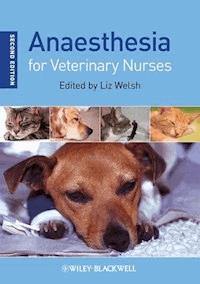
Anaesthesia for Veterinary Nurses E-Book
64,99 €
Mehr erfahren.
- Herausgeber: John Wiley & Sons
- Kategorie: Fachliteratur
- Sprache: Englisch
Anaesthesia for Veterinary Nurses has been written specifically for veterinary nurses by veterinary nurses and veterinary surgeons. Easy to read and understand, it provides detailed coverage of the physiological, pharmacological and physical aspects of anaesthesia. Fully updated and reflecting recent changes to veterinary nursing qualifications, this second edition is now also illustrated in colour.
Sedation and anaesthesia are a crucial part of veterinary practice, and the protocols and methods involved are often complex and vary considerably from animal to animal. In addition to cats and dogs, Anaesthesia for Veterinary Nurses contains detailed sections on rabbits, rodents, birds, reptiles, and larger animals.
Suitable for those with or without previous subject knowledge, this book is ideal for quick reference by veterinary nurses and technicians in practice, or for more substantial study by students.
• Reflects recent changes to veterinary nursing qualifications, current terminology and drugs in use.
• Includes chapters on small mammals, birds, reptiles, and large animals.
• Now illustrated with colour photographs.
Sie lesen das E-Book in den Legimi-Apps auf:
Seitenzahl: 639
Veröffentlichungsjahr: 2013
Ähnliche




















Contents
Contributors
Preface
Acknowledgements
1 The Role of the Veterinary Nurse in Anaesthesia
LEGISLATION GOVERNING VETERINARY NURSES
DEFINITIONS IN ANAESTHESIA
PRINCIPLES OF ANAESTHESIA
HEALTH AND SAFETY ASPECTS OF ANAESTHESIA
MORTALITY
REFERENCES
2 Physiology Relevant to Anaesthesia
RESPIRATORY SYSTEM
CARDIOVASCULAR SYSTEM
KIDNEYS AND CONTROL OF FLUID
LIVER
NERVOUS SYSTEM
OVERVIEW OF AVIAN RESPIRATORY PHYSIOLOGY
REPTILE PHYSIOLOGY RELEVANT TO ANAESTHESIA
REFERENCES AND FURTHER READING
3 Preoperative Assessment and Preparation of the Patient
HISTORY
PHYSICAL EXAMINATION
THE SIGNIFICANCE OF ABNORMALITIES
PREOPERATIVE MANAGEMENT OF SYSTEMIC DISEASE
GERIATRIC PATIENTS
PREOPERATIVE BLOOD TESTS
GENERAL PREPARATION GUIDELINES AND ADMISSION
SUMMARY
REFERENCES AND FURTHER READING
4 Anaesthetic Machines and Ventilators
THE ANAESTHETIC MACHINE
VENTILATORS
PHYSICAL PRINCIPLES
SUMMARY
FURTHER READING
5 Breathing Systems and Airway Management
BREATHING SYSTEMS
AIRWAY MANAGEMENT
SUMMARY
REFERENCES AND FURTHER READING
6 Anaesthetic Drugs
PREMEDICATION OR SEDATION
INDUCTION OF ANAESTHESIA
MAINTENANCE OF ANAESTHESIA
FURTHER READING
7 Analgesia
PATHOPHYSIOLOGY OF PAIN PERCEPTION
ANALGESIC DRUGS
SUMMARY
FURTHER READING
8 Intravenous Access and Fluid Therapy
FLUID THERAPY FOR ANAESTHETISED PATIENTS
INTRAVENOUS FLUID SELECTION
FLUID ADMINISTRATION
FLUID DELIVERY SYSTEMS
MONITORING THE CLINICAL RESPONSE TO FLUID THERAPY
SUMMARY
REFERENCES AND FURTHER READING
9 Monitoring the Anaesthetised Patient
CENTRAL NERVOUS SYSTEM FUNCTION
CARDIOVASCULAR FUNCTION
RESPIRATORY FUNCTION
MONITORING TEMPERATURE
MONITORING SURGERY AND FLUID THERAPY (SEE CHAPTER 8 )
MONITORING BLOOD GLUCOSE
MONITORING NEUROMUSCULAR BLOCKADE
MONITORING THE ANAESTHETIC EQUIPMENT AND GENERAL MANAGEMENT
SUMMARY
REFERENCES AND FURTHER READING
10 Nursing the Patient in Recovery
FACTORS AFFECTING THE RECOVERY PERIOD
RECOVERY AREA
MONITORING THE PATIENT IN RECOVERY
CONCLUSION
REFERENCES AND FURTHER READING
11 Cardiopulmonary Cerebral Resuscitation and Other Emergencies
CARDIOPULMONARY ARREST
OTHER EMERGENCIES AND ANAESTHETIC COMPLICATIONS
SUMMARY
REFERENCES AND FURTHER READING
12 Rabbits, Ferrets and Rodent Anaesthesia
INTRODUCTION
ASPECTS OF CHEMICAL RESTRAINT
PRE-ANAESTHETIC PREPARATION
INDUCTION AND MAINTENANCE OF ANAESTHESIA
ADDITIONAL SUPPORTIVE THERAPY
MONITORING ANAESTHESIA
RECOVERY AND ANALGESIA
REFERENCES AND FURTHER READING
13 Avian Anaesthesia
HANDLING BIRDS
CHEMICAL RESTRAINT
ADDITIONAL SUPPORTIVE THERAPY
MONITORING ANAESTHESIA
RECOVERY AND ANALGESIA
REFERENCES AND FURTHER READING
14 Reptile Anaesthesia
INITIAL RESTRAINT OF THE REPTILE PATIENT
ASPECTS OF CHEMICAL RESTRAINT
ADDITIONAL SUPPORTIVE THERAPY
MONITORING ANAESTHESIA
RECOVERY AND ANALGESIA
REFERENCES AND FURTHER READING
15 Large Animal Anaesthesia
EQUINE ANAESTHESIA
RUMINANT ANAESTHESIA
ANAESTHESIA OF PIGS
SUMMARY
REFERENCES AND FURTHER READING
Index
This edition first published 2009
First edition published 2003
© 2009, 2003 by Blackwell Publishing Ltd
Blackwell Publishing was acquired by John Wiley & Sons in February 2007. Blackwell’s publishing programme has been merged with Wiley’s global Scientific, Technical, and Medical business to form Wiley-Blackwell.
Registered office
John Wiley & Sons Ltd, The Atrium, Southern Gate, Chichester, West Sussex, PO19 8SQ, United Kingdom
Editorial offices
2121 State Avenue, Ames, Iowa 50014-8300, USA
9600 Garsington Road, Oxford, OX4 2DQ, United Kingdom
For details of our global editorial offices, for customer services and for information about how to apply for permission to reuse the copyright material in this book please see our website at www.wiley.com/wiley-blackwell.
The right of the author to be identified as the author of this work has been asserted in accordance with the Copyright, Designs and Patents Act 1988.
All rights reserved. No part of this publication may be reproduced, stored in a retrieval system, or transmitted, in any form or by any means, electronic, mechanical, photocopying, recording or otherwise, except as permitted by the UK Copyright, Designs and Patents Act 1988, without the prior permission of the publisher.
Wiley also publishes its books in a variety of electronic formats. Some content that appears in print may not be available in electronic books.
Designations used by companies to distinguish their products are often claimed as trademarks. All brand names and product names used in this book are trade names, service marks, trademarks or registered trademarks of their respective owners. The publisher is not associated with any product or vendor mentioned in this book. This publication is designed to provide accurate and authoritative information in regard to the subject matter covered. It is sold on the understanding that the publisher is not engaged in rendering professional services. If professional advice or other expert assistance is required, the services of a competent professional should be sought.
Library of Congress Cataloging-in-Publication Data
Anaesthesia for veterinary nurses / edited by Liz Welsh. – 2nd ed.
p. ; cm.
Includes bibliographical references and index.
ISBN 978-1-4051-8673-5 (pbk. : alk. paper) 1. Veterinary anesthesia. I. Welsh, Liz.
[DNLM: 1. Anesthesia–nursing. 2. Anesthesia–veterinary 3. Nurse Anesthetists.
SF 914 A532 2009]
SF914.A48 2009
636.089′796–dc22
2009021832
A catalogue record for this book is available from the British Library.
1 2009
Contributors
Joan Freeman Dip AVN(Surg)
Northwest Surgeons Ltd, Delamere House, Ashville Point, Sutton Weaver, Cheshire, WA7 3FW
Dr Mary Fraser BVMS PhD CertVD PGCHE FHEA CBiol MIBiol MRCVS
Girling & Fraser Ltd, Unit 3 Breadalbane Terrace, Perth, PH2 8BY
Dr Joan Duncan BVMS PhD DipRCPath CertVR MRCVS
NationWide Laboratories, 23 Mains Lane, Poulton-le-Fylde, FY6 7LJ
Dr Craig Johnson BVSc PhD DVA DipECVA MRCA MRCVS
Institute of Veterinary, Animal and Biomedical Sciences, Massey University, Private Bag 11 222, Palmerston North, New Zealand
Derek Flaherty BVMS, DVA, DipECVAA, MRCA, MRCVS, FHEA
University of Glasgow Faculty of Veterinary Medicine, Bearsden Road, Glasgow, G61 1QH
Dr Liz Welsh PhD, BVMS, MRCVS
Kate-Mora, Low Barmore, Stoneykirk, Stranraer, DG9 9BP
Louise Clark BVMS, CertVA, Dipl. ECVA, MRCVS
Davies Vet Specialists, Manor Farm Business Park, Higham Gobion, Hitchin, Herts, SG5 3HR
Nichole Hill DipAVN(surg)VN
Davies Vet Specialists, Manor Farm Business Park, Higham Gobion, Hitchin, Herts, SG5 3HR
Kirstin Beard VN DipAVN(Surg)VTS(ECC)
University of Edinburgh Hospital for Small Animals, Easter Bush Veterinary Centre, Roslin, Midlothian, EH25 9RG
Simon Girling BVMS (Hons) DZooMed CBiol MIBiol MRCVS
Girling & Fraser Ltd, Unit 3 Breadalbane Terrace, Perth, PH2 8BY
Fiona Strachan BVMS Cert VA MRCVS
University of Edinburgh Hospital for Small Animals, Easter Bush Veterinary Centre, Roslin, Midlothian, EH25 9RG
Preface
There have been many changes in veterinary medicine since the first edition of Anaesthesia for Veterinary Nurses was published in 2003. There is an increasing number of specialist referral hospitals, and the speciality of emergency and critical care has blossomed in the United Kingdom. However, still central to much that is achieved in veterinary practice is the ability to sedate and anaesthetise patients safely. The protocols and methods involved in veterinary anaesthesia are often complex and vary considerably from patient to patient.
The veterinary nurse has a pivotal role in anaesthesia, being directly involved before, during and after the anaesthetic period. I hope that this fully updated edition of Anaesthesia for Veterinary Nurses will help those starting out in their career to navigate the essential physiological, pharmacological and physical principles of anaesthesia, while acting as a useful reference to those dealing with the daily challenges of anaesthetising patients. In addition, I hope this book provides a platform for the increasing number of nurses specialising in the field of anaesthesia and undertaking further qualifi cations to advance their knowledge in this challenging and ever-changing discipline.
Acknowledgements
I would like to thank all my colleagues who contributed to the second edition of Anaesthesia for Veterinary Nurses. In addition, I would like to extend my continued thanks to Janis Hamilton and Janice McGillivray who authored and co-authored chapters in the first edition. As ever, the staff at Wile-Blackwell have been patient, supportive and forgiving, and to them I am eternally grateful.
1
The Role of the Veterinary Nurse in Anaesthesia
Joan Freeman
Veterinary surgeons must work within the legal constraints of the Veterinary Surgeons Act (1966). They must also abide by the rules of conduct for veterinary surgeons (‘Guide to Professional Conduct’) set up by the Royal College of Veterinary Surgeons (RCVS), the professional body in the United Kingdom. Veterinary surgeons can be found negligent and guilty of malpractice, not only as a consequence of their own actions but also for the injurious actions of an employee, including veterinary nurses and student veterinary nurses. Therefore, veterinary nurses are not entitled to undertake either medical treatment or minor surgery independently. Nevertheless, veterinary nurses have a duty to safeguard the health and welfare of animals under veterinary care and, as anaesthesia is a critical procedure, the need for knowledge and an understanding of the procedures involved in anaesthesia cannot be overestimated.
LEGISLATION GOVERNING VETERINARY NURSES
Student veterinary nurses who achieve an S or NVQ level 3 award in veterinary nursing, or who have passed the relevant examinations for a degree in veterinary nursing, or passed the RCVS Part II veterinary nursing examination in the United Kingdom and fulfill the practical training requirements at an approved centre, are entitled to have their names entered on a list of veterinary nurses maintained by the RCVS and to describe themselves as listed veterinary nurses (RCVS, 2002). In September 2007, the non-statutory Register for veterinary nurses opened. Any veterinary nurse that qualified on or after the 1st January 2003 is automatically entered on the register. Veterinary nurses that qualified prior to this date may agree to enter the register or may choose to remain on the non-registered part of the list.
The Veterinary Surgeons Act (1966) states that only a veterinary surgeon may practise veterinary surgery. Exceptions to this rule apply solely to listed veterinary nurses, and are covered under the 1991 amendment to Schedule 3 of the Act.
The exceptions are:
Veterinary nurses (or any member of the public) may administer first aid in an emergency as an interim measure until a veterinary surgeon’s assistance can be obtained.
A listed veterinary nurse may administer ‘any medical treatment or any minor surgery (not involving entry into a body cavity) to a companion animal’ under veterinary direction.
The animal undergoing medical treatment or minor surgery must be under the care of the veterinary surgeon and he or she must be the employer of the veterinary nurse.
The Act does not define ‘any medical treatment or any minor surgery’ but leaves it to the individual veterinary surgeon to interpret, using their professional judgment. Thus veterinary nurses should only carry out procedures that they feel competent to perform under the direction of a veterinary surgeon, and the veterinary surgeon should be available to respond if any problems arise. Recent changes to the Veterinary Surgeons Act 1966 (Schedule 3 amendment) Order 2002 now entitles listed veterinary nurses to perform nursing duties on all species of animal, not just companion animals, and in addition allows student veterinary nurses to perform Schedule 3 tasks during their training, provided they are under the direct, continuous and personal supervision of either a listed veterinary nurse (Figure 1.1) or veterinary surgeon.
Registered veterinary nurses (RVNs) accept both responsibility and accountability for their actions. Consequently, RVNs are expected to demonstrate their commitment by keeping their skills and knowledge up to date through mandatory continuing professional development and following the Guide to Professional Conduct for Veterinary Nurses (RCVS, 2007a). Equally it is important that veterinary nurses acknowledge their limitations and, if relevant, make these known to their employer.
Veterinary nurses receive training in many procedures and should be competent to carry out the following under the 1991 amendment to Schedule 3 of the Veterinary Surgeons Act (1966):
Administer medication (other than controlled drugs and biological products) orally, by inhalation, or by subcutaneous, intramuscular or intravenous injection.
Administer other treatments such as fluid therapy, intravenous and urethral catheterisation; administer enemas; application of dressings and external casts; assisting with operations and cutaneous suturing.
Prepare animals for anaesthesia and assist with the administration and termination of anaesthesia.
Collect samples of blood, urine, faeces, skin and hair.
Take radiographs.
Figure 1.1 A listed veterinary nurse supervising a veterinary nurse trainee during a clinical procedure.
The veterinary surgeon is responsible for the induction and maintenance of anaesthesia and the management to full recovery of animals under their care. The veterinary surgeon alone should assess the fitness of the animal for anaesthesia, select and plan pre-anaesthetic medication and a suitable anaesthetic regime, and administer the anaesthetic if the induction dose is either incremental or to effect. In addition, the veterinary surgeon should administer controlled drugs such as pethidine and morphine. However, provided the veterinary surgeon is physically present and immediately available, a listed veterinary nurse may:
administer the selected pre-anaesthetic medication;
administer non-incremental anaesthetic agents;
monitor clinical signs;
maintain an anaesthetic record;
maintain anaesthesia under the direct instruction of the supervising veterinary surgeon.
In 2005 the RCVS Council proposed that only a veterinary nurse or a student veterinary nurse should carry out maintenance and monitoring of anaesthesia. However in 2006 the Advisory Committee decided that further evidence was needed to justify this advice. As of October 2007 an advice note on the RCVS website states that, ‘the most suitable person to assist a veterinary surgeon to monitor and maintain anaesthesia is a veterinary nurse or under supervision, a student veterinary nurse’ (RCVS, 2007b).
DEFINITIONS IN ANAESTHESIA
Many different terms are used in anaesthesia and it is important to be familiar with those listed in Table 1.1
PRINCIPLES OF ANAESTHESIA
The purposes of anaesthesia are:
To permit surgical or medical procedures to be performed on animals. The Protection of Animals (Anaesthetics) Acts 1954 and 1964 state that:
carrying out of any operation with or without the use of instruments, involving interference with the sensitive tissues or the bone structure of an animal, shall constitute an offence unless an anaesthetic is used in such a way as to prevent any pain to the animal during the operation.
To control pain.
To restrain difficult patients. Patients may need to be restrained for radiography, bandage or cast application, etc.
To facilitate examination by immobilising the patient. Anaesthesia and sedation allow difficult animals to be restrained and handled, reducing the risk of injury to both staff and patients.
To control status epilepticus in animals. Diazepam and phenobarbital may be injected to control status epilepticus. Low doses of propofol administered by continuous infusion may also be used for this purpose.
To perform euthanasia. Euthanasia in dogs and cats is performed using concentrated anaesthetic agents.
Types of a naesthesia
General anaesthesia is the most commonly used type of anaesthesia in small animals. However it is important for veterinary nurses to understand and be familiar with local and regional anaesthetic techniques.
Table 1.1 Terms used in anaesthesia.
Term
Definition
Anaesthesia
The elimination of sensation by controlled,reversible depression of the nervous system
Analeptic
Central nervous system stimulant, e.g. doxapram
Analgesia
A diminished or abolished perception of pain
General anaesthesia
The elimination of sensation by controlled, reversible depression of the central nervous system. Animals under general anaesthesia have reduced sensitivity and motor responses to external noxious stimuli
Hypnosis
Drug-induced sleep. Originally hypnosis was considered a component of anaesthesia along with muscle relaxation and analgesia, however human patients administered hypnotics could recall events when apparently in a state of anaesthesia
Local anaesthesia
The elimination of sensation from a body part by depression of sensory and/or motor neurons in the peripheral nervous system or spinal cord
Narcosis
Drug-induced sedation or stupor
Neuroleptanalgesia and neuroleptanaesthesia
Neuroleptanalgesia is a state of analgesia and indifference to the surroundings and manipulation following administration of a tranquilliser or sedative with an opioid. The effects are dose dependent and high doses can induce unconsciousness (neuroleptanaesthesia), permitting surgery
Pain
An unpleasant sensory or emotional experience associated with actual or potential tissue damage
Pre-emptive analgesia
Administering analgesic drugs before tissue injury to decrease postoperative pain
Sedative, sedation Tranquilliser, tranquillisation Neuroleptic Ataractic
These terms are used interchangeably in veterinary medicine. The terms refer to drugs that calm the patient, reduce anxiety and promote sleep. However, they do not induce sleep as hypnotics do, and although animals are more calm and easier to handle they may still be roused
General a naesthesia
General anaesthesia is the elimination of sensation by controlled, reversible depression of the central nervous system. Animals under general anaesthesia have reduced sensitivity and motor responses to external noxious stimuli.
The ideal general anaesthetic would produce these effects without depression of the respiratory or cardiovascular systems, provide good muscle relaxation, and be readily available, economical, non-irritant, stable, non-toxic and not depend on metabolism for clearance from the body. Unfortunately, such an agent is not available, but a balanced anaesthetic technique can be employed using more than one drug to achieve the desired effects of narcosis, muscle relaxation and analgesia. This approach has the added advantage that the dose of each individual agent used may be reduced and consequently the side effects of each agent also tend to be reduced.
General anaesthetic agents may be administered by injection, inhalation or a combination of both techniques. The subcutaneous, intramuscular or intravenous routes may be used to administer injectable anaesthetics. In some species the intraperitoneal route is also used. The safe use of injectable agents depends on the calculated dose being based on the accurate weight of the animal. Propofol and alphaxalone (Alfaxan®) are commonly used intravenous agents; ketamine is a commonly used intramuscular agent, although it may be administered subcutaneously. Inhalational anaesthetic agents may be either volatile agents or gases and administered in an induction chamber, by mask or by tracheal intubation. Isoflurane, sevoflurane and nitrous oxide are commonly used in small animals.
Local a naesthesia
Local anaesthesia is the elimination of sensation from a body part by depression of sensory and/or motor neurons in the peripheral nervous system or spinal cord. Local anaesthetic drugs (e.g. lidocaine) and opioids (e.g. morphine) are commonly used in this way (see Chapter 6).
Both general and local anaesthesia have advantages and disadvantages and a number of factors will influence the type of anaesthesia used.
Anaesthetic period
Veterinary nurses are involved from the time of admission of the patient to the veterinary clinic until discharge of the animal back to the owner’s care.
The anaesthetic period can be divided into five phases, with different nursing responsibilities and patient risks associated with each phase. The surgical team is responsible for the welfare of the patient at all stages and it is important that they work as a team. Communication between team members is important to minimise both the risks to the patient and the duration of the anaesthetic. All members of the team must be familiar with the surgical procedure. The anaesthetic area and theatre should be prepared and equipment which may be required checked and available for use. Members of the team should also be familiar with possible intra- and postoperative complications and the appropriate action to be taken should they occur.
THE NURSE’s ROLE DURING THE ANAESTHETIC PERIOD
To ensure that the animal is prepared for anaesthesia according to the instructions of the veterinary surgeon.To observe the patient following administration of the pre-anaesthetic medication.To ensure that the necessary equipment is prepared for induction of anaesthesia and place an intravenous catheter.To assist the veterinary surgeon with induction of anaesthesia.To assist with tracheal intubation and connect monitoring equipment.To monitor both the patient and equipment during the anaesthetic period.To provide ancillary devices to maintain the patient’s temperature.To observe the patient during the postoperative period.To administer treatments as directed by the veterinary surgeon.To alert the veterinary surgeon in the event of unexpected changes in the patient’s status.Consent for a naesthesia
Initial communication with the client is very important, and often for elective procedures the veterinary nurse is the initial contact. In addition to being a legal requirement, completion of an anaesthetic consent form is also an opportunity for the nurse to introduce himself or herself to the client.
The nurse needs to maintain a professional friendliness and be approachable. It is important that the client understands the risks associated with all anaesthetics and surgical procedures. The nurse can explain to the client how the practice aims to minimise these risks. In addition, they can reassure the client by informing them that their pet will receive a full physical examination prior to administration of the anaesthetic, and that the practice will contact the client should further diagnostic tests be required, e.g. blood tests or radiographs. The nurse can explain to the client that modern anaesthetics are safer than those used in the past and that their pet will receive pre-anaesthetic medication, which will help both by calming the animal and by reducing the total amount of anaesthetic required. It is also important to reassure the client that trained veterinary nurses or supervised trainees will monitor their pet throughout the procedure and during recovery.
Details on the anaesthetic consent form may include:
the date;
the client’s name and address;
contact telephone number;
the animal’s identification;
the surgical or diagnostic procedure to be performed, including identification of lesion(s) for removal if appropriate;
known allergies;
current medication;
a brief summary of the risks relating to anaesthesia;
the client’s signature;
extra information may be recorded, such as an estimate of the cost of the procedure, any items left with the animal, dietary requirements, and so on.
HEALTH AND SAFETY ASPECTS OF ANAESTHESIA
Health and safety legislation ensures that the workplace is a safe environment in which to work. Several regulations are enforced to minimise the risk of exposure to hazardous substances and accidents within the workplace.
The Health and Safety at Work Act (1974)
This act states that the employer is responsible for providing safe systems of work and adequately maintained equipment, and for ensuring that all substances are handled, stored and transported in a safe manner. Safe systems of work should be written as standard operating procedures (SOPs) and be displayed in the appropriate areas of the workplace (Figure 1.2).
The Control of Substances Hazardous to Health (COSHH) (1988)
COSHH assessments involve written SOPs, assessing hazards and risks for all potential hazards within a veterinary practice. All staff should be able to identify hazards, know the route of exposure and the specific first aid should an accident occur.
Misuse of Drugs Act (1971) and Misuse of Drugs Regulations (1986)
In the United Kingdom the use of drugs is controlled by the Misuse of Drugs Act (1971) and the Misuse of Drugs Regulations (1986). The 1971 Act divides drugs into three classes depending on the degree of harm attributable to each drug. Class A drugs (or class B injectable agents) are deemed to be the most harmful and class C drugs the least. The 1986 Regulations divide controlled drugs into five schedules that determine the nature of the control.
Figure 1.2 Health and safety documentation prominently displayed within a veterinary hospital.
The 1986 Regulations cover a wide range of drugs, of which only a few are in regular use in veterinary practice. Schedule 1 drugs, for example, LSD, are stringently controlled and are not used in veterinary practice. Schedule 2 drugs include morphine, pethidine, fentanyl (Hypnorm®, Sublimaze®), alfent-anil, methadone and etorphine (Immobilon®). Codeine and other weaker opiates and opioids are also Schedule 2 drugs. An opiate is a drug derived from the opium poppy while an opioid refers to drugs that bind to opioid receptors and may be synthetic, semi-synthetic or natural. Separate records must be kept for all Schedule 2 drugs obtained and supplied in a controlled drugs register. These drugs can only be signed out by a veterinary surgeon and the date, animal identification details, volume and route of administration must be recorded. The controlled drug register should be checked on a regular basis and thefts of controlled drugs must be reported to the police. Schedule 2 drugs must be kept in a locked receptacle, which can only be opened by authorised personnel (Figure 1.3). Expired stocks must be destroyed in the presence of witnesses (principal of the practice and/or the police) and both parties involved must sign the register.
Figure 1.3 A locked, fixed receptacle for storing controlled drugs. Keys should never be left in the lock of controlled drug cabinets.
Schedule 3 drugs are subject to prescription and requisition requirements, but do not need to be recorded in the controlled drugs register. However, buprenorphine is required to be kept in a locked receptacle. It is recommended that other drugs in this schedule such as the barbiturates (pentobarbital, phenobarbital) and pentazocine should also be kept in a locked cupboard.
The remaining two Schedules include the benzodiazepines (Schedule 4) and preparations containing opiates or opioids (Schedule 5).
Specific hazards
Compressed gas cylinders
Anaesthetic gas cylinders contain gas at high pressure and will explode if mishandled. Gas cylinders should be securely stored in a cool, dry area away from direct sunlight. Size F cylinders and larger should be stored vertically by means of a chain or strap. Size E cylinders and smaller may be stored horizontally. Racks used to store cylinders must be appropriate for the size of cylinder. Cylinders should only be moved using the appropriate size and type of trolley. Cylinders should be handled with care and not knocked violently or allowed to fall. Valves and any associated equipment must never be lubricated and must be kept free from oil and grease.
Both oxygen and nitrous oxide are non-flammable but strongly support combustion. They are highly dangerous due to the risk of spontaneous combustion when in contact with oils, greases, tarry substances and many plastics.
Exposure to volatile a naesthetic agents
Atmospheric pollution and exposure to waste gases must be kept to a minimum. Long-term exposure to waste anaesthetic gases has been linked to congenital abnormalities in children of anaesthesia personnel, spontaneous abortions, and liver and kidney damage. Inhalation of expired anaesthetic gases can result in fatigue, headaches, irritability and nausea. In 1996 the British Government Services Advisory Committee published its recommendations, Anaesthetic Agents: Controlling Exposure Under the Control of Substances Hazardous to Health Regulations 1994, in which standards for occupational exposure were issued. The occupational exposure standards (OES) (see box) are for an 8-hour time-weighted average reference period for trace levels of waste anaesthetic gases.
OCCUPATIONAL EXPOSURE STANDARDS
100 ppm for nitrous oxide
50 ppm for enflurane and isoflurane
10 ppm for halothane
20 ppm for sevoflurane
These values are well below the levels at which any significant adverse effects occur in animals, and represent levels at which there is no evidence to suggest human health would be affected. Personal dose meters may be worn to measure exposure to anaesthetic gases. A separate dose meter is required for each anaesthetic agent to be monitored. These should be worn near the face to measure the amount of inspired waste gas. The dose meter should be worn for a minimum of 1.5 hours, but it will give a more realistic reading if worn over a longer period. At least two members of the surgical team should be monitored on two occasions for the gases to which they may be exposed. When analysed, an 8-hour weighted average is calculated and a certificate issued.
Sources of exposure
The main ways in which personnel are exposed to anaesthetic gases involve the technique used to administer the anaesthetic and the equipment used.
Anaesthetic techniques
Turning on gases before the animal is connected.
Failure to turn off gases at the end of the anaesthetic.
Use of uncuffed or too small diameter endotracheal tubes.
Use of masks or chambers for induction.
Flushing of the breathing system.
Anaesthetic machine, breathing system and scavenging system
Leaks in hoses or anaesthetic machine.
Type of breathing system used and ability to scavenge.
Refilling the anaesthetic vaporiser.
Inadequate scavenging system.
Precautions
Anaesthetic vaporisers should be removed to a fume hood or a well ventilated area for refilling. It is important not to tilt the vaporiser when carrying it. ‘Key-indexed’ filling systems are associated with less spillage than ‘funnel -fill’ vaporisers, however, gloves should be worn. The key-indexed system is agent specific and will prevent accidental filling of a vaporiser with the incorrect agent (see Chapter 4). Vaporisers should be filled at the end of the working day, when prolonged exposure to spilled anaesthetic agent is minimised.
In the event of accidental spillage or breakage of a bottle of liquid volatile anaesthetic, immediately evacuate all personnel from the area. Increase the ventilation by opening windows or turning on exhaust fans. Use an absorbent material such as cat litter to control the spill. This can be collected in a plastic bag and removed to a safe area.
Soda lime
Wet soda lime is very caustic. Staff should wear a face mask and latex gloves when handling soda lime in circle breathing systems.
Safety of personnel
The safety of personnel should not be compromised. Veterinary nurses should wear slip-proof shoes, and ‘wet floor’ signs should be displayed when necessary to reduce the risk of personal injury from slips and falls. Staff should never run inside the hospital.
Figure 1.4 Intravenous induction agent drawn up into a syringe and appropriately labelled with the drug name and date.
Care should be taken when lifting patients, supplies and equipment. Hydraulic or electric trolleys or hoists should be used wherever possible and assistance should be sought with heavy items.
The risk of bites and scratches can be minimised by using suitable physical restraint, muzzles, dogcatchers and crush cages. Fingers should not be placed in an animal’s mouth either during intubation or during recovery. It is important to learn the proper restraint positions for different species and focus attention on the animal’s reactions.
Sharp objects such as needles and scalpel blades should be disposed of immediately after use in a designated ‘sharps’ container. All drugs drawn up for injection should be labelled and dated (Figure 1.4). If dangerous drugs are used the needle should not be removed and both the syringe and needle should be disposed of intact in the sharps container.
To prevent the risk of self-administration or ‘needle-stick’ injuries, the following guidelines should be observed:
Unguarded needles should never be left lying about.
Needles should not be recapped but disposed of directly into a sharps container.
Do not place needle caps in the mouth for removal, as some drugs may be rapidly absorbed through the mucous membranes.
Do not carry needles and syringes in pockets.
Never insert fingers into, or open, a used sharps container.
Guidelines on the safe use of multidose bottles or vials in anaesthesia, and the use of glass ampoules in anaesthesia, are given in Figures 1.5 and 1.6.
MORTALITY
Anaesthesia in fit and healthy small animals is a safe procedure and should pose little risk to the animal. However, although there is little information regarding the incidence of anaesthetic complications in veterinary species, the mortality rate following anaesthesia in small animals appears to be unnecessarily high when compared to humans. One study conducted in the United Kingdom reported a mortality rate related to anaesthesia of 0.23% in dogs and 0.29% in cats (Clarke and Hall 1990), while in humans it was estimated that 1 in 10 000 patients died purely as a result of the anaesthetic procedure (Lunn and Mushin 1982). Many of the deaths reported occurred when the animal was not under close observation. However, deaths were reported to be due to failure of the oxygen supply, overdose of anaesthetic agents, unfamiliarity with drugs, respiratory obstruction and misinterpretation of depth of anaesthesia. In cats, complications following endotracheal intubation and mask induction of anaesthesia were identified as risk factors. The death rate for dogs and cats with pathological but not immediately life-threatening conditions was estimated to be 1 in 31. Most of these animals died while undergoing diagnostic radiography. This highlights the need for careful physical examination prior to investigation and the need to anticipate potential anaesthetic problems (see Chapter 3).
Figure 1.5 Use of multidose bottles in anaesthesia.
Wash and dry hands.
Select the appropriate drug and check drug concentration. If the drug has not been stored according to manufacturer’s recommendations it should be discarded.
Check that the drug is within the manufacturer’s expiry period.
Make a visual check for evidence of gross contamination or the presence of particulate matter in the solution or suspension.
Remove any protective caps covering the rubber top (a).
Wipe the top of the vial or bottle with a fresh cotton swab soaked with 70% alcohol,and allow it to dry (b).
Use a new hypodermic needle
and
syringe every time fluid is withdrawn from a multidose vial.
Never
leave one needle inserted in the vial cap for multiple uses.
Inject replacement air into the vial, ensuring that the needle tip is above the fluid level as injection of air into some solutions or suspensions can distort dosages.
Invert the vial and syringe to eye level and adjust needle tip to under the fluid level.
Rotate the syringe to allow calibrations to be viewed.
Draw up a slight excess of fluid.
Holding the syringe perfectly straight, tap the barrel to dislodge air bubbles, and expel both air and excess fluid back into the vial.
Remove the needle and syringe from the vial by grasping the syringe barrel.
Recapping needles can lead to accidental needle-stick injuries. This is of particular concern with certain drugs used for pre-anaesthetic medication, induction and maintenance of anaesthesia. If at all possible, dispose of needles immediately without recapping them. If a needle must be recapped, e.g. to avoid carrying an unprotected sharp when immediate disposal is not possible, recap the needle using the ‘one-hand’ technique, as follows. Place the needle cap on a flat surface and remove your hand from the cap (c). Using your dominant hand, hold the syringe and use the needle to scoop the cap onto the needle (d). When the cap covers the needle completely, use yourother hand to secure the cap on the needle hub (e).
Place a new needle on to the syringe and, if the drug is not to be administered immediately, label syringe appropriately.
Wash and dry hands.
Figure 1.6 Use of glass ampoules in anaesthesia.
More recently a large-scale multi-centre study of anaesthetic-related deaths in small animals has been carried out in the United Kingdom (Brodbelt 2006 ; Brodbelt et al. 2008a, 2008b). Results of this study indicated that the risks of anaesthetic-related mortality has decreased in both dogs (0.17%) and cats (0.24%), although they remain substantially greater (nearly 10 times greater) than the risk reported in humans. The reduction in risk, particularly in healthy patients suggests changes in anaesthetic technique, equipment and improved safety of small animal anaesthesia. The postoperative period was identified as a significant risk period perioperatively, with 50% of the postoperative deaths occurring within three hours of termination of anaesthesia. This suggests that closer monitoring is required in this early postoperative period. Sick patients remain particularly at risk of perioperative death and improved anaesthetic management of these cases is required. Although this study shows that standards have improved there is still substantial scope for further improvement (see Chapter 10).
Wash and dry hands.
Select the appropriate drug and check drug concentration. If the drug has not been stored according to manufacturer’s recommendations it should be discarded.
Check that the drug is within the manufacturer’s expiry period.
Make a visual check for evidence of gross contamination or the presence of particulate matter in the solution or suspension.
Many ampoules have coloured neckbands indicating a prestressed area to facilitate opening.
Invert the selected ampoule and shake fluid into the top of the ampoule (a). Afterwards,
holding the bottom of the ampoule, rotate it slowly to displace the fluid to the bottom (b).
Clean the neck of the ampoule before opening, e.g. wipe with a clean swab and 70% alcohol solution, to reduce bacterial contamination of the medication.
Hold the prepared ampoule in your non-dominant hand with the ampoule neck above your fingers.
Secure the top of the ampoule between the thumb and index finger of the dominant hand. A clean swab or alcohol wipe may be used to protect the fingers of the dominant hand (c).
Using strong steady pressure, without squeezing the top of the ampoule too tightly, the top may be snapped off.
If any glass splinters enter the ampoule it should be discarded. Glass particle contamination of medications may occur when opening ampoules, and if such particles are injected they can cause phlebitis and granuloma formation in pulmonary, hepatic, splenic, renal and interstitial tissue. Filter needles are available to prevent aspiration of glass splinters but are rarely used in veterinary medicine.
The ampoule top (and swab or wipe) is discarded safely.
Reusable ampoule breakers with a built-in long-life cutter, suitable for both prestressed and unstressed ampoules, are available (d), as are disposable, single-use ampoule breakers. Such
breakers reduce the chance of injury and allow for the safe disposal of the top of the ampoule.
Draw up the medication using an appropriate needle and syringe and, if the drug is not to be administered immediately, label syringe appropriately.
Wash and dry hands.
REFERENCES
Brodbelt, D.C. (2006) The Confidential Enquiry into Perioperative Small Animal Fatalities. PhD thesis, Royal Veterinary College, University of London and The Animal Health Trust.
Brodbelt, D.C., Blissitt, K.J., Hammond, R.A., Neath, P.J., Young, L.E., Pfeiffer, D.U. & Wood, J.L. (2008a) The risk of death: the confidential enquiry into perioperative small animal fatalities. Veterinary Anaesthesia and Analgesia35, 365–373.
Brodbelt, D.C., Pfeiffer, D.U., Young, L.E. & Wood, J.L. (2008b) Results of the confidential enquiry into perioperative small animal fatalities regarding risk factors for anesthetic-related death in dogs. Journal of the American Veterinary Medical Association233, 1096–1104.
Clarke, K.W. & Hall, L.W. (1990) A survey of anaesthesia in small animal practice. AVA/BSAVA report. Journal of the Association of Veterinary Anaesthetists17, 4–10.
Lunn, J.N. & Mushin, W. W. (1982) Mortality associated with anaesthesia. Anaesthesia37, 856.
Royal College of Veterinary Surgeons (2002) List of Veterinary Nurses Incorporating The Register of Veterinary Nurses 2008. Veterinary Nurses and the Veterinary Surgeons Act 1966, pp 239–242.
Royal College of Veterinary Surgeons (2007) Guide to Professional Conduct for Veterinary Nurses. RCVS, London.
Royal College of Veterinary Surgeons (2007) Advice Note 19, Maintenance and monitoring of anaesthesia. www.rcvs.org.uk/shared_asp_files/gfsr.asp?nodeid=97577 (Accessed 20 th April 2009).
2
Physiology Relevant to Anaesthesia
Mary Fraser
A good understanding of normal physiological processes is essential for veterinary nurses because all anaesthetic agents affect the organ function of anaesthetised animals to a greater or lesser extent, whether healthy or otherwise.
RESPIRATORY SYSTEM
The main function of the respiratory system is to carry oxygen into the body and remove carbon dioxide. The respiratory tract is also used to deliver volatile and gaseous anaesthetic agents. Therefore in order to carry out successful anaesthesia the normal functioning of the respiratory system must be understood. Consequently, any disease of the respiratory system will need to be considered when deciding upon an anaesthetic regime for an individual animal.
Respiratory cycle
At rest, the lungs are held expanded in the thoracic cavity due to negative pressure in the intrapleural space: in healthy animals this is equal to –4 mmHg.
Lesen Sie weiter in der vollständigen Ausgabe!
Lesen Sie weiter in der vollständigen Ausgabe!
Lesen Sie weiter in der vollständigen Ausgabe!
Lesen Sie weiter in der vollständigen Ausgabe!
Lesen Sie weiter in der vollständigen Ausgabe!
Lesen Sie weiter in der vollständigen Ausgabe!
Lesen Sie weiter in der vollständigen Ausgabe!
Lesen Sie weiter in der vollständigen Ausgabe!
Lesen Sie weiter in der vollständigen Ausgabe!
Lesen Sie weiter in der vollständigen Ausgabe!
Lesen Sie weiter in der vollständigen Ausgabe!
Lesen Sie weiter in der vollständigen Ausgabe!
Lesen Sie weiter in der vollständigen Ausgabe!
Lesen Sie weiter in der vollständigen Ausgabe!




