


119,99 €
Mehr erfahren.
- Herausgeber: John Wiley & Sons
- Kategorie: Wissenschaft und neue Technologien
- Sprache: Englisch
A user-friendly, hands-on guide to recognizing and conducting proper research techniques in data collection
Offering a unique approach to numerical research methods, Analyzing Quantitative Data: An Introduction for Social Researchers presents readers with the necessary statistical applications for carrying out the key phases of conducting and evaluating a research project. The book guides readers through the steps of data analysis, from organizing raw data to utilizing descriptive statistics and tests of significance, drawing valid conclusions, and writing research reports. The author successfully provides a presentation that is accessible and hands-on rather than heavily theoretical, outlining the key quantitative processes and the use of software to successfully draw valid conclusions from gathered data.
In its discussion of methods for organizing data, the book includes suggestions for coding and entry into spreadsheets or databases while also introducing commonly used descriptive statistics and clarifying their roles in data analysis. Next, inferential statistics is explored in-depth with explanations of and instructions for performing chi-square tests, t-tests, analyses of variance, correlation and regression analyses, and a number of advanced statistical procedures. Each chapter contains explanations of when to use the tests described, relevant formulas, and sample computations. The book concludes with guidance on extracting meaningful conclusions from statistical tests and writing research reports that describe procedures and analyses.
Throughout the book, Statistical Resources for SPSS® sections provide fundamental instruction for using SPSS® to obtain the results presented. Where necessary, the author provides basic theoretical explanations for distributions and background information regarding formulas. Each chapter concludes with practice problems, and a related website features derivations of the book's formulas along with additional resources for performing the discussed processes.
Analyzing Quantitative Data is an excellent book for social sciences courses on data analysis and research methods at the upper-undergraduate and graduate levels. It also serves as a valuable reference for applied statisticians and practitioners working in the fields of education, medicine, business and public service who analyze, interpret, and evaluate data in their daily work.
Sie lesen das E-Book in den Legimi-Apps auf:
Seitenzahl: 629
Veröffentlichungsjahr: 2014
Ähnliche




















CONTENTS
PREFACE
PART I SUMMARIZING DATA
1 DATA ORGANIZATION
1.1 INTRODUCTION
1.2 CONSIDERATION OF VARIABLES
1.3 CODING
1.4 DATA MANIPULATIONS
1.5 CONCLUSION
2 DESCRIPTIVE STATISTICS FOR CATEGORICAL DATA
2.1 INTRODUCTION
2.2 FREQUENCY TABLES
2.3 CROSSTABULATIONS
2.4 GRAPHS AND CHARTS
2.5 CONCLUSION
3 DESCRIPTIVE STATISTICS FOR CONTINUOUS DATA
3.1 INTRODUCTION
3.2 FREQUENCIES
3.3 MEASURES OF CENTRAL TENDENCY
3.4 MEASURES OF DISPERSION
3.5 STANDARDIZED SCORES
3.6 CONCLUSION
PART II STATISTICAL TESTS
4 EVALUATING STATISTICAL SIGNIFICANCE
4.1 INTRODUCTION
4.2 CENTRAL LIMIT THEOREM
4.3 STATISTICAL SIGNIFICANCE
4.4 THE ROLES OF HYPOTHESES
4.5 CONCLUSION
5 THE CHI-SQUARE TEST: COMPARING CATEGORY FREQUENCIES
5.1 INTRODUCTION
5.2 THE CHI-SQUARE DISTRIBUTION
5.3 PERFORMING CHI-SQUARE TESTS
5.4 POST HOC TESTING
5.5 CONFIDENCE INTERVALS
5.6 EXPLAINING RESULTS OF THE CHI-SQUARE TEST
5.7 CONCLUSION
6 THE t TEST: COMPARING CONTINUOUS-VARIABLE DATA AMONG DICHOTOMOUS GROUPS
6.1 INTRODUCTION
6.2 THE t DISTRIBUTION
6.3 PERFORMING tTESTS
6.4 CONFIDENCE INTERVALS
6.5 EXPLAINING RESULTS OF THE tTEST
6.6 CONCLUSION
7 ANALYSIS OF VARIANCE: COMPARING CONTINUOUS- VARIABLE DATA AMONG NONDICHOTOMOUS GROUPS
7.1 INTRODUCTION
7.2 THE F DISTRIBUTION
7.3 PERFORMING ANOVAs
7.4 POST HOC TESTING
7.5 CONFIDENCE INTERVALS
7.6 EXPLAINING RESULTS OF THE ANOVA
7.7 CONCLUSION
8 CORRELATION AND REGRESSION: COMPARING CHANGES AMONG CONTINUOUS-VARIABLE SCORES
8.1 INTRODUCTION
8.2 BIVARIATE RELATIONSHIPS
8.3 MULTIVARIATE RELATIONSHIPS
8.4 THE PHI COEFFICIENT
8.5 EXPLAINING RESULTS OF CORRELATION–REGRESSION ANALYSIS
8.6 CONCLUSION
9 ADVANCED STATISTICAL ANALYSES
9.1 INTRODUCTION
9.2 REPEATED-MEASURES ANALYSIS OF VARIANCE
9.3 MULTIPLE ANALYSIS OF VARIANCE
9.5 DISCRIMINANT ANALYSIS
PART III APPLYING DATA
10 DRAWING CONCLUSIONS
10.1 INTRODUCTION
10.2 ACCEPTING AND REJECTING HYPOTHESES
10.3 DRAWING CONCLUSIONS FROM RESULTS
10.4 CAUTIONS
10.5 CONCLUSION
11 WRITING RESEARCH REPORTS
11.1 INTRODUCTION
11.2 TONE
11.3 SECTIONS OF THE RESEARCH REPORT
11.4 CONCLUSION
APPENDIXES
APPENDIX A: Z-SCORE TABLE
APPENDIX B: TABLE FOR CRITICAL χ2 VALUES
APPENDIX C: TABLE FOR CRITICAL t VALUES
APPENDIX D: TABLE FOR CRITICAL F VALUES
REFERENCES
ANSWERS TO REVIEW QUESTIONS
INDEX
Copyright © 2011 by John Wiley & Sons, Inc. All rights reserved.
Published by John Wiley & Sons, Inc., Hoboken, New Jersey.Published simultaneously in Canada.
No part of this publication may be reproduced, stored in a retrieval system, or transmitted in any form or by any means, electronic, mechanical, photocopying, recording, scanning, or otherwise, except as permitted under Section 107 or 108 of the 1976 United States Copyright Act, without either the prior written permission of the Publisher, or authorization through payment of the appropriate per-copy fee to the Copyright Clearance Center, Inc., 222 Rosewood Drive, Danvers, MA 01923, (978) 750-8400, fax (978) 750-4470, or on the web at www.copyright.com. Requests to the Publisher for permission should be addressed to the Permissions Department, John Wiley & Sons, Inc., 111 River Street, Hoboken, NJ 07030, (201) 748-6011, fax (201) 748-6008, or online at http://www.wiley.com/go/permissions.
Limit of Liability/Disclaimer of Warranty: While the publisher and author have used their best efforts in preparing this book, they make no representations or warranties with respect to the accuracy or completeness of the contents of this book and specifically disclaim any implied warranties of merchantability or fitness for a particular purpose. No warranty may be created or extended by sales representatives or written sales materials. The advice and strategies contained herein may not be suitable for your situation. You should consult with a professional where appropriate. Neither the publisher nor author shall be liable for any loss of profit or any other commercial damages, including but not limited to special, incidental, consequential, or other damages.
For general information on our other products and services or for technical support, please contact our Customer Care Department within the United States at (800) 762-2974, outside the United States at (317) 572-3993 or fax (317) 572-4002.
Wiley also publishes its books in a variety of electronic formats. Some content that appears in print may not be available in electronic formats. For more information about Wiley products, visit our web site at www.wiley.com.
Library of Congress Cataloging-in-Publication Data:
Wetcher-Hendricks, Debra, 1970–
Analyzing quantitative data: an introduction for social researchers / Debra Wetcher-Hendricks.
p. cm.
Includes bibliographical references and index.
ISBN 978-0-470-52683-5 (cloth)
1. Social sciences–Statistical methods. 2. Quantitative research. I. Title.
HA32.W48 2011
001.4’2–dc22
2010039497
PREFACE
Until I reached graduate school, I never pictured myself as a social researcher, much less one who focuses on quantitative analysis. I took my first applied statistics course in graduate school only because the program’s faculty recommended it. Little by little, though, the concepts of significance, linear relationships, and other statistical analyses became interesting and, even, appealing. Applied statistics allows me to use both my mathematics and writing skills. I have tried to convince many, including my students, that social research and data analysis is the best of all academic worlds, sometimes more successfully than others.
Those new to data analysis, I’ve noticed, fret over its mathematical component. After spending some time teaching data analysis, trying to find the most effective way to explain the meaning of a significant difference, and playing with numbers to develop perfect examples for my students, I realized that I had a book. The only problem was that the book existed in my mind and in my sloppily scribbled lecture notes. During a 2008 sabbatical, though, I decided to organize my thoughts and notes, rationalizing that, if I considered them worthy of my students, others might find them useful as well.
This book began as a short, “bare bones” guide to data analysis. In fact, its original title was A Bare-Bones Guide to Data Analysis in the Social Science. In my original vision, students and those needing to do research for their occupations could use the book as a resource for understanding what tests to perform and how to analyze the results. It contained as little mathematics as possible. A portion of the book description first sent to publishers touted it as presenting a “less math-focused approach to data analysis” than other data analysis texts do and that, “even those plagued by the commonly referenced “math anxiety” should find the explanations in A Bare-Bones Guide to Data Analysis in the Social Sciences easy to understand and apply.
As you leaf through this book, however, you can easily see that this vision changed. With encouragement from my publisher, I drastically expanded the book to include basic theoretical explanations for distributions, background information regarding formulas, and instructions for using SPSS® (Statistical Package for the Social Sciences, proprietary to SPSS, Inc.) to perform each of the analyses presented in the chapters. Thus, readers who just want to learn how to obtain a particular statistic can focus on the sections and examples related to these processes, focusing either on their own calculations or SPSS protocol. Information about the principles behind these statistics, however, is also available for those interested in such matters.
In its present form, the book can be used in a variety of contexts. Faculty teaching undergraduate and graduate courses may choose to use it in their data analysis courses. Although the title suggests that the topics covered in the book relate only to social science issues, faculty teaching research courses in related disciplines, such as communications and medicine, may find that the book suits their purposes as well. Faculty who use the book in their courses can consider it as a reference book, instructing students to locate particular topics if and when they become relevant to course assignments, or a text, assigning consecutive reading assignments as the semester progresses. Outside the academic realm, those involved in public service industries, including medicine, communications, government, marketing, and education professions, would find the book’s information useful in understanding the research of others in their fields and in evaluating their own research projects. For these individuals, the book would most likely serve as a reference for particular analyses and interpretations as necessary.
The main portion of the book consists of three parts. The first part, entitled “Summarizing Data,” describes methods of organizing data, including suggestions for coding and entry into spreadsheets or databases. In addition, Part I introduces readers to commonly used descriptive statistics, clarifying their roles in data analysis. The bulk of the chapters fall into Part II, entitled, “Statistical Tests,” which addresses inferential statistics, and presents explanations of and instructions for performing chi-square tests, t tests, analyses of variance, correlation and regression analyses, and some advanced statistical procedures. Each of these chapters contains explanations for when to use the tests in question, relevant formulas, and sample computations. The final part of the book, “Applying Data,” provides direction on eliciting meaningful conclusions from statistical tests and on writing research reports that describe procedures and analyses.
Each chapter ends with practice problems and, when relevant, statistical resources for SPSS. The “Statistical Resources” sections provide fundamental instruction for using SPSS to obtain the statistics discussed in the chapters. Companion websites for these chapters, found at www.moravian.edu/aqd, contain additional details about these processes. Other features of these websites include derivations of the formulas and some formulas mentioned, but not discussed fully, in the chapters.
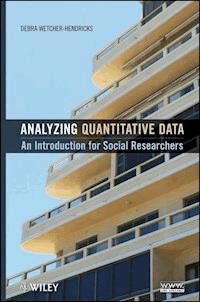
The aspect of the book that likely caught your attention first, however, is its cover. At the risk of seeming philosophical, I find the photograph on the cover of this book analogous to the process of social research. With each level building on the level that came before, a social researcher moves closer to the answers that he or she seeks. This search inevitably becomes a never-ending process as each one prompts more questions and, thus, calls for more research. The building that reaches toward an endless sky, therefore, seemed a perfect fit for the cover of this book, and I thank Margaret Hunter Quigley, a wonderfully talented photographer, for allowing me to use it.
Many others deserve acknowledgment for their help during the process of writing this book as well. Steve Quigley, Associate Publisher at John Wiley & Sons, Inc., has served as a mentor throughout the course of writing and publication, and Jacqueline Palmieri, Assistant Editor at John Wiley & Sons, Inc. has shown great patience as I worked my way through the publication process. My colleagues, especially Dr. Bettie Smolansky and Dr. Dana Dunn, and family have given me much needed moral support. I must also thank the directors of statsoft.com for allowing me to use the distribution and critical value tables from their website as a basis for creating those found in the appendixes of this book. An additional note of gratitude is extended to Gary D. Miner, who assisted me in obtaining these permissions. Finally, Andrew Watson has my sincere appreciation for his work in designing the book’s supplementary website.
The cooperation of these individuals, along with my own tedious writing and revising, has produced a final product that I hope encourages the appreciation for and excitement about data analysis that I have.
PART ISUMMARIZING DATA
1
DATA ORGANIZATION
1.1 INTRODUCTION
High school math teachers must cringe when they hear the age-old question “When am I ever going to need to know this?” Social scientists learn the answer to this question during their first attempts at social research. Early stages of research, including developing a research hypothesis, performing a literature review, creating data-gathering instruments, and actually gathering data certainly challenge novice researchers like you. However, the greatest anxiety seems to surround the anticipation of data analysis.
Those who have become familiar with data analysis, though, would tell you to relax. The challenges posed by data analysis pale in comparison to those already encountered by one who has designed and implemented a means of gathering data. Statistical analysis follows a relatively structured plan that, once recognized, provides a basis for evaluating data in any form. In fact, at the point of statistical analysis, the topic of one’s study becomes somewhat irrelevant. The same protocols and techniques apply to all data, regardless of the issues to which the data pertain or the method used to collect them.
1.2 CONSIDERATION OF VARIABLES
You can refer to anything that changes as a variable. In the research context, a variable is an entity about which you gather data. These entities can change over time, for different people, in different situations, and for many other reasons. In your analysis, you attempt to determine whether these changes follow any particular pattern.
1.2.1 Units of Analysis
Before beginning the analysis process, you must acknowledge the origin points of your data, called the units of analysis. Each data point describes a particular unit of analysis. For social research, the units of analysis are most often human beings. Data indicating the responses to survey questions, behaviors observed during field studies, and performances on pretests and posttests of experiments all pertain to individuals. Social researchers refer to these individuals as subjects and to the compilation of their subjects as a sample. Proper ways to select your sample are discussed in Chapter 4.
Example 1.1: Human Units of Analysis
A researcher who wishes to determine whether a relationship exists between the placement of one’s tattoo on one’s body and the cost of the tattoo, for example, would gather information about individuals who have tattoos. By speaking with these individuals or by observing them while they receive and pay for the tattoos, the researcher would obtain the information that he or she needs. Each data point originates with one individual person and, after data collection the researcher can associate each person with a tattoo placement and cost. Thus, people serve as the unit of analysis.
Like many other aspects of the social sciences, however, the identification of analysis units does not always remain so straightforward. Rather than evaluating individuals, some social research compares and contrasts social institutions or settings. Data points in these situations do not correspond to people. The origin of the data and, thus, the units of analysis, reflect the nonhuman entity that the data describe.
Example 1.2: Nonhuman Units of Analysis
Slightly changing the focus of the study described in Example 1.1 to one that compares the prices of tattoo parlors in urban and in rural areas provides an example of nonhuman units of analysis. A researcher conducting this study would obtain prices from various randomly selected tattoo parlors and would characterize each as located in an urban or a rural area. In this case, the data pertain to locations of and prices at tattoo parlors, making these establishments the units of analysis.
1.2.2 Variables
Data analysis begins with the recognition of variables. In a general sense, the term variable describes anything that changes. This definition provides a foundation for understanding the concept of variables for social research. In this context variables are issues that the researcher measures. Each piece of data (datum) collected by a researcher provides information about a particular unit of analysis. The term variable applies because the information gathered generally addresses behaviors, attitudes, and characteristics that change from subject to subject.
Example 1.3: Variables
For example, a researcher pursuing the study proposed in Example 1.1 would, at the very least, need to note the part of the body on which each individual receives a tattoo as well as the cost for receiving the tattoo. The information recorded about placement of tattoos on the body and cost of tattoos changes with each individual who provides information. These two aspects, then, are variables.
Some studies use more than two variables. The complexity of your study and your intentions determine the number of variables that you need to consider. Some scenarios involving more than two variables receive attention in Section 1.4 and in Chapters 8 and 10 of this book. However, developing an understanding of these situations rests on your recognition and description of the two main variables.
Lesen Sie weiter in der vollständigen Ausgabe!
Lesen Sie weiter in der vollständigen Ausgabe!
Lesen Sie weiter in der vollständigen Ausgabe!
Lesen Sie weiter in der vollständigen Ausgabe!
Lesen Sie weiter in der vollständigen Ausgabe!
Lesen Sie weiter in der vollständigen Ausgabe!
Lesen Sie weiter in der vollständigen Ausgabe!
Lesen Sie weiter in der vollständigen Ausgabe!
Lesen Sie weiter in der vollständigen Ausgabe!
Lesen Sie weiter in der vollständigen Ausgabe!
Lesen Sie weiter in der vollständigen Ausgabe!
Lesen Sie weiter in der vollständigen Ausgabe!
Lesen Sie weiter in der vollständigen Ausgabe!
Lesen Sie weiter in der vollständigen Ausgabe!
Lesen Sie weiter in der vollständigen Ausgabe!
Lesen Sie weiter in der vollständigen Ausgabe!
Lesen Sie weiter in der vollständigen Ausgabe!
Lesen Sie weiter in der vollständigen Ausgabe!
Lesen Sie weiter in der vollständigen Ausgabe!




