


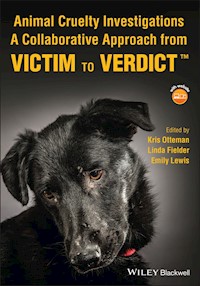
Animal Cruelty Investigations E-Book
84,99 €
Mehr erfahren.
- Herausgeber: John Wiley & Sons
- Kategorie: Fachliteratur
- Sprache: Englisch
Animal Cruelty Investigations: A Collaborative Approach from Victim to Verdict provides a framework for the experts who respond to animal cruelty cases: veterinarians, law enforcement agencies, animal care and control organizations, and prosecutors. This book is a practical guide which provides insight and direction for every phase of an animal cruelty investigation. The step-by-step guidance on responding to particular issues and challenges related to animal cruelty cases is bolstered by the extensive library of checklists, form templates, specific case protocols, and lists of available resources. This book is designed to empower readers to respond to animal cruelty cases confidently and effectively by: * Introducing veterinarians to their critical role in animal cruelty investigations including forensic examination and necropsy, crime scene response, report writing, and testimony. Included are detailed Specific Case Protocols for common animal cruelty scenarios. * Helping animal shelters navigate the challenges of holding animals in protective custody, housing unusual species, and placing evidence animals in foster care. * Offering law enforcement agencies useful methods for investigating animal cruelty such as search and seizure protocols, witness interview techniques, and valuable forms and templates necessary to strengthen and ensure proper search warrant execution, evidence collection and handling, and chain of custody; all with a focus on animals as both victims and evidence. * Guiding prosecutors through the steps necessary to utilize the veterinarian's findings during trial and providing insight into issues to be considered when reviewing search warrants, filing charges, proposing plea agreements, or filing pre-conviction forfeiture motions. This book is a must-have reference and guide for veterinarians, technicians, law enforcement officers, prosecutors, and all those involved in the protection of animals' health and wellbeing. The successful investigation of animal crimes relies on each of these disciplines, not only carrying out their professional duties, but having a collective understanding of what each other needs in order to meet that expectation.
Sie lesen das E-Book in den Legimi-Apps auf:
Seitenzahl: 833
Veröffentlichungsjahr: 2022
Ähnliche




















Table of Contents
Cover
Series Page
Animal Cruelty Investigations: A Collaborative Approach from Victim to Verdict™
Copyright Page
List of Contributors
Editors
Contributors
Preface
Acknowledgments
General Acknowledgments
Linda Fielder’s Acknowledgments
Emily Lewis’ Acknowledgments
Dr. Kris Otteman’s Acknowledgments
About the Companion Website
1 Introduction
1.1 Making the Most of This Resource
1.2 Why Definitions Are Important
1.3 Terms and Phrases: Animal Cruelty Cases
1.4 Terms and Phrases: Veterinary Medicine
1.5 Terms and Phrases: Law Enforcement and Field Services
1.6 Terms and Phrases: Criminal Law
1.7 Looking Ahead
References
2 Animal Basics
2.1 The History of the Five Freedoms and Their Impact on Animal Welfare Laws
2.2 Veterinarians as Experts in the Field
2.3 With So Many Species, Where to Begin?
2.4 Defining Animals by Category
2.5 Animal Basics by Species
2.6 Basics That Apply to All Animals
2.7 Putting Your Basic Knowledge to Work
References
3 Fundamentals of All Cases
3.1 Interdisciplinary Roles
3.2 Environment
3.3 Sanitation
3.4 Food and Water
3.5 Nutrition
3.6 Documentation
3.7 Body Condition
3.8 Documenting Body Condition
3.9 Dental, Foot, and Hoof Care
3.10 Veterinary Care, Medications, and Treatment
3.11 Nonaccidental Injury and Trauma
3.12 The Link Between Animal Cruelty and Crimes Against Humans
3.13 Emergency Issues
References
4 Initial Investigation and Assessment
4.1 Types of Reports
4.2 Anonymous Reports
4.3 Required Information
4.4 Response Triage
4.5 Legitimate or Not? How to Decide
4.6 Responding to Calls: Initial Site Visit
5 Witness and Subject Interviewing
5.1 Preparation for the Interview
5.2 Interview Location and Setting
5.3 Miranda and Consent
5.4 Building Rapport
5.5 Ask Clear and Direct Open‐Ended Questions
5.6 Suspect Interviews
5.7 Reading Body Language and Detecting Deception
5.8 Confessions
5.9 Ending the Interview
5.10 Documenting the Interview
5.11 Additional Resources and Training
References
6 The Veterinarian's Role in Animal Cruelty Investigations
6.1 The Veterinarian is an Important Partner in Animal Cruelty Investigations
6.2 The Veterinarian's Oath
6.3 How Veterinary Forensics Differs from Traditional Veterinary Medicine
6.4 Veterinary Confidentiality and Medical Records Requests
6.5 Public Information Considerations
6.6 Conflicts of Interest
6.7 Be Familiar with the Laws
6.8 How to Find and Build Knowledge in the Area of Animal Law
6.9 Understand What the Prosecutor and Law Enforcement Need to Know
6.10 How Animal Cruelty Investigations Surface and Become Active Cases
References
7 The Veterinary Exam and Treatment Plan
7.1 Request and Review Evidentiary Material
7.2 Initial Steps
7.3 Examination Key Elements
References
8 Setting Expectations and Monitoring Compliance
8.1 Education and Guidance vs. Citation
8.2 Passive Neglect and Lack of Resources
8.3 Education
8.4 Setting Expectations
8.5 What You Can and Cannot Require
8.6 Conducting Rechecks
8.7 What If Nothing Improves or Conditions Worsen?
8.8 What About Animal Hoarders?
References
9 Search Warrants and Seizures
9.1 Exceptions to the Warrant Requirement in Animal Cruelty Cases
9.2 Prewarrant Considerations
9.3 Drafting of the Affidavit and Search Warrant
9.4 Before You Serve the Warrant
9.5 Preservice Briefing
9.6 Serving the Warrant
9.7 Start Documenting the Scene
9.8 System for Evidence Documentation and Processing
9.9 Processing the Animals
9.10 Forms
9.11 Discovering Evidence of Other Crimes
9.12 The First 24 Hours After the Search Warrant Execution
References
10 Evidence Collection
10.1 What is Evidence?
10.2 How Evidence in Animal Cruelty Cases Differs from Traditional Property Crimes
10.3 How to Package the Evidence
10.4 What to Do with Evidence Until Trial
10.5 Evidence at Trial
10.6 Evidence After Trial
References
11 Veterinary Forensic Necropsy
11.1 How a Forensic Necropsy is Different
11.2 The Importance of the Forensic Necropsy
11.3 Necropsy at the Owner's Request
11.4 Packaging and Storing Remains Prior to Necropsy
11.5 Forensic Necropsy Equipment and Protocols
11.6 Case History
11.7 Preparing to Perform the Necropsy
11.8 The Necropsy Report
11.9 Next Steps
11.10 An Important Reminder
References
12 Report Writing
12.1 Introduction
12.2 General Principles
12.3 Crime Report
12.4 Veterinarian Reports
12.5 Witness Statements
12.6 The Case Packet
12.7 Conclusion
13 Protective Custody (Live Animals)
13.1 The Challenge of Live Animal Evidence
13.2 The First 24 Hours
13.3 Know Your Agency's Capacity
13.4 Facility Set‐Up and Security
13.5 Training Staff and Confidentiality
13.6 Paperwork and Record Keeping
13.7 Providing Security Without Isolation
13.8 Foster Care and Offsite Boarding
13.9 Routine and Emergency Veterinary Care
13.10 Death in Care and Euthanasia Considerations
13.11 Offspring Born in Care
13.12 Conclusion
References
14 Media and Fundraising
14.1 Media Coverage
14.2 Handling Negative Press
14.3 Internal Communications Policy
14.4 Fundraising
References
15 Forfeiture, Surrender, and Related Legal Remedies
15.1 Seized Animals and Reasonable Minimum Care
15.2 The Impact of Seizure Expenses – and Responsive Solutions
15.3 Voluntary Relinquishment
15.4 The Seized Animal as Contraband
15.5 Preconviction Forfeiture
15.6 Preconviction Forfeiture: Bond‐or‐Forfeit Statutes
15.7 Bond‐or‐Forfeit Statute Examples
15.8 Bond‐or‐Forfeit Statutes Are Constitutionally Compliant
15.9 Restitution
15.10 Forfeiture via Sentencing
15.11 Cost‐of‐Care Liens
15.12 Conclusion
References
16 Trial
16.1 Trials: An Overview
16.2 The Players
16.3 How a Typical Criminal Case Gets to Trial
16.4 Pretrial Matters
16.5 The Trial
16.6 Topics for Prosecutors
16.7 Conclusion
Introduction to the Appendix
Appendix A
Appendices B–D
Appendix A: Specific Case Protocols
Case: Failure to Provide Veterinary Care
Resources and References
Case: Emaciation, Starvation
Resources and References
Case: Animal Hoarding
Resources and References
Case: Substandard Breeding or Rescue Operation
Resources and References
Case: Blunt Force Trauma: Victim Dies
Resources and References
Case: Blunt Force Trauma: Victim Lives
Resources and References
Case: Sharp Force Injuries
Resources and References
Case: Gunshot Wounds
Resources and References
Case: Mutilated or Skinned Animal
Resources and References
Case: Burned Animal: Victim Dies
Resources and References
Case: Burned Animal: Victim Lives
Resources and References
Case: Sexual Assault of An Animal
Resources and References
Case: Drowning
Resources and References
Case: Poisoning
Resources and References
Case: Heat Stroke/Hyperthermia
Resources and References
Case: Cockfighting
Resources and References
Case: Dogfighting
Resources and References
Appendix B: Forms and Checklists
Minimum Care Checklist
Multi-Animal Site Visit Report
On Scene Habitat Evaluation
Large Animal Premises Inspection Report
Action Notice
Animal Cruelty Case Consent to Search Form
Animal Cruelty Case Relinquishment Form
Medical Exam Equipment Checklist
Veterinary Forensic Exam Form
Game Cock Physical Evaluation Form
Necropsy Exam Notes Form
Animal Observation Chart (Appetite, Elimination, and Weight)
Live Evidence Tracking Form
Live Animal Evidence Tracking Continuation Page
Nonliving Evidence Tracking Form
Nonliving Evidence Tracking Continuation Page
Crime Scene Access Log
Crime Scene Processing Roles and Responsibilities
Evidence Placard
Evidence Transport Inventory and Tracker
Transport Vehicle Log
Case Animal Intake Checklist
Affidavit and Search Warrant Drafting Checklist
Crime Scene Processing Supply List
Camera Log
Property in Custody and Evidence Receipt
Case Submission Checklist
Case Submission Inventory
Case Timeline
Witness List
Costs-of-Care Lien Foreclosure Checklist
Example Forfeiture Hearing Checklist
Appendix C: Templates and Agreements
Memorandum of Understanding Template
Communications–Media Policy Template
Confidentiality Agreement
Protective Custody Foster Care Agreement
Sample Veterinary Clinic Reporting Policy/Protocol
Summary Vet Report
Scene Processing Witness Report
Animal Cruelty Affidavit Template
Animal Cruelty Search Warrant Template
Animal Cruelty Warrant Return Template
Bill of Sale and Relinquishment of Animal Ownership Template
Forfeiture Petition Template
Forfeiture Order Template
Lien Foreclosure Notice Document Template
Sample Newspaper Notice Ad Template for Lien Foreclosure
Script Template for Lien Foreclosure Sale
Notice Letter of Future Discovery Template
Restitution Cover Letter Template
Restitution Waiver Template
Request for Live Animal Evidence Disposition Template
Appendix D: Resources
Investigations Triage Matrix (Example)
Guidance for Compliance/Recheck Planning
Animal Cruelty Case Field Operations Structure
Animal Crime Scene Processing Roles
Outline for Conducting Search Warrant Briefing
Evidence in Animal Cruelty Cases
Examples of on Scene Veterinary Assessments
Language Options for Adoption Contracts
State Evidence Retention and Disposition Rules
Resource List: Grants for Animal Cruelty Case Work
Index
End User License Agreement
List of Illustrations
Chapter 2
Figure 2.1 Feed requirements for cattle and other hoofstock can be calculate...
Figure 2.2 Community cats may be tame or unsocialized and often live in colo...
Figure 2.3 Tight collars may become embedded in an animal's skin causing pai...
Figure 2.4 Angora rabbits require regular grooming to prevent matting of the...
Figure 2.5 Captive birds may develop feather picking behaviors owing to stre...
Figure 2.6 Inadequate lighting and heat in reptile enclosures can lead to sk...
Figure 2.7 Animals in a weakened or debilitated state require veterinary car...
Chapter 3
Figure 3.1 The shelter pictured here does little to provide protection from ...
Figure 3.2 The multiple wounds and abscesses on the dog in this photo can be...
Figure 3.3 Contaminated food and water pose health risks to animals.
Figure 3.4 Animals require additional feed and calories when pregnant or nur...
Figure 3.5 Documentation of the environment through accurate notes, photogra...
Figure 3.6 Photos should accurately represent the animal's body condition....
Figure 3.7 Many animals, such as the pot‐bellied pig in this photo, require ...
Figure 3.8 Examine medication closely for prescription information, expirati...
Figure 3.9 There is a well‐established link between animal abuse and other v...
Chapter 4
Figure 4.1 Many reports concern animals living in inadequate conditions that...
Figure 4.2 The number of cats in this window offers a glimpse into condition...
Figure 4.3 Notices should be easy to read and posted in a conspicuous place....
Figure 4.4 Understand what the laws in your state specify about providing em...
Chapter 6
Figure 6.1 The veterinarian’s role includes evaluation of the behavioral and...
Figure 6.2 The forensic veterinarian’s role includes examining physical evid...
Figure 6.3 Evaluating overall animal husbandry and access to veterinary care...
Figure 6.4 Veterinarians assist in ruling in or out the reported causes of i...
Chapter 7
Figure 7.1 Evaluating photos of animals and their environment is an essentia...
Figure 7.2 Thorough and well‐documented examination of all evidence is the f...
Figure 7.3 Take multiple views of significant findings. In this case the dog...
Figure 7.4 This photo clearly depicts how loose the dog’s collar has become ...
Figure 7.5 Far‐range photos demonstrate the overall location and scale of a ...
Figure 7.6 Mid‐range photos provide context and detail.
Figure 7.7 Close‐up photos reveal details that are not visible in other view...
Figure 7.8 Collect multiple views when photographing animals. This photograp...
Figure 7.9 The aerial view of this dog clear demonstrates her emaciated cond...
Figure 7.10 Radiographs reveal unsuspected findings that are relevant, such ...
Figure 7.11 Hands‐on body condition scoring is a valuable tool for most spec...
Figure 7.12 Evidence gathered from feet or claws can contain important detai...
Figure 7.13 Approach selection of additional diagnostic tests efficiently....
Figure 7.14 Radiographic density as demonstrated via imaging may illustrate ...
Chapter 8
Figure 8.1 Many cases can be resolved through education and compliance monit...
Figure 8.2 Subsidized programs that provide spay/neuter and veterinary care ...
Figure 8.3 Compliance notices are a useful way to communicate instructions f...
Figure 8.4 Animal hoarding cases are complex, resource intensive, and best a...
Figure 8.5 Animal hoarding cases may involve any species or variety of speci...
Chapter 9
Figure 9.1 Photos incorporated directly into the body of your affidavit help...
Figure 9.2 Depending on the size of the property, using an aerial map instea...
Figure 9.3 Once this identifier is attached, each photo or video series take...
Figure 9.4 Identifying the animal and including the habitat in the photo pro...
Figure 9.5 Using a habitat evaluation form ensures that the scene processing...
Chapter 10
Figure 10.1 When investigating a rescue, collecting paperwork like this help...
Figure 10.2 (a and b) Connecting ulcerated feet to a urine‐soaked enclosure,...
Figure 10.3 (a–e) All of these areas may contain animal remains or other evi...
Figure 10.4 This enclosure, and several others like it, were discovered in a...
Figure 10.5 In hoarding cases locating and capturing animals can be complica...
Figure 10.6 Laboratories have specific requirements for feed submission. Be ...
Figure 10.7 (a and b) The dog in this case was assigned the unique evidence ...
Figure 10.8 (a–f) Some animals can easily be connected with their evidence I...
Figure 10.9 (a and b) The gray rabbit in the cage can be viewed in the envir...
Figure 10.10 This dog's posture and demeanor provided the veterinarian in th...
Figure 10.11 (a–h) In this series of photos the location is clearly marked w...
Figure 10.12 (a) The evidence placard associated with this cat was photograp...
Figure 10.13 This form tracks the chain of custody for a live animal. Every ...
Figure 10.14 It can be easier to track chain of custody and monitor a popula...
Figure 10.15 Attaching the evidence placard to the end of this pole permitte...
Chapter 11
Figure 11.1 When possible, identify and train an assistant ahead of time. In...
Figure 11.2 Supplies and equipment found in the animal's environment provide...
Figure 11.3 These medications discovered on scene support the probability th...
Figure 11.4 Start taking photographs upon receipt of the remains and continu...
Figure 11.5 Collect far, mid, and close‐uprange photos in sequence to show a...
Figure 11.6 Photos verify important procedures and demonstrate chain of cust...
Figure 11.7 Use photography to illustrate and document specific findings. In...
Figure 11.8 Hemorrhage into skin, tissues under the skin, and muscle results...
Figure 11.9 Full‐body imaging provides the examiner with information about t...
Figure 11.10 The use of a linear object can help trace the trajectory of pen...
Figure 11.11 Describe and photograph the appearance of wound margins and ass...
Figure 11.12 Collect measurements of wound dimensions prior to disrupting th...
Figure 11.13 (a–c) The shape and appearance of wounds from thermal and chemi...
Chapter 12
Figure 12.1 The circles were added to this radiograph in the veterinarian's ...
Chapter 13
Figure 13.1 Protective Custody begins when the animal is removed from the sc...
Figure 13.2 Critical evidence is discovered during the initial veterinary ex...
Figure 13.3 In this photo, a secure warehouse is being prepared for the inta...
Figure 13.4 Shelter staff and volunteers must be trained on important aspect...
Chapter 15
Figure 15.1 A simplified depiction of the bond‐or‐forfeit process in Oregon....
Figure 15.2 A simplified depiction of the bond‐or‐forfeit process in Washing...
Guide
Cover Page
Series Page
Title Page
Copyright
List of Contributors
Preface
Acknowledgments
About the Companion Website
Table of Contents
Begin Reading
Appendix A: Specific Case Protocols
Appendix B: Forms and Checklists
Appendix C: Templates and Agreements
Appendix D: Resources
Index
WILEY END USER LICENSE AGREEMENT
Pages
ii
iii
iv
xi
xii
xiii
xiv
xv
1
2
3
4
5
6
7
8
9
10
11
12
13
14
15
16
17
18
19
20
21
22
23
24
25
26
27
28
29
30
31
32
33
34
35
36
37
38
39
40
41
42
43
44
45
46
47
48
49
50
51
52
53
54
55
56
57
58
59
60
61
62
63
64
65
66
67
68
69
70
71
72
73
74
75
76
77
78
79
80
81
82
83
84
85
86
87
88
89
90
91
92
93
94
95
96
97
98
99
100
101
102
103
104
105
106
107
108
109
110
111
112
113
114
115
116
117
118
119
120
121
122
123
124
125
126
127
128
129
130
131
132
133
134
135
136
137
138
139
140
141
142
143
144
145
146
147
148
149
150
151
152
153
154
155
156
157
158
159
160
161
162
163
164
165
166
167
168
169
170
171
172
173
174
175
176
177
178
179
180
181
182
183
184
185
186
187
188
189
190
191
192
193
194
195
196
197
198
199
200
201
202
203
204
205
206
207
208
209
210
211
212
213
214
215
216
217
218
219
220
221
222
223
224
225
226
227
228
229
230
231
232
233
234
235
236
237
238
239
240
241
242
243
244
245
246
247
248
249
250
251
252
253
254
255
256
257
258
259
260
261
262
263
264
265
266
267
268
269
270
271
272
273
274
275
276
277
278
279
280
281
282
283
284
285
286
287
288
289
290
291
292
293
294
295
296
297
298
299
300
301
302
303
304
305
306
307
308
309
310
311
312
313
314
315
316
317
318
319
320
321
322
323
324
325
326
327
328
329
330
331
332
333
334
335
336
337
338
339
340
341
342
343
344
345
346
347
348
349
350
351
352
353
354
355
356
357
358
359
360
361
362
363
364
365
366
367
368
369
370
371
372
373
374
375
376
377
378
379
380
381
382
383
384
385
386
387
388
389
390
391
392
393
394
395
396
397
398
399
400
401
402
403
404
405
406
407
408
409
410
411
412
413
414
415
416
417
418
419
420
421
422
423
424
425
426
427
428
429
430
431
432
433
434
435
436
437
438
439
440
441
442
443
444
445
446
447
448
449
Cover photo:
Abraham was one of 149 dogs seized in a large‐scale animal neglect case in Oregon requiring strong inter‐disciplinary collaboration. After gaining 20 pounds (25% of his body weight), Abe, as he came to be known, found his forever home in Oregon. The plight of the animal victims in that case prompted significant strengthening of Oregon’s animal protection laws.
Animal Cruelty Investigations: A Collaborative Approach from Victim to Verdict™
Edited by
Kris Otteman
DVM, Diplomate ABVP Shelter Medicine Practice, CAWA
Courtesy Faculty Carlson College of Veterinary Medicine, Oregon State University, USA
Linda Fielder
CAWA
Animal Legal Defense Fund, Cotati, CA, USA
Emily Lewis
JD, MSEL
Animal Legal Defense Fund, Cotati, CA, USA
This first edition first published 2022© 2022 John Wiley & Sons, Inc
All rights reserved. No part of this publication may be reproduced, stored in a retrieval system, or transmitted, in any form or by any means, electronic, mechanical, photocopying, recording or otherwise, except as permitted by law. Advice on how to obtain permission to reuse material from this title is available at http://www.wiley.com/go/permissions.
The right of Kris Otteman, Linda Fielder, and Emily Lewis to be identified as the authors of the editorial material in this work has been asserted in accordance with law.
Registered OfficeJohn Wiley & Sons, Inc., 111 River Street, Hoboken, NJ 07030, USA
Editorial Office111 River Street, Hoboken, NJ 07030, USA
For details of our global editorial offices, customer services, and more information about Wiley products visit us at www.wiley.com.
Wiley also publishes its books in a variety of electronic formats and by print‐on‐demand. Some content that appears in standard print versions of this book may not be available in other formats.
Limit of Liability/Disclaimer of WarrantyThe contents of this work are intended to further general scientific research, understanding, and discussion only and are not intended and should not be relied upon as recommending or promoting scientific method, diagnosis, or treatment by physicians for any particular patient. In view of ongoing research, equipment modifications, changes in governmental regulations, and the constant flow of information relating to the use of medicines, equipment, and devices, the reader is urged to review and evaluate the information provided in the package insert or instructions for each medicine, equipment, or device for, among other things, any changes in the instructions or indication of usage and for added warnings and precautions. While the publisher and authors have used their best efforts in preparing this work, they make no representations or warranties with respect to the accuracy or completeness of the contents of this work and specifically disclaim all warranties, including without limitation any implied warranties of merchantability or fitness for a particular purpose. No warranty may be created or extended by sales representatives, written sales materials or promotional statements for this work. The fact that an organization, website, or product is referred to in this work as a citation and/or potential source of further information does not mean that the publisher and authors endorse the information or services the organization, website, or product may provide or recommendations it may make. This work is sold with the understanding that the publisher is not engaged in rendering professional services. The advice and strategies contained herein may not be suitable for your situation. You should consult with a specialist where appropriate. Further, readers should be aware that websites listed in this work may have changed or disappeared between when this work was written and when it is read. Neither the publisher nor authors shall be liable for any loss of profit or any other commercial damages, including but not limited to special, incidental, consequential, or other damages.
Library of Congress Cataloging‐in‐Publication Data Applied for
PB: 9781119764885
Cover Design: WileyCover Image: Courtesy of John Valls
List of Contributors
Editors
Linda Fielder, CAWAAnimal Legal Defense FundCotati, CAUSA
Emily Lewis, JD, MSELAnimal Legal Defense FundCotati, CAUSA
Dr. Kris Otteman, DVM, Diplomate ABVP Shelter Medicine Practice, CAWACourtesy Faculty Carlson College of Veterinary Medicine,Oregon State UniversityUSA
Contributors
Dr. Zarah Hedge, DVM, MHP, DACVPM, DABVPShelter Medicine PracticeSan Diego, CAUSA
Jake Kamins, JDState of Oregon Animal Cruelty Deputy District AttorneyCorvallis, ORUSA
David B. Rosengard, JD, LLMManaging Attorney, Animal Legal Defense FundAdjunct Professor of Animal Law, Lewis & Clark Law SchoolCotati, CAUSA
Preface
The authors have worked together to promote the investigation and prosecution of crimes against animals for over a decade. We have put our best efforts forward in hoarding cases that made the national news and cases of anonymous animal victims with no known owner, witnesses, or suspect. Despite our fierce dedication to the cause, there were moments, months, even years, that led to frustration, tested our fortitude, and pushed the boundaries of our tolerance for impediments. It is in those moments that we garnered the information and experience that we share with you in this book. We have faced many challenges in working on these cases and realized over time that our most successful responses were born out of a collaboration of disciplines and expertise. Not one of us could have approached our work in this field alone and we do not expect that from our readers.
Use the information in this book to empower you and your agency to respond to animal cruelty with confidence and integrity. Animal cruelty casework is difficult, particularly if you do not have the resources, support, and expertise you need. Let this book help identify those gaps in your jurisdiction and guide a solution regardless of the magnitude of the perceived roadblocks.
Confronting and addressing animal cruelty is important. If for no other reason than it is against the law in every state. That aside, animal abuse is a violent crime and to think the cycle of violence begins or ends with animals would be naive. The safety of your community is directly related to how seriously you take animal cruelty allegations. In our years of work on these cases, the frequency with which mental illness correlated to maltreatment of animals became glaringly evident. More often than not, the owner of a neglected animal needed community resources as much as the victim animal. Failing to adequately respond to neglected animals in your jurisdiction simultaneously ignores individuals who are struggling with mental health issues. Finally, animals are sentient beings, made vulnerable by their inability to put words to their experiences. They rely on veterinarians, field officers, and prosecutors to speak on their behalf with equal advocacy as any victim would receive.
After years in the field, each of us can recall a case that we wish had turned out differently for the animal or humans involved. For any one of you who can name that animal cruelty case, the one that keeps you up at night, the one you wish had turned out differently, the one you learned from, the one that simply did not seem fair, this book was born out of that indignation and the drive to facilitate justice in honor of those victims who never found it and future victims who deserve it.
Acknowledgments
General Acknowledgments
Writing this book was an exercise in perseverance and teamwork. Having worked together closely for many years, we consider ourselves masters of teamwork. As for perseverance, we’ve learned that a bend in the road is not the end of the road, and we are grateful to be continuing this journey together. We relied on each other throughout this process, but our thanks goes out to the people who kept us organized, contributed their expertise, and offered genuine feedback. Thank you to contributing authors Dr. Zarah Hedge, Jake Kamins, Esq., and David Rosengard, Esq. Each of you brings a deep well of experience and insight to this text. Thank you to Anika Moje for reviewing our work with a keen eye for detail, keeping us on task, and providing support and constant encouragement. Thank you to Kathleen Wood, Esq., for repeatedly lending your vast expertise on state law nuances and Conor Lamkin for your extensive legal research assistance. Our appreciation goes out to Scott Heiser, Esq. and Michelle Welch, Esq., for their contributions to the Specific Case Protocols. Thank you to Nichole Waldner for editing and formatting our manuscript, Jacqui Monahan for designing our graphics and templates, and to Merryl Le Roux, Erica Judisch, and Wiley Publishing for guiding us through the submission and publishing process. Thank you to the Oregon Humane Society for the use of case materials and photographs throughout this text.
Linda Fielder’s Acknowledgments
This book was created not only by the authors and contributors, but by every individual who worked alongside us responding to animal cruelty cases. The members of the Humane Investigations and Medical teams at the Oregon Humane Society were a committed, talented, compassionate group I considered family. We sweated inside Tyvek suits and maneuvered through crime scenes stacked with garbage, mired in mud, and filled with treacherous hazards both living and inanimate. We worked together through long days and beyond exhaustion. Never satisfied with doing just enough, my colleagues helped support the mindset of constant learning and always finding ways to do better, always for the animals.
In the field of animal cruelty investigations, having a support network outside the organization or agency is critical to one’s mental health and stamina. I am fortunate to have a chosen family of friends who made sure to check in when the work became heavy, both in the field and during the challenges of writing this manuscript. Finally, I owe a debt of gratitude to the experts who have contributed to the field of veterinary forensic medicine and whose texts I carried with me to the exam room, kept on the bedside table, and recommended to anyone who wanted to learn more about the science behind animal cruelty investigations. This book is intended to support those excellent works that came before it.
Emily Lewis’ Acknowledgments
Many years ago, the Criminal Justice Program at the Animal Legal Defense Fund graciously allowed me to volunteer as a recent college graduate, adrift in the world with a degree but no specific direction, save my compassion for animals. That position opened my eyes both to the horrific crimes perpetrated against animals and the network of remarkable professionals committed to seeking justice on their behalf. I had found my path.
In the years that followed, lawyers, professors, veterinarians, and animal welfare professionals whom I held in the highest esteem became mentors and eventually colleagues. I will never be able to adequately convey the level of gratitude I have for the individuals who created opportunities and then mentored me on the path of this career that has enriched my life in so many ways. This book is a testament to your leadership, guidance, and inspiration. Thank you for constantly raising the bar and never doubting my ability to meet it.
To my most wonderful, supportive family and amazing loyal friends, thank you for being the counterbalance to the heaviness of this work and shining a light on those days when the world can seem full of shadows. You are the constant reminder that there is good in the world and have always fueled my sustained optimism that it is worth fighting for that good.
Sentiments of gratitude cannot come without also acknowledging the motivation behind this work. To the individuals involved in animal cruelty cases – once or every day – who are open to unique partnerships and willing to rely on them, who value the insight of experts, and who use their experiences to teach others: you are inspiring, you make a difference, you are both the reason for this book and the answer for the animals.
Dr. Kris Otteman’s Acknowledgments
Working in a local veterinary practice in the early years of my career, I encountered animals who had suffered cruelty, however during this time, laws were not in place that recognized these crimes or offered any legal consequences on behalf of the animal victim. As the fields of veterinary medicine, animal welfare, and animal protection laws have grown and aligned in recent years, the resulting synergy has been incredible to witness. The tangible benefits to the animals and the people in our communities through teamwork, compassion, education, and emerging science have profoundly changed the world for the better.
The Oregon Humane Society provided the mission and the resources necessary for us to contribute to the incredible evolution of humane investigations in the United States through practical example and teaching others. I am eternally grateful to all the amazing people who made this possible. Every action certainly influences others and I am grateful for the opportunity to be a positive force and example that propels this field forward.
Thank you to my father, Dr. Richard H. Otteman, for inspiring me to never stop learning and to have the courage to make a difference even in the face of fear or uncertainty.
To my ever encouraging and best critic, my husband Jeff, thank you for supporting this effort to put into writing the passion and energy my co‐authors and I have for collaboration in the fight against animal cruelty. Your sage advice and wisdom sustain me.
To the social workers, law enforcement, prosecutors, animal control and animal welfare workers, veterinarians, and veterinary staff who give of their time, talents, and treasure to act and continue this momentum – thank you and do not tire. It is my hope that this book is a thank you to all my colleagues who have paved the way and an encouragement to all who may begin or choose to continue this journey of truly making reverence for life a reality for all creatures great and small.
About the Companion Website
This book is accompanied by a companion website:
www.wiley.com/go/otteman/victimtoverdict
The website includes:
Introduction to the Appendix
Appendix A
–Specific Case Protocols
Appendix B
–Forms and Checklists
Appendix C
–Templates and Agreements
Appendix D
–Resources
1 Introduction
Emily Lewis
All 50 states now criminalize cruelty to animals in one way or another. With animals as live evidence unable to put words to their suffering or the criminal act perpetrated upon them, attaining justice for victim animals is conditional on the successful collaboration of veterinarians, law enforcement, and prosecutors. Not only do these cases require each of these disciplines to understand and execute their role with precision in order to be successful, but they must also understand the duty, constraints, and capabilities of each other in the context of an animal cruelty case. The laws may differ between states in nuanced ways, but the foundation of a thorough and fair animal cruelty investigation remains relatively static across state lines. This book provides a multidisciplinary guide to building that foundation in every case.
1.1 Making the Most of This Resource
1.1.1 How to Use This Book
Whether you are working in the field or training members of your community, this book can be a valuable resource. It is written to be equally comprehensible across disciplines and experience levels. It can function as a guide for field officers to use when actively responding to reports of animal cruelty, while also providing forms and templates ready for use in the field. It can provide clarity to veterinary staff at a community clinic on what to do when they are presented with a suspected victim of animal cruelty. Seasoned and novice prosecutors can reference this book upon assignment of an animal cruelty case to understand the players and nuances of such cases.
The book is written and organized in a way that facilitates its use as a quick, situational reference source or as a comprehensive manual suited for field work or a classroom setting.
1.1.2 Roadmap
The chapters are ordered to follow the typical trajectory of an escalating criminal animal cruelty case. Before addressing the investigation aspect of these cases, the book first emphasizes the importance of a preliminary understanding of the subject matter of the investigation, found in Chapter 2. From there, the chapters discuss the various phases and components of a thorough investigation, starting with the baseline expectations for each case assessment (Chapter 3) through execution of a search warrant and evidence collection (Chapters 9 and 10). The final third of the book discusses the phases of a case that typically occur after the initial investigation and/or search warrant execution (Chapter 11, 12, and 13), concluding with remedies for animal ownership and trial (Chapters 15 and 16).
Acknowledging that differing animal cruelty offenses present unique hallmarks or challenges, Appendix A: Specific Case Protocols is included as a quick reference source. This appendix is organized by the nature of the crime or injury and provides in‐the‐moment advice and reminders specific to that type of animal cruelty case, while cross‐referencing recommended forms, checklists, agreements, templates, and resources provided in Appendices B–D.
1.2 Why Definitions Are Important
Endeavoring to impart knowledge of the expectations and challenges posed to multiple professional disciplines involved in animal cruelty investigations begins with a foundation in relevant terminology. The words used by veterinarians, field officers, and prosecutors alike can have far‐reaching implications in an animal cruelty case. This in and of itself is a compelling reason to discuss verbiage. Beyond that motivation, we acknowledge that states, agencies, and individuals are going to have their own nuanced definition of words and concepts frequently referenced in this book. There are venues to delve into those nuances and make the case as to why one definition may be better than another, but this book is not that venue. The overarching concepts behind these terms and phrases should be relatively consistent across states and disciplines and the way this book uses them should be easily adapted to the way you, your organization, or your state uses those words. Do not let semantics detract from the fundamentals imparted in the chapters that follow.
1.3 Terms and Phrases: Animal Cruelty Cases
Each state uses different verbiage to craft its cruelty laws, but across the board there are certain concepts found in every state's animal protection laws. These are important concepts and definitions to understand and will be continually referenced throughout this book.
1.3.1 Animal
At first impression, it would seem that “animal” could be easily defined, but in reality, states struggle with how to categorize this noun in the context of their criminal code. Some states list what are considered “animals” in that state [1, 2]. Other states define the term by saying what it is not [3, 4]. Other states choose a more succinct definition and simply say an animal is defined as a nonhuman animal [5]. And some states choose to take the opportunity to narrow the definition beyond what one would typically interpret to be an “animal” [6, 7]. For the purposes of this book, we are discussing animal species who are subject to your state's animal cruelty laws.
1.3.2 Active Animal Cruelty
An individual (or corporation) can commit what has been identified as “active animal cruelty.” These are acts that are decisive, acute, and done with intention. The mental states typically associated with this type of animal cruelty are malicious, intentional, purposeful, and knowing. Examples of statutes that would fit under this category are aggravated animal abuse, aggravated cruelty to animals, torture, and sexual assault of an animal. Throughout this book, unless a specific crime is being referenced, the phrase “animal abuse” will be used to indicate active animal cruelty.
1.3.3 Passive Animal Cruelty
All states criminalize certain types of “passive animal cruelty.” This can be identified when the inaction of an individual (or corporation) causes undue suffering to an animal. Reckless and criminally negligent are the mental states often connected with these types of crimes, though inaction of an individual can also be intentional or knowingly done. Examples of statutes that would fit under this category are those that require the provision of minimum care (food, water, shelter, veterinary care) to animals. Throughout this book, unless a specific crime is being referenced, the phrase “animal neglect” will be used to indicate passive animal cruelty.
1.3.4 Good Animal Husbandry
In the context of animal cruelty work, the phrase “good animal husbandry” needs to be distinguished from the phrase “accepted animal husbandry practices.” The latter is a phrase frequently used when exempting certain agricultural and food production practices from the animal cruelty laws in a state. The former colloquially refers to providing species‐appropriate care to an animal in one's custody and can provide the basis for minimum care standards in a state.
1.3.5 Mandatory Reporting
Across many professional disciplines, particularly those likely to encounter vulnerable populations, there exists a duty to report certain actions, statements, observations, or suspicions to law enforcement. The field of animal welfare is no different. Lawyers and police officers working in this field are mandatory reporters of child and elder abuse. Social workers and human services employees are also mandatory reporters of child abuse. Veterinarians in many states1 are mandatory reporters of animal cruelty. Being a mandatory reporter means you must report, it is not optional, and it is not transferable; not reporting could result in disciplinary action.
By passing laws requiring animal control officers to report suspected child abuse or permitting social service employees to report suspected animal cruelty, states are promoting cross‐reporting. If there is one vulnerable entity being victimized, other vulnerable populations in the situation are at risk of also being victimized; cross‐reporting ensures that this likelihood is not overlooked.
1.4 Terms and Phrases: Veterinary Medicine
1.4.1 Acute
Refers to a condition or situation that has occurred very recently. Acute conditions may become chronic health concerns.
1.4.2 Bright, Alert, and Responsive (BAR)
“Bright, Alert, and Responsive” is an acronym veterinarians use to indicate an animal's presentation is normal.
1.4.3 Blunt Force Trauma
An injury or group of injuries caused by tissue impacting or colliding with a blunt object.
1.4.4 Body Condition Score (BCS)
A quantitative, yet subjective, method for evaluating body fat and overall condition using a standardized numbering system. There are various BCS scoring charts available for reference that are species specific. When you are assigning an animal a BCS using a chart for reference, be sure to include the name of the chart you are referencing and words from the description associated with the BCS you are assigning to the animal.
1.4.5 CBC/Chemistry
Stands for complete blood count and blood chemistry panel. These are blood tests veterinarians may order in furtherance of the diagnostic phase of an exam or to evaluate the overall health status and well‐being of an animal.
1.4.6 Chronic
Refers to a condition or situation that is persistent or reoccurring having not occurred very recently (hours or days).
1.4.7 Easy Keeper
A term used to refer to a livestock animal who maintains a normal body weight on a relatively modest or average amount of feed.
1.4.8 Lividity
An unnatural coloration of the skin, caused by fluid leakage within the tissues; can be useful in determining the positioning of a body at the time of death and whether a body was moved after death.
1.4.9 Necropsy
An autopsy performed on a deceased animal.
1.4.10 Nonaccidental Injury or Death
Injury or death that has been deliberately inflicted.
1.4.11 PE
An acronym for “physical exam.”
1.4.12 Predation
The hunting or scavenging of an animal or animal remains by another animal for food. Victims of predation are often mistaken for victims of animal cruelty perpetrated by humans. There are certain hallmarks of predation that veterinarians can use to distinguish between those scenarios (see Chapter 11).
1.4.13 Radiographs
Radiograph means X‐ray.
1.4.14 Rigor
The result of chemical changes in the body that cause stiffening and contraction of the joints and muscles; occurs one to six hours after death.
1.4.15 Subjective, Objective, Assessment, and Plan (SOAP) Note
SOAP is a standardized method of documentation within an animal's medical record.
1.4.16 Stereotypic Behavior
Abnormal behaviors seen in animals confined and deprived of environmental enrichment (i.e. circling, pacing, self‐mutilation).
1.4.17 Unremarkable
Used when describing results that are normal or where nothing out of the ordinary has been found.
1.4.18 Veterinary Forensics
The collection of data from an animal and related materials that can be used for the investigation of animal abuse, neglect, or nonaccidental death.
1.5 Terms and Phrases: Law Enforcement and Field Services
1.5.1 Affidavit
Generally speaking, a sworn statement. Also, the supporting document of a search warrant request that outlines the probable cause motivating the warrant request.
1.5.2 Chain of Custody
The documentation that tracks a piece of evidence and who it comes into contact with, from where it was found at the scene of a crime to the point it is being offered as evidence of that crime.
1.5.3 Citation
An official notice of a violation of state law generated by someone with authority to enforce those laws (i.e. law enforcement).
1.5.4 Civilian
Any individual who is not a sworn peace officer.
1.5.5 Custodial
In the criminal context, when a person is in the custody of a state agency and cannot leave of their own free will. Custody can be defined as literal physical custody (i.e. in handcuffs or in prison) or constructive custody, which occurs when the circumstances of an interaction with a representative from a state agency are such that the individual does not feel they are free to leave.
1.5.6 Evidence
Statements, objects, or information that indicates an alleged fact is more likely or less likely to be true [8].
1.5.7 Interview
The questioning of a witness or a suspect in furtherance of an investigation.
1.5.8 Miranda
A series of warnings/rights that must be stated verbally and/or in writing to a person who is in the custody of an individual acting on behalf of the state or the federal government before the person is asked any questions about their involvement in a situation under criminal investigation [9].
1.5.9 Officer Safety
A term used to refer to the topics of policies, procedures, and trainings employed by law enforcement agencies in order to best protect their agents in the field from harm.
1.5.10 Probable Cause
There is information available to indicate that a crime more likely than not has occurred or is occurring.
1.5.11 Protective Custody
In the context of animal cruelty cases, the retention of a victim animal for inspection, preservation, and security from abuse, neglect, or danger during which chain of custody is maintained.
1.5.12 Public Information Officer (PIO)
A peace officer designated by a law enforcement agency to be the liaison between the department and representatives of the media.
1.5.13 Reasonable Suspicion
There is some reason beyond a “hunch” that creates the belief that a crime has or is occurring.
1.5.14 Reporting Party
A person who reports a concern about a situation to an entity with authority to act.
1.5.15 Risk Assessment
A standardized procedure in which law enforcement evaluates the risks associated with locations and individuals they are likely to encounter when pursuing a particular tactical move in an investigation. Routinely done prior to search warrant executions.
1.5.16 Search Warrant
An order from a judge that commands a peace officer to search a specified location and seize specific evidence of a particular crime(s).
1.5.17 Seizure
In the context of criminal cases, taking custody of an individual's property or the individual themselves, within the bounds and under the authority of a warrant.
1.5.18 Suspect
An individual who is believed to have committed a crime but against whom no criminal charges have been filed yet.
1.5.19 Third‐Party Owner
An individual, not the suspect, who has an ownership interest in an item of property.
1.5.20 Witness
An individual who has knowledge pertaining to or has personally experienced (with any one of their senses) anything relevant to a criminal investigation.
1.6 Terms and Phrases: Criminal Law
1.6.1 Alford Plea
A plea that maintains innocence but acknowledges that the prosecution could meet its burden of proof with the evidence available.
1.6.2 Arraignment
The proceeding in which charges are officially filed and the defendant enters a plea of guilty or not guilty.
1.6.3 Authentication
A process that seeks to admit items into evidence by proving they are true or genuine [10].
1.6.4 Brady Material
Any information or evidence that is favorable to the defendant. Nondisclosure by the prosecution is a violation of the defendant's constitutional rights [11].
1.6.5 Brief
A persuasive document written for submission to a judge or court about an issue in a case.
1.6.6 Charging Enhancement
Statutory provision that allows for more serious charges, when particular conditions are met, either by the defendant or by the circumstances of the crime. For example, in Nevada the crime of torturing a companion animal is a Class D felony but rises to a Class C felony if done to intimidate another person. In Idaho, the misdemeanor crime of torturing a companion animal rises to a felony if the perpetrator has a prior conviction involving voluntary infliction of bodily injury upon a human within 10 years [12, 13].
1.6.7 Charging Information
This is the document the prosecuting attorney files with the court to initiate criminal charges that are supported by probable cause.
1.6.8 Defendant
A criminal defendant is someone who has been charged with a crime.
1.6.9 Diversion
An arrangement that results in dismissal of the charges if a defendant complies with the terms of a plea agreement (see below) for a specified length of time without any violations.
1.6.10 Expert Witness
An expert witness is “[a] witness qualified by knowledge, skill, experience, training, or education to provide a scientific, technical, or other specialized opinion about the evidence or a fact issue” [14]. A veterinarian will almost always be considered an expert witness. Expert witnesses are treated differently than other witnesses in a trial (see Chapter 16 on trials for more information).
1.6.11 Forfeiture
A legal divestment of property that is ordered by a court.
1.6.11.1 Preconviction Forfeiture
A legal proceeding that is utilized in animal cruelty cases to address the cost of caring for victim animals until a criminal trial takes place. Once a preconviction forfeiture petition is filed, a defendant animal owner has a certain amount of time to pay a bond amount that will be used to provide care for their animals while they await trial. If the defendant animal owner cannot pay the bond amount, then ownership of the animals is transferred by an order of the court to a designated entity.
1.6.11.2 Postconviction Forfeiture
A divestment of property that occurs as a result of a criminal conviction.
1.6.12 Foreclosure
The process of terminating an ownership interest in property in order to gain title to the property or satisfy an unpaid debt connected to the property. In an animal cruelty case, the property consists of the animal/animals seized in the case. The unpaid debt is the costs of care that have accrued since the animal(s) was taken into custody.
1.6.13 Grand Jury
A body of citizens that reviews evidence presented by the prosecutor to determine if the prosecutor has probable cause to charge the suspect with a crime.
1.6.14 Hearing
A proceeding that takes place in front of a judicial officer to determine issues related to a case.
1.6.15 Judgment
A ruling in a case by a court containing its final determination in the case. Depending on the determination and the court, the judgment may be subject to appeal.
1.6.16 Lay Witness
A lay witness is “[a] witness who does not testify as an expert and who is therefore restricted to giving an opinion or making an inference that (1) is based on firsthand knowledge, and (2) is helpful in clarifying the testimony or in determining facts” [14].
1.6.17 Lien
“A legal right or interest that a creditor has in another's property, lasting usually until the debt or duty that it secures is satisfied” [15]. In an animal cruelty case, several states have laws that specifically create a lien for the costs of care that an agency or individual provides to the animals connected to a criminal animal cruelty case. The agency or individual can foreclose on those liens, the result of which is repayment of the costs or transfer of ownership of the property to satisfy the debt (see Chapter 15 for more information about liens and foreclosure).
1.6.18 Mental State
Mental state refers to an element of every animal cruelty offense: the state of mind of the perpetrator of the cruelty. Wording can vary slightly between states, but generally the mental state the prosecution is required to prove falls into one of these four areas [16].
1.6.18.1 Criminal Negligence
The perpetrator should have been aware of a risk and a reasonable person in their situation would have been aware of the risk.
1.6.18.2 Recklessly
The perpetrator disregards substantial and unjustifiable risk that a particular result will occur and engages in conduct that causes that result. This disregard for the risk deviates from that of an average law‐abiding citizen.
1.6.18.3 Knowingly
The perpetrator consciously engages in conduct knowing that a particular result is likely if not certain.
1.6.18.4 Purposefully or Intentionally
The perpetrator has the conscious objective to engage in the conduct and cause the result of the conduct.
1.6.19 Motion
A document filed in a case requesting the court/judge to take a particular action.
1.6.20 No Contest
A plea that does not admit guilt but does not challenge the charges.
1.6.21 Plea Bargain/Agreement
An agreement the defendant makes to negotiated charges and sentencing provisions, and results in a conviction [17].
1.6.22 Pretrial Hearing
A court proceeding that takes place prior to a trial to assess trial readiness, or to address and sometimes narrow, the issues in a case [18].
1.6.23 Possession Ban
A sentencing provision that prevents a defendant from possessing animals, a certain species of animal, or a particular animal for a period of time.2
1.6.24 Probation
A sentence that a defendant can receive that involves certain stipulations a defendant must meet after being released postconviction. Probation can be included with incarceration as part of a sentence, or in lieu of incarceration.
1.6.24.1 Bench Probation
Bench probation means the defendant will not have to check in with a probation officer but would have to appear before the trial judge if they are found to be in violation of one of the stipulations.
1.6.24.2 Supervised Probation
Supervised probation means the defendant will have to routinely check in with a probation officer to confirm they are adhering to their stipulations.
1.6.25 Release Order
An order by the court allowing a defendant to be released into the community pending trial, with restrictions that must be adhered to by the defendant.
1.6.26 Restitution
A monetary amount determined to redress a crime victim's injuries or losses that a defendant can be ordered to pay as part of sentencing.
1.6.27 Sentencing
The phase of the criminal justice process that determines how the defendant will be held accountable if they are convicted of a crime(s). This can include but is not limited to jail time, probation, fines, restitution, and mandatory counseling.
1.6.28 Stipulate
When two lawyers (generally adverse parties) agree to something relevant to their case. For example, to agree that a piece of evidence (lab results, photograph, video, etc.) can be admitted without authentication by a witness [19].
1.6.29 Testimony
Statements made by an individual under oath.
1.6.30 Trial
“A formal judicial examination of evidence and determination of legal claims in an adversary proceeding” [20]. In a criminal trial the defendant has the right to choose between a bench trial and a jury trial.
1.6.30.1 Bench Trial
A trial that takes place without a jury and the judge determines both questions of fact and law.
1.6.30.2 Jury Trial
A trial where a jury is convened to determine questions of fact that equate to elements of the charged offenses.
1.6.31 Victim
A being who has been injured through the commission of a crime.
1.6.32 Voir Dire
The process of selecting a jury for a trial. A judge and all attorneys representing a party in the case are permitted to ask questions of jury members and are permitted to eliminate a specified number of jurors.
1.7 Looking Ahead
Armed with this foundation of vocabulary relevant to animal cruelty case work, the next building block to a strong investigation is an understanding across disciplines of what basic care animals need in order to maintain their health and well‐being.
References
1
Arizona – “[M]ammal, bird, reptile or amphibian.” Arizona Revised Statutes Annotated, title 13, chapter 29, s 13‐2910(H) (1) 2019 (AZ).
2
Oklahoma – “[A]ny mammal, bird, fish, reptile or invertebrate, including wild and domesticated species, other than a human being.” Oklahoma Statutes Annotated, title 21, Pt VII, chapter 67, s 1680.1 1991 (OK).
3
Delaware – “‘Animal’ does not include fish, crustacea, or molluska.” Delaware Code Annotated, title 11, Pt I, chapter 5, subchapter VII, subpart A, s 1325(a) (11) 1972 (DE).
4
Georgia – “‘Animal’ shall not include any fish nor shall such term include any pest that might be exterminated or removed from a business, residence, or other structure.” Code of Georgia Annotated, title 16, chapter 12, article 1, s 16‐12‐4(a) (1) 2014 (GA).
5
Kansas – “[E]very living vertebrate except a human being.” Kansas Statutes Annotated, chapter 21, article 64, s 717B.1(1) 2011 (KS).
6
Iowa – “Nonhuman vertebrates, but not including: Livestock; Game, fur‐bearing animals, fish, reptiles, and amphibians, unless owned, confined or controlled by a person; Nuisance non‐game species.” Iowa Code Annotated, title XVI, subtitle 1, chapter 717B, s 1 1994 (IA).
7
Nebraska – “Any vertebrate member of the animal kingdom [except an] uncaptured wild creature or a livestock animal.” Revised Statutes of Nebraska Annotated, chapter 28, article 10, s 2 1990 (NE).
8
Garner, B.A. (ed.) (2019).
Black's Law Dictionary Standard
, 11e, 697–698. St. Paul, MN: Thomson Reuters.
9
Miranda vs. Arizona
, 86 St. Ct. 1602, (1966).
10
Garner, B.A. (2019).
Black's Law Dictionary Standard
, 11e, 163. St. Paul, MN: Thomson Reuters.
11
Garner, B.A. (2019).
Black's Law Dictionary Standard
, 11e, 231. St. Paul, MN: Thomson Reuters.
12
Nevada Revised Statutes Annotated, title 50, chapter 574, Cruelty to Animals, s 574.100(1) (a) 2017 (NV).
13
Idaho Code Annotated, title 25, chapter 35, ss 25‐3504A; 25‐3520A(3) (b) 2016 (ID).
14
Garner, B.A. (2019).
Black's Law Dictionary Standard
, 11e, 1920. St. Paul, MN: Thomson Reuters.
15
Garner, B.A. (2019).
Black's Law Dictionary Standard
, 11e, 1107. St. Paul, MN: Thomson Reuters.
16
Uniform Laws Annotated, Model Penal Code, P I, article 2, s 2.02 2020 (USA).
17
Garner, B.A. (2019).
Black's Law Dictionary Standard
, 11e, 1394. St. Paul, MN: Thomson Reuters.
18
Garner, B.A. (2019).
Black's Law Dictionary Standard
, 11e, 1438. St. Paul, MN: Thomson Reuters.
19
Garner, B.A. (2019).
Black's Law Dictionary Standard
, 11e, 1712. St. Paul, MN: Thomson Reuters.
20
Garner, B.A. (2019).
Black's Law Dictionary Standard
, 11e, 1812. St. Paul, MN: Thomson Reuters.
Notes
1
As of January 2021, veterinarians are mandatory reporters of animal cruelty in 19 states. Animal Legal Defense Fund (2020). Laws in favor of veterinary reporting of animal cruelty.
https://aldf.org/project/veterinary‐reporting
(accessed 4 August 2021).
2
As of January 2021, 17 states have mandatory possession bans for convicted animal cruelty offenders. Animal Legal Defense Fund (2020). Laws supporting post‐conviction possession bans. Animal Legal Defense Fund.
https://aldf.org/project/post‐conviction‐possession‐ban




