


91,99 €
Mehr erfahren.
- Herausgeber: John Wiley & Sons
- Kategorie: Wissenschaft und neue Technologien
- Sprache: Englisch
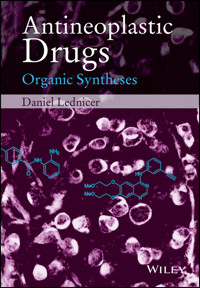
The past decade has seen a significant increase of research aimed at discovering new drugs for treating cancer, and the increasing number of new antineoplastic drugs approved by regulatory agencies reflects this. Until now, details on the synthesis of these newer agents have been scattered in various journals and in US and European patents. This timely volume deals with the organic chemistry involved in the synthesis of the agents found within antineoplastic drugs, including descriptions of the synthetic schemes for the preparation of over 200 compounds that have been granted non-proprietary names. Compounds are collected in chapters based on the mechanism of action rather than on their chemical structures. Each individual chapter is preceded by a brief description of that mechanism and includes detailed flow charts of the preparation of those compounds accompanied by discussions of the organic chemistry involved in each step. The first half of this volume is dedicated to the syntheses of established chemotherapy drugs. Kinase inhibitors occupy the following chapters with the largest single chapter dealing with the fifty compounds that inhibit tyrosine kinase. This class stands out since over twenty compounds in this group have been approved for treating patients; a rare track record compared to any other class of therapeutic agents. Antineoplastic Drugs: Organic Syntheses is written to appeal to organic and medicinal chemists in industry and academia. It is beneficial to those composing grant proposals for NCI and related organizations. The book is accessible to advanced undergraduates as well as graduates and researchers as well as those with a thorough grasp of organic chemistry.
Sie lesen das E-Book in den Legimi-Apps auf:
Seitenzahl: 306
Veröffentlichungsjahr: 2015
Ähnliche


















CONTENTS
Cover
Title page
Preface
Introduction
References
1 Alkylating Agents
1.1 bis-Chloroethyl Amines
1.2 Several Other Chloroethyl Agents
1.3 Platinum-Based Antineoplastic Agents
1.4 Miscellaneous Alkylating Agents
References
2 Antimetabolites
2.1 Introduction
2.2 Folate Antagonists
2.3 Pyrimidines and Purines
References
3 Hormone Blocking Anticancer Drugs
3.1 Introduction
3.2 Estrogen Antagonists
3.3 Androgen Antagonists
References
4 Topoisomerase Inhibitors
4.1 Introduction
4.2 Anthracyclines
4.3 Anthraquinones and Anthrapyrazoles
4.4 Camptothecins
4.5 Miscellaneous Topoisomerase Inhibitors
References
5 Mitotic Inhibitors
5.1 Introduction
5.2 Taxanes
5.3 Wholly Synthetic Compounds
References
6 Matrix Metalloproteinase Inhibitors
6.1 Introduction
6.2 Hydroxamates
References
7 Histone Deacetylase Inhibitors
7.1 Introduction
7.2 Hydroxamates
7.3 Phenylenediamines
References
8 Enzyme Inhibitor, Part I, Tyrosine Kinases
8.1 Introduction
8.2 Epidermal Growth Factor Inhibitors
8.3 VEGF
8.4 SRC Nonreceptor Tyrosine Kinase
8.5 PDGF
8.6 EGF
8.7 Other TKI
8.8 Janus Kinase Inhibitors
References
9 Enzyme Inhibitors: Part II Additional Targets
9.1 Serine–Threonine Kinase Inhibitors
9.2 Additional Enzyme Inhibitors
References
10 Miscellaneous Antineoplastic Agents
10.1 Acyclic
10.2 Monocyclic
10.3 Two Linked Rings
10.4 Rings on a Chain
10.5 Fused Rings
References
Appendix A
Combinatorial Chemistry
Index of Heterocycle Syntheses
Subject Index
End User License Agreement
List of Tables
Chapter 08
Table 8.1 Tyrosine kinase factors
List of Illustrations
Introduction
Scheme 1 Methchloramine.
Chapter 01
Scheme 1.1 Aziridinium salt formation.
Scheme 1.2 Synthesis of mustine.
Scheme 1.3 Cyclophosphamide.
Scheme 1.4 Estramustine.
Scheme 1.5 Canfosfamide.
Scheme 1.6 Nitrosoureas.
Scheme 1.7 Cloretazine.
Scheme 1.8 Cisplatin synthesis.
Scheme 1.9 Enloplatin.
Scheme 1.10 Oxaliplatin.
Scheme 1.11 Picoplatin.
Scheme 1.12 Imexon.
Scheme 1.13 Apaziquone.
Scheme 1.14 Temozolamide.
Chapter 02
Scheme 2.1 Targets of Antimetabolites.
Scheme 2.2 Methotrexate.
Scheme 2.3 Edatrexate.
Scheme 2.4 Pralatrexate.
Scheme 2.5 Lometrexol.
Scheme 2.6 Ralitrexed.
Scheme 2.7 Pelitrexol.
Scheme 2.8 Pemetrexed.
Scheme 2.9 Trimetrexate.
Scheme 2.10 Piritrexim.
Scheme 2.11 5-Fluorouracil.
Scheme 2.12 6-Mercaptopurine.
Scheme 2.13 Cytarabine.
Scheme 2.14 Gemcitabine.
Scheme 2.15 Tezacitabine.
Scheme 2.16 Sapacitabine.
Scheme 2.17 Decitabine.
Scheme 2.18 Fazarabine.
Scheme 2.19 Nelarabine.
Scheme 2.20 Cladribine.
Scheme 2.21 Fludarabine.
Chapter 03
Scheme 3.1 Clomiphene.
Scheme 3.2 Tamoxifen.
Scheme 3.3 Other “fenes.”
Scheme 3.4 Lasofoxifene.
Scheme 3.5 Raloxifene.
Scheme 3.6 Bazedoxifene.
Scheme 3.7 Fulvestrant.
Scheme 3.8 Estradiol from testosterone.
Scheme 3.9 Formestane.
Scheme 3.10 Exemestane.
Scheme 3.11 Aminoglutethimide.
Scheme 3.12 Fadrozole.
Scheme 3.13 Letrozole.
Scheme 3.14 Anastrozole.
Scheme 3.15 Vorozole.
Scheme 3.16 5α-reductase.
Scheme 3.17 Flutamide and Nilutamide.
Scheme 3.18 Bicalutamide.
Scheme 3.19 Andarine.
Scheme 3.20 Bexlosteride.
Scheme 3.21 Finasteride.
Scheme 3.22 Dutasteride.
Scheme 3.23 Abiraterone.
Scheme 3.24 Galeterone.
Scheme 3.25 Dromostanolone.
Scheme 3.26 Bolasterone and calusterone.
Chapter 04
Scheme 4.1 Rubicin antineoplastic agents.
Scheme 4.2 Idarubicin.
Scheme 4.3 Amrubicin A.
Scheme 4.4 Amrubicin B.
Scheme 4.5 Ametantrone.
Scheme 4.6 Mitoxantrone.
Scheme 4.7 Piroxantrone.
Scheme 4.8 Losoxantrone.
Scheme 4.9 Pixantrone.
Scheme 4.10 Topixantrone.
Scheme 4.11 Bisantrene.
Scheme 4.12 Camptothecin and camptogen.
Scheme 4.13 Irinotecan.
Scheme 4.14 Belotecan.
Lesen Sie weiter in der vollständigen Ausgabe!
Lesen Sie weiter in der vollständigen Ausgabe!
Lesen Sie weiter in der vollständigen Ausgabe!
Lesen Sie weiter in der vollständigen Ausgabe!
Lesen Sie weiter in der vollständigen Ausgabe!
Lesen Sie weiter in der vollständigen Ausgabe!
Lesen Sie weiter in der vollständigen Ausgabe!
Lesen Sie weiter in der vollständigen Ausgabe!
Lesen Sie weiter in der vollständigen Ausgabe!
Lesen Sie weiter in der vollständigen Ausgabe!
Lesen Sie weiter in der vollständigen Ausgabe!
Lesen Sie weiter in der vollständigen Ausgabe!
Lesen Sie weiter in der vollständigen Ausgabe!
Lesen Sie weiter in der vollständigen Ausgabe!
Lesen Sie weiter in der vollständigen Ausgabe!
Lesen Sie weiter in der vollständigen Ausgabe!
Lesen Sie weiter in der vollständigen Ausgabe!
Lesen Sie weiter in der vollständigen Ausgabe!
Lesen Sie weiter in der vollständigen Ausgabe!




