


8,49 €
Mehr erfahren.
- Herausgeber: Atlantic Books
- Kategorie: Wissenschaft und neue Technologien
- Sprache: Englisch
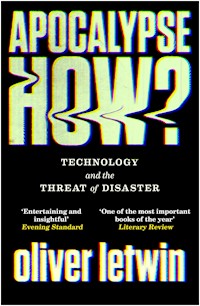
'Entertaining and insightful' -- Evening Standard 'One of the most important books of the year... Compelling' Jamie Bartlett, Literary Review 'Timely' -- New Statesman As the world becomes better connected and we grow ever more dependent on technology, the risks to our infrastructure are multiplying. Whether it's a hostile state striking the national grid (like Russia did with Ukraine in 2016) or a freak solar storm, our systems have become so interlinked that if one part goes down the rest topple like dominoes. In this groundbreaking book, former government minister Oliver Letwin looks ten years into the future and imagines a UK in which the national grid has collapsed. Reliant on the internet, automated electric cars, voice-over IP, GPS, and the internet of things, law and order would disintegrate. Taking us from high-level government meetings to elderly citizens waiting in vain for their carers, this book is a wake up call for why we should question our unshakeable faith in technology. But it's much more than that: Letwin uses his vast experience in government to outline how businesses and government should respond to catastrophic black swan events that seem distant and implausible - until they occur.
Das E-Book können Sie in Legimi-Apps oder einer beliebigen App lesen, die das folgende Format unterstützen:
Veröffentlichungsjahr: 2020
Ähnliche


















Praise forApocalypse How?
‘Entertaining and insightful . . . The picture [Letwin] paints is bleak as he uses chapters that alternate between a fictional depiction of chaotic meltdown in the year 2037 and analysis of the real-life causes to show why such disaster could occur.’
Evening Standard
‘Timely . . . it provides an insight into the mindsets that prevent politicians and civil servants from properly preparing for catastrophes.’
New Statesman
‘A vital guide for anyone in business or government who wants to know how to respond when apparently distant and implausible events strike home.’
Prospect
‘A vivid and engaging account of how the risks inherent in our increasing dependence on technology could someday coalesce into a perfect storm with disastrous consequences. Apocalypse How? reads like a dystopian thriller, but makes it clear that the dangers are very real.’
Martin Ford,
New York Times bestselling author of The Rise of the Robots
About the author
Sir Oliver Letwin was MP for West Dorset from 1997 to 2019. He has been an academic at Cambridge and Princeton universities, an investment banker and a cabinet minister at the top of the UK Government. For six years he was a member of the National Security Council as the minister with responsibility for the UK’s national resilience. He lives in West Dorset and London.
First published in hardback in Great Britain in 2020 by Atlantic Books, an imprint of Atlantic Books Ltd.
This edition published in 2021.
Copyright © Oliver Letwin, 2020
The moral right of Oliver Letwin to be identified as the author of this work has been asserted by him in accordance with the Copyright, Designs and Patents Act of 1988.
All rights reserved. No part of this publication may be reproduced, stored in a retrieval system, or transmitted in any form or by any means, electronic, mechanical, photocopying, recording, or otherwise, without the prior permission of both the copyright owner and the above publisher of this book.
Every effort has been made to trace or contact all copyright holders. The publishers will be pleased to make good any omissions or rectify any mistakes brought to their attention at the earliest opportunity.
10 9 8 7 6 5 4 3 2 1
A CIP catalogue record for this book is available from the British Library.
Paperback ISBN: 978 1 78649 688 1
E-book ISBN: 978 1 78649 689 8
Designed and typeset by EM&EN
Printed in Great Britain
Atlantic Books
An imprint of Atlantic Books LtdOrmond House
26–27 Boswell Street
London
WC1N 3JZ
www.atlantic-books.co.uk
CONTENTS
Abbreviations
People in the story
Preface to the paperback edition
Prologue
1: Could it happen?
2: The Cabinet Office
3: The social impact of black-swan events
4: Out in the darkness
5: Fragility and resilience
6: A difficult choice
7: Myths and realities
8: For whom the bell tolls
9: The global perspective
Index
ABBREVIATIONS
CCS
Civil Contingencies Secretariat
CDS
Chief of the Defence Staff
COBR
Cabinet Office Briefing Room
comms
communications
Defra
Department for Environment, Food and Rural Affairs
GCHQ
Government Communications Headquarters
GNSS
Global Navigation Satellite System
GSM
Global System for Mobile (Communications)
HMG
Her Majesty’s Government (UK)
IP
Internet Protocol
MoD
Ministry of Defence
NGO
non-governmental organization
NHS
National Health Service
NSC
National Security Council
Ofcom
Office of Communications
Ofgem
Office of Gas and Electricity Markets
Ofwat
Economic regulator of the water sector in England and Wales
PM
Prime Minister
PEOPLE IN THE STORY
The Prime Minister (PM) of Her Majesty’s Government (HMG), UK
General Sir Andrew Ark Chief of the Defence Staff (CDS)
Rt Hon. Jane Baldwin MP Chancellor of the Exchequer
Rt Hon. Sir Eric Bullient MP Minister of Housing, Communities and Local Government
Dr Bill Donoghue Duty Officer at the Bank of England
Dr Elaine Donoghue Accident and Emergency (A&E) Consultant at Yeovil Hospital
James Farrar-Scott Duty Director at Government Communications Headquarters (GCHQ)
Professor Dame Sheila Hart Chief Executive of the Office of Communications (Ofcom)
Rt Hon. Charles Hoare MP Business and Energy Secretary
Rt Hon. Simon Holt MP Minister for the Cabinet Office
Mrs Mary Hughes mother of Dr Elaine Donoghue
Rt Hon. Frank Jones MP Health Secretary
Aameen Patel Highways England traffic controller
Rt Hon. Liz Row MP Foreign Secretary
Jan Sikorski Deputy Director at the Civil Contingencies Secretariat (CCS)
Rt Hon. Harold Stuart MP Defence Secretary
Sir Jon Whewell Cabinet Secretary
PREFACE TO THE PAPERBACK EDITION
The hardback edition of this book was published in a different, more comfortable, pre-Covid-19 world. The global crisis through which we have all been living since that time has changed many things – some of them, in all probability, permanently. But there is one thing that it hasn’t changed at all. The frenetic efforts of governments, businesses and communities to address the challenge of the virus have done nothing to resolve – have, if anything, further obscured – challenges that are only a little further off.
Although this is entirely understandable, and perhaps temporarily inevitable, it exposes us (with crushing irony) to the very same danger that has afflicted the whole world in the face of the coronavirus: the danger of being under-prepared for an event whose colossal impact is ignored because the likelihood of it happening today or tomorrow is low. Once again, both the world’s leaders and the world’s populations are focussing on the present. Once again, we are paying far too little heed to building resilience against the threats of the future.
This book is about one of the most obvious, but also one of the most neglected, future threats: the threat of network collapse. It presents strong reasons for believing that we need, now, to guard against this threat, and to do so in a way that is flexible, formidable and foolproof.
Much of the book is just as applicable to the world’s past lack of preparedness for Covid-19 as it is to the world’s current lack of preparedness for network collapse. A large part of the analysis is devoted to explaining why we all (governments, businesses, media, people at large) find it so difficult to consider small probability, large impact threats with the seriousness they deserve – until they actually arrive on the scene, at which point we spend so much time and effort attending to the current catastrophe that we run the serious risk of ignoring the next threat along the line.
So part of the point of the book is to urge that we should learn the lessons of history in the right way. Instead of assuming that the next crisis will be substantially the same as the last one, or that we have now ‘had’ crises, we should assume instead that a series of crises (each, in themselves, unlikely but serious in their impacts) will come at us – generally from unanticipated directions. We should assume that our defences against them, however well-constructed, will sometimes prove inadequate, because we cannot expect to construct adequate defences against unanticipated causes.
None of this, however, should make us pessimistic, let alone despairing. On the contrary, the moral of this book is that if we take appropriate steps to prepare ourselves for dealing with crises that have occurred despite our best defences against them, then we can in fact get through them with reasonable aplomb. The art of crisis management is to have means to hand of mitigating the problems we cannot prevent, and of being well prepared to deploy those mitigations in the face of disconcerting circumstances. There is no rule book, no text book, no recipe that will provide all of the answers in advance. Life as we know it in peacetime cannot be preserved, unaffected in wartime. But we can get through most kinds of war without too many dead at the end, if we know how to make do and mend, and if we have had the foresight to furnish ourselves with the rudimentary means of doing so.
It is in this spirit that I hope the recommendations made in this book for the construction of analogue fallbacks to handle digital crises will be read and understood. They are, I believe, a necessary feature of any resilient society in a modern age hugely dependent on a network of networks. But they are also a paradigm for the sort of preparation that humanity at large, and each country’s government in particular, should make for dealing with events that we hope not to witness, may never witness, and yet which need to be recognised as possibilities rather than dismissed as fantasies.
Oliver LetwinOctober 2020
PROLOGUE
Midnight, Thursday 31 December 2037
Aameen Patel may have been the first person to notice. Everyone else in Integrated Traffic Control at Highways England’s Swindon HQ was either snoozing or drinking coffee in the lounge area. But Aameen had arrived at 23:45 for the midnight to 06:00 shift, and had just turned on his screen. He cursed silently when it went blank. With all this advanced technology, why couldn’t they make sure computers worked on New Year’s Eve?
He obviously couldn’t report the fault using the normal Skype-view on his blank terminal, so he reached for his i16 to call the IT people. He was so focused on trying to remember the number that he didn’t at first take in that the signal-indicator wasn’t showing any bars.
It was at this point, he later remembered, that the lights in the Control Room went off. And he realized there was some noise missing. He gradually worked out that the missing element was the usual soft hiss of the warm-air system coming up through the underfloor vents. Then, just a few seconds later, the noise of the warm air and the lights in the Control Room came on again as the reserve generator cranked into action. And that was when he looked out of the large viewing-window in front of his console. Where there should have been a thin stream of New Year’s Eve traffic passing along the M25 in an orderly sequence, there was instead a growing pile-up of crashed cars and lorries, partially illuminated by headlights jutting upwards and outwards as the concertina accumulated on the icy road.
Even Aameen, always cautious about jumping to conclusions, wondered whether all of this was entirely coincidental.
Some miles away, James Farrar-Scott, the Duty Director at GCHQ in Cheltenham, was a great deal more worried than Aameen. His reserve generators had kicked in almost instantaneously when the lights had flickered off, but every one of the sixteen screens mounted on the wall of his room was showing a malfunction. Unlike Aameen, he couldn’t try his personal smartphone, because it was locked up in the safe at reception that was used to store mobile devices belonging to GCHQ personnel when they entered the doughnut-shaped building; but he had tried the specially protected fibre-based phone on his desk, and had found that it – as he more than half expected – was down too.
James knew perfectly well what all of this meant. Just a few days back, he had been part of the team briefing ministers at the National Security Council on the risk that someone, somewhere, might be able to turn off a lot of things at once, using the appropriate combination of cyber-worms. Now, his own words to the NSC members were ringing in his ears: ‘For years, we have been warning that more and more is beginning to depend on less and less. The Internet is no longer just a communication system. It is now the infrastructure on which every major system and utility in this country depends. And that means all of those systems are vulnerable.’
Staring at the blank screens in front of him and recalling the NSC meeting, what flashed through James’s mind were all the wrong turnings that had been taken by successive governments over more than a decade: the decision not to invest in an alternative mass communication system that could operate independently from the Internet; the decision to use 5G, 6G and then 7G as the basis for autonomous vehicle control with no Internet-independent back-up; the decision to let the hard-pressed NHS and social care providers base their entire integrated patient-management system on cloud-computing; the decision not to insist on expensive back-up generation for recharging electric vehicles; and, above all, the crucial decision in the early 2020s to save huge sums of money by moving the whole of the electricity, gas and water control-systems over to an integrated 6G solution. Ever since the North Korean cyber-attack on Sony at the start of the century, the extent of the vulnerabilities had been acknowledged, and large sums had been spent on building ‘walls’ to protect the key systems. But no one had been willing to face the elephant in the room: what happens if the walls are breached? Now, as he knew only too well, we were going to pay a heavy price for all of those decisions.
Over in the Bank of England’s headquarters at Threadneedle Street in London, Bill Donoghue was going through a rather different sequence of thoughts. He was thinking about his wife, Elaine, slaving away in the A&E unit at Yeovil Hospital. Ever since the new Health Secretary had won his carefully prepared battle with the consultants and had forced them to provide what he described as ‘senior cover at all A&E units 24/7’, it had become clear that consultant physicians at small district general hospitals were going to have a change in lifestyle; the result was Bill’s solo New Year’s Eve at the Bank in London rather than around the log-fire with Elaine in their Somerset cottage.
There had been, of course, nothing in particular for him to do when he arrived at Threadneedle Street as the sole officer volunteering for duty that night. Financial institutions and markets across the world were shut for New Year. Even the Shanghai Stock Exchange and the Chinese banks – which had their real holiday at the time of the Chinese New Year – would be closed for the next 24 hours. So he had been catching up with some tedious office chores that he had put off for weeks: filling out meaningless online timesheets required by some pedant in administration. He was making progress, aided by the box of Christmas chocolates he had brought in. But then the lights went off and the computer screen went blank.
The strange thing was that, when the reserve generator kicked in and the computer started up, the online timesheets didn’t re-appear. He pushed every button he could think of, then re-booted the computer and finally tried to open up the FaceTime function which the Bank now used for all calls, in the hope that someone from the IT department might be around. When none of this worked, he concluded that the brief outage must have done some permanent damage to the machine and reached for his smartphone to call the switchboard. There was no signal. He realized that something quite serious had happened to the communications system.
This was also the moment when he began to worry about his 92-year-old mother-in-law, Mary Hughes. Although frail, she remained fiercely independent and had stayed with him and Elaine over Christmas. She had then returned to her own house in East Coker and had absolutely refused to have anything to do with a New Year’s Eve celebration, which she regarded as arrant nonsense. So now she was all alone. If something had gone wrong with the phones, and if whatever it was had affected Somerset as well as London, how was anyone going to know if she needed help? He recalled the trip to A&E following Mary’s unwise skating adventure two years ago. He really didn’t fancy a repeat of that nightmare.
The natural thing would be to get hold of Elaine. But he didn’t have any way of doing so. And if there really was a problem in Somerset, then her phone would be down too. This left him with the question, should he abandon his pretty well useless post at the Bank and drive down to East Coker? Or remain here and hope for the best so far as his mother-in-law was concerned? The more he thought about it, the clearer he became that he’d better go down to the West Country. With Elaine stuck at the hospital, and no one else looking after Mary, he might be needed – and he could always come back up to London well in time for the market opening in Shanghai late the next night. He headed for the internal circular yard by the Governor’s entrance in which, as a special favour on New Year’s Eve, the security men had let him leave his car.
As he switched on the car and turned up the heating, the thought did cross his mind that whatever was causing a problem with the phones and computers might also cause some difficulty for his journey. But, by now, he was committed to a course of action and he had never believed in vacillating: in for a penny, in for a pound. As he turned down Cheapside, he noticed a warning light on the dashboard that he hadn’t seen before, and which didn’t mean anything to him. But the car seemed to be working fine, and it couldn’t be a battery problem because – having invested in a Jaguar equipped with the new Dyson 888 solid-state batteries – he had more than 850 miles of charge, enough to get him the 150 miles to Somerset and back and still leave plenty of spare battery for whatever he needed to do once he got there.
With almost no traffic on the London streets, everything went smoothly until he was getting close to the Hogarth roundabout at the approach to the M4 and switched on the onboard guidance system. This was when he understood the meaning of the persistent dashboard warning light. The flashing words on the screen, ‘Guidance System Offline’, didn’t really surprise him, now he came to think of it, because he had seen the Transport Secretary being interviewed on TV just before Christmas about some Parliamentary Select Committee report that had warned about the possibility of log-jam on the motorways if the GPS, Galileo and 7G systems failed. The Transport Secretary had been very reassuring, explaining that, although this was theoretically possible, the chances of the satellite-based systems and all of the 7G system failing simultaneously were fantastically low. Yes, he’d said, there could well be localized failures, but even these were likely to be very rare given the amount of redundancy in the systems. And in any case they would only ever cause the same sort of disruption as an accident or road closure of the sorts to which we had become accustomed over many decades.
It did cross Bill’s mind at the time that the Department for Transport might have been a trifle too optimistic about this. But, however localized or generalized this particular problem might prove to be, the immediate difficulty was that, without logging his car into the on-route motorway guidance system, he wouldn’t be able to enter the motorway. Or at least that was what was meant to happen. As the notices all the way from Chiswick made abundantly clear – with highly expressive diagrams for the benefit of any non-English-speaking tourists – failure to log in would cause his engine to be automatically slowed down and then shut off on the approach road.
The strange thing was that he was now on the approach road, and none of this seemed to be happening. Like the smattering of other cars on the road, he seemed to be moving along, and he still seemed to be able to control the speed. Presumably, whatever system it was that was meant to stop his engine had also failed. But did this make it legal to use the motorway without logging in? Bill had no idea what the answer to that one might be. As he didn’t want to run the risk of finding out, he moved into the left-hand lane and made his way off the M4 approach road onto the old A4. Clearly, other people were making the same decision; the slip road was filling up, and he couldn’t see anyone in front of him heading towards the M4.
He thought it likely that he’d also be unable to enter the M25 or the M3 and would therefore have to make his way to Somerset on the A30 or some other route that didn’t involve any motorways. But how to get from the A4 to the A30? Normally, it would be a doddle: just switch on the onboard guidance system, put in the destination, switch to auto-control, and the car would take him there without any further effort on his part. But with the guidance system malfunctioning, he wasn’t even able to operate the plain-vanilla GPS or the direction-finding function on which he used to rely before auto-control took over. He needed to go back to the Stone Age and buy a physical, printed map. So he began looking out for a garage.
A few minutes later, he realized he had just passed a garage. Damn. Why had that happened, when he’d been on the lookout for one? He kept his eyes peeled, and then it came to him. The reason he hadn’t spotted the garage was that, until his LED-light-sensitive headlights had picked up its outer perimeter, it had been invisible. And that was when he realized what he should have noticed all along. The power cut at the Bank, quickly remedied by the Bank’s reserve generators, had been just a tiny fraction of the problem with London’s electricity supply. It wasn’t just the houses that were, naturally enough, dark at 01:30 in the morning. There were no street-lights even on the major roads where they would normally be on throughout the night; the advertising hoardings were black, and so were the garages.
In the old days, of course, there had been paper-based maps – things you could keep in the car, which didn’t rely on any electronics. But no longer. Somehow, he was going to have to use his intuition and those road-signs he could read in the light provided by his headlights to find his way southwards from the A4 to the A30 and on towards Yeovil. It occurred to him that he might benefit from some traffic guidance from the BBC. So he switched on the car radio. Nothing. Clearly, with full digital switchover, whatever normally powered the BBC’s transmission network had come to depend on the same source of supply that had turned off the lights, at least in the London area. Well, there was nothing he could do about any of this, so his best bet was just to continue.
1
COULD IT HAPPEN?
The events of New Year’s Eve 2037, described in the Prologue of this book, are, of course, pure fiction. But are they just fiction? Or could they happen?
The answer is that they are not just fiction. They could indeed happen in any society in the developed world. In fact, there is every reason to expect that, if we don’t take appropriate action, they, or something very much like them, will happen at some point in the not too distant future. One just has to look at the reports of the Russian cyber-attacks on Ukraine’s power grid in 2015 and 2016 to see that we are dealing with a coming reality rather than science fiction.
The story told in this book is a modern-day parable: a story with a meaning, told with the purpose of conveying that meaning. But, like all parables, it is just one of many different stories that could have made the same point. And, as with all parables, to grasp the point, one must look through the medium to find the message.
I have chosen to illustrate the fragility of converging networks, and the dangers for society of excessive dependence on such networks, through picturing what might occur if a particular event were to have a particular set of effects on the electricity grid and on certain satellites. But this is not to say that electricity grids and satellite systems are the only networks that could fail, or that an event of the sort pictured in the story is the only kind of thing that could cause such fragile networks to break down. By no means. There are many converging, fragile networks; and there are many kinds of things that could cause them to break down. The time has come to recognize that more and more parts of our lives – of society itself – depend on fewer and fewer, more integrated networks. More of our communications infrastructure, our financial and industrial systems, our transport and energy systems – in short, everything we have learned to use in every aspect of our normal lives – can now function only through a highly developed set of interconnected and interdependent networks. The electricity grid, the Internet, satellite positioning systems and mobile telecommunications networks have become the unseen net that supports the society and economy of most developed countries. And each of these networks, in varying ways, depends on the others. So we are close to having, in effect, one network of networks on which more or less everything else – government, the public services, business and family life – relies.
A good way of understanding what is going on at present – and how many of the normal features of life either already hang or will shortly be hanging on this single, fragile thread – is to think back just over forty years, to 1976. That may seem a long time ago, but it is within the lifespan of about half the people alive today.




