


Applied Food Protein Chemistry E-Book
151,99 €
Mehr erfahren.
- Herausgeber: John Wiley & Sons
- Kategorie: Fachliteratur
- Sprache: Englisch
Food proteins are of great interest, not only because of their nutritional importance and their functionality in foods, but also for their detrimental effects. Although proteins from milk, meats (including fish and poultry), eggs, cereals, legumes, and oilseeds have been the traditional sources of protein in the human diet, potentially any proteins from a biological source could serve as a food protein. The primary role of protein in the diet is to provide the building materials for the synthesis of muscle and other tissues, and they play a critical role in many biological processes. They are also responsible for food texture, color, and flavor. Today, food proteins are extracted, modified, and incorporated into processed foods to impart specific functional properties. They can also have adverse effects in the diet: proteins, such as walnuts, pecans, almonds, and cashews, soybean, wheat, milk, egg, crustacean, and fish proteins can be powerful allergens for some people.
Applied Food Protein Chemistry is an applied reference which reviews the properties of food proteins and provides in-depth information on important plant and animal proteins consumed around the world. The book is grouped into three sections: (1) overview of food proteins, (2) plant proteins, and (3) animal proteins. Each chapter discusses world production, distribution, utilization, physicochemical properties, and the functional properties of each protein, as well as its food applications. The authors for each of the chapters are carefully selected experts in the field. This book will be a valuable reference tool for those who work on food proteins. It will also be an important text on applied food protein chemistry for upper-level students and graduate students of food science programs.
Sie lesen das E-Book in den Legimi-Apps auf:
Seitenzahl: 1120
Veröffentlichungsjahr: 2014
Ähnliche




















Applied Food Protein Chemistry
Edited by
Zeynep Ustunol
Michigan State University East Lansing, Michigan, USA
This edition first published 2015 © 2015 by John Wiley & Sons, Ltd
Registered office: John Wiley & Sons Ltd, The Atrium, Southern Gate, Chichester, West Sussex, PO19 8SQ, UK
Editorial offices: 9600 Garsington Road, Oxford, OX4 2DQ, UK The Atrium, Southern Gate, Chichester, West Sussex, PO19 8SQ, UK 111 River Street, Hoboken, NJ 07030-5774, USA
For details of our global editorial offices, for customer services and for information about how to apply for permission to reuse the copyright material in this book please see our website at www.wiley.com/wiley-blackwell.
The right of the author to be identified as the author of this work has been asserted in accordance with the UK Copyright, Designs and Patents Act 1988.
All rights reserved. No part of this publication may be reproduced, stored in a retrieval system, or transmitted, in any form or by any means, electronic, mechanical, photocopying, recording or otherwise, except as permitted by the UK Copyright, Designs and Patents Act 1988, without the prior permission of the publisher.
Designations used by companies to distinguish their products are often claimed as trademarks. All brand names and product names used in this book are trade names, service marks, trademarks or registered trademarks of their respective owners. The publisher is not associated with any product or vendor mentioned in this book.
Limit of Liability/Disclaimer of Warranty: While the publisher and author(s) have used their best efforts in preparing this book, they make no representations or warranties with respect to the accuracy or completeness of the contents of this book and specifically disclaim any implied warranties of merchantability or fitness for a particular purpose. It is sold on the understanding that the publisher is not engaged in rendering professional services and neither the publisher nor the author shall be liable for damages arising herefrom. If professional advice or other expert assistance is required, the services of a competent professional should be sought.
Library of Congress Cataloging-in-Publication Data has been applied for.
ISBN 978-1-119-94449-2 (cloth)
A catalogue record for this book is available from the British Library.
Wiley also publishes its books in a variety of electronic formats. Some content that appears in print may not be available in electronic books.
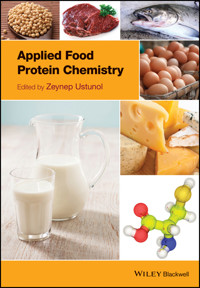
Cover images: Alaskan king salmon ©iStock/ debibishop, Soybeans ©iStock/ fotografiabasica, Various types of cheese ©iStock/ olgna, Milk ©iStock/ stocksnapper, Sirloin steak ©iStock/ bdmcintosh, Trade in eggs ©iStock/ intraprese, DrugModel: Amino Acid Cysteine ©iStock/ shunyufan
Contents
About the Editor
List of Contributors
Scientific Review Panel
Preface
Acknowledgments
Part I Protein Properties
1 Introduction to Food Proteins
2 Overview of Food Proteins
2.1 Overview of food proteins
2.2 Projected needs for the future
Reference
3 Amino Acids, Peptides, and Proteins
3.1 Introduction
3.2 Amino acids
3.3 Peptides, oligopeptides, polypeptides, proteins
3.4 Conclusion
References
4 Physical, Chemical, and Processing-Induced Changes in Proteins
4.1 Introduction
4.2 Protein denaturation
4.3 Chemical modification of proteins
4.4 Enzymatic modification of proteins
4.5 Processing-induced changes in food proteins
4.6 Oxidizing agents
4.7 Conclusion
References
5 Functional Properties of Food Proteins
5.1 Introduction
5.2 Interfacial properties
5.3 Proteins as structure formers leading to aggregation and network formation
5.4 Binding properties of food proteins
5.5 Conclusions and outlook
References
6 Biologically Active Peptides from Foods
6.1 Introduction
6.2 Production of bioactive peptides
6.3 Bioactive peptides in health and disease
6.4 Application and development of bioactive peptides
6.5 Conclusion
References
7 Protein and Peptide-Based Antioxidants
7.1 Introduction
7.2 Background
7.3 Classes of natural antioxidants
7.4 Conclusions
References
8 Nutritional Aspects of Proteins
8.1 Introduction
8.2 Evaluation of protein quality
8.3 Protein and amino acid requirements for humans
8.4 Conclusion
References
Part II Plant Proteins
9 Soy Proteins
9.1 Introduction
9.2 Soybean proteins
9.3 Health aspects of soybean proteins
9.4 Soy protein analysis
9.5 Physicochemical modifications of soy proteins by technological approaches
9.6 New trends of soy proteins in food applications
9.7 Other applications of soy proteins
9.8 Conclusion
Acknowledgments
References
10 Canola/Rapeseed Proteins and Peptides
10.1 Introduction
10.2 Canola production
10.3 Storage proteins of canola and rapeseed
10.4 Important functional properties of canola/rapeseed proteins
10.5 Biological activity
10.6
In vivo
dietary toxicity
10.7 Role in aquaculture
10.8 Role in ruminant nutrition
10.9 Food applications of canola proteins
10.10 Conclusion
References
11 Wheat Proteins
11.1 Introduction
11.2 The protein classes of wheat endosperm
11.3 Proteins of non-endosperm tissues
11.4 Functional roles of wheat proteins
11.5 Gluten as an industrial commodity
11.6 Nutritional aspects of wheat proteins
11.7 Health-related aspects of wheat proteins
11.8 Wheat proteomics—new perspectives
11.9 Future prospects
11.10 Conclusion
Acknowledgment
References
12 Rice Proteins
12.1 Introduction
12.2 Rice proteins
12.3 Extraction of rice proteins
12.4 Functional properties of rice proteins
12.5 Applications in foods
12.6 Conclusions
References
13 Sorghum and Millet Proteins
13.1 Introduction
13.2 Taxonomy
13.3 Production and distribution
13.4 Physicochemical properties of sorghum and millet proteins
13.5 Functional properties of sorghum and millet proteins
13.6 Conclusion
Note
References
Part III Animal Proteins
14 Muscle Proteins
14.1 Introduction
14.2 World livestock for muscle protein production
14.3 Emerging markets: meat production and consumption by BRICS countries
14.4 Meat processing for various utilizations
14.5 Structure and chemical composition of skeletal muscle
14.6 Conversion of muscle to meat
14.7 Pre-rigor/hot boning technology
14.8 Conclusions
References
15 Seafood Proteins and Surimi
15.1 Introduction
15.2 World production, distribution, and utilization of surimi
15.3 Surimi production
15.4 Fish proteins
15.5 Methods used to determine physicochemical properties of fish proteins
15.6 Methods for protein identification and species differentiation
15.7 Fish allergens
15.8 Conclusion
References
16 Milk Proteins
16.1 Introduction
16.2 Caseins
16.3 Whey proteins
16.4 Conclusions
References
17 Egg Proteins
17.1 Introduction
17.2 World production of avian eggs
17.3 Structure and chemical composition of the egg
17.4 Functional properties of egg proteins
17.5 Conclusion
References
Index
Advert
End User License Agreement
List of Tables
Chapter 3
Table 3.1
Table 3.2
Chapter 6
Table 6.1
Table 6.2
Table 6.3
Table 6.4
Table 6.5
Table 6.6
Table 6.7
Chapter 7
Table 7.1
Chapter 8
Table 8.1
Table 8.2
Table 8.3
Table 8.4
Table 8.5
Table 8.6
Table 8.7
Table 8.8
Table 8.9
Table 8.10
Table 8.11
Table 8.12
Table 8.13
Table 8.14
Table 8.15
Table 8.16
Chapter 9
Table 9.1
Table 9.2
Table 9.3
Table 9.4
Chapter 11
Table 11.1
Table 11.2
Table 11.3
Table 11.4
Chapter 12
Table 12.1
Table 12.2
Table 12.3
Table 12.4
Table 12.5
Table 12.6
Table 12.7
Table 12.8
Table 12.9
Table 12.10
Table 12.11
Table 12.12
Table 12.13
Table 12.14
Chapter 13
Table 13.1
Table 13.2
Table 13.3
Table 13.4
Table 13.5
Chapter 14
Table 14.1
Table 14.2
Table 14.3
Table 14.4
Chapter 16
Table 16.1
Table 16.2
Table 16.3
Table 16.4
Table 16.5
Chapter 17
Table 17.1
Table 17.2
Table 17.3
Table 17.4
Table 17.5
Table 17.6
Guide
Cover
Table of Contents
Preface
Pages
vii
ix
x
xi
xii
xiii
xiv
xv
xvi
1
3
4
5
5
6
7
8
9
11
11
12
13
14
15
16
17
18
19
20
21
23
24
25
26
27
28
29
30
31
32
33
34
35
36
37
38
39
40
41
42
43
44
45
46
47
48
49
50
51
52
53
54
55
56
57
58
59
60
61
62
63
64
65
66
67
68
69
70
71
72
73
75
76
77
78
79
80
81
82
83
84
85
86
87
88
89
90
91
92
93
94
95
96
97
98
99
100
101
102
103
104
105
106
107
108
109
110
111
112
113
114
115
116
117
118
119
120
121
122
123
124
125
126
127
128
129
130
131
132
133
134
135
136
137
139
141
142
143
144
145
146
147
148
149
150
151
152
153
154
155
156
157
158
159
160
161
162
163
164
165
166
167
168
169
170
171
172
173
174
175
176
177
178
179
180
181
182
183
184
185
186
187
188
189
190
191
193
194
195
196
197
198
199
200
201
202
203
204
205
206
207
208
209
210
211
212
213
214
215
216
217
218
219
220
221
222
223
224
225
226
227
228
229
230
231
232
233
234
235
236
237
238
239
240
241
242
243
244
245
246
247
248
249
250
251
252
253
254
255
256
257
258
259
260
261
262
263
264
265
266
267
268
269
270
271
272
273
274
275
276
277
278
279
280
281
282
283
284
285
286
287
288
289
290
291
292
293
294
295
296
297
298
299
300
301
302
303
305
306
307
308
309
310
311
312
313
314
315
316
317
318
319
320
321
323
324
325
326
327
328
329
330
331
332
333
334
335
336
337
338
339
340
341
342
343
344
345
346
347
348
349
350
351
352
353
354
355
356
357
358
359
361
363
364
365
366
367
368
369
370
371
372
373
374
375
376
377
378
379
380
381
382
383
384
385
386
387
388
389
390
391
392
393
394
395
396
397
398
399
400
401
402
403
404
405
406
407
408
409
410
411
412
413
414
415
416
417
418
419
420
421
422
423
424
425
427
428
429
430
431
432
433
434
435
436
437
438
439
440
441
442
443
444
445
446
447
448
449
450
451
452
453
454
455
456
457
458
459
460
461
462
463
464
465
466
467
468
469
470
471
472
473
474
475
476
477
478
479
480
481
482
483
484
485
486
487
488
489
490
491
492
493
494
495
496
497
498
499
500
501
502
503
504
505
About the Editor
Zeynep Ustunol is a Professor of Food Science and Human Nutrition and Director of Graduate Programs at Michigan State University. She received her BS and MS degrees from Utah State University in Food Science and her PhD degree in Food Science with a minor in Biochemistry at University of Kentucky. After two years of a postdoctoral fellowship in the Department of Animal Science at University of Kentucky, she joined the faculty in the Department of Food Science and Human Nutrition at Michigan State University. She teaches Food Chemistry, Advanced Food Chemistry, Principles of Food Science, and Dairy Processing courses at Michigan State University. She also has an active research program in dairy chemistry/processing focused on enhancing the value of dairy and dairy-based products. For many years Dr. Ustunol has served as the Faculty Coordinator for R.J. Brunner Protein Symposium, which was held yearly at Michigan State University in honor of Dr. Brunner. This symposium has been the source of inspiration for this book.
Dr. Ustunol is the recipient of the Fulbright Senior Research Scholar Award to New Zealand, and recipient of the American Dairy Science Association Milk Industry Foundation Outstanding Teaching Award. Dr. Ustunol is an active member of the American Dairy Science Association (ADSA), Institute of Food Technologists (IFT), American Chemical Society (ACS), and American Association for Advancement of Science (AAAS). During 2004–2008, she served as the Senior Editor and Editor of the Journal of Dairy Science.
List of Contributors
Ayyappan Appukuttan Aachary
Department of Human Nutritional Sciences
University of Manitoba
Winnipeg, Canada
Scott Bean
Center for Grain and Animal Health Research
United States Department of Agriculture
Agricultural Research Service
Manhattan, Kansas, USA
Frank Békés
FBFD PTY LTD
New South Wales, Australia
Milena Corredig
Department of Food Science
University of Guelph
Guelph, Ontario, Canada
Vermont P. Dia
Department of Food Science and Human Nutrition
University of Illinois Urbana-Champaign
Urbana, Illinois, USA
Michael N.A. Eskin
Department of Human Nutritional Sciences
University of Manitoba
Winnipeg, Canada
Nana Y. Farkye
Dairy Products Technology Center
California Polytechnic State University
San Luis Obispo, California, USA
Brian P. Ioerger
Center for Grain and Animal Health Research
United States Department of Agriculture
Agricultural Research Service
Manhattan, Kansas, USA
Angéla Juhász
Agricultural Institute
Centre for Agricultural Research
Hungarian Academy of Sciences
Martonvásár, Hungary
Iksoon Kang
Animal Science/Food Science and Human Nutrition
Michigan State University
East Lansing, Michigan, USA
Eleana Kristo
Department of Food Science
University of Guelph
Guelph, Ontario, Canada
Quanqaun Li
Department of Biochemistry
Memorial University
St. John's, Newfoundland, Canada
Elvira González de Mejía
Department of Food Science and Human Nutrition
University of Illinois Urbana-Champaign
Urbana, Illinois, USA
Yoshinori Mine
Department of Food Science
University of Guelph
Guelph, Ontario, Canada
Luis Mojica
Department of Food Science and Human Nutrition
University of Illinois Urbana-Champaign
Urbana, Illinois, USA
Roger Nahas
Kalsec, Inc.
Kalamazoo, Michigan, USA
Jae W. Park
OSU Seafood Research and Education Center
Oregon State University
Astoria, Oregon, USA
Marissa Villafuerte Romero
Rice Chemistry and Food Science Division
Philippine Rice Research Institute
Maligaya, Science City of Muñoz, Nueva Ecija, Philippines
Zachary H. Reed
Kraft Foods/Oscar Mayer
Madison, Wisconsin, USA
Pranjal Singh
Department of Food Science and Human Nutrition
Michigan State University
East Lansing, Michigan, USA
Nagendra Shah
Department of Food and Nutritional Science
University of Hong Kong
Hong Kong
Fereidoon Shahidi
Department of Biochemistry
Memorial University
St. John's, Newfoundland, Canada
Usha Thiyam-Hollander
Department of Human Nutritional Sciences
University of Manitoba
Winnipeg, Canada
Nathalie Trottier
Department of Animal Science
Michigan State University
East Lansing, Michigan, USA
Zeynep Ustunol
Department of Food Science and Human Nutrition
Michigan State University
East Lansing, Michigan, USA
Ryan Walker
Department of Food Science and Human Nutrition
Michigan State University
East Lansing, Michigan, USA
John Weaver
Kalsec, Inc.
Kalamazoo, Michigan, USA
Colin W. Wrigley
Queensland Alliance for Agriculture and Food Innovation
The University of Queensland
St Lucia, Australia
Scientific Review Panel
Dr. Scott Bean
Center for Grain and Animal Health Research
United States Department of Agriculture
Agriculture Research Service
Manhattan, Kansas, USA
Professor Matt Doumit
Department of Animal and Veterinary Science
University of Idaho
Moscow, Idaho, USA
Professor Patrick Fox
University College Cork
Cork, Ireland
Dr. Bienvenido O. Juliano
Philippine Rice Research Institute
Los Baños Pili Drive, UPLB Campus College
Laguna, Philippines
Professor Tyre Lanier
Department of Food Science
North Carolina State University
Raleigh, North Carolina, USA
Professor Eunice Li-Chan
Faculty of land and food systems
University of British Columbia
Vancouver, BC, Canada
Professor Lloyd Rooney
Department of Nutrition and Food Science
Texas A & M University
College Station, Texas, USA
Professor John Taylor
Department of Food Science
University of Pretoria
Pretoria, South Africa
Professor Nagendra Shah
Department of Food and Nutritional Science
University of Hong Kong
Hong Kong
Professor Denise Smith
School of Food Science
Washington State University and University of Idaho
Pullman, Washington, USA
Preface
The intent of this book is to provide an updated applied reference book for those who work with or do research on food proteins. This book is also intended to provide an updated text on applied food protein chemistry for upper-level students or graduate students in Food Science programs.
The information in the book is grouped into three sections: (1) overview of food proteins, (2) plant proteins, and (3) animal proteins. The first section on the overview of food proteins covers amino acid, peptide, and protein chemistry, reviews physical and chemical properties of food proteins, their chemical, physical, and enzymatic modification. Functional properties, nutritional aspects of proteins as well as biologically active and antioxidant peptides are also covered in separate chapters. The focus of the remaining two sections is to cover in depth use of both plant proteins (soy, canola, wheat, rice, sorghum, millet) and animal proteins (muscle, dairy, egg, seafood). Each chapter discusses global production, distribution, utilization, physicochemical properties, their functional properties, and food applications. The authors for each of the chapters have been carefully selected from those actively working in the topic area and have a reputation of being an expert in the field. All chapters are peer-reviewed. The book is designed to augment the related books currently in the market.
I am indebted to the contributing authors of this book and the scientific review panel for their hard work, contributions, and high level of professionalisms. I hope that readers of this book will find it useful, and will direct their comments, and any unavoidable errors that they detect to my attention.
Zeynep UstunolMichigan State University East Lansing, Michigan, USA
Acknowledgments
I would like to thank Gavin Witter for the editorial and technical assistance he has provided to this project, and Gareth Ross for his loving support at all stages of this project. I also would like to acknowledge all my colleagues and students who have provided constructive comments and feedback during the course of this book.
Zeynep UstunolMichigan State University East Lansing, Michigan, USA
IProtein Properties
1Introduction to Food Proteins
Lesen Sie weiter in der vollständigen Ausgabe!
Lesen Sie weiter in der vollständigen Ausgabe!
Lesen Sie weiter in der vollständigen Ausgabe!
Lesen Sie weiter in der vollständigen Ausgabe!
Lesen Sie weiter in der vollständigen Ausgabe!
Lesen Sie weiter in der vollständigen Ausgabe!
Lesen Sie weiter in der vollständigen Ausgabe!
Lesen Sie weiter in der vollständigen Ausgabe!
Lesen Sie weiter in der vollständigen Ausgabe!
Lesen Sie weiter in der vollständigen Ausgabe!
Lesen Sie weiter in der vollständigen Ausgabe!
Lesen Sie weiter in der vollständigen Ausgabe!
Lesen Sie weiter in der vollständigen Ausgabe!
Lesen Sie weiter in der vollständigen Ausgabe!
Lesen Sie weiter in der vollständigen Ausgabe!
Lesen Sie weiter in der vollständigen Ausgabe!
Lesen Sie weiter in der vollständigen Ausgabe!
Lesen Sie weiter in der vollständigen Ausgabe!
Lesen Sie weiter in der vollständigen Ausgabe!
Lesen Sie weiter in der vollständigen Ausgabe!
Lesen Sie weiter in der vollständigen Ausgabe!




