


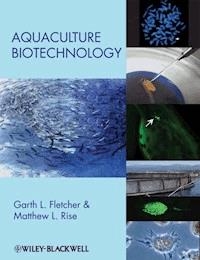
Aquaculture Biotechnology E-Book
184,99 €
Mehr erfahren.
- Herausgeber: John Wiley & Sons
- Kategorie: Fachliteratur
- Sprache: Englisch
This important book looks at a broad spectrum of biotech research efforts and their applications to the aquaculture industry. Aquaculture Biotechnology provides key reviews that look at the application of genetic, cellular, and molecular technologies to enable fish farmers to produce a more abundant, resilient, and healthier supply of seafood. Aquaculture Biotechnology is divided into seven sections and nineteen chapters that cover topics ranging from broodstock improvement to fish health and gene transfer. With chapters provided by leading researchers and skillfully edited by top scientists in the field, this will be a valuable tool to researchers, producers, and students interested in better understanding this dynamic field of aquaculture.
Sie lesen das E-Book in den Legimi-Apps auf:
Seitenzahl: 930
Veröffentlichungsjahr: 2011
Ähnliche




















Contents
Cover
Title Page
Copyright
Dedication
Preface
Contributors
Part 1: Broodstock Improvement
Chapter 1: Genomic Tools for Understanding the Molecular Basis of Production-Relevant Traits in Finfish
OVERVIEW
TARGETED, TRAIT-RELEVANT GENE DISCOVERY
THE APPLICATION OF MICROARRAY TECHNOLOGY IN FINFISH AQUACULTURE AND RESEARCH
Chapter 2: Advances in Genomics and Genetics of Penaeid Shrimp
INTRODUCTION
EST COLLECTION AS AN APPROACH TO GENE DISCOVERY IN SHRIMP
MEDIUM- TO HIGH-THROUGHPUT STUDIES OF DIFFERENTIAL EXPRESSION AND GENE DISCOVERY
RNAi-BASED APPLICATIONS IN SHRIMP AQUACULTURE: FROM REVERSE GENETICS TO CONTROL OF DISEASES
MARKERS, GENETIC MAPS, AND LARGE INSERT GENOMIC LIBRARIES IN SHRIMP
ANALYTICAL CHALLENGES IN GENOMICS AND GENETICS OF SHRIMP
CONCLUDING REMARKS
ACKNOWLEDGMENTS
Chapter 3: Genetic and Genomic Approaches to Atlantic Halibut Broodstock Management
INTRODUCTION
PRODUCTION OF ALL-FEMALE STOCKS OF ATLANTIC HALIBUT
PEDIGREE ANALYSIS
HALIBUT GENETIC LINKAGE MAP
QUANTITATIVE TRAIT LOCI
BROODSTOCK SELECTION
FUTURE DIRECTIONS
ACKNOWLEDGEMENTS
Chapter 4: Prospects and Pitfalls of Clonal Fishes in the Postgenomic Era
BACKGROUND
CLONAL LINES: A REPEATABLE EXPERIMENTAL SYSTEM
GENETIC ANALYSES USING CLONE CROSSES
UTILIZATION OF DNA OR RNA FROM CLONES
CASE EXAMPLES OF POTENTIAL FOR UTILIZING CLONES IN AQUACULTURE-RELATED RESEARCH
CONCLUSION
Part 2: Molecular Cytogenetics
Chapter 5: Application of Fluorescence In Situ Hybridization (FISH) to Aquaculture-Related Research
INTRODUCTION
LOCALIZATION OF REPETITIVE SEQUENCES, TRANSPOSONS, AND TRANSGENES
IDENTIFICATION AND CHARACTERIZATION OF SEX CHROMOSOMES
CHARACTERIZATION OF INTERSPECIFIC HYBRIDS AND CHROMOSOME SET MANIPULATED FINFISH
ASSIGNMENT OF GENETIC LINKAGE GROUPS TO SPECIFIC CHROMOSOMES (GENOME MAPPING)
IDENTIFICATION OF PATHOGENS IN CULTURED SHELLFISH, FISH, AND WASTEWATER GENERATED BY AQUACULTURE
FUTURE APPLICATIONS
Part 3: Fish Health
Chapter 6: The Application of Genomics, Proteomics, and Metabolomics to Studies of Fish Health
INTRODUCTION
STUDIES OF PATHOGEN BIOLOGY
HOST–PATHOGEN INTERACTIONS
APPLICATIONS OF GENOMICS AND PROTEOMICS TO VACCINE DEVELOPMENT
CONCLUDING REMARKS
Chapter 7: Antimicrobial Peptides and Their Potential as Therapeutants in Aquaculture
OVERVIEW
PHYSICAL PROPERTIES OF ANTIMICROBIAL PEPTIDES
DISTRIBUTION OF ANTIMICROBIAL PEPTIDES
EXPRESSION OF ANTIMICROBIAL PEPTIDES
ACTIVITIES OF ANTIMICROBIAL PEPTIDES
THERAPEUTIC POTENTIAL OF ANTIMICROBIAL PEPTIDES
FUTURE DEVELOPMENTS
ACKNOWLEDGMENTS
Chapter 8: Adaptive Immunity in Finfish: A Physiological Perspective
INTRODUCTION
THE IMMUNE SYSTEM AS A WHOLE INTEGRATIVE DEFENCE MECHANISM
MH RECEPTORS
ANTIGEN PRESENTATION IN THE ADAPTIVE IMMUNE RESPONSE
MH SEQUENCES AND THEIR APPLICATIONS
CYTOKINES AND CHEMOKINES AS MEASURES OF IMMUNE RESPONSES
KNOWLEDGE OF FISH IMMUNITY AND WHAT IT MEANS FOR VACCINES
qPCR: A TECHNIQUE TO ASSESS ADAPTIVE IMMUNE RESPONSE
ENHANCING IMMUNE RESPONSES: IMMUNOSTIMULANTS
MONITORING OF HEALTH STATUS
IMPROVING BROODSTOCK AND BREEDING PRACTICES
THE FUTURE OF BIOTECHNOLOGY AND IMMUNOLOGY IN AQUACULTURE
SUMMARY
Part 4: Viral Pathogens and Diseases
Chapter 9: Structural Biology and Functional Genomics of the Shrimp White Spot Syndrome Virus and Singapore Grouper Iridovirus
INTRODUCTION
PROTEOMICS STUDIES ON WSSV AND SGIV
FUNCTIONAL ANALYSIS OF SGIV GENES USING MORPHOLINOS
STRUCTURAL CHARACTERIZATION OF NOVEL VIRAL PROTEINS
SUMMARY
ACKNOWLEDGMENTS
Chapter 10: DNA Vaccines for Viral Diseases of Farmed Fish and Shellfish
INTRODUCTION
DNA VACCINE DEVELOPMENT CRITERIA
VACCINE CANDIDATES
VACCINE FORMULATIONS
CYTOKINES AS ADJUVANTS FOR DNA VACCINES
DELIVERY METHODS
THE RESPONSE OF THE IMMUNIZED HOST
REGULATORY CONSTRAINTS
PUBLIC OPINION
Conclusions and Future Directions
Part 5: Embryogenesis and Stem Cells
Chapter 11: Egg Transcriptome, the Maternal Legacy to the Embryo
INTRODUCTION
MOLECULAR PORTRAIT OF THE FISH OOCYTE
ROLE OF MATERNAL mRNAS IN OOCYTE QUALITY AND EARLY EMBRYONIC DEVELOPMENT
CONCLUSION
Chapter 12: Application of Fish Stem Cell Technology to Aquaculture and Marine Biotechnology
INTRODUCTION
DERIVATION OF ZEBRAFISH ES CELL CULTURES
GENETIC MANIPULATION OF FISH ES CELL CULTURES
DERIVATION OF ZEBRAFISH PGC CULTURES
GERM-LINE CHIMERA PRODUCTION FROM ZEBRAFISH PGC CULTURES
APPLICATION OF STEM CELL TECHNOLOGY TO MARINE BIOTECHNOLOGY
ACKNOWLEDGMENTS
Chapter 13: Culture of Fish Head Kidney Mononuclear Phagocytes and Muscle Satellite Cells: Valuable Models for Aquaculture Biotechnology Research
INTRODUCTION
MONONUCLEAR PHAGOCYTES IN FISH
TROUT MUSCLE SATELLITE CELLS
Chapter 14: Germ Cell Transplantation in Fish: Basic Biology and Biotechnological Applications
INTRODUCTION
VASA GENE IS SPECIFICALLY EXPRESSED IN GERM CELLS
NEWLY HATCHED EMBRYOS ARE IMMUNOLOGICALLY IMMATURE
GERM CELLS CAN SEEK OUT THE GONADS AND MIGRATE TO THEM
TRANSDIFFERENTIATION OF SPERMATOGONIA FROM ADULT FISH INTO EGGS
TRIPLOID FISH ARE STERILE, BUT THEIR SOMATIC CELLS ARE NORMAL
CONCLUSION AND PERSPECTIVES
Part 6: Gene Transfer
Chapter 15: Spatial and Temporal Regulation of Transgene Expression in Fish
INTRODUCTION
TRANSGENIC FISH
PRIMARY TRANSGENIC ANIMALS AND ESTABLISHED TRANSGENIC LINES
TRANSPOSASE-MEDIATED TRANSGENESIS
LIMITATIONS IN TRANSGENESIS EFFICIENCY
REGULATION OF TRANSGENE EXPRESSION
IDENTIFICATION OF DNA REGULATORY ELEMENTS
HOMOLOGOUS AND HETEROLOGOUS REGULATORY SEQUENCES
INDUCIBLE GENE EXPRESSION SYSTEMS
CONCLUSION
Chapter 16: Antifreeze Protein Gene Transfer—Promises, Challenges, and Lessons from Nature
INTRODUCTION
THE DANGER POSED TO FISH BY LOW SEA WATER TEMPERATURES
ANTIFREEZE PROTEINS
WINTER FLOUNDER: A MODEL FOR ANTIFREEZE PROTEIN FREEZE RESISTANCE STRATEGIES
LOW TEMPERATURE LIMITATIONS TO SEA CAGE AQUACULTURE
ANTIFREEZE PROTEIN GENE TRANSFER; PROGRESS TO DATE
FUTURE DIRECTIONS IN THE PRODUCTION OF FREEZE-RESISTANT SALMON
SUMMARY AND CONCLUSIONS
Chapter 17: Potential Applications of Transgenic Fish to Environmental Monitoring and Toxicology
INTRODUCTION
SMALL FISH MODELS AS SENTINELS IN AQUATIC TOXICOLOGY: ZEBRAFISH AND MEDAKA
MODELS OF BIOMONITORING FISH
TOXICITY SCREENING OF COMPOUNDS USING FLUORESCENT TRANSGENIC EMBRYOS AND LARVAE
ADVANTAGES OF TRANSGENIC BIOMONITORING FISH
PERSPECTIVES
Chapter 18: Transgenic Tilapia for Xenotransplantation
INTRODUCTION
HISTORY OF THE TG FISH PROJECT (FUNDING AND PATENT ISSUES)
PRODUCTION OF TG TILAPIA
STATUS OF THE BREEDING PROGRAM
FUTURE IMPROVEMENTS TO TG TILAPIA
CONCLUSIONS
Chapter 19: The Potential of Enhancing Muscle Growth in Cultured Fish through the Inhibition of Members of the Transforming Growth Factor-β Superfamily
INTRODUCTION
MYOSTATIN DEFICIENCY AND INHIBITION
MYOSTATIN AND FISH
PRODUCTION OF TRANSGENIC TROUT OVEREXPRESSING FOLLISTATIN
FOLLISTATIN OVEREXPRESSION IN TROUT INFLUENCES MUSCLE GROWTH
DISCUSSION
ACKNOWLEDGMENTS
Part 7: Cryopreservation
Chapter 20: Fish Gamete and Embryo Cryopreservation: State of the Art
BASIC PRINCIPLES OF CELL CRYOPRESERVATION
GAMETE CRYOPRESERVATION
EMBRYO CRYOPRESERVATION
BLASTOMERE AND PRIMORDIAL GERM CELL CRYOPRESERVATION
APPLICATIONS
Part 8: Environmental Considerations
Chapter 21: The Potential Ecological and Genetic Impacts of Aquaculture Biotechnologies: Eco-Evolutionary Considerations for Managing the Blue Revolution
INTRODUCTION
GENETIC BACKGROUND
PHENOTYPIC EXPRESSION
DOMESTICATION SELECTION AND DIVERGENCE
EFFECTS IN NONNATIVE HABITATS
EFFECTS WITHIN NATIVE HABITATS
CASE STUDY OF SALMONID GROWTH ENHANCEMENT
CONCLUSION
ACKNOWLEDGMENTS
Part 9: Ethical Issues
Chapter 22: Aquaculture Ethics in the Biotechnology Century
INTRODUCTION
DOES AQUACULTURE BIOTECHNOLOGY RAISE AN ETHICAL DILEMMA?
MODERN AQUACULTURE AS A FOCAL POINT
FEATURES OF A CONTROVERSY
FROM FACTS TO ETHICAL ISSUES
CONCLUSION
ACKNOWLEDGMENTS
Color Plates
Index
This edition first published 2012 © 2012 by John Wiley & Sons, Ltd.
Wiley-Blackwell is an imprint of John Wiley & Sons, formed by the merger of Wiley's global Scientific, Technical and Medical business with Blackwell Publishing.
Registered office: John Wiley & Sons, Ltd, The Atrium, Southern Gate, Chichester, West Sussex, PO19 8SQ, UK
Editorial offices: 2121 State Avenue, Ames, Iowa 50014-8300, USA The Atrium, Southern Gate, Chichester, West Sussex, PO19 8SQ, UK 9600 Garsington Road, Oxford, OX4 2DQ, UK
For details of our global editorial offices, for customer services and for information about how to apply for permission to reuse the copyright material in this book please see our website at www.wiley.com/wiley-blackwell.
Authorization to photocopy items for internal or personal use, or the internal or personal use of specific clients, is granted by Blackwell Publishing, provided that the base fee is paid directly to the Copyright Clearance Center, 222 Rosewood Drive, Danvers, MA 01923. For those organizations that have been granted a photocopy license by CCC, a separate system of payments has been arranged. The fee codes for users of the Transactional Reporting Service are ISBN-13: 978-0-8138-1028-7/2012.
Designations used by companies to distinguish their products are often claimed as trademarks. All brand names and product names used in this book are trade names, service marks, trademarks or registered trademarks of their respective owners. The publisher is not associated with any product or vendor mentioned in this book. This publication is designed to provide accurate and authoritative information in regard to the subject matter covered. It is sold on the understanding that the publisher is not engaged in rendering professional services. If professional advice or other expert assistance is required, the services of a competent professional should be sought.
Library of Congress Cataloging-in-Publication Data
Aquaculture biotechnology / edited by Garth L. Fletcher, Matthew L. Rise. p. cm. Includes bibliographical references and index. ISBN-13: 978-0-8138-1028-7 (hard cover : alk. paper) ISBN-10: 0-8138-1028-0 (hard cover : alk. paper) 1. Aquacultural biotechnology. I. Fletcher, G. L. II. Rise, Matthew L. SH136.B56A73 2012 578.76–dc23 2011028323
A catalogue record for this book is available from the British Library.
This book is published in the following electronic formats: ePDF 978070963067; Wiley Online Library 9780470963159; ePub 9780470963098; Mobi 9780470963128
Disclaimer
The publisher and the author make no representations or warranties with respect to the accuracy or completeness of the contents of this work and specifically disclaim all warranties, including without limitation warranties of fitness for a particular purpose. No warranty may be created or extended by sales or promotional materials. The advice and strategies contained herein may not be suitable for every situation. This work is sold with the understanding that the publisher is not engaged in rendering legal, accounting, or other professional services. If professional assistance is required, the services of a competent professional person should be sought. Neither the publisher nor the author shall be liable for damages arising herefrom. The fact that an organization or Website is referred to in this work as a citation and/or a potential source of further information does not mean that the author or the publisher endorses the information the organization or Website may provide or recommendations it may make. Further, readers should be aware that Internet Websites listed in this work may have changed or disappeared between when this work was written and when it is read.
Dedication
In memory of
Kenjiro Ozato
1938–2006
This monograph on aquaculture biotechnology is dedicated to the memory of Professor Kenjiro Ozato. He was one of the first pioneers to exploit the use of gene transfer to fish as a means of altering phenotypes and, thus, helped to pave the way to greater understanding of tissue-specific gene expressions.
At the time of his passing, in 2006, Kenjiro Ozato was Emeritus Professor at Nagoya University. He retired in 2002 and became an honorary member of his former laboratory, the Laboratory of Freshwater Fish Stocks at the Bioscience and Biotechnology Center of Nagoya University, where he continued his research on medaka.
Kenjiro graduated from the Department of Zoology in the Faculty of Science at Kyoto University in 1962 and joined the Graduate School of Science to study chicken embryogenesis under the tutelage of Dr. Tokindo S. Okada. In 1967, he was awarded an Assistant Professorship at the Biological Laboratory, Yoshida College, Kyoto University. Shortly after taking up this position, he spent a period of time studying cell culture techniques under the tutelage of Dr. James D. Ebert, a renowned embryologist at the Carnegie Institute. Upon returning to Japan, he was encouraged by Dr. Tokindo S. Okada to study the developmental biology of fish. Dr. Okada was convinced that “[t]he time of fish biology will come in 15 years.” At that time (1970s), this aspect of fish biology was in its infancy. There is no question that tremendous advances have been made in molecular and developmental biology since that time. Kenjiro Ozato became a pioneer in this field.
Kenjiro established an in vitro cell culture system for fish pigment cells using goldfish and attempted to understand the molecular mechanisms associated with pigment cell transformation in the Xiphophorus fish-hybrid melanoma system. However, Xiphophorus, being viviparous, complicated in vitro analyses of the cellular mechanisms. Consequently, he shifted his attention to medaka, an oviparous fish, and developed methods to introduce foreign genes into medaka eggs in order to elucidate gene function in vivo. In 1986, he successfully demonstrated the expression of the chick δ-crystalline gene in medaka embryos (Ozato et al. 1986). This was the first direct evidence for transgene expression in fish: a demonstration that helped encourage a fledgling group of like-minded biologists to follow in his footsteps. Subsequently, Kenjiro produced a great volume of work in the field of fish developmental biology using transgenic and nuclear transfer techniques.
In 1994, Kenjiro moved to the Laboratory of Freshwater Fish Stocks at the Bioscience Centre of Nagoya University, where he began his genetic studies of Professor Hideo Tomita’s collection of living natural medaka mutants. During this time, he successfully helped establish a strain of transparent medaka, “see-through medaka,” within which the internal organs could be observed without the need for dissection (Wakamatsu et al. 2001). Kenjiro was also eager to advance the use the medaka as a disease model as evidenced by his final contribution to fish biology with his research on polycystic kidney disease, which was well received by researchers in a variety of medical fields (Mochizuki et al. 2005).
Kenjiro introduced medaka as an animal model for research around the world (Ozato et al. 1992). He collaborated with other investigators in assessing the influence of endocrine disrupters on wild animal taxa using medaka (Wakamatsu and Ozato 2002) and contributed to research efforts involving the use of this model for research on space exploration. He helped convene two international symposia on medaka research and was very active in encouraging and supporting Asian scientists in the development of their research programs on fish by visiting them in their own countries and welcoming them to participate in workshops at Nagoya University (Japan 1996).
Kenjiro was a kind, generous gentleman who showed true humility with regard to his many accomplishments. His considerable achievements and gentle manner earned him high regard and endearment from researchers worldwide.
Excerpted from The Fish Biology Journal MEDAKA (2007), Vol 11, pp 1–4, with permission. Yuko Wakamatsu Laboratory of Freshwater Fish Stocks, Bioscience and Biotechnology Center Nagoya University, Nagoya, Japan
REFERENCES
Japan 1996. Japan Society for the Promotion of Science, Asian Science Seminar, Reproductive Biology and Biotechnology in Aquatic Animals-Asia ‘96. March 16–28, 1996, Nagoya University.
Mochizuki E, Fukuta K, Tada T, Harada T, Watanabe N, Matsuo S, Hashimoto H, Ozato K, and Wakamatsu Y. 2005. Fish mesonephric model of polycystic kidney disease in medaka (Oryzias latipes) pc mutant. Kidney Int. 68: 23–34.
Ozato K, Kondoh H, Inohara H, Iwamatsu T, Wakamatsu Y, and Okada TS. 1986. Production of transgenic fish: introduction and expression of chicken δ–crystalline gene in medaka embryos. Cell Differ. 19: 237–244.
Ozato K, Inoue K, and Wakamatsu Y. 1992. Medaka as a model of transgenic fish. Mol Mar Biol Biotechnol. 1: 346–354.
Wakamatsu Y, Pristyazhnyuk S, Kinoshita M, Tanaka M, and Ozato K. 2001. The see-through medaka: a fish model that is transparent throughout life. Proc Natl Acad Sci USA. 98: 10046–10050.
Wakamatsu Y and Ozato K. 2002. Medaka (Oryzias latipes) as a fish model for endocrine-disrupting substance testing. Environ Sci. 9: 419–426.
Preface
The culture of fish began in ancient Egypt and China several thousand years ago. However, it was not until the 1950s and 1960s that modern aquaculture for food and profit had its beginnings (Beveridge and Little 2002). Today, it is the fastest growing animal food production sector worldwide. This rapid expansion of aquaculture was, and still is, a boon to biologists as well as engineers because of its requirements for highly qualified personnel with the skill sets required to solve problems essential to the development of this important and essential food resource.
A sustainable and profitable aquaculture industry is technology and innovation driven. The rapid expansion of the industry motivated by increasing demands for product and profit required the development of appropriate low-cost feeds, efficient feeding systems, and increasingly sophisticated culture facilities on land and in the water to ensure containment and to minimize environmental contamination.
All cultured food fish and shellfish were at some point captured in the wild, and many are only now going through the process of domestication: selection of the fittest to survive, grow, and reproduce in an aquaculture environment. Not all genotypes lend themselves to survival in contained culture facilities, let alone reproduce successfully and grow at a cost-effective rate sufficient to satisfy investors. This general issue led to the first successful innovation of benefit to aquaculture: the introduction of selective crossbreeding programs for Atlantic salmon in Norway in the early 1970s (Gjedrem 1997). This program clearly demonstrated that fish, in common with other domesticated animals, had desirable traits with strong heritable components.
The first major biotechnology products to prove essential to industry were antibiotics, where they were credited with preventing a total crash of the salmon culture industry in Norway in the 1980s. This technology has, to a large extent, been superseded by the development of efficacious vaccines; the first ones being simple products consisting of inactivated bacterial cultures that eventually gave way to the use of live attenuated vaccines and more recently subunit or recombinant vaccines (Sommerset et al. 2005).
A quantum leap in interest by the scientific community to look for biotechnological ways to improve aquaculture production took place with the 1982 publication by Palmiter and colleagues, demonstrating that the addition of a few extra growth hormone genes could dramatically increase the growth rates of mice. This prompted a number of scientists to try and duplicate this success by experimenting with gene transfer in fish. However, at that time, very few fish genes were available, so most researchers had to resort to the use of the available mammalian, chicken, bacterial, and viral nucleotide sequences to build gene constructs. The only exception was the Davies, Hew, and Fletcher group, who were fortunate enough to be conducting research on fish antifreeze protein genes (Fletcher and Davies 1991). Few of these early gene transfer studies proved of value to aquaculture. However, they did serve as a “proof of concept” by showing that genes could be transferred to fish, expressed appropriately, and inherited in a stable Mendelian fashion.
In addition to the paucity of knowledge about genes in fish in the 1980s, the lack of a simple and effective method for detecting transgene integrants in tissues served as a second major bottleneck to the successful development of biotechnology tools for the benefit of aquaculture. The only reliable technique available during those early years was genomic Southern blotting; a difficult and slow procedure when one considers that there can be hundreds to thousands of samples to screen. This particular hurdle was overcome by a key technological leap in the 1980s: the invention and widespread application of PCR techniques. This revolutionized the field of molecular biology and provided an effective and essential technique to genetic engineers for the detection of transgene integrants.
The next advancement of considerable value to the development of biotech tools for aquaculture was the establishment of zebrafish as a vertebrate model in the 1990s (Grunwald and Eisen 2002). Although this development did not take place with aquaculture in mind, it did bring widespread international attention to the value of research on fish.
Once zebrafish and later the Japanese Medaka were established as important vertebrate models, all of the discoveries in molecular biology that occurred in the 1970s (e.g., reverse transcriptase, restriction enzymes, recombinant DNA, and DNA sequencing technologies), the 1980s (e.g., automated DNA sequencing), and the 1990s (e.g., DNA microarrays, cDNA, and genomic DNA libraries) were widely applied to the study of fish. These developments helped train a “critical mass” of scientists that could apply their expertise to solving problems.
Today, genome sequences are available for five model fish species (fugu, tetraodon, zebrafish, medaka, and stickleback), and genome sequencing projects for aquaculture species such as Atlantic salmon and catfish are well underway (Davidson et al. 2010; Liu 2011). These genomic technologies show great promise with regard to the discovery of genes that could alleviate aquaculture production constraints such as growth rates, disease and stress resistance, low or high temperature tolerance, and for the carnivorous species, the ability to utilize plant sourced feeds. Such discoveries could be used to modify the genome and phenotype of the animal, or facilitate the development of molecular markers for selecting broodstock with production-relevant traits.
At present, the practical application of gene biotechnologies to commercial aquaculture that bring a return on the investment in research is largely restricted to the development of vaccines, broodstock selection markers, and disease diagnostics. This is, to a large extent, due to difficulties government agencies have had in developing an acceptable process for the approval of animal food products developed by biotechnological means. Observe the fact that it took from 1994, when Aqua Bounty Technologies first met with FDA USA, until 2009 for the agency to codify the procedures required to review an application to market a growth hormone transgenic salmon product (FDA 2009). It took another year for the agency to announce that the product was safe to eat (FDA 2010). However, at the time of writing this book, the FDA has yet to approve the product for sale. Investment by the company in this product is in excess of $20 million; much of it is attributable to the lack of regulatory precedents. Therefore, it is apparent that, once the guidelines for the approval of aquaculture biotechnological products have been established, they will serve as a road map for corporate researchers to follow.
This will provide investors with the confidence that investment in such endeavors is worthwhile.
This monograph brings together the major biotechnological advances that are relevant to the enhancement of aquaculture to date. It is divided into nine parts. Part 1, consisting of four chapters, deals with genomic approaches to improving fish and shellfish broodstock. Genomics is, in essence, fundamental to identifying functional genes that can be used as markers for selective breeding programs and/or genetic modification.
Part 2 deals with cytogenetic tools for genome mapping and the localization of protein-coding genes and transgenes on fish and shellfish chromosomes.
Part 3 concentrates on fish health with chapters on the physiological aspects of adaptive immunity in fish, the application of genomics to understand the health of fish, and the discovery of fish antimicrobials that could serve as therapeutants.
Part 4 consists of two chapters. The first chapter deals with proteomics and structural biology techniques, mass spectrometry in particular, that can be used to study the viral protein structure, function, and virus–host interactions. The second chapter outlines progress toward the development of DNA vaccines for viral diseases of farmed fish and shellfish.
Part 5 consists of four chapters on the fundamental issues concerning fish embryogenesis and stem cells that range from the egg transcriptome to germ cell transplantation.
Part 6 deals with issues pertinent to gene transfer. Despite the 30-year history behind the application of this technique to aquaculture, there have been few advances. The efficiency of gene transfer is still very low; targeted integration of single copy genes has yet to be achieved and the ability to accurately predict expression levels at the transcription and translation level is nonexistent. At present, our hopes lie in research on model fish, such as zebrafish, that could point to ways of resolving these issues. It is for this purpose that this part begins with a chapter on the regulation of transgene expression in zebrafish. The remaining four chapters present examples of the range of research that is currently being carried out using gene transfer techniques. The first chapter points to the difficulties involved in producing freeze-resistant fish, and the remaining three chapters outline progress toward the generation of zebrafish for environmental monitoring, tilapia for the production of human insulin expressing islets for xenotransplantation, and follistatin transgenic trout to understand fish muscle growth.
Part 7 deals with cryopreservation, a technique that is essential for the preservation of unique genotypes.
The monograph is completed with two chapters on environmental and ethical issues (Parts 8 and 9, respectively) that should be considered when planning to apply biotechnological advances to aquaculture.
REFERENCES
Beveridge MCM and Little DC. 2002. The history of aquaculture in traditional societies. In: Ecological Aquaculture, The evolution of the blue evolution (ed. Costa-Pierce BA). Blackwell Publishing Ltd., Oxford, UK. pp 3–29.
Davidson WS, Koop BF, Jones SJM, Iturra P, Vidal R, Maass A, Jonassen I, Lien S, and Omholt SW. 2010. Sequencing the genome of the Atlantic salmon (Salmo salar). Genome Biol. 11: 403.
FDA. 2009. Genetically engineered animals. http://www.fda.gov/AnimalVeterinary/DevelopmentApprovalProcess/GeneticEngineering/GeneticallyEngineeredAnimals/default.htm.
FDA. 2010. AquAdvantage Salmon. Briefing Packet. Food and Drug Administration, Centre for Veterinary Medicine, Veterinary Medicine Advisory Committee. http://www.fda.gov/downloads/AdvisoryCommittees/CommitteesMeetingMaterials/ VeterinaryMedicineAdvisoryCommittee/UCM224762.pdf.
Fletcher GL and Davies PL. 1991. Transgenic fish for aquaculture. In: Genetic Engineering, Principles and Methods (ed. Setlow J). Plenum Press, New York. Vol 13. pp 331–370.
Gjedrem T. 1997. Selective breeding to improve aquaculture production. World Aquacult. 28(1): 33–45.
Liu Z. 2011. Development of genomic resources in support of sequencing, assembly, and annotation of the catfish genome. Comp Biochem Physiol. 6 (Part D): 11–17.
Palmiter RD, Brinster RL, Hammer RE, Trumbauer ME, Rosenfeld MG, Birnberg NC, and Evans RM. 1982. Dramatic growth of mice that develop from eggs microinjected with metallothionein−growth hormone fusion genes. Nature. 300: 611–615.
Sommerset I, Krossøy B, Biering E, and Frost P. 2005. Vaccines for fish in aquaculture. Exper Rev Vaccines. 4(1): 89–101.
Garth L. Fletcher Matthew L. Rise
Contributors
Leandro A. Becker Department of Biology University of Waterloo Waterloo, ON, Canada
Tillmann Benfey Department of Biology University of New Brunswick Fredericton, NB, Canada
Julien Bobe Institut National de la Recherche Agronomique INRA SCRIBE—Campus de Beaulieu Rennes, France
Marije Booman Ocean Sciences Centre Memorial University of Newfoundland St. John's, NL, Canada
Terence M. Bradley Department of Fisheries Animal and Veterinary Science University of Rhode Island Kingston, RI, USA
Craig L. Browdy Novus International Inc., Charleston, SC, USA
Laura L. Brown Pacific Biological Station Department of Fisheries and Oceans Nanaimo, BC, Canada
Elsa Cabrita Institute of Marine Sciences of Andalusia—ICMAN Spanish National Research Council—CSIC Puerto Real, Cádiz, Spain
Robert W. Chapman Marine Resources Research Institute South Carolina Department of Natural Resources Charleston, SC, USA
Paul Collodi Department of Animal Sciences Purdue University West Lafayette, IN, USA
Peter L. Davies Department of Biochemistry Queen's University Kingston, ON, Canada
Enrique de la Vega CI OCEANOS Cartagena, Colombia
Mònica Díaz Departament de Fisiología Facultat de Biologia Universitat de Barcelona Barcelona, Spain
Brian Dixon Department of Biology University of Waterloo Waterloo, ON, Canada
Susan E. Douglas Institute of Marine Biosciences National Research Council Halifax, NS, Canada
Zhi-Qiang Du Department of Animal Science and Center for Integrated Animal Genomics Iowa State University Ames, IA, USA
Marc Ekker Centre for Advanced Research in Environmental Genomics Department of Biology University of Ottawa Ottawa, ON, Canada
Oystein Evensen Department of Basic Sciences and Aquatic Medicine Norwegian School of Veterinary Science Oslo, Norway
Ian A. Fleming Ocean Sciences Centre Memorial University of Newfoundland St. John's, NL, Canada
Garth L. Fletcher Ocean Sciences Centre Memorial University of Newfoundland St. John's, NL, Canada
Alexis Fostier Institut National de la Recherche Agronomique INRA SCRIBE—Campus de Beaulieu Rennes, France
Frederick W. Goetz School of Freshwater Sciences University of Wisconsin-Milwaukee Milwaukee, WI, USA
Zhiyuan Gong Department of Biological Sciences and NUS Graduate School National University of Singapore Singapore
Danielle M. Gorbach Department of Animal Science and Center for Integrated Animal Genomics Iowa State University Ames, IA, USA
Paz Herráez Department of Molecular Biology Faculty of Biology University of León León, Spain
Choy L. Hew Department of Biological Sciences National University of Singapore Singapore
Olga Hrytsenko Department of Biology Dalhousie University Halifax, NS, Canada
Dimitar B. Iliev Norwegian College of Fishery Science University of Tromsø Tromsø, Norway
Stewart C. Johnson Pacific Biological Station Department of Fisheries and Oceans Nanaimo, BC, Canada
Yannick Labreuche Marine Biomedicine and Environmental Sciences Center Medical University of South Carolina Charleston, SC, USA
IFREMER Département Lagon Ecosystèmes et Aquaculture Durable en Nouvelle-Calédonie Station de Saint-Vincent Noumea cedex, New Caledonia
Siew Hong Lam Department of Biological Sciences National University of Singapore Singapore
Jo-Ann C. Leong Hawai'i Institute of Marine Biology School of Ocean and Earth Science and Technology University of Hawaii Kaneohe, HI, USA
Lyne Létourneau Faculté des sciences de l’agriculture et de l’alimentation Département des sciences animals Pavillon Paul-Comtois Quebec, QC, Canada
Zhengjun Li Department of Biological Sciences National University of Singapore Singapore
Ryan MacDonald Centre for Advanced Research in Environmental Genomics Department of Biology University of Ottawa Ottawa, ON, Canada
Simon MacKenzie Institute of Biotechnology and Biomedicine Universitat Autonoma de Barcelona Barcelona, Spain
Debbie Martin-Robichaud Fisheries and Oceans Canada St. Andrews Biological Station St. Andrews, NB, Canada
Darek T.R. Moreau Ocean Sciences Centre Memorial University of Newfoundland St. John's, NL, Canada
Hwee Boon Grace Ng Department of Biological Sciences and NUS Graduate School National University of Singapore Singapore
Tomoyuki Okutsu Japan International Research Center for Agricultural Science Tsukuba, Ibaraki, Japan
Nuala A. O’Leary Marine Biomedicine and Environmental Sciences Center Medical University of South Carolina Charleston, SC, USA
Michael P. Phelps Department of Fisheries Animal and Veterinary Science University of Rhode Island Kingston, RI, USA
Ruth B. Phillips School of Biological Sciences Washington State University-Vancouver Vancouver, WA, USA
Josep V. Planas Departament de Fisiologia Facultat de Biologia Universitat de Barcelona Barcelona, Spain
Bill Pohajdak Department of Biology Dalhousie University Halifax, NS, Canada
Darrin Reid Institute for Marine Biosciences National Research Council Halifax, NS, Canada
Michael Reith Institute for Marine Biosciences National Research Council Halifax, NS, Canada
Matthew L. Rise Ocean Sciences Centre Memorial University of Newfoundland St. John's, NL, Canada
Javier Robalino Facultad de Ingeniería Marítima y Ciencias del Mar Escuela Superior Politécnica del Litoral Prosperina, Guayaquil, Ecuador
Barrie D. Robison Department of Biological Sciences University of Idaho Moscow, ID, USA
Vanesa Robles Indegsal and Department of Molecular Biology University of León León, Spain
Kristine Romoren GE Healthcare AS—Oslo Oslo, Norway
Max F. Rothschild Department of Animal Science and Center for Integrated Animal Genomics Iowa State University Ames, IA, USA
Hendrian Sukardi Department of Biological Sciences National University of Singapore Singapore
Yutaka Takeuchi Research Center for Advanced Science and Technology Tokyo University of Marine Science and Technology Tateyama, Chiba, Japan
Gary H. Thorgaard School of Biological Sciences Washington State University Pullman, WA, USA
Juan Martin Traverso Institut National de la Recherche Agronomique SCRIBE—Campus de Beaulieu Rennes, France
Gregory W. Warr Marine Biomedicine and Environmental Sciences Center Medical University of South Carolina Charleston, SC, USA Division of Molecular and Cellular Biosciences National Science Foundation Arlington, VA, USA
Ten-Tsao Wong Department of Animal Sciences Purdue University West Lafayette, IN, USA
James R. Wright Jr. Department of Pathology and Laboratory Medicine University of Calgary/Alberta Health Services-Calgary Zone Calgary Laboratory Services—Diagnostic and Scientific Centre Calgary, Alberta, Canada
Jinlu Wu Department of Biological Sciences National University of Singapore Singapore
Goro Yoshizaki Department of Marine Biosciences Tokyo University of Marine Science and Technology Minato-ku, Tokyo, Japan
Part 1
Broodstock Improvement
Chapter 1
Genomic Tools for Understanding the Molecular Basis of Production-Relevant Traits in Finfish
Marije Booman and Matthew L. Rise
OVERVIEW
Significant genomic resources (e.g., expressed sequence tag (EST) databases, DNA microarrays, single nucleotide polymorphism (SNP) genotyping platforms, bacterial artificial chromosome (BAC) libraries and BAC end sequences, genetic linkage maps, and physical maps) have been generated for several finfish species of importance to global aquaculture. Over the last few years, numerous articles (e.g., Cerdá et al. 2008; Koop et al. 2008), reviews (e.g., Douglas et al. 2006; Canario et al. 2008; Goetz and MacKenzie et al. 2008; Martin et al. 2008), and book chapters (e.g., Palti 2009; Rise et al. 2009; and several chapters in book Aquaculture Genome Technologies, 2007, edited by Z. Liu) have been published on the creation and application of finfish genomics resources. With the advent of next-generation sequencing (NGS) technologies, it is anticipated that finfish genomic resources will continue to expand.
For species of key importance to global aquaculture and fisheries (e.g., Atlantic salmon (Salmo salar), rainbow trout (Oncorhynchus mykiss), Atlantic cod (Gadus morhua), channel catfish (Ictalurus punctatus), and common carp (Cyprinus carpio)), complete “genomics toolboxes” will be needed in order to take full advantage of the power of genomics in aquaculture research (e.g., for marker-assisted selection (MAS) of superior broodstock, development of optimal and sustainable feed formulations, development of maximally effective vaccines and therapeutants, etc.). Complete, high-quality reference genome sequences are critically important components of these toolboxes, and whole-genome sequencing projects are already underway for Atlantic salmon (Davidson et al. 2010) and catfish (Lu et al. 2011). As aquaculture finfish species’ genomes are sequenced and assembled, and as we move into a postgenomics era for these species, bioinformatics will undoubtedly play an ever-increasing role in the success of aquaculture genomics research.
Table 1.1 Expressed Sequence Tag (EST) Collections of Selected Aquaculture Fish Species.
Selected Orders of TeleostsLesen Sie weiter in der vollständigen Ausgabe!
Lesen Sie weiter in der vollständigen Ausgabe!
Lesen Sie weiter in der vollständigen Ausgabe!
Lesen Sie weiter in der vollständigen Ausgabe!
Lesen Sie weiter in der vollständigen Ausgabe!
Lesen Sie weiter in der vollständigen Ausgabe!
Lesen Sie weiter in der vollständigen Ausgabe!
Lesen Sie weiter in der vollständigen Ausgabe!
Lesen Sie weiter in der vollständigen Ausgabe!
Lesen Sie weiter in der vollständigen Ausgabe!
Lesen Sie weiter in der vollständigen Ausgabe!
Lesen Sie weiter in der vollständigen Ausgabe!
Lesen Sie weiter in der vollständigen Ausgabe!
Lesen Sie weiter in der vollständigen Ausgabe!
Lesen Sie weiter in der vollständigen Ausgabe!
Lesen Sie weiter in der vollständigen Ausgabe!
Lesen Sie weiter in der vollständigen Ausgabe!
Lesen Sie weiter in der vollständigen Ausgabe!
Lesen Sie weiter in der vollständigen Ausgabe!
Lesen Sie weiter in der vollständigen Ausgabe!
Lesen Sie weiter in der vollständigen Ausgabe!
Lesen Sie weiter in der vollständigen Ausgabe!
Lesen Sie weiter in der vollständigen Ausgabe!
Lesen Sie weiter in der vollständigen Ausgabe!
Lesen Sie weiter in der vollständigen Ausgabe!
Lesen Sie weiter in der vollständigen Ausgabe!
Lesen Sie weiter in der vollständigen Ausgabe!
Lesen Sie weiter in der vollständigen Ausgabe!
Lesen Sie weiter in der vollständigen Ausgabe!
Lesen Sie weiter in der vollständigen Ausgabe!
Lesen Sie weiter in der vollständigen Ausgabe!




