


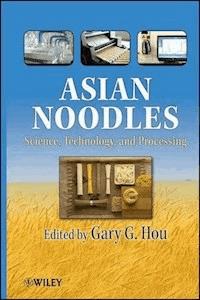
Asian Noodles E-Book
206,99 €
Mehr erfahren.
- Herausgeber: John Wiley & Sons
- Kategorie: Fachliteratur
- Sprache: Englisch
In Asian Noodles: Science, Technology and Processing, international experts review the current knowledge and offer comprehensive cutting-edge coverage on Asian noodles unmatchable in any publication. The authors cover an array of topics including breeding for noodle wheat, noodle flour milling, noodle flour quality control and analysis, noodle processing, sensory and instrumental measurements of noodle quality, the effects of wheat factors on noodle quality, packaging and storage, nutritional fortification of noodle products, noodle flavor seasoning, and noodle plant setup and management.
Das E-Book können Sie in Legimi-Apps oder einer beliebigen App lesen, die das folgende Format unterstützen:
Seitenzahl: 784
Veröffentlichungsjahr: 2011
Ähnliche




















Contents
Cover
Half Title Page
Title Page
Copyright
Dedication
Preface
References
Acknowledgments
Contributors
Chapter 1 Breeding Noodle Wheat in China
1.1 Introduction
1.2 Noodle Quality Testing and Cultivar Development
1.3 Breeding for Better Noodle Quality
1.4 The Future
1.5 Summary
References
Chapter 2 Breeding for Dual-Purpose Hard White Wheat in the United States: Noodles and Pan Bread
2.1 Introduction
2.2. Genetic Considerations: Seed Traits and Quality Traits
2.3 General Breeding Methods
2.4 Small-Scale Grain Quality Tests
2.5. Cultivar Release Selection/Large-Scale End-Use Quality Tests
2.6 Summary
References
Chapter 3 Wheat Milling and Flour Quality Analysis for Noodles in Japan
3.1 Introduction
3.2. Wheat Selection
3.3. Milling
3.4 Summary
References
Chapter 4 Wheat Milling and Flour Quality Analysis for Noodles in Taiwan
4.1 Introduction
4.2 Milling for Noodle Flour
4.3 Flour Mill Quality Control and Assurance Programs
4.4 Milling Test
4.5 Flour Specifications
4.6 New Quality Indicator for Flour Grading
4.7 Summary
Acknowledgments
References
Chapter 5 Noodle Processing Technology
5.1 Introduction
5.2. Basic Processing Overview
5.3. Processing Technology and Quality Characteristics of Major Noodle Types
5.5 Summary
Acknowledgments
References
Chapter 6 Instant Noodle Seasonings
6.1 Introduction
6.2 Seasoning Components
6.3 Manufacturing
6.4 Summary
References
Chapter 7 Packaging of Noodle Products
7.1 Introduction
7.2 Functions of Noodle Packaging
7.3 Components of Noodle Packaging
7.4 Key Factors in Noodle Packaging
7.5 Packaging Materials and Containers for Asian Noodles
7.6 Packaging Technologies for Asian Noodles
7.7 Summary
References
Chapter 8 Laboratory Pilot-Scale Asian Noodle Manufacturing and Evaluation Protocols
8.1 Introduction
8.2 Guidelines for the Laboratory Manufacture of Asian Noodles
8.3. Pilot-Scale Laboratory Noodle Testing Equipment
8.4. PILOT-SCALE LABORATORY NOODLE TESTING PROTOCOLS
8.5 Summary
Acknowledgments
References
Chapter 9 Objective Evaluation of Noodles
9.1 Introduction
9.2 Milling
9.3 Noodle Color
9.4 Processing
9.5 Assessing Noodle Appearance by Image Analysis
9.6 Texture Measurements for Quality Assessment
9.7 Summary
References
Chapter 10 Sensory Evaluation of Noodles
10.1 Introduction
10.2 Classification of Noodles
10.3 Quality Characteristics of Major Noodle Types
10.4 Sensory Evaluation of Noodle Quality
10.5 Summary
References
Chapter 11 Effects of Flour Protein and Starch on Noodle Quality
11.1. Introduction
11.2. Protein Characteristics for Asian Noodles
11.3 Starch Characteristics for Asian Noodles
11.4 Interaction of Starch and Protein
11.5 Summary
References
Chapter 12 Effects of Polyphenol Oxidase on Noodle Color: Mechanisms, Measurement, and Improvement
12.1 Introduction
12.2 Ppo Biochemistry and Biology in Plants
12.3 Ppo Biochemistry and Biology in Wheat
12.4 Ppo Genetics and Markers in Wheat
12.5 Phenolic Substrates for Ppo
12.06 Measuring Ppo Activity in Wheat Kernels
12.7 Measuring Ppo Activity in Flour
12.8 Measurement of Noodle Color and Darkening
12.9 MECHANISMS OF NOODLE DARKENING
12.10 Summary
Acknowledgments
References
Chapter 13 Effects of Flour Characteristics on Noodle Texture
13.1 Introduction
13.2 Physical Flour Properties
13.3 Starch
13.4. Protein
13.5 Lipids
13.6 Arabinoxylans
13.7 Starch and Protein Interactions
13.8 Summary
References
Chapter 14 Noodle Plant Setup and Resource Management
14.1 Introduction
14.2 Plant Location and General Requirements
14.3 Factory Construction and Design
14.4 Machines, Tools, and Equipment
14.5 Utilities and Services
14.6 Sanitary Facilities and Controls
14.7 Warehouse and Storage Facilities
14.8 Quality Assurance Programs
14.9 Maintenance Programs
14.10 Inventory Control
14.11 Management and Employee Requirements
14.12 Marketing
14.13 Summary
Acknowledgments
References
Chapter 15 Quality Assurance Programs for Instant Noodle Production
15.1 Introduction
15.2 Quality Management System
15.3 Role of the Quality Assurance Department
15.4 Good Manufacturing Practice (GMP)
15.5 Hazard Analysis and Critical Control Points (HACCP)
15.6 Quality Control
15.7 Packaging Materials
15.8 Summary
References
Glossary of Terms
Chapter 16 Rice and Starch-Based Noodles
16.1 Introduction
16.2 Types of Rice and Starch-Based Noodles and Their Consumption
16.3 Raw Materials and Quality Requirements
16.4 Equipment, Processing, and Product Quality
16.5 Influence of Processes on Finished Product Quality
16.6 Current and Future Research Topics
16.7 Summary
References
Index
ASIAN NOODLES
Photo credits: Gary G. Hou, Bon Lee, and Bruce Forster Photography.
Copyright © 2010 by John Wiley & Sons, Inc. All rights reserved.
Published by John Wiley & Sons, Inc., Hoboken, New Jersey.
Published simultaneously in Canada.
No part of this publication may be reproduced, stored in a retrieval system, or transmitted in any form or by any means, electronic, mechanical, photocopying, recording, scanning, or otherwise, except as permitted under Section 107 or 108 of the 1976 United States Copyright Act, without either the prior written permission of the Publisher, or authorization through payment of the appropriate per-copy fee to the Copyright Clearance Center, Inc., 222 Rosewood Drive, Danvers, MA 01923, 978-750-8400, fax 978-750-4470, or on the web at www.copyright.com. Requests to the Publisher for permission should be addressed to the Permissions Department, John Wiley & Sons, Inc., 111 River Street, Hoboken, NJ 07030, 201-748-6011, fax 201-748-6008, or online at http://www.wiley.com/go/permission.
Limit of Liability/Disclaimer of Warranty: While the publisher and author have used their best efforts in preparing this book, they make no representations or warranties with respect to the accuracy or completeness of the contents of this book and specifically disclaim any implied warranties of merchantability or fitness for a particular purpose. No warranty may be created or extended by sales representatives or written sales materials. The advice and strategies contained herein may not be suitable for your situation. You should consult with a professional where appropriate. Neither the publisher nor author shall be liable for any loss of profit or any other commercial damages, including but not limited to special, incidental, consequential, or other damages.
For general information on our other products and services or for technical support, please contact our Customer Care Department within the United States at 877-762-2974, outside the United States at 317-572-3993 or fax 317-572-4002.
Wiley also publishes its books in a variety of electronic formats. Some content that appears in print may not be available in electronic formats. For more information about Wiley products, visit our web site at www.wiley.com.
Library of Congress Cataloging-in-Publication Data:
Asian noodles : science, technology, and processing / edited by Gary G. Hou.
p.cm.
Includes index.
ISBN 978-0-470-17922-2 (cloth)
1. Noodles–Asia.2. Wheat–Milling–Asia.3. Wheat–Processing–Asia.I. Hou, Gary G.
TP435.M3A85 2010
664′.7550951–dc22
2009054244
In memory of my parents for their unconditional love.In appreciation of my eldest brother and sister-in-law for their love and unwavering support.
PREFACE
While it is still being debated whether or not Marco Polo was the first to introduce noodles into Italy in 1296 on his return to Venice from China (Donadio 2009), at least one case about where noodles may have originated has been closed. The Chinese, the Italians, and the Arabs have all claimed that they were the first ones to invent noodles. However, the discovery of a pot of well-preserved 4000-year-old noodles unearthed in 2005 by Chinese archaeologists in the Lajia archaeological site in northwestern China may have finally settled the dispute (Lu et al. 2005). These easily recognizable noodles are more than 2000 years older than the earliest mention of noodles, which appeared in a Chinese book written during the East Han Dynasty sometime between AD 25 and 220. The noodles were thin (~0.3 cm in diameter), more than 50 cm in length, and yellow in color. They resemble the La-Mian noodle, a traditional Chinese noodle that is made by repeatedly pulling and stretching the dough by hand. It turned out that these 4000-year-old noodles were made from millet, not from wheat flour as they are made today.
Some historical time later, Chinese noodles were introduced into Japan and other Asian countries and beyond, where they were adapted into the local diet and modified, eventually evolving into diverse forms and preparations that have become an essential part of local cuisines. Today, Asian noodles, especially instant ramen noodles, are consumed worldwide. By combining the traditional art of noodle preparation with modern science and processing technology, many noodle products, which used to be produced at small-scale levels, are now being produced in large-scale food manufacturing plants with consistently high quality.
Asian noodles and certain Italian pasta products (e.g., spaghetti) are sometimes confusing to consumers because they appear to be quite similar. This may be one of the causes contributing to the ongoing debate about whether these two products are related or have a common origin. Actually, there are some key differences between them in their characteristics and in the raw materials used, the processes involved, and their consumption patterns (Hou 2001). Most Asian noodles are made from common wheat flour (Triticum aestivum) and a salt solution that are mixed together to form a dough that is processed by sheeting. This type of Asian noodle is often eaten in a soup. In contrast, authentic pastas are traditionally made from durum (Triticum durum) semolina and water mixed together to form a dough that is processed by extrusion technology. This type of pasta is often consumed with sauce.
Outside of Asia, noodles often are made from wheat flour. Within Asia, however, noodles are thought of as thin strips of dough that can be made from a variety of raw materials, including but not limited to wheat flour, rice flour, buckwheat flour, or starches derived from mung bean, tapioca, sweet potato, sago, wheat, rice, or corn. Noodles made from wheat flour remain the most popular noodle products in Asia and around the world, followed by rice and starch-based noodles, which are consumed primarily in Asia.
The importance of noodles in the Asian diet is significant. Currently, an average of 20–50% of the total wheat flour consumption in many countries occurs in the form of noodles. The percentage of total flour consumed as noodles by country is as follows:
Indonesia50%Korea45%Vietnam45%Mainland China40%Taiwan38%Malaysia30%Thailand30%Japan28%Philippines21%Many of these countries rely heavily on wheat imports because none of them, except for China, grow much wheat. Therefore, the wheat market demand in Asia for noodle flour production is too large to be ignored by the major wheat-exporting countries.
In the last 20 years, there has been a growing global interest in Asian noodles. They are very traditional foods, and early research was mainly conducted in countries such as China, Japan, and Korea; however, information and scientific publications were not easily accessible because they were published in the native languages and not translated for a broader audience. Today, however, a wealth of information and technical publications are available in various scientific journals in English. There are many reasons for this interest, including noodle industry expansion, business development, intercultural exchange, migration, and simple changes in dietary habits. One of the key driving forces behind the scenes was the increased investment and focus of major wheat-exporting countries on developing new wheat varieties to compete in the noodle wheat market in Asia and elsewhere.
Noodle consumption has not only increased dramatically in Asia over the years but has also received wide acceptance in other parts of the world. For instance, the consumption of instant ramen noodles in 2007 reached nearly 100 billion meals around the world (World Instant Noodle Association 2009), an increase of 66% from 2002. Of the top 15 instant noodle-consuming countries, there are five countries in which noodles are not part of the traditional diet: United States, Russia, India, Brazil, Nigeria, and Mexico. Thus, the noodle product is one of a number of wheat-based foods whose globalization continues to stimulate international trade in the world's top-ranked grains in terms of harvested area (McKee 2009).
For the past 14 years, I have not only witnessed the growth of the noodle industry around the world but have also contributed, to some extent, to its success. When I first joined the Wheat Marketing Center, Inc. in 1995, I was put in charge of conducting the Asian Products Collaborative (APC) project, which was jointly organized by the U.S. Wheat Associates and the Wheat Marketing Center. Throughout the life of this project (1995–2008), I worked very closely with nearly 380 collaborators in 70 teams from 9 Asian countries. These collaborators included flour millers, food processors, research scientists, and wheat buyers. Together, we developed standard protocols for 13 types of Asian noodles, 6 types of steamed breads, and several other types of products. Each protocol includes formulation, processing, and quality evaluation methods.
After gaining technical expertise through working with these Asian collaborators, I started teaching Asian noodle technology short courses at the Wheat Marketing Center and in institutions overseas to companies in Asia, Africa, Europe, Latin America, and North America. More than 150 noodle processors, flour millers, ingredient suppliers, researchers, and technologists have participated in these courses. In recent years, noodle consumption in Latin America and Africa (particularly Nigeria) has experienced substantial and sustainable growth.
Over the years, I have had the opportunity to travel to many countries and have visited numerous noodle manufacturing plants, both large and small, and was able to provide technical assistance to them. Although much more knowledge and information on Asian noodles is available now than ever before, many people in the industry are still not able to access this, partly because many publications are available only in scientific journals and in a handful of scientific books that contain a few chapters on Asian noodles that were published 10 years ago. This has created an urgent need for a book on the subject. Asian Noodles: Science, Technology, and Processing meets this need in a timely manner by providing readers with a comprehensive, up-to-date, single source of information on every aspect of Asian noodles, from wheat breeding to noodle product packaging. There are 16 chapters in all, each written by experts in the subject.
The book begins with noodle-wheat breeding in China since noodles were originated in China thousands of years ago. The wheat-breeding community worldwide will be interested in learning about the strategies that Chinese breeders have employed to develop varieties for their own noodle products. This is followed by breeding for dual-purpose hard white wheat in the United States for noodles and pan bread in Chapter 2. The United States started hard white wheat-breeding programs 20 years ago and hoped to offer alternatives to end-users in Asia for producing both noodles and Western pan bread. This chapter discusses the promising selection strategies in breeding dual-purpose hard white wheat in the United States. Chapters 3 and 4 deal with wheat milling and flour quality analysis for noodles in Japan and Taiwan, respectively. Wheat milling is a critical process in noodle flour production, and the milling industry in both Japan and Taiwan has extensive experience and advanced milling technology. Chapter 5 introduces the commercial noodle processing technology of eight types of noodles consumed worldwide. Chapter 6 discusses the composition, processing, and quality evaluation of instant noodle soup seasonings. Packaging of noodle products is covered in Chapter 7. Chapter 8 reports on laboratory pilot-scale noodle manufacturing and evaluation protocols. Objective and sensory evaluation techniques are introduced in Chapters 9 and 10, respectively. The effects of flour composition and characteristics on noodle quality are examined in Chapters 11 and 13 while the effects of polyphenol oxidase on noodle color and its mechanism are discussed extensively in Chapter 12. The guidelines for noodle plant setup and resource management are presented in Chapter 14, and quality assurance programs for instant noodle manufacturing are described in Chapter 15. Of course, a volume on Asian noodles would not be complete without a chapter on rice and starch-based noodle products (Chapter 16).
This book contains a good mix of theories on wheat breeding and genes (quality markers) as well as many down-to-earth applied noodle manufacturing technologies, from lab-scale noodle processing and evaluation to commercial noodle manufacturing plant setup and quality assurance programs. This compendium is the first of its kind to provide such comprehensive coverage on Asian noodles in a single English volume with up-to-date scientific and technological information. Many chapters contain excellent photos and diagrams, and each chapter is supplemented by an up-to-date bibliography, allowing for follow-up on the information provided. Therefore, the book should serve as a unique reference for all involved in the industry, including wheat breeders, growers, flour millers, noodle processors, quality control personal, scientists/researchers, students, business developers, and suppliers of food machinery, packaging materials, ingredients, spices, and seasonings, as well as informed consumers and newcomers to the noodle business and related industries.
I am fully aware that despite the extensive topics covered in this book, it cannot be, nor is it intended to be, all-inclusive. By reviewing the latest research and new developments in Asian noodles and compiling all this information into a single volume, we can lay the foundation for continued advancement in breeding, milling, processing, packaging, plant management, and quality assurance programs that will benefit all of us in the not-too-distant future.\vskip\baselineskip
Gary G. Hou
REFERENCES
Donadio, R. 2009. So you think you know pasta. New York Times, October 14, 2009 (http://www.nytimes.com/2009/10/14/dining/14ency.html?_r=1).
Hou, G. 2001. Oriental noodles. Advances in Food and Nutrition Research43:141–193.
Lu, H., Yang, X., Ye, M., Liu, K., Xia, Z., Ren, X., Cai, L., Wu, N., and Liu, T. 2005. Culinary archaeology: millet noodles in Late Neplithic China. Nature437:967–968 (October 13, 2005).
McKee, D. 2009. Globalization of instant noodles. World Grain27(3):32–36.
World Instant Noodle Association (WINA) 2009. Expanding market. World Instant Noodles Association, Osaka, Japan (http://instantnoodles.org/noodles/expanding-marlet.html).
ACKNOWLEDGMENTS
I am deeply grateful to all the people who have helped bring this publication into print. My greatest appreciation goes to all the specialists who have contributed to this volume. There are a total of 32 chapter contributors from 11 countries. All have brought new and personal insights to the field of Asian noodle products based on their individual research and industrial experience.
I deeply appreciate the help and strong support given to me by Dr. David Shelton, Executive Director of the Wheat Marketing Center, who has made this happen by allowing extensive use of personnel and facilities.
This book has benefited immeasurably from the support of many people over many years. I deeply appreciate the help I have received from everyone, including Robert Drynan who first brought me into the field 14 years ago, Mark Kruk whom I worked with and had many intriguing discussions with over many years, and especially all the collaborators from Asia and elsewhere who have generously shared their knowledge and experience with me.
I very much appreciate the support and opportunity given to me to learn and to teach on numerous aspects of Asian noodles over the years by the U.S. Wheat Associates, including Dr. John Oades, Rick Callies, Jim Frahm, Matt Weimar, Ron~Lu, Mark Samson, Mitch Skalicky, Steven Wirsching, Dr. Won Bang Koh, Alvaro de la Fuente, Ed Wiese, Jim McKenna, Mike Spier, Peter Lloyd, Plutarco Ng, Phua Lock Yang, Roy Chung, Dr. Woojoon Park, Shipu (Andy) Zhao, Gerald Theus, Muyiwa Talabi, and Shu-ying (Sophia) Yang.
I am grateful for the guidance and support that Dr. Perry K. W. Ng provided to me when I was pursuing my Ph.D. study under his supervision at the Department of Food Science and Human Nutrition, Michigan State University. Dr. Xiang S. Yin is especially acknowledged for recommending me to Perry Ng.
My special thanks go to Pamela Causgrove for her painstaking editing of the manuscript; Susan Perry for her assistance in formatting numerous figures, graphs, and drawings; and Bon Lee for translating some technical literature from Japanese into English.
I express my special appreciation to Jonathan Rose, editor at John Wiley & Sons, Inc., for providing me the challenge and wonderful opportunity to write this book. I appreciate the wonderful editing, proofing, typesetting, and production work done by Rosalyn Farkas, production editor at John Wiley & Sons, Inc., and Ronald D'Souza, project manager at Aptara Inc.
Last, but not least, I am grateful to my family who has always supported me along the way.
G.G.H.
CONTRIBUTORS
James V. Anderson, Ph.D. U.S. Department of Agriculture – Agricultural Research Service, Plant Science Research Unit, 1605 Albrecht Boulevard, Fargo, ND 58105 USA.
Byung-Kee Baik, Ph.D. Department of Crop and Soil Sciences, Washington State University, Pullman, WA 99164 USA.
Arron H. Carter, Ph.D. Department of Crop and Soil Sciences, Washington State University, Pullman, WA 99164 USA.
C. C. Chen, M.Sc. Chia Fha Enterprise Co. Ltd., 115, Sec. 1, San Min Rd., Ching Shuei Township, Taichung, Taiwan.
Lilia S. Collado, Ph.D. School of Biological Sciences, The University of Hong Kong, Pokfulam Road, Hong Kong SAR, PRC.
Graham B. Crosbie, Ph.D. Crosbie Grain Quality Consulting, 22a Stratford Street, East Fremantle, WA 6158 Australia.
James Dexter, Ph.D. Retired (Canadian Grain Commission), 62 Lemmen Drive, Winnipeg, MB R2K 3J8 Canada.
Kerry Fabrizio, M.Sc. Givaudan Flavors Corporation, 1199 Edison Drive, Cincinnati, OH 45216 USA.
Bin Xiao Fu, Ph.D. Durum Wheat Research, Grain Research Laboratory, 1404-303 Main Street, Winnipeg MB R3C 3G8 Canada.
E. Patrick Fuerst, Ph.D. USDA–ARS Western Wheat Quality Laboratory, Washington State University, Pullman, WA 99164 USA.
Julio González, MBA, Ch.E. Grupo Buena, 19 AV 16-30 Zona 10, Guatemala City, Guatemala.
Kim Gray, Ph.D. Givaudan Flavors Corporation, 1199 Edison Drive, Cincinnati, OH 45216 USA.
David W. Hatcher, Ph.D. Grain Research Laboratory, Canadian Grain Commission, 1404-303 Main Street, Winnipeg, MB R3C 3G8 Canada.
Zhonghu He, Ph.D. CIMMYT China Office, c/o Chinese Academy of Agricultural Sciences, Beijing 100081 China.
Gary G. Hou, Ph.D. Wheat Marketing Center, Inc., 1200 NW Naito Parkway, Portland, OR 97209 USA.
Verónica Jiménez Montaño, MBA Fabrica de Galletas La Moderna/Bimbo, Leandro Valle No. 404., Col. Reforma, Toluca, Edo de Mexico. México. C.P. 50010.
Sumonrut Kamolchote, M.Sc. Thai President Foods PCL., 601 Moo 11 Suklapiban 8 Rd, Nongkham, Sriracha, Chonburi 20232, Thailand.
Kimberlee K. Kidwell, Ph.D. College of Agricultural, Human and Natural Resource Sciences, 423 Hulbert Hall, PO Box 646243, Pullman, WA 99164 USA.
Qingyue Ling, Ph.D. Food Innovation Center Experiment Station, Oregon State University, 1207 NW Naito Parkway, Portland, OR 97209 USA.
Zhan-Hui Lu, Ph.D. College of Food Science and Nutritional Engineering, China Agricultural University, PO Box 40, China Agricultural University (East Campus), 17 Qinghua East Avenue, Haidian District, Beijing 100083 China.
Linda Malcolmson, Ph.D. Canadian International Grains Institute, 1000-303 Main Street, Winnipeg, MB R3C 3G7 Canada.
Craig F. Morris, Ph.D. USDA–ARS Western Wheat Quality Laboratory, Washington State University, E202 FSHN East, Pullman, WA 99164 USA.
Hideki Okusu, M.Sc. Nippon Flour Mills Co. Ltd., Central Laboratory, 5-1-3 Midori-Gaoka, Atsugi, Kanagawa, Japan 243-0041.
Syunsuke Otsubo, B.Sc. Nippon Flour Mills Co. Ltd., Food Processing R&D Laboratory, 5-1-3 Midori-Gaoka, Atsugi, Kanagawa, Japan 243-0041.
Rajesh Potineni, Ph.D. Givaudan Flavors Corporation, 1199 Edison Drive, Cincinnati, OH 45216 USA.
Andrew S. Ross, Ph.D. Crop and Soil Science, and Food Science & Technology, Oregon State University, Crop Science Building, Corvallis, OR 97331 USA.
Toh Tian Seng, MBA, B.Sc. Noodles, Cereals and Nutrition, Nestle R&D Center (Pte) Ltd., 29 Quality Road, Singapore 618802.
Lanbin Shen, B.S.E. Guangzhou City Lotte Machinery, Co., Ltd., 121 Wenming Road, Nancun Town, Panyu District, Guangzhou 511442 China.
Carl A. Walker, M.Sc. Department of Crop and Soil Sciences, Washington State University, Pullman, WA 99164 USA.
Xianchun Xia, Ph.D. CIMMYT China Office, c/o Chinese Academy of Agricultural Sciences, Beijing 100081 China.
Shu-ying (Sophia) Yang, M.Sc. U.S. Wheat Associates, Chen Shin Building, 3-3 Lane 27, Chung Shan North Road, Section 2, Taipei 104, Taiwan.
Yan Zhang, Ph.D. CIMMYT China Office, c/o Chinese Academy of Agricultural Sciences, Beijing 100081 China.
CHAPTER 1
BREEDING NOODLE WHEAT IN CHINA
ZHONGHU HE, XIANCHUN, XIA AND YAN ZHANG
1.1 INTRODUCTION
China is the largest wheat producer and consumer in the world, and wheat ranks as the third leading grain crop in China after rice and maize. Wheat products are the major staple foods consumed in northern China although its consumption in southern China is also increasing rapidly. In 2007, the national wheat area, average yield, and production were 23.7 million ha, 4608 kg/ha, and 109 million metric tons, respectively. However, more than 70% of Chinese wheat is produced in five provinces— Henan, Shandong, Hebei, Anhui, and Jiangsu. The wheat-growing area has been divided into ten major agroecological zones as indicated in Figure 1.1, based on wheat types, varietal reactions to temperature, moisture, biotic and abiotic stresses, and wheat-growing seasons (He et al. 2001). On the basis of sowing dates, autumn-sown wheat accounts for more than 90% of production and acreage. Winter and facultative wheats, sown in the Northern China Plain (Zone I) and Yellow and Huai River Valleys (Zone II), contribute around 70% of production. Autumn-sown, spring habit wheat, planted in both the Middle and Low Yangtze Valleys (Zone III) and Southwestern China (Zone IV), contributes around 25% of production. Spring-sown spring wheat is mostly planted in Northeastern and Northwestern China (Zones VI, VII, and VIII) and makes up around 5% of production.
FIGURE 1.1 Chinese wheat production map: I, Northern Winter Wheat Zone; II, Yellow and Huai River Valleys Facultative Wheat Zone; III, Middle and Low Yangtze Valleys Autumn-Sown Spring Wheat Zone; IV, Southwestern Autumn-Sown Spring Wheat Zone; V, Southern Autumn-Sown Spring Wheat Zone; VI, Northeastern Spring Wheat Zone; VII, Northern Spring Wheat Zone; VIII, Northwestern Spring Wheat Zone; IX, Qinghai–Tibetan Plateau Spring–Winter Wheat Zone; X, Xinjiang Winter-Spring Wheat Zone.
From the establishment of the People’s Republic of China in 1949 to the present, wheat continues to play an important role in food production. Great progress has been achieved in wheat production during the last 60 years. Average wheat yield has increased 1.9% annually, and production has increased more than sixfold. Many factors have contributed to the significant increase of average yield, including adoption of improved varieties, extension of high-yielding cultivation technology, increased use of fertilizers and irrigation, expansion of farm mechanization, and improvement of rural policy. Agricultural policy reform in the early 1980s greatly stimulated wheat production, and 123 million metric tons of harvested grain was recorded in 1997. Wheat area, however, has declined from 30 million ha to around 23 million ha since 2000, largely due to the policy of increasing crop diversity, elimination of guaranteed pricing policies in south China and spring wheat regions, and lower profitability of wheat production in comparison to cash crops.
Around 50% of production is marketed as commercial wheat and stored in governmental grain stations, and the remaining 50% is stored and consumed by individual farmers. The annual wheat consumption is around 100–105 million metric tons. Currently, around 80% of wheat is used for food production, 10% for feed, 5% for seed, and the remaining 5% for industrial use. As listed in Table 1.1, traditional Chinese foods, such as steamed bread and noodles, account for around 85% of food products, and Western-style bread and soft wheat products, such as cookies, cakes, and biscuits, make up the remaining 15% although they are increasing rapidly, particularly in the urban areas. There are many types of noodles consumed across China; however, fresh noodles, instant noodles, and dry white Chinese noodles are the most popular types as presented in .
Lesen Sie weiter in der vollständigen Ausgabe!
Lesen Sie weiter in der vollständigen Ausgabe!
Lesen Sie weiter in der vollständigen Ausgabe!
Lesen Sie weiter in der vollständigen Ausgabe!
Lesen Sie weiter in der vollständigen Ausgabe!
Lesen Sie weiter in der vollständigen Ausgabe!
Lesen Sie weiter in der vollständigen Ausgabe!
Lesen Sie weiter in der vollständigen Ausgabe!
Lesen Sie weiter in der vollständigen Ausgabe!
Lesen Sie weiter in der vollständigen Ausgabe!
Lesen Sie weiter in der vollständigen Ausgabe!
Lesen Sie weiter in der vollständigen Ausgabe!
Lesen Sie weiter in der vollständigen Ausgabe!
Lesen Sie weiter in der vollständigen Ausgabe!
Lesen Sie weiter in der vollständigen Ausgabe!
Lesen Sie weiter in der vollständigen Ausgabe!
Lesen Sie weiter in der vollständigen Ausgabe!




