


Erhalten Sie Zugang zu diesem und mehr als 300000 Büchern ab EUR 5,99 monatlich.
- Herausgeber: Pushkin Press
- Kategorie: Gesellschafts- und Liebesromane
- Sprache: Englisch
In a giddy rush, a young woman and her older lover escape the rising fascism of 1930s Berlin for a summer vacation on the Côte d'Azur. As they drive along stunning bays and linger over sumptuous meals, they are enchanted by each other. But their harmony soon falters, and the woman decides she must leave in search of a cottage of her own near Saint-Tropez. There, amid the vineyards and lemon trees, she will forge startling new connections and pass an unforgettable summer of independence and freedom.Background for Love is an autobiographical novel by the great publisher Helen Wolff, who together with her husband, Kurt Wolff, set up Pantheon Books in America after fleeing Nazi Germany. In the fascinating companion essay, historian Marion Detjen, the author's great-niece, delves into the basis of the novel in Helen's own life as well as the political and social forces that led her to abandon hope of publishing it.Written in 1932 and now translated into English for the first time by the author's grandson, Tristram Wolff, this is a lushly atmospheric, irresistible story of passion and self-discovery, told from the cusp of disaster.
Sie lesen das E-Book in den Legimi-Apps auf:
Seitenzahl: 306
Veröffentlichungsjahr: 2024
Das E-Book (TTS) können Sie hören im Abo „Legimi Premium” in Legimi-Apps auf:
Ähnliche

















‘Some books you don’t read, you experience.This story of a woman who discoversthe full extent of her strength of will in asparkling summer of love, is one of them’
DIE WELT
‘A fast-paced, highly intense, emotionallygripping, autobiographical novel’
BUCHKULTUR
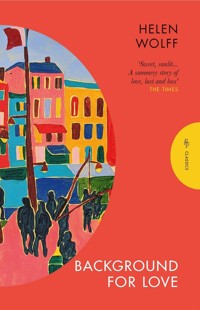
BACKGROUND FOR LOVE
HELEN WOLFF
TRANSLATED FROM THE GERMAN BY TRISTRAM WOLFF
EDITED AND WITH AN ESSAY BY MARION DETJEN TRANSLATED FROM THE GERMAN BY JEFFERSON CHASE
PUSHKIN PRESS CLASSICS
CONTENTS
BACKGROUND FOR LOVE8
This is it: we’re really on our way. Blankets and big suitcases and coats, a pile of maps, sunglasses to protect us from the dust and the glare. Chocolate, hard-boiled eggs, cognac, bananas: it’s going to be a long journey, a journey without lunch, instead we’ll have a quick bite when the gates are lowered at railroad crossings, and there’ll be irritated chewing when we’re delayed at the border.
We’ve put a long winter behind us, full of work and anxieties, rain, fog, hail and snow. It’s five in the morning. We have the feeling we’re running from something, toward the easy life, toward a sunlit world. It’s almost a kind of betrayal, this journey through the gray morning haze, betrayal of the friends who have stayed behind to freeze, betrayal of the morning and evening papers that from now on will only ever reach us late, hardly any scent left to them, hardly even true anymore. We feel guilty as Germany slips by beneath us, devoured by our accomplice’s four wheels, as the windshield wiper, eager accessory, busily shoves away a fine mist of rain.
We’re on our way: the car, you and I.
Oh yes, in spite of it all it’s sheer joy to be on the road. Anything could happen to us, a flat tire, an accident might call us back, like a gendarme hard on the heels of a fugitive—but 10each kilometer makes us feel safer. The uncertain early light grows surer, more confident. We really are on our way—
I move closer to you. You wear thick gloves, a good camel traveling coat, you’re hidden in its warm skin and you watch your turns closely, you watch for slippery streets and for obstacles that might get in the way of your progress. Later on it will get easier, I know, clearer, your strained attention can relax once the world crosses from the early hour into plain morning, the spell broken. But at this hour shrubs still look like haycarts, haycarts like shrubs, danger lurks, the farmers have long poles on the sides of their carts hidden by the early light. We have to just keep going, we can’t afford to get tripped up now, we’re on our way.
‘It’s gorgeous,’ I say. ‘Not completely real yet.’
The car veers sharply to one side. A prehistoric creature lumbers against us, bangs and clatters past.
‘We could have been killed,’ you say.
‘You should have used the horn.’
‘At this hour?’
The roads are an adventure, like a jungle. Something could be lying in wait round any corner, ready to leap out at us. But we love adventure, we surrender to its winds as they come at us over the radiator.
‘Annemarie said to me, how can you go to that fashionable, crowded seaside—’
‘Just wait.’
I sink into silent exhilaration. We count kilometers and calculate hourly averages. You tell me about the wide, long, 11straight avenues in France—tout droit, tout droit, comme un billard,Madame—the mottled trunks of plane trees to the right and left. We talk about the journey and not us, though here too we are marking a departure from old habits for new. Up till now we’ve met for meals together, been to concerts together, danced with each other, talked deeply, fought and loved each other. You are familiar to me from those many hours; but how you look while shaving, that I don’t know. I’m still not acquainted with your morning mood or your working quiet; I only know your exceptions, not your rules. This trip is meant to lead us to common ground, we want to weather new adventures, different from the old. We’re no longer challenging each other to small war and small peace, we are braving the dragon called every day that dwells in the cavern every night. How long until I’ve exhausted all my reserves, everything I’ve read or can remember, until I won’t be able to enchant you with words anymore because you’ll know all of mine already. And you’ll notice how quickly I get tired, and—but I’m not afraid of what I’ll notice.
‘What are you thinking?’
No, I don’t tell you what I’m afraid of. ‘How many kilometers to the border?’
‘Take a look at the map.’
I get the map out. I comb over it for the villages and towns and can’t find the road. Finally I find it, but can’t add up the distance in kilometers. I fall in your esteem. You tell me to take the wheel. No, I am no Diana on these country roads, no bold knight of the steering wheel, you’ve found me out too soon. I 12daydream easily and see trees instead of milestones, rooftops instead of signposts. If you’ve taken me for competent—
‘What are you thinking?’
‘I’m wondering whether we’ll find a cottage.’
‘Wouldn’t we be better off in a hotel? It’s much more comfortable.’
‘Everyone lives in hotels. No, it has to be a cottage. And it should stand in a small meadow and a white cat should sit on the well and purr as soon as you look at her. And I want a fig tree in front of the doors, then we’ll want to grow old like Philemon and Baucis and never go back to Munich or Berlin.’
‘Of course,’ you say seriously, and step on the gas, now that the road is straight and widening. ‘Yes. Never again. Not until fall.’
He said until fall, I think: that could be September or November. But I don’t ask. Until fall is a long time, more than just months, more than a quarter of a year. With a few words you’ve cut a fat slice out of the round year and put it on my plate. I look wonderingly, because it’s still whole, only the crumbs of an hour have fallen off it.
Meanwhile, because the day is now bright, you place your arm round me and drive with only your left hand. I’m lost in admiration.
We are free. We are happy. We have money for a few months, you more, I less, as is the way with us. I’m nearly certain that you love me and that it can last perhaps for a summer. Especially in the south, where they say it’s in the air. Yes—step on the gas pedal, cut into the fog and rain, soon we’ll be in Switzerland. 13Already we’re at Lake Constance, and here and there you can see trees blossoming.
One border guard asks us how much money we have and whether we don’t in fact have more. Another wants to see our car’s registration number, to know how much tobacco we have, how many cigarettes. The car rattles impatiently, because you can’t bring yourself to turn the motor off. The tollbooth attendants are wet and freezing and show some understanding. They grasp at least that we have to keep moving, that already another country is opening up for us.
It’s welcoming here, it’s peaceful. But we hardly take it in. We can’t stop for the gorgeous blue lakes of Zürich, Vierwaldstadt, Geneva. We don’t stop to rest in the surrounding villages. It’s beautiful, but we drive past and the landscape doesn’t sink in. Only small fragments, scraps of mountains, a pretty rising curve, all the flags on the hotels in Geneva. We’ve devoured all of Switzerland. The day grows tired like us, but you still want to get to France before it’s over, drink warm red wine and sleep in a wide bed like you’ve promised.
We haven’t spoken, haven’t paused, only pushed on, onward, onward. You sit doggedly at the wheel and take the curves hungrily. The mountains to you are obstacles, you curse at the slower cars and want to clear the train crossings like hurdles. You only open your mouth when I stuff a hard-boiled egg or a banana into it, or when I entice you with a chicken leg. You don’t look my way. But I know we’re of one mind, we’re silently fixed on the same goal, strung on the same bow, I’m grateful beyond words to have been brought along, to be allowed to sit 14mounted here alongside you. And while you gallop I hold on breathlessly, just as women have always clung full of joy and fear to the manes of horses bearing them away.
You’re still wearing your winter face, rather furrowed, simultaneously tired and impatient, but a new skin is already growing underneath. Forty years old, I think, amazed: to have eaten your fill so many times and yet still be so hungry. To have seen so much, and still want to see more; loved so much, and yet be seduced again and again.
Out of the blue you say, ‘Remind me I have to write to Eva, she always worries.’
This again. I’m brave and ask cheerfully: ‘Why go off with me this time, anyway?’
‘I want to spend a summer with you.’
‘And with Adelheid?’
‘Holy Week,’ you respond, pleased with yourself. ‘And now let’s talk about today and tomorrow. Have you ever eaten bouillabaisse?’
No, I have not. I’ve seen absolutely nothing, eaten absolutely nothing interesting or exciting.
‘You’ve run off with a virgin,’ I say.
‘We’ll soon take care of that. This is France, after all.’ You say this grandly, as though handing me the country on a serving platter.
Each country welcomes us with the same words of greeting: Cigars—Cigarettes—Tobacco. France is no exception. The customs agent is appealingly lazy. Ça ira becomes ça va, the republic consolidated. We’re allowed to drive on and now all borders 15are behind us. In a deeper sense, we’ve arrived. Already the French country roads are all around us. They’re not country roads at all, actually, but boulevards, absolutely straight and arched over with still-barren branches. The distance markers are adorned with red caps and they’re numbered, Route Nationale201—now even I can find my way—and we’ll stay on this road until we reach Chambéry.
‘Chambéry—a good place for truffles,’ you instruct me. ‘It’s a crime to drive through truffle country without stopping, only excusable in this case because these aren’t the real truffles. Those grow in Périgord.’
French place names fill the mouth wonderfully, there is something savory in their sound. We become bold. We forget the thunderclouds brewing back home in Germany. You talk about truffles and express a desire to drink a warm Châteauneuf du Pape this evening—these are the borders now to be crossed, a lust for life growing up from the earth. The billboards cry out, Cointreau, Pernod—Hitler and Hindenburg seem far away.
We hardly saw each other in the days leading up to our departure.
‘How long has it actually been?’ you ask.
‘So long that I’m practically like new,’ I say.
‘Tonight,’ you say.
But tonight you’ll be tired, full of food and wine, and you’ll want to rise early in the morning, so no, not tonight.
We kiss. Evening draws nearer. We plan to spend the night in Grenoble. Grenoble, by the Isère River, which flows to our left along the avenue. This is my first time in France. The roads are 16beautiful, the trees beautiful, one of divine creation, the other human, and it’s good. I’d like very much to kiss you again, but the city’s outskirts are busy with cyclists and you have to drive carefully to avoid them.
We quarrel fiercely over the hotel. You want to stay at the Majestic and I think it’s too grand. At last we ask a policeman to referee the debate. We land at the Majestic.
This is France. Our room comes with a gigantic bed. It’s a matchmaking hotel, I discover. No one asks for my name. C’est la dame à Monsieur. No one wants to know whether we’re married; if what we want is to sleep together, all is well.
We freshen up. The windows are open wide, noise echoes up from the plaza below, some festival with a circus and carousel. You want to go down and take a look, have a go on the see-saw, but I’m too much diminished from the journey, unwillingly I confess I’m more fatigued than you. Then comes the food—the whole menu, actually. The waiter sets the chicken on the side table and we sit across from the giant bed and drink wine.
Now you tell stories about Monte Carlo. You get very animated and sketch out the gaming table and draw rouge et noir, pair et impair, passe et manque. My head spins like a roulette wheel, I say yes and nod and don’t follow.
‘The bank has better odds than the player,’ you say. ‘You see, when you roll a zero…’
You fill my glass. I’m not used to this much wine and it draws its circle around me, I feel like a stone dropped in water, now I’m sinking deep and then it lifts me back up lightly to the surface, where I stay buoyant, tipsy. 17
The waiter has cleared our dishes away. We’re alone in a strange town, I haven’t even seen it, it was already night when we arrived, I only know that Stendhal was born here: mere literary reminiscence, no more of that, just sit quietly.
‘Time for bed—come here, I’ll help with those clothes.’
‘But I thought—I thought you still wanted to write a card.’ While the bath is running you sit at the desk wearing a bathtowel and do in fact, remarkably, write a postcard, despite the hour. I’m in awe. Eighteen hundred kilometers at the wheel, plus the wine, but you can still write postcards—right now writing a postcard sounds like climbing the Matterhorn to me.
‘Hmm,’ you say, licking a stamp—yes, you’ve miraculously conjured French stamps from somewhere—‘the card has to go out tonight. I really can’t go downstairs like this. Would you?’
I walk the length of the hallway to the stairs apprehensively. Oh God—the stairs! They’re horrifyingly wide, down the middle runs a narrow red strip. I’m to walk along this strip, it’s clear, and the strip leads into the great hall, where everyone looks at you. It stretches like a tightrope. I think desperately of my guardian angel, wondering whether he’s invisibly steadying me so I don’t tumble onto the smooth white marble on my right and left. And all for Eva, I think, all these terrors for Eva, these awful trials for Eva. I’m filled with rage and suddenly I’m on solid ground, as a small attendant—there’s my guardian angel—takes the card from me and sticks it into a narrow slot that’s somehow both a little higher and a little lower than you’d expect. I marvel at this young page and the angel helps me on my way, I reach the elevator and go back up, emerge at the 18correct floor, now the final adventure: I have to choose the right door, then there you are, my love, and you’ve taken possession of the enormous wide bed, legs spread far apart: I hunt for a small corner to fold myself into, and see that you’re already asleep.
And here we are at the end—the speedometer jumps from 100 to 110—behind us lies a foggy morning in the Savoie mountains, stone huts, destitution, barrenness, the gray of the stones and the inhabitants, herds of goats driven by young Savoyard boys, fond memories from the books of my childhood—and then the descent, gliding down into these blessed plains, into the first rays of sun, into an immaculate church-window blue, into the fertile expanse, into olive groves—so this is Provence—old, heavy and rich with history, aged and clarified in the cellar of many centuries, and always born anew under this sun. We drive past vineyards and rubble slopes, among strange rust-red domes of rock, moon-mountains you call them. The heavens stretch over us unbroken, colors glow more truly, houses and farms shimmer pink and ocher, cypresses and poplar rows stand upright against the wind, a stunning and severe drawing of the southern landscape.
Maybe there is no such thing as a fatherland, as they call it back home; and borders are arbitrary and that’s why they’re so often moved around, here as there; what there are instead are climates, milder and harsher, rougher and gentler, and climates kind to us humans.
You know the country here, you and our good steed, you’ve bathed in this world before, left the other far behind, cold, 19hard, gridded with laws. You drive past what’s here too, further southward, until the last barrier in your path is gone; you wind through the Maritime Alps, and then you really give her free rein, poor heaving beast, the road pulls straight and wide once more, it glows white under the sun, you laugh, happy for the first time in months, you laugh as if you’d accomplished some victory, like someone who’s conquered a country and rides in triumphant. The vernal blues of the sky stretch over you like triumphal arches, almond trees are holy virgins who curtsey as you pass but you hardly spare them a glance. ‘Nice’—you toss the name to me—and the wind snatches the word from your mouth, leaving it far behind. Already the city begins to show the tips of its toes, and now you hail the sea in greeting—which all of a sudden, at this magic word, comes into view, only to vanish again alluringly—you greet it like the Greeks: Thalatta, Thalatta!
‘That was the most beautiful drive of my life,’ I say.
We’re sitting at Pistonato’s on the Promenade des Anglais, and you order, very much at home here.
‘You’re still young,’ you say. ‘Now, we’ll have the bouillabaisse and the rosé du pays with it—to a warm and beautiful summer to come, my dear child!’
‘So you think it’s beautiful too?’
‘Yes, spectacularly so. With you. And tonight I won’t fall asleep like yesterday, that was unforgivable.’
‘Is it customary here to talk about making love over lunch?’
‘It’s the French way.’
Then I powder both our noses, mine first since that’s more important, and we consider where to stay tonight. 20
‘Nice,’ you instruct—because you know everything, or just about everything, and you’ve tried everything too—‘is a city for shopping, and for eating the best ice cream. Not for living, and not for making love.’
‘Anyhow,’ I say (I say ‘anyhow’ far too much, you tell me), ‘it’s a city. And the palm trees look like giant feather dusters.’
‘You always manage to find a flaw,’ you say.
‘Always,’ I say. ‘Anyhow, I don’t want to be in a city. What we wanted was to rent a cottage in a meadow.’
‘Hmm,’ you reply. ‘Did we?’
At least you don’t say no.
The bouillabaisse arrives, seasoned with saffron and garlic, swimming with hunks of bread soaked in broth, and among them float langoustines, fish with complicated names, mussels and onion slices. It’s a bright, voluptuous dish, a dish for people who take joy in life.
‘You should really have a mustache for this meal,’ I say as you bite down on a langoustine shell. ‘A good long mustache, so that both ends can drip slowly and deliciously. It’s such wonderfully messy food, why don’t you make more noise eating it?’
We smack our lips noisily. We slurp from langoustine shells till they’re empty. We eat with Pantagruelian manners, the juice drips from our hands and mouths. One can only eat this way on the street under an awning, not surrounded by mirrors in some formal dining room—the sea and the sun don’t mind a bit. Between courses we wash our hands. The next dish is artichokes. Once again we’re a mess. 21
‘How does the south strike you so far?’ you ask during a break from this hard work.
‘Blue,’ I say, and reach for another artichoke, to really make the handwashing worth it. ‘I love it, so long as I get to eat with my hands.’
‘You haven’t seen anything yet—nothing at all,’ you say. ‘But just around the corner there’s lots more of the south to see; I think we’ll need to go for a drive.’
‘Do you really? Can that be true?’ I ask.
‘Today is Friday,’ you say, ‘so yes, it can be true.’
Friday is my day of good fortune. On Friday, everything is true.
A grubby man brings by astonishing carnations white as snow. You buy a bunch and lay them between us. We pretend to be on our honeymoon by the Mediterranean. You kiss me, and I blush.
‘Everyone kisses on the street here,’ you advise.
‘At two in the afternoon?’
‘Two in the afternoon is a very proper hour, as good as any other. Now, let’s see if we can find a post office.’
In your language, to look for the post office means enough nonsense, back to reality, back to reason. You can never quite shrug off your restraints, never quite swing free in the present. Mail attaches you to the country and people you left behind with such impatience only yesterday. Even this climate isn’t perfect. If I had Aladdin’s magic lamp or at least his ring, I’d wish for part of this beautiful world to be elevated to a stratosphere where no postman could go, 22somewhere with a spell too strong for the telegraph operator to break.
Of course there’s no post office. You’re caught between relief and disappointment. I want to walk to the flower market. I’m impressed by the gorgeous bay, endless, pure, washed by the sea, nothing can ruin it, not even the casino. We’ve walked all along the quay by these absurd pink fountains and light fixtures which look—so you tell me—like lit-up bidets in a fancy brothel, and I must say it’s how I would imagine a brothel might look. The world is divided into the precious blues of sky and ocean and the cheap pinks of these sugar sculptures, and humans can only sign the latter as their invention. And the humans themselves fit right in: groomed baboons and guinea fowl under their Basque-striped parasols, idle and chattering—but we don’t stay long, and God likewise seems not to want to examine this place too closely, where Rolls-Royces are allowed to pile up to the sky.
I’m hanging on to your arm. I’m small and you’re big. If I don’t cling tightly I’ll have to trot behind you, out of breath, like a little dog tied by a short leash to the back of a car.
The landscape, someone once said—a most charming woman—is best understood as a background for love. Here in this moment, when our strides are in sync, the foreground and background merge, the bay with your face, the warmth of the sun with the feeling of love, into complete relaxation, a weightless, suspended, intoxicating serenity; for just a few seconds life is perfect, humanity redeemed. You: you’re more than a lover, you’re the great enchanter, you make our dreams real. Other men offer tender words, other men are more faithful 23or at least love longer, but you are the one always looking for ways to leap from the everyday into the extraordinary, you don’t let yourself get attached or settle. Other men are rational and intelligent, but they also have worries and doubts. Instead you have courage and wings. I love you as one loves a bird or some other beautiful, strong, light-hearted animal. In this instant I love you without reservation, set adrift from my own fate, which when I’m with you climbs to new heights, sublime and precarious. I love you as you are.
You look at me. You don’t ask, as you usually would, what I’m thinking. You know. We mirror one another without a word, our images are clear. I imagine eternity is just like this moment. And in another moment, it’s gone.
A yellow car stops suddenly and skillfully in front of us. Oh, not this: now for the routine and tedious Where have you comefrom?—How long are you staying? You greet the elegant woman behind the wheel, who suits the landscape so exactly, she looks like a great bouquet of pink carnations, she blossoms and carries a gay hat and is colorful all over, much too colorful for my taste, and all at once I’m painfully conscious of my paleness, my dirty overcoat, my not-so-new shoes and my very, very old beret. A person should look like a person, not a meadow in summer, I think, and I doubt the genuineness of her hair color even as I know in my heart it’s real, but that doesn’t improve my mood. The woman is kind, to me as well as you, overbearingly so I decide. It’s too bad you can’t just say to people: You’re bothering us, dear woman, stop blocking our light, drive on, adieu, farewell!
But of course you’re being kind now too, the two of you 24toss questions back and forth, I grow impatient and scan the newspapers at the kiosk: corpse defilement, decision of the cabinet, exchange rate of the British pound, news in every language. Now go away—va t’en—off with you—
You go on chatting. Dear God, don’t let him make plans with this woman, I pray, weakness of the pound, naval agreement, just give me this one day, maybe two—
You pull me over and hold my arm a little more tightly than necessary, which means ‘Get a hold of yourself.’
‘We’re going to walk to Vogade for ice cream.’
We—which means the woman, you and me. On the way she learns this is my first time here.
‘Oh, you mustn’t run around without a hat in this sun, it’s too much. You’re already so pale.’
Only with great difficulty do I manage to keep her from putting her own hat on my head. She really is very kind. Suddenly she vanishes into a store and reappears with a parasol. It’s a bit colorful, but I say thank you and you’re touched. Then we sit outside at Vogade and eat ice cream, and you engage us—us—for the following morning. And in the afternoon we’re supposed to go for tea at this woman’s house, because somewhere around here she has one; and in the meantime I’m supposed to go hat-shopping with her since, of course, she knows the shops.
At last you announce it’s time for us to go. We still intend to make it to Menton. Your farewell is prolonged and sincere. I keep mine brief and mute. I’ve left the parasol behind at Vogade. Unfortunately, you remind me in time. 25
‘What a lovely, kind, attentive woman, very open-minded. If we spent the summer in this area, she could give us a few tips. Did you like her as well?’
‘I’d call her hyperactive.’
You laugh. ‘She’s just healthy.’
‘I’ve always shopped for my hats by myself,’ I venture.
‘And it shows, my dear.’
‘Well I don’t want to look like a tropical bird.’
‘Are you jealous? So soon?’
How you ask it! As if jealousy were some disgusting disease, the lowest and most despicable thing you can catch. And with that you place yourself several rungs above me, lay pettiness and selfishness on my account, pre-empt every word or objection that might form on my lips.
Yes—maybe I am already jealous. But I really don’t like this woman. I disliked her from the start, and I wouldn’t have spent time with her of my own volition, here or anywhere else, with or without you. She’s loud and she gets on my nerves, and she’s nothing like any of my friends. You ought to have known this, grasped it, instead of applying your simple, comfortable masculine formula to every situation as usual, casting me from now on as the jealous woman.
I grow quiet. We drive down a fairy-tale road. You’ve already forgotten and are back in the present, point out Cap Ferrat to me with its lighthouse, Monte Carlo the operetta city, Èze the bird’s nest in the steep cliffs, you point and you glow with the pleasure of seeing old friends, the pleasure of gift-giving, for it’s you, yes you, bestowing this country on me. We both forget 26the blonde woman. Things are no longer perfect, but after all they’re still very, very good.
We drive through Cap Martin without stopping, you promise we’ll return there the day after tomorrow, gardens and olive groves, pine trees bent over the water—a background for love.
And then we’re in Menton. The slanted roofs of the old city stand out darkly against the blue sky, charmingly crowded around a church-tower that rises up from the gorgeous arched bridges, brightly colored boats, and brown nets of the harbor, the bay curves gently round, and I can easily believe the Romans called it ‘Peaceful Bay’.
The hotel recommended by our blonde friend is the sort of fine establishment that suits you, not me. We’re booked into what amounts to a small apartment: two rooms, a bathroom and a tiny vestibule, all on the top floor at the end of a long hallway. I don’t think we’ve ever been so secluded. We have a balcony higher than the palm trees growing in the front garden. I unpack your things, lay them out lovingly on the bathroom vanity, the army of brushes and combs, the small flasks and bottles, I lightly make fun of your packing—you man of property—we kiss on the balcony, and the sun goes down. You send telegrams so your mail will reach you here, you’re surprised I have no messages to send, not so much as a postcard. And then I unpack my own things, everything a young bachelor woman needs: a large grip, an overnight bag. It’s quickly emptied or filled again. It’s ugly and convenient. When I want to leave in a hurry, we’re both travel-ready in half an hour. Comb and 27brush, two small tins, two small bottles: my side of the vanity looks scanty, like it’s been picked clean. And then I dress up proudly in my evening wear, still more or less in fashion, and I’m ready before you’re even done shaving.
So this is how you look covered in shaving cream. And this is the way you walk through the room, mirror in hand, instead of sitting still like a dignified person. It seems there’s no such thing as privacy to be had with you: you fling the door open without knocking, sit down on my bed and leave flecks of foam on the carpet, you search through my dresser, you are amazed that I have no perfume or skin cream, and I think how nice it is to have no privacy, no distance built into our closeness. I am half shocked, half enchanted. I throw you out and two minutes later am disappointed you’re not back yet. You disappear for ten minutes and I feel abandoned. But then you reappear, bringing lipstick and rouge, suitable for a woman of the world now in the company of a man of the world who’s left her practical, bread-earning days behind her.
I put on make-up while you offer advice. It seems you’ve watched other women with close attention. But I’m not thinking of other women just now. You’re impatient and touched by my faltering, my lack of confidence. Suddenly you say, ‘You really are the innocent,’ and we kiss to test whether the lipstick is safe to kiss. I feel secure around you, I throw the past and future into the nearby sea, I decide to be at home in your arms and in this elegant hotel, not to be afraid in front of the doorman or the strangers in their evening wear, I’m slightly intoxicated and set free from myself. I find you 28beautiful, good, young, an excellent companion for adventure. I decide to live the good life this time, arm in arm we descend the stairs, cross the street to the restaurant dining room on the water, where naturally you get us a table by the window. The waves below us slap gently, a radio softly plays ‘Happy Days’, I see the lights of Menton, you see the lights of Ventimiglia, the moon is rising, you search out my foot under the table, the langoustines arrive and we’re toasting one another when—‘Man’—a voice interrupts this scene; ‘Man, what on earth are you doing here?’
I would happily have stabbed this voice, in fact I was already holding the knife, but you leap up, already beaming, a small man embraces you, he’s dark-haired and tanned and has the energy and countenance of a little monkey. ‘Man,’ he says, ‘this is fantastic.’ I give him a look and lay the knife down again, he pulls a chair up to our table, sniffs like a dog at the breeze wafting around us, decides against politics or the economy and talks instead of wine, the countryside, women.
‘See that woman over there?’ he asks. ‘An American, the doorman tells me, with a delicate, porcelain face, wears clothes in soft pastels, has a smile that could outlast Mona Lisa, only less secretive. I call her Keep Smiling. It’s a funny thing, isn’t it—love? For me it always comes on quick. There I am sitting on the beach, this woman thank God has a dog—’
‘In the Renaissance dogs were the courtesan’s companion,’ you say. ‘Just think of Titian.’
‘These women have a talent for making nothing of marriage—really, I find it extraordinarily appealing.’ 29
‘How far along are you?’ you ask.
‘Man,’ he says, ‘you got here just in time. I need your advice, since you’re something of a specialist when it comes to love. I’ve already met with her for tea once. That was nice, but we had no privacy. Now I want to take her out for an evening stroll. But—should I try for a kiss? Or should I walk her back to her room right away? Or—’
‘I’d have a word with the doorman,’ you say. ‘Are you thinking of tonight for this walk?’
‘One moment,’ says the small man, and jumps up. Keep Smiling turns her smile up a notch. She plucks grapes from a bunch with meticulously manicured fingers. Every woman’s eyes are on her table. The small man speaks in a low voice, confidentially.
‘Bold,’ I say.
‘How do you like him?’
‘Sweet,’ I say. ‘He could be our little son.’
The small man returns dissatisfied. ‘Life is short and she’s putting me off. Has to play bridge this evening. Bridge: the Anglo-Saxon substitute for having a love life. What an idiot nation, eh? They need civilizing—’
We return to the hotel. In the smoking parlor there’s a slot machine. The coins go in at the top, you spin a wheel in the middle, then if all goes well ten times what you put in comes out at the bottom. But that almost never happens. The men try their luck—when have they ever been able to resist this sort of thing?—the small gentleman, his name is Erich, has lost twenty francs, and on your losses no comment. A pair of shoes, my 30calculating brain tells me; it thinks more easily in terms of the value of practical objects.
‘I have an idea,’ cries Erich, ‘a wonderful idea. This piece of junk is a joke. Let’s drive to Monte Carlo. We’ll get square again there, for sure.’
And so we drive to Monte Carlo, squashed tightly together all three of us in the front of your car, in high spirits, adding our headlights to all the others illuminating the magical night. This outdated world lives on for who knows how much longer: the ghastly casino, the ghastly carpeting with recessed footlights, yet everything is crowded with people, with cars, with lights. I find it all uncanny, like murky water frothed up into foam: the uncanny casino, the uncanny monotonous noises, the uncanny fanatics, most of whom you seem to recognize and point out to us. The Zero-Freak, the Phosphorescent Man, the Drowned Body—nearly all stand to the side, haunting the tables, they jot down symbols and figures in notebooks, abracadabra, incantations for luck. The whole scene is otherworldly: the croupier’s rake, the eerie roll of the ball, it’s just what you always read about and it’s all there, exactly as it’s described in books. Here the world has stood still, it doesn’t turn round its accustomed axis, it turns instead with a nightmarish monotony, with nightmarish sameness, in the same ghastly spaces under the same ghastly chandeliers, around scores of minuscule balls thrown by an indifferent hand. You call out rash, statistically derived numbers. I can only feel the stationary moment. Outside is the starry sky and soft breeze; in here, it’s stifling and oppressive. My radiant mood is spoilt and suddenly you’re both nowhere to be found. 31




