


Erhalten Sie Zugang zu diesem und mehr als 300000 Büchern ab EUR 5,99 monatlich.
- Herausgeber: JABberwocky Literary Agency, Inc.
- Kategorie: Krimi
- Serie: A Francesca Vierling Mystery
- Sprache: Englisch
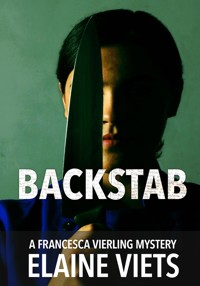
From Anthony and Agatha Award-winning author of the Dead End Job mysteries—the first novel in a gritty series featuring a no-nonsense female journalist who follows her stories wherever they may lead…especially if they lead to big trouble. As a columnist for the St. Louis City Gazette, Francesca Vierling is a six-foot-tall beauty with brains and a talent for finding unusual and interesting subjects. The colorful people of her city provide her with all the inspiration she can handle, and her readers love her smart, streetwise style—even if her stuffy, less-than-appreciative bosses never seem to. Her work suddenly becomes all too personal when two of her favorite local characters die one after another. And for Francesca, there are too many odd ends for both deaths to be a coincidence. Driven by grief, anger, and the specters of her own past, she sets out to find out why the men were murdered, even if everyone else thinks she's chasing shadows. But there's one person out there who knows for certain that Francesca is onto something. That she's getting close to revealing a secret they've already killed to keep. And that if she keeps digging, they're going to have to kill Francesca too… Note: The author has made some minor revisions to the original text for this edition of the book.
Sie lesen das E-Book in den Legimi-Apps auf:
Seitenzahl: 378
Veröffentlichungsjahr: 2019
Das E-Book (TTS) können Sie hören im Abo „Legimi Premium” in Legimi-Apps auf:
Ähnliche




















Backstab
Copyright © Elaine Viets, 1997
Originally published by Dell, 1997
Published as an eBook in 2019 by JABberwocky Literary Agency, Inc.
All rights reserved
eISBN: 978-1-625673-43-5
This is a work of fiction. Names, characters, places, and incidents either are the product of the author’s imagination or are used fictitiously, and any resemblance to actual persons, living or dead, business establishments, events, or locales is entirely coincidental.
Cover design by Triggers & Sparks
TABLE OF CONTENTS
Title Page
Copyright Page
Dedication
Acknowledgments
Chapter 1
Chapter 2
Chapter 3
Chapter 4
Chapter 5
Chapter 6
Chapter 7
Chapter 8
Chapter 9
Chapter 10
Chapter 11
Chapter 12
Chapter 13
Chapter 14
About the Author
Also by Elaine Viets
To my husband Don and hisenormous…gray cat.
ACKNOWLEDGMENTS
Many thanks to my agent, David Hendin, and my editor, Jacquie Miller. This book wouldn’t be possible without them.
I also want to thank Father Patrick S. McDonnell, pastor of St. Sebastian Church, Fort Lauderdale. St. Louis Police Officer Barry Lalumandier. Anne Watts and the staff of the St. Louis Public Library. Richard Buthod of The BookSource. Susan Carlson, Karen Grace, Jinny Gender, Debbie Henson, Marilyn Koehr, Cindy Lane, Robert Levine, Betty and Paul Mattli, Sharon Morgan, Dick Richmond, Kathy Rethemeyer of the Fortune Teller bar, and Janet Smith. Finally, thanks to all those helpful folks who must remain anonymous, including my favorite pathologist.
CHAPTER 1
Newspapers have always used the language of death and violence. We kill a story. We spike it. Or bury it. We keep old stories in the morgue. Reporters complain that editors slash and cut their copy. Now, with the new computers, we’ve added more deadly words. We can abort and execute. For us, the pen really is mightier than the sword. But we writers are mostly mild types, content to take out our fury in back-stabbing.
That’s why, when the killing started, I knew no real newspaper person was behind it. They would never take those words literally. They wouldn’t kill my readers. When I look back now, I blame myself. I should have paid attention to what the two women told me that cold gray February day. Maybe those people would still be alive. Or maybe not. I didn’t take the time to find out. I was struggling with the most violent newspaper word of all.
A deadline.
Let me introduce myself: Francesca Vierling, columnist for the St. Louis City Gazette. Six feet tall. Dark hair. Smart mouth. Dumb enough to write for a newspaper when anyone with any sense was getting out of the business.
It was three o’clock in the afternoon on February eighth, three hours from my final deadline, and I still didn’t have a column. Instead I was sitting in a dark bar in South St. Louis, and a woman was holding my hand. Gina had long silver earrings, a nice set of laugh lines, and a purple fringed top. She had the courage not to dye her reddish-brown hair, now that it was going gray. I liked that. Not that I like women. Don’t get me wrong. Gina was holding my hand because she was a palm reader. She was also the owner and bartender at a joint in my South Side neighborhood called the Crystal Ball Bar. Like most neighborhood bars, Gina’s had hot dog nights, baseball nights, and two-for-one happy hours. But her place had a little something extra. Free palm readings one day a week. Gina read the palms herself, just like she barbecued the dogs on Hot Dog Night.
The Crystal Ball Bar had been designed back when saloons were the working folks’ social clubs in this old German neighborhood on the city’s South Side. For a quarter, the customers bought a beer and sat in the most luxurious surroundings they would probably ever see. The Crystal Ball had a twenty-foot oak bar, a mirrored back bar, and cozy dark booths lit by the golden glow of tulip-shaded art-glass lamps. The luxury was long vanished. The bar was covered with cardboard racks selling aspirin and Alka-Seltzer and beef jerky. Even in the dim light, you could see that most of the customers were retirees who could barely afford the price of a draft, or worn-out hookers and run-down vice cops. The place smelled of Pine Sol and stale cigar smoke and the booths were harder than a bill collector’s heart.
To me, it felt like home. I grew up in bars like these. My first words were “orange soda.” Writing any column about a bar was an easy out when I was under pressure. Two columns had gone dead on me in thirty minutes. One subject was out of town, so I couldn’t check a vital fact by deadline time. Another column went belly-up when the guy who said his children were unjustly taken away from him turned out to have a conviction for assault and battery. He beat up his wife when she wouldn’t let him take their son one weekend. So much for the story of a hardworking divorced dad denied his rights. I rushed down to the Crystal Ball on Palm Day.
Gina said she would read my palm, but she wouldn’t take any money for it. She never did. She didn’t think it was right to make money off something she said came naturally to her. I didn’t feel that way about writing, but I admired Gina just the same.
“If conditions aren’t right, I won’t be able to do it,” she said. But she was a kind person who recognized a desperate woman—me—and she ushered me into the first booth by the door, where she could keep one eye on my future and another on her customers. She closed her eyes, and pulled her concentration into herself, the same way I’d seen athletes do. Then she turned my palm over and looked at the lines on it.
“You have a very old soul,” Gina said.
“I’m not surprised. The rest of me isn’t getting any younger,” I said. I’d just turned thirty-seven. It was traumatic.
Gina ignored the wisecrack. She was taking this very seriously. Her long earrings swayed like chandeliers in an earthquake as she studied my palm. “You have a long lifeline,” she said.
That was probably true. The women in my family lived into their nineties. When my grandmother died at seventy-three, instead of the usual ninety-three, the family carried on like it was a crib death.
“But there will be an abrupt change soon,” Gina said. She pointed to a spot where my lifeline zigzagged. “I see much turmoil and crisis.”
“I work for a newspaper. There’s always turmoil,” I said.
“This crisis could end your career,” she said.
I could feel my palm sweat, even though I didn’t believe a word she said. I just needed a column.
“I see you in Washington.”
“D.C.?” I said, hopefully. Finally, after fifteen years, I was going to get some national recognition for my work.
“Missouri,” she said.
Oh. Washington, Missouri, is a town fifty miles outside of St. Louis, best known for a sausage shop and a bakery. I go there every October because Jim Hanks, a vet friend who lives there, has his annual nut fry. Doc Hanks is the Lorena Bobbitt of the bull world. Whenever he castrates a bull, he freezes the testicles, then in October dredges them in flour and fries them in deep fat. They taste like mushrooms. The best part is watching the guys at the fry. They drink a lot of beer and keep their legs crossed. After about four beers, they start downing nuts at a great rate, with silly smiles on their faces.
But no matter how late Doc Hanks’s nut fry lasts at the local VFW hall, I never stay in Washington more than a weekend.
“What am I doing in Washington?” I asked.
“It will be your refuge when your world collapses. In your time of crisis,” Gina said. “I’m sorry I can’t help you any more, except to tell you to be very careful in the next few months.”
I was always careful. I loved the city neighborhood where I lived, but I could get mugged walking to the supermarket.
I came away with the impression that Gina was a decent person who honestly believed in what she was doing, but I hadn’t seen a bigger load of garbage this side of the city landfill. Take refuge in Washington? Ridiculous! St. Louis was my city, and I knew it better than she knew my palm. If I ever needed help, it would be right here in my hometown. Oh, well. At least I had a column.
I thanked Gina, grabbed my purse, felt around with my foot for my shoes (I’m one of those women who slip off their shoes the minute they settle in), and went outside to see if someone had ripped off or ticketed my beloved blue Jaguar. Most reporters drive a modest Honda or Toyota. Not me. Modesty is for those who need it. I loved my fifty-two hundred pounds of blue flash. A used Jag costs less than a new Buick, but god, it goes fast.
There is one drawback to owning a Jaguar. You have to listen to a lot of lectures. “Jaguar, huh?” they’ll say. “You might as well own two—one to drive while the other one’s in the shop.” I bought one from the vintage years, ’86 to ’88, and it was the most reliable car I ever owned.
I stepped over some gray rags of last week’s snow and slid into the Isis blue leather seats. The car started up with a low sexy growl. I turned up my FuzzBuster and poured on the gas. I had to get back downtown to the newspaper office.
The Crystal Ball was twenty minutes from the newspaper office. That’s what I liked about St. Louis. It was convenient. Everything was twenty minutes from everything else. If it wasn’t, we didn’t go there. Another thing I liked was the city air. On the South Side, it had that sharp-sour smell of fresh-brewed beer. This part of the city was perfumed by the Anheuser-Busch brewery. If the stuff tasted as good as it smelled, I’d be in a detox ward.
My good fortune was holding. There was a parking spot in front of the building. I found some quarters in the bottom of my purse, fed the meter, and ran into the lobby. It looked like someone had overturned a junior high. Young teens, with that wet, newly hatched look, were everywhere. They giggled and poked and picked at their zits and picked up everything on poor George’s desk. George is the perpetually worried security guard.
George looked more worried than ever, with the students all over him. “Hi, George, how are you?” I yelled as I ran for the elevator. George managed a wave. He was signing in eighteen students for a newspaper tour, putting each kid’s name on a pass. The City Gazette made visitors wear these awful sticky tags with a picture of the News Hound, the newspaper’s doggy mascot who didn’t look bright enough to bring in the paper off the lawn, much less dig up stories with his “nose for news.”
Adults who made the mistake of putting the passes on a silk blouse or briefcase would never get the sticky stuff off. But kid visitors delighted in sticking the tags on subversive places throughout the building. My favorite was the young vandal who made his pass into a bow tie and stuck it onto the painted bow tie on the oil painting of our managing editor, Hadley Harris the Third. Hadley had to call in an expert from the Art Museum to clean and remove it.
When I started at the City Gazette fifteen years ago, the newsroom was the most romantic place in the world. We had these army-green desks, piled high with yellowing newspapers, and beat-up beige file cabinets, gray Royal typewriters, and, I swear, brass spittoons. Nobody used them for spitting. The staff poured their old coffee dregs and dropped their cigarette and cigar butts into the spittoons. The janitor had the awful job of emptying those brass slop jars. My worst day at the paper was when I tripped over one of those disgusting things.
They’re all gone now—the spittoons, the gray typewriters, and the army-green desks. Now we sit in mauve-and-gray ergonomic pods and type on beige IBM computers. It’s faster and more efficient, but it has all the romance of an Allstate insurance office. Not that I get too sentimental over the good old days. I’d still be writing fashion copy in that world. That’s all “girls” could do at newspapers then.
The newsroom had that predeadline hum. It started about three in the afternoon. It was a blend of constantly ringing telephones, small staff meetings, and phone conversations that got more frantic as reporters tried to pin down people for statements before the six o’clock deadline. I could hear frenzied fragments of conversations:
“When do you expect him back? Would you tell him we need his reply for the first edition?”
“When does Detective Connor get in? Not till five o’clock? Will you tell him I’m looking for him? Can I leave a message on his voice mail?”
“Do you think she dyes her hair?”
“At her age, she has to. And speaking of dyeing, get a load of that black suit. Who died?”
I tuned in to those last two remarks, and I smiled. Two female reporters hidden behind a stack of phone books were talking about me. Forget Front Page and All the President’s Men. The emotional age of a newsroom is freshman year in high school. By their comments, I could tell my short black Donna Karan suit had hit the mark. I must be looking good to make them talk so bad.
I waved to Tina, my friend who covered the city police beat, but all I saw was her dark brown curly head and her hunched-up shoulders. She was busy on the phone.
My own phone was ringing when I got to my desk. I found the phone under a pile of legal pads and old feature sections, removed the two yellow Post-it notes I’d stuck on the receiver to remind me to make some calls, and looked at the clock: four-fifteen P.M. It had to be Rita the Retiree, calling me to critique the newspaper. She called me at the same time every month.
Rita got her Social Security check, cashed it, and went down to the Peppermill bar for two draft beers. Then she went home and called me to complain about the paper. I liked Rita and I liked her comments, even if I couldn’t publicly agree with her. One sixty-six-year-old woman had figured out what was wrong with the paper better than all the focus groups and survey takers. Of course, she had one up on the high-priced consultants: Rita actually read the newspaper. I’d met Rita a couple of times. She was a good source of neighborhood information. She always looked the same. She wore a pink polyester pantsuit and had her gray hair sprayed into a helmet once a week at the Powder Box Beauty Salon. She preserved her hairdo for a full seven days by sleeping on a green satin pillowcase. She painted her nails red and smoked unfiltered cigarettes.
Rita called me from her home on Gannett. She lived in a brick one-story shotgun house, so called because you could fire a shotgun through the front door and hit all three rooms. First there was the living room, with a huge TV and a maroon three-piece furniture suite, protected by plastic slipcovers. The TV had a rabbit-ears antenna, with aluminum foil on the ends for better reception.
Next came the bedroom, with a Bassett bedroom set and a pink chenille bedspread. She bought them when she married Ray, who’d passed away ten years ago last March, God love him.
But she lived in her warm cozy kitchen, with the big Chromcraft kitchen set, the permanently percolating coffeepot, and the pride of Rita’s life, her collection of salt-and-pepper shakers from all fifty states in a tall glass display case. She’d spent a lifetime collecting the twin igloos from Alaska, the cacti from Arizona, the pair of red barns with corks in the bottom from Connecticut—all the way down to twin cheeses from Wisconsin and two buttes from Wyoming. Every week Rita took them all out, dusted them and admired them and put them back in their proper places. When she talked on the phone, she fixed her rocking chair so she could watch them glitter and sparkle, especially the ones made from Arkansas fool’s gold.
Rita’s smoke-cured voice rasped through the phone line with her usual opening, “Honey, did you see the paper today?”
“Yes, Rita.” Here it comes.
“How can they call it a newspaper, when it doesn’t have any news? The whole front section is six pages, and four of them are department store ads. And the two big front-page stories are a disgrace. One is called ‘Over Easy: 9-Year-Old Boy Breakfasting at Shoney’s Saves 6 Kittens Loose on the Interstate.’ ”
I’d wondered about that one myself. The kitten story was about a Chesterfield kid who was staring out the window, eating pancakes and tuning out a lecture from his mother, when he saw a semi make a left turn into a vet hospital van on the access road. The doors popped off, and six frightened kittens popped out. The kid left his breakfast to get cold, ignored his mother when she told him to sit back down, climbed a chain-link fence, and ran into rush hour traffic to save the kittens from being run over. The smiling blond boy was photographed on the front page with a rescued kitten on his head.
“Who the hell cares?” said Rita. “I mean, I wouldn’t want the kittens gettin’ squashed, but should your paper encourage children to run into traffic?”
I didn’t have to answer that question. Rita went straight into why the other major front-page story bothered her. It had a four-column photo of a weeping black woman, collapsed in the arms of eight of her children, after she heard that her twelve-year-old son was shot in a police raid on a North Side crack house. The story said the kid fired an Uzi at a cop, and the police fired back.
The story began, “Etta Mae has endured much, including her first pregnancy at age 15 and the misery of living on welfare with nine children. But today she had another burden laid on her ample shoulders. Her son, Tyronne, 12, was gunned down, possibly by St. Louis police, during a raid on an alleged crack house….”
Rita was not going to grieve about a dead crack dealer, even if he was twelve. She hated them all. Their desperate young customers had mugged her twice on her way home from her afternoons at the Peppermill. The second time, she held on to her purse so hard she broke her wrist when the kid yanked it out of her hands. Now her afternoons included the added cost of a cab. A tipsy retiree was a target.
“And then they’re putting that trashy woman with her dead drug-dealing son on page one,” Rita snapped. “Doesn’t your paper do any stories about churchgoing black people? I worked with a lot of them at City Hall, and believe me, they held down two and three jobs to send their sons and daughters to college. They raised up fine doctors and lawyers and accountants. But not if you read the Gazette. All black people are drug dealers and suffering welfare mothers.”
She was warming to her subject. I glanced at the clock: four thirty-five. I had to go soon. I had less than an hour and a half to finish my column.
“Where’s the news in my newspaper?” raged Rita. “What’s going on in the Middle East? What’s Congress up to? What’s happening in Mexico after we signed that stupid trade agreement? Why can’t I find out what’s going on in the world?”
Because the City Gazette paid half a million dollars to a group of consultants, who concluded readers wanted local news. If the paper had spent half a million dollars on news staff, they could have had outstanding local stories. But the CG didn’t want to hire more reporters. So they stuck to murders and kitten rescues, which were cheap and easy to do. They also played to some readers’ prejudices: White suburban kids saved kittens. Black city kids sold drugs.
But I couldn’t tell Rita that. I didn’t have to. She answered her own question: “They’re too cheap to do real reporting,” she said. I was always amazed at how much readers figured out by themselves.
“And they’ve missed the real story. It’s right there, right in front of them, buried in their own paper.”
“Where?” I said. If there was a story going loose, I wanted it.
“Check the ‘Police Notes.’ The second item under ‘City Murders.’ ”
I hunted around for a daily paper, turned to page five-A, and read the single fine-print paragraph: “Police found the body of a prostitute in a Dumpster in the 700 block of Bedler St.”
Hmmm, that address was right by the paper. Also right by the projects. It was a desolate area with empty weed-and-brick-studded lots and soon-to-be-razed buildings. The burned-out shells had the intense blackened look of insurance fires. A lot of bodies were found around Bedler Street.
“An autopsy showed the person had been beaten and strangled and was undergoing a sex change,” the article said.
“Wow!” I said, “That would put a strain on anybody.”
“Don’t laugh,” huffed Rita. I could almost see her chin wobbling indignantly. “It says here the deceased was twenty-two, had bosoms, was taking female hormones, but still hadn’t had his whatchamacallit cut off.”
That’s not quite how the paper phrased it, but Rita caught the spirit. The managing editor, Hadley Harris the Third, was a nineteenth-century prude in a twentieth-century job. He wore hand-tied bow ties, parted his thinning hair in the center, and wrote editorials about family values, Republican virtues, and the joys of raising his two daughters.
What most readers didn’t know was, Mr. Family Values ran around on his wife. At first I dismissed the gossip about Hadley. Sure, I’d see him with a female staffer a few times, and then she’d be promoted, but I just thought he was getting to know her. He was. I didn’t know how well until I covered an undertakers’ convention at the Riverside Inn downtown. I was supposed to interview a “grief counselor” in a seventeenth-floor suite. As the elevator doors opened, I saw Hadley and a mousy-looking city desk reporter coming out of suite 1710. Hadley was tying his bow tie, so I knew it wasn’t a clip-on, and smooching Miss Mouse on her round little ear. I ducked back into the elevator, hit the down button and hoped they didn’t see me. Three weeks later Miss Mouse got the coveted job of consumer reporter. I wondered what she consumed to get that promotion.
A true Victorian, Hadley felt what you said was more important than what you did. Hadley treated readers as if they were sheltered maidens, too delicate to withstand modern life. Nothing improper—i.e., interesting—was allowed to sully the City Gazette’s pages. With Hadley on one of his prude watches, I was surprised the sex-changing prostitute made the paper at all, even a paragraph in the “Police Notes.” Hadley was constantly lecturing me on good taste. Our latest run-in was when I mentioned in a column that a grocery store clerk found a used condom draped over a grapefruit. I thought this was a funny vignette about city life. Hadley Harris read it on a page proof and almost needed smelling salts to revive.
“Not in my newspaper,” he screamed. “Get it out. Out. Out.” You’d have thought a rat had run over his desk. I could see his scalp turning pink through the thinning hair. That was a bad sign.
“Hadley, don’t cut the condom,” I said. “It will be talked about.”
“That’s not the kind of discussion I want my paper to create,” he said. “A Hadley Harris paper has principles. We don’t pander to interest in smut.”
I wondered if Hadley used condoms for his assignations. I wondered if I could still make my Visa payment if I told the skirt-chasing hypocrite to stuff it. Sigh. Why did I argue? It was useless. There was no way I could explain to Rita we were lucky to see one paragraph on the dead prostitute in Hadley’s paper. There was no way to explain Hadley.
“There’s a story there. Aren’t you curious?” said Rita.
“The victim is a prostitute. Lots of them get killed.”
“I still think it’s a story,” grumped Rita. “I bet a customer found out she was a he and killed her. Remember BJ Betty?”
Rita couldn’t bring herself to say Blow Job Betty, as BJ was really called, not even after two beers.
“Of course I remember Betty,” I said. “I told you the story.”
“Tell it to me again,” she said, like a teacher prompting a not-very-smart student. “Maybe it will convince you this is a story.”
“It happened last summer,” I said. “Betty hung around the Last Word.”
“The newspaper bar,” said Rita.
“Right.”
“I’ve never been there,” she said.
“You haven’t missed a thing. The Word is a dingy place where the staff goes to complain about editors and talk about what they would do if they ran the paper. The draft beer tastes off because Terry, the bartender, doesn’t keep the lines clean. The tables wobble and have match-books under the legs. The tops are sticky with old spilled drinks and the ashtrays overflow. The floor crunches and rustles with empty peanut bags, spilled chips, and dropped pretzels.”
“Sounds like a lot of old bars,” Rita said.
“It’s not. It has a mean and nasty atmosphere. You go there to gripe and grouse, get drunk and cheat. I stay away from the Last Word, unless I want to get really depressed. But I was there the night BJ Betty’s story broke. Betty was a brassy little blonde with a haystack of bleached hair. She always wore a tight black skirt and red spike heels. She had knobby knuckles and long red nails. The red-painted nail on her little finger glittered with a rhinestone. Betty had oddly big, bony feet for someone so small, but I doubt the guys got much past her bulging blouse.”
“They never do,” sniffed Rita.
“Betty’s name was her specialty. She had oral sex with a lot of reporters, copy editors, phone clerks, and even a few printers in the back of her white Cadillac. It was kind of a ritual. Betty would come in, order a strawberry daiquiri, which Terry the bartender always grumped about making. Terry hated froufrou drinks.”
“He probably didn’t want to clean the blender,” said Rita, who used to work part-time at a bar.
“Betty’s order was the signal for one of the guys to sit down beside her. If Betty liked him, and the woman made Will Rogers look like a snob, she’d let him pay for her drink. After a couple of rounds, the guy would ostentatiously escort Betty, a little wobbly now on those red heels, out the back door to the parking lot. About half an hour later, he’d come back alone, grinning.”
“Hah. Men. They’re all alike,” said Rita.
“Charlie was one of her regular escorts,” I said, trying to continue. The beer was definitely taking its toll on Rita.
“Is he that little short, balding shit I met that time I toured the paper?” growled Rita.
“Some of my best friends are short,” I teased her. “Anyway, these days we say Charlie is vertically challenged.”
“That’s not the problem. He has mean, shifty eyes. I don’t trust him.”
I didn’t either, but I’d had to find out the hard way. I never could figure out how Rita sized the little creep up so fast.
“Charlie said he liked BJ Betty because he didn’t have to lie to The Wife. I never heard Charlie use the woman’s first name. Maybe she was baptized The. ‘If The Wife asks me if I’ve ever slept with Betty, I can tell her no. Well, I didn’t sleep with her, did I?’ he said, winking. ‘I didn’t go to bed with her, either.’ ”
“See, a sneaky little shit,” said Rita. It sounded shocking coming out of her mouth. She used the S-word only on her Peppermill afternoons.
“Some guys would ask Betty for a little more than oral sex and she would say, ‘Oh, no, honey. Not today. It’s my time, you know.’ Few complained. They’d rather have Betty’s specialty anyway.
“One night five or six guys got to bragging in the bar about Betty’s talented tongue. One of them mentioned he wanted to go all the way, but Betty said it was ‘her time’ this week.
“ ‘Yeah? She told me it was her time last week,’ said Dick.
“ ‘She told me it was her time the week before that,’ said Jim.
“ ‘Who cares?’ said Charlie. ‘She’ll never come whining to you that she’s pregnant.’
“A fat old beat cop who used to work the Stroll was listening to this conversation. He started laughing. I suspect he was ticked off because the Gazette had just done its Doughnuts to Diners exposé, revealing some city cops had free doughnuts or dinners at local diners. The owners gave them free food because there were fewer holdups in a diner full of blue uniforms.”
“That series was a real revelation,” said Rita, sarcastically. “A lot of good cops got stung because they ate a burger.”
I didn’t want to hear about it anymore. I continued my story.
“Anyway, the fat cop said, ‘If you get Betty pregnant, you’ll wind up in the Guinness Book of Records.’
“ ‘Why?’ said Charlie.
“ ‘Guys can’t get pregnant,’ said the cop.
“ ‘What’s that got to do with Betty?’ said Charlie.
“ ‘She’s. A. He,’ said the cop, punctuating each word with a mean smile.
“Charlie’s face turned the color of pork fat.
“ ‘A guy?’ Charlie croaked, and drank his draft in one gulp.
“ ‘Betty’s a bouncing boy, just about ready to get his final operation,’ said the cop, enjoying every word. ‘That’s why he never gives anything but blow jobs, he-man. You’ve been getting sucked off by a she-man.’ ”
“Hee, hee, I loved that part,” Rita said.
“Charlie’s smile did sort of curl up and slide off his face like a dead worm. He put some money on the bar and left. A lot of guys went home early that night. The men who stayed were the ones who’d never been with Betty in her white Cadillac, and they looked relieved. They claimed they could tell when they saw her Adam’s apple. But they couldn’t. Betty was darn good.”
“Here’s the part I want you to pay attention to,” Rita said, still prompting her pupil to learn this lesson. “What happened the next night?”
“The next night, when Betty’s Cadillac showed up on the back lot, Charlie and some of the guys were waiting for her. Or him. They beat up Betty so bad, Terry finally came out and made them stop. Betty’s blouse was ripped and she had bruises on her face and arms, but she’d managed to do some damage with her long fingernails and spike heels. Terry wanted to call an ambulance, but Betty didn’t want any trouble. She drove herself to the emergency room, bleeding all over the white interior. I heard Betty didn’t work her specialty for some time. She had to have her jaw wired. The cops asked if she wanted to press charges, but she said she fell in the parking lot.
“She certainly fell from grace at the Word. Betty never showed up at the bar again.”
“See what I’m saying? Those guys at the Last Word almost killed poor Betty when they found out what she was,” Rita said.
“Yeah, if Terry hadn’t come to her rescue with that lead pipe he keeps under the cash register she would have been a goner,” I said.
“I think that’s what happened to the poor thing they found on Bedler Street,” Rita said.
“Why do you say that?”
“Because of what happened when those guys at work found out about Betty.”
“It doesn’t mean that’s what happened to this person.”
“It’s worth looking into,” Rita said.
“It’s just another dead hooker,” I said.
“I’m trying to give you a good story tip, but you’re not listening,” Rita snapped. “I better go. Thelma is at the back door.” Thelma was her next-door neighbor, eighty-eight years old. I knew she wasn’t really there, or I would have heard her yelling and rattling the door knob. Rita was irritated with me. She was also right. This was the second time I’d ignored a woman’s good advice. I would regret it.
I finished my column by deadline, but I missed the story.
CHAPTER 2
“Being a columnist is like marrying a nymphomaniac. As soon as you finish, you have to start all over again.”
A reader told me Ellen Goodman said that. Maybe she did, but Ellen always looked too prissy in that column photo to know much about nymphos. Besides, it sounded awfully politically incorrect. There’s no such thing, medically speaking. A nympho is what scared men call an unsatisfied woman.
Still, I know what she means. A four-days-a-week column is insatiable. The thrill of servicing it is almost as good as sex. As soon as I finished one column, I needed another. And another. And another and another and another, until I was panting and exhausted. No wonder they say you put a newspaper to bed.
I love it. I’d hate to have a real job. Talking to a palm reader in a bar beats digging ditches and working in factories, and I have relatives who do both. When I finished my Crystal Ball column five minutes before deadline, I was a happy woman. Today’s work was done. I could look forward to tomorrow’s with satisfaction. Because I had another fantastic subject, a hot and juicy one. I grabbed my briefcase and a fresh legal pad and headed out to the Louie the Ninth Motor Inn, near the airport.
St. Louis is named for Louis IX, the saintly French warrior-king. If a saint who led two crusades to the Holy Land had to do any time in Purgatory after he died, I figure he spent it at the motel named after him, the Louie the Ninth. The decor was punishment enough. The Louie started out as a basic airport motel. It had a big high-ceilinged lobby fronting for a hollow two-story square of rooms. But the motel went slightly wacky when the present owners gave it a medieval theme.
Now aluminum suits of armor stood in the lobby next to the standard motel overstuffed sofas and silk ficus trees. The Sheetrock walls were painted like gray castle stones. The high ceilings were hung with colorful banners, which made the place look more like a gas station tire sale than a medieval court. But most of the activities in King Louis’s namesake motel were far from saintly. The Louie was the site of swap meets for bored married couples, swinging singles conventions, and gatherings of S and M aficionados, who loved the Dungeon cocktail lounge.
The motel also hosted the conventions other motels wouldn’t touch: scary-weird sci-fi gatherings, comics conventions, and cat shows. Many hotels won’t take cat shows because nervous cats shed huge amounts of hair. The Louie’s ballrooms had a light layer of cat fluff in the corners. The people who used the Louie never complained. They were happy to find any place that would host their events. I think the Louie’s semimedieval staff uniforms contributed to the louche atmosphere. They certainly made me think about sex. The women employees were dressed like Lady Macbeth in long, trailing gowns that emphasized their breasts. The men wore tabards and hose. I have a theory that most men have great legs. The Louie proved I was right.
I tried not to stare at the bellperson with the muscular legs set off by dark green tights. Instead, I went straight to a pale, ponytailed blonde behind the information desk. A Gothic plastic name tag announced that my informant was Tiffany. Tiffany wore her cheap blue gown with the dignity of a Plantagenet princess. Princess Tiffany was talking on the phone to a friend. She looked at me disdainfully, and rightly so. If I was at the Louie, I was probably up to no good.
“I’m looking for the Miss American Gender Bender Pageant,” I said, confirming her suspicions.
The pale princess pointed around the corner, not deigning to speak to me. The noise guided me the rest of the way—shrieks, squeals, and shrill girlish laughter. Standing in front of the Crusader Ballroom were some of the tallest women with the biggest hair I’d ever seen. The sequins on their dresses were as blinding as searchlights. They wore more mascara than a Barbie doll. In fact, they looked rather like giant Barbie dolls, with exaggerated busts, major makeup, dangly earrings, and drop-dead gowns.
I’ve always had my suspicions about Barbie. I knew for sure these weren’t real women. They were fabulous female impersonators hailing from Maine to Mississippi, here for the annual Miss American Gender Bender Pageant. They dragged U-Haul trailers filled with sets for their talent numbers. They packed eleven-thousand-dollar Bob Mackie gowns. They brought hair stylists from Elizabeth Arden and a queen’s ransom in rhinestones.
A successful female impersonator always travels with an entourage, and these brought their wardrobe advisers, set designers, and lovers. The men who accompanied them were decidedly gay. They wore a lot of black, leather, and chains. One of them was my friend Ralph the Rehabber. Ralph had traded in his daytime wear of paint-spattered, plaster-covered jeans for something a lot more interesting. He was going to be my guide for the evening.
Ralph was tall and lean. With his Vandyke beard and longish blond hair, he reminded me of those museum portraits of English aristocrats. Tonight he wore a silk pirate shirt, a studded black leather vest, and tight black leather pants with silver chains going places I probably shouldn’t look. The orange-and-yellow Proventil inhaler sticking out of his vest pocket spoiled the devil-may-care effect slightly. But Ralph had had a near-fatal asthma attack last December, and since then he didn’t go anywhere without his inhaler. He even kept one in a pouch on his ladder when he worked on houses.
My readers knew Ralph the Rehabber as a regular source on how City Hall worked—or didn’t. St. Louis is one of the “rehab” capitals of the country. “Rehab” is local slang for renovation. We have some gorgeous old brick homes in the city, and they go cheap. You can buy what would be a million-dollar mansion in any city on the coast for less than one hundred thousand dollars here. A lot of people fled St. Louis for the new, boring burbs. They saw those areas as crime-free. People like me feared we’d die of boredom if we lived in the suburbs. We stayed in the older parts of town, rehabbed the handsome houses, and lived in luxury on the urban edge.
It takes skill and nerve to finish a rehab project, get the required bank loans and permits, and outwit the city inspectors, and Ralph had all these skills. I think my favorite Ralph story was about when he was fixing six bungalow breeze-ways in a postwar subdivision on the edge of St. Louis. The city code required a fire door between the kitchen and the breezeway, which spoiled any chance of enjoying the breeze. Ralph rigged up a fire door that could be hung just before the city inspector arrived, then removed. It traveled from neighbor to neighbor, painted six different colors.
I knew Ralph the Rehabber was gay, and had lost his heart to a three-hundred-pound drag queen named Bambi. Bambi was a southern belle trapped in the body of a sumo wrestler. Imagine a simpering sumo wrestler, and you had Bambi. She had doelike brown eyes, a charming giggle, long red hair, and thick, rubbery lips. She shaved her face and her legs. She loved green satin and wore the biggest pair of dyed-to-match green heels I’d ever seen—and I’m six feet tall in my panty hose and wear a size 11 shoe.
Ralph designed all of Bambi’s prizewinning outfits, including a green satin wedding dress with a twelve-foot train that made her look like Scarlett O’Hara on steroids. I thought Bambi loved Ralph’s work, but not Ralph, and was only using him while she made out with a hunky bodybuilder whose sole talent was flexing his pecs. But I never said anything to Ralph. You can’t tell a person the truth about the one they love.
The pageant had been going on for four days. Like most beauty pageants, this one had contestant interviews, rehearsals, bathing suit competitions, and judging for poise, posture, and presentation. Tonight was the climax, with the two most important competitions: talent and evening gown.
The whole event was a flashback to 1957. Female impersonators put on the things many women have cast off—tortured and teased hair, ballistic breasts, hurting high heels. The natural look is not big in this crowd.
Ralph was my guide into this world. Unlike some gays, he never played “shock the straights.” Talking with Ralph was like watching a National Geographic special. He narrated the most astonishing facts in a professional, didactic manner. “I got us both passes for the whole show, including backstage,” Ralph said. I wondered how many strings, or chains, he had to pull for that. The straight press usually wasn’t allowed in these pageants, for good reason. We tended to cover them like freak shows, and displayed all the sensitivity of high school jocks.
“What about the Gazette photographer?” I asked.
“He’s allowed in, too,” Ralph said. “But we’ll have to stay with him.” I knew that would be fine with Jimbo. He was about twenty-five and looked like Beaver Cleaver, right down to the freckles. He’d react to this assignment the same way as the Beav. He’d give a gulp and a golly. Then he’d grab his cameras and do his usual good job. While we waited for Jimbo, Ralph began his lecture:
“The subject of female impersonators is very controversial in the gay world,” Ralph said, and I almost expected him to pull out a pointer and a blackboard. “Some gays feel that men date drag queens because they aren’t fully out of the closet and haven’t completely accepted their gayness. In other words, we’re going out with men who look like women, rather than accepting who and what we are, and loving men who look like men.
“My own theory is that female impersonators let us show our creativity and our need to walk on the wild side. We go for the outrageous.”
Ralph certainly did. Dating the Jolly Green Giantess was as outrageous as you can get.
“You won’t hear it from the Chamber of Commerce, but St. Louis is a center for female impersonators. It’s estimated we have some two hundred fifty in the area.” And now, thanks to the King Louie, we had a whole lot more.
Impersonators may look cheap, but they aren’t. “It costs thousands of dollars to get up on that stage,” Ralph lectured. “The twelve finalists spent a total of a hundred thousand dollars for their dresses. Some losers wind up with colossal debts. Many bet the rent and the utility money and don’t even place.”
“Then why are they doing this?”
“Often it’s a way out of the ghetto or the trailer park,” said Ralph. “Many of them are poor boys who have pretty faces and not much else. If they win, or even place, they get a ticket to the gay club circuit. They can make two hundred fifty dollars a night at a cabaret and three hundred to five hundred dollars in tips. It’s more money than those boys have ever seen in their life.”
“Do they put it away for their old age in securities and real estate, like smart call girls?”
“Most of them don’t have an old age,” said Ralph.
He pulled out his Miss American Gender Bender Pageant program and showed me the back pages. They were loaded with tributes to drag queens who’d died of AIDS. In their photos, the dead queens shimmered and simpered, and looked pitifully young. Their epitaphs were short and sad. “Beautiful Bettina, 1993 AGBP Runner-Up. 1975–1995. We love you.”
I flipped through the fat five-dollar program and found a happier section. It proved a beauty queen is a beauty queen, regardless of sex. These gushed just like female contestants and wrote girlish congratulations to their competition in the program. Last year’s title holder, a glamorous brunette named Sweet Cherry Whine, wrote this: “To the contestants—remember to be the best that you can be. While only one of you will wear the Gender Bender crown, you are all unique!” I couldn’t agree more.
That’s when Jimbo showed up, looking weirdly normal in jeans and a baseball jacket. He was wide-eyed with disbelief.
“We can get you backstage, Jimbo, but you have to stick with me,” I said.




