


Erhalten Sie Zugang zu diesem und mehr als 300000 Büchern ab EUR 5,99 monatlich.
- Herausgeber: JABberwocky Literary Agency, Inc.
- Kategorie: Krimi
- Serie: A Francesca Vierling Mystery
- Sprache: Englisch
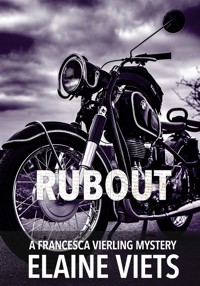
From Anthony and Agatha Award-winning author of the Dead-End Job mysteries—a gritty series featuring a no-nonsense female journalist who follows her stories wherever they may lead…especially if they lead to big trouble. St. Louis City Gazette columnist Francesca Vierling has scored a ticket to the Leather and Lace Bikers' Society Ball, one of the highlights of the social calendar. The organizers of the ball would prefer the event be considered a low-light, however, and have done everything they can to rough up the affair and deter the RUBs—Rich Urban Bikers who can't tell a Harley Hog from a Holstein heifer—from showing up. A little grittiness can't stop ultra-fashionable socialite Sydney Vander Venter from making an appearance. She's the talk of the town thanks to an impending divorce from her ultra-wealthy husband. But after spending the evening making moves on a few too many married men, she's told to hit the road. When Sydney's body is found ditched in a back alley, Francesca finds herself on a hunt for a murderer that takes her into the lives of St. Louis's hardcore biker gangs and the prim and powerful elite. But she soon learns that those very different worlds have one rule in common… If you don't belong, you don't survive for long. Note: The author has made some minor revisions to the original text for this edition of the book.
Sie lesen das E-Book in den Legimi-Apps auf:
Seitenzahl: 422
Veröffentlichungsjahr: 2019
Das E-Book (TTS) können Sie hören im Abo „Legimi Premium” in Legimi-Apps auf:
Ähnliche



















Rubout
Copyright © Elaine Viets, 1998
Originally published by Dell, 1998
Published as an eBook in in 2019 by JABberwocky Literary Agency, Inc.
All rights reserved
eISBN: 978-1-625673-44-2
This is a work of fiction. Names, characters, places, and incidents either are the product of the author’s imagination or are used fictitiously, and any resemblance to actual persons, living or dead, business establishments, events, or locales is entirely coincidental.
Cover design by Triggers & Sparks
TABLE OF CONTENTS
Title Page
Copyright Page
Dedication
Acknowledgments
Chapter 1
Chapter 2
Chapter 3
Chapter 4
Chapter 5
Chapter 6
Chapter 7
Chapter 8
Chapter 9
Chapter 10
Chapter 11
Chapter 12
Epilogue
Also by Elaine Viets
About the Author
To my agent, David Hendin,and my editor, Jacquie Miller
Acknowledgments
Many thanks to the people who helped me with this book, from Ladue to South St. Louis and across the U.S.A.
They include Pat and Roseann Brannon of the St. Louis Casa Loma Ballroom, Richard Buthod, Susan Carlson, Dean Engledow of Iron Horse Taming, Tom Finan, Jinny Gender, Gerald Greiman, Jane Gilbert, Kay Gordy, Karen Grace, Esley Hamilton, Debbie Henson, the Kirkwood HOGs, Marilyn Koehr, Cindy Lane, Robert Levine, Betty and Paul Mattli, Sharon Morgan, Donna O’Toole, Dick Richmond, St. Louis Police Officer Barry Lalumandier, the staff of the St. Louis Public Library, Janet Smith, Ron and Pat Steger, and Anne Watts, who has an amazing mind for murder.
Finally, thanks to all those folks who must remain anonymous, including several divorced women and my favorite pathologist.
CHAPTER 1
“So, do you think the boots are too much?”
Lyle, the man I semi live in sin with, looked at the black Italian suede boots that went almost to my thighs. Where they stopped, a pair of skintight black leather pants took over. I’m six feet tall, so I was covered by a lot of cow. The outfit was finished off by a silver chain belt and a black blouse. Lyle’s expression was somewhere between lust and disgust.
“Is that a joke?” the professorial Lyle asked.
We certainly didn’t go together. In fact, that was the problem tonight. We weren’t going together. He was wearing a wheat-colored lamb’s wool sweater, khaki pants, and some fancy German walking shoes, although he wasn’t walking. His feet were propped on a leather hassock in front of the gray slate fireplace in his West End town house. A pale shot of single-malt scotch in a crystal rocks glass complemented the ensemble. On his lap was the latest New Yorker. He had settled in for the evening, and he was going to spend it without me. I thought I’d zing him a little.
“Where I’m going,” I said, subtly reminding him I’d be parading around in this outrageous outfit alone, while he sat home, “this is as conservative as a white satin formal and twelve-button gloves.”
I was heading for the Leather and Lace Bikers’ Society Ball, the most exclusive social event in St. Louis—if you’re a biker. I’d finagled a ticket, and it wasn’t easy, even for a columnist at the St. Louis City Gazette. Tickets are restricted to keep out sightseers and RUBs—rich urban bikers—and keep the dance for the real Harley riders. I’ve always had a thing about Harleys, but then again, I like anything fast. That’s why I drive a blue Jaguar X-JS. It shocks the heck out of my colleagues at the City Gazette. They think female newspaper reporters should dress like rumpled nuns, male reporters should drink like Mike Royko, and both sexes should drone on in news stories like they’re writing a doctoral thesis. Oops. I didn’t mean to knock all professors. Just one. I was peeved at Lyle, and I guess it showed. I wanted him to go with me to the biker ball, and he refused.
“It’s not really my scene, Francesca,” he said. “Never play another man’s game.”
Lately Lyle didn’t seem to be playing any games at all. I didn’t want to go to the ball alone. This outfit should have raised the dead, but it couldn’t even get Lyle up off his chair. Well, I was too proud to beg. But I’d been going to too many events by myself recently because Lyle didn’t want to bestir himself. I’d begun to wonder if maybe I’d be better off alone, without Lyle.
“I’m leaving,” I said. “Good night.”
“Have a good time,” he said absently, already deep in his magazine.
“I’ll make sure,” I promised, and slammed the door. The damp rainy night stuck cold fingers down my collar the minute I stepped out the door. I shivered as I unlocked Ralph, my blue Jag, and waited for his engine to purr. The sleek car was named for my favorite old-time sitcom character, Ralph Kramden, of The Honeymooners. Neither Ralph seemed to mind. Lyle’s neighborhood, the Central West End, was supposed to be the most beautiful part of St. Louis. Maybe it had the grandest houses. But I was headed for South St. Louis, where I felt most at home. There, the air smelled of city smog and beer, and the houses had more recliners than a Sears showroom. It looked especially romantic on a rainy November Saturday night. I passed rows of redbrick flats, silvered by the streetlights and glistening in the rain. The windows were warm with light. Evidently, even my section of the city agreed with Lyle—it was a good night to stay in.
Until I got to Iowa Street. That’s when I saw the traffic for the biker ball: a line of shiny pickups, sedans, and stretch limos letting off passengers in front of the Casa Loma Ballroom. There were even a couple dozen bikes at this biker ball. It wasn’t a good night to ride, especially if you planned to drink and party. As the bikers hurried inside, wrapped in coats and rain gear, I caught interesting glimpses of black leather, chains, stretch lace, and skin. By the time I pulled into the Casa Loma parking lot, I’d quit brooding on my lagging love life. There was too much happening here.
The Casa Loma was a city success story. The seventy-year-old ballroom used to host the best of the big bands. Artie Shaw, Glenn Miller, and Benny Goodman played there. A young and skinny Frank Sinatra sang there, and so did Bill Haley and the Comets. You’d never guess that by looking at the outside. It was one more slightly dingy brick building. What made it spectacular was the ballroom on the second floor. The dance floor was five thousand square feet of mellow, polished wood cushioned by rubber. A floor like that turned every couple into a light-footed Fred and Ginger. The balconied ballroom, with its clean, sweeping lines, looked like an ocean liner in an old movie. The Casa Loma had been slated for destruction in 1990. But it was saved by those who loved it. Two ballroom dancers, Pat and Roseann Brannon, took it over. Now the Brannons had ballroom dancing on Friday nights. Some Casa Loma couples had had the same table for forty years. They brought their dance shoes in bags, for real ballroom dancers’ shoes never touched a sidewalk. Saturday night dances were usually devoted to rock, Latin, or Mexican music. St. Louis has a large, loyal Hispanic population, and whole families, from grandparents to little kids, would go to the Casa Loma in their best dancing clothes. Other nights there were proms or private parties. And one night a year there was the Leather and Lace Ball.
As I walked in the door, I was hit with a blast of sound from the band, the King of Hearts. It was a solid wall of rock. I saw four guys in leather wrestling a seven-hundred-pound black-and-chrome Harley up the ballroom steps. “Easy, now, easy. Almost there,” said a Harley wrestler in a leather biker cap with a chain headband, leather vest, and barrel chest. That was Sonny, head honcho of the South Side HOGs. HOG is short for Harley Owners Group. I waved and headed up to see him. Sonny got me into the ball, and I owed him a thank you. The Harley was now resting at the top of the stairs. So was Sonny. He was drinking Busch from the bottle. “Nice outfit,” he said, taking a swig from his beer.
“Nice Harley,” I returned politely.
“It’s the centerpiece for the ball,” he said.
“Sure beats flowers and balloons for decorations,” I said.
I’d seen plenty of those. In fact, I’d been to so-called charity balls where most of the money was spent on decorations. The bikers raised more money at their events than some charity balls that got kid-glove treatment in the paper. I’d had to cover my share of society events as a young CG reporter, and I hated them. The two worst, at least for me, were the Veiled Prophet and the Fleur de Lis balls, where St. Louis society made their debuts. The Fleur de Lis was the Catholic coming-out ball, and when I covered it fifteen years ago, rumor had it that the rich doctors and car dealers paid twenty thousand bucks for their daughters to bow before the cardinal. I was raised Catholic, but I lost what few shreds of religion I had when I heard the old gray cardinal tell the ballroom, “You are the backbone of the church.” I thought of my grandmother and her friends, working the St. Philomena’s bake sales until their feet hurt, to make two hundred dollars for the church. The cardinal had just wiped out their hard labor in favor of some guys who uncapped a pen. The cardinal must have forgotten that part in the Gospel about the widow’s mite.
The Veiled Prophet Ball was even weirder. This was supposed to be for the richest and most powerful families in the city. The Veiled Prophet was always an old white corporate guy who wore robes and covered his noggin with a funny-looking crowned veil. But nobody laughed at this getup. Young society women in white dresses actually had to bow down before him. Not just bow—prostrate themselves on the floor. Would you let your daughter do that? You didn’t have to be Sigmund Freud to see the symbolism. Especially when the sons didn’t bow. To me, it looked like the rich families were saying they were willing to sacrifice their daughters to money and power. I thought being rich meant you didn’t bow down to anyone, but Lyle, who had family money, said I missed the point. He didn’t go to either ball, by the way.
The Veiled Prophet was weird from a news standpoint too. The Gazette never printed the name of the Veiled Prophet. Anyone who was anyone claimed to know who the veiled bigwig was, and Babe, our gossip columnist, always came back from the ball and told his friends. The VP’s name was supposed to be a secret from us little people. To know his name was a sign you belonged to the city’s ruling class. At a features meeting, I told our then managing editor, Hadley Harris III, we should print the Veiled Prophet’s name. He was as shocked as if I’d wanted to run nude photos of the Prophet’s Queen of Love and Beauty.
“We have a city tradition to maintain,” Hadley said firmly, “and we will uphold it.”
I thought it wasn’t a tradition. It was a promise in writing that the Gazette wouldn’t name the Veiled Prophet—and would extend the same courtesy to the area’s white ruling class. The old boys could make their backroom deals without accountability. The paper’s first loyalty was to the city establishment. The top editors all went to the Veiled Prophet Ball. Even the publisher, who lived most of the time in Boston, flew in to attend the silly thing.
The only ball I wanted to go to was the biker’s society ball, and it was much harder to get in to. In biker circles, it didn’t matter how important your dead relatives were. Money wouldn’t help either. In fact, it might hurt. This society was based on skill. If you could handle a bike, you were admired. Tickets to the Leather and Lace Ball were twelve dollars. But you could buy them only at a HOG chapter meeting or a Harley dealer, and you had to act quickly. The thousand tickets were gone in two days. After that, Sonny had been offered a hundred dollars for a ticket to the ball. He always said no.
A big hot Harley was not just the perfect centerpiece for this ball, it was the only centerpiece. The only other thing on the tables were bottles of beer. Anything else would have been a distraction. At the Leather and Lace Ball, the dancers were the decoration. Each new arrival was more incredible. Behind Sonny, I could see a tall blonde with long straight hair, wearing a lace body stocking and a fringed miniskirt loosely laced up the sides. Her guy wore the biker’s formal wear: a black Harley T-shirt, black jeans, and a panther tattoo. His black beard was braided, biker style, to keep it from blowing in his face while he rode. I had an almost overpowering urge to yank it. Most guys wore some variation on this costume. But there were notable exceptions. A big tawny-haired man in fringed buckskin looked like he’d stepped off the set of a Western. A broad-shouldered man dressed like a riverboat gambler in a black frock coat and ruffled shirt looked like he was still on the set. Verrrry nice. He was talking to a tiny brunette wearing a black lace blouse over a white lace bra, a scrap of skirt, and thigh-high boots with white bows up the back. Her friend had hair the color of cold beer, a black body stocking, red bra, and jeans with heart cutouts down the legs. I bet there wasn’t an unbought body stocking in a fifty-mile radius.
I loved it. This was the only society ball where there wasn’t a tummy tuck or a face-lift in the whole room. Real biker women weren’t afraid of a few sags, lines, or saddlebag thighs. I saw a red-haired woman with her love handles boldly outlined by black lace. Her man, who sported a matching gut, couldn’t keep his hands off her overhangs. It gave me hope for when I turned forty, only three years from now. I was thirty-seven and holding, but my grip wasn’t as good as his.
“Looks like your anti-RUB measures succeeded,” I told Sonny. “This isn’t the Malcolm Forbes crowd.”
He smiled his crooked smile. “We tried to discourage the yups,” he said proudly. “Most of these bikers aren’t your ZIP-code riders.”
He saw the puzzled look on my face.
“Those are guys living in your desirable ZIP codes, rich guys who buy Harleys for status and take them out three weekends a year. The people here are mostly your big-mileage riders. They’ll put ten, twenty, thirty thousand miles a year on their bikes. They’re not afraid to get a few bugs in their teeth.”
As Sonny bragged, in walked the biggest, gaudiest RUB I’d ever seen. She entered the same way a roach strolls across your kitchen floor when you’re trying to convince a stuffy relative that you keep a clean house. This particular bug was an exotic breed. Her blond hair had been artfully tossed for about eighty bucks, and she wore at least three thousand dollars of designer leather. I recognized the outfit. I’d seen it in Vogue. It was by Escada, or Versace, or one of those designers who use lots of gold buttons and gold braid. She was wearing leather to the Leather and Lace Ball, but it was the wrong kind. Her outfit was soft designer leather. Real biker leather is hard because it acts as armor when you fall off the bike. Her outfit would have been stunning in her circles. But here she looked ridiculous, the way Marie Antoinette dressed as a shepherdess must have looked to a real sheepherder.
As she walked closer, I recognized not just her outfit but her face. Holy cowhide! This was Sydney Vander Venter. She really was a socialite, a former maid of honor in the Veiled Prophet court, and cochair of a half-dozen major galas and parties. Her picture was always in Babe’s column, but I bet she wasn’t too pleased with his last mention. Babe ran an item about her upcoming ugly divorce. Babe called Sydney “the bitter half” and said she was the estranged wife of local venture capitalist Hudson Vander Venter. Sydney and Hudson lived in Ladue, the richest suburb of St. Louis—at least they had when Babe announced the breakup. She had the underfed look favored by fashionable types. Sydney was fortyish, face-lifted, dyed, and dieted almost to starvation. What was this woman doing at a biker ball in low-rent South St. Louis?
“How’d she get in?” I asked Sonny.
“She doesn’t count.” He shrugged.
“She does if you read Babe,” I said.
“Gimme a break,” said Sonny. “Do I look like I read Babe? She goes out with a guy in our HOG chapter—Jack.”
This was more incredible. Jack lived in my neighborhood. He wasn’t quite what Sonny called a one-percenter, but he was somewhere between an angel and a Hell’s Angel. Bikers have a dirty little secret: Even the hardest riding, toughest-looking were mostly family men and women who held responsible jobs, had nice kids, and went to church. They just liked to ride hard and look bad. The one-percenters—the rare ones involved in drugs, prostitution, mayhem, and murder—around on the edges added some glamour. Personally, if I was going to take up with a bad biker, I could find one handsomer—and less hairy—than Jack.
“I can’t believe Sydney Vander Venter hangs around a guy who wears a helmet that says ‘Helmet Laws Suck,’” I told Sonny.
He took a thoughtful sip of beer and said, “Hey, she spent most of her life with prissy guys in suits. Now she wants to experience real life. Jack wants to experience real money. You can’t blame either one. If she …”
I didn’t hear the rest. My attention went elsewhere. A couple strolled by in a jaw-dropping getup. She was wearing nothing but black leather boots and a black lace body stocking. It was obvious—in that outfit—that she was a natural blonde. It was also obvious she had serious muscles.
“Who’s that?” I said, awed by the raw display.
“That’s Stephanie, Ms. Gypsy Tour,” he said. “She’s the woman who handled her bike best at the trials. She comes by her skills naturally. She’s an over-the-road trucker.”
“That’s quite a pair,” I said.
“She is built like a brick shithouse,” Sonny said, and his crooked grin slipped into a leer.
“I meant Stephanie and her escort make quite a pair,” I said.
“Oh, him. That’s her boyfriend, Crazy Jerry,” he said, and shrugged. Crazy Jerry was nobody I’d shrug away. He had almost as many muscles as she did, plus a flawless tan. I could tell because he was wearing only a black vest, black leather chaps, and a black Harley G-string. I looked, then quickly looked away. Almost every woman in the room did the same thing. It wouldn’t be good for our health to stare too much at Jerry’s stuffed G-string. Stephanie looked like she’d decked more than one man and wouldn’t hesitate to hit a defenseless woman.
I noticed Sydney couldn’t keep her eyes off the guy’s crotch, and she was pretty obvious. If she didn’t stop staring, Stephanie would boot her designer derriere all the way back to Ladue. Sydney had a flush on her face that didn’t come from her Chanel blusher. Judging by the drink in her hand, Sydney was chugging a biker favorite—Jack and Coke—a lethal combination if you’re not used to it. The sweet, strong Jack Daniel’s sipping whisky is hidden in the sweeter Coke. It tastes harmless going down. Then you try to stand up and realize you’re blitzed. Sydney must have been really drunk to stare at another woman’s man that way.
Fortunately, Stephanie was distracted by her duties. She was raising money for the night’s charity, the Troubled Children’s Foundation, by letting bikers stuff bills in her already bulging cleavage. I counted several hundred dollars sticking out of the gaps in the lace when she strolled by, and Sonny tucked another ten in there. “I like a gal who’s up front about her money,” he said, and this time he was definitely leering. Stephanie leered back. But when she turned to the dance floor, she tensed. What she saw wiped the smiles off everyone’s face.
Sydney the society lady had asked Jerry to dance, and Jerry had lived up to his name by being crazy enough to say yes. They were slow-dancing to some tune with a lot of sax. You’d need a crowbar to pry their pelvises apart. Sydney had her arms around Jerry’s waist, and she was grasping his cheeks—and I don’t mean on his face. Sydney must have a death wish.
Stephanie stalked over, grabbed Sydney by her artfully tossed hair, and pulled it back so hard I saw the dye line on her roots. It must have been a sobering experience. Sydney looked terrified.
“Get your hands off him, bitch,” Stephanie said in a low hiss, like a deadly snake. “Or I’ll kill you.”
I thought she meant it. So did Sydney. She was too scared to say a word. She didn’t even straighten out her hair, which stuck out at a stupid angle when Stephanie let go. Sydney looked around to see if anyone would help her, but we all pretended to be interested in the dancing or the drinks. Her date, Jack, was nowhere in sight, and nobody went looking for him. Sydney got herself into this, and she could get herself out. She worked her way toward the edge of the dance floor and then slunk up the steps toward the ladies’ room. Good. Let her hide out there for a while until she sobered up and Stephanie cooled off. Jerry had a sheepish grin on his face and looked rather pleased with himself, but I didn’t see him dance with anyone else. Stephanie went back to collecting money, and the bills the guys stuffed down her front were bigger than ever. I guess they were afraid not to contribute. I lost sight of Stephanie, Jerry, and Sydney, while I danced with two different guys. One worked at a furniture factory and the other wore the most gorgeous turquoise jewelry. He designed it himself. He was fun to talk to, but I wished Lyle had been there, and I was mad at myself for missing him. This was one night when I didn’t have to work. I was there as a guest, not a columnist. I wouldn’t have to stay up late to write afterward. We could have had fun.
Then Sonny tapped me on the shoulder for a dance, and I didn’t waste any more time thinking about Lyle. When I looked at my watch next it was almost midnight. I was dancing with a skinny biker named Mitch. He’d had enough beer to loosen up into a first-rate dancer. Sonny was dancing nearby with his cute blond wife, Debbie. When the music stopped suddenly, I heard Sonny tell her, “Oh, shit. Sydney’s started another commotion. Stay here while I see what it is.”
I couldn’t see or hear anything wrong, but I followed Sonny as he pushed through the crowd. Near the bar, I saw Gilly, a big ugly biker with a beer gut. He had his arms wrapped around Sydney in a bear hug. He was crushing her up against his chest and saying loudly “I thought you was looking for a big man, honey. I’m bigger than that Crazy Jerry and I can prove it.”
Sydney was struggling to get free, but she couldn’t. Gilly weighed three hundred pounds, and there was a lot of muscle embedded in that beer fat. Sonny walked up to Gilly. He was at least a hundred pounds lighter and a foot shorter, but he stared at the giant and tapped him on the arm. That’s all. Just tapped him. Gilly let go of Sydney like she might scald him. I wish I had that kind of power.
It looked like this encounter was going to end quietly. But then Jack, Sydney’s biker boyfriend, walked up out of nowhere and punched Gilly in the mouth, which hurt Jack’s hand pretty bad. Sonny and two of the other Harley wrestlers pulled them apart. It wasn’t much of a fight. Jack wasn’t really mad at Gilly. He just felt he had to do it. He saved his harsh words for Sydney. “You slut!” he screamed, while she cowered against the bar. “I’m not enough for you, huh? Huh? You gotta go after two guys in one night? Rich bitch gotta have everything and everyone. ‘Oh, bring your bike, Jack,’” he said, doing a simpering imitation of a woman. “‘I want to wrap myself around you and ride home with you in the rain.’ You’re so good at gettin’ guys, you can get another one to take you home.” Jack left her there and stormed down the stairs. Gilly seemed to be gone too, although I don’t know when he took off. Probably sometime during Jack’s speech.
We stared at Sydney. Her lip trembled and she started to cry silently. Dark streaks of eyeliner ran down her face. Some braid trim had pulled loose on her sleeve and a button was missing. She stumbled a little on her high heels, picked the gold button off the floor, and looked around for her little gold purse. Holding the handrail, she started unsteadily down the stairs. Everyone looked relieved.
“Shouldn’t someone go with her?” I asked. “She looks drunk.”
“She can call a cab from the lower lobby,” said Sonny. “There are guards out front. Let her alone. She’s caused enough trouble tonight.”
She wasn’t through causing trouble. But we didn’t know that.
“This is why we don’t want RUBs at the ball,” Sonny said. “They don’t know how to act.”
The bikers watching nodded, and I could feel the mood turning sour. Then the band broke into the official bikers’ anthem, “Born to Be Wild.” The King of Hearts wailed this song of freedom almost as well as Steppenwolf. Sonny revved up his black Harley and rode the centerpiece around the outside of the dance floor. It rumbled over the music and vibrated the floor. I danced with Panhead, lost in the wild, roaring sound. After the song, I heard the band paging Crazy Jerry. They must have paged him on and off for half an hour. Finally Sonny came up to me, looking worried. “Francesca, we need you to be a judge for the Leather and Lace contests,” he said. “We can’t find Jerry, and he’s one of our judges. I don’t want to stir up any more trouble looking for him.”
You never know when a woman is going to have to represent her sex. I knew I shouldn’t have said yes. But it was after midnight, he was cute, and I was weak. So I agreed to be the only female judge at the Leather and Lace Ball. There were three other judges. Parker had gray hair, a broad, calm face, and a vest with the Viet Nam Veterans colors. Will was a lean guy in a black T-shirt. Streak was named for the speed he rode and the iron-gray streak in his black hair. I also heard he got his name for riding bare-assed through the downtown police lot on a dare. Streak just grinned when you asked where he got his name. He smoked incessantly.
Sonny explained our duties. “You gotta judge the Best in Leather—Female, the Best in Leather—Male, and the Best in Lace. Ladies’ leather competition first.”
“What are the criteria?” I asked.
“Just pick the best,” Sonny said, and shrugged. I could tell this wasn’t going to be the Pillsbury Bake-Off.
Eight women lined up in front of the bandstand. The first Best in Leather wore a lace body stocking and leather chaps. The second entry wore almost the same outfit, but dropped her leather chaps and wiggled her butt. The men in the crowd cheered.
“Yeah!” cried three of the four judges.
The third contestant looked like a leather cheerleader. She wore a white leather skirt that was short and flippy, lace-trimmed white leather boots that were short and frilly, and a look of innocence that charmed the men and didn’t fool the women. The next woman had a leather vest and the cheeks cut out of her jeans. She wiggled her rear, to the delight of every judge but me. After that, bottoms started jiggling like Jell-O in an earthquake. “We need to look again,” cried Will, so the contestants wiggled some more, but the sight didn’t inspire me.
“Who are you picking?” asked Streak, wrapped in a cloud of cigarette smoke.
“I’m not voting this round,” I said.
“Hey, yes, you are,” Parker said gravely. “We need a woman’s view.”
I thought there were plenty of women’s views, but I peeked at the other scorecards. The judges had given the leather cheerleader high marks. I could go along with that. “Number Three,” I said.
“Good choice,” Streak said, letting out an approving puff of smoke. I was one of the guys.
Sonny presented the winner with the brass plaque to huge applause. I wondered where you hung an award like that.
“Best in Leather, Men’s Division,” Sonny announced, and a string of leather-clad guys stumbled to the front.
All three male judges said simultaneously, “I’m not judging men.”
“Yes, you are,” I said. “If I had to judge the women, you have to judge the men.”
“Fair is fair,” said Streak, and the other judges nodded and went to work.
Contestant Number One was just Busched enough that he switched his rear saucily when he paraded in his black leather chaps. “Hey!” a woman in the audience cried. “We saw the women’s butts, now what about the men’s?”
He ignored this request. So did Number Two. But contestant Number Three unbuckled his chaps, dropped his trou, and showed a really nice set of buns. They were fat free and tanned to a golden brown. There were no unsightly dimples or pimples. The women in the audience cheered his courageous move. The Catholic schoolgirl buried inside of me came out and disapproved. She knew I was going to hell for watching bikers drop their pants. The rest of me thought it was pretty funny.
Contestant Number Four was an impressive sight. He had a strong jaw, stronger shoulders, narrow hips, and sexy sun wrinkles around his blue eyes. He wore a brilliant blue jacket made of zillions of leather scales, blue jeans, and blue lizard boots. “That’s a really bad-ass jacket,” Parker said respectfully. Streak and Will agreed. In a fairer world, Number Four would have the plaque. But sex wins every time.
The women in the audience were screaming “Number Three! Number Three!” I explained the facts of life to the judges. “If you don’t vote for Number Three, you’re dead meat.” They looked out at the beer-bottle waving audience. The people had spoken, and they were pretty drunk. Number Three won.
“Now it’s time for our Ladies in Lace!” said Sonny. This was clearly the climax of the contest. Contestant Number One was a repeat from Ladies’ Leather, the bottom-waver in chaps and a lace body stocking. The judges waved her on. Next was a woman with rippling blond hair and a ruffly sheer red gown cut to reveal red lace panties. “Yeah!” three of the judges said. They barely had time to wipe off the drool before an even more astonishing outfit paraded by—a Spandex suit cut into a spiderweb of strange and wonderful holes. She waggled her rear and the men did everything but sit up and beg.
The Spandex Wonder was followed by a woman wearing only a black-lace body suit, cut high on the thigh. It was an awesome display of smooth skin from hip to heel. “That’s the best wax job I’ve ever seen,” I said. “That woman deserves to win for the pain endurance alone. I’d need a full anesthetic to be that hairless.” The guys didn’t get it, but the women sitting near me applauded her.
Another contestant wore an animal-print outfit that was two strips of cloth over her bosom and one on the bottom. The three male judges looked dizzy, but Judge Will brought them back to duty. “Impressive,” he said, “but this is not the Leopard and Lace Ball.” They admired the view and crossed her off the winner’s list.
The next woman belonged on a New York fashion runway. She was tall, bone thin, and bore up an intricate arrangement of leather and lace strips that moved every time she did. I couldn’t figure out how she kept the strategic parts covered. I had more leather on my keychain.
The final contestant wore a body stocking made of black Harley lace. Her body was covered with lacy Harley cycles. She had the generous womanly proportions that painters in another age loved.
The male judges were having a tough time deciding on a winner, and I wasn’t any help. “Let’s see them again,” they said. All the women paraded past and some waggled their rear ends, which thrilled three of the judges.
And, then to my delight, the male judges chose the handsome and generously proportioned woman. She was rejected by fashion, but these male bikers saw lightning in those thunder thighs.
“Gentlemen, I’m proud to confirm your decision,” I said.
The loser in the lace and leather chaps was not. She snarled, “You are all on my shit list.”
“I’m dead anyway,” Parker said, with resignation. “You eliminated the woman I’m sleeping with.”
“Correction. Used to sleep with,” Streak said. Everyone laughed but Parker.
Speaking of sleeping, it was almost two A.M. I was tired. I told Sonny and his wife Debbie good night, waved good-bye to the judges, found my purse and walked down the staircase. The night was still cold, but now, after the heat and cigarette smoke at the ball, it felt good. There was a light drizzle, and mist rose up from the rain-slicked streets.
Just outside the Casa Loma, I saw a buxom young woman, with pale hair like a spring dandelion. I watched Dandelion slug a young man right in the jaw with surprising strength. Young women certainly have improved their upper body strength since I was growing up. The young man rubbed his jaw and shouted, “I said I was sorry. What else am I supposed to do?”
Dandelion didn’t answer. Head high, she walked past him to the end of the building and turned down the alley. The off-duty cop guarding the Casa Loma door shrugged but didn’t follow her. The wide alley was lit so we could see her progress. Dandelion walked past an old garage with gray wooden doors and an abandoned plaid couch. Why are couches in alleys always plaid? The young man went to the alley and stood there. “I said,” he shouted at Dandelion, “what else do you want from me?”
Silence. Dandelion had almost reached a big Dumpster, tall as an upended van.
“Answer me,” he pleaded.
She screamed. It wasn’t a scream of rage. This was sheer fright mixed with horror, as if she’d seen some hellish sight. She backed away from the Dumpster, still shrieking, ran straight to the young man, stumbled and buried her pale face in his chest. She began rocking back and forth and crying “No! No! No!” He looked bewildered. The off-duty cop knew what her behavior meant: She had seen something so horrible, she didn’t want to believe it. The cop ran down the alley toward the Dumpster, and I ran after him.
Behind the Dumpster, a woman was lying on her side. She wasn’t moving. Her blond hair was damp and oozing big clots of something that looked black. Oil? Who would smear oil in her hair? As I got closer, I saw her hair was thick with blood, not oil. It covered her face like some exotic native mask. Her nose and cheekbone were strangely flattened. Blond hair and black blood were smeared across her eyes. Her lips looked mashed. A gold button winked in a puddle near her shoulder, and dirty gold braid trailed from one bloody wrist.
I didn’t recognize the face—not in its current condition—but I’d know that outfit anywhere. It was Sydney, very dead in her designer leather.
CHAPTER 2
Red police lights pulsed on the Casa Loma’s walls and mist rose from the alley potholes, turning the murder scene into a hell’s parody of the biker ball. For music, we had the shriek and wail of sirens. Yellow police-line tape festooned everything like some failed festive decoration. The T-shaped alley behind the Casa Loma was blocked at all three entrances, by what seemed to be every police car, marked and unmarked, in St. Louis. There was even a hook and ladder truck. The Evidence Technician Unit arrived, and police searched the alley carefully with flashlights to make sure they didn’t miss anything before they brought in the bulky vehicle. The ETU pulled up near the murder scene. Harsh lights on the roof illuminated the alley. An evidence technician snapped Sydney’s photo from every angle, and they were all bad. Sydney had been beaten until the fragile bones in her face cracked and collapsed. I could see some of the brutal damage even through the thick blood. I saw her small, blood-smeared hands, still trying to protect her face. Two nails were broken, but her hands were still beautiful, well tended, and useless. Like Sydney.
She’d been beaten with what looked like a motorcycle drive chain. It was artlessly draped near the shoulder of her leather jacket, as if the designer put it there for a prop. I’d just about convinced myself that the gobs of dark stuff on the chain were grease. Then I saw the clump of pretty silky blond hair, the size of a skein of embroidery thread, clinging to the drive chain. One end had a saucy curl. The other had a bloody bit of scalp.
I made it to the back of the old garage before I was sick. I managed to miss my suede boots, which were already sodden from the pothole puddles. I squatted by the garage for a bit, woozy and shaking. Actually, it was a good spot to observe things without being in the way. I could hear the crackle of police radios, see uniformed officers interviewing people in the alley, watch the brass standing around looking important and posing for the TV crews. Four unlucky cops were taking the Dumpster apart. Others had a dangerous assignment inside the Casa Loma. They had to close the bar in a roomful of one thousand bikers and then start interviewing people.
In the alley, several officers seemed awfully interested in a scrawny biker I’d danced with earlier. I thought his name was Mitch. I caught snippets of questions aimed at him: “Can you describe the person? How tall was the person?” I wanted to hear more, but then I was sick again.
When I stood up, sour-mouthed and shivering, a man handed me his white silk handkerchief. Terrific. Homicide Detective Mark Mayhew had been watching me barf my guts out.
“Francesca, are you okay?” he asked, and he sounded like he meant it.
“I’m fine,” I lied.
“Do you want to go inside and sit down? Can I get you a drink? Have someone drive you home?”
I answered no to all his well-meant suggestions. Every time I met him, I had to remind myself that he was married. Mark was the nicest fashion plate I’d ever met. Even at 2:00 A.M. the man was beautifully dressed. He took off his trench coat and put it around my shaking shoulders. It felt warm and smelled faintly of some spicy, manly scent. He was wearing a blue-striped silk shirt like the Perry Ellis I gave Lyle for his birthday and a gray suit so well cut it almost hid his shoulder holster.
“Nice outfit for hanging around alleys,” I said.
“So is yours,” he said. Suddenly I was very aware of my long black boots, leather pants, and dark hair, wild in the damp night. This wasn’t the way I usually dressed when I saw Mark. This was a nice outfit for an alley. It was an even better outfit for the nearby Cherokee Street Stroll, where the prostitutes paraded. He didn’t ask why I was dressed like a hooker, but I gave him an explanation anyway.
“I was at the biker ball,” I said. “As a guest. For once I didn’t have to do a column.” But now I did. I was within throwing-up distance of a major story. I should be covering it for the Gazette. I slipped into my reporter role. I wore it like armor. If I worked hard enough, I wouldn’t think about the other murder I saw, years ago. I still had nightmares about the dripping blood. I knew this would be one of the bad nights with bad dreams. But I could fight them off for a while if I played reporter.
“Sydney was beaten with a bike chain, wasn’t she?” I said. I wanted Mark to confirm it. He wouldn’t.
“The autopsy will tell us for sure,” he said, a noncommittal answer.
I tried again. “Why were the uniformed officers asking Mitch to describe someone? He seemed pretty drunk. Is he a suspect?”
This time Mayhew laughed. “Mitch a suspect? No, he was upstairs in the men’s room”—he pointed overhead at a square, lit window that looked out on the alley—“about twelve-ten or so, which is about ten or fifteen minutes after Sydney left the building. He says he stuck his head out for some fresh air and saw a little old lady—his words—hurrying down the alley toward Utah Street.”
“That information must be a big help,” I said sarcastically. Older women were as common as dandelions in this aging neighborhood.
“Did he get a description?”
“Yeah,” Mark said. “Mitch told us that she was ‘not too fat’ and wore what he calls ‘an old lady coat.’ He says it was maybe dark blue or black. The woman had a dark hat pulled over her hair, which was maybe gray. Or maybe white. She also carried a ‘big black old lady purse.’”
“That only describes every third older woman in South St. Louis,” I said.
“I know. But we’ll look for her anyway. Maybe the woman—if she exists—saw something in the alley and got spooked. But I’m not sure how reliable his description is. The condition Mitch is in, I’m surprised he didn’t see two old ladies walking a pink elephant.”
“If he saw any alcohol-induced animal, it would be a Clydesdale. Mitch was doing his best tonight to keep the Busch family in the style to which they’re accustomed.” The massive Clydesdale horses pulled the beer wagons in parades and commercials for the nearby Anheuser-Busch brewery.
Mark took a formal statement from me. He started with the questions he already knew the answer to: where I worked and what my address and phone number were. Then he asked what was my business in the alley.
“I wasn’t doing any business in the alley,” I said. “I just look like I was.”
“This is serious, Francesca. I need to know why you were in the alley.” So I told him about Dandelion and the fight with her boyfriend, and how she found Sydney in the alley.
“What was Sydney doing in the alley, anyway?” I asked Mayhew. “She had a fight with her boyfriend, Jack, and he refused to take her home on his bike. We figured she’d call a cab from the lobby. But the cab would have stopped by the front door.”
“She was probably going to drive herself home,” Mayhew said. “That’s her Jeep there.”
He pointed to a black Grand Cherokee parked nearby on a muddy lot at the top of the alley’s T. There was room for about eight cars, but only Sydney was naive enough to use that lot and walk alone to the building. Sydney died about fifteen feet from the vehicle, and I didn’t have to ask if it was hers. Few bikers send their sons to prep school, and the Grand Cherokee had a John Burroughs sticker on the back window.
I felt my stomach lurch again. Maybe if one of us—no, I was standing right there—maybe if I’d insisted she call a cab, Sydney would be alive now. She certainly wouldn’t have walked into a deserted alley. But I didn’t know she drove to the ball.
“I was right there, Mark. I heard Jack say she asked him to bring his bike in the rain so she could ride home with him. Why did she drive to the ball?”
“That’s one of the questions we’d like to ask Jack,” he said. “But right now we can’t seem to locate him. We can’t find her husband or her son, either. No one was home at the Vander Venter house in Ladue at two in the morning.
“We heard Sydney was a busy lady tonight at the Leather and Lace Ball, making a big impression wherever she went: She had one death threat, one attempted rape, one fistfight, and one irate boyfriend in one short evening. We also heard she gave new meaning to ‘dancing cheek to cheek.’ And Crazy Jerry was missing for more than half an hour during the time she was probably murdered.”
“I have no idea where Jerry was,” I told Mark, “but from what I saw, all he’d do is love her to death.”
“I’ve seen that, too,” said Mark. “You got one drunk guy who can’t get it up and one drunk woman who says the wrong thing, and the next thing you know, he beats her to death for laughing at him.”
Sydney’s bloody, broken face flashed in front of me again. Whoever killed her had wiped her smile off, along with most of her face. The killer could have been anyone at the ball tonight. A hundred people saw her leave. She was plainly drunk. So drunk she staggered down the steps. So drunk she walked alone into a dark alley.
“Why didn’t the off-duty officer escort her to her car?”
“He says he didn’t see Sydney leave. He was walking a couple of women to their cars in the far lot about that time.”
I wanted to get away from there. The cold, clammy air felt like it came from an open grave. The flashing lights and the mindless noise made it hard to concentrate. I handed Mark back his coat. “Thanks for your help,” I said. “I need to call the Gazette and then go.”
“You can use my cell phone,” he said, and handed it to me. Just briefly our hands touched, and there was a little electric shock that I don’t think came from the phone. We smiled stupidly at each other, like we’d been hit on the head with beer bottles. Then I heard the voice of the last person I wanted to witness this thrilling little scene. “Babe, you can use my cell phone, too.”
Damnation. It was Babe, the City Gazette gossip columnist. Mayhew took one look at Babe and simply dematerialized. Babe earned his nickname because he called everyone, male and female, Babe. Babe had a face like a cod and an unhealthy body. He was thin and pale and looked like he left his coffin at sundown. He even wore a tux, like a B-movie vampire. He really did come alive after dark. Babe loved to cover society parties, and he would go to five or six a night. He worshiped the rich and powerful. “We’re having a wonderful time” was a bon mot for Babe when it came from blue-blooded lips. His excessive enthusiasm could be quite funny. Babe once wrote this gushy lead to a Veiled Prophet story: “There are balls and there are balls, but there are no balls like the Veiled Prophet’s balls.”
Babe had another valuable function besides his entertainment value. He was a company spy. He was uncanny at sensing power shifts at the paper, and he immediately became the rising stars’ new best friend, feeding them choice tidbits of gossip and shameless servings of flattery. The Gazette had gone through some dreadful upheavals recently, but Babe had managed to sniff which way the winds blew and stay on top. God knows what tale he’d take back to the new Gazette managing editor. I saw him sizing up my leather outfit. He’d probably report that I was into bondage. I tried to head him off, without actually seeming to give him a reason why I was hanging around an alley in leather.
“Nice tux, Babe,” I said. “Armani?”
“Yes,” he said. “That idiot on the copy desk asked me why it was so baggy. He didn’t understand drape.”
“Probably thinks drape is something you hang in a window. I can tell you’ve been somewhere important.”
He preened. “What a night,” he said. “The art museum had an opening for the Monet show, and the publisher flew in for it. Then the symphony gala. And the charity cigar dinner at the Progress Club.”
“I’ve been to a charity ball, too,” I said brightly. “The Leather and Lace Ball. Are you covering it, too?”
He screwed up his face like I’d just offered him a cod liver oil cocktail. “No,” he said. “Those aren’t my sort of people. The Gazette beeped me because they heard the commotion on the scanner. The night city editor deduced that a prominent person had met with an accident and asked me to check it out. I didn’t know you’d be here.”
He seemed to feel I’d crashed his news event. The Gazette’s promise of “24 Hours of News You Can Use” got a little thin in the wee hours. Our ads showed a bustling newsroom, but those pictures were taken during the hyperbusy late afternoon. Between about 1:00 and 6:00 A.M. the tight-fisted Gazette




